2027 Best Online Two-Year Degrees With Full-Time Online Options

Co-Founder and Chief Data Scientist
Choosing an online associate degree means deciding more than what to study: you need to know whether you can complete its requirements full time without unexpected campus visits or schedule conflicts. The choice matters for career changers, working adults, and students planning to transfer. The U.S. Bureau of Labor Statistics projects strong growth in some technology occupations, but their entry requirements differ sharply from those of associate-level jobs. This guide compares six degree fields by career fit, online feasibility, cost, and next-step requirements so you can narrow your options before applying.
Key Things You Should Know
- Start with the goal: an AA or AS often supports transfer, while an AAS commonly emphasizes workforce skills; confirm how the specific program uses its credits.
- Many associate degrees require around 60 credits, but full-time enrollment does not guarantee a two-year finish if prerequisites, course sequencing, or clinical placements add time.
- The College Board reported average published in-district tuition and fees of $4,050 at public two-year colleges for 2024-25; your total cost also depends on fees, residency, supplies, and aid.
Top 10 Best Online Two-Year Degrees With Full-Time Online Options
Business Programs
An online AA or AS in business administration suits students planning to transfer into accounting, finance, or management. A business AAS may instead emphasize bookkeeping, operations, or office technology for earlier workforce entry. Full-time online coursework is often feasible, but check whether required classes run every term and whether presentations require live attendance. Business is versatile, not a direct route to management: supervisory roles typically also require experience. Choose a transfer-focused curriculum if a bachelor's degree is your likely next step.
Healthcare Programs
Health information technology and medical coding are worth comparing if you want healthcare work with fewer hands-on training requirements than patient care. An online AAS may prepare students for records, coding, or administrative tasks, although employers may prefer relevant certification or experience. Check for a required internship, approved exam eligibility, and training in current electronic health record systems. By contrast, imaging and other clinical allied-health degrees generally require substantial in-person labs or placements; online lectures do not make the entire degree remote.
Information Technology Programs
Online IT associate degrees can cover networking, systems support, cybersecurity fundamentals, or software development. An AAS with hands-on virtual labs may fit entry-level support goals; an AS with transferable math and programming courses may better support a bachelor's degree. Compare actual lab access, instructor feedback, and whether certification preparation is included or merely suggested. Cybersecurity titles can be misleading: many security analyst roles expect a bachelor's degree and related experience, so ask which entry-level roles the curriculum realistically supports.
Nursing / Pre-Nursing Programs
A pre-nursing AA or AS can offer online general education and science theory, but labs may require campus attendance. It does not itself qualify a student to practice nursing. An associate degree in nursing combines coursework with supervised, in-person clinical training; a program advertising online classes is not necessarily fully online. Confirm clinical placement responsibilities, state board approval, applicable nursing accreditation, and eligibility to take the NCLEX-RN where you intend to practice. Admission to the college may also be separate from competitive admission to its nursing program.
Criminal Justice Programs
An online criminal justice AA or AS can provide a transfer foundation in law, courts, and public policy; an AAS may emphasize applied public-safety or corrections coursework. Neither format substitutes for an employer's academy, background screening, physical standards, or job-specific training. Full-time online study may suit students already working in public safety, provided live classes do not conflict with shifts. Check target employers' hiring requirements before assuming that the associate degree provides a hiring advantage.
Psychology / Counseling Programs
An online psychology AA or AS is primarily a foundation for further study, not a counseling license. Coursework commonly introduces research methods, human development, and statistics; an AAS in human services may instead include applied support skills or a local practicum. Choose psychology if you have a clear bachelor's transfer plan. Choose human services if you are exploring entry-level support work and can complete any field placement. Independent clinical counseling generally requires graduate education, supervised experience, and state licensure.
What Are the Best Online Two-Year Degrees for Career-Focused Students?
The best field depends on two questions: can you complete its required activities while enrolled full time, and does its degree lead toward the work or further education you actually want? The comparison below describes common program designs, not a ranking of colleges; individual delivery rules can differ.
| Degree field | Best fit | Full-time online consideration | Main trade-off |
| Business | Students seeking broad skills or a bachelor's transfer path | Often possible with online coursework | Broad preparation may need specialization or experience |
| Health information or coding | Students interested in healthcare data and administration | Check internships and certification-related requirements | Credentials and employer expectations vary |
| Information technology | Students willing to build a portfolio and troubleshoot systems | Confirm access to labs and technical support | Advanced security roles often need more education or experience |
| Nursing or pre-nursing | Students pursuing an eventual nursing license | Science labs and clinical work may require in-person attendance | "Online" rarely means remote-only clinical training |
| Criminal justice | Students exploring public-safety studies or transfer | Check scheduled sessions against work shifts | Employers may require separate academy training |
| Psychology or human services | Students planning transfer or entry-level support work | Human services placements may be local and in person | Licensed counseling requires substantial further training |
If your goal is a bachelor's degree, compare the associate curriculum against your intended university's major rather than choosing a field solely for its perceived pay potential. A guide to what majors make the most money can help frame that longer-term choice, but earnings by major do not predict your outcome.
How Much Do Online Two-Year Degrees Cost and How Long Do They Take?
A typical associate curriculum is around 60 credits. Two academic years may be realistic with a full-time course load and courses offered when needed; prerequisite chains, limited clinical slots, developmental coursework, or fewer summer offerings can extend the timeline. Short online terms describe the length of individual classes, not necessarily the time needed to finish the degree.
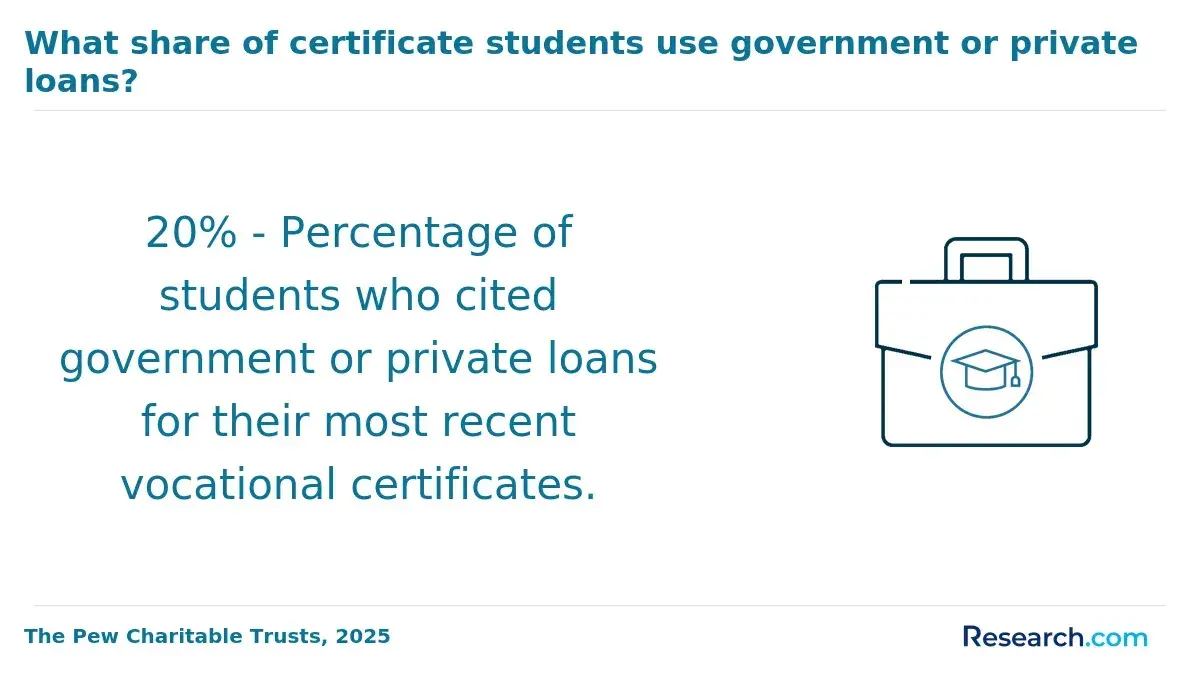
Compare the cost to finish, not just the advertised price per credit. Ask each college for an estimate covering tuition, mandatory online and technology fees, books or software, proctoring, and any travel or placement expenses. Public-college in-district rates may not apply to out-of-district or out-of-state online students. An aid offer can reduce your out-of-pocket cost, but loans still need to be repaid; confirm the institution's federal aid eligibility and your own eligibility before relying on either.
If you have prior college credit, request an evaluation showing which credits satisfy degree requirements. That can change both time and cost. If committing to an associate degree does not fit your goal, shorter options - including one year degrees for seniors - may be worth comparing, but verify the credential and job relevance rather than assuming shorter is better.
Which Online Two-Year Degrees Offer the Strongest Salary and Job Outlook?
For direct workforce preparation, health information and IT support deserve a close look because they connect coursework to identifiable tasks. Nursing can lead to a regulated occupation, but only through an approved pathway that meets examination and licensing requirements. Business, criminal justice, and psychology may be stronger choices when paired with a specific transfer or employer plan than when judged by the degree title alone.
The Bureau of Labor Statistics reports a May 2024 median annual wage of $93,600 for registered nurses. That is an occupational figure across workers with different education and experience - not a starting salary for associate degree graduates. Use occupational wages and job projections to investigate a target role, then check its usual entry requirements, local openings, and whether the online program meets them. If your long-term target requires graduate study, even a fastest online masters option does not eliminate intervening bachelor's, experience, or licensure requirements.
How Can Students Verify Online Program Accreditation and Transferability?
Institutional accreditation is the starting point: check the college in the U.S. Department of Education's accreditation database and confirm that the accreditor and institutional status are current. For a regulated field, separately verify the program's approval or accreditation with the relevant state board or profession; institutional accreditation alone may not establish licensure eligibility.
Transfer requires a second check. Ask your intended bachelor's institution for a written course-by-course evaluation or an applicable articulation agreement. A university can accept a course as elective credit without applying it to your major. Compare the agreement's course, grade, and residency requirements with your associate degree plan before enrolling in classes you expect to transfer.
What Are the Admission Requirements for Online Associate Degree Programs?
Many associate programs ask for a high school diploma or equivalent and an application. Colleges may use placement measures or previous coursework to determine which math and writing classes you start with; policies vary, and placement can affect your timeline even when it does not prevent admission. Ask about transfer-credit evaluation early if you have studied elsewhere.
Admission to the institution is not always admission to the major. Nursing and some allied-health programs may require prerequisites, a minimum grade standard, a separate application, and a competitive selection process. Clinical participation may bring additional health, background-screening, or site requirements. Obtain the major-specific admission criteria and the next available start date before planning a full-time schedule.
What Coursework and Skills Do Online Two-Year Degree Programs Include?
Most associate degrees combine general education - such as writing, quantitative reasoning, and social science - with a major sequence. Business students may study accounting and communication; IT students may complete programming and network labs; health information students may practice coding and records workflows. Transfer-oriented AA and AS plans often prioritize courses that apply to a bachelor's degree, while an AAS may devote more credits to occupational skills.
Delivery matters as much as the course title. A virtual lab can support IT practice, but a nursing clinical or human services practicum involves supervised work that cannot simply be replaced by recorded lectures. Review a sample full-time term and ask which classes have live meetings, timed exams, local placements, or required visits. That schedule shows whether the program's skills training is compatible with your other commitments.
How Do Full-Time Online Programs Compare With Campus-Based Options?
Full-time online study removes routine commuting for online classes, but it does not necessarily offer self-paced work. This comparison highlights the scheduling differences that most often determine whether a student can finish.
| Format | Potential advantage | Constraint to check |
| Asynchronous online | Access coursework at different times | Weekly deadlines, timed exams, and course availability |
| Scheduled online | Live discussion and predictable meeting times | Attendance conflicts with work or caregiving |
| Hybrid | Online theory with in-person practice | Commute, lab schedule, and placement location |
| Campus-based | On-site labs and face-to-face services | Travel and fixed class times |
Online is the better fit when required courses are consistently available and their meeting times work for you. Campus or hybrid study may be better when hands-on instruction, local clinical placements, or in-person support would make completion more realistic.
Which Careers Require Licensure or Professional Certification After Graduation?
Registered nursing requires meeting a state board's eligibility rules and passing the NCLEX-RN; graduation from an associate nursing program alone is not a license. Other clinical occupations can have different state and examination requirements. Medical coding certification may matter to employers, but the degree and a professional credential are separate. Public-safety jobs may require an academy or agency certification rather than a license earned through the associate program.
Psychology and human services associate degrees do not authorize independent therapy. Students considering counseling should check their state board's graduate-degree and supervised-experience rules. Choosing an easiest masters degree to get is not a substitute for confirming that a particular graduate program meets those professional requirements.
How Can Students Choose a Reputable Online Two-Year Degree Program?
Build a shortlist around your intended outcome and your actual weekly availability. Before applying, use these checks to uncover costs or requirements that a program's "online" label might leave unclear:
- Request the degree plan and mark every prerequisite, required course sequence, lab, placement, live session, and campus visit.
- Confirm current institutional accreditation and, where relevant, state approval and programmatic accreditation for your intended occupation.
- Ask for a full-time schedule and a written estimate of tuition, mandatory fees, materials, and required travel at your residency rate.
- Get written answers about transfer applicability or certification and licensure eligibility, depending on your goal.
- Compare advising access, online technical help, and how the college assists students when required courses or placements are unavailable.
Treat vague claims of "fully online," guaranteed employment, or automatic credit transfer as red flags until the school provides details. The strongest choice is the program whose verified requirements fit both your career plan and your capacity to complete it.
Other Things You Should Know About
Sometimes. Many business, IT, and transfer-focused programs can be completed through online coursework, but verify live meetings, exams, labs, and any required visits. Clinical programs usually include in-person training.
Not necessarily. Required credits, prerequisites, course scheduling, accepted transfer credit, and clinical availability determine your finish date.
An applied program aligned with a specific entry-level role may be a better fit than a broad transfer degree. Compare local job requirements with the curriculum and check whether employers expect certification or experience.
It can, but transfer is not automatic. Ask the destination university which credits will meet general education and major requirements, not just whether it accepts them.
References
- College Accreditation - U.S. Department of Education https://www.ed.gov/laws-and-policy/higher-education-laws-and-policy/college-accreditation
- Fact Sheet #71: Internship Programs Under The Fair Labor Standards Act | U.S. Department of Labor https://www.dol.gov/agencies/whd/fact-sheets/71-flsa-internships
- The Database of Postsecondary Institutions and Programs | ed.gov https://ope.ed.gov/dapip/
- School-Determined Requirements | 2024-2025 Federal Student Aid Handbook https://fsapartners.ed.gov/knowledge-center/fsa-handbook/2024-2025/vol1/ch1-school-determined-requirements
- Rule 3332-1-02 - Ohio Administrative Code https://codes.ohio.gov/ohio-administrative-code/rule-3332-1-02
- Full-time Study | HESC https://hesc.ny.gov/dictionary/tap-coach/term/full-time-study
- Undergraduate Retention and Graduation Rates - COE https://nces.ed.gov/programs/coe/indicator/ctr/undergrad-retention-graduation
- Enrollment | University of Arizona Catalog https://catalog.arizona.edu/policy/registration-tuition-fees/registration-enrollment/enrollment
- SDSU Transfer Pathways https://admissions.sdsu.edu/transfers/transfer-pathways
- Tuition and Fees Charts - Student Financial Services https://sfs.gsu.edu/resources/student-acct/tuition-breakdown/