2027 Best Online Nutrition Master's Programs at Nonprofit Universities

Co-Founder and Chief Data Scientist
Choosing an online nutrition master's means weighing whether a program supports your intended role, not simply finding the lowest advertised tuition. Nonprofit universities can offer institutionally accredited degrees, established faculty, and online formats for working adults. The U.S. Bureau of Labor Statistics reports a $73,850 median annual wage for dietitians and nutritionists in May 2024, making career alignment especially important. This guide compares reputable nonprofit options, accreditation, costs, schedules, admissions, and outcomes so you can identify the program that fits your budget and professional goals.
Key Things You Should Know
- Prioritize institutional accreditation, transparent tuition, required practicum details, and curriculum fit; nonprofit status alone does not establish program quality or dietetics eligibility.
- Many online nutrition master's programs require about 30 to 36 credits and can be completed in roughly 18 to 36 months, but asynchronous delivery does not always mean there are no live sessions, fieldwork requirements, or campus visits.
- For career context, dietitians and nutritionists had a $73,850 median annual wage in May 2024, according to the U.S. Bureau of Labor Statistics; an advanced degree can strengthen specialized skills but does not automatically lead to RD/RDN licensure.
Which Nonprofit Universities Offer the Best Online Nutrition Master's Programs, and How Were They Selected?
The best online nutrition master's program depends on whether you need advanced nutrition knowledge, a pathway connected to dietetics training, public-health preparation, or a clinically focused specialization. A nonprofit university reinvests revenue into its educational mission rather than distributing profits to owners; it may be a public university or a private institution. Nonprofit status is useful context, but students should still verify institutional accreditation, faculty credentials, state authorization, and total cost.
The programs below are notable options to investigate because they are offered by nonprofit universities and have established online or distance-learning nutrition-related master's study. Availability, tuition, eligibility, and curriculum can change, so applicants should confirm details directly with each institution before applying.
| University | Online nutrition-related master's option | Typical academic focus | Best fit to investigate |
| University of Alabama | MS in Human Nutrition | Nutrition science, education, wellness, research | Working professionals seeking broad graduate nutrition study |
| University of Nebraska-Lincoln | MS in Nutrition and Health Sciences | Nutrition science and health promotion | Students wanting a public-university online option |
| Kansas State University | MS in Dietetics | Dietetics and advanced professional practice | Professionals with a dietetics-oriented background |
| University of Arizona | MS in Applied Nutrition | Applied nutrition, health behavior, wellness | Students seeking practical nutrition specialization |
| University of Western States | MS in Human Nutrition and Functional Medicine | Functional and integrative nutrition approaches | Students who want a defined niche and can assess employer fit |
Selection should be based on comparable, decision-relevant evidence rather than a single ranking signal. Strong candidates generally show institutional accreditation, clearly described online delivery, graduate-level nutrition coursework, transparent admissions policies, accessible faculty, and information about whether the degree supports a particular credential or career path.
Use this short comparison process before narrowing your list:
- Confirm that the university is institutionally accredited by an accreditor recognized by the U.S. Department of Education or the Council for Higher Education Accreditation.
- Match the curriculum to your target role, especially if you seek registered dietitian nutritionist preparation, clinical work, public health, research, wellness, or food-industry work.
- Calculate total required charges, including technology, distance-learning, books, travel, practicum, and graduation costs.
- Ask whether courses are asynchronous, whether attendance is required at set times, and whether field experiences can be completed near your home.
- Request outcome information that is relevant to the program, such as completion, employment support, licensure preparation, or alumni career examples.
Students considering nutrition alongside laboratory science or preprofessional study may also compare an online biology degree when deciding whether they first need foundational science coursework.
Why Choose a Nonprofit University for an Online Nutrition Master's Degree?
A nonprofit university can be a sensible choice when you value a degree issued by an established public or private institution, access to faculty who may also teach campus students, and a university infrastructure for libraries, advising, and financial aid. Public nonprofit universities may offer relatively favorable tuition for residents, while private nonprofit universities may charge one online rate regardless of residency. Neither model is automatically better.
The practical advantages and trade-offs are easier to see side by side.
| Factor | Public nonprofit university | Private nonprofit university | What to check |
| Tuition structure | May distinguish in-state and out-of-state students | May use a standard online rate | Total required tuition and fees, not only per-credit price |
| Program scale | Often broad course offerings and research resources | May offer smaller cohorts or specialized curricula | Course availability and faculty access |
| Admissions | Can require specific science prerequisites | May use holistic review with program-specific requirements | Prerequisites, GPA, and professional background |
| Career relevance | Varies by curriculum and local partnerships | Varies by curriculum and alumni network | Credential alignment and employer recognition |
Do not treat nonprofit status as a substitute for due diligence. A school can be nonprofit and still be expensive, have limited specialization choices, or offer a degree that does not meet the requirements for your intended license. Conversely, a lower-cost public program may be the better value if it covers the same competencies and fits your schedule.
Nutrition often overlaps with nursing, pharmacy, and population health. Learners whose goals are primarily advanced nursing practice should compare a fastest DNP program instead of choosing a nutrition degree that does not support their intended scope of practice.
What Accreditation Should an Online Nutrition Master's Program Have?
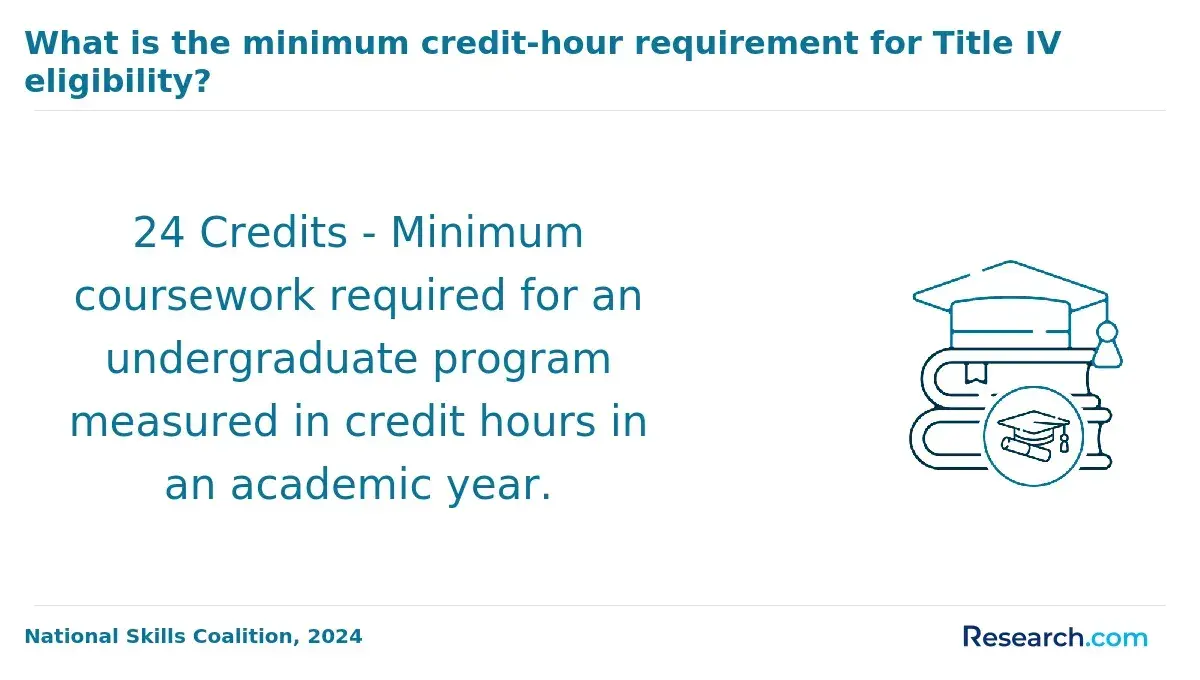
Start with institutional accreditation. This evaluates the university as a whole and affects federal financial-aid eligibility, transfer-credit acceptance, and general degree recognition. Verify the institution through the U.S. Department of Education's database or the accreditor's own directory rather than relying solely on a school webpage.
Programmatic accreditation is a separate issue. For students pursuing the registered dietitian nutritionist pathway, the relevant organization is the Accreditation Council for Education in Nutrition and Dietetics (ACEND). A graduate degree in nutrition is not automatically an ACEND-accredited dietetics program, and completing it alone does not qualify someone to sit for the RDN examination.
These distinctions help prevent one of the most expensive enrollment mistakes: assuming that any nutrition master's produces the same professional eligibility.
| Credential or review | What it evaluates | Why it matters |
| Institutional accreditation | The university's academic and administrative quality | Supports general degree legitimacy and financial-aid access |
| ACEND accreditation | Dietitian nutritionist education pathways | Important for students pursuing RDN eligibility |
| State licensure requirements | State-specific authority to use titles or practice | May affect clinical or nutrition-practice work after graduation |
| Specialized certification eligibility | Professional organization requirements | Varies by certification, employer, and prior education |
Before enrolling, ask the program in writing whether it is designed to meet educational requirements for the credential you want in your state. Also ask whether supervised practice, an internship, clinical hours, examinations, or additional coursework are required. Nutrition licensing rules vary, and schools generally cannot determine an individual student's legal eligibility to practice in every state.
Students interested in regulatory, workplace, or public-health safety careers may find that nutrition is adjacent rather than central to their goals; compare online environmental health and safety programs accredited options for a more directly aligned curriculum.
How Much Does an Online Nutrition Master's Degree at a Nonprofit University Cost?
Total cost is more useful than advertised tuition. Most online nutrition master's degrees require approximately 30 to 36 credits, so even a small difference in per-credit pricing can materially affect borrowing. Fees, course materials, required travel, proctoring, and supervised-practice expenses can also change the final bill.
Rather than relying on a general average that may not match your residency or prerequisite needs, request a written estimate from every school. The cost categories below show what to include in a realistic comparison.
| Cost category | How it affects total cost | Question to ask |
| Tuition per credit | Usually the largest direct charge | Is the online rate the same for all students? |
| Mandatory fees | May be assessed by term, course, or program | Which fees apply to fully online students? |
| Prerequisite courses | Can add credits before graduate enrollment | Which anatomy, physiology, chemistry, or statistics courses are required? |
| Residency or practicum travel | May create lodging, transportation, and lost-work costs | Are any campus visits or site-based activities mandatory? |
| Books and software | Can vary by course and specialization | What materials are required beyond tuition? |
Federal aid for eligible graduate students may include Direct Unsubsidized Loans and, for students who need additional funding and qualify, Grad PLUS Loans. Borrow only after comparing employer tuition assistance, university scholarships, state workforce support, payment plans, and the likely earnings value of the degree. Loan limits, eligibility, and interest terms can change, so review current federal aid information before accepting an award.
Affordable is not always synonymous with lowest tuition. A lower-priced program can cost more overall if it requires extensive travel or delays graduation, while a somewhat higher-priced program may be worthwhile when it meets a credential requirement or permits continued full-time employment. Ask admissions for the number of credits required for your specific plan of study and whether transfer credit is likely to reduce the total.
What Are the Admission Requirements for Online Nutrition Master's Programs?
Admissions requirements vary by concentration and by whether the degree is designed for applicants with prior nutrition, dietetics, biology, health, or clinical experience. Many programs evaluate a completed bachelor's degree, undergraduate GPA, official transcripts, statement of purpose, and résumé. Some also require recommendations, prerequisite science courses, statistics, or evidence of professional experience.
Applicants without a nutrition background should pay particular attention to prerequisites. A program may admit students conditionally or require foundation courses before advanced nutrition science, which changes both time to completion and cost.
These questions help applicants identify requirements that are easy to overlook:
- What minimum GPA is required, and is it calculated across all undergraduate work or only recent coursework?
- Which prerequisites must be completed before admission, and what grade is required in each course?
- Does the program require a registered dietitian credential, dietetic internship experience, or a health-related professional license?
- Are GRE scores optional, unavailable, or required for a particular applicant group?
- Can transfer credits be accepted, and what are the limits on age, grade, and course equivalency?
- Are international transcripts, background checks, immunizations, or site agreements needed for any applied component?
A strong statement of purpose explains a realistic career target and why the curriculum supports it. Avoid presenting a master's as an RDN pathway unless the school specifically documents that relationship. Applicants pursuing another health-profession route may need a different admissions strategy; for example, some prospective nurses look at nursing schools without entrance exam requirements when nutrition is not their primary graduate objective.
What Will You Study in an Online Nutrition Master's Program?
Online nutrition master's curricula commonly deepen evidence-based nutrition assessment, metabolism, research interpretation, health promotion, and nutrition counseling. The exact emphasis matters. A human nutrition program may prioritize science and wellness education, while a dietetics-focused program may address advanced practice and professional standards. Applied nutrition programs may emphasize behavior change, community health, or specialized populations.
The following curriculum map can help you compare course titles with the competencies you actually need.
| Common subject area | Typical learning goal | Career relevance |
| Macronutrient and micronutrient metabolism | Explain nutrient function and metabolic pathways | Nutrition education, research, product development |
| Nutrition assessment | Interpret dietary, anthropometric, and health information | Clinical support and population-health settings |
| Research methods and statistics | Evaluate evidence and conduct graduate-level inquiry | Research, quality improvement, evidence-based practice |
| Community and public-health nutrition | Design nutrition interventions for groups | Public agencies, nonprofits, health promotion |
| Behavior change and counseling | Apply communication and coaching approaches | Wellness, education, patient-support roles |
Review syllabi where available, not just program descriptions. Look for required capstones, thesis options, group projects, case-based learning, and faculty research interests. These details reveal whether a degree is primarily research-oriented, professionally applied, or designed for a specific nutrition niche.
Be cautious of programs that use broad wellness language without clearly explaining scientific rigor, faculty qualifications, and graduate competencies. Functional, integrative, sports, and culinary nutrition can be legitimate areas of study, but their employer value and certification relevance differ. Choose a specialization because it matches your intended work, not because it sounds more marketable.
How Flexible Are Online Nutrition Master's Programs, and How Long Do They Take?
Most online nutrition master's programs are designed for working adults, but "online" can mean several different delivery models. Fully asynchronous courses allow students to complete lectures and discussions within weekly deadlines. Synchronous online courses require attendance at scheduled video sessions. Hybrid programs may add campus intensives, laboratory work, or local field experiences.
A 30- to 36-credit degree often takes about 18 to 36 months, depending on course load, course sequencing, transfer credit, and whether students study year-round. Accelerated programs can reduce elapsed time, but they may increase weekly reading, writing, and group-work demands.
| Format | Scheduling pattern | Best for | Potential limitation |
| Asynchronous online | Weekly deadlines with no regular live class | Students with variable work schedules | Requires strong self-management |
| Synchronous online | Regular live virtual meetings | Students who want real-time discussion | May conflict with work shifts or time zones |
| Hybrid or low-residency | Online classes plus planned in-person activity | Students who value hands-on networking | Travel and scheduling costs |
| Part-time online | One or two courses per term | Working adults and caregivers | Longer completion timeline |
Before enrolling, request a sample term schedule and ask how often courses are offered. A program may advertise an accelerated completion time but only offer a required course once each year. Also verify time-zone expectations, exam-proctoring rules, group assignment requirements, and any practicum placement responsibilities.
Students should not assume an accelerated health-professions program is interchangeable with nutrition graduate education. Those seeking pharmacy licensure should examine an accelerated PharmD program, which follows a distinct professional curriculum and licensure route.
What Student Support, Faculty Access, and Networking Do Online Nutrition Master's Programs Offer?
Program quality is partly visible in what happens outside the learning platform. Strong online programs provide clear access to faculty, academic advising, library databases, technical support, disability services, writing support, and career guidance. The most useful support model depends on your needs: a research-focused student may value faculty mentorship, while a career changer may need résumé review, internship guidance, and alumni connections.
Ask each program how online students receive the services available to campus students. The following indicators can help separate meaningful support from vague marketing language.
- Faculty office hours offered by video conference, phone, or appointment
- Named academic advisor with guidance on course sequencing and graduation requirements
- Online library access to peer-reviewed nutrition and health databases
- Career services that explicitly serve distance learners and graduate students
- Professional association events, guest speakers, alumni panels, or virtual networking
- Clear assistance for locating and approving practicum or project sites when applicable
Networking is especially valuable in nutrition because career paths range from health systems and public agencies to food companies, community organizations, research teams, and wellness businesses. Ask whether students complete collaborative projects, meet practitioners, or join alumni communities. However, do not assume networking alone substitutes for credential eligibility, clinical experience, or a portfolio of relevant work.
What Jobs, Salaries, and Career Outcomes Can You Expect From an Online Nutrition Master's Degree?
An online nutrition master's can support advancement in nutrition education, community health, wellness, food and nutrition research, health communication, program management, and specialized nutrition services. Outcomes depend heavily on prior education, licenses, work history, geography, employer type, and whether the graduate is eligible for a regulated credential.
For a national benchmark, the U.S. Bureau of Labor Statistics reported a median annual wage of $73,850 for dietitians and nutritionists in May 2024. That figure describes the occupation rather than the earnings of every nutrition master's graduate, and it should not be used as a guaranteed return on a particular degree. The bureau projected 7% employment growth for dietitians and nutritionists from 2023 to 2033, indicating demand that is faster than the average for all occupations.
This table distinguishes common directions a graduate may pursue. Job titles and credential requirements vary by employer and state.
| Career direction | Typical responsibilities | Master's degree value | Important limitation |
| Dietitian nutritionist | Provide medical nutrition therapy and nutrition care | May meet part of advanced education goals | RDN eligibility requires a specific accredited pathway and other requirements |
| Community nutrition professional | Plan education, outreach, and food-access programs | Builds program-planning and evaluation skills | Employers may prefer public-health or community experience |
| Wellness or health educator | Develop behavior-change and wellness programming | Supports nutrition expertise and communication skills | Scope of practice and employer standards differ |
| Nutrition research coordinator | Support studies, data collection, and protocol operations | Strengthens research literacy and analysis | Some roles require prior research or clinical experience |
| Food and nutrition industry specialist | Support education, product, quality, or regulatory work | Can add subject-matter depth | Requirements differ widely across employers |
To evaluate outcomes, ask for job titles of recent graduates, the proportion of graduates who were already employed in nutrition-related work, and examples of employer partnerships. Be skeptical of broad salary claims that do not identify the role, location, experience level, reporting period, or number of respondents.
Is an Online Nutrition Master's Degree From a Nonprofit University Worth It?
An online nutrition master's degree is most likely to be worth the investment when it solves a defined professional problem: meeting a graduate-education expectation, building research or leadership skills, moving into public-health nutrition, gaining advanced subject knowledge, or supporting a credential path that the school explicitly confirms. It may be a weaker investment if you are unsure what job you want, need RDN eligibility but select a nonqualifying program, or would need unsustainable borrowing.
Compare the likely value of enrollment against alternatives before committing.
| If your goal is | An online nutrition master's may fit when | Consider another route when |
| Become an RDN | The program documents alignment with your required education and supervised-practice pathway | The degree is general nutrition only and does not support eligibility |
| Advance in wellness or health education | Curriculum builds behavior change, program planning, and evidence evaluation | An employer values a shorter certificate or direct experience more |
| Move into research | The program includes methods, statistics, and faculty mentorship | You need laboratory training unavailable in the online format |
| Change careers quickly | You can transfer prerequisites and study at an accelerated pace | You need extensive foundational science or a regulated professional credential |
A practical final decision should include a written cost comparison, confirmation of accreditation and state eligibility, a realistic weekly study plan, and a conversation with an advisor about your background. The common red flags are unclear tuition, vague statements about licensure, missing practicum details, pressure to enroll quickly, and claims that a degree alone guarantees employment or salary.
Choose the program with the clearest connection between curriculum, credential requirements, total cost, and your target role. Prestige can matter in some settings, but affordability, schedule fit, documented academic quality, and relevant experience usually have a more direct effect on whether you can finish the degree and use it well.
Other Things You Should Know About Nutrition
Possibly, but job titles and legal restrictions vary by state and employer. Some states regulate nutrition titles or practice, and clinical roles may require an RDN credential, state license, or other qualifications. Check the rules where you plan to work before choosing a program.
Employers generally focus on the awarding university's accreditation, the relevance of your coursework, applicable credentials, and your experience. A degree delivered online by an institutionally accredited nonprofit university is typically evaluated as the university's degree, but employers may still have role-specific requirements.
Not always. Some programs offer a thesis track, while others use a capstone project, comprehensive examination, practicum, or applied portfolio. A thesis can be useful for doctoral study or research-oriented work; an applied capstone may better suit students seeking professional advancement.
Many universities consider transfer credit, but policies differ. Schools commonly review course equivalency, grade earned, accreditation of the prior institution, recency of coursework, and limits on the number of credits transferred. Obtain a written transfer evaluation before assuming your completion time will be shorter.
References
- Master of Science in Applied Nutrition | RDN to MSAN Path | UNE Online https://online.une.edu/program/ms-applied-nutrition-rdn-to-msan/
- M.S. in Clinical Nutrition with Dietetic Internship - Immaculata University https://www.immaculata.edu/academics/degrees-programs/clinical-nutrition-ms-graduate-studies/
- Most Popular Online Nutrition Master's Degrees https://www.onlineu.com/degrees/masters-nutrition
- Best Online Master's Degree Programs in Dietetics for 2025 https://www.onlinemastersdegrees.org/best-programs/nutrition/dietetics/
- Master's Degree, Dietetic Internship, and Coordinated Programs https://waportal.org/health-initiatives/washington-wic-careers/rdn-career-pathway/education-pathways/masters-degree-dietetic-internship-and-coordinated-programs
- Top 25 MPH Nutrition Programs - MPH Online https://www.mphonline.org/best-mph-nutrition/
- Nutrition Degree Programs Guide 2026 https://www.publichealthonline.org/nutrition/degree-programs/
- What can you do with a nutrition degree? | edX | edX https://www.edx.org/resources/what-can-you-do-with-a-masters-degree-in-nutrition-science