2027 Cheapest Accredited Online Nutrition Master's Programs With Flat-Rate Tuition: Costs per Term and Total Degree Estimates

Co-Founder and Chief Data Scientist
A low advertised term price can become an expensive nutrition master's if you need extra enrollment periods, pay separate fees, or choose a program that does not meet your credential goal. The U.S. Bureau of Labor Statistics reports a $73,850 median annual wage for dietitians and nutritionists, making program cost and career alignment important investment decisions. This guide explains how flat-rate tuition works, what a term can cost, how to estimate a full degree price, and how to compare accredited online options before applying.
Key Things You Should Know
- Flat-rate tuition charges one set amount for a defined enrollment period, commonly a 6-month term, rather than charging separately for every credit; it saves the most when students complete a high course load within that period.
- Western Governors University's online M.S. in Nutrition has published tuition of $4,035 per 6-month term, making its estimated tuition-only cost $8,070 if completed in two terms; tuition, fees, and completion requirements can change.
- Institutional accreditation is not the same as ACEND programmatic accreditation: students pursuing Registered Dietitian Nutritionist eligibility must verify that their education pathway meets current ACEND and state licensure requirements.
What Does Flat-Rate Tuition Mean for an Online Nutrition Master's Program?
Flat-rate tuition means a university charges one published tuition amount for a defined academic period instead of charging a separate rate for each credit or course. In an online nutrition master's program, the period may be a semester, quarter, trimester, or competency-based term. The price usually covers coursework up to a stated enrollment limit, but it does not necessarily cover fees, repeat attempts, clinical experiences, textbooks, or other required expenses.
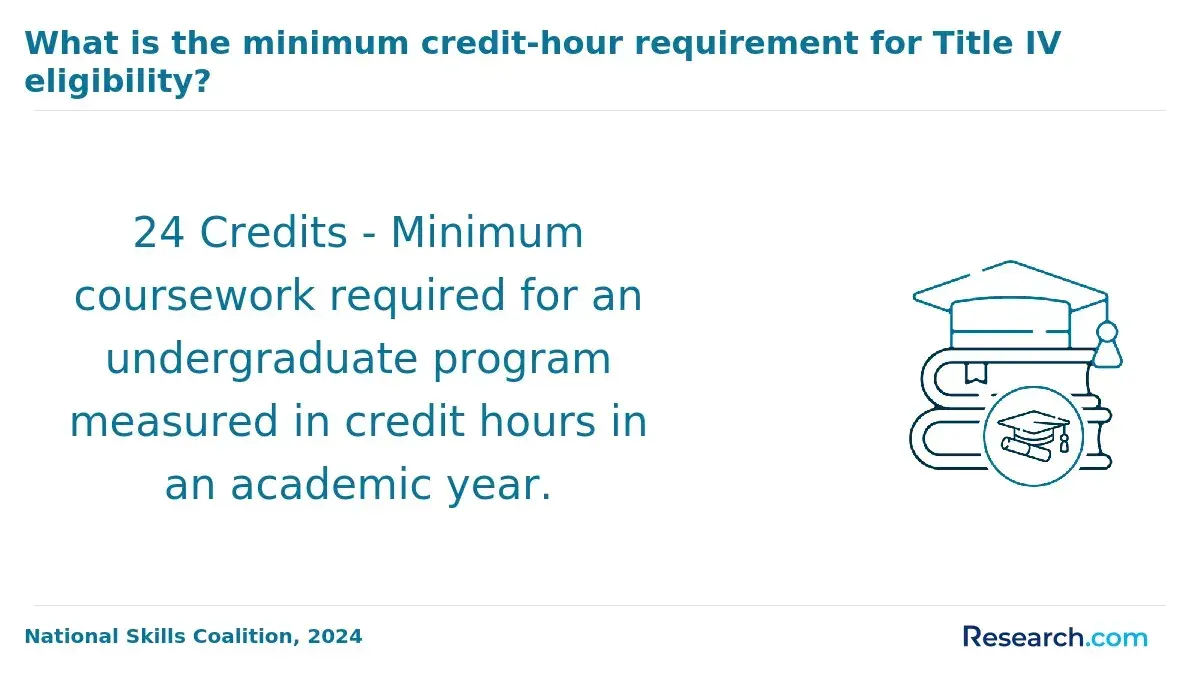
Competency-based programs are the clearest example. Students pay for a term and may progress through more courses if they satisfy academic requirements and have faculty approval. A traditional online program may also use flat-rate pricing, but often only after a student reaches full-time enrollment, such as 9 credits in a semester.
This model fits self-directed students who can devote consistent weekly time to graduate study. It may be a poor fit for students planning to take only one course at a time, those with unpredictable work demands, or learners who need a tightly sequenced practicum program. Students considering adjacent clinical education paths should also distinguish a nutrition degree from options such as a accelerated PharmD program, which leads toward a different regulated profession and has different clinical requirements.
For nutrition careers, accreditation requires particularly careful review. Institutional accreditation evaluates the university as a whole. Programmatic accreditation from the Accreditation Council for Education in Nutrition and Dietetics, commonly called ACEND, matters for educational pathways connected to Registered Dietitian Nutritionist preparation. An online M.S. in Nutrition can strengthen knowledge in nutrition science, wellness, public health, education, research, or industry roles without necessarily qualifying a graduate for the RDN credential.
How Much Does a Flat-Rate Online Nutrition Master's Program Cost Per Term?
Published flat-rate pricing is less common among online nutrition master's programs than per-credit pricing, so shoppers should be cautious about "cheapest" rankings. Many schools label a program online but still bill tuition by credit, while others advertise a term price that applies only to students meeting full-time enrollment requirements.
The following example shows a published competency-based model. It is a planning estimate, not a binding quote; prospective students should obtain the current tuition schedule and written confirmation of what the term charge includes before enrolling.
| Program | Tuition model | Published tuition per term | Term length | Important limitation |
| Western Governors University M.S. in Nutrition | Flat-rate, competency-based | $4,035 | 6 months | Students must complete program requirements within the paid terms; separate resource fees and policy changes may apply. |
At $4,035 per 6-month term, the price is compelling only if the student can complete enough competency units to avoid a third term. A student who needs three terms would pay $12,105 in tuition alone, which changes the comparison with a per-credit program substantially.
Ask admissions offices whether the quoted rate is tuition only, whether it applies to online students in every state, and whether there is a maximum number of credits or competency units per term. Also ask whether a required capstone, practicum, or internship can be scheduled within the normal term length.
How Much Does an Online Nutrition Master's Degree Cost in Total With Flat-Rate Tuition?
Total cost depends more on the number of paid terms than on the headline term rate. Calculate tuition by multiplying the current term price by the realistic number of terms needed, then add mandatory recurring fees and one-time academic expenses. Do not assume that a school's fastest completion claim will be your timeline.
This estimate uses the $4,035 published tuition example and excludes fees because fee schedules vary by enrollment period and can change. It illustrates the financial consequence of completing the degree in an additional term.
| Completion scenario | Paid 6-month terms | Estimated tuition-only total | Cost implication |
| Accelerated completion | 2 | $8,070 | Lowest tuition outcome if academic progress is approved and sustainable. |
| Moderate pace | 3 | $12,105 | Adds one full term, increasing tuition by $4,035. |
| Extended pace | 4 | $16,140 | May still be affordable, but should be compared against per-credit alternatives and career timing. |
For a traditional credit-based master's, use a different formula: required credits multiplied by the per-credit tuition rate, plus mandatory fees. A 30- to 36-credit nutrition curriculum can have a lower total cost than a flat-rate option if you expect to study part time. Conversely, a flat-rate model can be a better value when you can complete a larger-than-standard course load without sacrificing grades or learning.
Students who want a stronger science foundation before graduate study may benefit from reviewing an online biology degree pathway. Completing prerequisite science coursework strategically can prevent delayed admission or an unplanned extra graduate term.
How Does Course Load Affect the Cost of a Flat-Rate Online Nutrition Master's Degree?
Course load determines the effective price of flat-rate tuition. The same $4,035 term becomes less expensive per completed competency unit or credit when a student finishes more approved work during the term. However, the lowest effective rate is not automatically the best outcome if an unsustainable pace causes withdrawals, incomplete courses, or a need to repeat material.
The example below uses a $4,035 flat term and hypothetical completed-credit equivalents solely to demonstrate the calculation. A school's actual competency units may not equal conventional semester credits, so applicants should use its official conversion and graduation requirements.
| Completed credit equivalent in one term | Flat term tuition | Illustrative effective cost per credit | Best fit |
| 6 credits | $4,035 | $672.50 | Part-time student; flat-rate value may be limited. |
| 9 credits | $4,035 | $448.33 | Typical full-time pace where available. |
| 12 credits | $4,035 | $336.25 | Well-prepared student with sufficient time and approved progression. |
Before selecting a pace, students should map required courses, prerequisites, capstone milestones, and personal obligations. They should then ask whether courses can be opened concurrently, whether faculty approval is required for acceleration, and whether assessments have fixed deadlines. A course sequence can limit acceleration even when tuition is technically flat rate.
A common mistake is treating "unlimited" coursework as an entitlement. Flat-rate competency-based programs generally still require satisfactory academic progress, assessment readiness, and mentor or instructor approval. Plan for a pace that is ambitious but realistic rather than budgeting around the fastest possible timeline.
Is Flat-Rate Tuition Cheaper Than Per-Credit Tuition for an Online Nutrition Master's Degree?
Flat-rate tuition is cheaper only when the number of courses completed during each paid period produces a lower total degree cost than a comparable per-credit program. The break-even point depends on the school's term price, the per-credit alternative, required credits, fees, and whether the student can avoid an additional term.
This comparison illustrates the decision using a $4,035 flat-rate term and a hypothetical $500 per-credit alternative for a 36-credit degree. The per-credit figure is an example for comparison, not a quoted price from a nutrition program.
| Payment approach | Completion assumption | Illustrative tuition total | What it suggests |
| Flat rate | 2 terms | $8,070 | Strong value when the student completes 36 credit equivalents in 12 months. |
| Flat rate | 3 terms | $12,105 | Still may be competitive, but requires direct comparison with actual per-credit quotes. |
| Per credit | 36 credits at $500 each | $18,000 | Predictable cost for a part-time pace, though the actual rate and fees vary by school. |
Per-credit tuition may be the better choice for working professionals who need one course at a time, students who anticipate leaves of absence, or applicants who require a highly structured ACEND-aligned curriculum. Flat-rate tuition tends to work best for disciplined learners who can complete substantial work each term and whose career goals do not require a program format unavailable in the flat-rate option.
Nutrition is also connected to population health and workplace safety. Professionals comparing interdisciplinary options can explore online environmental health and safety programs accredited when their goal is compliance, occupational health, or environmental risk work rather than nutrition practice.
What Fees and Additional Expenses Apply to a Flat-Rate Online Nutrition Master's Program?
Flat-rate tuition rarely represents the complete cost of attendance. A term price may exclude learning-resource fees, graduation fees, technology charges, proctoring, transcript requests, background checks, travel, professional memberships, and costs connected to field experiences. Some expenses occur once, while others recur every enrollment period.
Use the school's current cost-of-attendance page and program handbook to identify which expenses are mandatory. The categories below are the most important to verify because they can materially change a low tuition estimate.
- Recurring institutional charges, including technology, distance-learning, learning-resource, and student-service fees.
- Course materials, electronic textbooks, assessment attempts, remote-proctoring requirements, and specialized nutrition software where applicable.
- Experiential requirements, such as travel, lodging, immunizations, liability insurance, background checks, site fees, or professional attire for practicums.
- One-time charges, including application, transcript evaluation, graduation, and diploma fees.
- Living expenses and reduced work hours, which are not tuition but can affect the affordability of an accelerated schedule.
Request a written estimate that separates tuition from every mandatory fee. If a program includes digital materials in the term price, ask whether that inclusion applies for the full degree and whether students pay extra for failed assessments, extensions, or a repeated course.
Students entering health-related graduate education should not assume all admissions processes are identical. For example, some nursing schools without entrance exam requirements may use different admissions standards, while nutrition programs commonly evaluate prior coursework, GPA, statement of purpose, and relevant experience.
Can Accelerated Study Lower the Total Cost of a Flat-Rate Online Nutrition Master's Degree?
Accelerated study can lower tuition when it reduces the number of paid flat-rate terms. In the $4,035-per-term example, completing the degree in two terms instead of three avoids $4,035 in tuition. It can also shorten the time before a student can pursue a promotion, a new role, or further credentialing, although no program can guarantee an employment outcome.
Acceleration is financially sensible only when the program allows it and the student can sustain the workload. Graduate nutrition study may include biochemistry, metabolism, nutrition assessment, research methods, statistics, public health, or a capstone. Students with limited preparation in these areas may learn more effectively at a steadier pace.
Use this sequence before committing to an accelerated plan.
- Confirm the exact number of credits or competency units required for graduation and identify courses with prerequisites or fixed schedules.
- Ask whether students may start multiple courses in one term and what academic approvals govern faster progression.
- Estimate weekly study time honestly, including reading, assessments, group work, capstone tasks, and employer obligations.
- Build a contingency budget for one additional term rather than assuming the shortest advertised completion time.
- Review withdrawal, incomplete, and failed-course policies before registering for an aggressive course load.
An accelerated plan should not substitute for credential planning. If the objective is RDN eligibility, verify the full academic and supervised-practice pathway first; a fast, low-cost master's that does not meet the required pathway can be a poor investment for that goal.
Professionals seeking a different advanced clinical route may compare timelines with a fastest DNP program, but a DNP and a nutrition master's prepare graduates for distinct scopes of practice and credential requirements.
Can Financial Aid and Employer Reimbursement Reduce the Cost of a Flat-Rate Online Nutrition Master's?
Yes. Eligible students may use federal financial aid, employer tuition assistance, scholarships, veterans' education benefits, or private financing to reduce out-of-pocket expense. Aid eligibility, loan limits, satisfactory academic progress rules, and enrollment definitions vary by institution and student circumstances, so published tuition should never be treated as the amount every student will personally pay.
Federal Direct Unsubsidized Loans and Graduate PLUS Loans may be available to qualifying graduate students at eligible institutions that participate in federal aid programs. Students should submit the FAFSA, review the school's award offer, and compare the amount borrowed with a realistic total program cost that includes an extra-term scenario.
Employer reimbursement can be especially useful for dietetics, wellness, food-service management, public health, healthcare, and corporate health employees. Before enrolling, obtain written answers about reimbursement caps, grade requirements, preapproval, repayment obligations after leaving the employer, and whether tuition is reimbursed after each course or only after degree completion.
Borrowing decisions should reflect the career target. The Bureau of Labor Statistics projects employment for dietitians and nutritionists to grow 7% from 2023 to 2033, faster than the average for all occupations. That outlook supports demand context but does not mean every nutrition master's leads to a dietitian role, licensure eligibility, or a particular salary.
How Do Enrollment Breaks and Extra Terms Affect the Cost of an Online Nutrition Master's Degree?
In a flat-rate program, an extra term can be the largest avoidable cost. A leave of absence, slow course progression, delayed capstone, failed assessment, illness, work disruption, or inability to secure a required placement may move completion into another paid period. With a $4,035 6-month term, one extra term adds $4,035 to tuition before any additional fees.
Enrollment breaks may be appropriate when personal circumstances require them, but students should understand the financial and academic consequences before stopping. A break can affect financial-aid enrollment status, loan repayment timing, course catalog requirements, degree deadlines, access to university services, and whether previously completed coursework remains current.
Before beginning the program, ask the registrar or enrollment counselor the following questions.
- What is the cost to re-enroll after a leave, and are recurring fees charged again?
- How long may a student pause before readmission or a new catalog year is required?
- Can unfinished capstone or practicum work carry into the next term without additional academic penalties?
- What happens financially and academically after a withdrawal, incomplete grade, or unsuccessful assessment?
- Are tuition refunds prorated, and what are the deadlines for changing enrollment?
The practical solution is to budget for the likely timeline, not just the fastest timeline. Students with variable work schedules may prefer a predictable per-credit program if the chance of needing multiple additional flat-rate terms outweighs the potential savings from acceleration.
How Should Students Choose the Best-Value Flat-Rate Online Nutrition Master's Program?
The best-value program is not always the one with the lowest term price. It is the program that meets the student's credential objective, fits the student's available time, has appropriate accreditation, and produces the lowest realistic - not merely advertised - total cost. Start by identifying whether the goal is RDN preparation, a nutrition-science credential, wellness leadership, public health work, research, education, or advancement in a current role.
Compare each candidate using the same inputs. This checklist helps prevent a misleading apples-to-oranges tuition comparison.
- Verify institutional accreditation and determine whether ACEND programmatic accreditation or another specific approval is necessary for your intended credential.
- Confirm admissions prerequisites, including science coursework, minimum GPA, professional experience, and any requirements that may delay your start date.
- Obtain the current term tuition, term length, credit or competency-unit limit, and all mandatory recurring and one-time fees in writing.
- Calculate a realistic total using your expected number of terms, then calculate a second estimate with one additional term.
- Ask whether transfer credit, prior graduate coursework, or competency credit is accepted and whether it will actually reduce a paid term.
- Review course sequencing, capstone requirements, practicum expectations, faculty access, and support for online students in your state.
- Compare financial-aid eligibility, employer reimbursement compatibility, and the debt required after grants or employer funding.
- Evaluate career relevance by reviewing curriculum outcomes and confirming how the degree aligns with employer, certification, or state requirements.
A useful final comparison is a three-column budget: minimum likely cost, realistic expected cost, and cost if completion requires one extra term. Choose the program that remains financially acceptable in the realistic scenario and still supports the career pathway you actually want.
Students should avoid two common red flags: a school that cannot clearly explain what flat-rate tuition includes, and a program presented as a route to dietitian licensure without transparent confirmation of ACEND and supervised-practice requirements. Confirm details directly with the university and, when licensure is relevant, with the licensing authority in the state where you plan to practice.
Other Things You Should Know About Nutrition
No. A nutrition master's alone does not automatically qualify someone to become a Registered Dietitian Nutritionist. RDN candidates must meet current education, supervised-practice, examination, and other requirements established for the credential. Confirm whether a program is part of an ACEND-accredited pathway before enrolling.
Requirements commonly include a bachelor's degree, official transcripts, a minimum GPA, a statement of purpose, recommendations, and prerequisite coursework in areas such as biology, chemistry, anatomy, physiology, or statistics. Exact requirements vary by program and concentration.
Depending on prior education and credentials, graduates may pursue work in wellness programming, nutrition education, food and nutrition management, public health, research support, health communications, or corporate wellness. Roles involving medical nutrition therapy or regulated dietetics practice may require additional credentials or state authorization.
Ask the university whether it is authorized to enroll online students in your state and whether the program meets any state-specific educational requirements relevant to your career goal. This is especially important when a program includes practicum work, clinical experiences, or leads toward a regulated credential.
References
- Important Terms for Paying and Saving for Education Simplified https://illinoistreasurer.gov/home/individuals/college-savings/key-terms-for-understanding-education-costs/
- Online Nutrition & Dietetics Master of Science Degree https://www.idea.edu/program/dietetics
- Tuition | Clinical Nutrition | Nutrition Degrees | MSCN https://www.sonoran.edu/programs/college-of-nutrition/tuition/
- Options for Financing Your Education https://lesley.edu/costs-financial-aid/options-for-financing-your-education
- Master's in Nutrition Prerequisites | University of Bridgeport https://www.bridgeport.edu/news/masters-in-nutrition-prerequisites/
- Full-Time Student Hours vs. Part-Time: What's the Difference? https://www.citizensbank.com/student/articles/full-time-student-hours.aspx
- Paying for College: 4 College Financing Options to Explore | NC Assist Loans https://www.ncassist.org/paying-for-college-101/blog/paying-for-college/
- Nutrition Degree Programs Guide 2026 https://www.publichealthonline.org/nutrition/degree-programs/
- Facts about working full-time as a full-time student https://www.luminafoundation.org/topics/todays-students/working-adults/
- EdAssist | Understanding college pricing models https://www.brighthorizons.com/resources/blog/edassist/understanding-college-pricing-models