2027 Best Online Nursing Education Doctorate Programs for Teaching at the College Level

Co-Founder and Chief Data Scientist
Choosing an online Nursing Education doctorate is really a faculty-career decision: the right program can strengthen your teaching, research, and academic credentials, while the wrong one may limit your options. The U. S. Bureau of Labor Statistics projects postsecondary teacher employment to grow 8% from 2023 to 2033, faster than average, which keeps faculty preparation relevant for nurses considering higher education roles. This guide helps prospective doctoral students compare online programs, understand PhD versus professional doctorate trade-offs, evaluate accreditation, and choose a path aligned with adjunct, full-time, or tenure-track teaching goals.
Key Things You Should Know
- The strongest online Nursing Education doctorates for college teaching usually combine accredited graduate nursing preparation, doctoral-level research, curriculum design, assessment, and supervised teaching experience; a PhD is typically stronger for tenure-track and research-intensive roles, while a DNP or EdD may fit teaching-focused or practice-leadership roles.
- An online doctorate can support college-level teaching, but it does not automatically qualify you for every faculty job; universities often weigh your highest degree, RN/APRN background, scholarship, publications, teaching record, clinical expertise, and whether the doctorate matches the courses you want to teach.
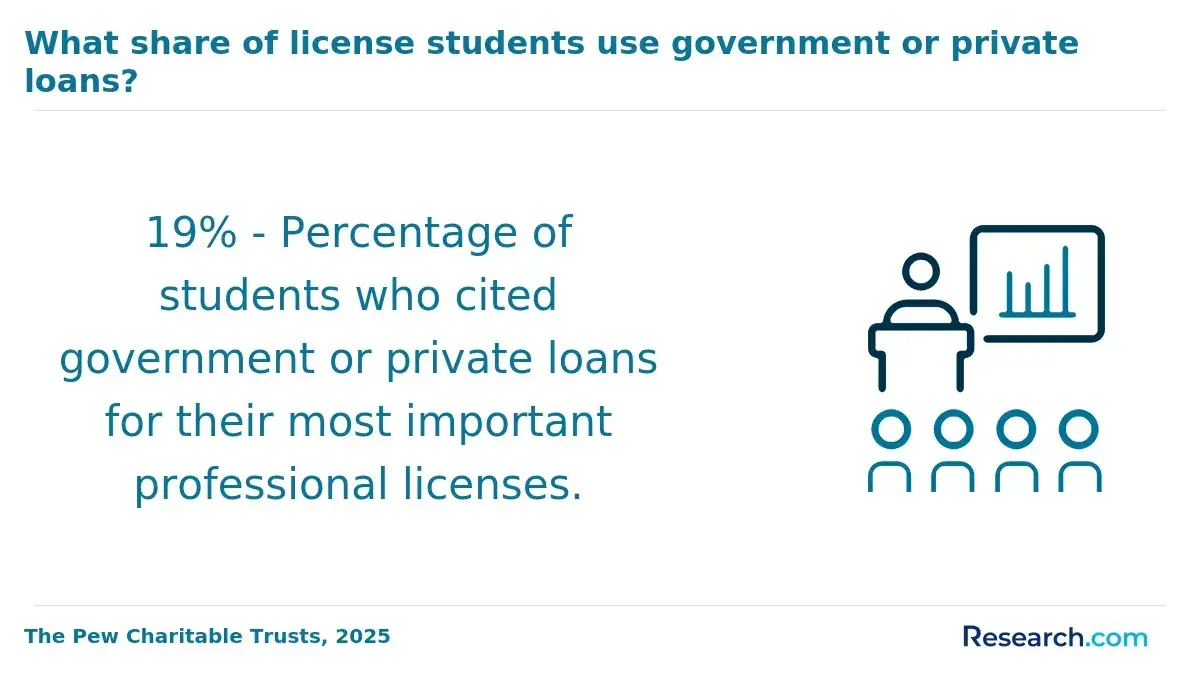
- Most working nurses should compare total cost, 3-to-6-year completion timelines, dissertation or project expectations, residencies, accreditation, and faculty mentorship before enrolling; federal graduate Direct Unsubsidized Loans are capped at $20,500 per academic year under current federal rules.
Do You Need a Nursing Education Doctorate to Teach at the College Level?
You do not always need a doctorate to teach nursing, but a doctorate becomes increasingly important as you move from adjunct clinical instruction to full-time faculty, graduate-level teaching, program leadership, or tenure-track roles. Many community colleges and prelicensure nursing programs hire MSN-prepared nurses for clinical or skills-lab teaching, especially when the instructor has strong practice experience. However, universities, graduate nursing programs, and research-oriented departments commonly prefer or require doctoral preparation.
A Nursing Education doctorate is a terminal degree that prepares nurses to teach, design curricula, evaluate learning outcomes, conduct scholarship, and contribute to nursing education research or practice improvement. It may be offered as a PhD in Nursing with an education focus, a DNP with an education concentration, or an EdD in Nursing Education or health professions education.
The table below shows how faculty expectations often differ by role. Requirements vary by institution, state board rules, program level, and accreditation standards, so use this as a planning guide rather than a universal rule.
| College teaching goal | Typical minimum credential | What usually matters most | Doctorate value |
| Clinical adjunct instructor | Often MSN plus active RN license | Recent clinical expertise, availability, teaching potential | Helpful but not always required |
| Didactic undergraduate faculty | MSN may qualify; doctorate often preferred | Teaching experience, course expertise, curriculum knowledge | Improves competitiveness for full-time roles |
| Graduate nursing faculty | Doctorate commonly preferred or required | Advanced specialty expertise, scholarship, graduate-level mentoring | Often important for credibility and hiring |
| Tenure-track professor | Research doctorate commonly favored | Research agenda, publications, grants, dissertation quality | Usually central to competitiveness |
| Program director or academic administrator | Doctorate often preferred or required | Accreditation, assessment, leadership, faculty supervision | Strong fit when paired with administrative experience |
For aspiring professors, the key question is not simply whether the degree is online. It is whether the program gives you the scholarly profile, teaching record, and faculty mentorship needed for the kind of institution where you want to work.
Which Online Nursing Education Doctorate Programs Are Best for Aspiring College Professors?
The best online Nursing Education doctorate is the one that matches your target faculty role. A nurse who wants a tenure-track position at a research university should evaluate programs differently from a nurse who wants to teach undergraduates at a regional college or lead curriculum assessment in a school of nursing.
Because program quality depends on fit, compare online doctorates by category rather than relying only on rankings. If affordability is your first filter, reviewing cheapest online nursing PhD programs can help you identify lower-cost options before you evaluate research fit and faculty support.
The table below summarizes which online doctorate types are usually best suited to specific college teaching goals.
| Best-fit category | Usually strongest for | Look for | Possible trade-off |
| Online PhD in Nursing with education focus | Tenure-track roles, graduate teaching, research universities | Dissertation, research methods sequence, publication mentorship, funded research opportunities | Longer timeline and heavier research expectations |
| Online DNP with Nursing Education concentration | Teaching in practice-focused programs, clinical education leadership, curriculum roles | DNP project tied to education outcomes, practicum in teaching, accreditation and assessment coursework | May be less competitive for research-intensive tenure-track jobs |
| Online EdD in Nursing Education or health professions education | Teaching-focused colleges, academic leadership, curriculum and instructional design roles | Applied dissertation, higher education pedagogy, assessment, program evaluation | May not carry the same research signal as a PhD in some nursing departments |
| Hybrid doctorate with short residencies | Students who want online flexibility plus campus-based scholarly networking | Residency purpose, faculty access, dissertation support, teaching demonstrations | Travel costs and scheduling constraints |
When narrowing your list, prioritize programs that can show clear evidence of faculty preparation. The strongest options usually include these features:
- Doctoral faculty whose research or scholarship connects to nursing education, simulation, curriculum design, assessment, online teaching, health equity, or academic leadership.
- A dissertation, scholarly project, or applied research pathway that lets you study a real nursing education problem rather than completing only broad leadership coursework.
- Opportunities to teach, co-teach, precept, design course materials, or receive formal feedback on college-level instruction.
- Transparent graduate outcomes, including where alumni teach, publish, present, or hold academic leadership roles.
- Clear online learning support, including writing assistance, library access, statistical consulting, technology help, and structured dissertation milestones.
A common mistake is choosing the fastest or cheapest doctorate without checking whether it helps you build a professor profile. For college teaching, a shorter program may be attractive, but it should still offer rigorous scholarship, credible faculty mentorship, and evidence that graduates move into academic roles.
Should You Choose a PhD or Professional Doctorate in Nursing Education for College Teaching?
The PhD versus professional doctorate decision is one of the most important choices for future nursing faculty. A PhD is a research doctorate designed to prepare scholars who generate new knowledge. A DNP or EdD is a professional or applied doctorate that usually emphasizes practice improvement, educational leadership, curriculum change, and evidence-based problem solving.
If your goal is a research-intensive academic career, the PhD is often the stronger signal. If your goal is teaching, curriculum leadership, or practice-focused education, a DNP or EdD may be a practical fit. Nurses who already hold an MSN and want a practice-focused doctoral route may also compare MSN to DNP programs before deciding whether the DNP's applied focus matches their faculty goals.
The table below compares the degree types through the lens of college teaching preparation.
| Factor | PhD in Nursing | DNP with Nursing Education focus | EdD in Nursing Education |
| Main purpose | Research and theory development | Practice improvement and systems leadership | Applied educational leadership |
| Typical final requirement | Dissertation | DNP scholarly project | Dissertation or applied dissertation |
| Best academic fit | Tenure-track, research faculty, graduate research mentorship | Clinical faculty, practice-focused graduate programs, education leadership | Teaching-focused colleges, curriculum roles, academic administration |
| Research expectations | Usually highest | Applied evidence-based project focus | Applied research or program evaluation focus |
| Potential limitation | May be less practice-leadership focused | May not satisfy research-heavy hiring expectations | Recognition may vary by nursing department and institution type |
Use this decision sequence if you are unsure which degree to choose:
- Identify your target role: adjunct, full-time lecturer, clinical professor, tenure-track professor, graduate faculty, or academic administrator.
- Review faculty job postings from the schools where you would realistically want to work and note whether they prefer PhD, DNP, EdD, or simply "earned doctorate."
- Compare final projects carefully; a traditional dissertation is usually stronger for research-oriented academic roles, while an applied project may be better for practice or curriculum leadership.
- Ask whether the program supports conference presentations, peer-reviewed publication, teaching portfolios, and mentorship from faculty with active scholarship.
- Choose the degree whose outputs match the hiring evidence, not just the title that sounds most convenient.
Students who want the broadest academic flexibility often favor the PhD, especially if they may later pursue tenure-track or research leadership. Students who are already strong clinicians and want to teach in practice-oriented settings may find that a DNP or EdD aligns better with their professional identity.
Accreditation is essential because it affects academic credibility, transferability, employer recognition, federal financial aid eligibility, and sometimes whether a school of nursing will consider your degree for faculty appointment. For online doctoral students, accreditation matters more than delivery format. A well-supported online doctorate from an appropriately accredited university can be credible, while a poorly accredited or unaccredited program can create serious career limitations.
Start with institutional accreditation. In the U.S., colleges and universities should be accredited by an agency recognized by the U.S. Department of Education or the Council for Higher Education Accreditation. Programmatic nursing accreditation is also important, especially when the doctorate is housed in a school of nursing. Common nursing accreditors include the Commission on Collegiate Nursing Education and the Accreditation Commission for Education in Nursing.
The table below explains how different accreditation layers affect your decision as a future faculty member.
| Accreditation factor | Why it matters for college teaching | Red flag |
| Institutional accreditation | Signals that the university meets broad academic and administrative standards | The school is unaccredited or uses vague wording such as "licensed" instead of accredited |
| Nursing programmatic accreditation | May strengthen recognition among nursing employers and academic departments | The nursing program cannot clearly state its accreditor or accreditation status |
| State authorization for online learning | Determines whether the school can enroll students in your state | The program accepts you without confirming state eligibility |
| Licensure alignment | Important if the program includes advanced practice preparation or clinical components | The school will not explain whether it meets requirements in your state |
| Faculty credential alignment | Academic employers may evaluate whether your doctorate is relevant to what you teach | The curriculum has little connection to nursing education, scholarship, or your specialty area |
Before applying, take these practical steps:
- Verify the university's institutional accreditation using official accreditor or federal databases rather than relying only on marketing pages.
- Confirm whether the school of nursing or doctoral nursing program holds programmatic accreditation and whether the status is current.
- Ask whether online students in your state are eligible for enrollment, clinical placement, practicum, or residency requirements.
- Request written clarification if the program claims to prepare graduates for faculty roles, certification, or licensure-related outcomes.
- Check faculty job ads to see whether your target employers name preferred accrediting bodies or degree types.
Avoid programs that pressure you to enroll quickly, refuse to provide accreditation details, or promise faculty jobs after graduation. Accreditation supports credibility, but it does not replace scholarship, teaching experience, and a strong academic record.
For college teaching, curriculum matters because your doctorate should help you prove two things: you can teach nursing students effectively, and you can contribute to the academic work of a nursing department. The strongest programs combine pedagogy, research, assessment, leadership, and a final scholarly product that relates to nursing education.
Look for a curriculum that goes beyond general leadership. Future faculty members benefit from coursework and experiences that map directly to classroom, simulation, clinical, and online teaching responsibilities.
- Nursing education theory, curriculum development, course design, instructional strategies, learner assessment, and program evaluation.
- Quantitative, qualitative, and mixed-methods research courses that prepare you to read, conduct, and explain nursing education scholarship.
- Online teaching, simulation, clinical evaluation, competency-based education, and technology-supported learning experiences.
- Higher education topics such as accreditation, academic governance, faculty roles, diversity and inclusion, student retention, and academic integrity.
- Dissertation or scholarly project support with clear milestones, committee access, writing expectations, and research ethics training.
The final doctoral requirement deserves special attention. A dissertation generally carries more weight in research-oriented faculty searches because it demonstrates independent inquiry. A DNP project or applied dissertation can still be valuable for teaching-focused roles when it produces measurable educational improvement, publishable findings, or a strong presentation portfolio.
AI is also changing nursing education. Programs that teach responsible use of educational technology, learning analytics, simulation tools, and AI-supported instructional design may better prepare future faculty to work with today's students. However, technology should not replace core doctoral training in research design, ethical scholarship, and student assessment.
Strong applicants should ask schools the following questions before enrolling:
- Can doctoral students focus the dissertation or project on nursing education rather than only clinical practice or administration?
- How often do students publish, present at conferences, or collaborate with faculty on research?
- Are online students eligible for teaching assistantships, guest lectures, course design projects, or supervised teaching practice?
- What happens if a dissertation chair leaves, a project site changes, or the student falls behind?
- Does the program provide statistical consulting, writing coaching, IRB support, and library access for distance learners?
A program that cannot clearly answer these questions may still be legitimate, but it may not be the best choice for someone whose main goal is becoming a competitive college educator.
Admission requirements vary by degree type and school, but most online Nursing Education doctorate programs expect applicants to show graduate-level academic readiness, current nursing licensure, professional experience, and a clear match between career goals and the program's focus. Research-focused PhD programs may weigh writing samples, research interests, and faculty fit more heavily than professional doctorate programs.
Some applicants discover during the admissions process that they are not ready for a doctorate yet. For example, nurses still comparing advanced clinical pathways may want to review online nurse practitioner programs before committing to a doctorate centered on teaching and scholarship.
The table below summarizes common admissions expectations and why each one matters for future faculty preparation.
| Requirement | Common expectation | Why it matters |
| Prior degree | MSN is common; some programs offer BSN-to-PhD or BSN-to-DNP routes | Determines entry point, transfer credits, and total timeline |
| RN license | Active, unencumbered RN license is commonly required | Supports credibility for nursing teaching and clinical education roles |
| GPA | Competitive graduate GPA is often expected | Signals readiness for doctoral coursework and research |
| Professional experience | Clinical, teaching, leadership, or advanced practice experience may be requested | Helps connect doctoral work to real nursing education problems |
| Writing sample or goal statement | Often required, especially for PhD and EdD programs | Shows scholarly readiness and alignment with faculty expertise |
| Interview | Common in selective programs | Allows faculty to assess fit, motivation, and research interests |
To strengthen your application, prepare materials that show you are not just seeking a credential but building toward an academic role.
- Write a focused goal statement naming the courses, student populations, or nursing education problems you want to address.
- Identify faculty whose scholarship connects to your interests and explain the connection professionally.
- Highlight teaching, precepting, simulation, onboarding, staff development, or curriculum experience, even if it was outside a formal faculty title.
- Use your writing sample to demonstrate clear academic reasoning rather than only personal motivation.
- Ask recommenders to address your readiness for doctoral study, scholarship, teaching, leadership, and persistence.
Avoid applying to programs only because they have rolling admission or minimal requirements. Easier entry does not necessarily mean the program will provide the mentorship, rigor, or academic network needed for college teaching.
Many online Nursing Education doctorates are designed for working nurses, but "online" does not mean light or self-paced. Doctoral study requires sustained reading, writing, research, discussion, practicum work, and committee communication. The realistic timeline depends on the degree type, entry point, transfer credits, dissertation or project pace, and whether you study full time or part time.
Students looking for a less demanding route should be careful not to confuse easier admission with easier doctoral completion. If your near-term goal is advanced clinical entry rather than doctoral teaching preparation, comparing an easiest NP program may be more relevant than entering a doctorate before your goals are clear.
The table below gives a practical comparison of typical timeline patterns for working nurses.
| Program route | Typical pacing | Best for | Main time risk |
| BSN-to-PhD | Often longest because it combines graduate and doctoral preparation | Nurses committed early to research and academic careers | Balancing foundational graduate work with dissertation development |
| MSN-to-PhD | Often 3 to 6 years depending on pace and dissertation progress | Future researchers, tenure-track candidates, graduate faculty | Dissertation delays and research design changes |
| MSN-to-DNP with education focus | Often 2 to 4 years depending on credits and project scope | Practice-focused faculty and education leaders | Project site access and practicum scheduling |
| EdD in Nursing Education | Often 3 to 5 years depending on dissertation model | Teaching-focused faculty and academic administrators | Applied dissertation planning and data collection |
You can often complete an online doctorate while working, but you need a realistic plan. Consider these workload strategies before enrolling:
- Ask for a term-by-term plan showing course load, practicum hours, residency dates, comprehensive exams, and dissertation or project milestones.
- Choose a research topic connected to your workplace or teaching environment only if approvals, data access, and ethics review are feasible.
- Discuss schedule flexibility with your employer before intensive writing terms or practicum requirements begin.
- Protect weekly writing time early; dissertation delays often come from waiting too long to build scholarly habits.
- Budget for travel, childcare, technology, reduced work hours, and conference participation if those are part of your academic plan.
The students who finish most smoothly are usually those who treat the doctorate as a long-term professional project, not just a sequence of online courses.
The cost of an online Nursing Education doctorate depends on tuition model, credit requirements, residency travel, technology fees, dissertation extension fees, books, clinical or practicum expenses, and whether you reduce work hours. Comparing only per-credit tuition can be misleading because a lower rate may still cost more if the program requires more credits or repeated dissertation enrollment.
Federal aid remains a major planning factor for graduate students. Under current federal rules, graduate and professional students may borrow up to $20,500 per academic year in Direct Unsubsidized Loans, with additional borrowing sometimes available through Grad PLUS Loans subject to eligibility. This limit means doctoral students should compare the full cost of attendance, not just what can be covered in one academic year.
When estimating total cost, include the following categories because they can change the real price of an online doctorate:
- Tuition charged per credit, per term, or by program subscription model.
- Mandatory university, technology, distance learning, graduation, and dissertation continuation fees.
- Residency travel, lodging, meals, parking, and lost work time.
- Research costs such as transcription, survey tools, statistical software, incentives, or conference presentations.
- Books, database access, certification preparation, background checks, immunizations, and practicum-related documentation.
- Interest, loan origination fees, and the opportunity cost of reducing work hours during intensive terms.
The table below shows common funding sources and how they typically fit doctoral nursing education.
| Funding source | How it may help | Important limitation |
| Federal Direct Unsubsidized Loan | Helps cover graduate tuition and eligible education costs | Annual borrowing limit applies and interest accrues |
| Grad PLUS Loan | May cover remaining cost of attendance after other aid | Credit check and higher long-term debt risk |
| Employer tuition assistance | Can reduce out-of-pocket cost for working nurses | May require continued employment or limit eligible programs |
| University scholarships or assistantships | Can support tuition, research, or teaching development | Online doctoral students may have fewer assistantship options |
| Nurse faculty loan or workforce programs | May support students preparing for nurse educator roles | Eligibility, service obligations, and availability vary |
Before enrolling, ask the financial aid office for a written cost-of-attendance estimate for the entire program. Also ask how many dissertation or project continuation terms students typically need, because those extra terms can add meaningful cost even after coursework is complete.
An online Nursing Education doctorate can support several academic career paths, but the outcome depends on your background, specialty, scholarship, and the institution's hiring standards. The degree may help you compete for faculty roles, but it should be paired with teaching experience, clinical credibility, and evidence of scholarly engagement.
The U.S. Bureau of Labor Statistics reported a May 2024 median annual wage of $83,980 for postsecondary teachers overall. That figure is useful as a broad salary context, but nursing faculty pay can vary widely by institution type, rank, region, clinical specialty, contract length, and whether the role is tenure-track, non-tenure-track, adjunct, or administrative.
The table below outlines common roles for graduates who use a Nursing Education doctorate in higher education.
| Role | Typical responsibilities | Credential fit | What strengthens candidacy |
| Adjunct nursing instructor | Teach clinical, lab, simulation, or selected didactic courses | MSN may be enough; doctorate can add credibility | Recent clinical experience, strong evaluations, reliability |
| Full-time nursing faculty | Teach courses, advise students, serve on committees, assess outcomes | Doctorate often preferred and sometimes required | Teaching portfolio, curriculum experience, specialty expertise |
| Clinical professor or professor of practice | Connect advanced practice, clinical leadership, and student learning | DNP or practice-focused doctorate may fit well | Advanced certification, practice leadership, graduate teaching ability |
| Tenure-track assistant professor | Teach, publish, seek funding, mentor students, build scholarship | PhD commonly favored in research-oriented settings | Dissertation quality, publications, conference presentations, research agenda |
| Nursing education program director | Lead curriculum, accreditation, faculty coordination, student outcomes | Doctorate often preferred or required | Accreditation knowledge, assessment expertise, leadership record |
Faculty work is changing. More nursing programs use hybrid delivery, simulation, competency-based assessment, analytics, and technology-supported teaching. A strong doctorate should help you demonstrate not only content expertise but also the ability to teach diverse learners and evaluate learning outcomes in modern academic environments.
If your goal is tenure, begin preparing before graduation. Tenure-track searches often expect a coherent research agenda, evidence of publication potential, and a clear fit with departmental needs. If your goal is teaching-focused employment, prioritize course design, student evaluation methods, simulation experience, and documented teaching effectiveness.
How Can an Online Nursing Education Doctorate Help You Build a Competitive Academic CV?
A doctorate can give you the academic foundation for college teaching, but your CV is what shows hiring committees how you used that foundation. A competitive nursing faculty CV connects your education, clinical expertise, teaching experience, scholarship, service, and leadership into a clear academic identity.
Use your doctoral years strategically. Instead of waiting until graduation to look for faculty work, build evidence of teaching and scholarship throughout the program.
- Create a teaching portfolio with syllabi, lesson plans, simulation materials, assignments, grading rubrics, student feedback, and a teaching philosophy.
- Seek opportunities to guest lecture, teach as an adjunct, precept students, support simulation, or assist with online course design.
- Turn course papers, dissertation chapters, or DNP project findings into conference abstracts, poster presentations, or manuscript drafts.
- Join professional organizations connected to nursing education, your clinical specialty, and higher education teaching.
- Document service work such as curriculum committees, assessment projects, accreditation preparation, student mentoring, and diversity initiatives.
- Ask doctoral faculty for mentorship on publishing, peer review, academic interviewing, and job-market timing.
Common mistakes can weaken your academic trajectory even if you complete the degree. Watch for these red flags and correct them early:
- Choosing a dissertation or project topic with no connection to your future teaching area or scholarly interests.
- Graduating with no teaching artifacts, no presentations, and no evidence of classroom or clinical education experience.
- Assuming a DNP, EdD, or PhD title alone will outweigh lack of publications or teaching experience in competitive searches.
- Ignoring the difference between teaching-focused colleges and research universities when planning your CV.
- Failing to ask faculty mentors how graduates from the program have performed in academic job searches.
The best online doctoral students treat every assignment, practicum, and scholarly project as a potential CV builder. By graduation, your goal is to show a hiring committee not only that you earned a doctorate, but that you are already functioning like an emerging nurse educator-scholar.
Other Things You Should Know About Nursing Education
In many universities, the diploma does not list the delivery format, but policies vary. More important than the wording on the diploma is whether the institution is properly accredited and whether the program gives you credible teaching, research, and faculty-development experiences.
Certified Nurse Educator certification is not usually a universal requirement for faculty employment, but it can strengthen your profile by showing commitment to nursing pedagogy. Some employers may prefer it for teaching-focused roles, especially after you have gained classroom experience.
Possibly. Many nursing faculty hold doctorates in nursing, education, public health, leadership, or related fields. The key issue is whether your graduate preparation, clinical background, scholarship, and teaching experience align with the courses and program level you want to teach.
Often, yes. Optional residencies can help you meet faculty, refine your dissertation or project, practice scholarly presentation, and build academic relationships. If you want a college teaching career, networking and mentorship can be as valuable as the coursework itself.
- DNP Education https://www.aacnnursing.org/students/nursing-education-pathways/dnp-education
- Guide to Online Nursing Programs | OEDb.org https://www.oedb.org/rankings/online-nursing-programs/
- Online DNP Program https://www.chamberlain.edu/academics/nursing-school/doctor-of-nursing-practice
- EdD vs DNP: EdD in Nursing Education vs DNP in Nursing Education https://www.onlineeddprograms.com/faqs/edd-nursing-education-vs-dnp-nursing-education
- Your Guide to Online PhD Nursing Programs: What They Are, What to Expect, and How to Choose the Right One – FRESHRN https://www.freshrn.com/online-phd-nursing-programs/
- Best Online Ph.D. Nursing Programs for 2026 | Ranked https://www.nurseeducator.com/degrees/phd/
- The development of an interdisciplinary nurse educator doctoral program Issues for consideration and goals for success https://www.scirp.org/journal/paperinformation
- Can You Earn a DNP Online? | All Nursing Schools https://www.allnursingschools.com/dnp/online-or-on-campus/
- DNP vs. PhD vs. EdD: What to Know About Terminal Degrees for Nursing Faculty https://www.elevatednpblog.com/post/terminal-degrees-for-nursing-faculty
- The Best Value DNP Degree Programs for 2025 https://www.doctorofnursingpracticednp.org/the-best-value-dnp-degree-programs/