
2027 PhD vs Professional Doctorate in Nursing Education: Key Differences, Careers, and Salary Outcomes

Co-Founder and Chief Data Scientist
Choosing between a PhD and a professional doctorate in Nursing Education is really a decision about the kind of influence you want to have. The need is urgent: the AACN reported 1,977 full-time faculty vacancies in U. S. nursing schools in 2024, and most preferred or required doctoral preparation.
This guide is for nurses, educators, and advanced practice nurses comparing research, teaching, leadership, cost, time, and salary outcomes so they can choose the doctorate that best fits their goals.
Key Things You Should Know
- A PhD in Nursing Education is best for nurses who want to create new knowledge through original research, publish, compete for grants, and pursue tenure-track faculty or research roles; a professional doctorate such as a DNP or EdD is better aligned with applied teaching leadership, curriculum improvement, healthcare systems change, and practice-based innovation.
- Salary depends more on role, employer, region, experience, and leadership responsibility than on the letters after your name; for context, the BLS reported a May 2024 median wage of $86,530 for postsecondary nursing instructors and teachers and $117,960 for medical and health services managers.
- PhD programs are more likely to offer assistantships or tuition support but often require heavier research immersion, while professional doctorates are commonly designed for working nurses and may be easier to schedule around full-time employment, though they are often self-funded.
What Is the Difference Between a PhD and a Professional Doctorate in Nursing Education?
A PhD in Nursing Education is a research doctorate. It prepares nurses to ask original questions, design studies, analyze evidence, publish findings, and teach future nurses from a scholarly foundation. In practice, many PhD graduates work as tenure-track faculty, nurse scientists, academic researchers, policy researchers, or senior education scholars.
A professional doctorate in Nursing Education is an applied doctorate. Depending on the program, this may be a Doctor of Nursing Practice with an education, leadership, or systems focus, or an EdD with a nursing education concentration. These programs prepare nurses to apply evidence to real-world problems such as improving clinical education, redesigning simulation, leading curriculum assessment, strengthening workforce development, or improving patient-care education systems.
The biggest difference is not prestige. It is purpose. A PhD asks, "What new knowledge should the nursing profession have?" A professional doctorate asks, "How can evidence be used to improve practice, education, systems, or outcomes?"
This comparison shows how the two pathways typically differ for nurses who want to teach, lead, research, or advance into higher-level education roles.
| Factor | PhD in Nursing Education | Professional Doctorate in Nursing Education |
| Primary purpose | Original research and theory development | Applied improvement in education, practice, or systems |
| Best fit | Future nurse scientists, tenure-track faculty, research faculty, policy researchers | Academic leaders, clinical education directors, DNP-prepared educators, curriculum leaders, healthcare education executives |
| Final project | Dissertation based on original research | Practice-based capstone, scholarly project, or applied dissertation |
| Typical work style | Research design, data analysis, publication, grants, teaching | Program improvement, implementation, evaluation, teaching innovation, leadership |
| Common employment setting | Universities, research centers, academic health systems, policy organizations | Universities, colleges, hospitals, health systems, professional development departments |
| Main trade-off | Stronger research preparation but often a longer and more intensive scholarly pathway | More practice-oriented and often work-friendly, but usually less focused on independent research careers |
If your long-term goal is to become a principal investigator, publish research, or compete for tenure-track academic roles, the PhD is usually the stronger match. If your goal is to lead nursing education programs, improve clinical teaching systems, or move into applied academic administration, a professional doctorate may be more practical.
How Do PhD and Professional Doctorate Curricula, Research, and Capstone Requirements Differ in Nursing Education?
Curriculum is where the difference becomes most visible. PhD programs usually move students into theory, research methods, statistics, qualitative and quantitative inquiry, grant writing, and dissertation development. Professional doctorates usually emphasize evidence-based practice, leadership, curriculum design, organizational change, quality improvement, program evaluation, and applied scholarship.
The final requirement is especially important because it affects your workload, timeline, faculty mentoring needs, and career readiness. Here is how the academic work typically compares.
| Program component | PhD pathway | Professional doctorate pathway |
| Research methods | Deep training in original research design, measurement, sampling, statistics, qualitative methods, and theory | Training in evidence appraisal, implementation science, evaluation, quality improvement, and applied research use |
| Nursing education coursework | Often includes pedagogy, curriculum theory, faculty role development, and education research | Often includes curriculum design, assessment, simulation, academic leadership, teaching technologies, and evaluation |
| Clinical or practice focus | Varies by program; usually less practice-based than a DNP | Often built around clinical systems, academic practice partnerships, or healthcare education problems |
| Faculty mentorship | Best when a faculty member studies your research topic or method | Best when faculty have expertise in your practice setting, leadership goal, or education problem |
| Dissertation or capstone | Original research that contributes new knowledge | Applied project that uses evidence to solve a defined problem |
| Publication expectations | Often expected or strongly encouraged | May be encouraged, but practical implementation and measurable outcomes are usually central |
A dissertation is usually a better fit if you want to build a scholarly identity around a research agenda. A capstone or applied doctoral project is usually a better fit if you want to show employers that you can solve an organizational, curricular, or practice problem using evidence.
Before choosing, ask each program how students are supported through the final project. Strong programs usually provide clear milestones, faculty expertise, writing support, statistics or evaluation support, and examples of completed student work.
- Choose the PhD dissertation route if you want to study questions such as nursing faculty retention, simulation outcomes, student learning, health equity in nursing education, or workforce policy using original research methods.
- Choose the professional doctorate project route if you want to redesign a clinical orientation program, evaluate a simulation curriculum, improve NCLEX readiness strategies, implement competency-based assessment, or lead an education quality-improvement initiative.
- Be cautious if a program cannot clearly explain the difference between a dissertation, DNP project, EdD applied dissertation, capstone, or scholarly project, because unclear expectations can delay graduation.
What Are the Admissions Requirements for a PhD vs Professional Doctorate in Nursing Education?
Admissions requirements vary by university, but both pathways usually expect a strong nursing background, graduate-level academic readiness, professional references, and a clear purpose statement. The difference is that PhD committees often look closely at research fit, while professional doctorate committees often look closely at leadership experience, practice goals, and ability to complete an applied project.
This table summarizes common requirements so you can identify which pathway is likely to be more realistic for your background.
| Requirement | PhD in Nursing Education | Professional Doctorate in Nursing Education |
| Prior degree | Often BSN-to-PhD or MSN-to-PhD; some require a master's degree | Often MSN-to-DNP, post-master's DNP, EdD, or related doctoral pathway |
| RN license | Usually required for nursing-focused programs | Usually required for DNP programs; requirements vary for EdD programs with nursing education concentrations |
| GPA | Commonly a minimum graduate or cumulative GPA requirement | Commonly a minimum graduate or cumulative GPA requirement |
| Experience | Teaching, clinical, research, or leadership experience may strengthen the application | Clinical leadership, teaching, advanced practice, staff development, or academic experience is often valuable |
| Writing sample | Often important because scholarly writing and research are central | May be required, especially for EdD or doctoral project-focused programs |
| Research or project fit | Faculty research match is often critical | Practice site, leadership goal, and project feasibility are often critical |
A strong PhD application should show that you understand research and have a focused area of inquiry. You do not need to have a fully formed dissertation topic, but you should be able to explain the problem you want to study and why a particular faculty member or school is a good match.
A strong professional doctorate application should show that you can identify a meaningful practice or education problem and have access to a setting where change is possible. For a DNP, schools may also expect advanced nursing preparation or a defined professional practice focus.
Use these steps before applying so you do not waste time or money on programs that do not fit your goals.
- Confirm whether the program is designed for BSN-entry, MSN-entry, post-master's, or advanced practice nurses.
- Compare faculty expertise with your research interest or applied project goal.
- Ask whether the program requires an active RN license in your state or a compact-state license.
- Review whether GRE scores are required, optional, or waived, since policies differ widely.
- Ask for recent examples of dissertations or doctoral projects completed by nursing education students.
How Long Does a PhD vs Professional Doctorate in Nursing Education Take, and Can You Work While Studying?
Time-to-degree depends on entry point, enrollment status, dissertation or project progress, and whether you study full time or part time. In general, PhD programs often require more sustained research immersion, while professional doctorates are more commonly structured for working nurses.
The timeline below reflects typical planning ranges rather than guarantees. Your actual completion time can change if you switch topics, lose access to a project site, need extra statistics support, change jobs, or pause enrollment.
| Pathway | Typical structure | Work compatibility | Common pacing challenge |
| BSN-to-PhD | Longer route that combines doctoral coursework, research training, and dissertation preparation | Possible, but full-time study may be expected or strongly encouraged | Balancing doctoral research training with work and family responsibilities |
| MSN-to-PhD | Coursework followed by qualifying exams, proposal, research, dissertation, and defense | Part-time options exist, but research milestones can be demanding | Maintaining dissertation momentum after coursework ends |
| MSN-to-DNP or post-master's professional doctorate | Applied coursework, leadership or education courses, practice hours if required, and doctoral project | Often designed for employed nurses | Securing project-site support and completing implementation on schedule |
| EdD in Nursing Education or related field | Education leadership coursework, research methods, and applied dissertation or capstone | Often work-friendly, especially in online or hybrid formats | Aligning the project with nursing education career goals |
Working while studying is possible in many programs, but it requires an honest look at weekly workload. A professional doctorate may fit better if you need predictable online coursework and want your job to serve as the project setting. A PhD may fit better if you can reduce work hours or accept an assistantship that supports research productivity.
To choose a realistic schedule, ask programs specific workload questions before enrolling.
- How many hours per week do successful part-time students usually spend on coursework?
- Are synchronous sessions required, and if so, when are they scheduled?
- Can dissertation or project milestones be completed while employed full time?
- Does the program require campus visits, residencies, intensives, clinical hours, or teaching practica?
- What happens if a student's research site, practicum site, or project site changes?
How Much Does a PhD vs Professional Doctorate in Nursing Education Cost, and Which Offers Better Funding?
Cost is one of the clearest differences between the two pathways. PhD programs are more likely to provide fellowships, research assistantships, teaching assistantships, tuition remission, or stipends, especially for full-time students. Professional doctorate programs are frequently built for working professionals, which can make them more flexible but also more likely to be funded through employer tuition benefits, savings, federal loans, or out-of-pocket payments.
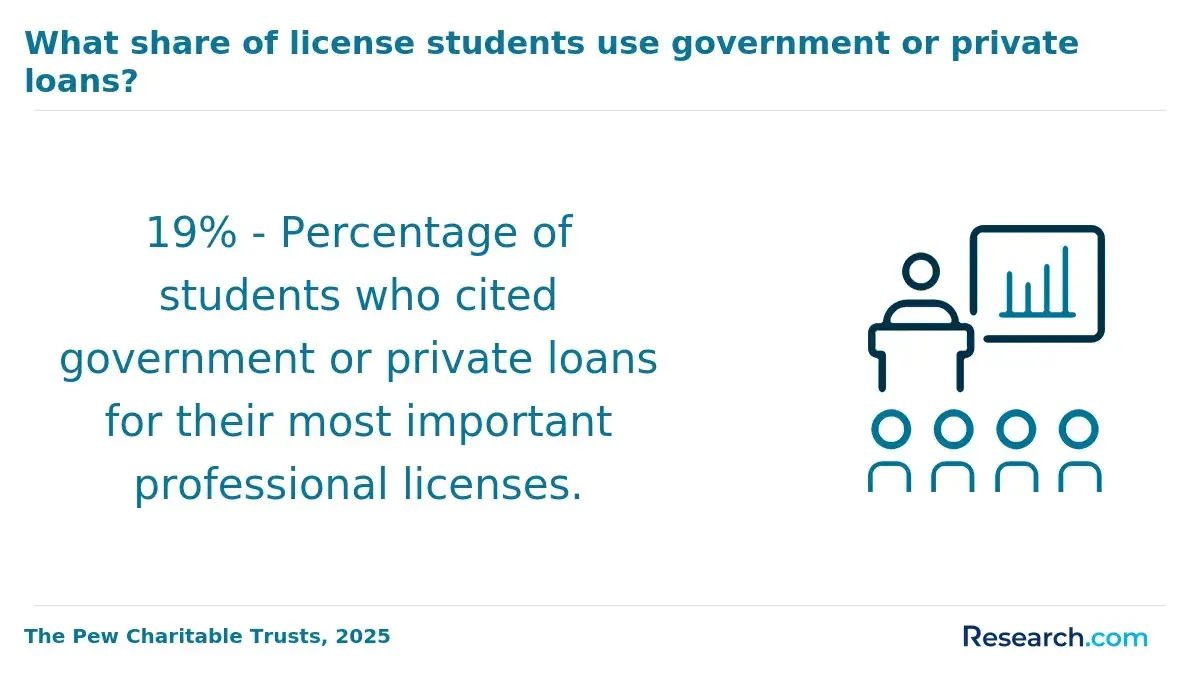
Federal financing also matters. Graduate and professional students can generally borrow up to $20,500 per academic year through the Direct Unsubsidized Loan program before considering Grad PLUS loans. That limit is useful when comparing programs because a doctorate with high tuition, fees, travel, and lost work hours can exceed basic federal loan capacity quickly.
If minimizing tuition is your top priority, compare public universities, in-state rates, credit totals, and online fees, and review lists of cheapest online nursing PhD programs as a starting point rather than assuming every doctoral option has the same financial model.
The table below shows the major cost and funding differences to evaluate before committing.
| Cost factor | PhD pathway | Professional doctorate pathway |
| Tuition model | May be funded for full-time students, especially at research universities | Often charged by credit and commonly self-funded |
| Assistantships | More common through teaching or research roles | Less common, though some schools offer scholarships or employer partnerships |
| Work income | Full-time study may reduce outside employment | Often compatible with continued employment |
| Hidden costs | Research software, conference travel, residency requirements, dissertation expenses | Project implementation costs, practicum travel, technology fees, residency requirements |
| Opportunity cost | Potential income reduction if you leave or reduce work | Potential burnout if you continue full-time work while studying |
| Best financial fit | Students who can secure funding and want research careers | Working nurses using employer support or pursuing leadership advancement |
A common mistake is comparing only tuition per credit. Total cost should include required credits, fees, books, technology, travel, residency days, unpaid practice hours, reduced work hours, childcare, and the time it takes to finish the dissertation or project.
Before enrolling, use this practical cost checklist.
- Ask for the full estimated cost of attendance, not just tuition.
- Confirm whether tuition differs for in-state, out-of-state, online, or nonresident students.
- Ask whether doctoral funding is guaranteed, competitive, renewable, or limited to the first year.
- Review employer tuition reimbursement rules, including repayment obligations if you leave your job.
- Compare expected career value by target role, not by degree title alone.
What Careers Can You Pursue With a PhD vs Professional Doctorate in Nursing Education?
Both doctorates can support careers in nursing education, but they tend to signal different strengths. A PhD signals advanced research preparation. A professional doctorate signals applied leadership and practice-based problem solving. Employers may value either, but the best fit depends on the role.
For nurses whose next step is advanced practice before doctoral education, comparing MSN to DNP programs can be useful because many DNP pathways combine clinical leadership, systems improvement, and education-focused projects.
The table below connects degree type with common career directions and the kind of work each role usually involves.
| Career path | Typical doctorate fit | Common responsibilities |
| Tenure-track nursing faculty member | PhD often preferred, especially at research universities | Teach, conduct research, publish, mentor students, seek grants, serve on committees |
| Nurse researcher or nurse scientist | PhD | Design studies, analyze data, publish findings, develop evidence for education or practice |
| Clinical nursing education director | Professional doctorate or PhD, depending on employer | Lead staff education, competency programs, simulation, orientation, and continuing education |
| Academic program director or dean track | Either, depending on institution and role expectations | Oversee curriculum, accreditation readiness, faculty development, student outcomes, and operations |
| DNP-prepared nurse educator | Professional doctorate | Teach applied nursing content, lead quality improvement, supervise practice learning, evaluate outcomes |
| Education consultant or curriculum specialist | Either | Design learning systems, review programs, improve assessment, advise schools or healthcare organizations |
Some roles are flexible. Community colleges, teaching-focused universities, hospitals, and healthcare systems may value a DNP or EdD for nurse educator and leadership positions. Research-intensive universities are more likely to expect a PhD for tenure-track faculty roles because publication, grants, and independent scholarship are central to promotion.
Skills also matter. Doctoral graduates who combine nursing expertise with data literacy, simulation design, online teaching, AI-aware education practices, assessment strategy, and leadership experience may be more competitive than candidates who rely only on the degree title.
- Choose a PhD if your target job description includes funded research, tenure, peer-reviewed publication, research methods teaching, or principal investigator responsibilities.
- Choose a professional doctorate if your target job description emphasizes academic leadership, curriculum redesign, clinical education systems, quality improvement, simulation leadership, or workforce development.
- Choose carefully if you want to switch between academia and healthcare leadership, because the most portable doctorate is the one paired with relevant experience, publications or projects, and strong professional networks.
Which Pays More: a PhD or Professional Doctorate in Nursing Education?
Neither a PhD nor a professional doctorate automatically pays more. Salary outcomes depend on the job you take, the type of employer, geographic market, union or faculty pay structures, clinical specialty, administrative responsibility, and years of experience. A PhD may open research faculty or scientist roles, while a professional doctorate may support leadership roles that can pay more in health systems than some faculty positions.
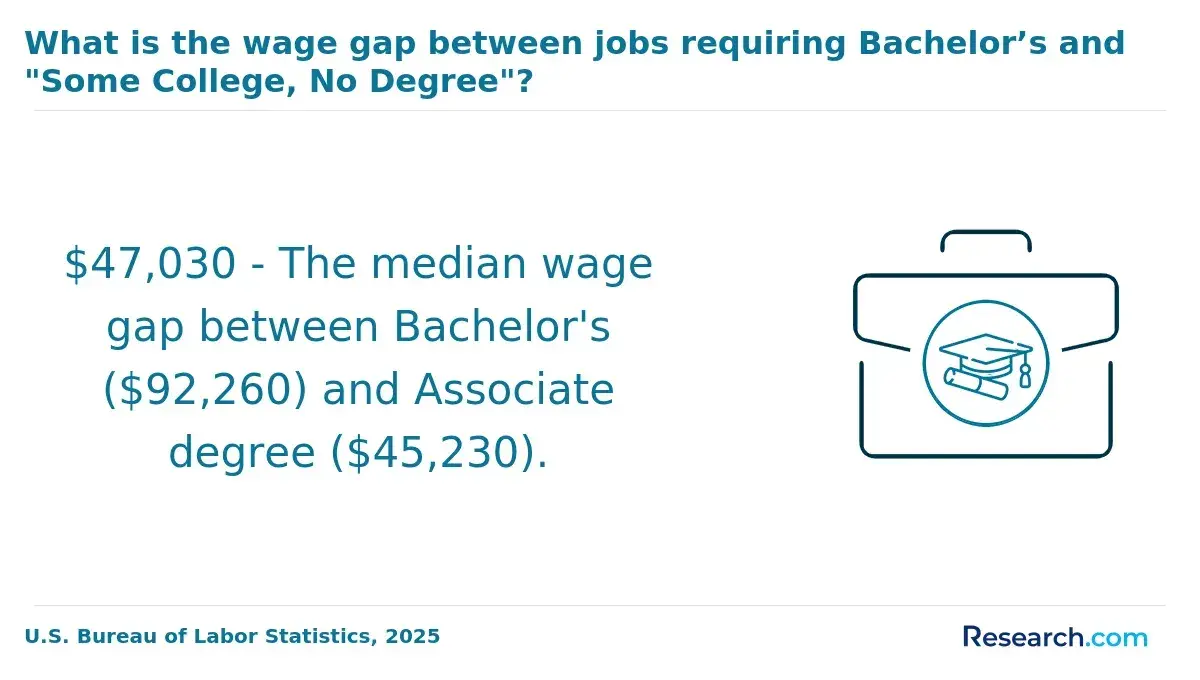
The BLS reported a May 2024 median wage of $86,530 for postsecondary nursing instructors and teachers. That figure is useful because many doctoral nursing education graduates consider faculty roles, but it is not a doctorate-specific salary guarantee and does not separate PhD, DNP, and EdD holders.
Salary comparisons are clearest when you compare target occupations rather than degree names. The table below uses common role categories to show why the "which pays more" question depends on career setting.
| Role category | Doctorate often associated with the role | Salary context | What affects pay most |
| Postsecondary nursing instructor or professor | PhD, DNP, or EdD depending on institution | Faculty salaries often vary by institution type, rank, contract length, and research expectations | Academic rank, tenure status, institution type, region, specialty, publication record |
| Nurse scientist or academic researcher | PhD | Research roles may be tied to grants, academic rank, or research-center funding | Grant funding, publication record, research area, university or health-system budget |
| Medical and health services manager | Professional doctorate or PhD depending on role | The BLS reported a May 2024 median wage of $117,960 for this broader management occupation | Scope of responsibility, employer size, service line, region, leadership experience |
| Nurse practitioner educator or clinical leader | DNP often common when advanced practice is central | Pay may reflect both clinical specialty and education or leadership responsibility | Certification, clinical market, productivity expectations, leadership duties, employer type |
| Academic administrator | Either | Pay can exceed faculty salaries when the role includes major operational responsibility | Budget authority, program size, accreditation responsibility, rank, institution type |
The safest way to estimate salary is to search current postings for your target role and region, then separate required qualifications from preferred qualifications. A PhD may improve access to research-intensive academic jobs, but a DNP or EdD may be more aligned with leadership postings that emphasize applied change, program management, or clinical education outcomes.
Avoid these salary mistakes when comparing the two options.
- Do not assume a doctorate will automatically raise your salary if your employer does not require or reward doctoral preparation.
- Do not compare a professor salary with a healthcare executive salary and conclude that one doctorate always pays more.
- Do not ignore the cost of time; a funded PhD with reduced income and a self-funded professional doctorate completed while working can produce very different financial outcomes.
- Do not choose based only on national medians; local employer demand and role type are often more useful.
What Is the Job Outlook for PhD and Professional Doctorate Graduates in Nursing Education?
The job outlook is shaped by two overlapping forces: the continued need for nurses and the need for qualified people to educate them. The AACN's 2024 faculty vacancy data shows that doctoral preparation remains highly relevant for nursing education because schools need faculty who can teach, mentor, conduct scholarship, and support accreditation standards.
At the same time, demand is not identical across all doctoral roles. PhD-prepared nurses may find the strongest alignment in research universities, academic health centers, research institutes, policy organizations, and grant-funded roles. Professional doctorate graduates may find strong alignment in schools of nursing, clinical education departments, simulation centers, quality and safety teams, and healthcare leadership roles.
Current trends that affect both pathways include AI-supported teaching, simulation expansion, competency-based education, online and hybrid nursing programs, faculty shortages, clinical placement constraints, and rising pressure to document student outcomes. These trends increase the value of doctoral graduates who can evaluate evidence, design effective learning, measure outcomes, and lead change.
The BLS projects much faster-than-average growth for nurse practitioners in the current 2023 to 2033 outlook cycle, and this matters for nursing education because growing advanced practice programs need qualified faculty, preceptors, simulation experts, and curriculum leaders. However, regional hiring, school budgets, and faculty salary competitiveness can still limit opportunities in some markets.
To evaluate job outlook for your own situation, take a local-market approach.
- Search job postings from universities, community colleges, hospitals, academic medical centers, and nursing education vendors in your preferred region.
- Note whether postings require a PhD, DNP, EdD, certification, teaching experience, or a specific clinical background.
- Compare tenure-track, non-tenure faculty, clinical faculty, staff development, and leadership roles separately.
- Ask programs where recent graduates work and whether outcomes differ for PhD, DNP, or EdD students.
- Look for evidence of faculty mentoring, publication support, teaching practica, simulation training, and leadership placements.
How Do Accreditation, Licensure, and Employer Recognition Differ for PhD vs Professional Doctorate in Nursing Education?
Accreditation and licensure should be checked before you compare price or convenience. For nursing doctoral programs, institutional accreditation matters because it affects federal financial aid eligibility, credit recognition, and employer confidence. Programmatic accreditation may also matter, especially for DNP programs and nursing programs connected to advanced practice preparation.
If your plan includes advanced practice nursing, compare state licensure rules and certification requirements carefully. Doctoral education in nursing education is not the same as qualifying for nurse practitioner practice, and readers considering that route should separately review accredited online nurse practitioner programs before assuming a doctorate will meet clinical licensure requirements.
Employer recognition differs by setting. Research universities may strongly prefer or require a PhD for tenure-track research faculty roles. Teaching-focused schools, community colleges, hospitals, and healthcare systems may accept a PhD, DNP, or EdD, especially when the candidate has strong teaching, clinical, or leadership experience.
This table summarizes what to verify before enrolling.
| Item to verify | Why it matters | What to ask |
| Institutional accreditation | Supports financial aid eligibility, transfer recognition, and employer acceptance | Is the university accredited by an agency recognized by the U.S. Department of Education? |
| Nursing program accreditation | May matter for DNP programs, employer recognition, and advanced nursing pathways | Is the nursing program accredited by a recognized nursing accreditor? |
| State authorization | Online programs may not be authorized for students in every state | Can students from my state enroll and complete all requirements? |
| Licensure alignment | Education-focused doctorates do not automatically create advanced practice eligibility | Does this program meet any licensure or certification requirements I need? |
| Employer expectations | Some employers specify PhD, DNP, EdD, or "earned doctorate" differently | Which doctorate is accepted for the roles I want? |
| Faculty credentials | Doctoral mentoring quality depends on faculty expertise | Who will supervise my dissertation or project, and what is their scholarly background? |
A major red flag is a program that markets doctoral prestige without clearly explaining accreditation, state authorization, faculty supervision, project requirements, or graduate outcomes. Another red flag is a program that claims it will qualify you for licensure or certification without directing you to your state board or certifying body.
Is a PhD or Professional Doctorate in Nursing Education Worth It for Your Career Goals?
A PhD or professional doctorate in Nursing Education can be worth it when the degree is required or strongly preferred for your target role, when the curriculum matches your career plan, and when the financial commitment is realistic. It may not be worth it if you are choosing mainly for status, if your employer will not reward the credential, or if the program's dissertation or project model does not fit your strengths.
If your actual goal is to become an NP before thinking about doctoral education, it may be better to first compare an easiest NP program option that matches your state, schedule, clinical placement needs, and certification goals, rather than entering a nursing education doctorate too early.
Use the following decision guide to match the doctorate to your long-term goal.
| Your goal | Better fit | Why |
| Become a tenure-track nursing professor at a research university | PhD | Research productivity, dissertation training, publication, and grants are central |
| Lead curriculum, simulation, or academic program improvement | Professional doctorate or PhD | Applied leadership and education expertise may matter more than research intensity |
| Become a nurse scientist | PhD | Original research preparation is essential |
| Advance in hospital-based education leadership | Professional doctorate often fits well | Applied projects, systems leadership, and outcome measurement align with the work |
| Move into dean, director, or administrator roles | Either | Employers often weigh doctorate type, leadership record, accreditation experience, and institutional needs |
| Teach part time while keeping a clinical career | Professional doctorate, MSN, or PhD depending on employer | The best credential depends on institutional policy and teaching level |
The right choice should survive a practical test. If you removed the word "doctor" from the degree title, would the coursework, mentoring, project, cost, and career outcomes still make sense for your next decade of work?
Before applying, take these final steps.
- Write down your target job title, preferred setting, and ideal responsibilities.
- Review 10 current job postings and record which doctorate each employer requires or prefers.
- Estimate total program cost, lost income, loan needs, and employer reimbursement.
- Ask whether you want to generate new knowledge or apply evidence to improve education and practice.
- Choose the program with the strongest fit, not the one with the most impressive-sounding title.
In simple terms, choose the PhD if you want research to be the center of your professional identity. Choose a professional doctorate if you want to lead change in nursing education, clinical learning, or healthcare systems. Choose neither until you can connect the degree to a realistic role, employer demand, funding plan, and completion strategy.
Other Things You Should Know About Nursing Education
Yes, many schools hire DNP- or EdD-prepared nurses for teaching roles, especially in clinical, practice-focused, or leadership-oriented programs. Research universities may still prefer a PhD for tenure-track faculty positions.
No. An EdD usually focuses on education leadership, teaching systems, curriculum, and applied educational research. A DNP focuses on advanced nursing practice, systems improvement, evidence-based practice, and clinical or organizational outcomes.
Not always. Some nurse educator roles accept an MSN, especially in clinical instruction or community college settings. Doctoral preparation becomes more important for graduate teaching, leadership roles, tenure-track positions, and some accreditation-related faculty expectations.
No. Salary should be part of the decision, but not the only reason. Compare target jobs, employer requirements, funding, time commitment, and whether the degree prepares you for the work you actually want to do.
References
- Doctoral degrees: Which one is right for you? https://www.myamericannurse.com/doctoral-degrees-which-one-is-right-for-you/
- What Is the Difference Between a PhD and a Professional Doctorate? https://www.coloradotech.edu/degrees/studies/business-and-management/difference-between-phd-and-professional-doctorate
- DNP vs. PhD: What's the Difference? https://credenzahealth.com/career-advice/dnp-vs-phd-whats-the-difference
- PhD Education https://www.aacnnursing.org/students/nursing-education-pathways/phd-education
- Differences in MD, PhD,. Professional Doctorate | University of Phoenix https://www.phoenix.edu/articles/online-college/differences-between-md-phd-and-professional-doctorate.html
- Client Challenge https://www.slideshare.net/slideshow/joyce-zurmehly/47250749
- The Value of the DNP; Job Market Outlook/Compensation https://doctorsofnursingpractice.org/forums/topic/the-value-of-the-dnp-job-market-outlook-compensation/
- What is the Difference Between a Ph.D. and a DNP in Nursing? https://www.pointloma.edu/resources/nursing/what-difference-between-phd-dnp-nursing
- How Much Can You Earn With a Doctor of Nursing Practice (DNP)? https://www.allnursingschools.com/dnp/salary/


