2027 Online Nursing Education Doctorate Programs with Practicum, Internship, Clinical, or Fieldwork Requirements

Co-Founder and Chief Data Scientist
Choosing an online nursing education doctorate is rarely just about online coursework. The harder question is whether you can complete the required practicum, clinical, internship, or fieldwork experience. The U.S. Bureau of Labor Statistics reported a May 2024 median wage of $86,530 for postsecondary nursing instructors, making doctoral preparation relevant for nurses pursuing faculty, leadership, or academic roles.
This guide explains which online doctorate pathways include hands-on requirements, how placements work, what they cost, and how to decide whether the added commitment fits your location, schedule, and career goals.
Key Things You Should Know
- Online nursing education doctorates are usually not fully "from home." DNP and education-focused doctoral tracks commonly require supervised practice hours, projects, teaching practica, simulations, campus intensives, or local fieldwork.
- Cost planning should include more than tuition. Federal graduate Direct Unsubsidized Loans for 2024-2025 carry an 8.08% fixed interest rate, so delays from placement problems can increase the total cost of attendance.
- The best-fit program is not always the one with the fewest required hours. Students should compare accreditation, placement support, state authorization, supervisor rules, and whether fieldwork aligns with faculty, clinical education, or leadership goals.
Which Online Nursing Education Doctorate Programs Require Practicum, Internship, Clinical, or Fieldwork Experience?
Most online nursing education doctorates include some form of experiential learning, but the type and intensity vary by degree. A Doctor of Nursing Practice, or DNP, is practice-focused and typically requires supervised practice hours tied to advanced nursing leadership, education, systems improvement, or specialty outcomes.
A PhD in Nursing is research-focused and may require teaching practica, research residencies, dissertation work, or field-based data collection rather than traditional clinical hours.
Students comparing MSN to DNP programs should pay especially close attention to practice-hour rules because DNP curricula are built around applied doctoral work. Nursing education concentrations within DNP programs may combine online didactic courses with teaching practicum experiences, curriculum design projects, academic leadership work, and a final scholarly project.
The table below summarizes the online doctorate formats most likely to include hands-on requirements. It helps clarify whether a program is more likely to require clinical practice, teaching fieldwork, research activity, or a combination of these experiences.
| Program type | Typical experiential requirement | Best fit | Key placement question |
| DNP in Nursing Education | Practice hours, educator practicum, scholarly project, possible campus or virtual intensives | Nurses seeking academic, staff development, simulation, curriculum, or clinical education leadership roles | Can teaching or practice hours be completed at a local college, health system, or current employer? |
| PhD in Nursing with education focus | Research apprenticeship, teaching practicum, dissertation research, possible residencies | Nurses pursuing research-intensive faculty, scholarship, or academic leadership careers | Are in-person research, teaching, or residency requirements mandatory? |
| EdD in Nursing Education or Health Professions Education | Field-based education project, applied research, leadership practicum, dissertation-in-practice | Nurse educators focused on teaching systems, curriculum, assessment, or academic administration | Does the school approve healthcare, academic, or simulation settings near home? |
| Post-master's nursing education doctorate certificate-to-degree pathway | Bridge practicum, portfolio review, project hours, teaching documentation | Experienced MSN-prepared nurses who already teach or precept | Will prior graduate clinical or teaching hours reduce new requirements? |
Programs that advertise "online" may still require in-person experiences. The practical distinction is whether the school delivers coursework online while allowing local fieldwork, or whether it also requires campus visits, synchronous seminars, specialty labs, or pre-approved regional sites.
What Are the Practicum, Internship, Clinical, and Fieldwork Requirements for Online Nursing Education Doctorates?
The terms practicum, internship, clinical, and fieldwork are sometimes used loosely, but they do not always mean the same thing. Before enrolling, students should ask the program to define each requirement in writing because the difference affects scheduling, supervision, documentation, and whether the experience fits a nursing education career path.
The table below explains how common experiential terms differ in online nursing education doctorates. Use it to interpret curriculum plans and ask more precise questions during admissions conversations.
| Requirement | What it usually means | Common settings | Why it matters |
| Practicum | Supervised application of doctoral knowledge to teaching, curriculum, assessment, leadership, or systems improvement | Nursing schools, hospitals, simulation centers, staff development departments | Often central to nursing education doctorates because it connects coursework to educator competencies |
| Internship | Structured professional experience with defined outcomes, often longer or more role-specific than a practicum | Academic departments, clinical education offices, healthcare organizations | May require a formal site agreement and a qualified preceptor or mentor |
| Clinical | Supervised nursing practice or advanced practice activity, sometimes tied to DNP standards or specialty preparation | Clinics, hospitals, community health agencies, advanced practice settings | Can affect licensure, certification, or specialty eligibility if the program includes advanced practice preparation |
| Fieldwork | Applied work in a real education, healthcare, policy, or community setting | Employers, colleges, public health organizations, education agencies | Provides flexibility in some programs but still requires formal approval and documentation |
For DNP programs, experiential learning often supports a doctoral project rather than a traditional dissertation. For PhD programs, the hands-on component may revolve around research design, data collection, teaching development, or scholarly dissemination. For EdD pathways, fieldwork often supports a dissertation-in-practice focused on a real educational problem.
Students should verify the following before applying because these details are often more important than the program's online label:
- The exact number of required hours and whether prior MSN-level hours can be counted toward the total.
- Whether hours must be clinical, educational, leadership-based, research-based, or project-based.
- Whether a current workplace can serve as a site and what conflict-of-interest rules apply.
- Whether the supervisor must hold a doctorate, advanced practice credential, faculty appointment, or specific professional role.
- Whether the program requires campus intensives, synchronous seminars, simulation days, or final project presentations.
How Do Online Nursing Education Doctorate Programs Arrange Practicum and Clinical Placements?
Placement responsibility is one of the biggest differences among online nursing education doctorates.
Some schools coordinate placements directly, some approve sites that students identify, and others use a hybrid model. A program can be academically strong but still be a poor fit if its placement process does not work in your state, region, employer setting, or specialty area.
The table below compares the most common placement models. It is useful because placement responsibility affects time to completion, administrative burden, and the risk of delays.
| Placement model | How it works | Advantages | Possible drawbacks |
| School-arranged placement | The program identifies or assigns approved sites and preceptors | Less burden on the student and clearer accountability | May be limited by geography, state authorization, and site availability |
| Student-identified placement | The student finds a site, then the school reviews and approves it | More local flexibility and easier alignment with work or community connections | Higher risk if the student cannot secure a qualified site or supervisor |
| Hybrid placement | The school provides requirements, support, and approval while the student helps identify local options | Balances flexibility with institutional oversight | Still requires early planning and responsive communication from both parties |
| Employer-based placement | The student completes approved hours at a current workplace or affiliated site | Can reduce travel and scheduling disruption | May be restricted if the student's normal job duties cannot count as doctoral fieldwork |
Admissions pages often summarize placement policies, but they may not reveal the full process. Before enrolling, ask the school to explain the sequence from site identification to final approval.
- Ask whether the school has existing placement agreements in your state or region.
- Request a written list of site, preceptor, and supervisor qualifications.
- Confirm who initiates affiliation agreements and how long approvals usually take.
- Ask what happens if a site withdraws, a preceptor leaves, or a placement is delayed.
- Find out whether the program has deadlines for submitting site paperwork before each term.
A red flag is a program that says local placement is "usually possible" but cannot explain who approves the site, what documents are needed, or what backup options exist. Students should not assume convenience until placement feasibility is documented.
Many students can complete fieldwork near home, but it is not automatic. Local completion depends on the school's state authorization, the type of experiential requirement, the availability of qualified supervisors, and whether the proposed site can meet the program's learning outcomes.
Local fieldwork is most realistic when the doctoral requirement is education-focused rather than tied to a highly specific clinical specialty. For example, a nurse who works in staff development may be able to complete an educator practicum through simulation, curriculum evaluation, preceptor training, or competency assessment projects if the school approves the site.
Students should verify local feasibility before committing to a program. These questions help separate genuine flexibility from marketing language:
- Is the program authorized to place students in my state?
- Can I complete fieldwork in a nursing school, hospital education department, simulation center, community college, or current employer setting?
- Does the program require the site to hold specific accreditation, provide specific patient populations, or employ a doctorally prepared supervisor?
- Are there restrictions on completing fieldwork under my direct manager or within my own unit?
- Will I need to travel for orientations, intensives, project defenses, simulation assessments, or final presentations?
Students who live in rural areas, work nights, serve in military settings, or live near state borders should ask extra questions. A site may be geographically close but administratively unavailable if it is across a state line, lacks an affiliation agreement, or cannot provide the required supervision.
Fieldwork affects cost in two ways: direct expenses and opportunity costs. Direct expenses may include tuition for practicum credits, background checks, drug screening, immunization updates, liability insurance, travel, lodging, parking, technology fees, and site onboarding. Opportunity costs can include reduced work hours, unpaid project time, or delayed graduation if placement paperwork takes longer than expected.
Students looking primarily at tuition may also want to compare the cheapest online nursing PhD programs, but affordability should be weighed against placement support, research fit, faculty mentorship, and whether the degree type matches the intended career. A low-tuition program can become less affordable if it requires repeated travel or leaves students to arrange hard-to-find placements alone.
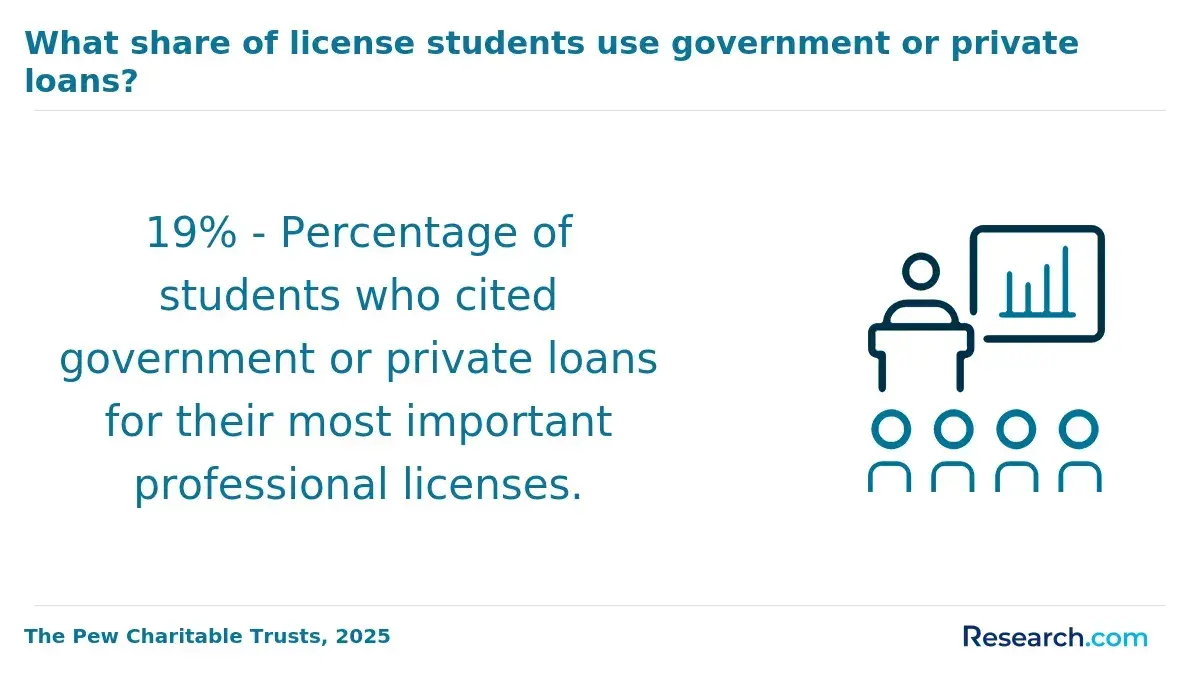
Federal borrowing costs are also relevant. For 2024-2025, the fixed interest rate for Direct Unsubsidized Loans for graduate and professional students is 8.08%, according to Federal Student Aid. That means an extra term caused by placement delays can raise the real cost of a doctorate even when tuition appears manageable.
The table below outlines common cost and timeline factors tied to experiential requirements. Use it to build a realistic budget before accepting admission.
| Factor | How it can affect cost or timeline | What to verify |
| Practicum credit tuition | Some schools charge tuition for each practicum, project, or residency credit | Whether fieldwork credits are included in the published tuition estimate |
| Travel and lodging | Campus intensives or distant placements can add out-of-pocket costs | Whether in-person visits are required and how often they occur |
| Site approval delays | Affiliation agreements and preceptor approvals can postpone enrollment in practicum courses | Deadlines for submitting site paperwork and backup placement policies |
| Reduced work availability | Daytime fieldwork can conflict with full-time nursing employment | Whether evening, weekend, virtual, or employer-based hours are allowed |
| Project revisions | DNP or EdD projects may require additional terms if approvals or outcomes change | How the school supports project design, IRB review, and faculty feedback |
Timeline planning should be conservative. Even if coursework can be completed asynchronously, fieldwork often follows site schedules, academic calendars, faculty availability, and approval cycles that are less flexible than online lectures.
Flexibility varies significantly. Some programs allow students to complete practicum hours at approved local sites, use current employment settings, or spread hours across multiple terms. Others require sequential practica, specific preceptors, fixed campus intensives, or project milestones that must be completed before students can advance.
Online learning trends have expanded access for working nurses, especially through asynchronous courses, video supervision, electronic portfolios, virtual simulations, and remote scholarly project meetings. However, those tools do not eliminate the need for approved real-world learning when the curriculum requires supervised practice or applied education work.
The most flexible programs usually clarify what can and cannot be customized. When comparing options, look for flexibility in these areas:
- Whether practicum hours can be completed part time across more than one term.
- Whether hours can be scheduled during evenings, weekends, academic breaks, or employer-approved time.
- Whether virtual teaching, simulation design, online course development, or remote project meetings can count toward selected objectives.
- Whether students can use more than one site to meet different competencies.
- Whether the program offers leave, extension, or re-entry policies if a placement is interrupted.
A common mistake is choosing the program with the fewest required hours without asking whether those hours are rigidly scheduled. A smaller requirement can still be difficult if all hours must be completed during weekday daytime blocks at a site far from home.
Accreditation and licensure considerations depend on the degree type and professional goal. For nursing doctorates, institutional accreditation matters for federal financial aid, transferability, employer recognition, and future academic roles. Programmatic nursing accreditation, such as CCNE or ACEN accreditation where applicable, can also be important for credibility and alignment with professional standards.
Experiential requirements matter because accreditors and professional standards often expect evidence that doctoral students can apply advanced knowledge in real settings. For a DNP, practice hours and a scholarly project are central to the degree's purpose.
For a PhD, research training and dissertation work are central. For a nursing education doctorate, teaching practica, curriculum development, assessment projects, and academic leadership experiences may help demonstrate educator readiness.
Students comparing doctoral education with advanced practice pathways should distinguish nursing education preparation from nurse practitioner preparation. Those exploring clinical practice roles may need to compare separate online nurse practitioner programs, because NP programs have different clinical-hour, population-focus, certification, and state licensure requirements.
Use this accreditation and licensure checklist before enrolling:
- Confirm the institution is accredited by an agency recognized by the U.S. Department of Education or Council for Higher Education Accreditation.
- Check whether the nursing program holds relevant programmatic accreditation for your goal.
- Ask whether the school is authorized to enroll and place students in your state.
- Verify whether the fieldwork hours satisfy only degree requirements or also support certification, licensure, faculty appointment, or employer requirements.
- Contact your state board of nursing or employer credentialing office if your goal involves regulated clinical practice.
Do not assume doctoral fieldwork automatically satisfies state licensing rules. Nursing education doctorates typically prepare students for educator, leadership, research, or academic roles; advanced practice licensure has separate requirements that vary by state and specialty.
Strong support can make the difference between a manageable online doctorate and a frustrating one. Support should begin before the practicum term, not after students discover that a site agreement, preceptor form, or compliance document is missing.
Effective programs usually provide structured advising, clear handbooks, placement documentation, faculty project mentors, technology support, and escalation procedures when a site problem occurs. The most helpful schools also explain expectations to preceptors so students are not left translating doctoral requirements on their own.
The table below shows support services to look for when comparing programs. These features are important because they reduce avoidable delays and help students complete fieldwork with appropriate supervision.
| Support feature | Why it matters | Question to ask |
| Placement coordinator | Helps manage affiliation agreements, site paperwork, and deadlines | Is there a dedicated placement contact for online doctoral students? |
| Faculty mentor | Guides practicum objectives, scholarly projects, teaching activities, and evaluation | How often will I meet with my mentor during fieldwork terms? |
| Preceptor orientation | Clarifies expectations for site supervisors and reduces confusion | Does the program train or brief preceptors before hours begin? |
| Compliance tracking | Ensures health records, background checks, and site documents are current | What system tracks onboarding and compliance requirements? |
| Contingency planning | Protects students if a site cancels or a supervisor becomes unavailable | What backup process exists if my approved site falls through? |
Students should also ask to speak with current students or recent graduates about placement experiences. Admissions staff can explain policy, but student perspectives often reveal whether communication is timely, whether site approvals are realistic, and whether faculty feedback is consistent.
Experiential requirements can strengthen career readiness when they match the role a student wants after graduation. For aspiring nursing faculty, teaching practica can provide evidence of course design, student evaluation, clinical instruction, simulation facilitation, and curriculum assessment. For health system educators, fieldwork can produce measurable projects in onboarding, competency validation, professional development, or quality improvement.
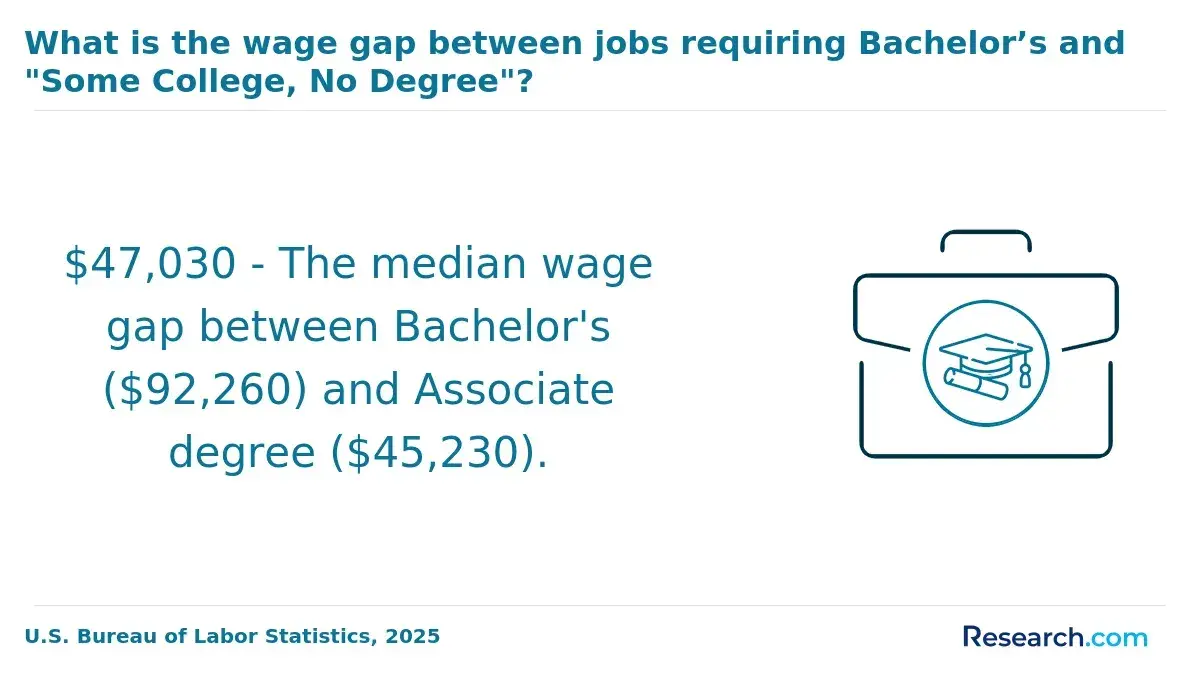
Labor market context matters. The BLS projects employment for postsecondary teachers to grow faster than the average for all occupations over the 2023-2033 period, though hiring conditions vary by discipline, institution type, geography, and budget. For nursing education doctorate students, this means fieldwork should be treated as a portfolio-building opportunity, not just a graduation requirement.
Well-designed doctoral practicum experiences can support several career paths:
- Academic nursing faculty roles that involve classroom teaching, clinical supervision, simulation, advising, and curriculum work.
- Clinical nurse educator or professional development specialist roles in hospitals and health systems.
- Academic leadership positions such as program director, curriculum coordinator, assessment lead, or simulation director.
- DNP project leadership roles focused on evidence-based practice, quality improvement, patient education, or workforce development.
- Research or scholarship roles when the doctorate includes strong methods training, publication support, and dissertation or project dissemination.
The return on investment is strongest when the fieldwork produces reusable career evidence: a teaching portfolio, curriculum map, simulation scenario, evaluation plan, quality improvement outcome, conference abstract, publication, or leadership project.
Students should choose placements that generate artifacts they can discuss in faculty interviews or promotion reviews.
How Should Students Choose an Online Nursing Education Doctorate With Experiential Requirements?
The right program is the one you can complete realistically while building the credentials, portfolio, and supervised experience your career goal requires. Students should compare degree type, placement support, cost, accreditation, faculty expertise, and state authorization together rather than ranking programs by convenience alone.
Ease can be a useful consideration, but it should not replace fit. For example, a nurse comparing the easiest NP program with a nursing education doctorate should recognize that these pathways prepare for different outcome.
NP programs focus on advanced clinical practice, while nursing education doctorates focus on teaching, leadership, scholarship, or educational systems.
Use this decision process before applying. It is designed to help you avoid the most common mistake: enrolling in an online program before confirming whether the in-person or supervised requirements are feasible.
- Define your target role first: faculty, clinical educator, academic administrator, DNP leader, researcher, or advanced practice clinician.
- Match the degree type to that role: DNP for applied practice leadership, PhD for research-intensive scholarship, or EdD for education systems and applied academic leadership.
- Request the exact fieldwork, practicum, clinical, internship, residency, and project requirements in writing.
- Confirm whether your state is approved for online enrollment and field placement.
- Ask who finds the site, who approves it, and what happens if the site becomes unavailable.
- Calculate total cost using tuition, fees, travel, compliance costs, lost work time, and possible extra terms.
- Check accreditation, faculty qualifications, project support, and graduate outcomes relevant to your goal.
- Speak with current students about placement timelines, communication quality, and whether local fieldwork was realistic.
Students should be cautious if a school cannot provide a practicum handbook, will not clarify placement responsibility, gives vague answers about state authorization, or implies that online delivery means fieldwork will be easy to arrange. A strong program should be transparent about both flexibility and limits.
For many working nurses, an online nursing education doctorate with practicum or fieldwork is worth it when the supervised experience is local, well supported, aligned with career goals, and affordable within a realistic timeline.
It is less attractive when the program shifts most placement risk to the student, requires travel the student cannot manage, or does not clearly connect fieldwork to the intended professional outcome.
Other Things You Should Know About Nursing Education Programs
Many doctoral nursing education programs require an MSN or a closely related graduate nursing degree, but some offer BSN-to-DNP or bridge pathways. Applicants should check prerequisites for statistics, advanced nursing courses, RN licensure, GPA, professional experience, and writing samples.
Many students work while enrolled, especially in part-time online formats. The challenge is usually not weekly coursework alone but practicum hours, project deadlines, synchronous meetings, and site availability. Full-time workers should ask for sample term schedules before enrolling.
Both can support faculty careers, but they emphasize different strengths. A PhD is usually better for research-intensive academic roles, while a DNP may fit practice-focused teaching, clinical education, simulation, and leadership roles. Hiring preferences vary by institution.
It depends on the degree. PhD programs usually require a dissertation. DNP programs typically require a scholarly or practice-focused doctoral project. EdD programs may require a dissertation-in-practice focused on an applied education problem.
- DNP vs Ph.D. in Nursing Degree - What’s the Difference? https://nursinglicensemap.com/nursing-degrees/dnp-degree-programs/dnp-vs-phd-in-nursing/
- Online DNP Program - Doctor of Nursing Practice | Aspen University https://www.aspen.edu/nursing/dnp/
- Online Doctor of Nursing Practice (DNP) | DNP Degree | University of Phoenix https://www.phoenix.edu/online-nursing-degrees/nursing-practice-doctoral-degree.html
- AACN Fact Sheet - DNP https://www.aacnnursing.org/news-data/fact-sheets/dnp-fact-sheet
- Reasons to Consider an Online DNP Degree | Maryville Nursing https://nursing.maryville.edu/blog/reasons-to-consider-an-online-dnp-degree
- Online Doctor of Nursing Practice - MSMU https://www.msmu.edu/departments/nursing/doctor-of-nursing-practice/
- Doctor of Nursing Practice (DNP) vs. Nurse Practitioner (NP) https://www.chamberlain.edu/blog/dnp-vs-np-whats-the-difference
- Online Doctor of Nursing Practice DNP Degree Programs https://teach.com/online-ed/healthcare-degrees/online-doctor-of-nursing-practice-programs/