2027 Best Online Master's Degrees

Co-Founder and Chief Data Scientist
Choosing an online master's degree means deciding whether the credential will advance your goals enough to justify its cost and time. The distinction matters: the U.S. Bureau of Labor Statistics (BLS) reported median weekly earnings of $1,543 for workers with a bachelor's degree in 2024, but that figure cannot predict what any individual will earn after graduate school. This guide compares master's degree fields - not colleges - for working professionals and career changers. You'll learn where each path fits, what online study may still require in person, and how to evaluate programs before applying.
Key Things You Should Know
- The best online master's degree depends on your goal: an MBA may support a move into management, while an MS in computer science offers deeper technical specialization and a counseling degree may support a licensed practice pathway.
- BLS reported median weekly earnings of $1,840 for workers with a master's degree in 2024. That population-wide figure does not show the financial return from any particular program or guarantee a raise.
- Compare total cost, accreditation, course schedules, career relevance, and required in-person work. "Online" does not necessarily mean self-paced or free of clinical placements, residencies, or campus visits.
Top 10 Best Online Master's Degrees
Business / MBA Programs
A Master of Business Administration (MBA) is a broad, practice-oriented option for professionals seeking stronger skills in finance, operations, strategy, and leadership. An MS in finance or accounting is usually a better fit when you need depth in one function. Online MBAs suit people who can apply coursework at work, but a degree alone rarely qualifies someone for management without relevant experience. Compare employer connections, team-project schedules, admissions expectations, and total cost. Some programs require live classes or short residencies despite offering most coursework online.
Healthcare Administration & Management Programs
A Master of Healthcare Administration (MHA) typically emphasizes healthcare operations, finance, policy, and quality improvement. It fits clinicians or administrators pursuing organizational roles rather than direct patient care; a Master of Public Health (MPH) may fit population-health goals better. Healthcare management positions often require industry experience, so ask whether internships or applied projects are available to career changers. Verify any scheduled sessions or site-based requirements. An MHA does not replace a clinical license.
Information Technology Programs
An MS in information technology generally covers enterprise systems, cloud infrastructure, databases, and IT strategy. It can suit professionals moving from technical support or systems work toward architecture or technology leadership. Compare hands-on labs and the program's balance of technical and managerial courses: an IT management curriculum may not provide the programming depth needed for software engineering. Professional experience and role-specific certifications can matter as much as the credential. Confirm whether labs can be completed remotely.
Computer Science Programs
An MS in computer science is a technical path for advanced software, computing systems, or research-focused work. It may offer specializations in artificial intelligence, but compare actual courses and projects rather than the concentration label. Applicants from other majors may need programming, algorithms, or mathematics prerequisites that add time and cost. A research thesis can support doctoral ambitions; a project-based track may better suit practitioners. Neither format guarantees a software job, and many such roles do not require a master's degree.
Cybersecurity Programs
An MS in cybersecurity can develop skills in risk assessment, secure systems, incident response, and security governance. It is especially useful when its concentration matches your experience and target role: technical defense and policy leadership demand different preparation. Look for practical labs that online students can access and check whether courses address current threats without relying only on tools that may change. Employers may also expect hands-on experience or certifications. A cybersecurity master's degree alone does not qualify someone for a senior security position.
Data Science / Analytics Programs
An MS in data science usually emphasizes statistics, programming, machine learning, and model evaluation; business analytics degrees may put more weight on organizational decisions and communication. Choose based on whether you want to build models or use analysis to solve business problems. Check prerequisites in calculus, statistics, or coding, along with access to datasets and computing resources. As AI tools become part of analytical work, rigorous methods and the ability to explain limitations remain important. A portfolio-worthy capstone can help demonstrate those skills.
Education / Educational Leadership Programs
A Master of Education (MEd) can support instructional specialization, while educational leadership programs may prepare experienced educators for administrative responsibilities. If you want a principal or other regulated role, confirm that the specific program meets your state's preparation rules before enrolling. Such paths may require an existing teaching license, school experience, or a field-based internship. Online classes do not remove those requirements. Educators who want curriculum expertise without an administrative credential may be better served by a non-licensure concentration.
Counseling / Psychology Programs
A clinical mental health counseling master's may provide a route toward counselor licensure, provided its curriculum and supervised training meet the intended state's requirements. An MA or MS in general psychology often has a different purpose and usually does not, by itself, qualify graduates to practice independently as psychologists. Compare required practica, internship placement support, and state authorization before applying. These programs are not fully remote in practice when supervised client work must occur at an approved site.
Nursing Programs
A Master of Science in Nursing (MSN) serves registered nurses seeking advanced practice, education, informatics, or leadership preparation. Entry requirements vary by track; some programs offer pathways for nurses without a BSN. An advanced-practice track may require clinical hours and must meet state licensure and certification rules, while a leadership track has different outcomes. Ask who arranges clinical placements and whether sites can be approved near you. Online coursework does not eliminate in-person patient-care requirements.
Engineering Management Programs
An MS in engineering management combines technical decision-making with project, financial, and organizational skills. It can fit engineers preparing to oversee teams or complex projects, but a management title usually also requires substantial work experience. Compare the curriculum with an MBA: engineering management generally stays closer to technical operations, while an MBA offers broader business study. Check mathematics or engineering prerequisites and whether a capstone can address a problem from your workplace. An online format may still include scheduled group projects.
What Are the Best Online Master's Degrees for Career Advancement?
The best choice for career advancement is the degree that closes a specific skills or credential gap in your intended role. An MBA can broaden an experienced professional's business preparation; a technical MS can deepen specialized expertise; and a licensure-oriented degree may open a regulated pathway that experience alone cannot replace. The table compares degree families by their strongest use, not by a universal ranking.
| Degree path | Strongest fit | Key trade-off |
| MBA or MHA | Moving toward organizational responsibility with relevant industry experience | Leadership roles still depend heavily on experience |
| Computer science, cybersecurity, or data science MS | Building advanced technical expertise | Prerequisites and hands-on practice may be substantial |
| MEd, counseling master's, or MSN | Pursuing a defined education or professional-practice goal | State rules and in-person fieldwork may limit program choice |
If your goal does not require graduate education, compare the degree's added value with a certificate, professional certification, or more work experience. A closer look at graduate degrees that are worth it can help frame that decision, but your target job's requirements should decide it.
How Much Do Online Master's Degrees Cost?
Online master's degrees do not have a single meaningful price. Total cost depends on required credits, tuition rules, mandatory and program fees, prerequisites, books or software, and travel or placement expenses. A lower per-credit price can cost more overall if the program requires substantially more coursework.
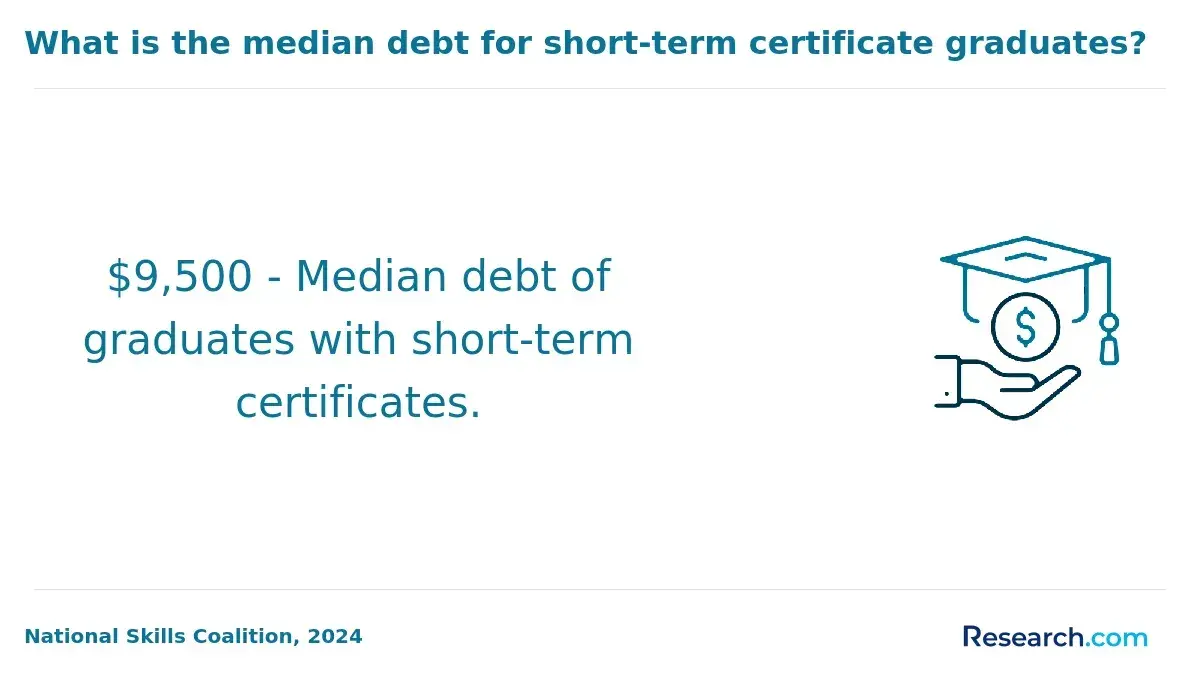
For comparable estimates, multiply each school's published graduate rate by the credits you must complete, then add required fees and expenses. Ask for a written estimate covering any foundation courses and residencies. Graduate transfer credit or a stackable certificate may reduce the remaining bill only if the school confirms that those credits apply to your degree. Review scholarships, employer tuition assistance, and current federal aid eligibility; borrowing also adds interest and repayment costs.
Are Online Master's Degrees Accredited and Respected?
Yes, an online master's degree can be accredited and respected, but the delivery format alone establishes neither. First, verify the institution's accreditation through the accreditor or U.S. Department of Education. Then check whether your intended occupation calls for programmatic accreditation or approval, particularly in regulated fields.
Employer reception depends on the institution, the curriculum's relevance, your work, and the role. For a licensed occupation, ask the program and the licensing board in the state where you intend to practice whether its specific online pathway satisfies educational requirements. Institutional accreditation is important, but it does not by itself establish eligibility for every license.
Which Online Master's Programs Offer the Best Career Outcomes?
Career outcomes are strongest when a program teaches skills employers need and matches the student's starting experience. Technical degrees may help established practitioners specialize; an MBA or MHA may support advancement after industry experience; and a qualifying counseling or nursing program may be necessary for a particular licensed path. None independently promises employment or promotion.
Use BLS occupational wage and outlook information to examine your target role, not as a forecast of what degree graduates earn. Before paying tuition, compare job postings for your desired position with the program's required courses and ask schools for clearly defined, recent graduate-outcome data. If your main question is what degree makes the most money, distinguish occupational pay from the additional earnings, if any, attributable to this master's degree.
What Are the Admission Requirements for Online Master's Programs?
Most master's programs require a completed bachelor's degree, transcripts, and an application; programs may also request recommendations, a statement of purpose, a résumé, or an interview. Requirements vary at the program level. A computer science applicant may need quantitative and programming preparation, an MSN applicant may need an active nursing license, and an MBA may value professional experience. Published GPA thresholds and GRE or GMAT policies also vary; a test waiver is not the same as automatic admission.
Check prerequisites before treating an offer as affordable or fast: foundation courses may add expense and time. If you have not yet completed a bachelor's degree, start with undergraduate eligibility rather than graduate admission; guidance on what's the easiest bachelor's degree to get addresses a different educational step.
How Long Does an Online Master's Degree Take to Complete?
Completion time varies with required graduate credits, full- or part-time enrollment, course sequencing, prerequisites, and a thesis, capstone, internship, or clinical placement. Many students plan for roughly one to three years, but that is a planning range, not a promise from any particular program. Short course terms do not mean the entire degree takes one term.
Ask for a course-by-course completion plan based on the number of classes you can realistically take. If you have prior graduate coursework or a stackable certificate, request an evaluation showing which credits satisfy degree requirements and which must be completed at the new institution. A combined bachelor's/master's or bridge pathway can have separate eligibility rules; previous undergraduate coursework does not ordinarily count as graduate transfer credit.
What Do You Study in an Online Master's Degree Program?
Coursework depends on the credential's purpose. Professional degrees such as the MBA and MHA commonly combine core management courses with electives and applied projects. Technical MS programs may require advanced methods, labs, and a research thesis or capstone. Licensure-oriented programs add prescribed content and supervised fieldwork; electives cannot necessarily replace those requirements.
Review the actual catalog rather than deciding from a degree title. Compare required courses, prerequisite work, assessment methods, and whether a thesis or practice-based project better serves your next step. If you are asking what is the easiest master's degree to get, consider fit with your preparation and schedule - not just whether the program has fewer technical courses.
Do Online Master's Degrees Lead to Licensure or Certification?
Some online master's degrees support licensure or certification, but awarding the degree and granting a professional credential are separate decisions. Counseling may require a qualifying curriculum, supervised clinical work, an examination, and a state license. Advanced-practice nursing and school leadership also have role- and state-specific requirements. An MBA, general psychology MS, or IT master's should not be assumed to confer a professional license.
Before applying, identify the state and credential you want, then compare its board or certification requirements with the program's published curriculum and placement arrangements. Ask how the school handles placements in your location and what happens if a suitable site is unavailable.
How Can You Choose a Reputable Online Master's Program?
Start with the job or professional credential you want, then shortlist programs that meet its educational requirements. A reputable option combines verified accreditation, relevant coursework, manageable total cost, and delivery requirements you can fulfill - not simply a prominent ranking or the lowest advertised tuition.
For each finalist, check the graduate catalog and tuition schedule, confirm whether classes are asynchronous or scheduled, and ask about visits, fieldwork, and placement support. Request a degree plan and written answers about prerequisites, applicable graduate transfer credit, and total required credits. Red flags include unclear licensure claims, undisclosed fees, promises of a particular salary, and calling a program "fully online" without explaining required in-person work.
Other Things You Should Know About
It may be if it meets a clear job, specialization, or licensure goal at a cost you can manage. Compare that benefit with experience, certificates, and the time you would spend studying.
Often, but online does not mean self-paced. Check live-class times, weekly workload, and any internship, clinical, or residency requirements.
Many evaluate the institution, relevant skills, and experience rather than delivery format alone. Verify accreditation and ask whether your target employer or licensing body has specific requirements.
Choose a program that accepts your academic background and teaches the skills or meets the credential requirements for your target role. Budget for any prerequisites, and confirm whether graduates without prior field experience receive practical opportunities.
References
- Understanding College Costs | studentaid.gov https://studentaid.gov/resources/prepare-for-college/students/choosing-schools/consider-costs
- Should I get a master's degree?: Career Outlook | bls.gov https://www.bls.gov/careeroutlook/2015/article/should-i-get-a-masters-degree.htm
- DAPIP | Homepage - Office of Postsecondary Education (OPE) https://ope.ed.gov/dapip/
- Career Outcomes - OU Online - The University of Oklahoma https://online.ou.edu/about/outcomes/
- Online Masters in Clinical Mental Health Counseling | William James College https://www.williamjames.edu/academics/counseling/clinical-mental-health-counseling-ma-online/overview.html
- Online MS in Social Work | Columbia University https://onlinemsw.socialwork.columbia.edu/
- Regional vs. National Accreditation: Which is Better? | Drexel University Online https://www.online.drexel.edu/news/national-vs-regional-accreditation.aspx
- A Guide to Getting Financial Aid for Graduate School | Elmhurst University Elmhurst University Blog https://www.elmhurst.edu/blog/a-guide-to-getting-financial-aid-for-graduate-school/
- UMass Global MyPath: Self-Paced Programs https://www.umassglobal.edu/why-umassglobal/flexible-ways-to-learn/self-paced
- Grad School and Working Full-Time | ASU Online https://asuonline.asu.edu/newsroom/online-learning-tips/grad-degree-while-working-full-time/