
2027 Best Online Majors With Credit for Work Experience

Co-Founder and Chief Data Scientist
Your work may have taught you skills a degree requires, but a college will not award credit simply because you held a job. The decision is which online major fits your goals and offers a way to assess what you already know.
The stakes can be substantial: the U.S. Bureau of Labor Statistics (BLS) reports a 2024 median annual wage of $93,600 for registered nurses, a career with specific licensing requirements. This guide compares fields, explains how credit is evaluated, and helps you avoid paying for coursework you may already have mastered.
Key Things You Should Know
- Business, IT, and criminal justice can be practical fields to investigate for work-based credit; the amount awarded depends on a school's assessment policy and how learning fits the degree.
- A bachelor's degree commonly requires about 120 credits, but transfer limits, prior-learning limits, and required credits completed at the institution determine how much remains.
- At the master's level, credit for professional learning is generally more restricted; never assume undergraduate prior-learning credit will apply to a graduate degree or replace licensure-related practice.
Top 10 Best Online Majors With Credit for Work Experience
Business Programs
Online business administration majors are a strong starting point for adults with experience in supervision, accounting operations, sales, or project management. At the bachelor's level, a school may assess documented learning against management or elective requirements.
An online MBA or specialized business master's usually applies stricter rules: professional experience may strengthen an application without earning graduate credit. Ask whether an approved assessment can satisfy a specific course, not just add electives. Choose this field for broadly transferable business skills; choose a specialized accounting pathway if professional accounting credentials are your goal.
Healthcare Programs
Healthcare administration majors may suit experienced clinic managers, medical coders, and health operations staff. Their workplace learning may align with administration or elective coursework, subject to assessment.
Online master's programs in healthcare administration may value experience for admission but award little or no credit for it. Distinguish administrative degrees from clinical ones: managing a clinic does not establish competency in patient care or satisfy a professional license. Compare how each school treats industry certifications, remaining coursework, and any required internship or capstone.
Information Technology Programs
IT majors are worth investigating if you can document learning from network administration, cybersecurity, cloud operations, or recognized certifications. An online bachelor's program may evaluate exams, certifications, or a portfolio, but credit depends on current course equivalencies and degree rules.
Master's programs may instead require prior technical coursework and reserve advanced classes for graduate study. Ask whether certification credit satisfies the major or only free electives. If your goal is hands-on systems work, compare degree requirements with the certifications employers request for your target role.
Computer Science Programs
Software developers may have substantial practical experience, but computer science programs typically require demonstrable foundations in programming, algorithms, and mathematics. Some online bachelor's programs assess learning through exams or portfolios; others offer no work-based credit for core courses.
Computer science master's programs may require prerequisite coursework even for experienced programmers, and professional experience is not automatically graduate credit. Request a course-by-course evaluation before assuming that a coding job replaces theory requirements. An applied IT or software development major may fit better if your work does not align with computer science coursework.
Nursing Programs
For licensed registered nurses, an online RN-to-BSN pathway may recognize prior nursing education through a published bridge or transfer policy. That is not necessarily credit awarded for employment.
Nursing master's programs generally require an eligible nursing degree and license; clinical hours, supervised practice, and specialty requirements cannot be assumed waived because of years on the job. Check nursing accreditation, state authorization, placement support, and whether local clinical work is required. If you are not already licensed, an RN-to-BSN or advanced nursing pathway is not an entry route into nursing.
Psychology Programs
Experience in counseling support, human services, or behavioral health may be relevant to an online psychology bachelor's portfolio, especially for electives. It rarely substitutes automatically for research methods or statistics.
A psychology master's may require specific undergraduate preparation, research, a thesis, or supervised training; admission and graduate-credit rules vary. A psychology degree alone does not qualify someone to practice independently as a psychologist. If licensure is the goal, work backward from your state's requirements before choosing a psychology, counseling, or social work program.
Education Programs
Teachers, paraprofessionals, and trainers can ask whether documented instruction or professional development qualifies for assessment in an online education major. A master's in education may serve licensed teachers seeking advancement or specialists pursuing curriculum work; it may not lead to initial teacher licensure.
Schools may recognize approved prior coursework while still requiring student teaching, fieldwork, or a capstone. Classroom experience is not automatically academic credit or a substitute for state-mandated preparation. Verify the program's licensure track and placement requirements before enrolling.
Criminal Justice Programs
Criminal justice may suit people with documented law enforcement, corrections, military, or public-safety training. An online bachelor's program might evaluate approved training or exams against major or elective requirements.
A criminal justice master's may instead use that experience to inform admission and coursework without awarding credit. Compare the degree with your intended role: many agencies set separate hiring, academy, and fitness requirements. Ask whether credits from a training academy meet a specific requirement and whether a research or leadership-focused graduate program matches your career plans.
Engineering Programs
Engineering technicians may have relevant workplace learning, but accredited engineering degrees often contain tightly sequenced mathematics, laboratory, and design requirements.
Engineering technology and engineering are different pathways; their accreditation and licensing implications can differ. Online engineering master's programs commonly expect an appropriate bachelor's degree and may require projects or laboratory access. Do not assume that industry experience replaces foundational courses or that an online format eliminates in-person activities. If professional engineer licensure is the goal, check your state board's education rules before selecting a program.
Social Work Programs
Human-services experience may help you succeed in social work, but supervised field education is central to accredited social work degrees. An online MSW may offer advanced standing to eligible graduates of qualifying bachelor's in social work programs; that is a defined academic pathway, not general credit for years of employment.
Students from other majors generally follow a different route. Check program accreditation, admission eligibility, local field-placement arrangements, and state licensing rules. Do not count on an employer to substitute for required supervised fieldwork.
What is credit for work experience, and how does prior learning assessment work?
Credit for work experience means academic credit awarded for learning demonstrated through work, not for time spent employed. Prior learning assessment (PLA) may use a portfolio, faculty evaluation, a standardized exam, an approved industry certification, or documented military or professional training. Schools may also offer competency-based assessments. A résumé can establish context, but it rarely proves mastery of every course outcome.
For example, a project manager might submit a portfolio connecting budgets, schedules, and completed projects to the learning outcomes of a management course. The college then decides whether the evidence earns credit, what kind of credit it earns, and where it applies. A fee may be charged even if the assessment awards no credit. Ask for the school's written PLA policy and a degree audit before committing.
Which online majors offer the most credit for prior work experience?
There is no universally most generous major. Business, IT, healthcare administration, and criminal justice are sensible places to start because some workplace training can align with their coursework. The deciding factor is the specific online program's assessment and degree-applicability rules. These fields are candidates for investigation, not a promise that every program offers work-based credit.
The comparison shows where experience might fit and where required academic or supervised work is less likely to be replaceable. Use it to narrow your search, then request a written evaluation for your own records.
| Major or field | Potential evidence to ask about | Requirement to check closely |
| Business administration | Management portfolio or approved professional training | Whether credit satisfies the major or only electives |
| Information technology | Current certifications, exams, or technical portfolio | Course equivalency and certification-age rules |
| Healthcare administration | Operations training or administrative certification | Distinction between administrative and clinical credit |
| Criminal justice | Approved academy, military, or public-safety training | How training maps to degree requirements |
| Licensure-oriented fields | Previous accredited coursework or formal bridge eligibility | Clinical, fieldwork, and state requirements |
If you are still deciding among good degrees to get, compare career fit first. A field with more available elective credit may be the wrong choice if it does not prepare you for your intended work.
How much college credit can you earn for work and life experience?
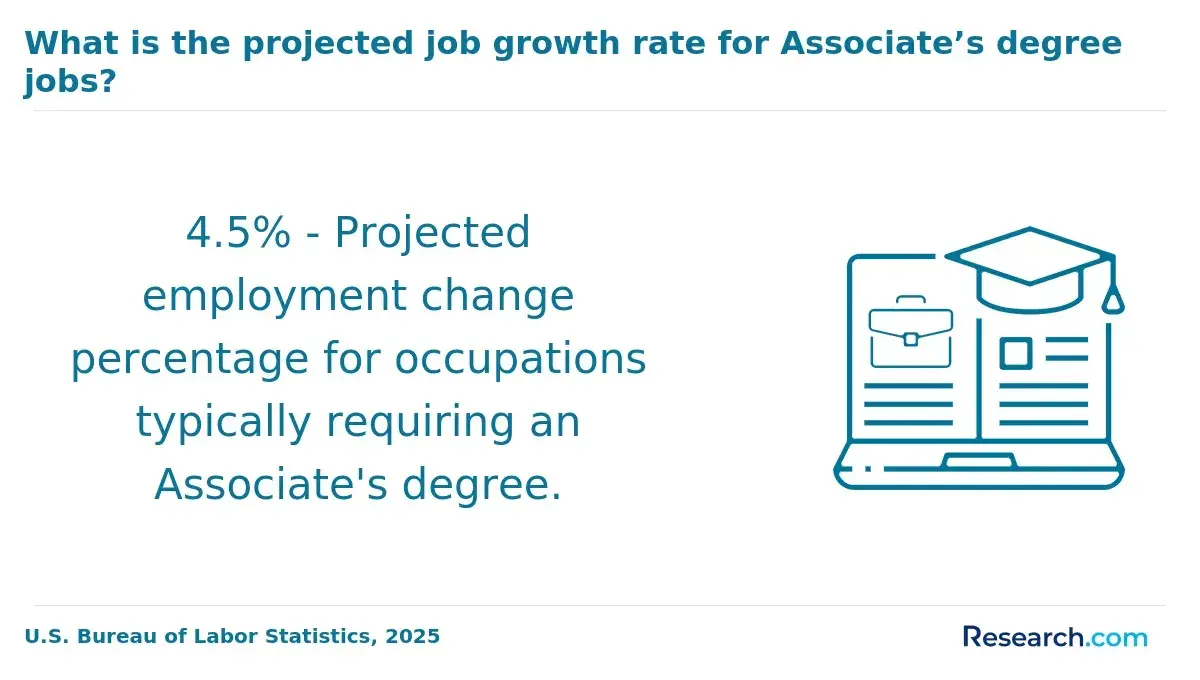
A bachelor's degree commonly totals about 120 credits, but there is no standard number awarded for employment. Schools set separate rules for transfer coursework, examination credit, assessed experiential learning, and credits that must be completed through the institution. A published maximum for outside credit is a ceiling, not a personal award. A master's degree has its own graduate-credit rules; undergraduate credit generally does not reduce its requirements.
Consider two applicants with similar experience: one earns credit that satisfies required courses, while the other receives only electives in a degree with no elective space left. Their awards may look similar on paper but produce different completion plans. Prior associate degrees can also provide transferable coursework, but the receiving school decides which courses meet bachelor's requirements.
Request an audit showing credits accepted, credits applied, required institutional credits, and courses still needed.
How do you find accredited online programs accepting work experience credits?
Start with an online program in your intended field, then check the institution's accreditation through the U.S. Department of Education's accreditation database or the Council for Higher Education Accreditation. For regulated careers, check the relevant programmatic accreditation separately. Accreditation does not, by itself, mean the school awards PLA credit or that a program meets your state's licensing rules.
Next, look for an official catalog policy covering portfolio assessment, exams, certifications, military training, fees, credit caps, and institutional residency. Confirm that the specific online major and degree level accepts the type of learning you have. Ask whether an advisor can provide a preliminary review before you pay an enrollment deposit. Treat a promise to "credit your experience" without a stated evaluation process as a red flag.
What are the admission requirements for online majors awarding work credits?
Undergraduate applicants commonly need a high school diploma or equivalent; graduate applicants normally need an appropriate bachelor's degree. A particular major may also require prerequisite courses, a minimum GPA, professional credentials, a portfolio, or a license. Admissions eligibility and PLA eligibility are separate decisions: being admitted does not mean your experience will earn credit.
Ask the program to confirm its current requirements for your applicant category, including any conditional-admission option and whether standardized tests are used. For a master's in nursing, education, social work, or engineering, check field-specific preparation before applying. If you lack prerequisites, include their cost and time in your comparison rather than assuming an accelerated pathway will bypass them.
How do online majors with work experience credit compare with campus programs?
Online and campus programs may follow the same institution-wide PLA rules, but their scheduling and hands-on requirements can differ. The useful comparison is not simply where lectures appear; it is whether you can complete the remaining degree requirements while working.
This comparison highlights trade-offs to check in each program. Neither delivery format guarantees more prior-learning credit.
| Factor | Online program | Campus program |
| Course access | May reduce commuting; live meetings and fixed deadlines may remain | Scheduled in-person attendance may be more predictable for local students |
| PLA evaluation | Governed by the school's applicable policy | Governed by the school's applicable policy |
| Experiential work | May require approved local placements or campus visits | May offer easier access to campus labs or arranged placements |
| Cost | Compare tuition, technology fees, travel, and placement expenses | Compare tuition, commuting, parking, and campus fees |
For working adults, the best format is the one in which required courses are available when needed and unavoidable in-person components are feasible. Confirm the schedule in writing; "online" does not mean asynchronous.
How long and how much do these online degree programs take?
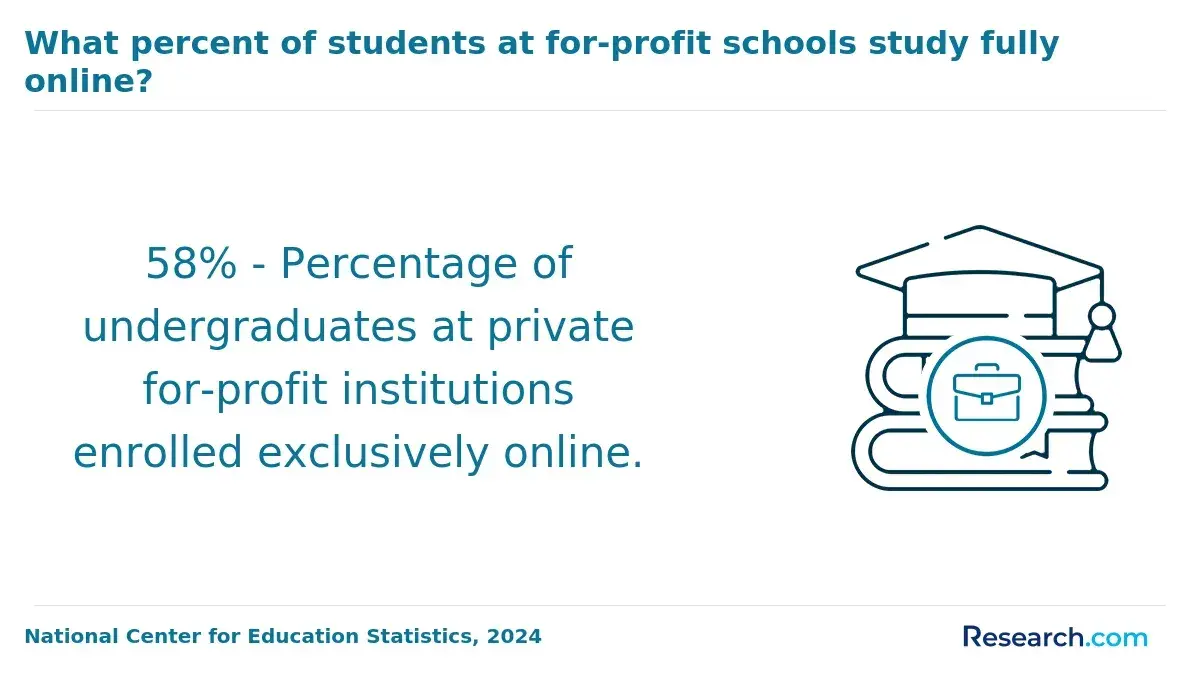
Time to completion depends on the credits the school applies to your degree, enrollment pace, course sequencing, and any capstone, laboratory, or placement. Master's programs have separate requirements and often cannot be shortened through undergraduate PLA. A short course term is not the length of an entire degree.
Build a cost estimate from remaining credits multiplied by applicable tuition, then add mandatory fees, assessment charges, books, travel, and placement costs. Subtract confirmed grants or employer assistance when comparing what you may pay; do not assume all aid covers PLA fees. Ask financial aid staff how assessment credit affects enrollment status and aid eligibility.
Compare that individualized estimate with accelerated online degree programs only after checking each pathway's entry assumptions. A faster advertised timeline may presume substantial prior coursework, full-time study, or a qualifying license you do not hold.
What careers, salaries, and job outlooks follow these online majors?
Choose a major by working backward from realistic jobs, not from the largest possible credit award. The BLS publishes occupational wages and projections, but those figures describe workers in an occupation - not the earnings or job prospects of graduates from a particular program.
The examples distinguish a useful degree direction from additional requirements. They are starting points for comparing careers, not guarantees of entry or advancement.
| Field | Potential career direction | Important qualification check |
| Business | Operations or project management | Relevant experience may matter alongside the degree |
| IT or computer science | Systems or software roles | Employers may assess technical skills directly |
| Nursing | Registered nursing or advanced practice | Appropriate license and, for advanced practice, further credentials |
| Education | Teaching or instructional leadership | State-specific teaching or administrator requirements |
| Social work | Social services or clinical practice | Accredited preparation and applicable licensing steps |
If a degree is not required for your target job, compare its total cost with certifications, employer training, or accelerated career programs. Conversely, do not choose a shorter alternative when the role requires a specific accredited degree or license. Check current BLS occupational profiles for wages, projected growth, and typical entry requirements in your chosen role.
How can you verify licensing and certification requirements before enrolling?
Before enrolling in nursing, teaching, social work, engineering, counseling, or another regulated path, identify the state where you intend to work. Read that state licensing board's education, examination, supervised-practice, and background-check requirements. Then ask the program, in writing, whether its specific online pathway meets those requirements for applicants in your state.
Check required programmatic accreditation, field-placement arrangements, and whether assessed credit can be used toward courses the board requires. A school's permission to award credit does not obligate a licensing board to accept a shortened pathway. If the school cannot confirm eligibility, seek clarification from the board before paying a deposit - especially if you might move states during the program.
Other Things You Should Know About
Usually not. A college must evaluate documented learning through an approved method, such as an exam, portfolio, or recognized training. Employment length alone does not establish course equivalency.
Start with the field that fits your career goal. Business, IT, healthcare administration, and criminal justice are worth checking for relevant work-based assessments, but confirm the specific program's policy before applying.
Do not count on it. Graduate programs may value experience for admission while awarding no academic credit for it. Request the graduate-level credit policy and a review of any eligible prior coursework.
Request a written degree audit showing how each proposed credit applies, remaining required courses, assessment fees, institutional credit requirements, and any in-person or licensing-related work.
References
- Rule 3358:5-7-12 | Prior learning assessment policy. https://codes.ohio.gov/ohio-administrative-code/rule-3358:5-7-12
- Credit for Prior Learning - Ohio Department of Higher Education https://highered.ohio.gov/students/adult-learners/credit-for-prior-learning
- Seattle College District Procedure | Seattle Colleges https://www.seattlecolleges.edu/about/policies-and-procedures/pro515
- Ready or Not, Here It Comes! New Regulations When Offering Programs Leading to a License Effective July 1! | WCET https://wcet.wiche.edu/frontiers/2024/05/16/ready-or-not-here-it-comes-new-regulations-when-offering-programs-leading-to-a-license-effective-july-1/
- Portfolio Assessment | Credit for Prior Learning | Indiana State University https://www.indianastate.edu/admissions/credit-prior-learning/portfolio-assessment
- Professional Licensure Programs | College of Southern Nevada https://www.csn.edu/professional-licensure-programs
- Credit for Prior Learning - Graduate College https://gradcollege.nsuok.edu/Credit%20for%20Prior%20Learning.aspx
- Credit for Prior Learning | University of Arizona Catalog https://catalog.arizona.edu/policy/courses-credit/credit/credit-prior-learning


