2027 Best Online Adult Degree Programs for Low Student Debt

Co-Founder and Chief Data Scientist
An online degree can fit around work and family, but convenient scheduling does not make borrowing affordable. The U.S. Bureau of Labor Statistics (BLS) reports that workers with a bachelor's degree earned a median $1,543 per week in 2024, compared with $930 for workers whose highest credential was a high school diploma. That broad comparison does not predict the payoff from an additional degree. This guide helps adults compare online master's program families, estimate the amount they may need to borrow, and identify when a less expensive credential could meet the same goal.
Key Things You Should Know
- Best starting point: Compare the remaining cost after grants and employer assistance - not advertised tuition - and check program-level debt data where available.
- Best fit varies by career: A master's can be necessary for clinical social work or certain advanced nursing roles, but many business and technology jobs do not require one.
- Best safeguard: Confirm accreditation, online scheduling, in-person requirements, and state licensure eligibility before paying a deposit or borrowing.
Top 10 Best Online Adult Degree Programs for Low Student Debt
Business Programs
Online MBAs and specialized master's programs in accounting, finance, or analytics can suit adults seeking a defined advancement opportunity. An MBA usually emphasizes management across functions; a specialized degree develops narrower expertise. Compare required credits, employer reimbursement, and whether a promotion actually requires graduate study. Some accounting pathways include coursework relevant to CPA eligibility, but state education and examination rules apply separately. An MBA with low tuition can still produce substantial debt if the student must leave work or pay significant program fees.
Healthcare Programs
Online master's degrees in healthcare administration or public health prepare students for organizational, policy, or population-health work - not medical licensure. Compare an MHA's management focus with an MPH's public-health focus before choosing. Internships or applied projects may add scheduling and travel costs. Adults already working in healthcare should ask whether their employer offers tuition assistance and whether the intended role requires a master's. A lower-cost program is a poor value if its coursework misses the skills or experience employers expect.
Information Technology Programs
Online master's programs in information technology, cybersecurity, and information systems may help experienced workers specialize or move toward leadership. Check whether the curriculum includes current technical practice, applied projects, and any scheduled labs. A degree is not automatically needed for entry-level IT work; relevant experience and professional certifications may be a less costly first step. Compare the program's full price with the specific job requirements you see, rather than assuming a graduate credential will raise pay.
Computer Science Programs
An online MS in computer science can support advanced study in software, systems, or AI. Some programs expect prior programming and mathematics coursework; foundation classes can increase both time and cost for career changers. Compare a research-oriented thesis track with an applied, non-thesis option and confirm whether projects or examinations require scheduled attendance. Software development jobs do not universally require a master's, so applicants with limited experience should also weigh a portfolio, relevant work, and lower-cost coursework.
Nursing Programs
Online MSN programs may focus on nursing education, leadership, or advanced practice. They generally require an active nursing license and can include supervised clinical work at an approved site; "online" does not eliminate that obligation. Advanced practice eligibility depends on the specialty and state, not simply possession of an MSN. Before borrowing, confirm admission requirements, clinical-placement responsibilities, programmatic accreditation where applicable, and authorization in the state where you intend to practice. An employer-funded leadership pathway may cost less out of pocket than a clinical specialty.
Psychology Programs
Online master's programs in psychology vary widely: some emphasize research or organizational applications, while others relate to counseling. A general psychology master's does not, by itself, qualify someone to practice as a licensed psychologist. Counseling licensure typically has distinct program, supervised-practice, and examination requirements. Adults seeking a clinical career should work backward from their state board's rules before selecting a degree. Those interested in research or workplace applications should compare curricula and career requirements before taking on graduate debt.
Education Programs
Online MEd and MAT programs can serve different purposes: professional development for existing educators or preparation for an initial teaching credential. The latter may require student teaching and state-approved coursework in person. Salary schedules and employer reimbursement can help an employed teacher assess the financial case, but neither applies universally. Verify that the program matches the credential and state you need, then compare net cost and time away from paid work. A general MEd should not be mistaken for an initial licensure pathway.
Criminal Justice Programs
An online master's in criminal justice may emphasize policy, leadership, or analysis for adults with relevant experience. Many entry-level public-safety roles do not require graduate study, and agencies may value service record or specialized training more. Review the actual coursework and advancement rules for your target employer before borrowing. Also check whether any internship, capstone, or scheduled class conflicts with shift work. The strongest financial case is a defined opportunity that requires or rewards the degree, particularly when an employer contributes to its cost.
Engineering Programs
Online engineering master's programs can offer technical specialization to practicing engineers, but prerequisites and laboratory arrangements vary. Confirm that your prior degree meets admission requirements and whether any course requires campus access, specialized equipment, or live attendance. Professional engineer licensure follows state rules involving education, examinations, and experience; a master's alone does not confer a license. Compare employer support and the technical skills required for your intended role with the total cost of a degree versus targeted professional training.
Social Work Programs
An online MSW may be appropriate for adults pursuing clinical social work, which generally requires a qualifying degree and additional supervised experience and licensure. Field placements are substantial in-person commitments even when classes are online. Applicants with a qualifying BSW should investigate advanced-standing eligibility; its shorter curriculum is not available to everyone. Before accepting an offer, confirm program accreditation, placement support, state eligibility, remaining credits, and whether reduced work hours would increase the amount you need to borrow.
What Are the Best Online Degrees for Adults Seeking Low Student Debt?
The best online adult degree program for low student debt is one that meets a specific career requirement at a manageable net cost while allowing the student to keep earning. No field guarantees low debt: an inexpensive degree that does not lead toward the intended role can be a worse choice than a costlier required credential. These program families present different reasons to pursue graduate study.
The comparison below identifies the main value test for each family. It is not a ranking of individual schools or a claim that every program in a field is available entirely online.
| Program family | When a master's may make sense | Main debt concern |
| Business or technology | A defined specialization or advancement opportunity | Paying for a credential the target job does not require |
| Education or nursing | A verified credential pathway or employer-supported advancement | Licensure mismatches and unpaid practical requirements |
| Social work or counseling-related study | A program that meets the intended state's professional requirements | Placement time, supervised practice, and additional licensing costs |
If your goal does not require graduate study, compare the degree with work experience or a shorter credential first. Readers still exploring graduate options can use easy masters degrees to consider how program demands differ - but ease should never replace career fit or total-cost analysis.
How Much Do Online Adult Degree Programs Cost?
Online master's programs do not have a single reliable price. Schools may charge by credit, term, or program, and the advertised rate can exclude mandatory fees, books, travel, technology, and required fieldwork expenses. Estimate total completion cost using the credits you still need, not the price of one course.
The cost categories below show why two programs with similar tuition can leave adults needing different amounts of financing.
| Cost category | What to include in the comparison |
| Academic charges | Remaining credits, tuition rate, mandatory fees, and any program surcharge |
| Participation costs | Books, software, equipment, travel, and required in-person work |
| Income effects | Reduced work hours or unpaid placement time, if applicable |
| Funding that does not create debt | Grants, scholarships, employer assistance, and available savings |
Request an itemized estimate based on your transcript and planned course load. Compare what remains after nonloan funding, then consider how interest would affect repayment. If the target job does not require a master's, easy associate degrees that pay well illustrate a different education level worth evaluating against its own career requirements - not an automatic substitute for graduate study.
Which Online Colleges Offer the Lowest Student Debt?
No college can credibly be named the lowest-debt choice for every online adult learner. Borrowing depends on the particular program, aid offer, accepted credits, employer support, and whether the student can continue working. Institution-wide debt figures can also obscure differences between undergraduate and graduate students or among fields.
Use the U.S. Department of Education's College Scorecard to examine available institution and field-of-study debt and earnings information. Check which credential and student group a figure represents; some program results are unavailable or suppressed. Then request a written cost and aid estimate from each school. Favor the option with the lowest necessary borrowing for your intended outcome, rather than declaring a winner from a college-wide average.
How Can You Verify Online College Accreditation?
Institutional accreditation is a baseline check, not proof that every professional program meets licensing rules. Verify the school and its recognized accreditor through the U.S. Department of Education's accreditation database or the accreditor itself. Confirm that the institution - not merely a similarly named campus or affiliate - awards the degree.
For regulated paths, check the relevant programmatic accreditation and your intended state licensing board. Examples include nursing, social work, and certain counseling or education pathways. Ask the school to identify the exact program, degree, and state eligibility covered by its claims. A red flag is a promise that an "accredited online degree" automatically qualifies graduates for licensure everywhere.
What Admission Requirements Apply to Online Adult Degree Programs?
Most master's programs require a bachelor's degree, but prerequisites vary by field. A computer science program may require programming and mathematics; an MSN commonly requires nursing preparation and licensure; an advanced-standing MSW has separate prior-degree eligibility. Schools may also consider transcripts, recommendations, a statement of purpose, professional experience, or tests under their published policies.
Ask admissions to evaluate your record against the specific online program, not just general graduate-school admission. Confirm whether missing prerequisites add credits, whether conditional admission is possible, and when you will receive a final decision. Do not assume that flexible university-wide admissions rules apply to a selective professional program.
How Long Do Online Adult Degree Programs Take to Complete?
Completion time depends on remaining credits, part-time or full-time enrollment, course sequencing, and practical requirements. An adult taking one course at a time may need substantially longer than an advertised full-time timeline. Clinical placements, student teaching, or a thesis can also limit acceleration even when online classes have short terms.
Before enrolling, obtain a term-by-term plan showing when every required course and placement is offered. Have the school evaluate eligible previous graduate coursework or an applicable advanced-standing credential; prior credit is useful only if it fulfills this degree's requirements and the school's residency rules. Choosing a sustainable pace can protect income and reduce the chance of borrowing for unfinished coursework.
What Careers and Salaries Can Online Adult Degrees Lead To?
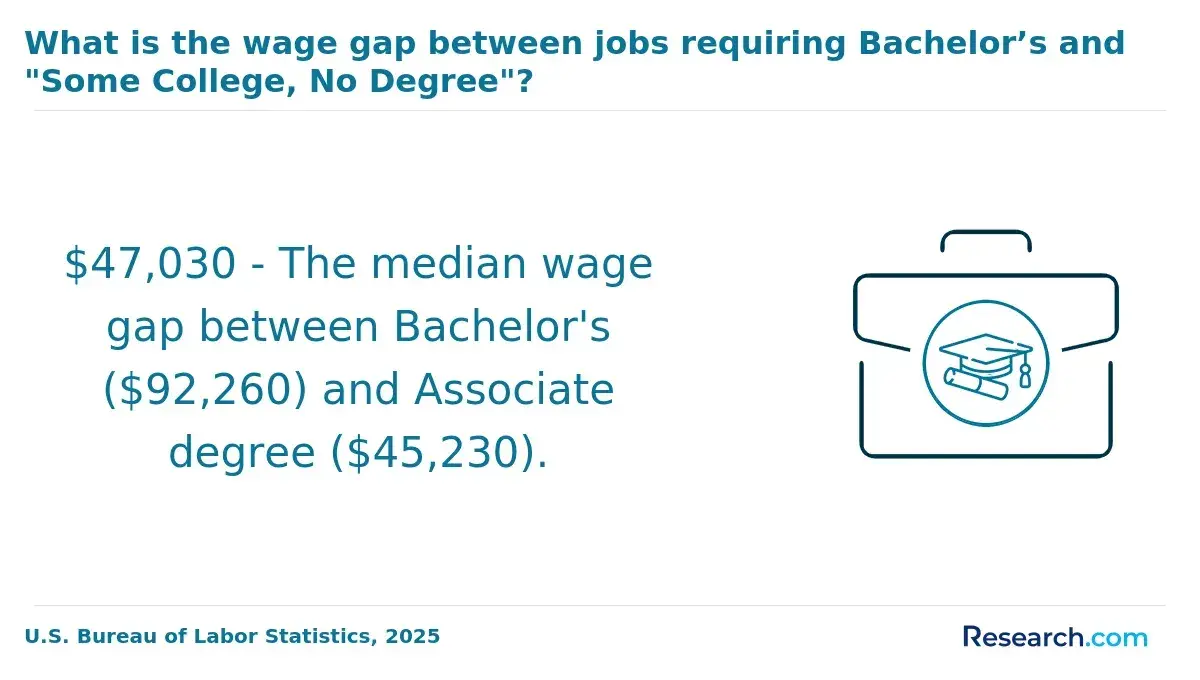
Compare job postings for your target role with the curriculum, then ask whether the degree fills a requirement that experience cannot. In some technology or business roles, a shorter credential may be worth testing first; high paying certificate jobs offers alternatives to assess. For licensed professions, include the time and expense of post-degree requirements in your career calculation.
Do Online Degrees Require Licensure or Professional Certification?
Sometimes. An online degree and permission to practice are separate matters. Advanced practice nursing, clinical social work, teaching, and counseling can require a specified educational pathway, examinations, supervised practice, and a state-issued license. Professional certifications in areas such as IT or accounting have their own eligibility rules and may be optional or employer-specific.
Start with the regulator or certification body for the state and role you want. Check whether the exact program meets its education rules and whether field placements can be completed where you live. Never rely solely on a school's general statement that graduates are "prepared for licensure"; ask what additional steps remain.
How Should Adults Choose a Reputable Online Degree Program?
Choose a program by working backward from the job or license you want, then comparing the cost of meeting that goal. A practical shortlist should survive the following checks before you commit.
- Confirm the exact credential, accreditation, state eligibility, and any required in-person activities.
- Request a transcript review and a written plan for remaining credits, course availability, and realistic completion time.
- Compare itemized total costs and aid offers; calculate how much you would actually need to borrow.
- Check class meeting times, placement arrangements, advising access, and whether the schedule lets you maintain your income.
- Compare the degree with a less costly credential or experience-based route where the occupation permits one.
Watch for vague transfer promises, missing fee information, or salary claims presented as guaranteed graduate outcomes. If your aim is research rather than professional advancement, evaluate doctoral requirements separately; even discussions of 1 year PhD programs online no dissertation should not be treated as evidence that a doctorate has the same cost, timeline, or purpose as a master's.
Other Things You Should Know About
Possibly. Employer assistance, grants, scholarships, savings, and part-time enrollment while working can reduce borrowing. Compare written aid offers and the full cost before assuming a program will be debt-free.
Not necessarily. Tuition policies vary, and online students may still pay technology fees or travel for required placements. Compare total completion costs for the specific programs.
No. A more expensive program could require less borrowing if an employer pays part of the cost or its schedule lets you keep working. Career fit and required credentials also matter.
Only if the particular program meets that state's educational requirements and you complete any additional examination or supervised-practice steps. Check with the state board before enrolling.
References
- Data Home - College Scorecard - Department of Education https://collegescorecard.ed.gov/data/
- Cost of Attendance (Budget) | 2025-2026 Federal Student Aid Handbook https://fsapartners.ed.gov/knowledge-center/fsa-handbook/2025-2026/vol3/ch2-cost-attendance-budget
- Diploma Mills and Accreditation | ed.gov http://www.ed.gov/laws-and-policy/higher-education-laws-and-policy/college-accreditation/diploma-mills-and-accreditation
- Understanding College Costs | studentaid.gov https://studentaid.gov/resources/prepare-for-college/students/choosing-schools/consider-costs
- Return to School | Employer Tuition Assistance Programs | UMass Global https://www.umassglobal.edu/blog-news/get-your-employer-pay-college-tuition-assistance-programs
- How to Pay for College Without Loans: Scholarships, Grants and Other Options - www.shc.edu https://www.shc.edu/how-to-pay-for-college-without-loans-scholarships-grants-and-other-options/
- Cost of Attendance & Tuition | Financial Aid | Admission & Aid | Columbia University https://www.tc.columbia.edu/admission/financial-aid/cost-of-attendance--tuition/
- Programmatic Accreditation - Academic Program Quality https://apq.ucf.edu/programmatic-accreditation/