2027 Best Graduate Degrees for Low Student Debt

Co-Founder and Chief Data Scientist
A graduate degree can advance your career, but borrowing for it may leave you with payments that outlast the benefit. The U.S. Bureau of Labor Statistics (BLS) projects data scientist employment to grow 34% from 2024 to 2034 - a promising outlook, not a reason to pay any price for a degree. If you are weighing a master's, this guide compares fields where affordable study and relevant career opportunities may align. You will learn which costs to calculate, when a credential adds value, and how to choose a path that limits debt without sacrificing your goal.
Key Things You Should Know
- No master's field is inherently low-debt: compare the full program cost after grants and employer assistance, not tuition per credit alone.
- Career demand matters, but it is not a return-on-investment guarantee: BLS projects 34% employment growth for data scientists from 2024 to 2034, while individual outcomes depend on skills and experience.
- The strongest low-borrowing options often build on qualifications you already have; licensure pathways may be worth the cost but can add clinical, exam, and supervision expenses.
Top 10 Best Graduate Degrees for Low Student Debt
Business / MBA Programs
A Master of Business Administration (MBA) is a professional degree for people pursuing broader business responsibilities. A lower-cost public or employer-funded MBA can make sense when you have experience and a plausible advancement opportunity. Compare total credits, program fees, and time away from work; a cheap tuition rate can conceal a costly program. Employers may value demonstrated management results more than the credential alone. If you need one skill rather than broad business training, a targeted graduate certificate may require less borrowing.
Healthcare Administration & Management Programs
A Master of Healthcare Administration (MHA) or healthcare-focused MBA prepares students for organizational work in healthcare, not clinical licensure. Public-university programs and employer support may reduce borrowing for current healthcare workers. Compare required internships, scheduling, and any added program fees. Management positions usually require relevant experience; the degree alone is not a shortcut to a director role. If your goal is clinical practice, choose the required clinical credential instead.
Information Technology Programs
An MS in information technology often covers systems, infrastructure, and technology management. It may be a sensible low-debt option if employer assistance pays for coursework you can apply in your current job. Check whether the curriculum requires a computing background or foundation courses that raise the final bill. For a narrow technical goal, compare the master's with a relevant certification or experience-based advancement before borrowing.
Computer Science Programs
An MS in computer science can support technical specialization or a career change. Research-oriented tracks may include a thesis; professional tracks may emphasize projects. Career changers should budget for prerequisite programming and mathematics courses, which may add cost and time without counting toward graduate credits. If you already work in software, compare the degree's incremental value with your existing experience and a focused course of study.
Cybersecurity Programs
An MS in cybersecurity can develop security engineering, risk, or policy expertise. The lowest-debt route may be a part-time program funded by an employer, particularly for someone already in IT. Compare hands-on labs, faculty expertise, and prerequisites alongside price. Security positions often require practical experience, and some roles require specific certifications or clearances; a master's does not replace those qualifications.
Data Science / Analytics Programs
An MS in data science or analytics can be valuable when it adds statistics, programming, and substantial project work to your existing preparation. Check prerequisite math and computing requirements before comparing prices. An analytics-focused business degree may suit decision-making roles, while a technical MS may better fit modeling work. Neither credential alone establishes job readiness; a portfolio and relevant experience can matter as much as the degree's title.
Education / Educational Leadership Programs
A Master of Education (MEd) or educational leadership degree may be a lower-borrowing choice for teachers who have district tuition support or a documented salary-schedule increase. Compare that increase with the entire degree cost before enrolling. Leadership tracks may require teaching experience, fieldwork, and a state-approved route to administrator licensure. An inexpensive program that does not meet your state's requirements can be an expensive mistake.
Counseling / Psychology Programs
A master's in counseling may lead toward licensed practice, but required clinical placements and post-degree supervised work can limit paid-work hours and increase borrowing. Verify state licensure eligibility, required accreditation where applicable, and placement support before selecting a program. A master's in psychology is not interchangeable with a clinical counseling degree and generally does not independently qualify someone to practice as a licensed psychologist. Choose this path for the required professional role, not a presumed quick salary gain.
Nursing Programs
A Master of Science in Nursing (MSN) can support nursing specialization, education, leadership, or an advanced practice pathway. Employer assistance may make it affordable for a working registered nurse. Advanced practice options can require clinical hours, certification, and state licensure, so include placement travel and reduced work hours in your budget. An MSN's value depends on the specialty and your current license; it does not automatically qualify every graduate for advanced practice.
Engineering Management Programs
An MS in engineering management blends technical operations with business and project work. It may fit an experienced engineer seeking broader responsibility without the wider scope of an MBA. Compare employer sponsorship, required credits, and whether the program adds skills beyond those you already use. Managerial roles typically depend on professional experience and performance, not the master's alone; a focused project-management credential may be a cheaper alternative for some goals.
What Are the Best Graduate Degrees for Avoiding Student Debt?
The best graduate degree for avoiding student debt is one that meets a specific career requirement at a cost you can cover without excessive borrowing. No field guarantees low debt: the same degree can be inexpensive with public tuition and employer support or costly with high fees, extra prerequisites, and lost earnings.
The comparison below identifies where each degree family may offer a low-borrowing route - and the expense most likely to change that assessment. It compares fields, not individual colleges or guaranteed outcomes.
| Degree family | Potential low-debt advantage | Cost or career-fit risk |
| MBA, healthcare administration, IT, or engineering management | May be completed while working with employer assistance | Advancement often depends on existing experience |
| Computer science, cybersecurity, or data science | Can build specialized skills for established technical workers | Prerequisites or a weak project portfolio can reduce value |
| Education or nursing | May align with employer support or a defined career pathway | State rules, placements, or specialty requirements can add cost |
| Counseling | Can provide education required for a licensed pathway | Clinical and supervised-practice requirements may constrain earnings |
If you are choosing an initial career rather than advancing from an existing one, compare the cost of graduate study with bachelor's-level options, including highest paid degrees. The right choice is the least costly adequate preparation for your target role - not necessarily the least expensive master's.
Which Graduate Degrees Offer the Best Salary-to-Debt Ratio?
There is no reliable universal salary-to-debt ranking by master's field. Program debt varies by school and student, while occupational wages describe workers with different degrees and experience. For context, BLS reports a 2024 median annual wage of $112,590 for data scientists. That is an occupational figure, not the expected salary of an MS graduate; some data scientists enter with a bachelor's degree.
A technical master's can have a favorable cost-to-earnings case when it fills a documented skills gap at modest cost. An MBA or management degree may have a stronger case for an experienced employee whose organization rewards the credential. Counseling or advanced practice nursing can justify greater expense when the degree is necessary for the intended licensed role, but placement and supervision requirements must be included. Ask employers whether the degree changes your eligibility or pay before treating a wage figure as a return.
How Much Does a Low-Debt Graduate Degree Cost?
Calculate the cost to finish, not the advertised price of one course. Graduate tuition differs by institution, residency status, enrollment pattern, and specialty. Without a specific school's current tuition and degree requirements, a dependable total cannot be quoted.
Request an individualized estimate from each program. To make the estimates comparable, include these costs and offsets:
- Required graduate credits multiplied by your applicable tuition rate, plus mandatory, technology, and program-specific fees.
- Prerequisite courses, books, equipment, travel, residencies, and unpaid placement-related expenses.
- Any earnings you expect to give up, less confirmed scholarships, assistantships, and employer tuition assistance.
- Interest and repayment costs if you must borrow; distinguish your projected borrowing from the program's full price.
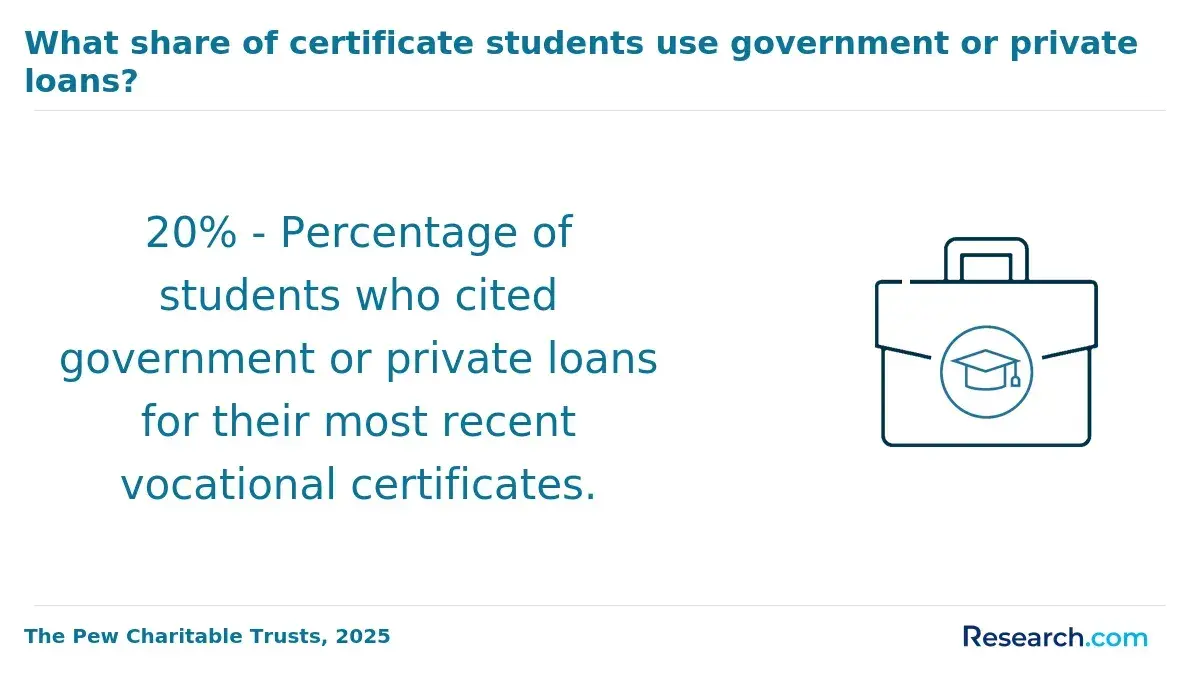
Federal aid generally depends on the school and program's eligibility, not simply whether a course is online. Complete the FAFSA and confirm graduate aid eligibility with the financial aid office. If a master's is not required for your goal, compare shorter alternatives, including FAFSA-approved online certificate programs, while checking the eligibility of the specific certificate.
Which Affordable Graduate Degrees Have the Strongest Job Outlook?
Data science and cybersecurity have strong projected occupational growth, but growth does not establish that a master's is required. BLS projects information security analyst employment to grow 29% from 2024 to 2034. That signals demand for security work; applicants still need to meet employers' technical and experience requirements.
Healthcare management and advanced practice nursing can also offer relevant opportunities, particularly to people who already hold clinical or healthcare credentials. Education openings and pay vary by state and district, while counseling demand must be weighed against the time needed for licensure. Use the job outlook for your target occupation and location, then read actual postings to see whether a master's is required, preferred, or unnecessary.
Are Online Graduate Degrees Cheaper Than Campus Programs?
Online study can lower travel or relocation costs, but it is not automatically cheaper than campus study. Compare the same complete degree requirements, tuition category, fees, and available aid. An online program with expensive per-credit tuition may cost more than a nearby public campus program; an online clinical program can still require local placements or travel.
Check whether courses meet live or asynchronously, whether part-time students can get required classes, and whether exams, labs, residencies, or practicums require attendance at a particular location. Staying employed can be an important financial advantage, but an online degree does not guarantee a remote job. If location flexibility is part of your career goal, compare online degrees for remote jobs with the actual duties and hiring practices of your target occupation.
What Accreditation Should a Graduate Program Have?
Start by confirming that the institution holds accreditation from an agency recognized by the U.S. Department of Education or the Council for Higher Education Accreditation. Institutional accreditation matters for federal aid eligibility and can affect credit recognition, but it does not establish that every degree meets professional licensing rules.
For a regulated goal, verify the program's status and your state's requirements directly with the relevant board. Examples of field-specific checks include Commission on Collegiate Nursing Education or Accreditation Commission for Education in Nursing accreditation for nursing, Council for Accreditation of Counseling and Related Educational Programs accreditation where relevant to counseling, and Commission on Accreditation of Healthcare Management Education accreditation for applicable healthcare management programs. Programmatic accreditation can matter for licensure, certification, or employer preferences; ask what your intended role actually requires before paying an application fee.
What Are the Admission Requirements for Affordable Graduate Degrees?
Most master's programs require a completed bachelor's degree and an application with transcripts; some also request recommendations, a statement, an interview, a portfolio, professional experience, or GRE or GMAT scores. Technical degrees may require specific math or programming preparation, while MSN pathways commonly require an appropriate nursing background and license. GPA minimums, test waivers, and conditional admission vary by graduate program rather than by degree field.
For career changers, the key admissions question is whether missing prerequisites can be completed affordably and whether they count toward the master's. An online associate degree may be a useful earlier educational step, but it does not substitute for the bachelor's degree normally required for master's admission. Ask for a written prerequisite and credit evaluation before accepting an offer.
Which Graduate Degrees Require Licensure or Certification?
Licensure is separate from graduation. Counseling degrees intended for clinical practice generally lead into state-specific examination and supervised-experience requirements. Advanced practice nursing requires the applicable nursing license, specialty preparation, and state authorization; education leadership and some teaching roles require state credentials. A general psychology master's does not, by itself, qualify someone for psychologist licensure.
By contrast, an MBA or typical MS in IT, computer science, data science, or engineering management usually does not carry a general state license to practice the field. Employers may still request certifications for particular jobs. Before enrolling in any regulated pathway, ask the state board whether the exact program and delivery format meet its educational rules, including clinical or field-placement requirements.
How Can You Compare Graduate Programs by Debt and Career Outcomes?
Compare programs against the job you want and the amount you would need to borrow. A low tuition quote is not enough if the degree lacks required accreditation, leaves you with costly prerequisites, or cannot accommodate your work schedule.
Use the same sequence for each finalist so that advertised prices and career claims do not obscure meaningful differences:
- Identify a target role and check job postings, employer requirements, and any state licensing rules; decide whether a master's adds value beyond your current preparation.
- Request the required-credit total, tuition and fee schedule, prerequisite assessment, and realistic completion plan for your enrollment pace.
- Ask for a pre-enrollment evaluation of eligible prior graduate coursework or stackable certificates; confirm which credits apply to this degree and which requirements remain.
- Subtract confirmed grants and employer benefits, then estimate borrowing and payments without assuming a promotion or salary increase.
- Request program-level completion, debt, placement, and licensure-exam outcomes when available; ask how the school defines each measure and treat missing data as a limitation.
A common mistake is comparing a best-case accelerated timeline with a standard tuition estimate. Accepted graduate credits, course sequencing, clinical hours, and part-time availability can change both. Do not assume undergraduate coursework or work experience earns graduate credit unless the institution explicitly awards it under a published policy.
Other Things You Should Know About
Possibly. Savings, employer tuition assistance, scholarships, assistantships, and part-time study may cover the cost. Verify how much funding is guaranteed and whether you must repay an employer if you leave.
No. A program must meet your career or licensing requirements and offer a workable completion plan. Compare its full cost and likely value, not just tuition per credit.
Not on salary alone. Occupational medians include experienced workers and do not show what a particular master's graduate will earn. Check whether the degree is needed for the job and how much you would borrow.
It can if the school accepts eligible graduate-level credits toward required courses and charges you for fewer remaining credits. Ask for a written evaluation; acceptance of a course does not always mean it fulfills your degree requirements.
References
- Types of Financial Aid: Grants, Work-Study, and Loans | studentaid.gov https://studentaid.gov/understand-aid/types
- Learn About Funding Options | Academic Advancement Programs https://academicsuccess.ucf.edu/aap-guidetogradschool/topic/4c-learn-about-funding-options/
- Paying for Your MBA: Scholarships, Employer Benefits and Loans | Jenkins MBA https://mba.ncsu.edu/2026/05/07/paying-for-your-mba-scholarships-employer-benefits-and-loans/
- Graduate degrees pay - but it's complicated | Brookings https://www.brookings.edu/articles/graduate-degrees-pay-but-its-complicated/
- Career earnings by college major - The Hamilton Project https://www.hamiltonproject.org/data/career-earnings-by-college-major/
- Balancing the Costs and Value of Graduate Programs | Arnold Ventures https://www.arnoldventures.org/resources/balancing-the-costs-and-value-of-graduate-programs