2027 Best Colleges With Flat-Rate Tuition

Co-Founder and Chief Data Scientist
A flat tuition rate can make college costs more predictable, but it does not automatically make a degree cheaper. Some schools charge by semester; others let eligible students complete multiple courses within a paid subscription period. The distinction matters whether you are starting college, returning with credits, or considering a master's degree.
The U.S. Bureau of Labor Statistics reports that workers with a bachelor's degree had median weekly earnings of $1,543 in 2024, but that figure says nothing about what any one degree is worth. This guide helps you compare flat-rate colleges by eligibility, pace, total cost, and career fit.
Key Things You Should Know
- Western Governors University, the University of Maine at Presque Isle's YourPace program, and select Capella FlexPath and Purdue Global ExcelTrack programs use flat-rate periods; eligibility varies by program and education level.
- WGU bills eligible students by six-month term, while UMPI YourPace uses eight-week sessions. More courses completed within a paid period can lower effective cost per course, but only if your schedule makes that pace realistic.
- Compare the cost of all periods needed to finish, required fees, accepted credits, and any clinical or licensing requirements, not just the advertised term price.
Top 10 Best Colleges With Flat-Rate Tuition
Business Programs
Flat-rate business options include undergraduate programs at WGU and UMPI YourPace, as well as selected graduate pathways such as WGU's MBA. Compare the curriculum before comparing prices.
An MBA generally emphasizes management and decision-making, while a specialized master's may focus on accounting, analytics, or another function. Ask how many courses you can realistically finish per paid period and whether prerequisites or a capstone could extend enrollment.
Healthcare Programs
WGU offers graduate healthcare leadership options under its term-based tuition model. These programs suit professionals seeking administrative preparation, not a shortcut into licensed clinical practice. Compare healthcare management and public health curricula against the jobs you want.
If your goal involves patient care, confirm whether a separate clinical degree, supervised training, or state license is required; a flat-rate administrative master's does not replace those steps.
Information Technology Programs
WGU offers graduate IT-related study under flat-rate terms, and selected Capella FlexPath programs offer subscription-style study. Availability depends on the specific degree, not simply the school's tuition model.
Look for coursework in security, systems, data, or IT leadership that matches your experience and target role. A self-directed format may work well for experienced professionals, but assess whether you need structured instruction before paying for a period you may struggle to use fully.
Computer Science Programs
Do not assume a college's flat-rate IT program includes a master's in computer science. Computer science usually places greater emphasis on algorithms, software theory, and advanced computing than an IT management degree.
Check the exact graduate catalog, prerequisites, and billing format before treating a program as a flat-rate computer science option. Applicants changing fields should also ask whether required foundation courses add paid terms.
Nursing Programs
WGU offers selected master's-level nursing programs with term-based tuition. Graduate nursing admission generally requires nursing preparation and an active RN license; concentration and state requirements can add conditions.
Compare the track with your intended role, and ask about clinical hours, placement responsibilities, and costs. Flat tuition does not remove time-consuming practice requirements or, where applicable, separate certification and licensure steps.
Psychology Programs
Selected psychology programs may be available in a subscription format, but confirm the exact master's degree and delivery option before enrolling. A general psychology master's and a clinical licensure pathway serve different purposes.
If your goal is counseling or psychologist licensure, check your state board's degree, accreditation, supervised-practice, and examination rules. Faster coursework alone cannot shorten requirements imposed outside the classroom.
Education Programs
WGU offers graduate education programs under its flat-rate term model. Some serve licensed teachers seeking advancement; others have different entry or professional goals.
Verify whether your chosen program leads to initial licensure, an additional endorsement, or neither. Student teaching, fieldwork, and state approval can determine both eligibility and completion time, even when academic courses are completed online.
Criminal Justice Programs
A college offering flat-rate undergraduate criminal justice study does not necessarily offer a flat-rate criminal justice master's. Verify the credential and its billing format separately. For careers in investigations, policy, or public administration, compare the actual coursework with job requirements.
Many roles also depend heavily on experience, agency selection standards, or additional training. A graduate degree is not automatically required for entry-level criminal justice work.
Engineering Programs
Flat-rate technology degrees should not be mistaken for engineering master's degrees. If you need an engineering credential, confirm that the school offers the exact discipline, required laboratories or project work, and a flat-rate billing option for that program.
Professional engineering licensure has separate education, examination, and experience requirements that vary by state. A conventional per-credit engineering program may be a better fit than an unrelated flat-rate degree.
Social Work Programs
Do not substitute a flat-rate human services or psychology degree for a Master of Social Work. Prospective clinical social workers should confirm that an MSW program meets applicable accreditation and state licensing requirements, including supervised field education.
Ask whether field placement is available locally and how its schedule affects paid enrollment periods. If a suitable flat-rate MSW is unavailable, program eligibility matters more than the appeal of subscription pricing.
What Is Flat-Rate Tuition and How Does It Work?
Flat-rate tuition means an eligible student pays a set tuition charge for a defined enrollment period rather than a separate tuition charge for every credit attempted. The period may be a semester, a term, or a subscription session.
Rules differ: a conventional semester rate may cover a specified full-time credit range, while a competency-based program may allow students to complete additional courses after meeting its minimum enrollment requirements.
The financial advantage comes from finishing applicable requirements within fewer paid periods. It disappears if you need extra periods because of prerequisites, course sequencing, work commitments, or clinical placements. Flat rate also describes tuition, not necessarily fees, books, assessments, travel, or living expenses.
Which Accredited Colleges Offer Flat-Rate Tuition Programs?
These accredited U.S. institutions provide useful starting points because they publish flat-rate tuition for identified programs or learning formats. They are not ranked, and none should be treated as flat-rate for every degree: verify your program's current tuition schedule before applying.
| College or program | Where the flat rate applies | Most important comparison point |
| Western Governors University | Eligible bachelor's and master's programs billed by six-month term | Competency-based progress can reward students able to complete more requirements per term. |
| University of Maine at Presque Isle YourPace | Eligible online undergraduate programs billed by eight-week session | Check how transferred credits apply to the major and how many sessions remain. |
| Capella University FlexPath | Selected undergraduate and graduate programs billed by subscription session | Confirm both degree eligibility and whether self-paced learning suits you. |
| Purdue University Global ExcelTrack | Selected degree programs with flat-rate terms | Compare the ExcelTrack version with the standard version of your intended degree. |
| University of Wisconsin Flexible Option | Eligible competency-based programs offered through participating Universities of Wisconsin institutions | Identify the degree-granting institution and any credential required for admission. |
Institutional accreditation applies to the degree-granting school, while professional programs may need additional programmatic accreditation or state approval. Check those distinctions for nursing, teaching, and other licensed fields. Program availability, tuition, and fees can change between enrollment periods.
How Much Does Flat-Rate College Tuition Cost?
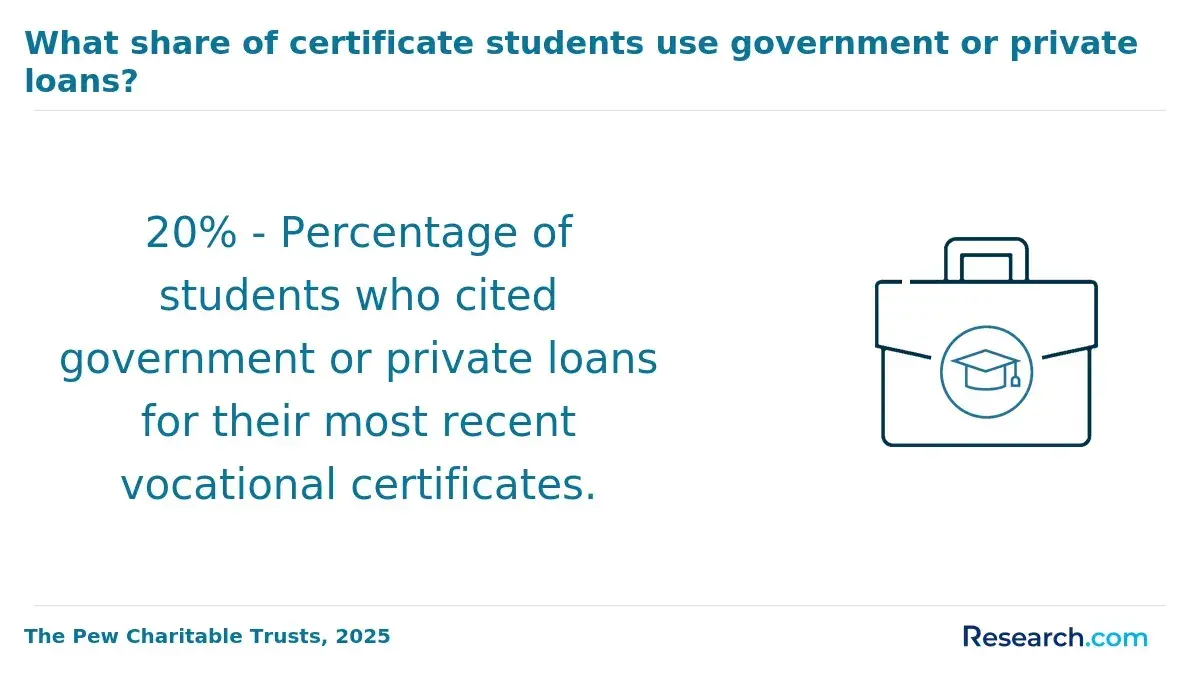
There is no single flat-rate college price. Schools use different billing periods, and the number you need depends on your remaining requirements and completion pace. To compare offers, estimate total tuition as the rate per period multiplied by the periods you expect to enroll, then add required expenses and subtract aid you are eligible to receive.
The following cost categories explain why the lowest advertised rate may not produce the lowest final bill.
| Cost factor | What to confirm | Why it changes the comparison |
| Tuition period | Its length, rate, and renewal rules | Rates for unequal periods cannot be compared directly. |
| Remaining requirements | Written transfer evaluation, prerequisites, and residency rules | Accepted credits help only when they satisfy degree requirements. |
| Required extras | Technology, assessment, laboratory, clinical, and graduation charges | A flat tuition rate may exclude these costs. |
| Time and aid | Likely course pace and financial aid eligibility | Another paid period or a change in aid can outweigh a lower rate. |
Request an itemized estimate for your specific degree. Federal aid eligibility depends on the institution, program, and your circumstances; an advertised subscription price is not your net price.
Is Flat-Rate Tuition Cheaper Online or On Campus?
Neither format is inherently cheaper. Online competency-based programs may cost less for students who can move quickly through eligible coursework without relocating.
Campus programs may offer a flat full-time semester rate, but savings depend on the permitted credit range, course availability, housing, and commuting costs. Online study can still involve scheduled meetings, proctored work, local clinicals, or travel.
If location flexibility matters, compare accredited online colleges by their actual program format, not the word "online" alone. Ask both online and campus schools for a completion plan showing when each remaining course is offered.
What Degrees and Certificates Can You Earn With Flat-Rate Tuition?
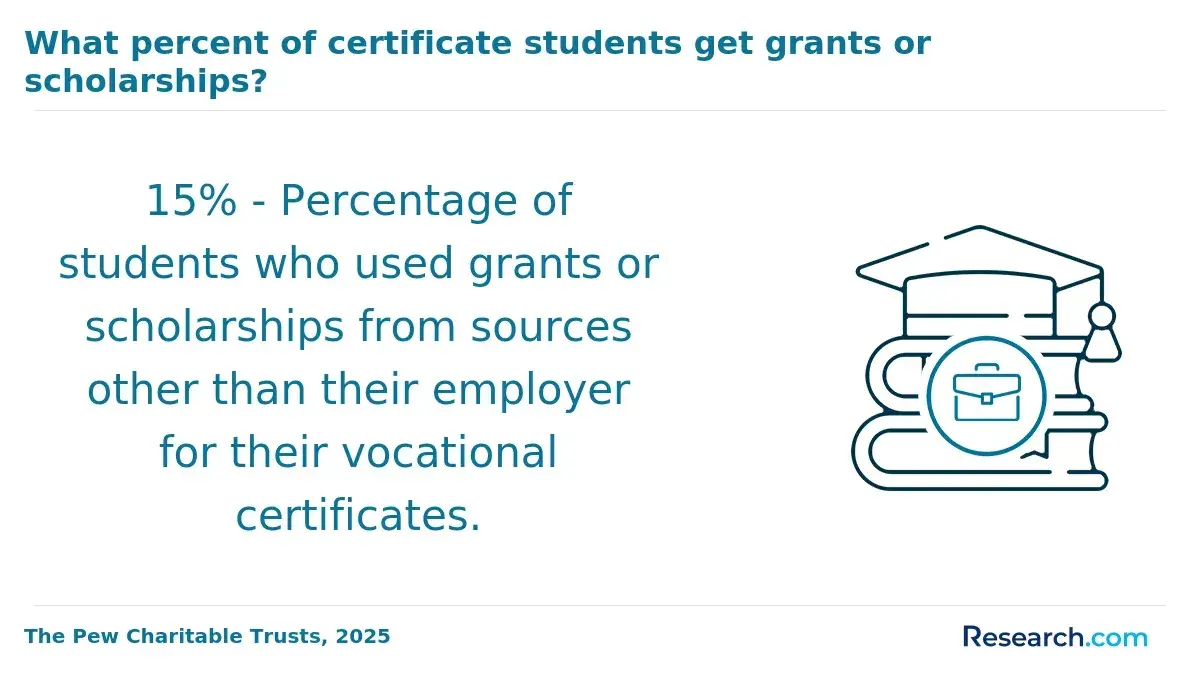
Flat-rate options can lead to certificates, bachelor's degrees, and selected master's degrees, depending on the institution. They are not interchangeable: a certificate may teach a focused skill, while a degree includes broader academic requirements. A school's undergraduate subscription policy does not automatically extend to its graduate programs.
Start with the credential your intended occupation actually requires. If you are considering an associate degree online, verify the individual college's tuition model rather than assuming that a short completion pathway uses flat-rate pricing. Likewise, ask whether a certificate can later count toward a degree; stackability must be established by the receiving institution.
What Are the Admission Requirements for Flat-Rate Colleges?
Admission requirements depend on both the college and the degree. Undergraduate applicants commonly submit prior school records; graduate applicants generally need a bachelor's degree and may face program-specific prerequisites.
Nursing programs may require an RN license, while education pathways can have separate teacher-licensure or field-placement conditions. An institution's general admissions policy does not override a selective program's rules.
Before applying, ask for a written evaluation of previous coursework. Confirm accepted credits, how they satisfy your intended major, any grade or recency rules, and the credits you must complete at the new institution. Work experience does not automatically become academic credit: competency assessments and prior-learning policies have their own eligibility rules.
How Long Does It Take to Complete a Flat-Rate Program?
Completion time is determined by remaining requirements and achievable pace, not by the length of one tuition period. An eight-week session or six-month term describes billing and scheduling; it is not a promise that an entire degree can be finished in that time. Transfer credit can help, but only after the school confirms which requirements it fulfills.
Build a term-by-term plan with an advisor before enrolling. Include prerequisites, course availability, capstones, and any internship, clinical, or student-teaching hours. Then compare a sustainable plan with an ambitious one: the cost of an extra paid period is a useful test of whether the faster pace is worth the pressure.
What Careers and Salaries Can Flat-Rate Programs Lead To?
Flat-rate programs can prepare students for many occupations, but the tuition structure has no direct effect on salary. For context, the Bureau of Labor Statistics reports a 2024 median annual wage of $93,600 for registered nurses.
That is an occupational figure, not a predicted wage for graduates, and becoming an RN requires an approved nursing pathway and licensure, not simply any flat-rate healthcare degree.
For each career goal, identify the credential employers or regulators require before paying for additional education. A degree may be appropriate for a licensed profession or a role requiring broad preparation.
Focused 12 month certificate programs that pay well may merit comparison when the target job does not require a degree. Weigh likely opportunities against total cost, existing experience, and any unpaid training time.
How Can You Choose the Best Flat-Rate College?
The best flat-rate college is the accredited one that offers your required credential at a total cost and pace you can sustain. A student with extensive applicable credit may benefit from one program; a student needing scheduled instruction or a specific clinical placement may benefit from another.
Subject fit comes first: exploring the top degrees for the future is useful only if the available flat-rate program supports your own career goal.
Use these checks to turn advertised rates into a decision you can defend:
- Confirm in the official catalog that your exact degree and enrollment format qualify for flat-rate tuition.
- Request a written transfer evaluation and a realistic schedule through the final required course or placement.
- Calculate tuition for the likely number of paid periods, then add mandatory fees and required in-person costs.
- Verify institutional accreditation and any program accreditation, state approval, or license requirements relevant to your goal.
- Compare the total with a suitable per-credit program; do not assume that faster billing periods mean faster completion.
Other Things You Should Know About the Best Colleges
No. Schools set enrollment, academic progress, and program rules. Some allow eligible students to finish additional coursework within a paid period, but course availability and assessments still matter.
Yes, if the school accepts them toward requirements you otherwise would have completed there. Ask for a written evaluation; credits accepted only as electives may save less than expected.
It may, if the school and program qualify and you meet aid rules. Ask the financial aid office how your enrollment format affects eligibility and billing.
No. Some charge a flat amount for a conventional full-time semester. Even competency-based programs can have deadlines, required assessments, and fixed clinical or fieldwork schedules.
References
- COE - Price of Attending an Undergraduate Institution https://nces.ed.gov/programs/coe/indicator/cua/price-of-attending-an-undergraduate-institution
- Cost of Attendance (Budget) | 2025-2026 Federal Student Aid Handbook https://fsapartners.ed.gov/knowledge-center/fsa-handbook/2025-2026/vol3/ch2-cost-attendance-budget
- Interest Rates and Fees for Federal Student Loans | studentaid.gov https://studentaid.gov/understand-aid/types/loans/interest-rates
- College Affordability and Transparency Center | ed.gov https://collegecost.ed.gov/
- Tuition and Fees | Finance and Administration https://vpfa.uoregon.edu/tuition/tuition-and-fees
- Tuition & Fee Information - Bursar's Office | The University of New Mexico https://bursar.unm.edu/tuition-and-fees/tuition-fee-information.html
- Flat-Rate Tuition Frequently Asked Questions | Transfer to Wayne State University https://wayne.edu/registrar/flat-rate-faq
- Banded Tuition: IU East https://east.iu.edu/cost-aid/cost-of-attendance/banded-tuition.html
- Explanation of Tuition and Fees - UIC Office of the Registrar https://registrar.uic.edu/financial-matters/tuition-explanation/