2027 Best Colleges

Co-Founder and Chief Data Scientist
Choosing a college means deciding which school can deliver the right education at a cost you can manage - not simply picking a familiar name. The College Board reports that average published tuition and fees for in-state students at public four-year colleges were $11,610 in 2024-25. That figure excludes living costs and may differ substantially from what a student pays after aid.
This guide is for prospective undergraduates and graduate students comparing colleges. It explains how to assess institutions, examine popular master's fields, and check the requirements that could affect your time, budget, and career plans.
Key Things You Should Know
- The best college is the one with appropriate accreditation, a suitable program, a manageable net cost, and requirements you can realistically complete - not necessarily the highest-ranked school.
- For comparison, average published tuition and fees at private nonprofit four-year colleges were $43,350 in 2024-25, according to the College Board; aid can change the amount a student pays.
- Verify career-specific requirements before enrolling: a college's accreditation does not automatically make every nursing, teaching, counseling, or other professional program eligible for licensure.
Top 10 Best Colleges
Business Programs
Master's options include an MBA, which spans management functions, and specialized degrees in accounting, finance, analytics, or supply chain management. An MBA may suit professionals seeking broader responsibilities; a specialized degree can make more sense when the target role requires particular technical skills. Compare work-experience expectations, quantitative prerequisites, internship access, and whether courses are scheduled for working students. An MBA alone does not qualify someone for a management position, and accounting licensure has separate state requirements.
Healthcare Programs
Healthcare master's degrees include public health, health administration, health informatics, and allied-health specialties. A Master of Public Health may emphasize population health, while a health administration degree focuses more on organizational operations. Check whether the curriculum includes a practicum and whether your intended occupation requires clinical preparation or a license that the degree does not provide. For career changers, prerequisite coursework and the availability of local experiential placements can matter more than an attractive course list.
Information Technology Programs
IT master's programs often cover cybersecurity, cloud systems, networking, or technology management. They can suit professionals who want to manage infrastructure or deepen a technical specialty. Compare hands-on labs, security coursework, and the experience employers expect for the roles you want. Some programs admit students from other majors but require foundation courses, which can add time and cost. An online course format does not necessarily mean labs or group projects are self-paced.
Computer Science Programs
A computer science master's degree typically emphasizes algorithms, software systems, artificial intelligence, or research. Thesis options may fit prospective researchers; project-based options may better suit applied goals. Students without a computing bachelor's degree should check programming and mathematics prerequisites before comparing advertised completion times. A degree can strengthen technical preparation, but software roles also depend on demonstrated skills and experience; a shorter certificate may be sufficient for a narrower upskilling goal.
Nursing Programs
Master of Science in Nursing pathways may prepare registered nurses for leadership, education, or advanced practice. Admission commonly depends on nursing preparation and an active RN license; requirements vary by program. Advanced-practice tracks require appropriate clinical experiences and have separate certification and state licensure rules. Confirm specialty accreditation, clinical placement responsibilities, and authorization in the state where you plan to practice. A fully online classroom component does not eliminate in-person clinical hours.
Psychology Programs
Psychology master's degrees may focus on research, applied psychology, or preparation for further study. Do not assume that a general psychology degree qualifies you to practice independently as a psychologist: that occupation typically requires doctoral education and state licensure. If your goal is counseling, compare programs specifically designed to meet your state's counselor-licensing education requirements. Review research methods, supervised training, and whether the degree is intended as a terminal credential or a step toward a doctorate.
Education Programs
Education master's degrees include curriculum and instruction, special education, educational leadership, and initial teacher preparation. Some are designed for licensed teachers; others offer a route for career changers. Check the program's stated audience before applying. State rules determine whether coursework satisfies teacher or administrator licensure requirements, and student teaching may require a local daytime placement. An online degree is not necessarily a practical fit if those field requirements conflict with your schedule.
Criminal Justice Programs
Criminal justice master's programs may examine policy, crime analysis, administration, or research methods. They can be useful for professionals seeking specialized knowledge, but many entry-level law enforcement jobs do not require a master's degree. Compare the curriculum with your intended role and ask employers whether graduate study affects eligibility or advancement. A public administration, social work, or data-focused degree may be a better match for some policy or community-service careers.
Engineering Programs
Engineering master's degrees offer advanced study in disciplines such as electrical, mechanical, civil, and systems engineering. Research-oriented students may prefer a thesis; working engineers may favor a project or coursework track. Check undergraduate prerequisites, laboratory access, employer tuition assistance, and whether courses run often enough for part-time study. If professional engineer licensure is your goal, review your state board's education and experience rules rather than assuming a master's degree alone meets them.
Social Work Programs
A Master of Social Work (MSW) can prepare students for advanced social work practice, subject to state licensing rules. Compare Council on Social Work Education accreditation, field-placement support, and the populations or practice areas covered. Graduates of eligible bachelor's social work programs may qualify for advanced standing, but eligibility and remaining requirements vary. An MSW does not itself grant a clinical license; supervised experience and examinations may also be required.
What makes a college one of the best choices for students?
A strong choice is an institution that meets your academic and career requirements while offering a realistic path to completion. There is no defensible universal ranking for every applicant: a low-cost public college, a transfer-focused community college, and a research university can each be the best fit for different goals.
The comparison below separates institutional qualities from claims that need program-level verification. Use it to decide which schools merit a closer look.
| Factor | Evidence to compare | Why it matters |
| Academic fit | Available major or graduate specialization, required courses, and experiential work | A strong institution overall may not offer the pathway you need. |
| Affordability | Personal aid offer, mandatory fees, and expected completion cost | Published tuition alone does not show what you will pay. |
| Feasibility | Course schedules, placement locations, transfer evaluation, and advising | Requirements must fit your time, location, and prior education. |
| Credibility | Institutional accreditation and applicable program approval | These can affect aid eligibility, further study, and professional pathways. |
How can you verify whether a college is properly accredited?
Find the institution's accreditor in its official catalog, then confirm its current status using the U.S. Department of Education's accreditation database or the accreditor's own directory. Check the exact campus, institution, and credential you intend to attend. Accreditation status can change, so verify it before paying a deposit.
Institutional accreditation and programmatic accreditation serve different purposes. A nursing, social work, engineering, or licensure-oriented education program may need specific accreditation or state approval. Ask the relevant state licensing board whether the exact program meets its educational requirements; do not rely solely on a college-wide accreditation statement.
What degree and certificate programs do the best colleges offer?
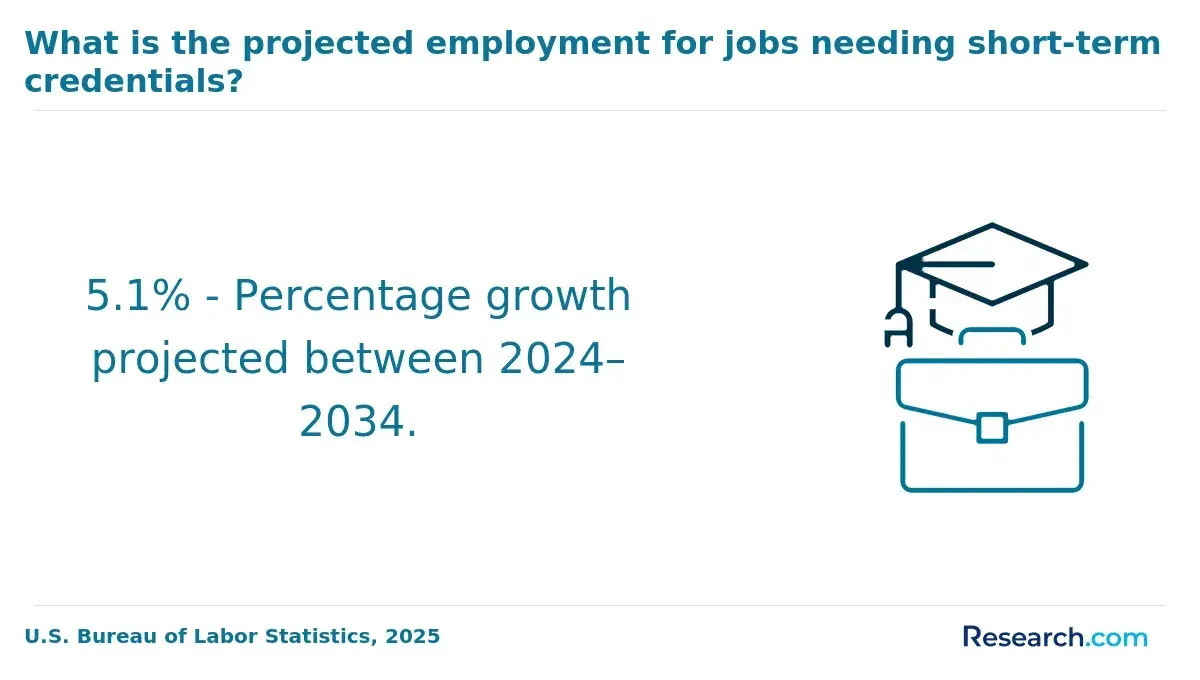
Colleges may offer career certificates, associate and bachelor's degrees, and graduate credentials, but their offerings differ. Associate programs can provide occupational preparation or a transfer route. Bachelor's programs typically combine general education with a major. Graduate certificates offer focused study, while master's degrees may emphasize professional practice, technical specialization, or research.
Match the credential to the job or further study you want before comparing institutions. If graduate study is appropriate, a guide to most useful masters degrees can help generate fields to investigate, but check each college's actual curriculum and admission prerequisites. A certificate may be more economical than a full degree for a limited skill gap; it may not substitute for a degree required for licensure.
Are online colleges as valuable as traditional campus-based schools?
An online credential can be valuable when the institution is appropriately accredited, the program fits your goal, and its requirements can be completed from your location. Delivery format alone does not establish academic quality or employer acceptance. Compare the same curriculum, faculty access, support, and required experiences you would examine in a campus program.
Online also does not mean self-paced. Ask about live meetings, fixed deadlines, proctored assessments, labs, residencies, and local placements. Readers seeking an accessible undergraduate starting point can explore the easiest bachelor degree to get online, while remembering that "easiest" depends on their strengths and does not remove degree requirements. For licensed occupations, verify state eligibility before enrolling from outside the college's home state.
What are the admission requirements for the best colleges?
Undergraduate applicants may need transcripts and evidence of high school completion; selective schools may also consider essays, recommendations, or test scores under their current policies. Graduate applicants generally need a bachelor's degree, and a particular program may require prerequisites, experience, a portfolio, an interview, or professional licensure. Requirements can differ across programs at the same college.
Check the admissions page for your exact credential and applicant category, including transfer or international status where relevant. Confirm current testing rules, deadlines, and fees rather than assuming a college-wide policy applies to every program. Applicants comparing online colleges no application fee should verify that the waiver covers their intended program and term; avoiding an application fee says little about the eventual cost of attendance.
How much do the best colleges cost, and what financial aid is available?
Published tuition is a starting point, not a final bill. Add mandatory and program fees, books, housing, transportation, and any travel or placement costs. Then compare each college's aid offer and estimated net price - the amount remaining after grants and scholarships, before deciding how to cover it.
As a benchmark, the College Board's 2024-25 published tuition-and-fee averages distinguish the following institution types. These are national averages, not quotes for a particular college or estimates of total attendance cost.
| Institution type | Average published tuition and fees | Important limitation |
| Public four-year, in-state | $11,610 per year | Out-of-state rates and living costs can be higher. |
| Private nonprofit four-year | $43,350 per year | Institutional grants may substantially change net price. |
Submit the Free Application for Federal Student Aid (FAFSA) to determine eligibility for federal aid, and check state, institutional, employer, and program-specific assistance. Compare grants separately from loans: loans must generally be repaid. For a multiyear program, estimate the cost through completion rather than choosing solely on the first-year offer.
How long does it take to complete a college degree or certificate?
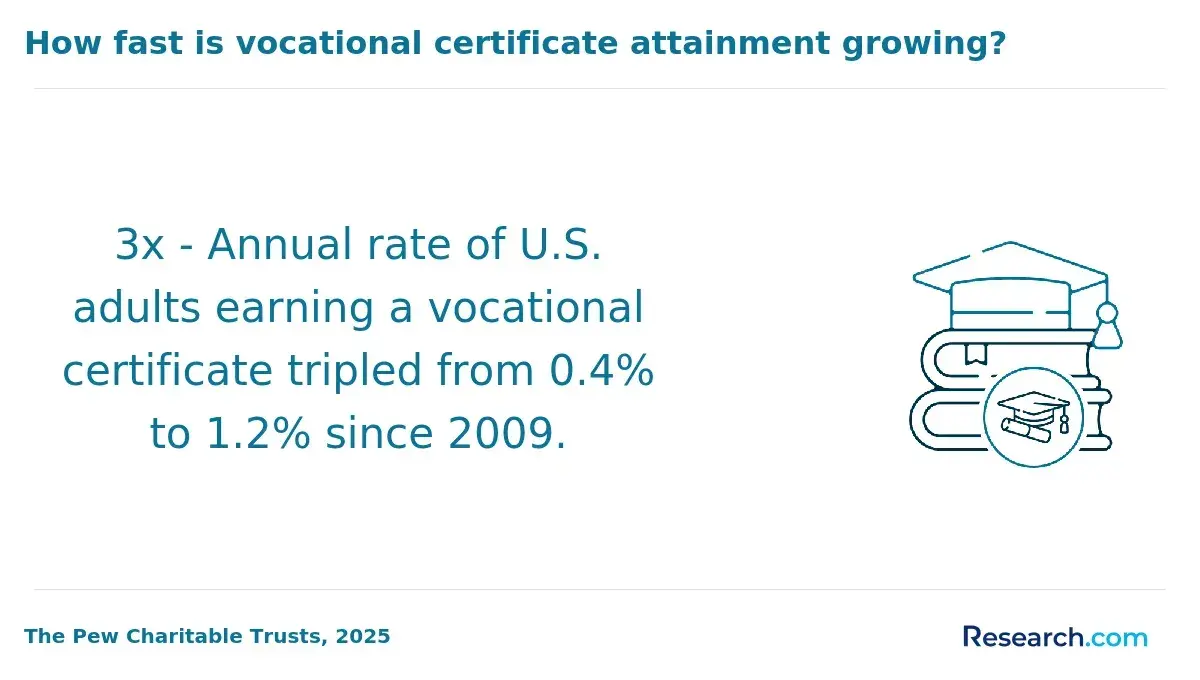
A traditional full-time associate degree often takes about two years, and a bachelor's degree about four; certificates and master's degrees vary widely. These are planning benchmarks, not promises. Required credits, course availability, enrollment intensity, and fieldwork determine the actual timeline.
Ask a college for a term-by-term plan based on your own transcript. Transfer acceptance is only the first question: credits must also apply to general education, major, or elective requirements, and the school may require a minimum number of credits completed there. If you are considering the easiest masters degree to get, compare prerequisites and the remaining capstone, thesis, or practicum work rather than assuming a short advertised timeline applies to every applicant.
What careers and salaries can graduates expect from the best colleges?
Career possibilities depend on the field, credential, experience, location, and any required license - not on a college's reputation alone. For context, the U.S. Bureau of Labor Statistics reports a May 2024 median annual wage of $93,600 for registered nurses. That is an occupational wage across workers, not an expected salary for graduates of a nursing program; becoming an RN also requires meeting state licensure requirements.
For another comparison, BLS reports a May 2024 median annual wage of $133,080 for software developers. A computer science degree can be relevant preparation, but the figure does not measure what new graduates earn or establish that a master's degree is required. Before committing to a program, review job postings for your target role and region, then distinguish required credentials from preferred skills and experience.
How should you compare colleges before choosing a program?
Begin with the career or further-study goal, then narrow your options to colleges that offer an appropriate credential. Request information for the exact program and entry term rather than relying on a general admissions page. The following sequence helps reveal problems while you can still choose another option.
- Confirm institutional accreditation and any program approval or state licensure eligibility your goal requires.
- Compare curricula, admission prerequisites, schedules, required in-person work, and support for completing placements.
- Request a written transfer-credit evaluation and a realistic course plan if you have previous college work.
- Compare total estimated completion costs using your aid offers, including fees and living expenses; separate grants from borrowing.
- Ask each school for program-specific completion and career information, including how outcomes were measured, before making a deposit.
A common mistake is treating a ranking, low tuition rate, or "fully online" label as proof of fit. If a school cannot clarify essential requirements in writing, treat that uncertainty as a reason to keep comparing.
Other Things You Should Know About
It can be, especially for an associate degree or a lower-cost transfer route. Confirm how courses will apply to the intended bachelor's program before enrolling.
Not necessarily. Compare the program's relevance, cost, required experiences, and credible outcomes for your target career rather than relying on rank alone.
Usually, but the receiving school decides which credits it accepts and how they apply. Request an evaluation before assuming a move will preserve your timeline.
Compare the remaining net cost and the scholarship's renewal conditions. A larger award does not always produce the lower total cost.
References
- Net Price Calculator Center | ed.gov https://collegecost.ed.gov/net-price
- Research Summary: Education and Lifetime Earnings | ssa.gov https://www.ssa.gov/policy/docs/research-summaries/education-earnings.html
- Estimate your college cost | USAGov https://www.usa.gov/estimate-college-cost
- Types of Financial Aid: Grants, Work-Study, and Loans | studentaid.gov https://studentaid.gov/understand-aid/types
- Institutional Groupings in IPEDS: Considerations for Data Use and Analysis | ed.gov https://nces.ed.gov/ipeds/use-the-data/institutional-groupings-in-ipeds
- Nearly Three-Quarters of Undergraduates Received Some Type of Financial Aid in 2019-20 | IES https://ies.ed.gov/learn/press-release/nearly-three-quarters-undergraduates-received-some-type-financial-aid-2019-20
- What Are the 4 Types of College Degree Levels? | snhu.edu https://www.snhu.edu/about-us/newsroom/education/college-degree-levels
- What Are the Different Levels of College Degrees? | Furman Blog https://www.furman.edu/blogs/levels-of-degrees/
- Cost of Attendance - Financial Aid and Scholarships | The University of Utah https://financialaid.utah.edu/tuition-and-fees/cost-of-attendance.php
- Estimating Costs | Financial Aid - University of Michigan https://finaid.umich.edu/getting-started/estimating-costs