
2027 Best Associate Degree Completion Programs for Adults Returning to College

Co-Founder and Chief Data Scientist
If you have college credits but no degree, the best program is the one that applies those credits to a credential you can finish around work and family - not simply the one advertising the shortest timeline. College Board reports average published tuition and fees of $4,050 for in-district students at public two-year colleges in 2024-25, but your remaining credits and fees determine what completion will actually cost. This guide compares six fields, explains where online study has limits, and shows you what to verify before enrolling.
Key Things You Should Know
- Start with a written transfer evaluation: a typical associate degree requires around 60 credits, but accepted credits must apply to your remaining requirements to save time.
- For working adults, compare part-time course availability, scheduled meetings, clinical requirements, and residency rules - not just whether classes are labeled online.
- Choose the credential for your goal: an AA or AS may better support transfer, while an AAS often emphasizes employment; nursing and some healthcare roles also require separate licensure.
Top 10 Best Associate Degree Completion Programs for Adults Returning to College
Business Programs
Business administration and accounting are practical completion choices when previous general education or business courses still meet degree requirements. An AA or AS may suit adults planning a bachelor's degree; an AAS may emphasize bookkeeping, office operations, or applied management skills. Look for evening or asynchronous sections that run often enough to avoid delays. Compare how many transferred courses count toward the major, not just the total accepted. An associate degree can support entry-level work, but management roles generally require experience.
Healthcare Programs
Healthcare administration and health information programs may accommodate more online coursework than hands-on clinical majors, making them worth comparing for adults who cannot leave their jobs for daytime placements. An AAS may target support roles; an AS may provide a stronger transfer route. Check whether previously completed science courses are current enough to count and whether an internship is required. Do not assume a general healthcare degree qualifies you for a regulated clinical occupation or a particular certification exam.
Information Technology Programs
Information technology, networking, and cybersecurity pathways may accept prior computing coursework, but departments can require current versions of technical courses. Compare applied labs, evening access, and whether industry certifications can be evaluated for credit. An AAS often emphasizes workforce skills; an AS may be better if a bachelor's degree is next. Help-desk or technical support work can be an entry point, while many cybersecurity positions require additional experience. Online delivery does not eliminate scheduled labs, exams, or group projects.
Nursing / Pre-Nursing Programs
These are different paths. An associate degree in nursing can prepare graduates to seek registered-nurse licensure if the program meets applicable approval requirements; a pre-nursing AA or AS generally covers prerequisites and does not itself qualify someone to practice. Nursing admission may be selective even at an open-admission college. Before returning, ask whether older anatomy and other science credits count, when clinical placements occur, and whether you must apply separately to the nursing cohort. Online lectures cannot replace required in-person clinical training.
Criminal Justice Programs
Criminal justice can be a transfer-oriented AA or a more applied AAS. Returning adults should compare how prior coursework applies and whether required internships fit their schedules. The degree may support applications for public-safety or administrative roles, but hiring standards vary: law enforcement jobs can require academy training, background screening, physical qualifications, and other steps. If your goal is a bachelor's degree, confirm that major courses will satisfy requirements at your intended transfer institution rather than transferring only as electives.
Psychology / Counseling Programs
A psychology AA or AS is usually a foundation for transfer, not a direct route to becoming a psychologist or licensed counselor. It may suit adults whose previous general education credits apply and who have a clear bachelor's-degree plan. Compare statistics and research-methods requirements at the intended transfer school before choosing electives. Some entry-level human-services work may be accessible with an associate degree, but clinical counseling and psychologist roles require substantially more education and state-specific licensure.
What are associate degree completion programs for adults returning to college?
Associate degree completion programs help students apply previously earned college credit toward the requirements of an associate degree. "Completion" describes your starting point, not a universal short program: the school still decides which credits transfer, where they apply, and how many credits you must earn there.
An Associate of Arts (AA) or Associate of Science (AS) often supports transfer to a bachelor's program; an Associate of Applied Science (AAS) often emphasizes occupational preparation. Those labels are useful starting points, but the curriculum and transfer agreement matter more. The best option for a returning adult is one with a clear evaluation of old credits, available remaining courses, and a credential matched to the next job or degree.
Which associate degree completion programs offer the best career opportunities?
No field is best for every adult. Compare the work the degree prepares you to pursue with the time and additional credentials your goal requires. This overview separates relatively direct workforce paths from fields that generally serve as stepping-stones.
| Field | Potential advantage | Main qualification to check |
| Business | Broad entry-level administrative and accounting applications | Experience or further education for management |
| Healthcare support | Employer-facing administrative or information roles | Role-specific certification or clinical requirements |
| Information technology | Technical support and networking entry points | Current skills and relevant experience |
| Nursing | A defined route toward registered-nurse practice | Program admission, clinical training, exam, and state licensure |
| Criminal justice | Public-safety and related administrative foundations | Employer screening and occupation-specific training |
| Psychology | Foundation for further study or some support roles | Further degrees and licensure for clinical practice |
If you need a credential for near-term employment, compare applied programs against local job postings. If your target occupation requires a bachelor's or graduate degree, favor an affordable transfer path with an articulation agreement; an associate degree alone may not meet that goal.
Are online associate degree completion programs as credible as campus-based programs?
Yes, an online associate program can be as credible as a campus-based one when the institution is appropriately accredited and the curriculum meets the same academic and, where relevant, professional requirements. Delivery format alone does not establish quality or eligibility for a license.
For adults, the more useful distinction is between online access and usable flexibility. An online course may still meet live, require proctored exams, or impose fixed weekly deadlines. Healthcare and nursing pathways may also require in-person labs or clinical placements. Ask for the course schedule and all on-site requirements before assuming you can complete the degree around a work shift.
What admission requirements apply to adult associate degree completion programs?
Most colleges ask returning applicants for an application and transcripts from every previously attended institution; requirements for placement, prerequisites, or minimum grades vary. Admission to the college does not necessarily mean admission to a selective nursing or allied-health major. Ask the program - not just general admissions - whether earlier science courses remain eligible and whether an entrance exam or background check applies.
If a prior conviction could affect placement or employment, check the program's clinical-site and relevant licensing-board rules before paying for classes. Guidance on best associate degrees for felons can help frame the question, but eligibility depends on the specific role and jurisdiction.
How long do associate degree completion programs take, and what do they cost?
A typical associate degree requires around 60 credits, but your timeline depends on remaining applicable credits, enrollment pace, course sequencing, and any clinical placement. A student with general education credits but none of the required major courses may need substantially longer than an advertised completion timeline suggests. Likewise, a associate degree in 6 months online claim is not a realistic planning assumption without checking the credits already earned and every remaining requirement.
College Board's 2024-25 average of $4,050 in published tuition and fees for in-district public two-year students is a yearly benchmark, not a quote for finishing a degree. Compare each school's charges for your remaining credits, mandatory fees, books, technology, commuting, and possible clinical expenses. Also ask about financial aid eligibility, employer tuition assistance, and payment plans; the cheapest per-credit price may not produce the lowest total cost if fewer old credits apply.
What courses and transfer credits are included in associate degree completion programs?
Completion students may still need writing, mathematics, sciences, humanities, and major courses. A transcript can show many accepted credits while leaving required courses unfinished because the credits count only as electives. Request a degree audit that separates credits accepted, credits applied to each requirement, and credits still needed.
Policies vary for maximum transfer credit, minimum credits earned at the graduating college, course age, grades, and the accreditation of prior schools. Some colleges also evaluate exams, documented professional training, military education, or industry credentials for credit; experience alone does not automatically count. Adults with service records can compare credit-evaluation questions alongside resources on military friendly online colleges. If a bachelor's degree is your next step, verify separately that completed courses will satisfy that school's major - not merely transfer as electives.
What jobs and salaries can graduates expect after completing an associate degree?
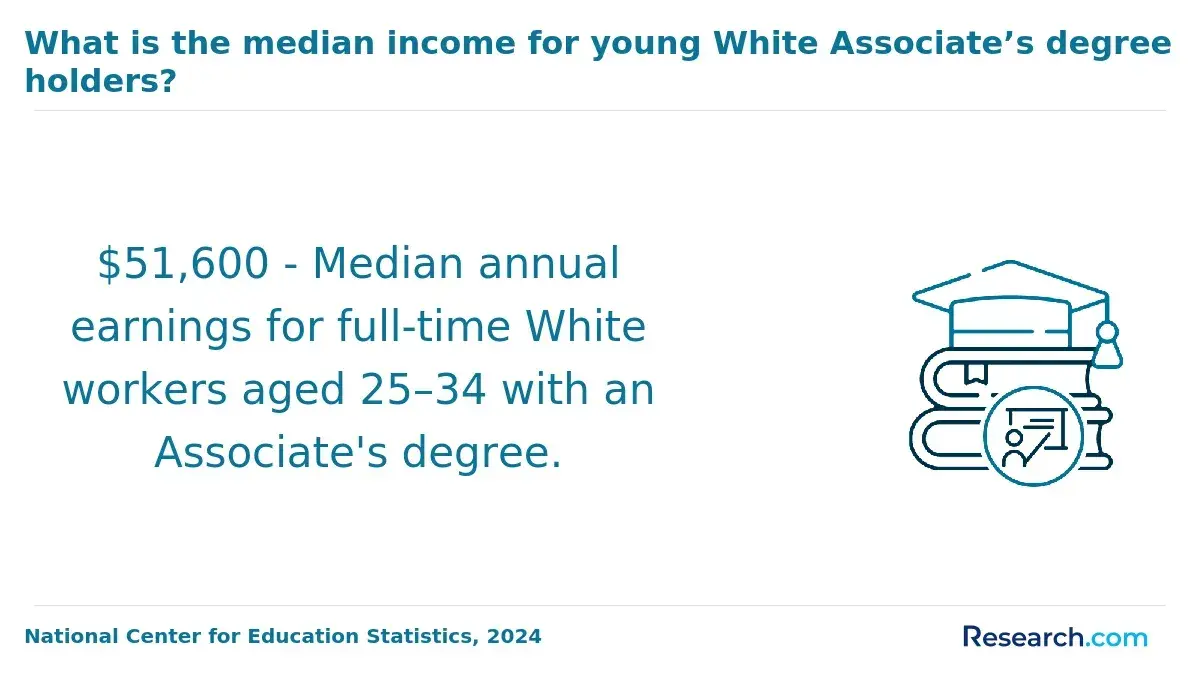
Potential roles include bookkeeping or administrative support, computer support, healthcare office work, and certain human-services support positions. The right match depends on the major, local hiring standards, and your existing experience. Nursing is a distinct, regulated route: the U.S. Bureau of Labor Statistics reports a May 2024 median annual wage of $93,600 for registered nurses as an occupation. That is not the expected pay of a new associate degree graduate; the role also requires licensure, and wages vary by employer, location, and experience.
Before enrolling, compare local job postings with the program's courses and required credentials. If most target jobs ask for a bachelor's degree, a transfer-focused associate program may be more useful than a workforce-focused AAS.
Which certifications or licenses do associate degree graduates need for employment?
An associate degree and a professional credential are separate. Registered nurses must meet state licensure requirements and pass the applicable licensing examination; other healthcare occupations can require distinct program approval, certification, or licensure. IT certifications may strengthen an application but are not universally required. Public-safety roles may impose academy, screening, and training requirements beyond the degree.
Psychology requires particular care: an associate degree does not qualify someone as a licensed psychologist or clinical counselor. Even discussions of 1 year PhD programs online should not be mistaken for evidence that a short educational path meets a state's clinical licensure rules. Check the licensing board for the state where you intend to work before committing to a program.
How can adults choose an accredited associate degree completion program?
Start by checking the institution's accreditation and, for a regulated occupation, the program approval or accreditation relevant to that occupation and state. Then request a written transfer evaluation and a term-by-term plan for the courses you have left. This is more reliable than choosing from a ranking or comparing advertised tuition alone.
Ask an advisor whether your remaining classes are offered in the terms and formats you can attend, how many credits must be completed at the college, and what the full remaining cost will be. Confirm any clinical or campus requirements and, if you plan to transfer, obtain the destination school's guidance on how credits will apply. A red flag is a short completion promise made before anyone has reviewed your transcripts.
Other Things You Should Know About
Yes, if the new college accepts your previous coursework. Request an evaluation showing which credits fulfill degree requirements and how many must be earned at the new institution.
Policies differ. General education credits may remain usable, while a program may limit the age of science or technical courses. Ask for a course-by-course review.
Choose based on your goal and the specific curriculum. AA and AS pathways often support transfer; AAS pathways often emphasize employment. Confirm both course transfer and job requirements before deciding.
Often, but check when required courses run. Scheduled online meetings, infrequently offered classes, and daytime clinical placements can make a nominally part-time program difficult to complete.
References
- Thinking Through Transfer: Examining How Community College Students Make Transfer Decisions - PMC https://pmc.ncbi.nlm.nih.gov/articles/PMC10857860/
- Measuring Student Success In IPEDS: Graduation Rates (GR), Graduation Rates 200% (GR200), And Outcome Measures (OM) https://nces.ed.gov/ipeds/use-the-data/measuring-student-success-in-ipeds
- School-Determined Requirements | 2024-2025 Federal Student Aid Handbook https://fsapartners.ed.gov/knowledge-center/fsa-handbook/2024-2025/vol1/ch1-school-determined-requirements
- .14 Evaluation and Review Process for Transfer of Courses and Credits. | Library of Maryland Regulations https://regs.maryland.gov/us/md/exec/comar/13B.06.02.14
- Credit for Prior Learning - Ohio Department of Higher Education https://highered.ohio.gov/initiatives/access-acceleration/credit-for-prior-learning
- How You Can Receive Credit for Prior Learning at TESU https://www.tesu.edu/about/newsroom/2026/receive-credit-for-prior-learning-at-tesu.php
- How to Get College Credit for Work Experience - Post University https://post.edu/blog/pla-101-can-a-prior-learning-assessment-get-me-college-credit-for-work-experience/
- Prioritizing Time to Completion for Community College Students | Community College Research Center https://ccrc.tc.columbia.edu/easyblog/prioritizing-time-completion-community-college-students.html
- Transfer Credit Services - Office of Academic Records and Registrar https://arr.usc.edu/transfer-credit-services/
- How Long Are Community College Programs? | Edison State Community College https://www.edisonohio.edu/blog/how-long-are-community-college-programs


