2027 Best Accredited Online Substance Abuse Counseling Degree Programs: Compare Tuition, Admissions, and Career Outcomes

Co-Founder and Chief Data Scientist
Choosing an online substance abuse counseling degree is a high-stakes decision because the right program can affect licensure eligibility, total debt, and job options. SAMHSA's latest national survey, released in 2024, estimated that 48.5 million people ages 12 and older had a substance use disorder in the past year, underscoring the need for trained counselors. This guide is for working adults, transfer students, and first-time students comparing accredited programs. You will learn how to evaluate tuition, admissions, accreditation, flexibility, financial aid, and career outcomes before enrolling.
Key Things You Should Know
- The strongest overall value usually comes from regionally accredited public or nonprofit online programs that align coursework with state substance abuse counselor credential requirements and keep total costs below private-market benchmarks.
- BLS data for 2024 reports a $59,190 median annual wage for substance abuse, behavioral disorder, and mental health counselors, with projected employment growth of 17% from 2024 to 2034.
- Accreditation matters for federal aid, transfer credits, graduate admission, and licensure review; students should verify institutional accreditation first, then check whether the curriculum supports state-specific addiction counseling credentials.
Which Accredited Online Substance Abuse Counseling Degree Programs Offer the Best Overall Value?
The best accredited online substance abuse counseling degree program is not always the cheapest or the most selective. The best value is usually the program that combines recognized accreditation, state licensure alignment, reasonable tuition, strong field-placement support, and enough flexibility for the student to finish without interrupting employment.
Most students should compare programs by degree level first. Certificates can help current human services workers meet credential requirements, associate degrees can support entry-level roles in some states, bachelor's degrees are often stronger for advancement, and master's degrees may be needed for independent clinical counseling licensure depending on the state.
The table below summarizes which type of accredited online substance abuse counseling program is likely to offer the best value for different student goals. It is not a ranking of individual schools; it is a decision framework for comparing real programs side by side.
| Program type | Best fit | Typical value advantage | Main limitation to check |
| Online undergraduate certificate in substance abuse counseling | Students who already have college credits or work in behavioral health | Lower cost and shorter completion time than a full degree | May not be enough for licensure or advancement without a degree |
| Online associate degree in addiction counseling or human services | First-time students seeking an entry point into the field | Often lower tuition, especially through public community colleges | Some states and employers prefer a bachelor's degree |
| Online bachelor's degree with an addiction counseling concentration | Transfer students and working adults seeking broader career mobility | Better long-term flexibility for case management, treatment coordination, and graduate school | Higher total cost than a certificate or associate degree |
| Online master's degree in counseling with addiction specialization | Students targeting clinical counseling licensure or supervisory roles | Stronger pathway to advanced credentials when state rules align | Requires careful review of practicum, internship, and licensing requirements |
The strongest value choice for many working adults is a regionally accredited online bachelor's program with addiction counseling coursework, generous transfer-credit policies, and practicum guidance in the student's home state. Students who already hold a bachelor's degree may find better return on investment in a graduate certificate or counseling master's program if it directly supports licensure.
A common mistake is choosing a school because it advertises "online counseling" without confirming whether addiction-specific coursework meets state credential standards. Another mistake is assuming a national brand is worth a higher price automatically. In healthcare education, the best ROI often depends on credential alignment and speed to completion; students comparing broader administrative pathways may also want to review options such as the fastest online master's in healthcare management if they prefer leadership roles over direct counseling practice.
What Accreditation Should Students Look for in an Online Substance Abuse Counseling Degree Program?
Accreditation is the first filter students should apply. For an online substance abuse counseling degree, accreditation means an outside recognized body has reviewed the institution or program for academic quality, governance, student support, and financial stability. It does not guarantee licensure, employment, or a particular salary, but it can determine whether credits transfer, whether federal aid is available, and whether licensing boards will review the degree.
Students should understand the difference between institutional and programmatic accreditation. Institutional accreditation applies to the college or university as a whole. Programmatic accreditation applies to a specific professional program, such as counseling.
The table below explains the main accreditation categories and why they matter for students comparing online substance abuse counseling programs.
| Accreditation type | What it means | Why it matters | What to verify |
| Institutional accreditation | The college or university is accredited by an agency recognized by the U.S. Department of Education or CHEA | Supports federal aid eligibility, transfer credit review, and graduate admission | School name, accreditor, active status, and campus or online authorization |
| CACREP accreditation | Some graduate counseling programs meet specialized counseling standards | Can be important for professional counseling licensure in some states | Whether the exact online program and specialization are accredited |
| NASAC-related addiction studies accreditation | Some addiction counseling programs undergo specialized review for addiction studies education | May signal stronger addiction-specific curriculum alignment | Whether the credential is recognized by the relevant state board or certification body |
| State authorization and licensure alignment | The school is permitted to enroll online students in specific states and may disclose licensure fit | Helps students avoid programs that cannot support their state credential goal | State disclosures, practicum rules, and board-approved coursework |
Before applying, students should verify accreditation directly through recognized databases and the school's state authorization disclosures. Admissions representatives can be helpful, but students should not rely only on marketing pages when licensure is involved.
Use this sequence when checking accreditation and licensure fit:
- Confirm the institution is accredited by an agency recognized by the U.S. Department of Education or CHEA.
- Check whether the exact online program, not just the university, has any relevant counseling or addiction studies accreditation.
- Review your state's substance abuse counselor credential requirements for degree level, supervised experience, and required coursework.
- Ask the program for written licensure disclosures for your state before enrolling.
- Save documentation in case a licensing board asks for syllabi, practicum hours, or transcript details later.
The biggest red flag is vague language such as "prepares students for counseling careers" without a clear explanation of which credentials the curriculum supports. Another warning sign is a program that cannot explain whether online students can complete fieldwork in their home state.
How Do Tuition Costs Compare Across Accredited Online Substance Abuse Counseling Degree Programs?
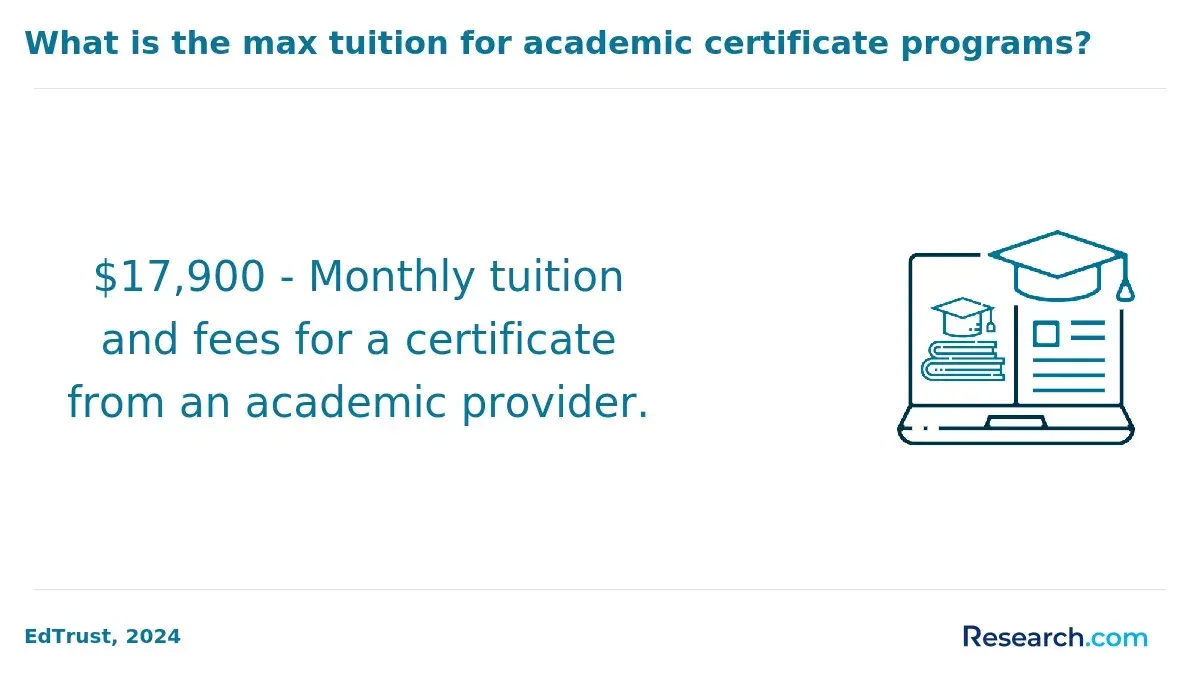
Tuition for accredited online substance abuse counseling degree programs varies widely by institution type, residency status, degree level, and transfer credit. Students should compare total cost, not just per-credit tuition, because online programs may also charge technology fees, clinical placement fees, background-check fees, exam-prep costs, and graduation fees.
National tuition benchmarks can help students judge whether an online program is priced reasonably. College Board's 2024 Trends in College Pricing data lists average published tuition and fees of $11,610 for in-state public four-year students and $43,350 for private nonprofit four-year students for the 2024-25 academic year; online students should use those figures as context, not as a substitute for each school's net price.
The table below shows the cost factors that most often change the real price of an accredited online substance abuse counseling degree. These categories help students compare offers even when schools use different tuition models.
| Cost factor | Why it changes total cost | Best-value signal | Red flag |
| Residency pricing | Public universities may charge different rates for in-state and out-of-state online students | Flat-rate online tuition or affordable in-state pricing | Out-of-state surcharge that erases the value of a public program |
| Transfer credits | Accepted credits reduce the number of courses students must pay for | Clear transfer maps and generous review of prior accredited coursework | Low transfer-credit limits or unclear evaluation rules |
| Practicum or internship expenses | Students may need site approvals, insurance, background checks, or travel | Dedicated field-placement guidance in the student's state | Student must find a placement alone with little institutional support |
| Course materials | Textbooks, digital resources, and assessment tools can add recurring expenses | Transparent book estimates or low-cost course materials | Fees disclosed late in the enrollment process |
| Pace of completion | Part-time enrollment can extend fees, while accelerated study may reduce time away from higher-level roles | Flexible pacing without penalty for working adults | Rigid sequencing that delays graduation if one course is missed |
When comparing costs, students should request a program-level estimate that includes tuition, mandatory fees, expected transfer credits, fieldwork expenses, and projected financial aid. The lowest advertised tuition may not be the best deal if a program accepts fewer transfer credits or requires extra semesters.
Students comparing substance abuse counseling with other healthcare pathways should keep credential level in mind. For example, a doctoral nursing route can be much more expensive and specialized, so guides to a cheap DNP can be useful only if the student is deciding between advanced nursing practice and behavioral health counseling, not if the goal is entry-level addiction counseling.
How Competitive Is Admission to Accredited Online Substance Abuse Counseling Degree Programs?
Admission to accredited online substance abuse counseling degree programs is usually less competitive than admission to highly selective clinical graduate programs, but requirements still matter. Schools may review prior GPA, completed prerequisites, transfer credits, personal statements, background checks, and readiness for fieldwork with vulnerable populations.
Admissions flexibility should not be confused with weak academic quality. Many online programs are designed for adult learners and transfer students, so they may offer rolling admissions, multiple start dates, and test-optional policies while still requiring strong performance in counseling, psychology, ethics, and human services courses.
The table below compares common admissions requirements by program level. It helps students identify which options are realistic now and which may require additional preparation.
| Program level | Common admissions requirements | Who is most likely to benefit | Preparation issue to check |
| Certificate | High school diploma, associate degree, bachelor's degree, or current enrollment depending on the school | Career changers or current behavioral health workers | Whether the certificate has prerequisites or assumes prior college work |
| Associate degree | High school diploma or GED, placement review, and general education readiness | First-time college students | Math, writing, and college-readiness placement policies |
| Bachelor's degree | High school diploma or transfer credits, minimum GPA, transcripts, and sometimes a personal statement | Transfer students and working adults | How many prior credits apply to the major, not just electives |
| Master's degree | Accredited bachelor's degree, minimum GPA, recommendation letters, statement of purpose, and sometimes interview or prerequisite coursework | Students pursuing advanced counseling roles or licensure pathways | Whether the program meets the student's state clinical requirements |
Students with lower GPAs should look for programs with conditional admission, prerequisite pathways, or strong academic advising rather than assuming they are excluded. Students with strong academic records should still avoid overpaying for selectivity if the program does not align with their state credential goal.
Before applying, use a practical admissions checklist:
- Request an unofficial transfer-credit review before paying multiple application fees.
- Ask whether a criminal background issue could affect field placement or state credentialing.
- Confirm whether the program requires live class attendance, campus visits, or local internship hours.
- Compare start dates against your work schedule and financial aid timeline.
- Keep copies of syllabi from prior psychology, sociology, and human services courses for transfer review.
A common mistake is prioritizing the fastest admission decision over the best academic fit. A quick acceptance is useful only if the program is accredited, affordable, transferable, and aligned with the student's career target.
Which Learning Formats Offer the Greatest Flexibility in Online Substance Abuse Counseling Degree Programs?
The most flexible online substance abuse counseling programs are usually asynchronous or mostly asynchronous, meaning students can complete weekly coursework on their own schedule. However, counseling education often includes skill practice, supervision, group discussion, and fieldwork, so "online" does not always mean completely self-paced.
Students should compare learning format with their work schedule, caregiving responsibilities, learning style, and fieldwork availability. A fully asynchronous program can be excellent for independent learners, while a program with live evening sessions may be better for students who want real-time feedback and counseling skill practice.
The table below compares common online learning formats and the trade-offs students should consider before enrolling.
| Learning format | Flexibility level | Best fit | Potential drawback |
| Asynchronous online | High | Working adults who need weekly flexibility | Requires strong self-discipline and proactive communication |
| Synchronous online | Moderate | Students who benefit from live discussion and instructor interaction | Scheduled sessions may conflict with work or family responsibilities |
| Hybrid online | Moderate | Students near campus or students who want some in-person skill practice | Travel can reduce flexibility for out-of-area students |
| Competency-based or self-paced | High for experienced students | Students with prior knowledge and strong independent study habits | May not fit students who need structured deadlines |
| Online with local practicum | Varies | Students who need supervised experience in their own community | Placement availability depends on local agencies and state rules |
Flexibility should be evaluated alongside clinical readiness. Addiction counseling requires interpersonal judgment, ethical decision-making, documentation skills, and crisis-awareness training; students should look for programs that teach these skills through supervised practice, not only readings and quizzes.
Students comparing online healthcare degrees should also recognize that different fields have different hands-on requirements. For example, the best online radiology tech programs generally require clinical imaging experience, while substance abuse counseling programs may require local practicum or supervised behavioral health placement depending on degree level and credential goals.
What Student Support Services Improve Success in Online Substance Abuse Counseling Degree Programs?
Student support services can strongly influence whether online learners finish on time. In substance abuse counseling programs, support is especially important because students may need help with transfer credits, field placements, professional boundaries, licensure paperwork, and emotionally demanding coursework.
Good online programs make support visible before enrollment. Students should be able to identify who advises them, who helps with technology issues, who approves fieldwork, and where they can get academic or wellness support if coursework becomes difficult.
The table below summarizes support services that improve the student experience and why they matter in counseling education.
| Support service | Why it matters | What strong programs provide |
| Transfer-credit advising | Prevents students from retaking courses unnecessarily | Degree audits before or soon after admission |
| Licensure and credential advising | Helps students understand state-specific requirements | Written disclosures and advising tied to state credential pathways |
| Field-placement support | Practicum or internship access can delay graduation if poorly managed | Site approval guidance, timelines, and dedicated placement staff |
| Online tutoring and writing help | Counseling programs require case notes, reflection papers, and research-based writing | Remote tutoring, library access, and writing-center support |
| Career services | Students need help translating coursework into behavioral health roles | Resume review, interview practice, employer connections, and credential guidance |
Students should ask direct questions before committing. The answers often reveal whether the program is built for online learners or simply offers online courses without a full support system.
- Who will review my transfer credits, and when will I receive a degree-completion plan?
- Does the program help identify practicum or internship sites in my state?
- Which staff member advises students on substance abuse counselor credential requirements?
- Are online students eligible for the same tutoring, library, disability, and career services as campus students?
- What happens if I need to pause enrollment for work, caregiving, or health reasons?
A major red flag is a program that places the full burden of field placement on the student without clear site criteria or approval timelines. Another is limited access to faculty, because counseling students need feedback on ethical reasoning, communication skills, and professional identity development.
Which Financial Aid Options Are Available for Accredited Online Substance Abuse Counseling Degree Students?
Accredited online substance abuse counseling degree students may qualify for federal, state, institutional, employer, military, and workforce-development aid. The key requirement for federal student aid is attendance at an eligible accredited institution and completion of the FAFSA, but award amounts depend on financial need, enrollment intensity, dependency status, and degree level.
Federal Student Aid lists the maximum Pell Grant at $7,395 for the 2025-26 award year. That amount can meaningfully reduce undergraduate costs, but students should still compare net price after grants and scholarships rather than assuming all aid offers will be equal.
The table below outlines common financial aid options and how they may apply to online substance abuse counseling students.
| Aid option | Who may qualify | How it affects program choice |
| Federal Pell Grant | Eligible undergraduate students with financial need | Can reduce out-of-pocket cost at accredited eligible institutions |
| Federal student loans | Eligible undergraduate and graduate students | Can cover remaining costs but affects long-term ROI |
| State grants | Residents meeting state-specific rules | May make in-state public programs more affordable |
| Institutional scholarships | Students meeting school-specific academic, need-based, or program criteria | Can narrow the price gap between public and private nonprofit programs |
| Employer tuition assistance | Employees of healthcare, nonprofit, government, or behavioral health organizations | May favor part-time or career-aligned programs |
| Military and veteran benefits | Eligible service members, veterans, and dependents | Can make approved online programs substantially more affordable |
| Workforce or behavioral health grants | Students in regions with behavioral health workforce initiatives | May support students entering shortage-related roles |
Students should compare financial aid packages with the same level of scrutiny they apply to tuition. A program with higher tuition can sometimes be cheaper after grants and scholarships, while a low-tuition program may still be costly if it offers little aid or accepts few transfer credits.
Use these steps when comparing aid offers:
- Submit the FAFSA early and list every school you are seriously considering.
- Ask each school for a program-specific cost of attendance, not just tuition per credit.
- Separate grants and scholarships from loans so you can see what must be repaid.
- Ask whether scholarships renew automatically or require a minimum GPA or course load.
- Calculate how transfer credits change both tuition and financial aid eligibility.
Students comparing behavioral health with advanced nursing should avoid mixing ROI assumptions across fields. For example, short DNP programs may appeal to licensed nurses seeking advanced clinical leadership, but they are not a substitute for addiction counseling preparation and usually involve different aid, licensure, and salary considerations.
Which Career Outcomes Are Associated With Accredited Online Substance Abuse Counseling Degree Programs?
Accredited online substance abuse counseling degree programs can lead to roles in addiction treatment centers, community mental health agencies, hospitals, correctional programs, recovery organizations, residential treatment facilities, employee assistance programs, and social service agencies. Exact job titles depend on degree level, state credentialing rules, supervised experience, and employer requirements.
BLS data for 2024 places the median annual wage for substance abuse, behavioral disorder, and mental health counselors at $59,190. Students should treat this as an occupational benchmark, not a guaranteed outcome, because pay can vary by state, employer type, credential level, and whether the role includes clinical supervision, case management, or independent counseling duties.
The table below connects common career outcomes with the degree levels that may support them. Students should verify state and employer requirements before assuming any degree automatically qualifies them for a specific title.
| Career outcome | Common responsibilities | Typical education or credential considerations |
| Substance abuse counselor | Assessment support, treatment planning, group counseling, relapse-prevention education, and documentation | Requirements vary widely; some states allow associate or bachelor's preparation with supervised experience, while others require more |
| Behavioral health technician or recovery support role | Client monitoring, recovery coaching, intake support, and coordination with clinical staff | Certificate, associate degree, or relevant training may be sufficient depending on employer |
| Case manager | Resource coordination, care planning, referrals, and client advocacy | Bachelor's degree in human services, psychology, social work, or addiction studies is often helpful |
| Clinical mental health counselor with addictions focus | Therapy, diagnosis-related assessment where permitted, treatment planning, and supervised clinical practice | Usually requires a master's degree and state licensure pathway |
| Program coordinator or treatment services manager | Staff coordination, compliance support, quality improvement, and service delivery oversight | Bachelor's or master's degree plus experience may be preferred |
The job outlook is favorable compared with many occupations. BLS projects 17% employment growth for substance abuse, behavioral disorder, and mental health counselors from 2024 to 2034, which reflects continued demand for behavioral health services, integrated care, and treatment access. That growth does not remove the need to choose a program carefully, because licensure fit and supervised experience still shape employability.
Students should also consider whether the day-to-day work fits their strengths. Substance abuse counseling can be meaningful, but it can also involve crisis situations, relapse, documentation demands, high caseloads, and emotional stress. Students who prefer research, policy, or healthcare leadership may want adjacent graduate pathways instead; for example, PhD in nursing programs are designed for nurse scholars and researchers rather than addiction counseling practitioners.
How Do Online and Campus-Based Substance Abuse Counseling Degree Programs Compare?
Online and campus-based substance abuse counseling degree programs can both be strong choices when they are accredited and aligned with credential requirements. The better option depends on the student's schedule, location, learning preferences, need for face-to-face interaction, and access to field placements.
Online programs often work best for students who are employed, live far from campus, or need to complete coursework around family responsibilities. Campus-based programs may be better for students who want in-person faculty access, structured routines, local agency connections, or easier participation in counseling labs and peer practice.
The table below compares online and campus-based formats across the factors that most affect student success and ROI.
| Comparison factor | Online programs | Campus-based programs |
| Schedule flexibility | Often stronger, especially with asynchronous coursework | Usually tied to fixed class times |
| Access to faculty | Depends on virtual office hours, response times, and advising structure | May be easier for students who value in-person meetings |
| Field placement | Can be local to the student, but site approval may take planning | May benefit from established relationships with nearby agencies |
| Peer interaction | Usually through discussion boards, video sessions, and group projects | Often more spontaneous and face to face |
| Cost | May reduce commuting and relocation expenses | May offer local scholarships or campus employment opportunities |
| Learning environment | Best for self-directed students | Best for students who prefer structured routines and physical classrooms |
Online is not automatically easier. Students still need to meet deadlines, complete fieldwork, participate in discussions, and demonstrate counseling knowledge. Campus-based is not automatically better either, especially if the student would need to reduce work hours, relocate, or pay substantially more to attend.
The best decision is format fit. Choose online if flexibility helps you persist and the school supports fieldwork in your state. Choose campus if in-person practice, local networking, and structured scheduling are more important than geographic flexibility.
How Should Students Choose the Best Accredited Online Substance Abuse Counseling Degree Program?
Students should choose an accredited online substance abuse counseling degree program by working backward from their career goal. A student who wants an entry-level recovery support role may not need the same degree as a student pursuing independent clinical counseling licensure. The right program is the one that matches the credential, cost, format, and timeline required for the intended outcome.
A practical selection process helps prevent the most expensive mistakes, such as enrolling in a program that is accredited but not aligned with the student's state credential, or choosing low tuition without noticing weak placement support.
Use this step-by-step process to compare programs before applying:
- Define your target role, such as substance abuse counselor, case manager, recovery support specialist, or licensed professional counselor with an addictions focus.
- Look up your state's credential requirements for education level, coursework, supervised hours, exams, and background checks.
- Verify institutional accreditation and any relevant counseling or addiction studies accreditation for the exact online program.
- Request a written transfer-credit evaluation and estimated graduation timeline.
- Compare total net cost after grants, scholarships, employer aid, and accepted credits.
- Ask how the program supports practicum, internship, or supervised experience in your state.
- Review learning format, live attendance requirements, and course sequencing against your weekly schedule.
- Compare career services, licensure advising, faculty access, and student support for online learners.
- Ask for recent outcome indicators the school can legitimately share, such as completion patterns, credential-exam support, or employer partnerships.
- Choose the program that offers the best combination of affordability, licensure fit, flexibility, and completion confidence.
For many students, the best overall investment is not the lowest-cost program but the lowest-risk program: accredited, transparent, supportive, and aligned with the student's state and career path. Paying more may be reasonable if the program accepts more transfer credits, offers stronger field-placement support, or shortens time to completion. Paying more is harder to justify when the added cost does not improve licensure readiness, support, or outcomes.
Students should consider a different path if they are uncomfortable with emotionally demanding client work, cannot complete required supervised experience, or want a career focused more on healthcare operations than counseling. The best choice is the program that fits both the student's life now and the credential they need next.
Other Things You Should Know About Substance Abuse Counseling
Possibly, but it depends on your state and the credential you want. Many states require specific coursework, supervised experience, exams, and background checks in addition to a degree, so verify requirements before enrolling.
Completion time depends on degree level and transfer credits. Certificates may take less than a year, associate degrees often take about two years, bachelor's degrees commonly take about four years for first-time students, and master's programs often take two to three years.
It can be a strong fit for career changers with communication skills, emotional resilience, ethical judgment, and interest in behavioral health. People with prior experience in social services, healthcare, education, corrections, or peer recovery work may find the transition especially relevant.
Some do, especially programs tied to counseling licensure or professional credential preparation. Even when coursework is fully online, students may need approved local supervised experience, so ask each program how placement works in your state.
References
- Counseling Scholarships with an Emphasis on Addiction & Substance Abuse Counseling https://addiction-counselor.org/resources/scholarships/
- Substance Abuse Counselor Salary and Potential Careers | Bradley University Online https://onlinedegrees.bradley.edu/blog/substance-abuse-counselor-salary-potential-careers
- How Much Can You Make as an Addiction Counselor? https://www.hazeldenbettyford.org/graduate-school-addiction-studies/drug-alcohol-counselor-salary
- 2025 Most Affordable Online Master's Degrees in Counseling https://www.onlineu.com/most-affordable-colleges/counseling-masters-degrees
- Is Your Addiction Counseling Program Accredited? Here's How to Know https://www.addiction-counselors.com/addiction-counseling-accreditation/
- Substance Abuse Counselor https://onlinecounselingprograms.com/become-a-counselor/counseling-careers/substance-abuse-counselor/
- How to Become a Substance Use Counselor [By State] https://sobercollege.com/substance-use-counselor/counseling-requirements-state/
- Best Online Addiction Counseling Degrees 2025 https://www.affordablecollegesonline.org/degrees/counseling-programs/addiction-counseling/
- Best Online Master's In Addiction & Recovery 2025 https://www.psychology.org/degrees/addictions-and-recovery/masters/
- SUD Counselor Certification - CCAPP Credentialing https://ccappcredentialing.org/