2027 Best Accredited Online Management Information Systems Degree Programs: Compare Tuition, Admissions, and Career Outcomes

Co-Founder and Chief Data Scientist
Choosing an online management information systems degree means comparing cost, credibility, flexibility, and career return before you commit. MIS matters because employers need professionals who can connect business goals with data, software, cybersecurity, and AI-enabled systems. The U.S. Bureau of Labor Statistics projects 17% growth for computer and information systems managers from 2023 to 2033, much faster than average.
This guide is for working adults, transfer students, and first-time undergraduates who want an accredited online option and need a practical way to compare tuition, admissions, support, and outcomes.
Key Things You Should Know
- The strongest online MIS values usually combine institutional accreditation, business or computing program accreditation, transparent online tuition, generous transfer credit, and career services-not just the lowest sticker price.
- BLS data published in 2024 shows computer and information systems managers had median pay of $169,510, but MIS bachelor's graduates often start in analyst, business systems, database, cybersecurity, or project coordination roles before moving into management.
- Online MIS programs vary widely in format: self-paced competency programs may reward experienced adults, while structured semester programs may be better for students who need deadlines, advising, and cohort support.
Which Accredited Online Management Information Systems Degree Programs Offer the Best Overall Value?
The best overall value is not always the cheapest online management information systems degree. A high-value program should be accredited, affordable after transfer credits and aid, flexible enough to complete, and strong enough to support employment in business technology roles.
Students comparing MIS programs should also recognize that schools use different labels for similar degrees, including information systems, business information systems, IT management, and MIS/business analytics. If you are comparing broader online options, reviewing lists of the best online degrees can help you see how MIS fits among other technology and business pathways.
The table below compares representative accredited online MIS or closely related bachelor's programs that are commonly considered by U.S. students. Tuition figures are based on recently published online undergraduate rates and should be verified directly with each school because rates, fees, and residency rules can change.
| Institution and online program | Accreditation profile to verify | Published tuition basis | Best value for | Important trade-off |
| Florida International University, Online BBA in Information Systems | Regional accreditation; AACSB business accreditation | About $236 per credit for Florida residents and about $649 per credit for nonresidents | Florida residents who want a public university business school with strong employer recognition | Nonresident tuition can reduce value unless scholarships, residency benefits, or employer aid apply |
| Colorado State University Global, BS in Management Information Systems and Business Analytics | Regional accreditation; business accreditation should be verified for the specific program | About $375 per credit with a flat online rate | Working adults who want predictable tuition and a business analytics emphasis | Students who prefer a traditional campus culture may find the fully online model less personal |
| Western Governors University, BS Business Administration in IT Management | Regional accreditation; business accreditation should be verified for the specific program | Flat-rate tuition of about $3,955 per six-month term | Experienced adults who can move quickly through competency-based coursework | Students who need frequent live lectures or fixed weekly class meetings may struggle |
| Oregon State University Ecampus, BS in Business Information Systems | Regional accreditation; AACSB business accreditation | About $409 per quarter credit | Students who want a public research university option with a business information systems focus | Quarter credits are not directly comparable to semester credits, so total cost must be calculated carefully |
| Bellevue University, BS in Management Information Systems | Regional accreditation; business accreditation should be verified for the specific program | About $449 per credit | Adult learners who value applied coursework and transfer-friendly policies | Students should compare total required credits and institutional fees before assuming affordability |
| Liberty University, BSBA in Management Information Systems | Regional accreditation; business accreditation should be verified for the specific program | About $390 per credit for full-time online undergraduate students | Students seeking a private nonprofit university with frequent online start dates | The faith-based institutional environment may be a strong fit for some students and less suitable for others |
The strongest choice depends on your profile. Florida residents may get excellent value from in-state public tuition, experienced professionals may benefit from competency-based pricing, and transfer students may save more by choosing a school that accepts more prior credits than by choosing the lowest per-credit rate.
A common mistake is relying on rankings alone. Before applying, compare each program using a short value checklist that connects price to completion and career fit.
- Calculate total remaining credits after transfer evaluation, not just published tuition per credit.
- Check whether the MIS curriculum includes databases, systems analysis, cybersecurity, business analytics, project management, and enterprise systems.
- Ask whether online students receive the same career services, internship support, and employer access as campus students.
- Review graduation, retention, and student outcome data when available, but interpret them in context because online adult learners often have different enrollment patterns.
- Confirm whether the degree name will be understandable to employers in your target roles, especially if the program uses an alternative title such as IT management or business information systems.
What Accreditation Should Students Look for in an Online Management Information Systems Degree Program?
Accreditation is the first quality screen for an online MIS degree. It affects federal financial aid eligibility, credit transfer, graduate school admission, employer recognition, and whether the institution has passed an external review process.
Students should look at both institutional accreditation and, when available, programmatic accreditation. Institutional accreditation applies to the whole university, while programmatic accreditation reviews a specific business, computing, or technology program.
| Accreditation type | What it means | Why it matters for MIS students | How to use it in your decision |
| Institutional accreditation | The college or university is reviewed by a recognized accreditor | Usually required for federal financial aid, credit transfer, and graduate school recognition | Treat this as nonnegotiable for any online bachelor's degree |
| AACSB | Specialized accreditation for business schools | Signals a rigorous business school review process and may matter for students targeting competitive business or analytics roles | Valuable, especially if the MIS degree sits inside a school of business |
| ACBSP or IACBE | Business program accreditors often focused on teaching quality and outcomes | Useful for applied business technology programs that emphasize professional preparation | Helpful, but still compare curriculum and outcomes instead of relying on the label alone |
| ABET computing accreditation | Specialized accreditation for selected computing and technology programs | More common in computer science, information technology, cybersecurity, or engineering technology than in business-based MIS programs | Worth checking if the program is technical or computing-heavy, but not required for every MIS career path |
To verify accreditation, do not rely only on a school's marketing page. Use the U.S. Department of Education accreditation database, the accreditor's own directory, and the program page to confirm the exact institution, degree, and location or online modality.
Red flags include schools that describe themselves as "approved" but not accredited, programs that refuse to name their accreditor, or institutions that claim accreditation from organizations not recognized for U.S. higher education. If you plan to pursue graduate study later, ask prospective graduate programs whether they accept credits or degrees from the online school you are considering.
How Do Tuition Costs Compare Across Accredited Online Management Information Systems Degree Programs?
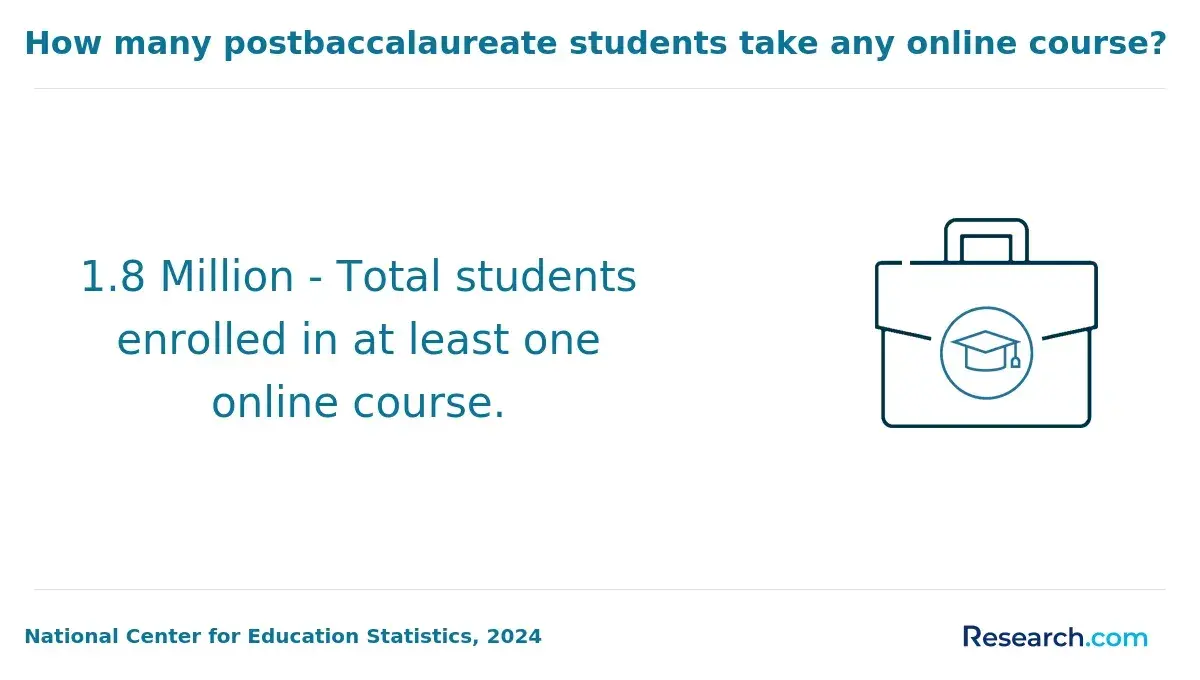
Online MIS tuition can vary by residency, institution type, transfer credit, and pricing model. NCES data released in 2024 shows that average undergraduate tuition and fees at public four-year institutions are far lower for in-state students than private nonprofit tuition, which is why residency and net price can matter as much as program reputation.
The table below explains the major cost patterns students usually encounter. It is designed to help you compare total cost before financial aid rather than simply scanning for the lowest per-credit number.
| Cost model | Typical structure | Who may benefit most | What to watch |
| In-state public tuition | Lower per-credit tuition for state residents | Residents with access to a strong public online MIS or information systems program | Out-of-state rates may be much higher unless the online program has a special flat rate |
| Flat online tuition | Same tuition for online students regardless of state residency | Out-of-state students who want a public or nonprofit option without a residency penalty | Fees, technology charges, and course materials can still increase total cost |
| Competency-based tuition | Flat charge per term rather than per credit | Students with prior experience who can complete more courses per term | Value drops if work, family, or learning pace slows progress |
| Private nonprofit tuition | Per-credit or per-term tuition set by the institution | Students who receive institutional scholarships, employer aid, or strong transfer credit | Sticker price can look high, so compare net price after aid |
| Transfer-heavy completion pathway | Students bring community college, military, professional, or prior university credits | Adult learners and associate degree graduates | Some schools limit technical, older, or lower-division transfer credits |
To compare tuition accurately, build a total-cost estimate for each school using the same assumptions. Include remaining credits, tuition rate, mandatory online fees, textbooks or software, proctoring fees, graduation fees, and any lost employer reimbursement if you study part time.
The biggest pricing mistake is comparing a $375-per-credit program with a $3,955-per-term program as if they work the same way. Per-credit programs are easier to forecast, while term-based programs can be cheaper only if you complete enough coursework within each term.
- Request an official transfer credit evaluation before estimating total tuition.
- Ask whether tuition is locked while enrolled or can increase each academic year.
- Separate direct school charges from optional expenses such as a new laptop or home internet upgrade.
- Compare net price after grants and scholarships, not only published tuition.
- Estimate the cost of delayed completion if a program's schedule may force you to take fewer courses each term.
How Competitive Is Admission to Accredited Online Management Information Systems Degree Programs?
Admission to online MIS bachelor's programs is usually less focused on extreme selectivity than admission to highly competitive campus programs, but requirements still vary. Public universities may require stronger GPAs and prerequisite coursework, while adult-focused online universities may use open or transfer-friendly admissions policies.
Most programs ask for a high school diploma or equivalent for first-time freshmen, official transcripts, minimum GPA standards, and proof of college readiness in math or English. Transfer applicants may need a minimum number of completed college credits and good academic standing at prior institutions.
If you are not ready for a four-year MIS program, an associate pathway can lower risk and build transferable credits. Some students start with 1 year associate degree programs or accelerated associate options before moving into a bachelor's completion program, but they should confirm transfer agreements first.
| Applicant type | Common requirements | Admissions strategy | Potential red flag |
| First-time college student | High school transcript or GED, application, possible placement requirements | Choose a program with strong advising, math support, and structured first-year courses | No clear support plan for students new to online learning |
| Transfer student | College transcripts, minimum GPA, transfer credit review | Prioritize schools that provide a written degree audit before enrollment | Vague promises that "most credits transfer" without course-by-course confirmation |
| Working adult | Prior college, professional experience, resume in some cases | Look for evening flexibility, asynchronous courses, and employer tuition support compatibility | Rigid schedules that conflict with work obligations |
| Military or veteran student | Military transcripts, prior college transcripts, benefit documentation | Ask about ACE credit, dedicated military advising, and benefit certification timelines | Unclear policies for military training credit or deployment interruptions |
| International or multilingual applicant in the U.S. | Transcript evaluation and possible English proficiency documentation | Confirm document deadlines early because evaluation can take time | No transparent policy for foreign credential evaluation |
Admissions flexibility does not automatically mean low quality. Many accredited online programs are designed for adult learners and transfer students, so they evaluate readiness differently from selective residential programs.
Before applying, ask admissions counselors direct questions about minimum GPA, prerequisite math, transfer limits, application deadlines, and whether admission to the university automatically means admission to the MIS major. That last distinction matters because some business schools require students to complete lower-division prerequisites before taking upper-division MIS courses.
Which Learning Formats Offer the Greatest Flexibility in Online Management Information Systems Degree Programs?
The most flexible online MIS format is the one that matches how you actually study. A self-paced model may be ideal for an experienced IT professional, while a structured weekly format may be better for a student who needs instructor interaction and predictable deadlines.
The table below compares common online formats and the type of student each tends to serve best. Use it to assess schedule fit before you compare brand names or tuition.
| Online format | How it works | Best fit | Main limitation |
| Asynchronous semester courses | Students complete weekly assignments without required live class meetings | Working adults who need flexibility but still want deadlines | Falling behind can become difficult because assignments still follow a calendar |
| Synchronous online courses | Students attend live virtual class meetings at set times | Students who want real-time discussion and instructor access | Less flexible for shift workers, caregivers, or students in different time zones |
| Competency-based education | Students progress by demonstrating mastery, often within flat-rate terms | Experienced learners who can move quickly through familiar material | Requires strong self-direction and comfort with independent study |
| Hybrid or low-residency format | Most coursework is online, with occasional campus or in-person requirements | Students near campus or those who want some face-to-face networking | Travel, time off work, or residency requirements can reduce convenience |
| Accelerated terms | Courses run in shorter sessions, often five to eight weeks | Students who want momentum and can focus on fewer courses at a time | The pace can be intense, especially in programming, database, or analytics courses |
MIS courses often include technical projects, group work, case analysis, and software tools. Flexibility should therefore include access to cloud labs, virtual desktops, collaboration platforms, and technical support outside standard business hours.
A frequent mistake is choosing the fastest calendar without considering course difficulty. Database design, systems analysis, business analytics, cybersecurity fundamentals, and programming-intensive courses can require more weekly time than general education classes, even when they carry the same credits.
What Student Support Services Improve Success in Online Management Information Systems Degree Programs?
Support services can make the difference between enrolling and actually graduating. This is especially true in MIS, where students often move between business courses, technical labs, quantitative assignments, and team-based projects.
Strong online programs give distance learners access to the same core academic and career resources available to campus students. Before enrolling, confirm which services are included in tuition and which require separate fees.
- Dedicated academic advising that helps students sequence prerequisites, upper-division MIS courses, electives, and capstone requirements.
- Online tutoring for statistics, accounting, programming, databases, writing, and business analytics.
- Technical support with extended hours for learning platforms, remote labs, proctoring tools, and required software.
- Career services that include resume reviews, mock interviews, internship guidance, employer events, and LinkedIn profile feedback.
- Library access with business, technology, and market research databases for case studies and capstone projects.
- Disability accommodations and accessibility support for online exams, course materials, and synchronous meetings.
- Veteran, military, transfer, and adult learner support for students balancing school with work and family responsibilities.
Career support deserves special attention. An MIS degree is applied, so students benefit from project portfolios, internship leads, business technology clubs, case competitions, and employer connections in fields such as consulting, healthcare, finance, logistics, government, and cybersecurity.
Ask whether online students can join student organizations, attend virtual employer events, and receive help finding internships in their local area. If a school treats online students as separate from the main university community, the degree may still be accredited, but the student experience can feel thinner.
Which Financial Aid Options Are Available for Accredited Online Management Information Systems Degree Students?
Students in accredited online MIS programs may be eligible for the same major aid categories as campus students, including federal grants, federal loans, state aid, institutional scholarships, military education benefits, and employer tuition assistance. Eligibility depends on the school, enrollment status, academic progress, and the student's financial profile.
The most important financial aid step is completing the FAFSA for eligible students and then comparing aid offers by net price. The same net-cost principle applies if you later compare graduate options, including MIS master's programs or even affordable EdD programs online: the lowest tuition is not always the lowest out-of-pocket cost.
| Aid option | How it can help | What MIS students should check |
| Federal Pell Grant | Reduces out-of-pocket cost for eligible undergraduate students | Whether enrollment intensity and satisfactory academic progress affect eligibility |
| Federal student loans | Can cover tuition and approved education expenses | Total borrowing, interest, repayment plans, and whether expected career path supports the debt |
| State grants | May support residents attending eligible in-state or approved institutions | Whether online out-of-state programs qualify |
| Institutional scholarships | Can lower net price at public or private universities | Renewal GPA, full-time enrollment rules, and whether transfer students qualify |
| Employer tuition assistance | Can reimburse part of tuition for job-related study | Annual reimbursement caps, grade requirements, and required service commitments |
| Military and veteran benefits | May cover tuition, fees, housing allowances, or training-related expenses | Benefit certification timelines and whether the program is approved for the specific benefit |
Do not assume a school is affordable because it advertises scholarships. Compare the actual award letter, remaining balance, loan amount, and renewal conditions.
- Submit financial aid documents early so you can compare complete aid offers before the enrollment deadline.
- Ask each school for a net price estimate based on your transfer credits and enrollment plan.
- Separate grants and scholarships from loans, because loans reduce today's bill but create future repayment obligations.
- Check whether part-time enrollment affects aid, especially if you plan to study while working full time.
- Calculate whether employer reimbursement is paid upfront or only after you complete each course.
Which Career Outcomes Are Associated With Accredited Online Management Information Systems Degree Programs?
An online MIS degree prepares students for roles that connect business processes with information technology. Graduates often work with databases, enterprise software, business analytics tools, cybersecurity practices, workflow improvement, vendor systems, and project teams.
BLS data published in 2024 projects 17% growth for computer and information systems managers from 2023 to 2033, but most bachelor's graduates do not step directly into manager roles. The practical goal is to build a foundation for analyst, coordinator, administrator, or specialist positions that can lead to management with experience.
The table below shows common career directions related to MIS. Salary figures are occupational medians reported by BLS for May 2023 and should be interpreted as market context, not a guaranteed outcome for any individual graduate.
| Career path | Typical responsibilities | Relevant MIS preparation | BLS median pay context |
| Computer systems analyst | Evaluate business technology needs and recommend system improvements | Systems analysis, databases, project management, business process modeling | $103,800 |
| Management analyst | Improve organizational processes, costs, and operations | Business analytics, operations, communication, data interpretation | $99,410 |
| Database administrator or architect | Organize, secure, maintain, or design data systems | Database design, SQL, data governance, cybersecurity fundamentals | $117,450 |
| Information security analyst | Help protect systems, networks, and data from threats | Security fundamentals, risk management, systems thinking, compliance awareness | $120,360 |
| Computer and information systems manager | Lead technology teams, strategy, budgets, vendors, and implementation projects | Business leadership, project management, enterprise systems, analytics, IT governance | $169,510 |
Current hiring trends make MIS especially relevant because employers increasingly expect business professionals to understand data, automation, cloud systems, cybersecurity risk, and AI-enabled workflows. MIS can be a good fit for students who do not want a pure computer science degree but still want to work in technology-driven roles.
Some graduates later pursue certifications or graduate education. Depending on career goals, options may include CompTIA, Certified ScrumMaster, AWS or cloud credentials, Google data analytics credentials, security certifications, an MS in information systems, or one of the fastest executive MBA programs for experienced professionals moving into leadership.
Students should build a portfolio while enrolled. Useful portfolio evidence can include database projects, dashboards, process maps, cybersecurity risk memos, systems analysis documents, capstone presentations, and internship work samples that show employers more than a transcript.
How Do Online and Campus-Based Management Information Systems Degree Programs Compare?
Online and campus-based MIS degrees can lead to similar academic outcomes when the institution is accredited and the curriculum is comparable. The bigger difference is the student experience: scheduling, networking, access to campus recruiting, learning style, and support structure.
The table below compares online and campus formats across decision factors that matter most to MIS students. Use it to decide which environment fits your schedule, learning habits, and career goals.
| Decision factor | Online MIS degree | Campus-based MIS degree | Best choice depends on |
| Schedule flexibility | Usually stronger, especially in asynchronous programs | Less flexible because classes meet at set times and locations | Work schedule, caregiving responsibilities, and commute |
| Networking | Can be strong if the school offers virtual events and active online communities | Often easier through clubs, professors, peers, and campus recruiting | Your willingness to network intentionally online |
| Learning environment | Requires self-direction, written communication, and comfort with technology | Offers more face-to-face interaction and immediate classroom feedback | Your study habits and need for structure |
| Internships | May require students to search locally or remotely | May provide stronger access to nearby employers and career fairs | School employer network and your location |
| Cost | Can reduce relocation, commuting, and housing expenses | May include campus fees, housing, transportation, and opportunity costs | Net price after aid and your ability to keep working |
| Employer perception | Generally strongest when the transcript and diploma come from an accredited, recognizable institution | Often familiar to local employers, especially for regional public universities | Accreditation, institution reputation, and career services quality |
Online is often the better investment for working adults, military students, caregivers, and transfer students who cannot relocate. Campus may be better for students who want daily structure, residential life, in-person student organizations, and direct access to local recruiting pipelines.
A key mistake is assuming online automatically means easier. Strong online MIS programs can be demanding because students must manage technical assignments, group projects, deadlines, and independent problem-solving without the routine of a physical classroom.
How Should Students Choose the Best Accredited Online Management Information Systems Degree Program?
The best accredited online MIS program is the one that fits your career goal, budget, learning style, and timeline with the least unnecessary risk. Instead of choosing based on one ranking or one tuition number, evaluate programs through a structured decision process.
Career changers should be especially deliberate. Whether someone is moving from retail, administration, teaching, healthcare, or another profession such as those exploring future paths as SLPs, the key is to connect the degree to a realistic role, required skills, and local or remote job opportunities.
- Define your target role first, such as business analyst, systems analyst, database specialist, cybersecurity analyst, IT project coordinator, or technology manager.
- Verify institutional accreditation and any relevant business or computing program accreditation.
- Request a transfer credit evaluation before comparing total tuition.
- Map the curriculum against employer needs, including SQL, data analytics, systems analysis, project management, cybersecurity basics, cloud tools, and communication.
- Compare delivery format with your weekly schedule and learning style.
- Review student support, especially advising, tutoring, technical support, and career services for online learners.
- Compare net price after grants, scholarships, employer aid, and loans.
- Ask about internship support, capstone projects, portfolio development, and access to employer events.
- Check whether credits will apply to future graduate programs if you may pursue an MBA, MSIS, or analytics degree.
- Choose the program that offers the strongest combination of completion likelihood, affordability, and career relevance.
Students should avoid programs that are vague about accreditation, refuse to provide written transfer evaluations, do not publish tuition clearly, or cannot explain how online students access career services. These are not always dealbreakers, but they are reasons to slow down and ask more questions.
Paying more for a nationally recognized program can make sense if it improves your access to employers, specialized coursework, alumni networks, or graduate pathways. Paying more does not make sense if the added cost creates debt that is out of proportion to your likely entry-level opportunities.
The most practical final step is to narrow your list to three schools: one lowest-cost accredited option, one strongest career-network option, and one best-flexibility option. Then compare actual net price, remaining credits, course sequence, and support services side by side before enrolling.
Other Things You Should Know About Management Information Systems
MIS sits between business and technology. Students learn how organizations use data, software, networks, and information systems to improve decisions and operations, but the degree is usually less programming-heavy than computer science.
Most bachelor's programs do not expect beginners to be expert coders. However, students should be ready to learn technical concepts such as databases, basic programming logic, analytics tools, and systems design.
MIS usually focuses on using technology to solve business problems, while information technology often focuses more directly on infrastructure, networks, systems administration, and technical implementation. The two fields overlap, so curriculum details matter.
Yes, certifications can help show specific technical or project skills. Useful options may include data analytics, cloud computing, cybersecurity, project management, Scrum, SQL, or vendor-specific credentials, depending on the job target.
References
- List of Online Colleges by Accreditation https://www.onlineu.com/resources/accreditation
- 2025's Best Online Master’s in Information Systems (MIS) Programs https://www.onlinemastersdegrees.org/best-programs/information-systems/
- Find Programs - ABET https://www.abet.org/accreditation/find-programs/
- Accreditations https://catalog.shsu.edu/undergraduate/accreditations/
- Online MIS Degrees | Accounting.com https://www.accounting.com/degrees/information-systems/masters/
- Online Bachelor's Degree in Management Information Systems (MIS) | CSU Global | Accredited https://csuglobal.edu/academic-programs/undergraduate-degrees/bachelors-degree-management-information-systems-business-analytics
- Online Bachelor's Degree: Computer Information Systems https://www.umgc.edu/online-degrees/bachelors/computer-information-systems
- National survey focuses on outcomes of new college graduates - Utah System of Higher Education https://ushe.edu/new-national-survey-focuses-on-outcomes-of-new-college-graduates/
- Tuition-Free Distance Learning Online Program in Managing Information Systems (MIS) - UNYBT https://unybt.com/tuition-free-program-mis/
- Best Bachelor's Degrees in Information Systems https://www.computerscience.org/degrees/bachelors/information-systems/