2027 Online Management Information Systems Degree Programs With Monthly Tuition Payment Plans

Co-Founder and Chief Data Scientist
Online Management Information Systems programs can be easier to budget when a school lets students divide a term balance into monthly installments rather than paying tuition at once. This matters because College Board reported average published tuition and fees of $11,610 at public four-year colleges and $43,350 at private nonprofit four-year colleges for 2024-25.
This guide is for prospective MIS students comparing online programs, payment-plan terms, aid, and total cost so they can choose a workable path without overlooking fees or deadlines.
Key Things to Know About Management Information Systems Programs with Monthly Tuition Payments
- Monthly tuition plans are usually short-term, interest-free installment arrangements for one semester or term - not multi-year financing - and commonly require an enrollment fee plus a first payment before classes begin.
- Published online undergraduate tuition can range widely: at $250 per credit, a 120-credit degree totals about $30,000 before fees, while a $375-per-credit program totals about $45,000 before fees; the monthly amount depends on the remaining term balance, not the full degree price.
- Federal aid is generally applied to a student account before installments are calculated; the 2025-26 maximum Federal Pell Grant is $7,395, but eligibility, disbursement timing, and remaining balances vary by student and school.
Which online Management Information Systems degree programs have monthly tuition payment plans?
Some online MIS programs are offered by institutions that publicly provide tuition installment plans to enrolled students. A school-wide plan does not automatically mean every online program, session, or student is eligible, so confirm availability with the bursar or student accounts office before relying on it.
The examples below identify online MIS-related bachelor's programs at institutions that advertise installment-payment options. Tuition and plan terms can change by catalog year, residency, enrollment level, and session length.
| Institution and online program | Published tuition reference | Reported payment-plan approach | What to verify |
| University of Maryland Global Campus, B.S. Management Information Systems | Undergraduate tuition is published by residency and military status | Monthly payment plan offered through student accounts | Eligible term balance, enrollment fee, installment count, and whether course materials are separate |
| Colorado State University Global, B.S. Management Information Systems and Business Analytics | Undergraduate tuition published per credit | Tuition-payment options are available for qualifying balances | Whether the plan covers accelerated sessions and the due date for the initial payment |
| University of West Florida, B.S.B.A. Management Information Systems | Online tuition published by credit hour and residency | Institutional payment plan available for eligible charges | Online-program charges, out-of-state rate, and late-payment consequences |
Start with the program's total-credit requirement, then ask whether the plan is administered per semester, per eight-week session, or per academic year. A lower per-credit price can still create a high installment if many credits are taken in a short term.
Students weighing cost alongside speed may also compare best online degrees when deciding whether a traditional 120-credit MIS bachelor's program is the most practical route for their career goal.
How much do online Management Information Systems degree programs typically cost?
There is no single national tuition price or average monthly payment for online MIS degrees because institutions price by credit, residency, course load, and fees. The most reliable comparison is the program's published per-credit rate multiplied by required credits, followed by a separate estimate for required non-tuition charges.
For perspective, a 120-credit bachelor's degree priced at $250 per credit has estimated tuition of $30,000, while one priced at $375 per credit has estimated tuition of $45,000. These are tuition-only illustrations; transfer credits, grants, employer support, technology fees, and annual price changes can materially alter the final amount.
This table shows why a monthly figure should be evaluated by term rather than advertised as a degree-wide payment.
| Illustrative tuition scenario | Term tuition at 6 credits | Four-payment plan illustration | Important limitation |
| $250 per credit | $1,500 | $375 per installment before fees and aid | Does not include books, fees, deposit, or interest-free plan enrollment charge |
| $375 per credit | $2,250 | $562.50 per installment before fees and aid | Assumes four equal payments and no aid applied first |
| $500 per credit | $3,000 | $750 per installment before fees and aid | Shorter sessions may allow fewer installments |
Compare net price, not tuition alone. College Board's 2024-25 published tuition figures are useful national context, but they are not online MIS price averages and should not replace a school-specific financial aid estimate.
If finishing quickly is more important than reducing each installment, evaluate the course sequence carefully. Some 1-year associate degree programs may be less expensive and faster, but they are not substitutes for a bachelor's degree when an employer requires one.
How common are monthly tuition payment plans among Management Information Systems programs?
Monthly payment plans are common across U.S. colleges, but their availability is usually determined by the institution's student accounts office rather than by the MIS department. That means an online MIS student may be able to use the same plan as campus-based students, subject to term, balance, and enrollment requirements.
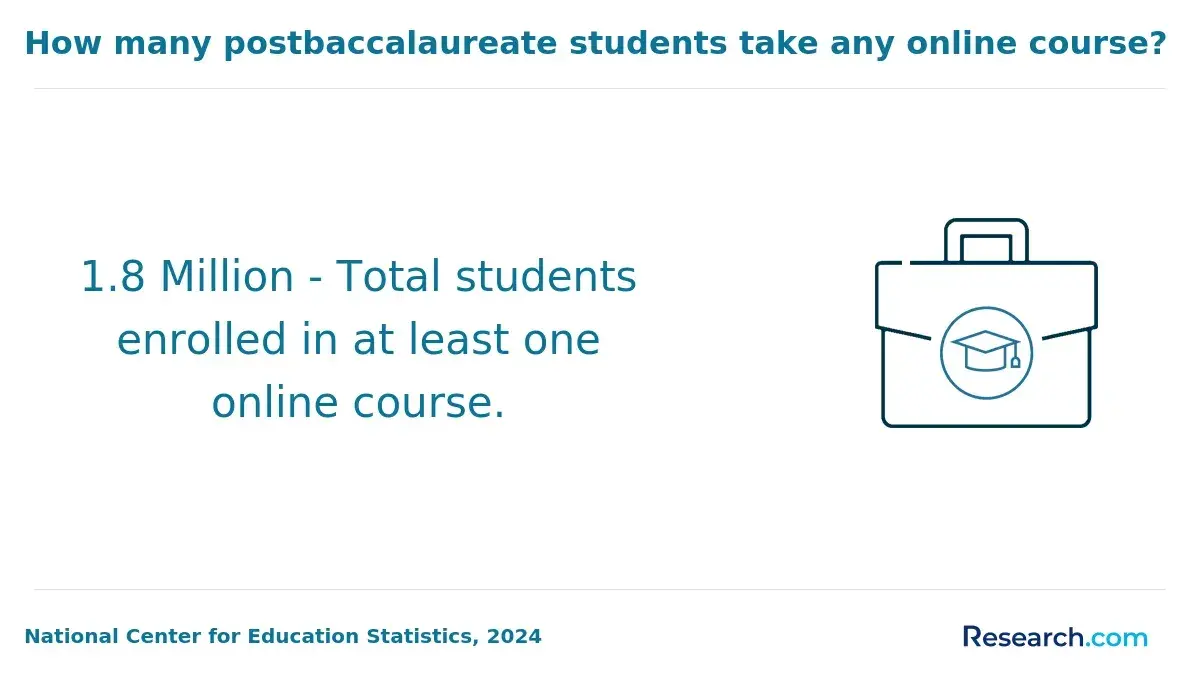
Online enrollment makes flexible billing especially relevant. National Center for Education Statistics data for how that millions of postsecondary students take exclusively distance education courses, which helps explain why many institutions maintain online billing and automated installment systems. Availability still varies most in shorter, accelerated terms because there may be too little time to split a balance into many payments.
Before applying, look for the school's tuition-payment-plan page and obtain written answers to these questions:
- Is the plan available to fully online MIS students in my start term?
- How many installments are offered for my specific session length?
- Must I enroll before financial aid disburses or after aid is posted?
- What balance, charges, or student categories are excluded?
A school that offers a plan is not necessarily more affordable. The useful comparison is whether the plan's timing fits your cash flow after grants, scholarships, employer reimbursement, and savings are considered.
Can monthly tuition plans make paying for Management Information Systems degrees more attainable?
Monthly plans can make an MIS degree more attainable when a student has dependable monthly income but cannot pay a full semester bill by the due date. They spread a known short-term balance over several scheduled payments, often without the interest charged by private financing.
The approach works best when the payment fits a conservative budget. It is less suitable for students whose income is unpredictable, whose employer reimburses only after grades are posted, or whose expected aid has not yet been confirmed.
The following comparison highlights when each funding approach tends to make sense.
| Option | May fit students who | Main trade-off |
| Monthly tuition plan | Can clear the full term balance within a few months from current income or savings | Missed installments may trigger late fees, registration holds, or plan cancellation |
| Pay tuition upfront | Have available savings and receive a discount for early payment, if offered | Uses more cash at once and may reduce emergency reserves |
| Federal student loans | Need to finance education over a longer period and qualify for aid | Borrowing can add interest and creates repayment obligations after enrollment |
| Employer tuition assistance | Have a documented benefit and can meet employer conditions | Reimbursement may arrive after payment is due and may require continued employment |
Use a payment plan as a cash-flow tool, not as evidence that the program is affordable overall. Students considering management careers that combine technology and leadership may also find it useful to compare program pacing with fastest executive MBA programs, particularly if they already hold a bachelor's degree and have substantial professional experience.
Does monthly payment plans have an effect on the overall cost of Management Information Systems degrees?
A monthly plan usually does not reduce tuition. In many cases it avoids loan interest because the balance is paid within the term, but an enrollment fee, returned-payment fee, or late fee can increase the amount paid. The key distinction is between an interest-free installment plan and longer-term financing that may carry interest.
Calculate the true plan cost before enrolling. Add every mandatory charge to the net term balance, then compare that result with paying by the school's regular deadline or using a loan only for any remaining gap.
- Find the tuition and required fees for your enrolled credit load.
- Subtract confirmed grants, scholarships, employer payments, and other posted credits.
- Add the plan enrollment fee, required down payment, and any anticipated payment-processing charge.
- Divide the remaining balance by the actual number of installments.
- Check the cost of a late or returned payment and the result if the plan is canceled.
A plan can cost less than borrowing when it has no interest and is paid on time. However, using it to postpone a balance that you cannot realistically repay by term end can lead to holds that prevent registration, transcript release, or continued enrollment.
Students pursuing leadership-oriented graduate study should apply the same total-cost test to affordable EdD programs online: an affordable advertised price is only one part of affordability when payment timing, fees, and borrowing are involved.
Do monthly payment plans affect your financial aid eligibility for Management Information Systems programs?
Enrolling in a monthly payment plan generally does not by itself reduce eligibility for federal financial aid. Eligibility is determined through the FAFSA and institutional aid processes, including enrollment status, satisfactory academic progress, cost of attendance, and other federal or school rules. The plan simply sets a schedule for paying the balance that remains after aid is applied or anticipated.
Timing is the issue to watch. Aid may disburse after the term begins, while a payment-plan deposit or first installment may be due earlier. Do not treat an estimated award as cash until the school confirms that the award is accepted, all verification requirements are complete, and the funds are scheduled to disburse.
Ask the financial aid office and student accounts office to clarify these points in writing:
- Whether pending financial aid lowers the installment amount before disbursement.
- Whether a plan is required while aid is pending and whether the enrollment fee is refundable.
- How dropped courses, withdrawal, or less-than-half-time enrollment could change the account balance.
- Whether a delayed disbursement can cause a late fee or automatic plan cancellation.
The 2025-26 maximum Pell Grant of $7,395 is a ceiling, not a typical award or a guarantee. Use your actual aid offer and the school's disbursement calendar when deciding whether monthly payments are manageable.
Is there a deposit required before starting Management Information Systems monthly payment plans?
Many schools require an initial payment before activating a tuition plan, but it may be described as a down payment, first installment, plan enrollment fee, or deposit. These are not interchangeable: a down payment usually reduces the tuition balance, while an enrollment fee may be a separate nonrefundable administrative charge.
There is no standard deposit amount across online MIS programs. The amount may be a fixed fee, a percentage of the balance, or the first scheduled installment. Accelerated programs may require a larger upfront share because the payment window is shorter.
Confirm the upfront obligation before registering for classes:
- Ask for the exact amount due on the day you enroll in the plan.
- Ask whether the amount is credited toward tuition or charged in addition to tuition.
- Request the refund policy if you withdraw, do not begin classes, or aid later covers the balance.
- Confirm whether future terms require a new enrollment fee or deposit.
A low initial payment can be helpful for immediate budgeting, but it may leave larger installments later. Choose the schedule based on the highest payment you can make reliably, not the smallest payment advertised at sign-up.
Are there fees not covered by monthly tuition payment plans for Management Information Systems programs?
Monthly plans often cover tuition and some mandatory institutional fees, but they may not cover every expense associated with an online MIS degree. Students should separate billed charges from indirect education costs, such as a computer, internet service, transportation for any required residency, or lost work hours.
This table identifies costs that frequently require separate confirmation. Policies differ by institution and can change by program or term.
| Cost category | Common treatment in a payment plan | What to check |
| Tuition | Usually included | Whether all registered credits are included |
| Mandatory technology or student fees | Often included if billed to the student account | Whether each fee is included in the financed balance |
| Books, access codes, and certification materials | Often excluded or charged separately | Required course-material costs and payment date |
| Payment-plan enrollment fee | Frequently separate | Refundability and whether it recurs each term |
| Late, returned-payment, and collection fees | Not covered as planned charges | Amounts, grace periods, and account-hold policy |
| Proctored exam or residency expenses | May be separate | Whether the MIS curriculum requires them |
Do not assume an online program has no additional costs. Review the official tuition-and-fee schedule, course-material policy, and payment-plan agreement together before accepting admission.
What should you look for in payment plan terms for Management Information Systems programs?
The strongest payment plan is one that is transparent about due dates, fees, and what happens when circumstances change. Read the agreement before enrollment, rather than relying on a monthly amount shown in a portal.
Use the following review points to compare plans across schools and avoid common surprises.
- Term length and installment count, especially for eight-week or other accelerated sessions.
- Required initial payment, plan enrollment fee, and whether payments are automatic.
- Exact due dates, grace periods, late fees, and returned-payment charges.
- Whether tuition increases, added courses, or dropped courses automatically recalculate the plan.
- Consequences of missed payments, including registration, transcript, course-access, or collection holds.
- Cancellation and refund rules if you withdraw or financial aid changes.
- Whether pending grants, scholarships, military benefits, or employer payments are reflected before installments are set.
A common mistake is comparing only the first month's bill. Compare the full payment calendar against your pay schedule, emergency savings, and expected aid date. Career changers may also want to compare the schooling and funding demands of technology programs with other pathways, such as resources for SLPs, before committing to a new degree.
How do you know if online Management Information Systems degrees with monthly payments are right for you?
An online MIS degree with monthly payments may be right for you if you need to preserve short-term cash flow, have stable income throughout the term, and can pay the entire remaining balance within the plan's limited timeframe. It can be especially practical for working adults whose employer assistance or household income arrives monthly.
It may be a poor fit if the plan requires payments before your income or reimbursement arrives, if you would need to miss essential bills to make an installment, or if a longer-term federal loan would provide a safer repayment structure. A payment plan does not solve a degree-price problem; it only changes when the school receives payment.
Before making a final enrollment decision, use this short decision process:
- Compare accredited online MIS programs based on curriculum, total credits, transfer policy, student support, and total estimated cost - not payment convenience alone.
- Request a written term-by-term bill showing tuition, mandatory fees, financial aid assumptions, deposit, and all installment dates.
- Build a budget using your lowest predictable monthly income, not overtime, bonuses, or unconfirmed reimbursement.
- Keep an emergency buffer for one installment and identify the school's missed-payment policy before enrolling.
- Choose upfront payment, a monthly plan, aid, employer support, loans, or a combination based on the lowest-risk way to cover the full program cost.
A good choice aligns program quality, career goals, and payment timing. If the schedule is tight even after confirmed aid, consider a lighter course load, a lower-cost institution, or postponing enrollment until the first term can be funded without relying on uncertain income.
Other Things You Should Know About Management Information Systems
Possibly. Some schools make plans available for certificates, while others require a minimum account balance or limit plans to degree-seeking students. Confirm eligibility for the specific certificate and session before registering.
Most short-term institutional installment plans do not function like private loans and commonly do not require a traditional credit check. However, schools can set their own rules, and third-party financing products may have different requirements.
Often, the school recalculates the balance and remaining installments after schedule changes. Ask whether the next payment rises immediately and whether a dropped course creates a refund, balance reduction, or financial aid adjustment.
Policies vary. A missed payment may result in a late fee, account hold, loss of future registration access, cancellation of the plan, or collection activity. Review the written policy and contact student accounts before the due date if a payment problem arises.
References
- Management Information Systems (Online Program) https://www.simpson.edu/academics-programs/all-programs/management-information-systems-online-program/
- Tuition Payment Plans for Students - Campus Commerce https://campuscommerce.com/payment-solutions/payment-plans/
- 2025's Best Online Master's in Information Systems (MIS) Programs https://www.onlinemastersdegrees.org/best-programs/information-systems/
- How to Take Advantage of College Tuition Payment Plans Today https://www.edumed.org/financial-aid/tuition-payment-plans/
- Do Colleges have Payment Plans? | Ascent Funding https://www.ascentfunding.com/blog/how-to-secure-and-use-a-college-tuition-payment-plan/
- MANAGEMENT INFORMATION SYSTEMS https://programmap.cuesta.edu/program/management-information-systems/
- Bachelor of Business Administration in Management Information Systems | Houston Christian University https://hc.edu/online-learning/degrees/bba-mis/
- What Is a Tuition Payment Plan and How Can You Benefit from One? | NC Assist Loans https://www.ncassist.org/paying-for-college-101/blog/tuition-payment-plan/
- Tuition Management Plans Evolution: Last 5 Years | TADS https://www.tads.com/blog/how-tuition-management-plans-have-changed-in-the-last-five-years/
- The Rise of Installments: Transforming Education Payment Options - Splitit https://www.splitit.com/blog/payment-solutions-technology/the-rise-of-installments-transforming-education-payment-options/