2027 Online Management Information Systems Degree Programs With No Letters of Recommendation Required

Co-Founder and Chief Data Scientist
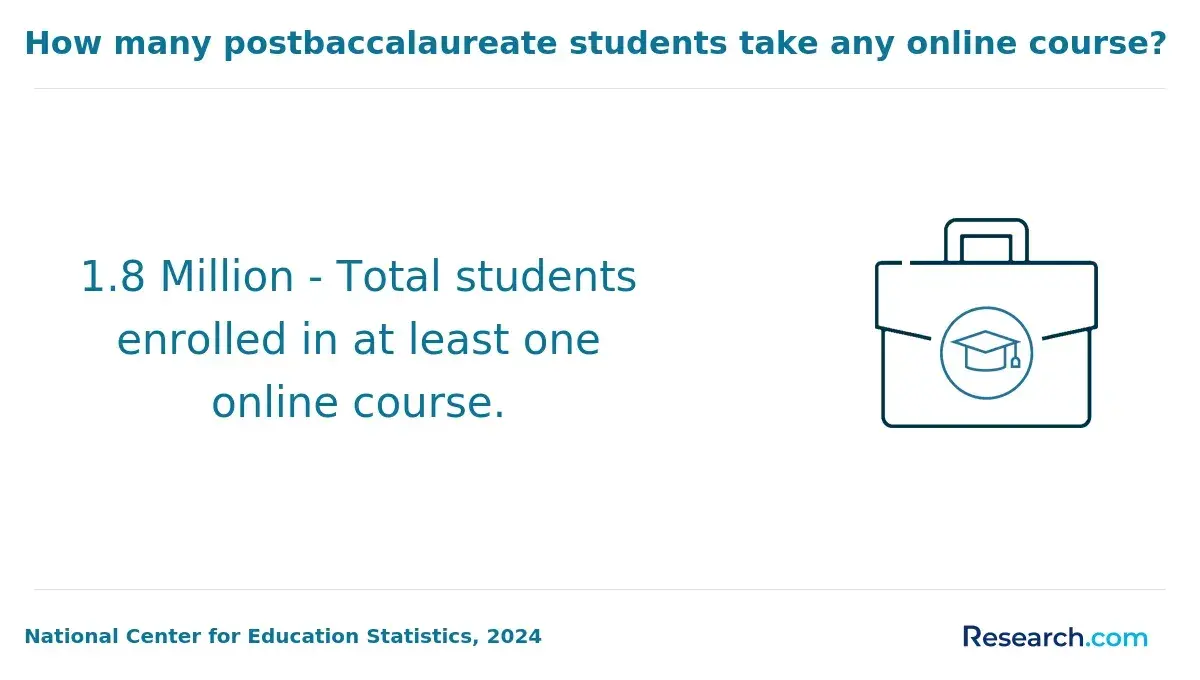
Applicants who lack recent professors or supervisors to recommend them can still pursue an online Management Information Systems (MIS) degree through programs that omit recommendation letters from required materials. This matters as online study remains a major enrollment option: the National Center for Education Statistics reported that 54% of U.S. postsecondary students enrolled in at least one distance-education course in fall 2022.
This guide explains how no-recommendation admissions work, what schools evaluate instead, and how to compare credible programs before applying.
Key Things You Should Know
- "No letters of recommendation required" means letters are not part of the standard application for that specific MIS program; it does not mean transcripts, minimum GPA standards, essays, prerequisites, or identity verification are waived.
- Look first for institutional accreditation, transparent tuition, a curriculum covering business and technology, and written confirmation from admissions that letters are neither required nor conditionally requested.
- MIS can support technology-business roles such as systems analyst, database administrator, IT project coordinator, and business analyst; the U.S. Bureau of Labor Statistics projects computer and information technology occupations to grow faster than the average for all occupations from 2023 to 2033.
Which Online Management Information Systems Degree Programs Require No Letters of Recommendation?
Online MIS degrees may appear under several names, including Management Information Systems, Information Systems, Business Information Systems, Information Technology Management, or Business Administration with an information systems concentration. Admissions rules are set at the program level, so a university may not require letters for an online bachelor's degree while requiring them for its graduate MIS program.
Some institutions commonly use streamlined admissions models for online undergraduate technology and business degrees. Examples worth checking directly include Western Governors University's online IT management-oriented programs, Southern New Hampshire University's online business and technology pathways, CSU Global's online information systems and technology programs, and some public-university online completion programs.
Requirements can change by term, applicant type, and degree level; these examples are starting points rather than a guarantee that every MIS-labeled program remains letter-free.
The distinction below helps applicants avoid a frequent application mistake: treating "optional" and "not required" as identical.
| Admissions wording | What it usually means | What to do |
| No letters of recommendation required | Letters are not a standard application item. | Save the admissions page or obtain written confirmation for your program and start term. |
| Letters optional | You may submit letters, but the committee may consider them if included. | Submit strong letters only if they add meaningful evidence of readiness. |
| Letters waived | The requirement may be removed only for applicants meeting stated conditions. | Confirm that you qualify for the waiver before submitting an application. |
| No letters listed | The website may be incomplete or may refer to a different applicant category. | Ask admissions whether letters can be requested later or are required for review. |
Applicants comparing shorter credentials alongside a full bachelor's degree can also review 1-year associate degree programs to understand whether a faster foundational credential better fits their immediate goals.
What Are the Admission Requirements for Online Management Information Systems Degree Programs With No Recommendation Letters?
A streamlined application removes one document; it does not remove academic review. Bachelor's applicants usually need a high school transcript, GED credential, or qualifying college coursework. Master's applicants typically need an accredited bachelor's degree and official postsecondary transcripts. Programs may also require prerequisite coursework in statistics, business, programming, accounting, or quantitative methods.
Before paying an application fee, compare the requirements for your exact degree, concentration, start date, and applicant category. The following documents commonly replace recommendation letters or remain required alongside their absence.
- Official transcripts showing completed coursework and cumulative GPA
- A personal statement or short admissions essay explaining academic and career goals
- A résumé documenting IT, business, analytics, leadership, or project experience
- Evidence of prerequisite completion, including course descriptions when transfer equivalencies are unclear
- Standardized test scores only when a school still requires them or offers test-optional review
- Proof of English-language proficiency for applicants who must meet that requirement
Minimum GPA policies vary considerably. Some online bachelor's programs use broad-access standards, while master's programs often state a minimum undergraduate GPA or review applicants holistically when their GPA falls below a guideline. A missing recommendation requirement should never be interpreted as permission to omit required transcripts or to bypass foundational technical skills.
Are Online Management Information Systems Programs With No Letters of Recommendation Easier to Get Into?
Not necessarily. Programs without recommendation letters are often easier to apply to, particularly for working adults, military learners, career changers, and students who have been out of school for years. They are not automatically easier to enter, complete, or use for career advancement. Schools can still evaluate grades, prerequisite performance, professional experience, writing quality, and readiness for online learning.
Open-access or broad-access institutions may admit a wider range of applicants, whereas selective universities can omit letters yet maintain demanding GPA, prerequisite, or portfolio expectations. The more useful question is whether the program's entry requirements match your current preparation and whether its coursework matches your target role.
For example, an applicant with several years of business systems experience but no recent academic references may be a strong candidate for streamlined review. In contrast, a student seeking highly technical data engineering work should not choose a program solely because it has fewer application documents; database, programming, cloud, and analytics coursework may matter more.
Professionals whose goal is management rather than an undergraduate technical foundation may also compare fastest executive MBA programs, although MBA admissions and MIS admissions have different prerequisites and career purposes.
What Do Online Management Information Systems Programs Evaluate Instead of Letters of Recommendation?
Recommendation letters give admissions teams an outside perspective on an applicant's work habits, communication, and readiness. When letters are not required, schools generally rely more heavily on evidence applicants can document directly. This can make the application more accessible, but it places added importance on submitting accurate and complete materials.
The following comparison shows what each alternative can demonstrate during review.
| Application evidence | What it can show | How to strengthen it |
| Transcript and GPA | Academic consistency and quantitative preparation | Highlight completed statistics, programming, accounting, economics, or database courses. |
| Résumé | Relevant experience and progression | Use concrete responsibilities, systems used, projects completed, and measurable results. |
| Personal statement | Goals, motivation, and communication | Connect the curriculum to a specific career objective without overstating experience. |
| Prerequisite record | Readiness for technical coursework | Provide course syllabi or descriptions if a transfer course has an unclear title. |
| Portfolio or work sample | Applied skills, when accepted | Include sanitized dashboards, process maps, database work, or project documentation. |
A concise statement can be particularly valuable for applicants with an uneven academic record or a career pivot. Explain the context briefly, focus on current evidence of readiness, and avoid assuming that work experience will automatically replace a listed prerequisite.
How Can You Tell if an Online Management Information Systems Degree With No Recommendation Requirement Is Accredited and Legitimate?
Legitimate online MIS programs are delivered by institutions recognized by an accrediting agency approved by the U.S. Department of Education or recognized by the Council for Higher Education Accreditation. Institutional accreditation is the central check for most MIS degrees because MIS generally does not have a universal programmatic accreditation requirement comparable to some licensed professions.
Use these steps before enrolling, especially when a school emphasizes quick admissions or aggressive enrollment deadlines.
- Find the institution in the U.S. Department of Education's Database of Accredited Postsecondary Institutions and Programs, and confirm that the accreditor and accreditation status are current.
- Verify that the online degree is awarded by the accredited institution itself, not merely marketed through a third-party website.
- Read the curriculum for business, data, databases, systems analysis, cybersecurity, project management, and technology governance content that fits your goals.
- Confirm whether online students receive the same degree title, transcript treatment, advising access, and career services as campus students.
- Request the complete tuition schedule, graduation requirements, refund policy, transfer policy, and no-recommendation admission rule in writing.
Additional quality signals can include business-school accreditation from organizations such as AACSB, ACBSP, or IACBE, but these are not required for an MIS degree to be legitimate. Treat them as one comparison factor, not a substitute for institutional accreditation. Red flags include unclear accreditor names, pressure to enroll before reviewing costs, promises of guaranteed jobs, or a refusal to explain faculty, curriculum, and credit-transfer rules.
How Much Do Online Management Information Systems Degree Programs With No Letters of Recommendation Cost?
The cost of an online MIS degree depends more on school type, residency rules, credits needed, pacing, fees, and transfer credit than on whether letters are required. A no-recommendation policy does not indicate a lower price. Public institutions may charge different rates by residency, while private institutions may use a flat per-credit or term-based model.
Published tuition examples illustrate why applicants should compare the full program price rather than an application's simplicity. These figures can change and may exclude technology, course-material, graduation, and other fees.
- Western Governors University undergraduate tuition: $3,955 per six-month term for many bachelor's programs, before certain fees and subject to program-specific pricing.
- Southern New Hampshire University online undergraduate tuition: $330 per credit, before fees and subject to program availability.
- CSU Global undergraduate tuition: $375 per credit, before fees and subject to program-specific pricing.
Ask each school for a personalized estimate based on accepted transfer credits and the number of courses you realistically expect to take each term. Term-based tuition can be economical for students who can accelerate without sacrificing learning, while per-credit tuition may be easier to forecast for part-time students. Students also weighing education leadership pathways can compare affordable EdD programs online, but an EdD serves a different professional purpose than MIS.
Can You Get Financial Aid for an Online Management Information Systems Degree With Streamlined Admissions?
Yes. Eligible students in accredited online degree programs can generally pursue federal student aid by completing the Free Application for Federal Student Aid (FAFSA). Admissions streamlining does not itself reduce aid eligibility. Eligibility depends on factors such as citizenship or eligible noncitizen status, enrollment level, satisfactory academic progress, program eligibility, and financial circumstances.
Federal aid may include grants, Direct Loans, and work-study where available. Schools may also offer institutional scholarships, employer-partnership discounts, military benefits, payment plans, or transfer scholarships. Graduate students should pay special attention to borrowing limits and interest costs because grant aid is often more limited than at the undergraduate level.
Compare net price rather than sticker tuition. A practical financial review includes the aid offer, required fees, cost of hardware or software, expected time to completion, and whether employer tuition assistance must be repaid if you leave your job. Avoid enrolling before the financial-aid office confirms how part-time attendance, accelerated terms, or competency-based pacing affects disbursement.
How Long Does an Online Management Information Systems Degree With No Letters of Recommendation Take to Complete?
Completion time depends on degree level, prior credits, course sequencing, and how many courses a student can manage while working. A traditional bachelor's degree commonly requires about 120 semester credits, while a master's MIS or information systems degree often requires roughly 30 to 36 credits. Transfer credit and year-round online terms can reduce elapsed time, but they do not eliminate required learning outcomes.
Most full-time bachelor's students should plan around four years without transfer credit; completion programs may be shorter for students with an associate degree or substantial accepted coursework. Full-time master's students often finish in roughly one to two years, while part-time students may need longer. Programs with asynchronous courses can offer scheduling flexibility, but group projects, proctored exams, internships, and capstones may still have fixed deadlines.
Do not confuse a faster application with a faster degree. Review the academic calendar, course availability, capstone prerequisites, and maximum transfer-credit limit before choosing a start date. Students exploring career-focused credentials with a shorter time horizon may find the guide to best online degrees useful for comparing alternatives.
Can You Transfer Credits Into an Online Management Information Systems Degree Program With No Recommendation Letters?
Many online MIS programs accept transfer credits, but policies differ by institution and degree level. Undergraduate schools commonly review general education, business, math, and introductory technology courses. Graduate programs are often more restrictive, accepting only a limited number of recent, equivalent graduate credits earned at an accredited institution.
Transfer evaluation should happen before enrollment whenever possible. Send official transcripts early and ask whether the school will provide a written degree plan identifying accepted credits, remaining requirements, and any prerequisite gaps. A course titled "Computer Applications" may not satisfy a database, programming, or systems-analysis requirement unless its content is demonstrably equivalent.
Students should also ask about credit age limits, minimum grades, residency requirements, exam credit, military training credit, and articulation agreements. A common mistake is choosing a program based on a broad statement that it "accepts transfer credits" without confirming how many of your credits apply to the MIS degree.
How Should You Compare Online Management Information Systems Degree Programs That Do Not Require Letters of Recommendation?
The best online MIS program is not simply the one with the fewest admissions documents. It should offer an accredited degree, a curriculum aligned with your target role, a workable schedule, and a total cost you can manage. MIS is especially suitable for people who want to connect business operations with technology rather than focus exclusively on software engineering or purely general management.
Compare finalists using the factors below, then contact each admissions office to confirm the current requirements in writing.
| Comparison factor | What to verify | Why it matters |
| Recommendation policy | Whether letters are truly not required for your program and term | Prevents a late document request or an incomplete application. |
| Accreditation | Current institutional accreditation and any relevant business-school recognition | Supports aid eligibility, transferability, and employer confidence. |
| Curriculum | Database, analytics, systems analysis, cybersecurity, project management, and business courses | Determines whether the degree develops skills relevant to your desired work. |
| Career support | Internships, employer relationships, career coaching, portfolio support, and alumni outcomes | Helps assess practical transition support beyond the credential. |
| Total cost | Tuition, fees, transfer evaluation, aid, and realistic completion pace | Produces a more useful affordability comparison than advertised tuition alone. |
| Learning format | Live sessions, asynchronous work, proctoring, group assignments, and time zone expectations | Shows whether the program fits employment and family responsibilities. |
Ask admissions six direct questions: Are recommendation letters required for my applicant type? What GPA and prerequisites apply? What will my transfer evaluation include? What is the estimated total cost after transfer credit? Is the degree identical in title to the campus version? Which career services are available to fully online students?
Career outcomes should guide the final decision. MIS graduates may pursue systems analysis, business analysis, IT project coordination, enterprise systems support, database administration, and technology consulting, depending on coursework and experience. The BLS reports a 2023 median annual wage of $103,790 for computer systems analysts, although pay varies by location, industry, experience, and employer.
For people considering a major career change, including professionals transitioning from education, resources for SLPs illustrate why comparing required credentials and career pathways matters before committing to a degree.
Other Things You Should Know About Management Information Systems
Often, yes. Programs that explicitly state no letters of recommendation are required generally do not require academic or professional references for standard admission. You may still need transcripts, a résumé, an essay, prerequisites, or other documentation.
Many do, even when their undergraduate programs do not. Graduate admissions frequently assess professional readiness and academic preparation more closely. Check the degree-specific graduate admissions page rather than relying on the university's general application checklist.
Include relevant jobs, technical tools, business systems, projects, certifications, leadership responsibilities, and measurable accomplishments. Be accurate and explain transferable experience, such as process improvement, data reporting, customer relationship management, or project coordination.
Review the official admissions page for your exact program and start term, download the checklist if available, and email or call admissions for written confirmation. Ask specifically whether letters are required, optional, waived, or potentially requested during review.
References
- A Buyer's Guide to Non-Traditional Student Information Systems https://moderncampus.com/blog/buyers-guide-to-non-traditional-student-information-systems.html
- Information Technology Management Major https://www.stonehill.edu/programs/information-technology-management/
- Application Instructions - The Consortium https://cgsm.org/application-instructions/
- Online MIS Degrees | Accounting.com https://www.accounting.com/degrees/information-systems/masters/
- Common Mistakes Managing MBA Recommenders https://www.stacyblackman.com/blog/mistakes-managing-mba-recommenders/
- How An Online Masters In Management Information Systems Can Advance Your Career - ReviewNPrep https://reviewnprep.com/blog/how-an-online-masters-in-management-information-systems-can-advance-your-career/
- 2025's Best Online Master's in Information Systems (MIS) Programs https://www.onlinemastersdegrees.org/best-programs/information-systems/
- All About MBA Application Recommendations https://www.mbamission.com/blog/all-about-mba-application-recommendations/
- Management Information Systems (Online Program) https://www.simpson.edu/academics-programs/all-programs/management-information-systems-online-program/