2027 Best Accredited Online Interdisciplinary Studies Degree Programs: Compare Tuition, Admissions, and Career Outcomes

Co-Founder and Chief Data Scientist
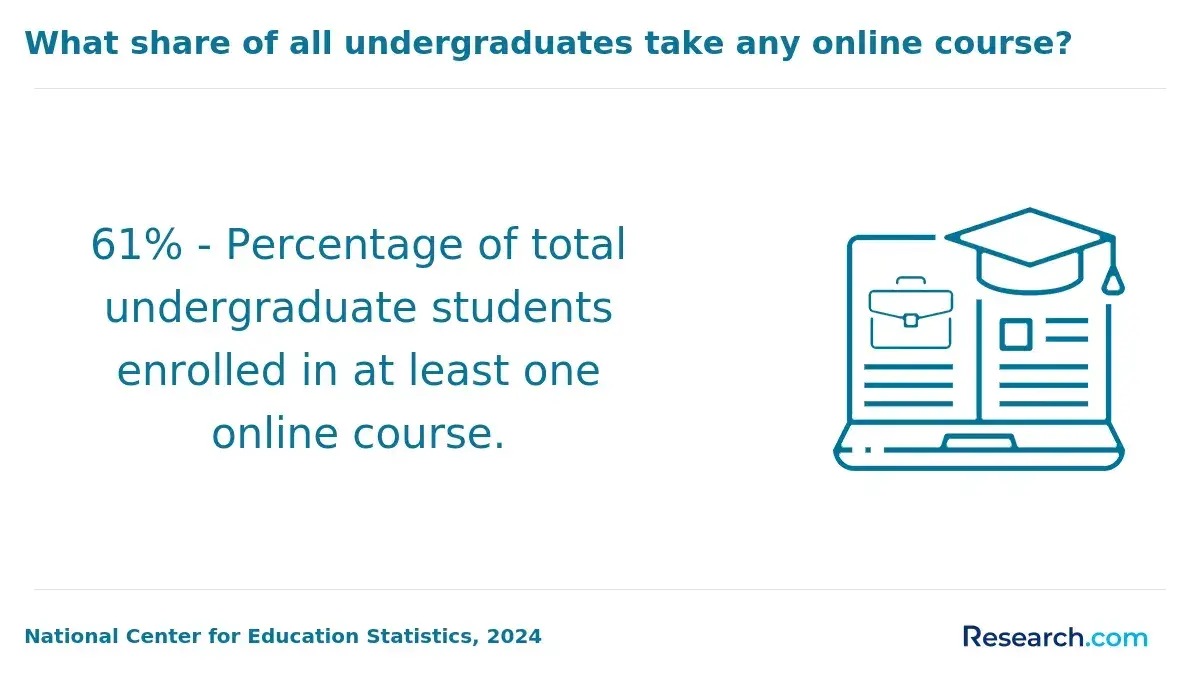
Choosing an online interdisciplinary studies degree is really a question of fit: can one accredited program combine your credits, interests, schedule, and career goals better than a traditional major? NCES data published in 2024 shows that more than half of U.S. undergraduates took at least one distance education course in a recent fall term, making online program quality more important than ever.
This guide helps working adults, transfer students, and first-time bachelor's students compare tuition, admissions, accreditation, flexibility, aid, and career value before applying.
Key Things You Should Know
- Best-value online interdisciplinary studies programs usually combine regional institutional accreditation, generous transfer-credit policies, transparent tuition, and advising that helps students build a coherent concentration instead of a random mix of courses.
- Cost comparisons should include total credits still needed, online fees, residency rules, books, technology costs, and aid; the 2024-25 maximum federal Pell Grant is $7,395 for eligible students.
- Career outcomes depend heavily on the disciplines you combine; BLS 2024 wage data shows bachelor's-level pathways such as human resources, market research, training, public administration, and project coordination can lead to materially different salary ranges.
Which Accredited Online Interdisciplinary Studies Degree Programs Offer the Best Overall Value?
The best overall value is not always the cheapest posted tuition. For interdisciplinary studies, value comes from how efficiently the school converts prior credits into degree progress, how well the curriculum supports a clear career goal, and whether the online format lets you finish without pausing work.
An interdisciplinary studies degree is a customizable bachelor's program that combines two or more academic fields, such as business and communication, psychology and education, technology and management, or public service and health. It is often a strong fit for students with previous college credits, military training, career experience, or goals that do not fit neatly into one traditional major.
The table below compares common value profiles found among accredited online interdisciplinary studies programs. Use it to identify which type of program is likely to deliver the best return for your situation before you request official tuition and transfer evaluations.
Program value profile | Best fit | Why it can be a strong value | Watch-outs |
Public university online interdisciplinary studies program | In-state students, transfer students, and adults seeking lower public tuition | Often combines recognized regional accreditation with lower resident tuition and access to state grants | Out-of-state online rates may be much higher, and some courses may follow fixed semester calendars |
Adult-degree completion program | Students with 45 to 90 transferable credits | May accept prior college, military, CLEP, DSST, professional training, or portfolio credit | Transfer limits and upper-division credit rules can change the real time to graduation |
Private nonprofit online interdisciplinary studies program | Students wanting frequent start dates, faith-based options, or structured online advising | Can offer predictable online pricing, strong adult-student support, and flexible course sequencing | Sticker prices may be higher before scholarships, military rates, or employer tuition benefits |
Large national online university program | Students who prioritize course availability, broad electives, and mature online infrastructure | May provide many concentration combinations and extensive digital student services | Higher per-credit tuition can be worthwhile only if the program reduces delays or improves fit |
Accelerated online bachelor's pathway | Students with substantial prior credit who want the fastest legitimate completion route | Can reduce opportunity cost if transfer credits, compressed terms, and year-round enrollment align | Heavy course loads can be difficult for students working full time or caring for family |
For students whose main goal is speed, an accelerated pathway may be more important than the major label itself. Comparing an interdisciplinary studies option with a best 1 year bachelor degree online list can help you decide whether fast completion or curricular customization matters more.
A practical way to define "best value" is to estimate the total cost to completion, not the cost of a full 120-credit bachelor's degree. A student who transfers 75 credits into a $500-per-credit program may pay less overall than a student who transfers only 30 credits into a lower-tuition program.
What Accreditation Should Students Look for in an Online Interdisciplinary Studies Degree Program?
Students should first look for institutional accreditation from an accreditor recognized by the U.S. Department of Education or the Council for Higher Education Accreditation. This matters because institutional accreditation affects federal financial aid eligibility, transferability of credits, employer recognition, and admission to many graduate programs.
Most interdisciplinary studies bachelor's degrees do not require separate programmatic accreditation because they are not usually licensure programs. However, programmatic accreditation can matter if your self-designed plan includes fields such as education, nursing, social work, counseling, business, engineering technology, or health administration.
The table below explains the main accreditation checks students should complete before enrolling. These checks are especially important for online programs because marketing language can make weak or unrecognized credentials sound more legitimate than they are.
Accreditation item | What to verify | Why it matters |
Institutional accreditation | The school is accredited by a recognized institutional accreditor | Supports federal aid eligibility, credit transfer, graduate school recognition, and employer acceptance |
Programmatic accreditation | Whether any career-specific track requires additional accreditation | Important for regulated or professionally screened fields, even when the degree title is interdisciplinary |
State authorization | The school is authorized to deliver online education to students in your state | Some online programs cannot enroll students from every state or may have state-specific restrictions |
Licensure disclosure | Whether the program meets education requirements for any state license you may pursue | Interdisciplinary studies alone usually does not qualify students for licensure without specific coursework or graduate training |
Common red flags include vague claims such as "fully accredited" without naming the accreditor, pressure to enroll before you receive a transfer-credit evaluation, or a curriculum that promises entry into licensed careers without explaining state requirements. If your goal involves teaching, counseling, social work, healthcare, or behavior services, ask the school to identify the exact licensure pathway in writing.
How Do Tuition Costs Compare Across Accredited Online Interdisciplinary Studies Degree Programs?
Tuition comparisons can be misleading because online interdisciplinary studies programs serve very different student groups. A first-time bachelor's student may need close to 120 credits, while a degree-completion student may need only 30 to 60 credits after transfer evaluation.
College Board data published for 2024-25 reported average published tuition and fees of $11,610 at in-state public four-year institutions and $43,350 at private nonprofit four-year institutions. That benchmark does not tell you what an online degree will cost, but it shows why public/private comparisons matter less than the net price after transfer credit and aid.
The table below shows the cost factors that usually create the biggest differences among accredited online interdisciplinary studies programs. It is designed to help you compare real cost to completion rather than relying on advertised tuition alone.
Cost factor | How it affects online interdisciplinary studies students | Decision tip |
Per-credit tuition | Sets the base price for each course, but may differ for in-state, out-of-state, military, part-time, and full-time students | Ask for the rate that applies specifically to online undergraduates in your state |
Transfer credits accepted | Can reduce both tuition and time to graduation more than a small difference in per-credit price | Request an official or pre-admission transfer audit before comparing offers |
Online and technology fees | May add recurring costs each term or course | Ask whether fees are included in the advertised online tuition rate |
Residency requirements | Some schools require a minimum number of credits to be completed at the institution | Check the residency rule before assuming all prior credits will shorten the degree |
Books, materials, and proctoring | Can vary by concentration, especially in technology, science, or design-heavy tracks | Ask whether courses use open educational resources or paid access codes |
Time away from work | Accelerated or synchronous courses can affect earnings and scheduling | Include opportunity cost when comparing faster and slower programs |
The biggest mistake is choosing the lowest posted tuition without checking how many credits will actually apply. A program with a higher per-credit rate but a generous transfer policy can be cheaper for a returning adult student than a lower-tuition program that rejects major-related or older credits.
Before enrolling, ask each school for a written estimate that includes tuition, required fees, accepted transfer credits, remaining credits, expected semesters, and whether tuition is locked or subject to annual increases. This gives you an apples-to-apples comparison and reduces the risk of surprise costs after matriculation.
How Competitive Is Admission to Accredited Online Interdisciplinary Studies Degree Programs?
Admission to online interdisciplinary studies programs is usually moderately accessible, especially at public universities and adult-degree completion programs. Selectivity varies by institution, but many programs focus less on standardized tests and more on high school completion, college GPA, transfer standing, and readiness for online study.
Admissions flexibility does not automatically mean lower academic quality. In many cases, interdisciplinary studies programs are designed for students with complicated academic histories, such as multiple colleges attended, military transcripts, career changes, or unfinished credits from different majors.
The table below summarizes common admissions patterns. Requirements vary by school, so students should use this as a checklist rather than assuming every program follows the same standard.
Applicant type | Common requirements | What to evaluate |
First-time bachelor's student | High school diploma or equivalent, transcripts, application, and sometimes test-optional review | Whether the program offers enough structure for students without prior college experience |
Transfer student | College transcripts, minimum GPA, good academic standing, and course-by-course evaluation | How many credits transfer into general education, electives, upper-division requirements, and concentration areas |
Adult learner returning after a gap | Prior transcripts, resume or personal statement in some cases, and advising review | Whether the school offers re-entry support, flexible starts, and academic planning for working adults |
Military or veteran student | Joint Services Transcript or equivalent, prior college transcripts, and benefit documentation | How military training is evaluated and whether the school has dedicated veterans services |
Students should prioritize admissions clarity over admissions ease. A program that admits you quickly but delays transfer evaluation may create more risk than a program that takes longer to review your file but gives a detailed plan to graduation.
Strong applicants usually explain why an interdisciplinary structure is necessary for their goal. For example, "I want to combine data analysis, communication, and public policy for government program evaluation" is more persuasive and useful than "I want a flexible major."
Which Learning Formats Offer the Greatest Flexibility in Online Interdisciplinary Studies Degree Programs?
The most flexible online interdisciplinary studies programs offer asynchronous courses, multiple start dates, part-time enrollment, and advising that helps students sequence courses around work and family responsibilities. However, flexibility should not come at the expense of course availability or academic coherence.
Online formats vary widely. Some programs are fully asynchronous, while others require live sessions, group projects, internships, capstones, or proctored exams. The right format depends on how much structure you need and how predictable your schedule is.
The table below compares common online learning formats and the student situations they serve best. It can help you avoid choosing a program that looks convenient on paper but conflicts with your work hours or learning style.
Format | Flexibility level | Best for | Possible drawback |
Asynchronous online | High | Working adults, parents, shift workers, and military students | Requires strong self-management and comfort with independent learning |
Synchronous online | Moderate | Students who want live discussion and predictable weekly structure | Live meeting times may conflict with work or time zones |
Hybrid or low-residency | Moderate to low | Students near campus or those who value occasional in-person support | Travel requirements can reduce convenience and add cost |
Accelerated terms | High for completion speed | Students with time to focus intensively on one or two courses at a time | Fast pacing can be stressful, especially with writing-heavy interdisciplinary courses |
Competency-based or self-paced | Very high for experienced learners | Students with strong prior knowledge and disciplined study habits | Not ideal for students who need frequent instructor deadlines or peer interaction |
Current online education trends also matter. More programs now use learning analytics, virtual advising, AI-supported tutoring tools, and digital collaboration platforms. These tools can improve convenience, but students should ask how the school protects academic integrity, privacy, and equitable access to support.
A common mistake is assuming "online" means "self-paced." Before applying, ask whether courses have weekly deadlines, required live attendance, proctored exams, internship hours, or capstone presentations. Those details determine whether the program fits your actual life.
What Student Support Services Improve Success in Online Interdisciplinary Studies Degree Programs?
Student support is especially important in interdisciplinary studies because students must connect courses from multiple fields into one purposeful academic plan. Without strong advising, the flexibility that makes the degree attractive can become a source of confusion.
The most useful services are the ones that directly reduce delays, improve course choices, and support career readiness. Students should look beyond general promises of "online support" and ask how each service works for fully remote learners.
- Dedicated academic advising that helps map concentration areas, transfer credits, upper-division requirements, and graduation timelines.
- Career coaching that translates an interdisciplinary curriculum into employer-friendly skills, job titles, resumes, portfolios, and interview stories.
- Online tutoring and writing support, especially because interdisciplinary capstones often require research, synthesis, and professional communication.
- Transfer-credit specialists who can explain why credits apply or do not apply to degree requirements.
- Technology support with evening or weekend availability for students who study outside normal business hours.
- Library access, research databases, and librarian consultations for students completing capstones or applied projects.
- Disability services and accessibility accommodations that are fully available to online students.
Students who want a more career-specific and shorter credential should compare support expectations across program types. For example, a student exploring administrative roles may find that an office administration college pathway offers more direct job preparation, while interdisciplinary studies may be better for broader advancement or bachelor's completion.
Ask schools how often online students meet with advisors, whether career services are available after graduation, and whether online students can participate in internships, employer events, or alumni mentoring. These services can influence completion and career confidence as much as course content does.
Which Financial Aid Options Are Available for Accredited Online Interdisciplinary Studies Degree Students?
Accredited online interdisciplinary studies students may qualify for the same major federal aid programs as eligible campus-based students, as long as the institution participates in federal student aid and the student meets enrollment and academic progress requirements. Financial aid should be compared by net cost, not by the size of the award letter alone.
For 2024-25, the maximum federal Pell Grant is $7,395 for eligible undergraduate students. That figure is important because grant aid can reduce borrowing, but eligibility depends on FAFSA results, enrollment intensity, cost of attendance, and remaining lifetime Pell eligibility.
Students should compare the following aid sources and ask each school how they apply to online enrollment. The strongest aid package is usually the one that lowers out-of-pocket cost without creating unnecessary debt.
- Federal Pell Grants for eligible undergraduate students with financial need.
- Federal Direct Subsidized and Unsubsidized Loans, with attention to annual and lifetime borrowing limits.
- State grants, which may depend on residency, enrollment status, school participation, and satisfactory academic progress.
- Institutional scholarships for transfer students, adult learners, military students, online students, or students with strong academic records.
- Employer tuition assistance or reimbursement, especially for students connecting interdisciplinary studies to advancement within their current organization.
- Military and veterans education benefits, including GI Bill benefits, tuition assistance, and school-specific military rates where available.
- Credit for prior learning, which is not aid in the traditional sense but can reduce the number of credits you pay for.
If interdisciplinary studies is a bridge toward a graduate or professional goal, compare aid across the entire pathway. For instance, students combining psychology, education, and human services may later evaluate BCBA online programs, where graduate tuition, supervised fieldwork, and certification-related costs can change the long-term budget.
A common financial mistake is accepting the first aid offer without comparing remaining balance, borrowing, renewal rules, and transfer-credit impact. Before committing, ask each school for a net price estimate based on your actual remaining credits and enrollment plan.
Which Career Outcomes Are Associated With Accredited Online Interdisciplinary Studies Degree Programs?
Career outcomes for interdisciplinary studies graduates depend less on the degree title and more on the disciplines selected, the student's work experience, internships, portfolio, and ability to explain the degree to employers. A strong interdisciplinary plan should produce a clear skill story, such as "business analytics plus communication," "human services plus leadership," or "technology plus public administration."
BLS May 2024 wage data shows why concentration choice matters. For example, several bachelor's-level occupations connected to interdisciplinary pathways have different median wages, responsibilities, and advancement routes.
The table below connects common interdisciplinary study combinations with career directions. The salary figures are occupational medians, not promises for any individual graduate, and actual outcomes vary by location, experience, industry, and additional credentials.
Interdisciplinary focus | Possible roles | Relevant BLS 2024 median wage context | Best supporting experiences |
Business, communication, and leadership | Project coordinator, operations associate, client success specialist, administrative manager trainee | Management analysts had a median annual wage of $101,190 | Internships, process-improvement projects, Excel or data tools, and supervisory experience |
Psychology, education, and human services | Program coordinator, case management support, community outreach specialist, training assistant | Social and community service managers had a median annual wage of $78,240 | Volunteer work, field placements, nonprofit experience, and graduate-school planning where needed |
Data, marketing, and communication | Market research assistant, digital content analyst, customer insights associate | Market research analysts had a median annual wage of $76,950 | Portfolio projects, analytics certificates, survey design, and writing samples |
Human resources, training, and organizational studies | HR specialist, learning coordinator, talent development assistant | Human resources specialists had a median annual wage of $72,910 | HR internships, SHRM-aligned coursework, labor relations exposure, and training projects |
Technology, security awareness, and management | IT project coordinator, compliance assistant, security awareness training coordinator | Training and development specialists had a median annual wage of $65,850 | Technical electives, certificates, help desk experience, and cybersecurity fundamentals |
Students considering technical advancement should be realistic about the difference between a broad bachelor's degree and a specialized graduate credential. A technology-focused interdisciplinary plan can build useful foundations, but a student aiming for senior security roles may eventually compare options such as a cyber security masters.
The degree may be worth it when it helps you finish a bachelor's degree efficiently, align multiple interests with a real labor-market need, or qualify for roles where any bachelor's degree plus relevant skills is valued. It may be a poor fit if you need a tightly prescribed licensure major, a highly technical curriculum, or a degree title that employers in your target field specifically require.
How Do Online and Campus-Based Interdisciplinary Studies Degree Programs Compare?
Online and campus-based interdisciplinary studies programs can lead to the same credential when they are offered by the same accredited institution, but the student experience can differ significantly. The best choice depends on your schedule, need for in-person networking, learning style, and whether your concentration requires labs, fieldwork, studios, or local placements.
The table below compares online and campus-based formats across decision factors that affect cost, completion, and student experience. Use it to decide whether convenience or in-person access matters more for your goals.
Factor | Online interdisciplinary studies | Campus-based interdisciplinary studies |
Schedule | Often better for working adults, caregivers, military students, and students outside commuting range | Better for students who want daily structure and face-to-face routines |
Cost | May reduce commuting, housing, and relocation costs, but online fees can apply | May provide access to campus jobs, facilities, and local scholarships, but commuting or housing can raise costs |
Networking | Depends on virtual events, discussion boards, online career services, and proactive student engagement | Often stronger for spontaneous faculty contact, student organizations, and local employer relationships |
Course availability | Can be strong at large online universities but limited if only selected electives are offered online | May offer broader electives, labs, studios, or seminars depending on campus resources |
Learning style | Best for self-directed students who can manage deadlines and technology | Best for students who benefit from in-person accountability and immediate interaction |
Online programs can be the better investment when they allow you to keep working, use transfer credits efficiently, and avoid relocation. Campus programs can be better when your goals depend on faculty mentorship, local internships, lab access, performance spaces, studio work, or a highly collaborative learning environment.
Students planning a creative or therapeutic graduate pathway should check prerequisites carefully because some fields require studio, psychology, or supervised experience beyond a general bachelor's degree. For example, students considering an art therapy masters should verify undergraduate coursework expectations before choosing online electives.
How Should Students Choose the Best Accredited Online Interdisciplinary Studies Degree Program?
Students should choose the best accredited online interdisciplinary studies program by starting with their target outcome and working backward. The right program should make your credits count, produce a coherent academic plan, fit your schedule, and support a credible career or graduate-school next step.
Use the following step-by-step process to compare programs. This approach helps prevent common mistakes such as focusing only on rankings, tuition, or speed.
- Define your goal in one sentence, such as "I want to finish my bachelor's degree and move into HR training roles" or "I want a flexible degree that prepares me for graduate study in public health."
- Verify institutional accreditation through official accreditation databases and the school's accreditation page.
- Request a transfer-credit evaluation before enrolling, including how credits apply to general education, electives, upper-division requirements, and concentration areas.
- Compare total cost to completion, including tuition, fees, books, technology, proctoring, and the number of credits left after transfer.
- Review concentration options and make sure the course plan forms a coherent skill set that employers or graduate programs can understand.
- Check online format details, including asynchronous work, live sessions, term length, start dates, exams, capstones, and any in-person requirements.
- Ask for graduation planning support, career services access, internship options, and examples of capstone projects or alumni outcomes.
- Compare financial aid offers by net price, renewal rules, borrowing, and whether aid applies to part-time or accelerated enrollment.
- Confirm whether your goal requires licensure, certification, graduate prerequisites, or specialized accreditation that the interdisciplinary degree alone may not provide.
- Choose the program that offers the strongest combination of credit acceptance, academic fit, support, affordability, and credible outcomes for your specific goal.
Lower tuition matters most when two programs offer similar accreditation, credit acceptance, support, and course fit. Stronger career alignment may matter more when a slightly higher-cost program offers better advising, required career projects, employer connections, or a concentration that maps more clearly to your target field.
Students should also know when not to choose interdisciplinary studies. If your target career requires a specific major, lab sequence, studio preparation, teacher certification route, engineering accreditation, or clinical licensure pathway, a traditional major may be safer. Interdisciplinary studies works best when flexibility serves a clear plan, not when it replaces careful career planning.
Other Things You Should Know About Interdisciplinary Studies
Yes, if it is awarded by an accredited college or university. Employers and graduate schools generally evaluate the institution, degree level, coursework, GPA, experience, and fit for the role or program.
Often, yes. Admission depends on the graduate program's prerequisites. Students should choose undergraduate electives that satisfy required coursework for their intended master's, professional, or certification pathway.
Strong pairings usually connect skills employers can recognize, such as business and communication, psychology and education, data and marketing, public administration and health, or technology and management.
Usually, diplomas from accredited universities list the degree and institution, not the delivery format. Policies vary, so students should ask the registrar how the degree appears on the diploma and transcript.
References
- Best Accredited Online Universities in 2025 https://www.study.eu/article/best-accredited-online-universities
- Recent Graduate Outcomes by Field of Study https://opportunitydata.org/grad-labor-explorer.html
- Top 50 Online and Distance Learning Universities 2026 | EUCDL Distance Accreditation Council https://www.eucdl.com/ranking-2026
- online degree programs credibility and outcomes https://www.srjis.com/downloadPdf/35_%20ONLINE%20DEGREE%20PROGRAMS%20CREDIBILITY%20AND%20OUTCOMES.pdf/8303/236
- Online Bachelor's Degree in Interdisciplinary Professional Studies | CSU Global | Accredited https://csuglobal.edu/academic-programs/undergraduate-degrees/bachelors-degree-interdisciplinary-professional-studies
- Top 50 Most Reputable Online Colleges https://mycollegeguide.org/most-reputable-online-colleges/
- About - Degree Completion Interdisciplinary Studies | CIIS https://www.ciis.edu/academics/continuing-undergraduate-programs/bachelor-arts-interdisciplinary-studies
- Online BA or BS in Interdisciplinary Studies | Bushnell University https://www.bushnell.edu/college-of-theology-arts-and-sciences/school-of-arts-sciences/online-interdisciplinary-studies/
- Labor Market | ELA https://ela.nauka.gov.pl/en/labor-market/who_earns_more_after_studies