2027 Online Interdisciplinary Studies Degree Programs That Accept 60, 75, or 90 Transfer Credits

Co-Founder and Chief Data Scientist
If you already have college credits, the right online interdisciplinary studies degree can turn unfinished coursework into a faster path to a bachelor's degree. Many transfer-friendly programs may accept 60, 75, or even 90 credits, but "accepted" does not always mean "applied." The National Student Clearinghouse Research Center reported in 2024 that transfer enrollment rose 5.3% year over year, showing renewed momentum among students returning to finish degrees.
This guide helps transfer and degree-completion students compare credit limits, residency rules, remaining requirements, completion time, and total cost before enrolling.
Key Things You Should Know
- A 120-credit bachelor's degree typically leaves about 60 credits after transferring 60 credits, 45 credits after 75 credits, and 30 credits after 90 credits, but only if those credits apply to general education, electives, major requirements, or approved concentration areas.
- The most transfer-friendly online interdisciplinary studies programs usually allow up to 75% of the degree to come from transfer, prior learning, exams, military credit, or associate-degree coursework, while still requiring institutional residency and upper-division credits.
- Before choosing a program, verify the official transfer evaluation, minimum grade rules, accreditation requirements, residency requirement, upper-division requirement, and whether the school accepts credits only as free electives or applies them directly toward the interdisciplinary studies plan.
How Many Transfer Credits Can You Apply Toward an Online Interdisciplinary Studies Degree?
Online interdisciplinary studies degrees are often built for students whose past coursework does not fit neatly into a single major. Instead of losing credits, students may combine areas such as business, communication, social science, technology, health studies, humanities, or public service into an approved degree plan.
For most bachelor's programs, 120 semester credits is the standard graduation target. A school that says it accepts 60, 75, or 90 transfer credits is describing the maximum number it may bring into the student record. The more important question is how many of those credits count toward the specific degree audit.
This comparison shows the practical difference between the three common transfer scenarios. It assumes a 120-credit bachelor's degree, but individual schools may require different totals, especially if they use quarter credits or competency-based formats.
| Transfer scenario | Approximate share of 120-credit degree completed | Credits usually remaining | Best fit | Main caution |
| 60 transfer credits | 50% | 60 credits | Students with an associate degree or two years of prior coursework | General education may transfer well, but major and upper-division work may remain |
| 75 transfer credits | 62.5% | 45 credits | Students with an associate degree plus extra college courses, exams, or certificates | Some credits may apply only as electives if they do not match the degree plan |
| 90 transfer credits | 75% | 30 credits | Degree-completion students close to finishing a bachelor's degree | Residency, capstone, and upper-division requirements can still prevent immediate graduation |
The key distinction is accepted credits versus applied credits. Accepted credits appear on your transfer record. Applied credits reduce the exact requirements needed for the interdisciplinary studies degree. A student can have 90 credits accepted but still need more than 30 credits if required courses, upper-division credits, or concentration requirements are missing.
Which Online Interdisciplinary Studies Degree Programs Accept 60, 75, or 90 Transfer Credits?
The online programs most likely to accept high numbers of transfer credits are bachelor's degree-completion programs with flexible majors. These may be called interdisciplinary studies, liberal studies, general studies, university studies, professional studies, applied studies, individualized studies, or multidisciplinary studies. The name matters less than the transfer policy, degree audit, and residency requirement.
Students comparing high-transfer programs should look beyond the advertised maximum. A program that accepts 90 credits may not be faster than one that accepts 75 if the 75-credit option applies more of your past coursework to required categories.
This table summarizes the kinds of online interdisciplinary or closely related degree-completion programs that commonly align with 60-, 75-, or 90-credit transfer students.
| Program type | Typical transfer-credit fit | Why it may work for transfer students | What to verify |
| Online bachelor's in interdisciplinary studies | 60 to 90 credits | Often allows students to combine multiple academic areas into one approved plan | Whether past courses apply to the concentration, electives, or only general education |
| Online bachelor's in liberal studies | 60 to 90 credits | Usually flexible for students with broad humanities, social science, or general education credits | Upper-division credit minimums and capstone requirements |
| Online bachelor's in general studies | 75 to 90 credits | Designed for degree completion when credits come from several institutions | Whether the degree is too broad for your career or graduate-school goal |
| Online bachelor's in professional studies | 60 to 90 credits | May accept applied, technical, military, business, or workplace-related credits | Limits on technical credits and credits from non-regionally accredited institutions |
| Online bachelor's in individualized or university studies | 60 to 90 credits | May allow a custom plan built around prior coursework and current goals | Advisor approval, learning outcomes, and required coursework at the home institution |
If speed is your main concern, compare degree-completion programs with accelerated bachelor's options. A resource on the best 1 year bachelor degree online can be useful, but a one-year timeline is realistic only when transfer credits, course availability, and residency rules line up.
Career outcomes for interdisciplinary studies graduates vary because the degree is customizable. Students often use the credential for advancement in administration, nonprofit work, communication, business operations, human services, public service, or preparation for graduate study. The U.S. Bureau of Labor Statistics' 2024 wage data shows that many bachelor's-level occupations have median pay above roles requiring only a high school diploma, but the degree's value depends heavily on the student's concentration, work experience, and target field.
How Can You Tell Whether Transfer Credits Will Actually Apply Toward Your Interdisciplinary Studies Degree?
To know whether transfer credits will actually apply, you need a degree audit or official transfer evaluation, not just an admissions estimate. Interdisciplinary studies programs are flexible, but they still have structure: general education, major or concentration requirements, upper-division credits, electives, minimum GPA rules, and a final capstone are common.
Use this checklist before assuming your 60, 75, or 90 credits will shorten the program as expected. Each item can change your remaining credit count and total tuition.
- Request an official or pre-enrollment transfer evaluation that maps each prior course to a requirement, not just a total credit count.
- Ask which credits apply to general education, which apply to the interdisciplinary studies major, and which count only as free electives.
- Confirm the minimum transfer grade, since many schools require at least a C or equivalent for undergraduate transfer credit.
- Check whether all previous institutions were regionally accredited or otherwise recognized by the receiving school.
- Ask whether repeated, remedial, developmental, vocational, or non-credit courses are excluded.
- Verify whether your chosen concentration requires specific prerequisites or upper-division courses that your transfer credits do not cover.
- Get the final remaining credit total in writing before enrolling, including any residency, capstone, writing-intensive, or major courses.
A common mistake is choosing the school with the highest published transfer maximum without checking degree fit. A better approach is to compare how many credits each school applies to graduation. In some cases, a school accepting 75 well-matched credits can be cheaper and faster than a school accepting 90 credits mostly as electives.
What Types of Previous College Credits Can Transfer Into an Online Interdisciplinary Studies Degree?
Interdisciplinary studies programs can be especially transfer-friendly because they may accept credits from several academic areas. Still, schools usually evaluate credits by source, accreditation, course level, grade, age, and relevance to the student's degree plan.
These are the most common credit sources that may transfer into an online interdisciplinary studies degree. The exact rules vary by institution, so students should ask how each source will be categorized in the degree audit.
- Community college credits, especially general education courses, associate-degree coursework, and lower-division electives.
- Credits from regionally accredited four-year colleges and universities, including unfinished bachelor's coursework.
- Technical or applied credits, which may fit professional studies, applied studies, or career-focused interdisciplinary concentrations.
- Exam-based credits such as CLEP, DSST, Advanced Placement, or International Baccalaureate when accepted by the school.
- Military training evaluated through recognized credit recommendations, often using Joint Services Transcript records.
- Prior learning assessment credits based on portfolios, workplace learning, licenses, certifications, or documented professional training.
- International coursework, if evaluated by an approved credential evaluation agency and accepted by the institution.
For example, a student with an associate degree in business support, records management, or administrative operations may be able to transfer many lower-division credits into an interdisciplinary studies plan focused on organizational communication or management. Students still exploring two-year pathways can compare an office administration college option before deciding how those credits might later stack into a bachelor's program.
The main red flag is vague language such as "up to 90 credits accepted" without showing how credits apply. Ask for a requirement-by-requirement breakdown before committing to a start date.
How Do Residency and Upper-Division Requirements Affect Interdisciplinary Studies Transfer Students?
Residency requirements are the credits you must complete through the university awarding the degree. Upper-division requirements are advanced 300- or 400-level credits, often required within the major, concentration, or final portion of the degree. Together, these rules explain why a 90-credit transfer student may still need more coursework than expected.
Many bachelor's programs require at least 30 credits in residence. Some also require a minimum number of upper-division credits overall or within the interdisciplinary studies concentration. Because a 90-credit transfer already represents 75% of a 120-credit degree, the final 30 credits often must be carefully chosen to satisfy multiple rules at once.
This table shows how residency and upper-division rules can affect students who enter with substantial credit.
| Requirement type | What it means | Why it matters for 60-, 75-, and 90-credit transfers |
| Institutional residency | Credits that must be completed at the degree-granting school | Can limit how much a high transfer maximum actually reduces remaining coursework |
| Major residency | Major or concentration credits that must be taken at the school | May require new interdisciplinary studies courses even when many electives transfer |
| Upper-division requirement | Advanced junior- or senior-level coursework | Community college credits usually transfer as lower-division, leaving advanced credits unfinished |
| Capstone requirement | Final project, seminar, portfolio, or integrative course | Usually cannot be transferred and must be completed near the end of the program |
| General education residency | Specific writing, diversity, quantitative, or institutional learning outcomes | May require one or more additional courses even after an associate degree transfers |
Residency and upper-division rules also matter if you plan to use the bachelor's degree for graduate study. For example, a student considering a cyber security masters may need specific math, computing, or programming prerequisites that an interdisciplinary studies plan should intentionally include.
How Does the Transfer Credit Evaluation Process Work for an Online Interdisciplinary Studies Degree?
The transfer evaluation process determines how your previous learning becomes part of your new degree plan. It can be quick for standard college courses from accredited institutions, but it may take longer if you have credits from multiple schools, older courses, military records, exam scores, international transcripts, or prior learning portfolios.
Follow these steps before enrolling so you can compare programs using the same information. The goal is to confirm remaining credits, not just admission eligibility.
- Collect official transcripts from every college attended, even if you completed only one course or withdrew later.
- Send exam-score reports, military transcripts, certification documentation, and prior learning records if the school evaluates alternative credit.
- Apply or request a preliminary evaluation, depending on the institution's process for prospective transfer students.
- Review the transfer report line by line to see how each course applies to general education, concentration, electives, or unused credit.
- Ask an academic advisor to build a remaining-course plan showing semester-by-semester or term-by-term completion.
- Confirm whether any missing requirements can be met with accelerated terms, summer courses, exams, or prior learning assessment.
- Compare at least two schools by remaining credits, total tuition, start dates, course availability, and graduation requirements.
Do not rely on unofficial verbal estimates alone. Admissions counselors can explain policy, but the academic record usually needs a formal evaluation before you can know whether transferring 60, 75, or 90 credits will actually reduce your time to graduation.
How Long Does It Take to Finish an Online Interdisciplinary Studies Degree With 60, 75, or 90 Transfer Credits?
Completion time depends on remaining credits, term length, course load, course availability, and whether the student attends full time or part time. Online programs may offer eight-week, six-week, or self-paced terms, but fast terms do not eliminate required credits.
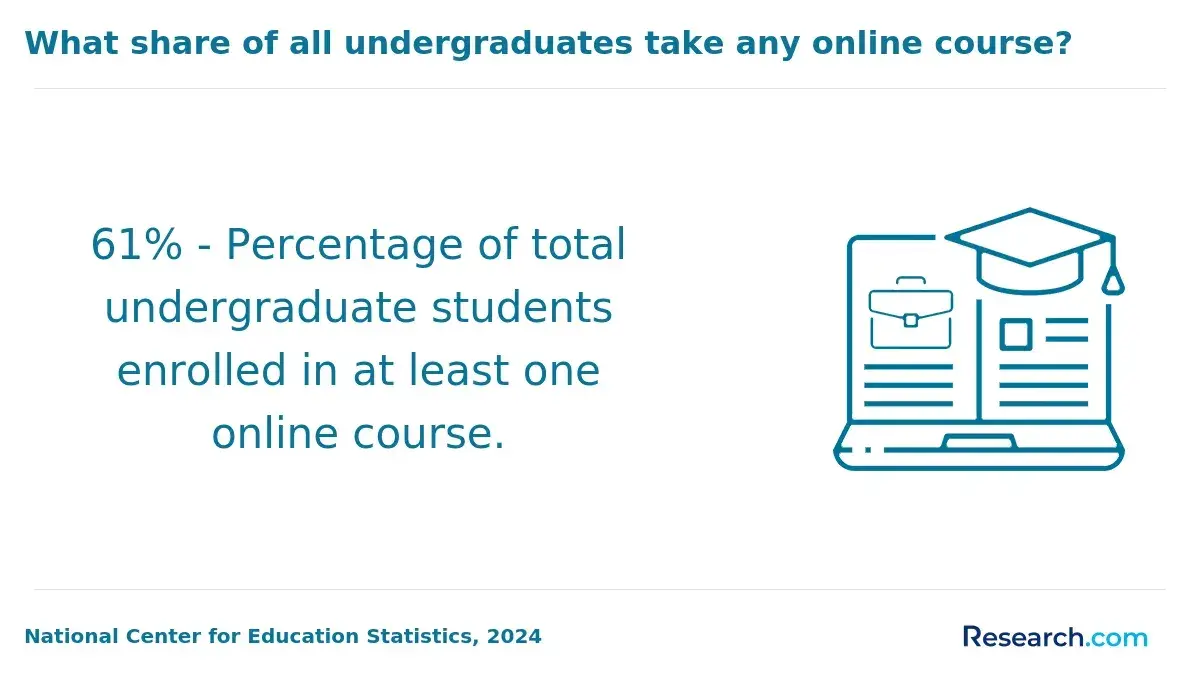
The National Center for Education Statistics' recent distance education reporting continues to show that online learning remains a major part of U.S. higher education. For degree-completion students, that matters because asynchronous courses, multiple start dates, and year-round scheduling can make it easier to finish while working.
This table estimates time to completion using common undergraduate course loads. It assumes all transfer credits apply and the student passes each course on schedule.
| Transfer credits applied | Credits remaining in a 120-credit degree | Full-time pace of 15 credits per term | Part-time pace of 6 credits per term | What can slow completion |
| 60 credits | 60 credits | About 4 terms | About 10 terms | Missing upper-division courses, limited course rotations, work schedule |
| 75 credits | 45 credits | About 3 terms | About 8 terms | Concentration requirements, capstone timing, prerequisite gaps |
| 90 credits | 30 credits | About 2 terms | About 5 terms | Residency minimums, senior-level requirements, unavailable required courses |
A 90-credit transfer pathway can be close to a one-year finish if the program offers enough required courses each term and the student can handle a full-time load. However, students should compare the calendar carefully because a missing capstone or required upper-division course offered only once per year can delay graduation.
How Much Can Transfer Credits Reduce the Cost of an Online Interdisciplinary Studies Degree?
Transfer credits can reduce cost because students pay for fewer remaining credits at the new institution. The savings are usually greatest when transferred courses replace required courses rather than simply filling unused electives.
The College Board's 2024 pricing report listed average published tuition and fees at $11,610 for in-state students at public four-year institutions and $43,350 at private nonprofit four-year institutions for the 2024-25 academic year. Those figures are not online-program quotes, but they show why avoiding repeated credits can materially affect the total cost of completing a bachelor's degree.
This table shows how transfer credits change the portion of a 120-credit bachelor's degree that remains to be paid at the receiving school. Use your actual per-credit tuition, fees, and financial aid award to calculate your personal estimate.
| Credits applied | Credits remaining | Tuition exposure at the new school | Cost advantage | Cost risk |
| 60 credits | 60 credits | About half of the degree | Strong savings if an associate degree fulfills general education | May still require two academic years of tuition if attending full time |
| 75 credits | 45 credits | About 37.5% of the degree | Can reduce both tuition and time if credits fit concentration and electives | Some credits may not reduce cost if they exceed elective limits |
| 90 credits | 30 credits | About 25% of the degree | Often the lowest remaining tuition if residency rules are satisfied | Fees, repeated courses, and unmet upper-division requirements can add cost |
To estimate cost accurately, multiply remaining credits by the school's per-credit tuition, then add mandatory fees, books, technology charges, graduation fees, and any portfolio or prior learning assessment fees. Then subtract grants, scholarships, employer tuition assistance, military benefits, or other aid that applies to the remaining program.
One mistake is assuming transfer credit always reduces financial aid use in a simple way. Federal aid eligibility, annual loan limits, satisfactory academic progress, and remaining enrollment status can all affect your out-of-pocket cost. Ask the financial aid office to estimate charges and aid after the official transfer evaluation is complete.
Can Prior Learning, Military Training, Exams, or Certifications Count Toward an Online Interdisciplinary Studies Degree?
Yes, some online interdisciplinary studies programs may award credit for prior learning, military training, exams, licenses, or certifications. This can be valuable for adult learners because workplace learning may fill elective or applied concentration credits, especially in professional studies or individualized degree plans.
Alternative credit is helpful only when it applies to the degree. Before paying for exams, portfolio reviews, or certification evaluations, ask whether the credits will reduce remaining requirements or only appear as extra elective credit.
Common alternative-credit pathways include the following. Each pathway has its own documentation rules, deadlines, fees, and credit limits.
- CLEP or DSST exams for general education, introductory business, social science, humanities, or elective requirements.
- Advanced Placement or International Baccalaureate scores from high school, if the institution still accepts the official score reports.
- Military training evaluated through recognized credit recommendations and recorded on official military transcripts.
- Professional licenses or certifications that match approved learning outcomes in business, technology, health, public safety, or human services.
- Prior learning assessment portfolios that document college-level learning gained through work, training, volunteer service, or independent study.
- Employer training or industry courses that have been evaluated for college credit by recognized credit-recommendation bodies.
Students using interdisciplinary studies as a bridge into human services, psychology, education, or behavior-related graduate pathways should be especially careful. For instance, someone later comparing BCBA online programs may need specific graduate prerequisites or field expectations that elective-heavy transfer credit may not satisfy.
The safest strategy is to build the interdisciplinary studies plan backward from your goal. If the goal is career advancement, prioritize credits that support your current field. If the goal is graduate school, verify prerequisite courses and minimum grades before using alternative credit to fill available space.
Do Older College Credits Expire When Transferring Into an Online Interdisciplinary Studies Degree?
Older college credits do not automatically expire, but they may be reviewed differently depending on subject area, accreditation, grade, and program relevance. Humanities, social science, history, communication, and many general education credits often remain usable longer than fast-changing technical, science, health, or technology courses.
Schools may accept older credits as electives while refusing to apply them to current major or prerequisite requirements. That distinction matters for interdisciplinary studies students because a broad degree can absorb more credits, but graduate programs and employers may still expect recent or specific coursework in some fields.
These factors commonly affect older transfer credits. Ask the registrar or transfer office how each applies to your transcript.
- Course age, especially in technology, healthcare, accounting, science, and other fields where knowledge changes quickly.
- Original institution accreditation at the time the credits were earned.
- Minimum grade requirements, since old D grades may not transfer or may transfer only in limited circumstances.
- Course level, because older lower-division credits may not satisfy upper-division requirements.
- Catalog changes, which can make old courses difficult to match to current requirements.
- Graduate-school prerequisites, which may require recent or specific undergraduate courses even if the bachelor's program accepts older credits.
This is especially important for students using interdisciplinary studies to prepare for specialized graduate programs. A student considering an art therapy masters, for example, may need current coursework in psychology, studio art, or human development even if older credits help complete the bachelor's degree.
The best way to avoid surprises is to ask two questions: "Will this older course transfer?" and "Will this older course satisfy the exact requirement I need?" The second answer is the one that determines whether the credit saves time and money.
Other Things You Should Know About Interdisciplinary Studies
Yes, if it is awarded by an accredited college or university. The degree title may be broad, but it is still a bachelor's degree when it meets institutional, state, and accreditation requirements. Always verify accreditation and make sure the curriculum fits your career or graduate-school goal.
Sometimes. Schools may allow additional transcripts, exam credits, military credits, or prior learning credits after enrollment, but deadlines and residency rules can limit what still applies. Ask before taking outside courses or exams.
Many employers focus on the bachelor's credential, relevant skills, work experience, and concentration area. To make the degree clearer, describe your academic focus on your resume, such as interdisciplinary studies with coursework in business, communication, data analysis, or human services.
Choose interdisciplinary studies if it helps you apply more prior credits and align multiple interests with your goals. Choose a specific major if your target job, license, certification, or graduate program requires a defined set of courses.
References
- Design your own degree online (Interdisciplinary Studies) title. (n.d.). https://sunyempire.edu/academics/undergraduate-academics/interdisciplinary-multidisciplinary-studies.html
- Lapu. (2025, November 7). Bachelor’s in Interdisciplinary Studies online. LAPU - Los Angeles Pacific University. https://www.lapu.edu/post/the-ultimate-flexible-degree-bachelor-s-in-interdisciplinary-studies-online
- Online Interdisciplinary Studies Degrees | NAU. (2024, June 27). National. https://www.national.edu/programs/interdisciplinary-studies-college-of-undergraduate-studies/
- Top online schools that accept transfer credits. (n.d.). https://www.edvisorly.com/student-guides/online-schools-that-accept-transfer-credits