2027 Accredited Online Interdisciplinary Studies Degree Programs for Working Adults: Flexible, Part-Time, and Self-Paced Options

Co-Founder and Chief Data Scientist
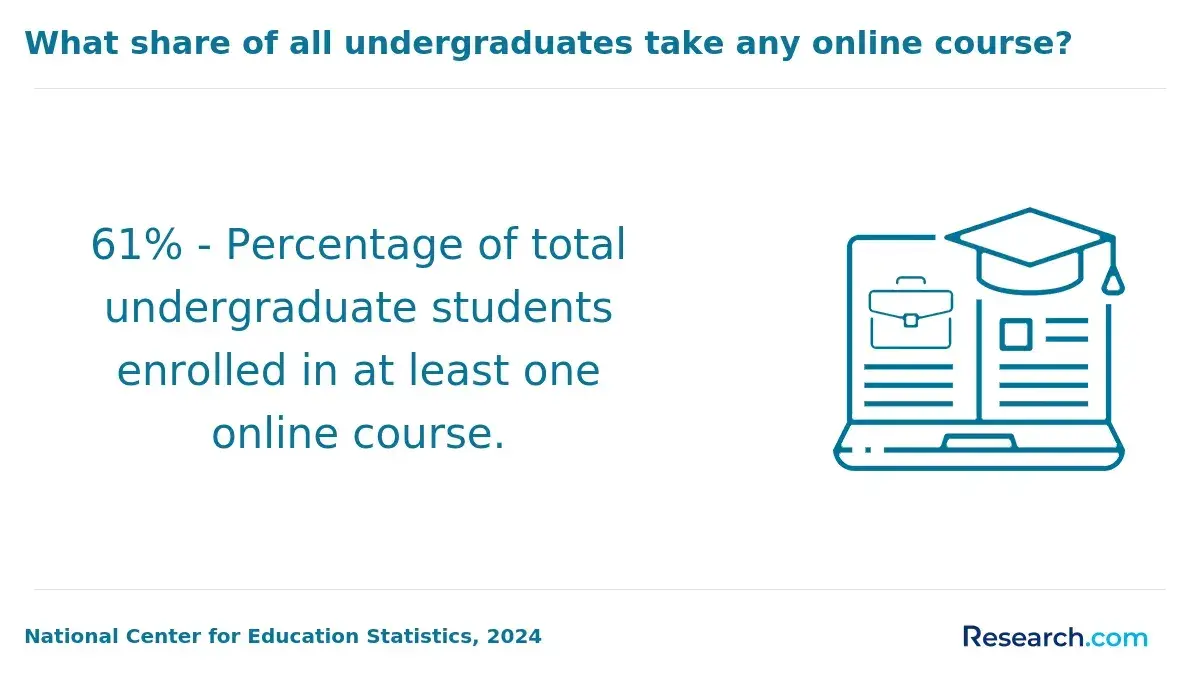
Choosing an online interdisciplinary studies degree is often a scheduling, cost, and accreditation decision as much as an academic one. NCES reported in 2024 that millions of U.S. undergraduates take at least some distance education, reflecting how central online learning has become for adults who work.
This guide explains accredited online interdisciplinary studies degree programs for working adults, including flexible, part-time, and self-paced options. You will learn how to compare format, workload, transfer credit, cost, support, and career fit before committing.
Key Things You Should Know
- Accreditation should be nonnegotiable: choose an institution recognized by the U.S. Department of Education or CHEA so your credits, federal aid eligibility, and employer recognition are more likely to hold up.
- Working adults typically do best with asynchronous or part-time formats requiring about 10 to 18 study hours per week for 6 to 9 credits, while full-time online study can require a workload closer to a second job.
- Transfer-friendly interdisciplinary studies programs may accept 60 to 90 prior credits toward a 120-credit bachelor's degree, which can reduce both tuition and completion time compared with starting from zero.
What Is an Accredited Online Interdisciplinary Studies Degree Program and Why Does Accreditation Matter?
An accredited online interdisciplinary studies degree lets students combine coursework from two or more academic areas into one coherent degree plan. A common example is a bachelor's program blending business, communication, psychology, technology, public administration, education, or social science. This format is especially useful for adults who have prior college credits from different majors and want a practical path to degree completion.
Accreditation matters because it is the quality-control signal behind the credential. For most working adults, the key question is institutional accreditation: whether the college or university is accredited by an agency recognized by the U.S. Department of Education or the Council for Higher Education Accreditation. Without recognized accreditation, students may lose access to federal financial aid, have trouble transferring credits, or face skepticism from employers and graduate schools.
Interdisciplinary studies is usually not a licensure-specific major. That can be a strength if your goal is broad career mobility, but it can be a limitation if you need a regulated credential. For example, someone aiming for board-certified behavior analyst pathways should compare specialized BCBA online programs rather than assuming an interdisciplinary studies degree will meet certification coursework requirements.
The table below shows how different quality signals affect adult learners. Use it to separate meaningful accreditation checks from marketing language that sounds official but may not protect your investment.
| Quality factor | What it means | Why it matters for working adults |
| Institutional accreditation | The college or university has been reviewed by a recognized accreditor. | It supports federal aid eligibility, credit transfer, graduate school review, and employer acceptance. |
| Programmatic accreditation | A specific program is reviewed by a field-specific accreditor. | It is less common for interdisciplinary studies but may matter if your concentration connects to education, counseling, healthcare, or another regulated field. |
| State authorization | The school is approved to offer online education to students in your state. | It helps prevent enrollment problems if you study online from outside the school's home state. |
| Clear degree audit | The school shows how prior credits apply to graduation requirements. | It helps you estimate cost, time, and whether the program truly fits your existing transcript. |
A strong program should be transparent about accreditation, transfer policy, curriculum requirements, and graduation pathways. A red flag is a school that emphasizes speed or convenience but makes it hard to verify recognized accreditation, total cost, or credit acceptance before enrollment.
Which Flexible Interdisciplinary Studies Degree Formats Are Best for Working Adults: Part-Time, Full-Time, or Self-Paced?
The best format depends on how predictable your work schedule is, how quickly you want to finish, and how much structure you need. "Online" does not automatically mean self-paced, and "flexible" does not always mean you can submit work whenever you want.
The comparison below summarizes the main online formats working adults are likely to encounter. It focuses on schedule control, workload, and the situations where each model tends to fit best.
| Format | Typical structure | Best fit | Main trade-off |
| Part-time asynchronous | Courses have weekly deadlines but no required meeting time. | Adults with full-time jobs, caregiving responsibilities, or rotating schedules. | Progress is slower than full-time study, but the workload is more sustainable. |
| Full-time online | Students take a heavier course load, often across multiple online classes at once. | Adults who can reduce work hours or have strong financial and family support. | Faster completion can come with higher weekly pressure. |
| Self-paced or competency-based | Students move through material faster or slower within school-defined limits. | Experienced adults with strong self-discipline and prior knowledge. | Less external structure can lead to procrastination if the learner lacks a schedule. |
| Synchronous online | Students attend live virtual class meetings at set times. | Learners who want discussion, accountability, and instructor interaction. | Less flexible for shift workers or parents with evening responsibilities. |
Part-time study is usually the safest option for adults working 40 hours per week because it protects time for job duties, family responsibilities, and unexpected interruptions. Full-time study can be worth considering if you have a deadline tied to promotion eligibility, military benefits, or a planned career transition, but it requires a realistic weekly calendar.
Self-paced programs can be powerful when you already know part of the material, have transferable work experience, or can study in concentrated blocks. They are less ideal if you need instructor reminders, peer interaction, or fixed milestones. If speed is your top priority, compare interdisciplinary studies programs with other accelerated completion models, including guides to the best 1-year bachelor degree online, but check whether your transfer credits and major requirements actually make that timeline possible.
Before choosing a format, ask admissions or advising staff for the exact learning rhythm rather than relying on broad labels. These questions can prevent a mismatch between marketing promises and your weekly reality.
- Are courses asynchronous, synchronous, self-paced, or a mix of formats?
- How many weekly hours do students usually spend per 3-credit course?
- Are exams proctored at fixed times, or can they be scheduled flexibly?
- Do courses have weekly deadlines, module deadlines, or open completion windows?
- Is there a maximum time limit for self-paced courses or competency-based terms?
What Are the Admission Requirements for Accredited Online Interdisciplinary Studies Degree Programs?
Admission requirements for accredited online interdisciplinary studies programs are usually straightforward, especially at adult-focused public universities and degree-completion institutions. Still, requirements vary by degree level, transfer status, and whether the program is designed for students with prior college credit.
For bachelor's degree programs, applicants commonly submit high school transcripts, college transcripts from every institution attended, an application form, and proof of English proficiency when applicable. Some schools require a minimum GPA for transfer admission, while others use open or test-optional admissions and then place students into appropriate courses.
Degree-completion programs may require a minimum number of prior credits before admission to the major. This is common when the interdisciplinary studies curriculum is built around upper-division coursework, a customized concentration, or a capstone project. If you have credits from multiple schools, ask for an unofficial transfer estimate before paying enrollment deposits.
The table below shows how admissions criteria often differ by student type. It can help you identify which pathway is most likely to apply to your situation.
| Applicant type | Common requirements | What to verify before applying |
| First-time college student | High school diploma or equivalent, application, possible placement assessment. | Whether the program offers enough lower-division general education courses online. |
| Transfer student | Official transcripts from all prior colleges, minimum GPA if required. | How many credits transfer and how many apply directly to degree requirements. |
| Adult degree-completion student | Prior college credits, advisor-approved plan of study, upper-division readiness. | Whether old credits expire or can still count toward major, elective, or general education requirements. |
| Military or workforce learner | College transcripts plus military, professional, or training documentation when accepted. | Whether the school awards credit for ACE-reviewed training, certifications, or prior learning assessment. |
A common mistake is applying to only the fastest-advertised program without checking whether your credits fit its curriculum. A better approach is to request written transfer evaluations from at least two accredited schools, then compare remaining credits, tuition, fees, and course availability.
How Much Does an Online Interdisciplinary Studies Degree Cost, and What Financial Aid Options Are Available?
The cost of an online interdisciplinary studies degree depends on tuition rate, transfer credits, residency status, fees, course load, books, technology, and how long you remain enrolled. The College Board's 2024 Trends in College Pricing and Student Aid reported an average published in-state tuition and fee price of $11,610 at public four-year institutions for full-time undergraduates. Online degree-completion programs may cost less or more than that benchmark depending on the school, but the figure is useful for understanding why transfer credit and aid eligibility matter.
Most accredited online bachelor's programs price tuition by credit hour, term, or subscription period. Adult learners should compare total estimated program cost, not just the per-credit rate, because a lower tuition rate can be offset by fees, limited transfer acceptance, or required courses offered infrequently.
Common cost categories include the following, and each one can affect your real out-of-pocket price:
- Tuition charged per credit, per course, per term, or through a competency-based subscription model.
- Online learning, technology, graduation, transcript, lab, proctoring, or portfolio assessment fees.
- Books, digital materials, software, laptop upgrades, webcam equipment, or reliable internet access.
- Lost income or reduced work hours if you choose an accelerated or full-time course load.
- Repeat-course costs if workload, scheduling conflicts, or missed deadlines force you to retake a class.
Financial aid can make an accredited program more manageable, but eligibility depends on the school, enrollment intensity, and student circumstances. Federal Student Aid reported in 2024 that the FAFSA remains the gateway for federal grants, loans, and many state and institutional aid programs, so adults should complete it even if they assume they will not qualify for need-based aid.
Working adults should evaluate these funding options before borrowing. The goal is to reduce net cost while avoiding enrollment decisions based only on short-term affordability.
- Complete the FAFSA and confirm that the school participates in federal student aid programs.
- Ask whether part-time students qualify for institutional scholarships, grants, or payment plans.
- Check employer tuition assistance, union education benefits, military education benefits, or workforce development funding.
- Compare transfer-credit awards because accepted credits can reduce tuition more directly than small scholarships.
- Ask whether prior learning assessment has a fee and whether approved credits count toward the degree or only as electives.
If your long-term goal is a specialized graduate field, factor future tuition into the decision. For instance, students using interdisciplinary studies as a stepping stone into technical leadership may later compare a cybersecurity master's, while others may need graduate study in education, counseling, public administration, or business.
How Long Does It Take to Complete an Online Interdisciplinary Studies Degree, and Can Transfer Credits Help You Graduate Faster?
A bachelor's degree in interdisciplinary studies usually requires about 120 credits, but the time to completion depends on how many credits you bring in and how many you take each term. Full-time students may finish a traditional four-year plan on the standard timeline, while adult degree-completion students with substantial transfer credit may finish much faster.
Transfer credit is often the biggest time-saver for working adults. Interdisciplinary studies programs are frequently designed to accept credits from several disciplines, which can help students avoid "lost credits" when they changed majors, paused school, or attended multiple institutions.
The table below illustrates how remaining credits can affect estimated completion time. Actual timelines vary by school calendar, course availability, academic performance, and whether the student studies continuously.
| Credits already earned | Credits remaining in a 120-credit degree | Possible pace for working adults | Planning note |
| 0 to 30 | 90 to 120 | Usually several years part time. | Look for strong advising and predictable course rotations. |
| 31 to 60 | 60 to 89 | Often manageable through part-time or mixed full-time terms. | Confirm general education and lower-division requirements early. |
| 61 to 90 | 30 to 59 | Often suitable for degree-completion formats. | Ask how many credits must be completed through the school. |
| 91 or more | Fewer than 30 | Potentially fast, but not automatic. | Residency rules, capstone courses, and major requirements may still set a minimum timeline. |
To avoid surprises, ask for a degree audit before enrollment. The audit should show which prior courses meet general education, major, concentration, elective, upper-division, and residency requirements. If a school gives only a rough estimate, keep comparing.
Adults who want to graduate faster should use a structured process rather than simply increasing course load. The safest sequence is:
- Collect official and unofficial transcripts from every college attended.
- Ask each school whether it accepts regionally accredited, nationally accredited, military, workforce, exam-based, or prior learning credits.
- Request an unofficial transfer review before committing to the program.
- Compare remaining credits, not just accepted credits, because credits that do not apply to the degree may not shorten your timeline.
- Build a term-by-term plan that accounts for work peaks, family obligations, course prerequisites, and capstone timing.
What Should You Look for When Comparing Accredited Online Interdisciplinary Studies Degree Programs?
The strongest online interdisciplinary studies program is not necessarily the cheapest, fastest, or most flexible. It is the one that is accredited, fits your schedule, accepts meaningful transfer credit, offers coherent academic focus, and supports your career goal.
Use the following comparison points when reviewing programs. They focus on the details that most often affect adult learners after enrollment, when switching schools becomes costly.
- Accreditation: verify recognized institutional accreditation directly through official accreditation databases, not only the school's marketing pages.
- Curriculum design: look for a clear concentration, theme, or advising process so the degree does not become a random collection of unrelated courses.
- Transfer policy: compare how many credits are accepted and how many actually reduce remaining degree requirements.
- Schedule structure: confirm whether courses are asynchronous, synchronous, accelerated, self-paced, or cohort-based.
- Course availability: ask whether required courses are offered every term or only once per year.
- Adult learner support: check advising hours, tutoring access, career services, library support, and technical help outside normal business hours.
- Total cost: calculate tuition, fees, books, technology, proctoring, and the cost of credits that do not transfer.
- Career alignment: ask how the program helps students translate an interdisciplinary degree into job-ready skills, portfolios, internships, or graduate school preparation.
The table below summarizes common red flags and better alternatives. It is designed to help you avoid choices that seem convenient at first but create cost, transfer, or career problems later.
| Red flag | Why it is risky | Better alternative |
| The school will not clearly name its recognized accreditor. | You may face aid, transfer, or employer recognition problems. | Choose a school with accreditation that can be verified through official databases. |
| "Self-paced" is advertised without completion windows. | You may discover strict term deadlines or extra fees later. | Ask for written policies on pacing, extensions, subscription periods, and maximum completion time. |
| The program accepts many credits but applies few to graduation. | Your timeline and cost may not improve much. | Compare degree audits showing remaining required credits. |
| The curriculum has no coherent concentration. | Employers may not understand what skills the degree represents. | Build a focused plan around business operations, human services, technology, communication, or another career theme. |
| Support services are available only during business hours. | Evening and weekend learners may struggle to get timely help. | Prioritize programs with extended advising, tutoring, library, and tech support access. |
Interdisciplinary studies can also serve as a practical completion path for adults who already hold career-focused credits. For example, someone with administrative coursework from an office administration college pathway may be able to build a bachelor's plan around organizational communication, management, public service, or business operations.
What Career Opportunities and Salary Potential Can You Expect With a Interdisciplinary Studies Degree?
An interdisciplinary studies degree can support many career paths, but it is most effective when paired with a clear skill theme. Employers usually hire for capabilities such as communication, analysis, project coordination, people management, technical fluency, public service, operations support, or customer experience, not for the word "interdisciplinary" alone.
According to the U.S. Bureau of Labor Statistics Occupational Outlook Handbook, updated in 2024, the median annual wage for bachelor's-level occupations was higher than the median for occupations requiring only a high school diploma. That does not mean every graduate will earn more, but it explains why degree completion can matter for adults seeking roles where a bachelor's degree is a screening requirement.
The table below connects interdisciplinary study themes to possible career directions. It does not guarantee eligibility for any specific job, but it can help you think strategically about concentrations, electives, internships, and certificates.
| Degree theme | Possible roles to research | Skills to build intentionally |
| Business, communication, and leadership | Project coordinator, operations specialist, account manager, training coordinator. | Written communication, spreadsheets, presentation, team coordination, process improvement. |
| Human services and social science | Case management assistant, community outreach coordinator, nonprofit program assistant. | Client communication, ethics, cultural awareness, documentation, resource navigation. |
| Technology and organizational systems | Business analyst assistant, systems support coordinator, digital operations specialist. | Data literacy, workflow mapping, cybersecurity awareness, software tools, problem solving. |
| Education, training, and workforce learning | Corporate trainer assistant, academic support coordinator, learning program specialist. | Instructional communication, adult learning basics, assessment, facilitation, learning technology. |
| Arts, wellness, and community engagement | Program coordinator, arts administrator, community engagement assistant. | Program planning, grant writing basics, communication, event coordination, stakeholder outreach. |
Salary potential depends heavily on your concentration, prior work history, location, industry, and whether the role requires specialized credentials. A working adult with supervisory experience and an interdisciplinary degree focused on operations may have a different outcome than a new graduate with limited experience and a broad set of electives.
Students should be careful with careers that require licensure or specialized graduate education. If your long-term interest is clinical, therapeutic, or counseling-related, compare the exact academic requirements before choosing undergraduate electives. For example, creative and mental health pathways may eventually require graduate preparation such as an art therapy master's, supervised experience, and state-specific licensure steps.
To improve return on investment, build the degree around a recognizable career story. Choose electives, certificates, capstone topics, and projects that let you say, "My degree combines communication, data, and operations for project coordination," rather than, "I studied a little bit of everything."
How Can Working Adults Balance a Interdisciplinary Studies Degree With Full-Time Work and Family Responsibilities?
Balancing an interdisciplinary studies degree with full-time work starts with choosing a realistic course load. For many adults, one or two courses per term is more sustainable than trying to move quickly and then stopping out after burnout.
The National Center for Education Statistics has continued to identify adult and part-time learners as a major part of U.S. higher education, and 2024 distance education reporting reinforces that online enrollment is no longer a niche option. For working adults, the practical takeaway is that many schools now design advising, online libraries, and course delivery around students who are not on campus during the day.
A workable study plan should account for both official deadlines and invisible labor such as commuting, caregiving, meal preparation, overtime, and recovery time. Use this process before the term begins:
- Map fixed commitments first, including work hours, commute, caregiving, medical appointments, religious commitments, and sleep.
- Block study sessions in 60- to 120-minute segments instead of relying on vague weekend catch-up time.
- Read every syllabus during the first week and record major assignments, exams, discussions, and group project deadlines.
- Tell family or housemates which study blocks are protected and which tasks you can still handle.
- Build a backup plan for busy work seasons, sick children, travel weeks, or technology problems.
Part-time enrollment is often worth the slower pace if it lets you keep your job performance stable and avoid repeat courses. Self-paced learning can help if your schedule changes weekly, but you should create your own deadlines because the absence of weekly due dates can make progress harder to maintain.
One common mistake is treating online classes as easier than campus classes. A better mindset is to treat them as flexible but real academic commitments. If a 3-credit course requires regular reading, discussions, assignments, and exams, the work still has to happen somewhere in your week.
What Student Support Services and Online Learning Resources Should You Expect From a Interdisciplinary Studies Degree Program?
Student support can make the difference between a flexible program that works and an online program that leaves you isolated. For working adults, support services should be available when you are actually studying, not only when you are at work.
At minimum, expect academic advising, technical support, online library access, tutoring, writing help, disability services, financial aid counseling, and career services. Stronger programs also offer degree maps, transfer specialists, success coaches, online orientation, mental health resources, and help translating interdisciplinary coursework into resumes and interviews.
When comparing programs, ask specific service questions rather than accepting broad promises. The most useful questions include:
- Can I meet with an advisor in the evening, on weekends, or by video?
- Will I have one advisor throughout the program or a general advising center?
- Is tutoring available for writing, statistics, research, and technology-related courses?
- Does the library provide remote database access, research consultations, and citation help?
- How quickly does technical support respond outside normal business hours?
- Does career services help interdisciplinary studies students explain their degree to employers?
- Are online students eligible for the same disability accommodations as campus students?
Career support is especially important because interdisciplinary studies are broad by design. Look for programs that help students build portfolios, select career-aligned electives, write targeted resumes, and connect capstone projects to workplace problems. If you already have a job, ask whether you can design projects around your current industry while still meeting academic requirements.
Do Online Interdisciplinary Studies Degree Programs Include Internships, Practicums, or Other Hands-On Learning Requirements?
Some online interdisciplinary studies programs include internships, practicums, service learning, field projects, research projects, or capstones, but requirements vary widely. Many adult-focused programs use a capstone project instead of a traditional internship because students may already be employed or unable to complete unpaid daytime field hours.
Hands-on learning can be valuable even when it is not formally required. It gives structure to a broad degree and helps employers understand what you can do. A capstone might involve improving a workplace process, analyzing a community issue, creating a training plan, designing a communication campaign, or conducting applied research across multiple fields.
The table below compares common experiential learning options in online interdisciplinary studies programs. It can help working adults anticipate scheduling and employer-approval issues before enrolling.
| Experience type | How it usually works online | Scheduling impact for working adults |
| Capstone project | Student completes a final applied, research, or portfolio-based project. | Often flexible, but deadlines still apply. |
| Internship | Student completes supervised work with an approved organization. | May be difficult if hours must occur during the business day. |
| Practicum or field experience | Student completes structured learning in a professional setting. | May require background checks, site approval, or fixed hours. |
| Service learning | Student connects coursework to community-based activity. | Can be flexible if local or virtual options are allowed. |
| Portfolio assessment | Student documents prior learning or professional experience for evaluation. | Can save time, but evidence standards can be detailed and time-consuming. |
Before enrolling, ask whether hands-on requirements can be completed near your home, remotely, or through your current workplace. Also ask whether unpaid hours are required, whether evening or weekend placements are available, and whether your employer must sign paperwork.
A common red flag is discovering a field requirement late in the program after you have already planned your schedule and finances. If you work full time, get experiential learning requirements in writing before you choose the school.
Other Things You Should Know About Interdisciplinary Studies
Yes, many graduates use interdisciplinary studies as preparation for graduate school, but admission depends on the specific graduate program. Check prerequisite courses, GPA requirements, recommendation expectations, and whether your concentration aligns with the field you plan to enter.
In many accredited universities, the diploma does not list the delivery format, but policies vary. Ask the registrar whether the transcript or diploma identifies online study if this matters to you.
Not always. General studies programs often emphasize broad degree completion, while interdisciplinary studies programs may require students to connect multiple fields through a planned theme, concentration, or capstone. Review the curriculum before assuming they are interchangeable.
Often, yes, but changing your concentration can affect graduation timing if new requirements replace courses you already completed. Before changing, ask your advisor for an updated degree audit showing credits remaining, course availability, and any added cost.
References
- How to capitalize on the rising demand for graduate-level interdisciplinary degrees | EAB https://eab.com/resources/blog/adult-education-blog/rising-demand-graduate-interdisciplinary-degrees/
- Language Requirements https://www.coleurope.eu/study/european-interdisciplinary-studies/languages-and-intercultural-dialogue/language-requirements
- How Online Learning Helps Adults Change or Advance Careers https://www.eucdl.com/post/how-online-learning-helps-adults-change-or-advance-careers
- Financial Aid for Adult Education https://www.vsac.org/plan/adult-learners/financial-aid
- Multidisciplinary Studies Degrees: Bachelor's, Associate & Online Class Info https://learningpath.org/articles/Multidisciplinary_Studies_Degrees_Bachelors_Associate_Online_Class_Info.html
- BA Interdisciplinary Studies Online | Naropa University https://www.naropa.edu/programs/undergraduate-academics/interdisciplinary-studies-degree-online/
- EdAssist | 7 tips to fund continued education as an adult learner https://www.brighthorizons.com/resources/blog/edassist/7-tips-to-fund-continued-education
- Financial Aid for Adult Learners: Grants, Scholarships & How to Pay for College (2026 Guide) https://www.straighterline.com/blog/financial-aid-resources-adults
- Best Accredited Online Universities in 2025 https://www.study.eu/article/best-accredited-online-universities
- Financial Aid For Online Colleges https://www.affordablecollegesonline.org/financial-aid/financial-aid-for-online-colleges/