2027 Accredited Online Interdisciplinary Studies Degree Programs With No GRE or GMAT Requirements

Co-Founder and Chief Data Scientist
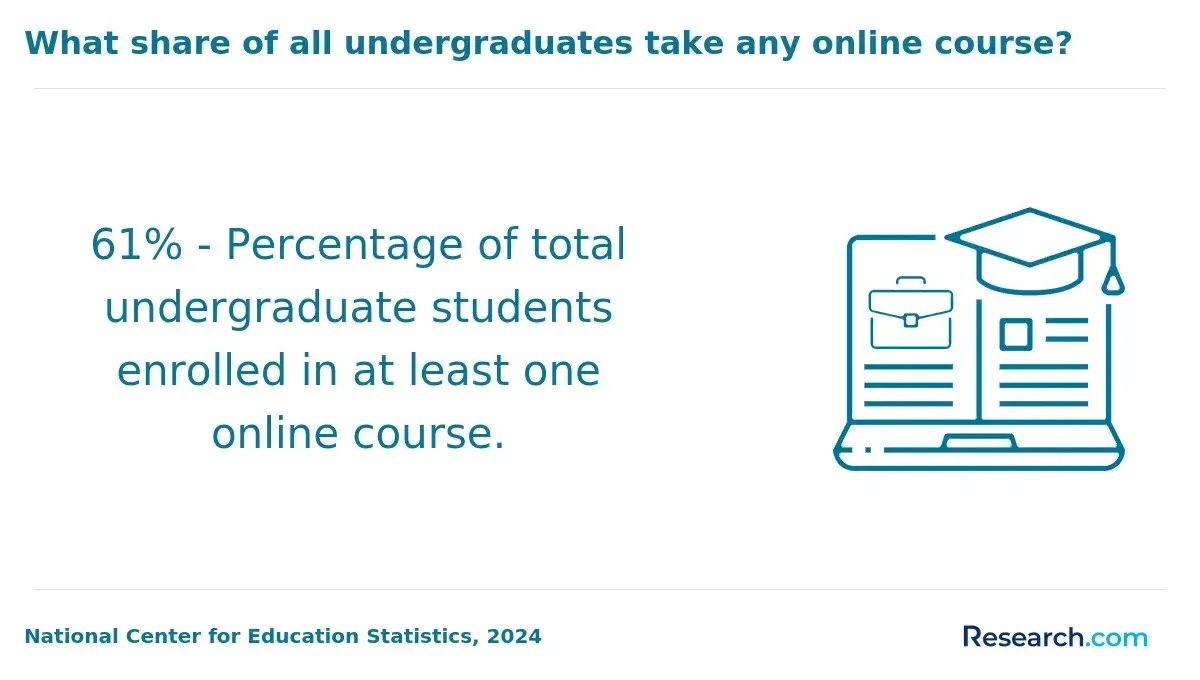
Choosing an online interdisciplinary studies degree without the GRE or GMAT can save time, money, and application stress, but test-free admissions do not automatically mean a weaker or easier program. NCES reported in 2024 that more than half of U. S. undergraduates took at least one distance education course in fall 2022, showing how central online learning has become. This guide is for adult learners, career changers, transfer students, and graduate applicants who want flexibility without sacrificing accreditation, affordability, or long-term value.
Key Things You Should Know
- Many accredited online interdisciplinary studies programs are test-free or test-optional, especially bachelor's programs and applied master's programs; the more important filter is regional or institutional accreditation, not the absence of the GRE or GMAT.
- Skipping the GRE or GMAT can reduce upfront application costs because the GRE General Test is commonly priced at about $220 in the U.S., while GMAT exam fees are often higher depending on delivery format and location.
- Career value depends on how well the degree is designed around a goal; BLS May 2024 data places median pay at $101,190 for management analysts and $98,580 for project management specialists, but outcomes vary by experience, industry, and specialization.
Which Accredited Online Interdisciplinary Studies Degree Programs Do Not Require the GRE or GMAT?
Accredited online interdisciplinary studies programs that do not require the GRE or GMAT generally fall into two groups: bachelor's programs, where graduate entrance exams are not relevant, and master's programs that use holistic admissions instead of standardized test scores. Interdisciplinary studies means the curriculum intentionally combines two or more academic areas, such as business and communication, psychology and education, technology and policy, or health and leadership.
The table below summarizes examples of U.S. accredited online programs or closely related customizable degrees where GRE or GMAT scores are not typically part of the standard admissions pathway. Policies can change, so applicants should confirm the current requirement with the school before applying.
| Institution | Online degree option | Degree level | Accreditation status to verify | GRE or GMAT policy context | Best fit |
| Arizona State University Online | Interdisciplinary Studies, BA | Bachelor's | Institutionally accredited by the Higher Learning Commission | GRE and GMAT are not undergraduate admissions exams | Students who want to combine two concentration areas with a broad career direction |
| University of Central Florida Online | Interdisciplinary Studies, BA or BS | Bachelor's | Institutionally accredited by SACSCOC | GRE and GMAT are not undergraduate admissions exams | Transfer students who need an adaptable degree completion path |
| University of North Texas | Applied Arts and Sciences or Interdisciplinary Studies-related online pathways | Bachelor's or master's, depending on program | Institutionally accredited by SACSCOC | Undergraduate pathways do not use GRE or GMAT; graduate policies should be checked by program | Adult learners with prior college credit, technical training, or military experience |
| Western New Mexico University | Interdisciplinary Studies, MA | Master's | Institutionally accredited by the Higher Learning Commission | Many applied liberal arts and interdisciplinary graduate programs use transcripts and goals statements instead of business-school testing | Graduate students seeking broad academic customization |
| Liberty University Online | Interdisciplinary Studies or individualized online degree pathways | Bachelor's or master's, depending on program | Institutionally accredited by SACSCOC | Admissions commonly emphasize transcripts and program-specific criteria rather than GRE or GMAT scores | Students seeking a large online university with frequent start dates |
| Southern New Hampshire University | General Studies or customized liberal arts-related online pathways | Bachelor's | Institutionally accredited by NECHE | GRE and GMAT are not undergraduate admissions exams | Students prioritizing transfer credit, flexible pacing, and broad career preparation |
A useful distinction is test-free versus test-optional. Test-free means the school does not use GRE or GMAT scores for that program. Test-optional means applicants may submit scores, but the program can review the application without them. If scores are optional, submit them only when they strengthen your file, such as when your undergraduate GPA is below the program's preferred range or your transcript does not show recent quantitative or writing-heavy coursework.
Students comparing interdisciplinary studies with adjacent professional options should also look at whether a more specialized degree better fits their goal. For example, someone focused on behavioral intervention, autism services, or board certification preparation may want to compare broader interdisciplinary programs with BCBA online programs.
Why Have Accredited Online Interdisciplinary Studies Degree Programs Eliminated GRE and GMAT Requirements?
Many online interdisciplinary studies programs have moved away from GRE or GMAT requirements because the degree itself is usually designed for flexible, nontraditional academic paths. Applicants may be working adults, military-affiliated learners, parents, transfer students, or professionals returning to school after years in the workforce. A single standardized test often does not capture their readiness as well as transcripts, work history, writing ability, and a coherent academic plan.
Cost and access also matter. In the U.S., a GRE registration fee of about $220 can be a real barrier when added to transcript fees, application fees, and potential test prep expenses. For students applying to programs that already evaluate academic writing, professional experience, and prior coursework, skipping the exam can make the application process faster without removing meaningful review.
Admissions teams also have practical reasons to use holistic review. Interdisciplinary programs need students who can connect ideas across fields, complete self-directed projects, and explain why their chosen combination of subjects makes sense. Those qualities are usually easier to evaluate through a statement of purpose, résumé, portfolio, writing sample, or faculty-reviewed plan of study than through a general test score.
This shift does not mean every program has the same standard. More selective programs may still expect a strong GPA, prerequisites, a minimum number of completed credits, professional experience, or a polished academic proposal. The key takeaway is that no-GRE admissions usually changes what evidence is reviewed, not whether evidence is reviewed.
What Admissions Criteria Matter Most Without GRE or GMAT Scores?
When GRE or GMAT scores are removed, admissions committees usually place more weight on evidence that directly predicts success in the program. For interdisciplinary studies, that means academic consistency, writing ability, goal clarity, and proof that the student can manage independent, cross-disciplinary work.
The table below shows which admissions factors commonly become more important when standardized tests are not required. Use it to identify where your application is strongest and where you may need to add context.
| Admissions factor | Why it matters more without test scores | How applicants can strengthen it |
| College GPA | It shows sustained academic performance across multiple courses | Explain upward grade trends, retake key courses if appropriate, or highlight recent strong coursework |
| Completed credits or prior degree | Many online interdisciplinary programs serve transfer or degree-completion students | Request a transfer credit evaluation before applying or early in the process |
| Statement of purpose | It shows whether the interdisciplinary plan is coherent rather than random | Connect your subject areas to a specific academic, career, or community goal |
| Résumé or work history | Professional experience can demonstrate maturity, leadership, and applied learning | Translate job duties into skills such as analysis, communication, project coordination, and supervision |
| Writing sample or portfolio | Interdisciplinary coursework often requires synthesis, research, and clear communication | Submit polished work that demonstrates reasoning across more than one subject area |
| Recommendations | References can validate readiness, reliability, and fit | Choose recommenders who can discuss your academic or professional performance in detail |
Applicants should treat the statement of purpose as the centerpiece of the application. A strong statement does not simply say that you are interested in multiple subjects; it explains why those subjects belong together and what problem, role, population, or industry you want to address.
Before submitting, review your materials in this order so your application tells one consistent story:
- Confirm the program accepts your intended subject combination or concentration areas.
- Match your résumé to the program by emphasizing transferable skills, not just job titles.
- Use the statement of purpose to explain why an interdisciplinary structure is necessary for your goal.
- Ask recommenders to address qualities that test scores would not show, such as persistence, judgment, writing ability, or leadership.
- Check whether optional test scores, prerequisite courses, or interviews could help offset a weaker GPA.
Students with prior associate-level training should also think strategically about transfer pathways. For example, someone coming from an office administration college program may be able to build an interdisciplinary bachelor's plan around business communication, organizational leadership, information systems, or public administration.
Are No-GRE or No-GMAT Online Interdisciplinary Studies Degree Programs Easier to Get Into?
No-GRE or no-GMAT programs are often easier to apply to, but they are not always easier to get into. The application may be less expensive and less time-consuming, yet the admissions committee may still evaluate GPA, transfer credits, writing quality, professional background, and program fit carefully.
The easiest mistake is assuming that "no test required" means "open admission." Some online bachelor's degree-completion programs may be broadly accessible if students meet GPA and credit requirements. Graduate interdisciplinary programs, however, may expect a bachelor's degree from an accredited institution, a minimum GPA, an academic goal statement, and sometimes faculty approval of the proposed study plan.
The comparison below explains how admissions pathways differ. This matters because a test-free program can still be selective if it has limited seats, faculty review, or high writing expectations.
| Admissions pathway | What it means | Applicant advantage | Applicant risk |
| Test-required | GRE or GMAT scores must be submitted | Strong scores can offset weaker parts of the application | Testing adds cost and preparation time |
| Test-optional | Scores may be submitted but are not required | Applicants choose whether scores help their profile | Weak scores can distract from stronger evidence if submitted unnecessarily |
| Test-waiver | Scores are waived if conditions are met | Work experience, GPA, or prior graduate credit may replace testing | Applicants must document eligibility carefully |
| Test-free | Scores are not used in the admissions process | The application focuses on transcripts, goals, and experience | There is no test score available to compensate for weak writing or unclear fit |
If your GPA is strong and your goals are clear, a no-GRE pathway can be a major advantage. If your academic record is uneven, consider whether the program allows supplemental materials such as a writing sample, portfolio, explanation statement, recent coursework, or interview.
Does Skipping the GRE or GMAT Affect Academic Quality or Accreditation?
Skipping the GRE or GMAT does not determine whether a program is academically strong or accredited. Accreditation is based on institutional or programmatic review of educational quality, governance, faculty qualifications, student support, assessment, and financial stability. Standardized test requirements are admissions policies, not accreditation requirements.
For most interdisciplinary studies degrees, the most important accreditation question is whether the college or university is institutionally accredited by an agency recognized by the U.S. Department of Education or the Council for Higher Education Accreditation. Institutional accreditation affects transfer credit, employer recognition, graduate school eligibility, and access to federal financial aid.
Students should also understand that interdisciplinary studies is usually not a licensure degree by itself. If your goal is counseling, teaching, behavior analysis, social work, nursing, or another regulated profession, you must verify separate state licensure, certification, practicum, and supervised experience requirements. A flexible interdisciplinary curriculum may support your preparation, but it may not satisfy a licensing board unless the program is explicitly designed for that purpose.
Use these checks to separate legitimate no-GRE programs from risky options:
- Confirm institutional accreditation on the school's official accreditation page and through federal or accreditor databases.
- Review whether online students have access to advising, library resources, tutoring, career services, and disability accommodations.
- Ask whether the diploma or transcript distinguishes online study from campus study.
- Check whether credits are transferable to graduate programs or professional programs you may pursue later.
- Verify any licensure, certification, internship, or fieldwork claims directly with the relevant state board or credentialing body.
Academic quality is best judged by curriculum coherence, faculty expertise, student support, completion expectations, and outcomes transparency. A no-test policy may improve access, but it should never be the main reason you choose a program.
Which Students Benefit Most From Online Interdisciplinary Studies Degree Programs Without GRE or GMAT Requirements?
No-GRE and no-GMAT interdisciplinary studies programs are especially useful for students whose strengths are better shown through experience, prior coursework, and career direction than through standardized testing. They can be a strong fit when your goal crosses traditional department boundaries or when you need a degree-completion pathway that makes use of credits you already earned.
The students who benefit most usually fall into a few practical categories. If you see yourself in one of these groups, the flexibility of interdisciplinary study may matter as much as the test-free admissions process:
- Adult learners returning to school after several years in the workforce who can show leadership, communication, or technical experience.
- Transfer students with credits from multiple colleges who need a degree plan that does not waste prior coursework.
- Military-affiliated students who want to convert training, prior learning, or leadership experience into a coherent academic pathway.
- Career changers who need to connect an existing background with a new field, such as business and healthcare, education and technology, or psychology and public service.
- Students preparing for broad roles in coordination, administration, nonprofit work, project support, communications, or operations.
Students should be cautious if they need a highly prescribed credential. If your target career requires a specific accredited major, supervised clinical hours, state licensure, or a technical certification, a broad interdisciplinary studies degree may not be enough by itself.
Time-to-completion is another major factor. Learners with substantial transfer credit may want to compare interdisciplinary degree-completion programs with accelerated options such as the best 1 year bachelor degree online pathways, especially if finishing quickly is more important than building a highly customized curriculum.
How Do Tuition and Financial Aid Compare for No-GRE Online Interdisciplinary Studies Degree Programs?
No-GRE programs are not automatically cheaper than test-required programs. The admissions process may cost less because you avoid exam registration and preparation expenses, but total value depends on tuition, fees, transfer credits, employer tuition assistance, financial aid eligibility, and time to completion.
College Board's 2024 pricing data shows how much institutional cost can vary: published tuition and fees for in-state students at public four-year institutions averaged $11,610 for 2024-25, while private nonprofit four-year institutions averaged $43,350. Those figures are not specific to interdisciplinary online programs, but they show why applicants should compare total program cost rather than relying on school type or admissions convenience alone.
The table below highlights cost factors that often affect online interdisciplinary studies students. It is especially useful for transfer students and working adults because the cheapest sticker price is not always the lowest final cost.
| Cost factor | Why it matters | What to ask before enrolling |
| Per-credit tuition | Online programs often charge by credit hour | Is tuition the same for in-state and out-of-state online students? |
| Transfer credit acceptance | Accepted credits can reduce both cost and time | How many prior credits can apply to the major, electives, and general education? |
| Technology and distance learning fees | Fees can make a low tuition rate less competitive | Are online course fees included in the published tuition estimate? |
| Prior learning assessment | Some schools award credit for military, workplace, or certification-based learning | What documentation is required and how much does assessment cost? |
| Federal financial aid eligibility | Accreditation affects access to federal grants and loans | Is the program Title IV eligible and offered by an accredited institution? |
| Employer tuition assistance | Working students may reduce out-of-pocket costs | Does the program schedule align with employer reimbursement rules? |
Financial aid should be evaluated carefully because borrowing costs have increased. For the 2024-25 academic year, federal Direct Unsubsidized Loans for graduate and professional students carried an 8.08% fixed interest rate. That makes program length, transfer credit, and employer support especially important for students considering a master's degree.
Before choosing a program, calculate cost in this order:
- Request an official transfer credit or prior learning estimate.
- Multiply remaining credits by the per-credit tuition rate.
- Add mandatory online, technology, graduation, and course-specific fees.
- Subtract grants, scholarships, employer assistance, military benefits, or tuition discounts.
- Estimate borrowing only after identifying non-loan funding.
Interdisciplinary study can offer strong value when it prevents credit loss, supports a clear career goal, or lets you complete a degree while working. It is less financially attractive when the curriculum is too broad to improve your qualifications or when a specialized degree would align better with your target role.
What Career Outcomes Can Graduates Expect From No-GRE Online Interdisciplinary Studies Degree Programs?
Career outcomes from interdisciplinary studies vary widely because the degree is intentionally broad. Graduates may work in business operations, public administration, nonprofit coordination, communications, project support, human services, education-related roles, or preparation for graduate study. The most employable students usually shape the degree around a specific skill set rather than simply collecting unrelated courses.
BLS May 2024 wage data offers useful context for common roles that may align with interdisciplinary preparation. The median salary for management analysts was $101,190, while project management specialists had a median salary of $98,580. These figures do not mean an interdisciplinary studies graduate will automatically enter those roles; they show that cross-functional skills such as analysis, coordination, communication, and process improvement can be valuable when paired with experience and targeted coursework.
The table below connects common interdisciplinary themes with career directions. Use it to think about whether a program's concentration options match the kind of work you actually want to do.
| Interdisciplinary focus | Possible career direction | Skills to build intentionally | When another degree may be better |
| Business, communication, and leadership | Operations coordinator, project assistant, team lead, nonprofit manager | Budgeting, writing, presentation, data reporting, supervision | Choose a business, accounting, or MBA pathway if your goal requires deeper finance or management training |
| Technology, policy, and security awareness | Program coordinator, compliance support, technology liaison | Risk awareness, documentation, systems thinking, stakeholder communication | Choose a specialized cybersecurity program for technical security roles |
| Psychology, education, and human services | Case support, student services, community program coordination | Ethics, cultural competence, interviewing, documentation, referral processes | Choose a licensure-aligned counseling, social work, or behavior analysis pathway if required |
| Arts, health, and community engagement | Arts administration, wellness programming, community outreach | Program design, grant writing, facilitation, evaluation | Choose a clinical or credentialed arts therapy degree if you want therapy licensure preparation |
| Public administration, social science, and data | Policy assistant, research coordinator, public service analyst | Research methods, statistics, policy writing, data visualization | Choose public policy, public administration, or data analytics for more technical specialization |
Employers usually care less about whether a program required the GRE or GMAT and more about whether the graduate can demonstrate relevant skills. For online students, internships, capstone projects, portfolios, certifications, and work-based projects can make the degree easier to translate into job interviews.
If your interdisciplinary interests lean toward technology, compare broad programs with a specialized cyber security masters before committing. A customized degree may support management or policy goals, but technical cybersecurity roles often require deeper hands-on training.
What Common Application Mistakes Reduce Admission Chances to No-GRE Online Interdisciplinary Studies Degree Programs?
Without GRE or GMAT scores, every other part of the application has to work harder. The most common mistakes are not dramatic; they are usually signs that the applicant has not connected past experience, academic interests, and future goals clearly enough.
These mistakes can weaken an otherwise qualified application. Review them before submitting so your materials show readiness and fit:
- Choosing a program only because it does not require the GRE or GMAT, rather than because the curriculum supports a clear goal.
- Submitting a generic personal statement that says you like several subjects but does not explain why they belong together.
- Ignoring minimum GPA, prerequisite, transfer credit, or prior degree requirements because the program is advertised as flexible.
- Assuming online format means lighter coursework, even though accelerated online classes can be writing-intensive and deadline-driven.
- Failing to verify accreditation before paying application or enrollment fees.
- Using recommenders who only know you casually and cannot discuss your academic readiness or professional strengths.
- Overlooking total cost while focusing on the convenience of test-free admissions.
- Not asking whether test-optional scores, a writing sample, or recent coursework could help offset a weaker transcript.
A strong application should make the admissions reader think, "This student knows why an interdisciplinary degree is the right structure." That is different from saying, "This student could not decide on a major."
If your interests include creative practice, counseling-adjacent work, or community wellness, be especially careful about licensure assumptions. A broad interdisciplinary degree is different from an art therapy masters, which may have specific clinical training expectations depending on the program and state.
How Should Students Compare Accredited Online Interdisciplinary Studies Degree Programs Without GRE or GMAT Requirements?
The best no-GRE online interdisciplinary studies program is not simply the one with the fewest admissions requirements. It is the program that combines legitimate accreditation, a coherent curriculum, affordable completion, strong advising, and a structure that supports your goal.
Use this decision process to compare programs before applying:
- Start with accreditation and federal aid eligibility, then remove any school that cannot clearly document institutional accreditation.
- Define your goal in one sentence, such as "I want to move from administrative work into healthcare operations" or "I want to combine education, technology, and training design."
- Check whether the program allows the subject combination you need, not just broad elective freedom.
- Request a transfer credit review if you have prior college, military, technical, or certification-based learning.
- Compare total remaining cost, not just per-credit tuition.
- Ask how online advising works and whether students receive help building an approved interdisciplinary plan.
- Review capstone, internship, portfolio, or applied project options because these can make the degree more marketable.
- Confirm whether the program supports graduate school, certification, or licensure plans if those are part of your future path.
The table below gives a practical scoring framework. It can help you compare several programs side by side without overvaluing the no-test feature.
| Comparison category | Strong sign | Warning sign |
| Accreditation | Institutional accreditation is easy to verify | The school uses vague language or avoids naming the accreditor |
| Curriculum fit | Concentrations, electives, or focus areas align with your goal | The program is flexible but lacks structure or advising |
| Admissions transparency | GPA, transcript, résumé, and statement requirements are clearly listed | No-GRE messaging hides other requirements |
| Cost clarity | Tuition, fees, and transfer policies are published or explained by an advisor | The school gives only a partial cost estimate |
| Student support | Online students receive advising, tutoring, library access, and career services | Support appears limited to enrollment counseling |
| Career relevance | Capstones, portfolios, internships, or applied projects connect to real roles | The program does not explain how students translate the degree into outcomes |
Applying without GRE or GMAT scores makes the most sense when your transcript, experience, and goals already tell a strong story. Taking or submitting a test may still make sense if scores are optional and you need to demonstrate quantitative readiness, offset older grades, or compete for a more selective graduate pathway.
Other Things You Should Know About Interdisciplinary Studies
Not always. General studies is often a broad degree-completion pathway, while interdisciplinary studies usually requires a planned combination of two or more academic areas. Some schools use the terms differently, so review the curriculum and advising model.
Yes, many graduates can apply to graduate school, especially if they complete the prerequisites required for the target program. Competitive graduate applications usually need a strong GPA, relevant coursework, recommendations, and a clear academic purpose.
Many accredited universities do not label the diploma as online, but policies vary. Ask the registrar or admissions office how the degree, transcript, and campus location will appear before enrolling.
A bachelor's degree typically depends on transfer credits and course load, while master's programs often take about one to three years. Accelerated terms can shorten the timeline, but they may require heavier weekly study time.
References
- Bachelor's vs Master's Degree Programs: What are the Differences? https://www.onlineeducation.com/faqs/bachelors-vs-masters-degrees
- Online Master’s in English Programs No GRE Required (Master of Arts) https://www.mastersincommunications.com/faqs/online-masters-in-english-gre-requirements
- Types of Financial Aid for Online Colleges https://www.umassglobal.edu/blog-news/types-financial-aid-online-colleges
- Online MHA Programs No GRE Required (including GRE Waiver) https://www.mhaonline.com/faq/no-gre-online-mha-programs
- Interdisciplinary Studies, Liberal Arts (BAS) https://catalog.coloradomesa.edu/areas-study/liberal-arts/interdisciplinary-studies-liberal-arts-bas/
- How to capitalize on the rising demand for graduate-level interdisciplinary degrees | EAB https://eab.com/resources/blog/adult-education-blog/rising-demand-graduate-interdisciplinary-degrees/
- 2025's Best Online Master’s Programs: No GRE Required https://www.onlinemastersdegrees.org/best-programs/no-gre/
- On the Growth and Value of Interdisciplinary Studies - Academic Briefing | Higher Ed Administrative Leadership https://www.academicbriefing.com/scholarship/curriculum/on-the-growth-and-value-of-interdisciplinary-studies/