2027 Berkeley MIDS Natural Language Processing Coursework: A Guide for Prospective Students

Co-Founder and Chief Data Scientist
Berkeley MIDS may appeal to prospective students who want to work with language data but also want a broader data science degree. The key decision is whether its NLP coursework offers enough depth for your goals, especially if you hope to build language models rather than simply use them.
This guide separates the dedicated NLP course from supporting coursework, then examines the admissions, scheduling, cost, and career questions that could change your choice.
Key Things You Should Know
- Berkeley MIDS includes a dedicated Natural Language Processing with Deep Learning course, but it is a broad data science degree - not an NLP specialization.
- For NLP-focused applicants, the decisive questions are whether the course fits their study plan and whether projects provide enough model-building and evaluation experience.
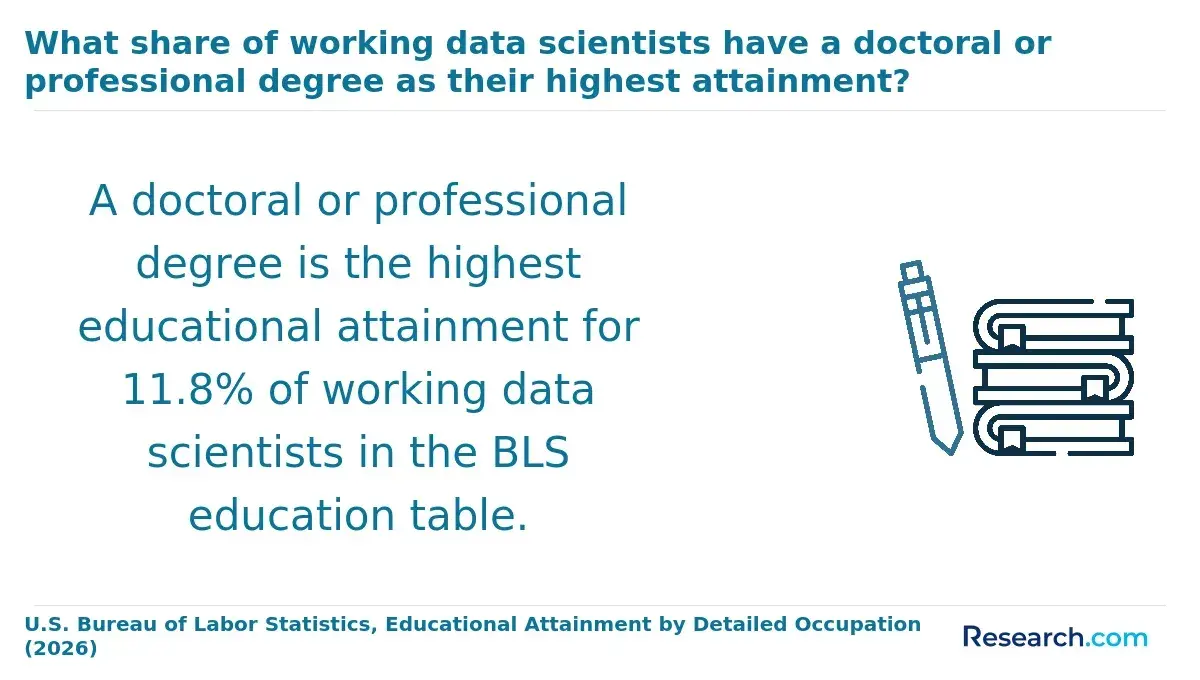
- The U.S. median annual wage for data scientists was $120,230 in May 2025, according to the Bureau of Labor Statistics; that occupation-wide figure is not a Berkeley graduate salary.
What Is Berkeley MIDS Natural Language Processing Coursework?
Berkeley's Master of Information and Data Science (MIDS) is an online graduate degree offered by the UC Berkeley School of Information. Its NLP coursework sits within a wider curriculum covering data science methods and applications. The most direct NLP offering is Natural Language Processing with Deep Learning, commonly identified in Berkeley course listings as Data Science W266.
That distinction matters: taking an NLP course within MIDS is not the same as completing a degree devoted to computational linguistics or language-model research. MIDS is a stronger conceptual fit if you want to apply language methods alongside general data science skills. If your principal goal is extensive advanced NLP study, examine how many relevant courses and projects you could actually complete before choosing it.
What Does Berkeley MIDS Teach About Natural Language Processing?
The dedicated course connects language-processing problems with deep learning. Prospective students should assess depth by looking beyond the title: a substantive graduate NLP experience should involve working with text data, training or adapting models, evaluating results, and explaining why a method is appropriate for a task. A project that merely sends text to an existing API demonstrates a different level of technical experience.
Berkeley's broader machine-learning and data-engineering coursework can support NLP work by developing skills in modeling and handling data. Python, probability, linear algebra, and machine-learning foundations are useful preparation, though students should check the current course description for formal prerequisites and the methods taught in their intended term.
If evaluating bias, privacy, or model oversight is central to your goals, compare MIDS project opportunities with master's-level preparation in responsible AI governance.
How Does Berkeley MIDS Compare With Other Data Science Degrees?
The useful comparison is accessible NLP depth within a complete degree, not whether another program mentions AI on its website. Berkeley offers a named NLP course within a generalist data science curriculum. Other degrees may provide more language-focused electives, while some offer only a brief NLP unit; course titles alone cannot establish which provides better project experience.
These distinctions help identify which kind of program to investigate further. Check current catalogs and course availability before treating any advertised topic as a guaranteed part of your study plan.
| Program emphasis | Potential advantage | Trade-off to examine |
| Berkeley MIDS | Dedicated NLP coursework alongside broad data science training | Limited room for NLP depth if few related courses or projects fit your plan |
| NLP-focused degree | More opportunities for specialized language study | May offer less breadth in general data science applications |
| General data science degree with no dedicated NLP course | Potential flexibility for other career goals | NLP learning may depend heavily on self-directed projects |
Choose a broad program when you want flexibility across data roles; prioritize specialized study when advanced language modeling is the main reason you are enrolling. For a wider set of alternatives, review university degree options in artificial intelligence and compare their actual course requirements with MIDS rather than comparing degree names.
What Courses Are Included in Berkeley MIDS NLP Training?
Natural Language Processing with Deep Learning is the course to examine first. Related MIDS study in applied machine learning and data engineering can help students prepare models, manage datasets, and place an NLP project in a practical workflow. A culminating project may provide another opportunity to work with text, but applicants should not assume that every project can have an NLP topic or that a particular elective will be offered when needed.
Before enrolling, compare the current Berkeley catalog and sample study plan against your goals. These checks distinguish a promising curriculum from a feasible one:
- Confirm the NLP course's current status, prerequisites, scheduling, and place in your intended sequence.
- Read the latest course description for the balance of model implementation, evaluation, and use of existing tools.
- Ask whether a text-based culminating project is feasible under current project rules and supervision arrangements.
What Are the Admission Requirements for Berkeley MIDS?
Applicants should use Berkeley MIDS' current admissions page for the definitive eligibility rules, required documents, deadlines, and any technical prerequisites. A relevant bachelor's degree or prior NLP work should not be treated as an automatic admission requirement - or an admission guarantee - without confirmation from the program.
For an NLP-focused applicant, readiness is also a practical question. Evidence of programming, quantitative reasoning, and experience with messy data can help you judge whether you can move from general machine learning into a deep-learning-based NLP course. If you have gaps, build that foundation before enrollment; independent study can prepare you academically, but it does not necessarily fulfill a formal admissions requirement.
Is Berkeley MIDS Online or Campus-Based?
MIDS is designed as an online program, making it more accessible to students who cannot relocate to Berkeley. Online delivery does not mean every requirement is self-paced or that no travel is involved: confirm current live-session schedules, attendance expectations, and any immersion or other in-person requirements directly with the program.
This is especially important if you plan to keep working while studying. Before accepting an offer, map required meeting times and project collaboration against your job, time zone, and travel constraints. A technically suitable NLP course is less useful if its delivery requirements make consistent participation impractical.
How Long Does Berkeley MIDS Take and How Much Does It Cost?
Completion time depends on the approved pace and course sequence. The time needed to reach the NLP course may matter more than the shortest advertised path: taking foundational work first can be valuable if you need stronger machine-learning preparation. Confirm current pacing options and the NLP course's availability when planning your timeline.
For cost, request Berkeley's current tuition and mandatory-fee schedule and calculate the amount for your expected enrollment pattern. No current program-total price is stated here because tuition, fees, and a student's final bill can change.
Include potential travel, equipment, materials, financing costs, and income lost if you reduce work hours. If cost is the binding constraint, compare the complete MIDS estimate - not tuition alone - with ML master's affordability below $20,000, while checking whether lower-cost alternatives offer comparable NLP work.
What Careers Can Berkeley MIDS NLP Coursework Support?
NLP coursework can be relevant to data science or machine-learning roles involving search, document analysis, text classification, or language-based products. The BLS projects 35% growth in U.S. data scientist employment from 2025 to 2035. That is an occupation-wide projection, not a forecast of NLP openings or MIDS placements; employers will still assess the applicant's existing experience and demonstrated skills.
For an NLP-oriented job search, a well-documented project is more informative than a course title alone. Show the problem, data permissions, baseline, evaluation method, errors, and decisions made from the results. Professional connections may also matter when identifying relevant teams; students weighing that factor can compare AI master's degrees with established alumni connections while asking each program what networking access online students actually receive.
What Salaries Can Berkeley MIDS Graduates Earn in NLP Careers?
There is no single defensible salary figure for Berkeley MIDS graduates working in NLP. The BLS reports a $120,230 median annual wage for U.S. data scientists in May 2025, but that figure includes workers from many educational backgrounds and specialties. It is not a graduate outcome, starting salary, or estimate of the earnings increase caused by MIDS.
Assess affordability using your current pay, realistic target roles, location, experience, and total education cost. A move into a new specialty could have a different financial result from an internal promotion. If you are comparing possible returns on a graduate degree, affordable paths to an AI master's qualification can help frame alternatives, but no program's advertised career possibilities should substitute for a personal budget.
Is Berkeley MIDS Accredited and Does NLP Require Certification?
UC Berkeley is institutionally accredited by the WASC Senior College and University Commission. Institutional accreditation applies to the university; it should not be mistaken for a separate endorsement of MIDS' NLP course. Check Berkeley's current accreditation information if this status affects an employer benefit or education-financing decision.
NLP is not generally a licensed profession with one required certification. Employers may instead look for relevant degree study, software and modeling skills, and credible project evidence. Avoid paying for an additional certificate solely because you assume it is mandatory for NLP work; check requirements for the specific roles you want.
Other Things You Should Know About Data Science
Possibly, but get permission first. Confirm the program's project rules and your employer's privacy, intellectual-property, and data-security requirements before uploading or sharing any material.
No. Ask whether assignments, approved datasets, and project supervision can support that language; a course's general NLP title does not establish multilingual depth.
Do not assume either way. Ask what computing resources the course supplies and whether a proposed project would require separately paid services.
Read the current course and university policies on permitted tools, disclosure, and independent work. Those rules may differ between an assignment that studies AI systems and one that assesses your own technical skills.
References
- Natural language processing: state of the art, current trends and challenges - PMC https://pmc.ncbi.nlm.nih.gov/articles/PMC9281254/
- 2024 - 2025 Graduate Catalog https://berkeleycollege.edu/catalogs/graduate-2024-2025/sdcl/orientation/index.html
- Data Science Curriculum | UC Berkeley School of Information's Online Master's Programs https://ischoolonline.berkeley.edu/data-science/curriculum/
- 6.4.1 General Course Info Page - Academic Senate https://academic-senate.berkeley.edu/course-toolbox/6.4.1
- Advanced Topics in Natural Language Processing Fall 2024 | illinois.edu https://blender.cs.illinois.edu/course/fall24/anlp.html
- Online Master of Information and Data Science | UC Berkeley School of Information https://www.ischool.berkeley.edu/programs/mids-online
- Related Courses - MELD Lab https://meld.lin.ufl.edu/related-courses/
- Info 159/259. Natural Language Processing | berkeley.edu https://people.ischool.berkeley.edu/~dbamman/nlp20.html
- Top 10 AI Programming Languages You Should Learn in 2026 | Syracuse University https://ischool.syracuse.edu/top-ai-programming-languages/
- Advancements in natural language processing | sciencedirect.com https://www.sciencedirect.com/science/article/pii/S2772503024000598