
2027 Are Online Criminal Justice Doctorate Degrees Respected by Employers? Hiring Trends and Career Outcomes

Co-Founder and Chief Data Scientist
An online criminal justice doctorate can be respected by employers, but only when the program, credential, and career goal match. The U. S. Bureau of Labor Statistics reported a May 2024 median annual wage of $77,270 for police and detectives, while many doctoral-level outcomes depend on moving into leadership, teaching, research, or policy roles rather than frontline work.
This guide is for working justice professionals comparing degree value, employer recognition, salary potential, and alternatives. You will learn when the doctorate strengthens your résumé, when it may not, and how to evaluate programs before investing.
Key Things You Should Know
- Employers usually care more about institutional accreditation, school reputation, research or leadership experience, and job fit than whether a criminal justice doctorate was completed online.
- The strongest ROI is usually in senior administration, college teaching, policy research, consulting, and executive public-safety roles; it is weaker for jobs where a master's degree, academy training, or certification already meets the hiring requirement.
- Cost and time matter: graduate borrowers can generally access up to $20,500 per year in federal Direct Unsubsidized Loans, so comparing tuition, employer tuition benefits, and likely advancement is essential before enrolling.
What Is the True ROI of an Online Criminal Justice Doctorate?
The true ROI of an online criminal justice doctorate is not just the difference between your current salary and a future salary. It is the combined value of higher-level job eligibility, promotion potential, teaching opportunities, research credibility, professional network access, and personal career goals minus tuition, fees, debt, time, and opportunity cost.
For many students, the best starting point is understanding what the doctorate is designed to do. A criminal justice doctorate may be a research-focused PhD, a practitioner-focused Doctor of Criminal Justice, or a closely related doctorate in public safety, homeland security, criminology, public administration, or justice leadership. Employers may interpret those degrees differently. Universities often prioritize research training and publications, while law enforcement agencies, corrections systems, courts, and public agencies may care more about executive leadership experience and evidence-based decision-making.
If you are still comparing earlier degree levels, an online criminal justice degree can also be part of a longer pathway toward supervisory or graduate study, especially for students who have not yet completed a bachelor's or master's degree.
Employer respect usually depends on several signals working together. The table below summarizes the factors that most often influence whether an online doctorate is viewed as credible in hiring and promotion decisions.
| Employer recognition factor | Why it matters | What to verify before enrolling |
| Institutional accreditation | Most employers and licensing or public-sector HR offices expect the university to be accredited by a recognized accreditor. | Confirm the school's accreditation through the U.S. Department of Education or the Council for Higher Education Accreditation databases. |
| Degree type | A PhD may be preferred for tenure-track or research roles, while an applied doctorate may fit command, policy, or executive leadership roles. | Ask whether graduates enter the same roles you are targeting. |
| School reputation in justice fields | Employers may be more familiar with programs that have faculty, alumni, or partnerships in policing, corrections, courts, security, or public policy. | Review faculty backgrounds, dissertation topics, alumni roles, and employer partnerships. |
| Professional experience | A doctorate without relevant justice experience may carry less weight for senior operational roles. | Compare program expectations with your current résumé and target job descriptions. |
| Research or capstone relevance | Employers value applied evidence when it helps solve real agency problems, such as recidivism, staffing, training, emergency response, or data analysis. | Check whether the program supports dissertations, applied projects, policy briefs, or publishable research. |
Admissions requirements commonly include a master's degree, graduate GPA minimum, résumé, statement of purpose, recommendations, and sometimes writing samples or professional experience. Some programs admit bachelor's-prepared students into longer doctoral tracks, but many online criminal justice doctorates are built for working professionals who already have graduate education and justice-sector experience.
How Much Does an Online Criminal Justice Doctorate Increase Earning Potential?
An online criminal justice doctorate can increase earning potential, but the increase is usually indirect. The degree is most financially useful when it helps you qualify for higher-level roles, compete for executive promotion, teach at the college level, consult, or lead research and policy initiatives. It is less likely to produce an automatic raise in roles with rigid civil-service pay scales unless the employer has an education incentive, command-track requirement, or promotion process that rewards doctoral education.
BLS wage data can help set realistic expectations. The table below uses May 2024 BLS median pay for selected occupations connected to criminal justice doctorate outcomes. These are occupation-level medians, not degree-specific salaries, so they should be treated as context rather than a forecast.
| Career area | Relevant BLS occupation | May 2024 median annual pay | How a doctorate may influence earnings |
| Law enforcement leadership | Police and detectives | $77,270 | The doctorate may support promotion to command, training, policy, or executive roles, but pay often depends on rank, agency, union rules, and locality. |
| Higher education | Postsecondary teachers | $83,980 | A doctorate is often expected for full-time faculty roles, though tenure-track positions usually require strong research credentials. |
| Emergency and public safety management | Emergency management directors | $86,130 | Doctoral training can help with policy, planning, interagency leadership, and research-informed decision-making. |
| Executive administration | Top executives | $103,840 | The degree may strengthen candidacy for senior public agency, nonprofit, security, or justice-system leadership roles when paired with substantial experience. |
The practical takeaway is that the doctorate has the highest earning potential when it moves you into a different labor market, not just a slightly higher education bracket. A patrol officer, probation officer, correctional officer, or analyst may see limited immediate wage change from the credential alone, while a professional moving into a director, professor, consultant, or policy leadership role may see stronger long-term value.
Which Careers Provide the Best Financial Return With an Online Criminal Justice Doctorate?
The best financial return usually comes from roles where doctoral-level expertise solves a specific employer problem: leading complex agencies, teaching advanced courses, evaluating programs, advising policy, or building evidence-based justice strategies. The degree is most respected when the job actually needs advanced research, leadership, or subject-matter authority.
The table below compares common career paths by how strongly they tend to reward a criminal justice doctorate. The goal is not to rank every job, but to help you identify where the credential is likely to create meaningful leverage.
| Career path | Typical employer settings | Doctorate value | ROI outlook |
| College professor or full-time lecturer | Community colleges, universities, online colleges, professional training programs | High when the role requires doctoral credentials, teaching experience, and research or applied expertise. | Strong if the program supports teaching preparation, publications, and academic networking. |
| Criminal justice policy researcher | Think tanks, universities, government agencies, research institutes, advocacy organizations | High when the doctorate includes research design, statistics, program evaluation, and policy analysis. | Strong for students with quantitative skills and a research portfolio. |
| Law enforcement or corrections executive | Police departments, sheriff's offices, corrections departments, state agencies, federal contractors | Moderate to high when combined with command experience and leadership accomplishments. | Strongest when the employer uses education in promotion scoring or executive selection. |
| Consultant or expert advisor | Public safety consulting firms, legal teams, security organizations, government contractors | Moderate to high when the professional has recognized field experience and a specialized niche. | Variable because income depends on reputation, client base, and business development. |
| Frontline practitioner | Police, corrections, probation, courts, victim services | Low to moderate unless the agency offers education pay, promotion credit, or specialized assignments. | Often weaker if the employee remains in the same role and pay scale. |
Current hiring trends also matter. Criminal justice employers increasingly value data literacy, digital evidence awareness, cyber-enabled crime knowledge, community trust strategies, crisis intervention, and evidence-based program evaluation. A doctorate aligned with these issues can appear more relevant than a general leadership credential with little connection to current agency challenges.
Employer Confidence in Online vs. In-Person Degree Skills, Global 2024

How Does an Online Criminal Justice Doctorate Affect Career Advancement?
An online criminal justice doctorate can improve advancement by signaling expertise, discipline, research ability, and readiness for strategic responsibility. It can help professionals move from operational roles into policy, administration, education, or consulting. However, it is rarely a substitute for leadership results, ethical judgment, communication skills, and field credibility.
For promotion committees and executive hiring panels, the doctorate is usually strongest when it supports a clear professional narrative. A corrections administrator studying reentry outcomes, a police commander researching recruitment and retention, or a court professional analyzing diversion programs can present the degree as directly useful to the employer's mission.
Professionals can increase the advancement value of the degree by using the program strategically. The following steps help connect doctoral study to promotion and hiring outcomes:
- Choose dissertation or capstone topics tied to measurable agency needs, such as staffing, training effectiveness, recidivism reduction, crisis response, officer wellness, intelligence analysis, or technology adoption.
- Document leadership outcomes during the program, including policy changes, grants, training programs, interagency projects, or measurable operational improvements.
- Build relationships with faculty, alumni, practitioners, and professional associations that connect directly to your target career path.
- Translate academic work into employer-friendly materials, such as executive summaries, policy memos, conference presentations, training modules, or program evaluations.
- Keep your résumé focused on impact, not just the credential; employers want to see what the doctorate helped you do.
A common mistake is assuming that the title "Doctor" alone will change employer perception. In criminal justice, advancement often depends on credibility under pressure, public accountability, labor relations, budgeting, community engagement, and ethical leadership. The doctorate can strengthen those qualifications, but it cannot replace them.
How Does the Cost of an Online Criminal Justice Doctorate Affect Its Overall Value?
Cost has a major effect on whether an online criminal justice doctorate is worth it. A respected, lower-cost accredited program may produce better ROI than a more expensive program if both lead to similar employer recognition in your target field. Conversely, a higher-cost program may be reasonable if it offers unusually strong faculty mentorship, research support, alumni access, employer partnerships, or a clear path into the career you want.
Students should compare tuition with total attendance cost, not just price per credit. If you need a broader cost baseline before moving into doctoral study, reviewing criminal justice degree price factors can help you understand how tuition, fees, books, technology costs, and residency requirements affect total value.
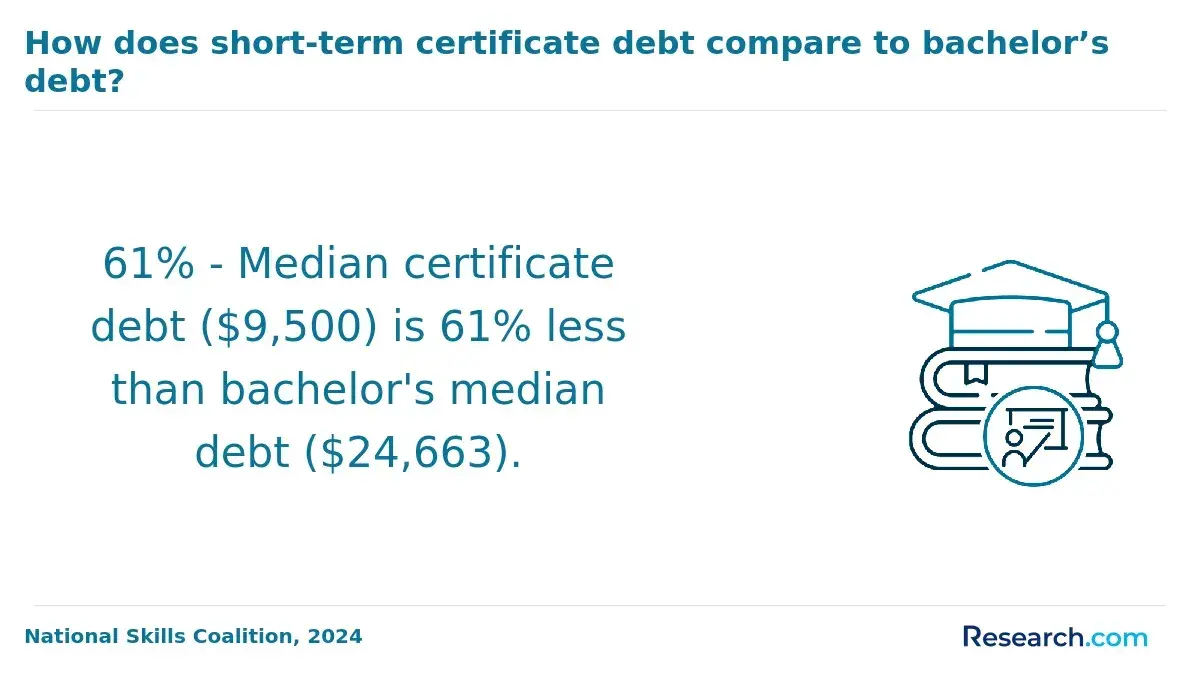
Federal borrowing limits are also part of the calculation. For graduate and professional students, the federal Direct Unsubsidized Loan annual limit is generally $20,500, while Grad PLUS Loans may cover remaining eligible cost of attendance after other aid. That access can make enrollment possible, but it can also make it easier to overborrow for a degree that may not produce a direct salary increase.
The criminal justice degree cost factors below are the ones most likely to change ROI. Review them side by side before choosing a program:
- Tuition structure: compare total program cost, not only per-credit tuition, because doctoral programs may include dissertation or continuation credits.
- Residency requirements: some online programs require campus visits, conferences, intensives, or travel that can add meaningful expenses.
- Time-to-completion rules: programs with strict dissertation timelines may reduce extra fees, while open-ended timelines can increase total cost.
- Employer tuition assistance: public agencies, universities, military benefits, and government employers may offset cost if the degree aligns with workforce needs.
- Opportunity cost: even online programs require time that could otherwise go toward overtime, consulting, promotion preparation, or professional certifications.
The best financial decision is not always the cheapest program. The best value is usually the lowest-cost accredited option that still gives you the faculty expertise, doctoral structure, research support, and employer credibility needed for your specific goal.
How Does the Time Commitment of an Online Criminal Justice Doctorate Affect Its ROI?
Time commitment affects ROI because doctoral study competes with work, family, overtime, promotion preparation, and professional networking. Many online criminal justice doctorates are designed for working adults, but "online" does not mean light. Students often spend several years completing coursework, research methods, comprehensive exams, dissertation proposals, data collection, writing, and revisions.
A realistic timeline is often three to six years, depending on transfer credits, enrollment intensity, dissertation progress, and whether the program is structured as a cohort. The longer the program takes, the more likely students are to pay extra fees, delay career moves, or lose momentum.
Before enrolling, estimate the time cost as carefully as the tuition cost. The following questions help identify whether the schedule supports your career plan:
- Can you complete weekly coursework while maintaining job performance, especially if you work shifts, overtime, court schedules, or emergency operations?
- Does the program offer part-time pacing without creating excessive dissertation extension costs?
- Will your employer support research access, schedule flexibility, tuition assistance, or applied projects?
- Can you finish a dissertation or doctoral project on a topic that is feasible with your access to data, agencies, or participants?
- Will the degree timeline align with promotion windows, retirement eligibility, faculty hiring cycles, or executive search timelines?
Time-to-degree is also a credibility issue. Employers may respect the credential, but they will still evaluate whether you continued building leadership results during the program. The strongest candidates do not disappear into graduate study; they use the doctorate to produce visible work while continuing to advance professionally.
Does an Online Criminal Justice Doctorate Have the Same Career Value as a Campus-Based Degree?
An online criminal justice doctorate can have the same career value as a campus-based degree when it comes from an accredited institution and provides comparable academic rigor, faculty support, research expectations, and professional relevance. Most employers do not reject a doctorate simply because it was delivered online, especially as online graduate education has become common among working professionals. Still, some academic, federal, or highly selective employers may scrutinize the institution, faculty, dissertation quality, and research record closely.
The key issue is not format alone; it is evidence of quality. The table below shows how employers tend to compare online and campus-based doctorates in real hiring decisions.
| Comparison area | Online doctorate | Campus-based doctorate | Employer takeaway |
| Accreditation | Can be fully respected if the institution is properly accredited. | Can be fully respected if the institution is properly accredited. | Accreditation matters more than delivery format. |
| Networking | May require more intentional effort through virtual cohorts, conferences, residencies, and professional associations. | Often provides more informal access to faculty, peers, and campus events. | Online students should actively build professional visibility. |
| Research preparation | Strong if the program includes methods training, dissertation support, and faculty mentorship. | Strong when students have access to research centers, assistantships, and faculty labs. | Research quality matters especially for academic and policy roles. |
| Work compatibility | Often better for employed professionals who cannot relocate or stop working. | May be better for students seeking assistantships, campus teaching, or full-time doctoral immersion. | The better format depends on career stage and target role. |
| Employer perception | Positive when the school is credible and the candidate has strong experience. | Positive when the school is credible and the candidate has strong experience. | Degree format rarely outweighs reputation, outcomes, and fit. |
Students targeting tenure-track faculty roles should be especially careful. Some colleges may prefer candidates with traditional PhD preparation, teaching experience, peer-reviewed publications, and a strong research agenda. An online doctorate can still be competitive, but the student may need to work harder to build an academic portfolio.
How Does an Online Criminal Justice Doctorate Compare With Other Career Advancement Options?
An online criminal justice doctorate is only one possible advancement path. For some professionals, a master's degree, graduate certificate, law degree, public administration degree, specialized training, or professional certification may deliver faster and cheaper career value. The right option depends on whether your target role rewards doctoral-level research and leadership expertise.
Students earlier in their education may not need to jump directly into doctoral planning. For example, the best online associate degree programs in criminal justice can support entry-level preparation or transfer pathways before students commit to advanced graduate study.
Compare alternatives based on employer requirements rather than prestige alone. The following framework can help:
- Choose a doctorate when your target role values original research, college teaching, executive policy leadership, or recognized subject-matter expertise.
- Choose a master's degree when your goal is promotion eligibility, management preparation, or specialized knowledge without the dissertation commitment.
- Choose a graduate certificate when you need focused expertise in areas such as homeland security, cybercrime, emergency management, victim advocacy, intelligence, or public administration.
- Choose professional certification when the employer specifically rewards job-ready technical skill, compliance knowledge, training credentials, or field specialization.
- Choose law school only when your target work requires legal practice, prosecutorial work, defense practice, judicial clerkship pathways, or roles where a JD is the recognized credential.
The doctorate is usually the better option when you want to become a scholar-practitioner, teach advanced students, evaluate justice programs, or compete for senior leadership roles where strategic credibility matters. It may not be the best option if your employer's promotion system caps education points at the master's level or if your desired role requires a license or certification instead.
Which Professionals Benefit Most From an Online Criminal Justice Doctorate?
The professionals who benefit most are usually mid-career or senior practitioners with a clear advancement target. The doctorate is especially useful for people who already have field credibility and want to add research, teaching, policy, or executive leadership authority.
Strong-fit candidates often include police commanders, corrections administrators, probation or parole leaders, court administrators, federal or state agency professionals, military or homeland security personnel, criminal justice instructors, policy analysts, and consultants. These professionals can connect doctoral work to real agency problems and demonstrate immediate value to employers.
Some professionals may be better served by adjacent fields. For example, public safety leaders moving toward workplace risk, compliance, emergency planning, or occupational safety may want to compare criminal justice doctorates with the best online environmental health and safety programs if their future work is more focused on prevention, regulation, and organizational safety systems than justice administration.
A criminal justice doctorate may be a poor fit for students who want a quick credential, dislike research and writing, lack a clear career goal, or expect the degree alone to create a major pay increase. It may also be unnecessary for professionals whose target employer already treats a master's degree as the highest compensated credential.
The best candidates usually share several characteristics:
- They have a specific target role, such as professor, agency executive, policy researcher, consultant, or director-level public safety leader.
- They can connect doctoral research to a real operational, legal, ethical, community, or policy challenge.
- They have enough professional experience for employers to view the doctorate as an enhancement rather than a substitute for practice.
- They understand that employer recognition varies by agency, region, institution, and career level.
- They are prepared to build a portfolio of teaching, publications, presentations, grants, policy work, or leadership outcomes alongside the degree.
How Can Students Decide Whether an Online Criminal Justice Doctorate Is Worth It?
Students should decide by working backward from the job they want, not forward from the degree title. A respected online doctorate can be a powerful credential, but only if it matches employer expectations, has legitimate academic quality, and supports a realistic career outcome.
Use the following decision process before applying:
- Identify three to five target roles and collect actual job postings, promotion policies, or faculty hiring announcements.
- Check whether those employers require a doctorate, prefer one, or treat it as optional.
- Confirm whether they prefer a PhD, applied doctorate, JD, public administration doctorate, or another credential.
- Verify institutional accreditation through recognized accreditor databases and avoid schools with unclear or misleading accreditation claims.
- Ask each program for completion rates, average time to degree, dissertation support, alumni job outcomes, employer partnerships, and examples of recent dissertation or capstone topics.
- Compare total cost, including tuition, fees, travel, books, technology, dissertation continuation credits, and lost work time.
- Interview current students or alumni in your target field, not only admissions representatives.
- Ask your employer or target employers how they evaluate online doctorates in promotion, hiring, or salary decisions.
- Plan how you will present the degree on your résumé, including research topics, leadership projects, teaching experience, publications, and measurable professional outcomes.
Watch for red flags. These do not always mean a program is poor, but they should prompt deeper investigation before you invest:
- The school emphasizes speed and title more than research quality, faculty mentorship, or professional outcomes.
- Accreditation information is vague, hard to verify, or framed in a way that sounds official but is not recognized by employers or federal financial aid systems.
- The program cannot provide clear information about dissertation support, faculty expertise, completion expectations, or alumni career paths.
- Admissions standards are unclear or unusually minimal for doctoral study.
- Marketing materials imply that the doctorate guarantees promotion, salary growth, or employer respect.
- The curriculum has little connection to your target field, such as policing, corrections, courts, policy analysis, homeland security, public administration, or criminological research.
The most practical answer is this: an online criminal justice doctorate is respected by many employers when it is accredited, rigorous, relevant, and paired with strong experience. It is most worth it when it helps you enter or advance in a role that genuinely values doctoral-level expertise. If your target job does not reward the credential, a lower-cost master's degree, certificate, or specialized professional pathway may provide better ROI.
Other Things You Should Know About Criminal Justice
Usually, diplomas list the institution and degree, not the delivery format. Policies vary by school, so ask the registrar before enrolling if this matters to you.
Yes, especially for adjunct, lecturer, community college, or professional training roles. Tenure-track university roles may require a research-focused doctorate, publications, teaching experience, and a strong academic network.
No. Criminal justice often focuses on systems, agencies, policy, and administration, while criminology usually emphasizes theories of crime, research, and social causes of criminal behavior. Some programs overlap, so compare curricula carefully.
Most criminal justice doctoral careers do not require a doctorate-specific license, but certain roles may have separate requirements. Law enforcement, counseling, forensic psychology, legal practice, and security work may involve state, agency, or professional licensing rules.
References
- Top Online Criminal Justice Degrees https://www.criminaljusticeprograms.com/online-criminal-justice-degrees/
- Emerging Trends in Criminal Justice Careers https://online.nmu.edu/criminal-justice-careers-emerging-trends/
- Criminal Justice Skills That Employers Value | Maryville Online https://online.maryville.edu/online-bachelors-degrees/criminal-justice/resources/criminal-justice-skills/
- Criminal Justice vs Criminology | University of Phoenix https://www.phoenix.edu/articles/criminal-justice/criminal-justice-vs-criminology.html
- Is a Criminal Justice Degree Worth It? ROI Analysis for 2026 https://policeofficer.org/is-a-criminal-justice-degree-worth-it/
- Earning Your PhD in Criminal Justice (Doctorate Degree Overview) https://www.allcriminaljusticeschools.com/criminal-justice/criminal-justice-phd-program/
- Online Ph.D. in Criminal Justice: Career Opportunities & More https://www.gograd.org/online-phd-programs/best-criminal-justice-degrees/
- Find Top Online Bachelor's In Criminal Justice Programs https://www.accreditedschoolsonline.org/criminal-justice/bachelors/
- Explore Doctorate Degrees In Criminal Justice | Criminal Justice Degree Schools https://www.criminaljusticedegreeschools.com/degrees/doctoral-degrees/


