2027 How Long Does It Take to Earn an Online Criminal Justice Doctorate? Timelines, Credits, and Dissertation Options

Co-Founder and Chief Data Scientist
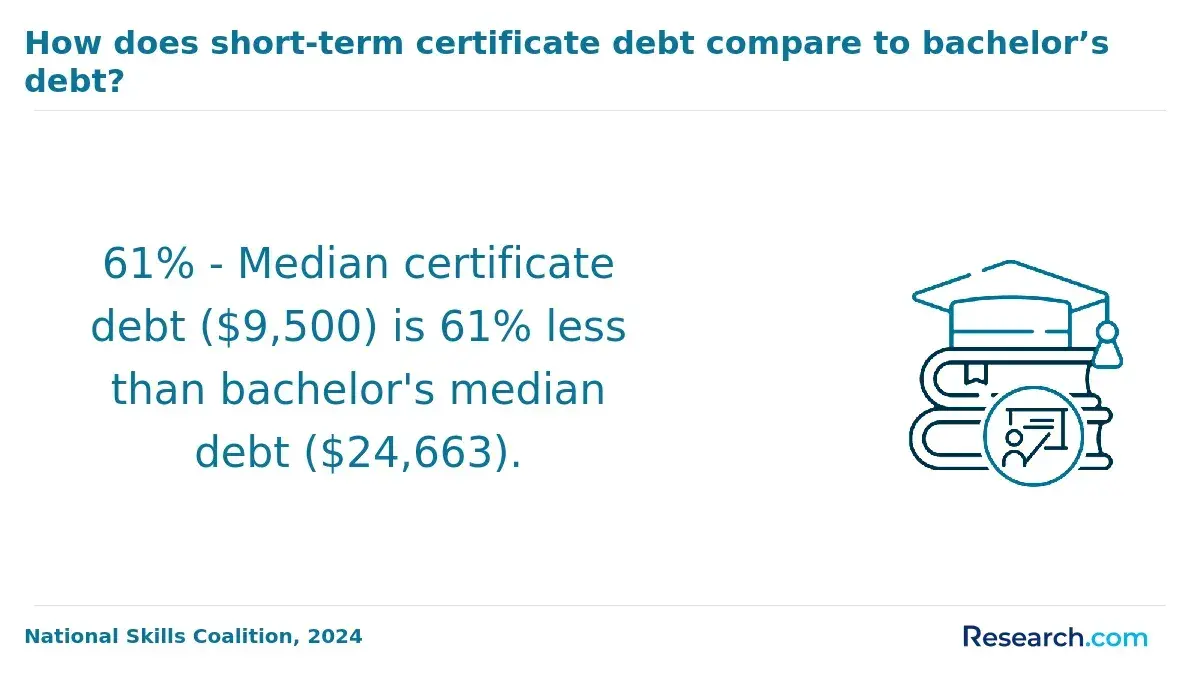
If you are comparing online criminal justice doctorate programs, the real question is whether the timeline fits your work, budget, and research goals. NCES data published in 2024 shows average graduate tuition and required fees were $12,596 at public institutions and $29,931 at private nonprofit institutions for 2022-23, before books, technology, and lost time are considered.
This guide explains completion ranges, credit loads, dissertation choices, transfer options, and delay risks so working professionals can estimate the true time commitment before enrolling.
Key Things to Know About Online Criminal Justice Doctorate Program Timelines
- Most online criminal justice doctorates take about 3 to 5 years after a master's degree, while part-time dissertation-heavy paths can extend to 6 or 7 years.
- Common credit requirements range from about 42 to 60 post-master's credits, with longer 60- to 90-credit structures when the program admits students without a closely aligned master's degree.
- Dissertation programs usually require original research and committee approval; professional doctorates may offer applied dissertations, capstones, or doctoral projects that can be more predictable but are not automatically faster.
What is the typical completion time for online Criminal Justice doctorate programs?
The typical completion time for an online criminal justice doctorate is 3 to 5 years for students entering with a relevant master's degree and taking courses continuously. Students who enroll part-time, pause during the dissertation stage, change topics, or need extra research-methods preparation often take closer to 5 to 7 years.
National doctoral time-to-degree data is useful as a benchmark, but it has limits. The 2024 Survey of Earned Doctorates from the National Center for Science and Engineering Statistics reports that U.S. research doctorates commonly require several years of registered doctoral study; however, it does not isolate online criminal justice doctorates. For prospective students, that means school-level completion data is more useful than national averages when estimating your own timeline.
The table below summarizes common online criminal justice doctorate pacing models. Use it to compare how enrollment intensity changes the calendar time you should expect.
| Enrollment path | Typical course load | Common completion range | Best fit |
| Full-time continuous enrollment | 2 courses per term, including summer when available | 3 to 4 years | Students with predictable work schedules, strong research preparation, and consistent study blocks |
| Part-time professional pace | 1 course per term, with some summer enrollment | 4 to 6 years | Working professionals balancing leadership roles, family responsibilities, or travel-heavy jobs |
| Dissertation-extended path | Coursework completed on time, research phase extended | 5 to 7 years | Students whose topic, data access, committee feedback, or writing schedule slows progress |
| Accelerated or cohort-based path | Compressed terms or year-round sequencing | 2.5 to 4 years | Students who can follow a fixed schedule and start the dissertation or project early |
Students exploring earlier academic pathways may find that an online criminal justice degree can build the foundation for graduate study, but doctoral pacing depends much more on research readiness, transfer credits, and dissertation expectations than on the online format alone.
How many total credit hours are required for an online Criminal Justice doctorate?
Most online criminal justice doctorates require about 42 to 60 credits beyond the master's degree. Programs that admit students with only a bachelor's degree or with a master's degree outside criminal justice, criminology, public administration, law enforcement leadership, homeland security, or a related field may require 60 to 90 total graduate credits.
Credits matter because they determine both tuition exposure and calendar time. If tuition is charged per credit, a 48-credit doctorate and a 60-credit doctorate can differ substantially in total cost even when both advertise similar completion timelines; readers comparing tuition should also review the full criminal justice degree price structure, including fees and dissertation-continuation charges.
The table below shows how credits are commonly distributed. Exact requirements vary by institution, but this breakdown helps you identify whether a program is coursework-heavy, research-heavy, or practice-focused.
| Requirement area | Common credit range | What it usually includes | Timeline impact |
| Core criminal justice theory and policy | 9 to 18 credits | Criminological theory, justice administration, policy analysis, ethics, leadership, and systems reform | Usually predictable because courses follow a set sequence |
| Research methods and statistics | 9 to 15 credits | Quantitative methods, qualitative methods, program evaluation, data analysis, and research design | Can slow students who need extra statistics or methodology support |
| Specialization or electives | 6 to 15 credits | Corrections, policing, juvenile justice, homeland security, cybercrime, victimology, or public policy | Flexible electives can speed completion if offered frequently |
| Residency, seminar, or doctoral colloquium | 0 to 6 credits | Research workshops, proposal development, professional writing, or virtual/in-person residencies | May add scheduling constraints even in online programs |
| Dissertation, capstone, or doctoral project | 9 to 18 credits | Proposal, data collection, analysis, defense, or applied project deliverables | Most common source of timeline variation |
A useful rule is to translate credits into terms, not just years. For example, a 48-credit program at 6 credits per term requires at least 8 terms before considering proposal approvals, committee review cycles, breaks, and graduation processing.
Is a dissertation required for an online Criminal Justice doctorate?
A dissertation is often required for a PhD in criminal justice, criminology, or justice studies, especially if the program is designed for research, university teaching, or policy scholarship. A dissertation is a substantial original research study approved by a faculty committee, usually involving a proposal, literature review, methodology, data collection or analysis, and oral defense.
Professional doctorates, such as a Doctor of Criminal Justice or Doctor of Public Safety, may still require a dissertation, but the format is often more applied. Instead of building theory for an academic audience, students may evaluate a justice program, analyze agency policy, design an intervention, or study organizational effectiveness.
Whether a dissertation helps or slows your timeline depends on fit. It may be the right choice if you want to teach at the college level, publish research, move into policy analysis, or qualify for research-oriented roles. It may not be ideal if your main goal is internal promotion in an agency and you have limited access to data, limited writing time, or no clear research question.
Before enrolling, ask the program for concrete dissertation milestones. The most important items to verify are summarized below because they directly affect how long you may remain enrolled after coursework.
- When students begin dissertation planning: Programs that introduce topic development in the first year usually reduce the risk of a long post-coursework gap.
- How committees are assigned: Delays can occur when students must recruit committee members without enough faculty availability in their topic area.
- Whether institutional review board approval is required: Human-subjects research involving justice professionals, incarcerated populations, victims, or sensitive administrative data can require additional review time.
- How often dissertation courses are offered: If dissertation credits are available every term, students can maintain momentum more easily than in programs with limited enrollment windows.
- What happens if the proposal is not approved on schedule: Some schools require additional continuation credits, which can increase both time and cost.
Are there alternatives to completing a dissertation for online Criminal Justice doctorate programs?
Yes. Some online criminal justice doctorate programs offer alternatives to the traditional dissertation, including an applied dissertation, doctoral capstone, policy project, program evaluation, or practice-based portfolio. These options are most common in professional doctorates focused on leadership, agency administration, public safety operations, or justice-system reform.
The main benefit of a nontraditional doctoral project is predictability. Instead of producing a purely academic study, students may solve a real organizational problem, evaluate an existing program, or produce a research-informed implementation plan. That can make the work more relevant for current law enforcement, corrections, court administration, emergency management, or policy roles.
The table below compares common doctoral completion formats. It can help you decide whether a research-heavy or practice-heavy endpoint better matches your career goal.
| Completion option | Primary output | Typical fit | Potential timeline risk |
| Traditional dissertation | Original scholarly research | Future faculty, researchers, policy analysts, and students considering academic publication | Topic changes, data access, committee feedback, and IRB approval can extend the timeline |
| Applied dissertation | Research study tied to a practical justice problem | Practitioners who want rigorous research with agency relevance | Still requires strong methodology and approval processes |
| Doctoral capstone | Applied project, intervention, evaluation, or policy plan | Agency leaders, consultants, administrators, and public safety managers | Can be delayed if project scope is too broad or agency cooperation changes |
| Portfolio or practice-based project | Series of professional products demonstrating doctoral-level competence | Students in competency-based or practitioner-oriented models | Requires clear rubrics; vague expectations can slow revision cycles |
A capstone is not automatically easier. It can still require literature review, evidence analysis, stakeholder feedback, and formal defense. The better question is whether the final project aligns with the type of work you can complete consistently while employed.
How do practicums or clinical hours affect the online Criminal Justice doctorate timeline?
Online criminal justice doctorates usually do not require clinical hours in the same way that health, counseling, psychology, or nursing doctorates do. However, some programs include practicums, field-based research, internships, leadership residencies, agency-based projects, or required professional engagement hours. These requirements can affect the timeline if they depend on employer approval, background checks, travel, or access to justice-system data.
For most criminal justice doctoral students, the practical barrier is not the number of hours alone; it is coordination. A project involving a police department, correctional facility, court, nonprofit victim-services agency, or public safety office may move slowly if approvals are needed from multiple decision-makers.
Students comparing public safety and compliance-related graduate options may also look at adjacent fields such as the best online environmental health and safety programs, where applied projects and employer-based requirements can similarly affect pacing.
Review these items before choosing a program with a practicum or agency-based project because each one can add weeks or months if it is not planned early:
- Site approval requirements: Confirm whether your current employer can serve as a project site or whether the school requires an external placement.
- Background or security clearance rules: Justice settings may require additional screening, especially for correctional, juvenile justice, or victim-service environments.
- Supervisor qualifications: Some programs require an approved agency mentor, licensed professional, or administrator to document your work.
- Travel expectations: Even an online program may require short residencies, campus intensives, conference attendance, or on-site presentations.
- Data-sharing restrictions: Agencies may limit access to case files, personnel data, body-camera records, incident reports, or protected information, which can delay research approval.
What factors determine how fast you can finish an online Criminal Justice doctoral degree?
The fastest students are usually not the ones who simply take the most credits. They are the students whose work schedule, research topic, faculty support, funding plan, and personal obligations all align with the program structure. For working adults, a sustainable pace often beats an unrealistic full-time load that leads to stop-outs.
Current online doctoral trends can help. Many universities now use asynchronous courses, virtual residencies, shorter academic terms, and embedded dissertation seminars to support working professionals. These features can reduce travel and make coursework more flexible, but they do not remove the need for disciplined weekly study, writing, and research time.
The table below summarizes the biggest timeline drivers. Use it as a checklist when comparing programs rather than focusing only on the advertised "finish in as little as" claim.
| Timeline factor | How it can speed completion | How it can delay completion |
| Enrollment intensity | Taking 6 credits per term and summer courses can shorten coursework | Overloading while working full time can cause withdrawals or weak dissertation progress |
| Course sequencing | Frequent course starts allow steady progress | Required courses offered once per year can add waiting time |
| Transfer credits | Approved graduate credits can reduce required coursework | Credits may be rejected if they are old, unrelated, or below doctoral level |
| Research preparation | Strong methods skills make proposal approval easier | Weak statistics, writing, or literature-review skills can extend the dissertation phase |
| Faculty availability | Early advisor matching keeps research focused | Limited faculty expertise in your topic can slow committee formation |
| Workplace support | Employer flexibility can protect writing and data-collection time | Shift work, overtime, emergencies, or travel can interrupt terms |
ROI should also be evaluated by opportunity cost. The Bureau of Labor Statistics data released in 2024 shows that wages in criminal justice, public safety, and postsecondary education vary widely by role, employer, and region, so the doctorate should be tied to a specific goal such as college teaching, agency executive leadership, research, consulting, or policy work rather than a general expectation of higher pay.
Are there fast-track or accelerated online Criminal Justice doctorate options available?
Yes, accelerated online criminal justice doctorate options exist, but they are not always the best fit. Fast-track programs usually rely on compressed terms, year-round enrollment, limited electives, cohort sequencing, prior graduate credit, or early dissertation integration. They work best for students who already have a focused research interest, strong academic writing skills, and enough weekly time to keep pace without pausing between terms.
Accelerated formats may be risky for students with unpredictable law enforcement shifts, military obligations, court schedules, family caregiving responsibilities, or limited research-methods preparation. A program advertising a short minimum completion time may still take longer if dissertation approval, IRB review, or data access becomes complicated.
Use the following steps to test whether an accelerated program is realistic for your situation before you apply:
- Calculate weekly study time: Ask the program how many hours students typically spend per 3-credit course and compare that with your work schedule during peak periods.
- Map every term: Build a term-by-term plan that includes summer enrollment, dissertation credits, residencies, exams, and expected graduation processing dates.
- Ask about course availability: Confirm that required courses are offered often enough to support accelerated pacing without waiting for a future term.
- Review dissertation start points: Prefer programs that require topic development, literature review, and methods preparation before coursework ends.
- Check continuation costs: Ask whether students pay additional tuition or fees if the dissertation or capstone extends beyond the advertised timeline.
An accelerated route makes sense when the structure reduces idle time. It does not make sense if it simply compresses the same workload into a schedule that is likely to cause burnout.
Can you transfer graduate credits into an online Criminal Justice doctorate program?
Many online criminal justice doctorate programs allow some graduate transfer credit, but policies vary widely. Common limits range from 6 to 30 credits, and schools often restrict transfers to recent, relevant, graduate-level courses completed with a strong grade at an accredited institution. Dissertation, capstone, residency, and doctoral seminar credits are often excluded from transfer.
Transfer credit can shorten the timeline only if it replaces required courses in the degree plan. If credits transfer merely as electives, they may reduce cost but not always reduce the number of terms needed, especially in cohort programs with fixed sequencing.
Students who started with earlier credentials, including those comparing the best online associate degree programs in criminal justice, should understand that doctoral transfer review focuses primarily on graduate coursework, not undergraduate credits. Prior associate or bachelor's study can support admission readiness, but it usually does not reduce doctoral credit requirements.
To maximize transfer approval, prepare a credit audit before applying. The process below helps you avoid the common mistake of assuming that all prior master's credits will automatically shorten the doctorate:
- Collect official transcripts: Include every graduate institution attended, even if you did not complete a degree there.
- Gather syllabi: Transfer reviewers often need course descriptions, weekly topics, assignments, textbooks, and learning outcomes.
- Match courses to requirements: Identify which prior courses align with required research methods, theory, policy, leadership, or specialization credits.
- Check age limits: Some schools reject credits older than a stated number of years, especially for methods, technology, or policy courses.
- Request a written evaluation: Do not rely on informal admissions estimates; ask for a documented transfer decision before committing when possible.
Is there a maximum time limit to complete an online Criminal Justice doctorate?
Yes. Many universities set a maximum time limit for doctoral completion, commonly around 7 to 10 years from initial enrollment or admission to candidacy. Exact rules vary by institution, degree type, catalog year, leave-of-absence policy, and whether the student changes programs or pauses enrollment.
Maximum time limits matter because students can complete coursework but still risk running out of time during the dissertation or capstone phase. If that happens, a school may require an extension petition, updated coursework, revalidation exams, a new dissertation proposal, or additional tuition-bearing enrollment.
Ask these questions before enrolling because time-limit policies are often buried in graduate handbooks rather than marketing pages:
- When does the clock start: Some schools count from first enrollment, while others count from doctoral candidacy or dissertation registration.
- What is the maximum allowed time: Confirm the exact number of years and whether extensions are routinely granted or rare.
- What happens after a leave of absence: Ask whether approved leave pauses the clock or simply pauses enrollment.
- Do transfer credits affect the deadline: Some schools shorten the remaining time if many credits are transferred in.
- What are the continuation requirements: Determine whether you must enroll every term while writing the dissertation or capstone.
A maximum time limit should not scare you away from a program, but it should influence your pacing plan. If your job is unpredictable, choose a program with clear leave policies, flexible dissertation enrollment, and proactive advising.
How can students avoid delays in their online Criminal Justice doctorate timeline?
Most delays in an online criminal justice doctorate are predictable. They often come from unclear transfer decisions, underestimated weekly workload, late dissertation planning, weak research design, committee changes, or difficulty accessing justice-system data. The best prevention strategy is to treat the doctorate like a multi-year project with milestones, not just a sequence of courses.
The following planning steps can reduce the risk of extended enrollment and unexpected costs:
- Create a term-by-term completion map: Include required courses, electives, exams, residencies, dissertation or capstone credits, summer terms, and graduation application deadlines.
- Start the research topic early: By the end of the first year, identify a feasible problem, possible data sources, and faculty members who can support the topic.
- Choose a manageable study design: A focused policy analysis, program evaluation, or document-based study may be more realistic than a project requiring hard-to-access agency data.
- Protect weekly writing time: Reserve recurring blocks for reading, outlining, coding data, drafting chapters, and revising, even before formal dissertation enrollment begins.
- Use faculty feedback quickly: Slow revision cycles can add months; respond to advisor comments on a set schedule.
- Confirm employer support: If your project uses workplace data or agency participation, get written approval early and identify backup sites if access changes.
- Track time-limit and financial-aid rules: Know the school's satisfactory academic progress standards, maximum timeframe policy, and dissertation-continuation fees.
The biggest red flag is a program that cannot clearly explain its dissertation or capstone process, average time beyond coursework, transfer-credit review, and residency expectations. A strong program should be able to describe milestones, advising support, research resources, and what happens when students fall behind.
An online criminal justice doctorate is most likely worth the time investment for professionals pursuing college teaching, senior agency leadership, research, policy analysis, consulting, or justice-system reform roles that value doctoral-level expertise. It may be a poor fit if your target job requires a different credential, if a master's degree already meets your goal, or if you cannot realistically sustain several years of advanced writing and research.
Other Things You Should Know About Criminal Justice
Yes, many students do, but full-time work usually makes part-time doctoral enrollment more realistic. Ask programs for expected weekly hours per course and plan for heavier workloads during exams, proposal writing, data analysis, and final defense preparation.
Some do. Requirements may include orientations, residencies, dissertation workshops, comprehensive exam sessions, or final defenses. Even when visits are short, they can affect travel budgets, leave time, and work scheduling.
Accreditation does not automatically shorten the timeline, but it affects credit transfer, employer recognition, financial aid eligibility, and academic credibility. Choose a regionally accredited institution and verify any program-specific expectations tied to your career goal.
Ask for the required credit total, transfer-credit limit, course sequence, dissertation or capstone format, residency requirements, average time beyond coursework, maximum completion limit, continuation fees, and available research support. Get important answers in writing when possible.
References
- How to Write a Criminal Justice Dissertation https://a-z-topics.com/how-to-write-a-criminal-justice-dissertation/
- Doctor of Criminal Justice | Online with Limited Residency | Tiffin University https://go.tiffin.edu/doctorate-programs/doctor-of-criminal-justice/
- How to Accelerate a Degree in Criminal Justice: Flexible Pathways and Planning Strategies https://www.aiuniv.edu/degrees/criminal-justice/articles/accelerate-online-criminal-justice-degree
- Doctoral Degrees in Criminal Justice | DCJ and PhD https://www.criminaljusticeprograms.com/programs/doctorate-in-criminal-justice/
- How Long is a Master's in Criminal Justice (MSCJ) Program? https://www.forensicscolleges.com/blog/resources/how-long-to-earn-masters-in-cj
- 1-2 Year Doctoral Programs Online: Top Schools & More https://www.phds.me/online-programs/one-year-doctoral-programs/
- How Long Does It Take to Get a PhD? Complete Timeline Guide https://streamlinedai.app/blog/how-long-does-it-take-to-get-a-phd