2027 Ambulatory Care Nurse Workday: Patient Mix, Responsibilities, and Teamwork
Audited and Verified:
Our Editorial and Data Verification Process
Research.com uses government datasets, official education statistics and primary institutional information to support its career and degree guides. Our review process checks factual accuracy, occupational definitions, source dates and the requirements associated with the credentials discussed.
How This Article Was Fact-Checked
Our editorial team verifies salary estimates, employment projections, education requirements and program information against original data providers and official organizations. Salary figures are checked against the relevant occupational definitions and reporting periods. Information about licensure, accreditation and required in-person training is reviewed separately.
Fact-checked and verified on:

Co-Founder and Chief Data Scientist
Ambulatory care nurses help patients manage health needs without an overnight hospital stay, but the work is not simply bedside nursing on a daytime schedule. A clinic day may combine scheduled visits, urgent phone calls, medication questions, patient teaching, and follow-up across multiple services.
For nursing students and RNs considering a move into outpatient care, understanding that mix is more useful than the job title alone. This guide explains the workday, patient population, team relationships, qualifications, and employment trade-offs so you can judge whether a particular ambulatory role fits your skills and goals.
Key Things You Should Know
- Ambulatory care RNs often divide their day among visit preparation, in-person assessment, telephone or portal triage, education, and follow-up; the mix depends heavily on the clinic.
- An active RN license is the central qualification. An ADN or BSN can lead to RN licensure, while ambulatory specialty certification is separate and generally intended for nurses with relevant experience.
- Compare jobs by patient complexity, triage volume, staffing, orientation, and after-hours coverage - not by advertised office hours alone.
What does an ambulatory care nurse do during a typical workday?
Ambulatory care means healthcare delivered without an overnight admission. An RN in a primary care office may spend much of the day coordinating ongoing care, while an RN in a specialty or procedure clinic may focus on assessments, treatment preparation, monitoring, and discharge teaching. Neither schedule is universal.
A representative clinic day begins with reviewing appointments, messages, test results routed to the nursing team, and patients who may need extra support. Between scheduled visits, the nurse may assess symptoms by phone or portal, administer treatments permitted by role and policy, teach patients how to follow a care plan, document decisions, and arrange referrals or follow-up. Triage and medication-related work require licensed judgment, applicable protocols, and a clear route for escalation - not independent prescribing.
The timing is a key difference from inpatient work: one nurse may manage several simultaneous queues rather than a fixed group of assigned beds. Before accepting a position, ask how many messages or triage requests nurses handle, who covers those queues during visits and breaks, and what happens when a patient needs same-day or emergency evaluation. Nurses seeking the provider role rather than the RN role should evaluate separate graduate preparation, such as planning a one-year FNP pathway; an RN clinic position does not confer nurse practitioner authority.
Which patients do ambulatory care nurses commonly treat?
The patient mix follows the service line. Primary care nurses may work with people managing diabetes, hypertension, preventive care, or new symptoms. Specialty clinics may see patients receiving oncology treatment, managing heart or lung disease, recovering after a procedure, or navigating complex medication regimens. Pediatric, women's health, behavioral health, and older-adult clinics bring different communication and safety needs.
The table shows why a clinic's specialty tells you more about the workday than the word "outpatient." These are examples, not a fixed assignment for every nurse.
| Setting | Common patient needs | Likely RN work |
| Primary care | Prevention, new concerns, long-term conditions | Symptom triage, education, follow-up, care coordination |
| Specialty clinic | Condition-specific treatment and monitoring | Focused assessment, treatment support, medication teaching |
| Procedure or infusion service | Time-limited treatment or recovery | Preparation, monitoring, adverse-event escalation, discharge teaching |
| Behavioral health clinic | Ongoing mental health treatment and access needs | Assessment within RN scope, medication-related education, coordination and safety escalation |
Behavioral health is a useful scope distinction: a psychiatric-mental health RN and a psychiatric-mental health nurse practitioner have different responsibilities and preparation. An RN considering the latter should examine graduate requirements separately, rather than treating shorter psychiatric-mental health nursing master's pathways as necessary for an ambulatory RN job.
What education and license are required to become an ambulatory care nurse?
For an ambulatory RN position, the essential credential is an active RN license in the jurisdiction where the nurse practices. Common initial routes include a board-eligible associate or bachelor's nursing program followed by meeting the state board's requirements, including the NCLEX-RN. Graduation, exam passage, and license issuance are distinct steps. Employers may prefer a BSN, recent clinical experience, or particular skills, but those preferences vary by job.
Some offices also employ LPNs/LVNs, medical assistants, and advanced practice nurses. Their duties and supervision differ; an LPN/LVN or assistant job should not be mistaken for an RN role because it takes place in the same clinic. New graduates should look for an orientation that teaches the site's triage protocols, EHR workflows, escalation routes, and patient population. Prior inpatient experience can help, but it does not automatically establish competence in telephone assessment.
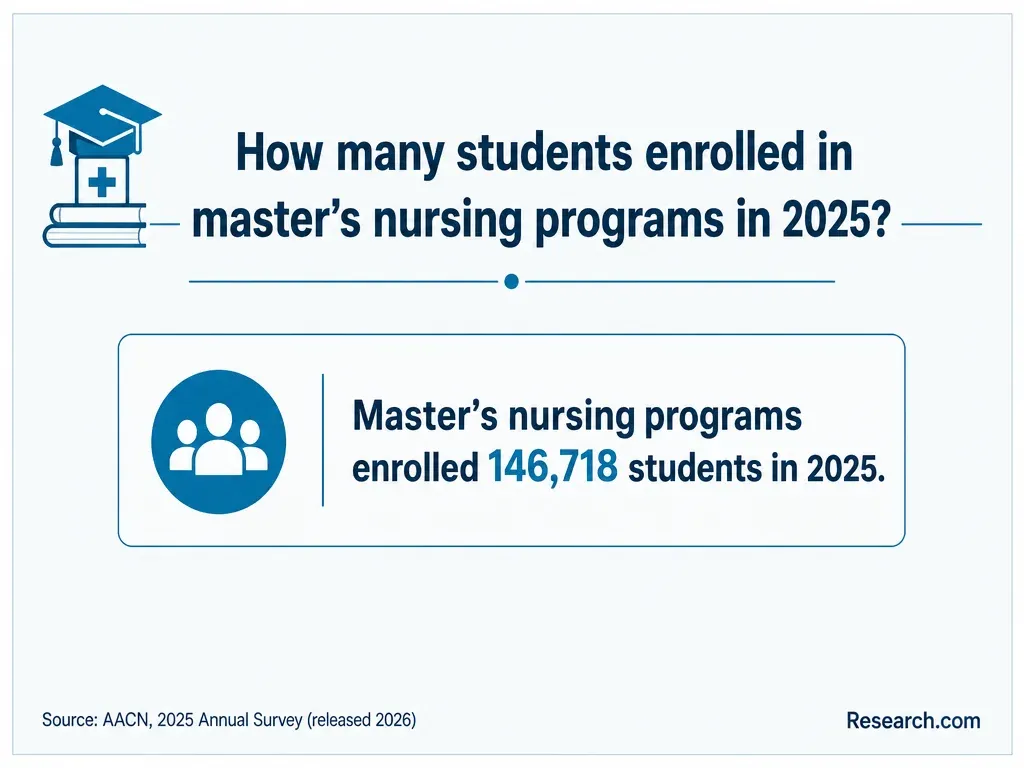
An ADN-prepared RN does not need a master's degree solely to enter ambulatory care. MSN bridge options for ADN-prepared RNs become relevant when a separate, clearly defined graduate-level goal justifies the time and expense.
Ambulatory nursing depends on reliable handoffs. An RN may communicate a concerning symptom to a physician or NP, clarify a treatment plan with a pharmacist, arrange support with a social worker or care manager, and coordinate testing with other departments. The nurse also translates the agreed plan into understandable instructions and checks whether the patient can carry it out.
Good teamwork requires knowing who owns each decision. A standing protocol may guide an RN's assessment and escalation, but it does not turn the RN into the prescribing clinician. Likewise, completing a referral is different from confirming that the patient obtained care. In interviews, ask how urgent messages reach a licensed decision-maker, how unresolved results are tracked, and who follows up after a missed appointment.
In some clinics, an FNP is one of the clinicians working alongside RNs. For a nurse who specifically wants that advanced practice role, a guide to accelerated post-master's FNP study concerns a different educational decision from preparing for ambulatory RN teamwork; prior graduate study and certification eligibility must be evaluated individually.
Clinical judgment at a distance is especially important. During a call or portal exchange, the nurse may have no vital signs or direct examination. They must gather relevant information, recognize what cannot safely be resolved remotely, document the exchange, and escalate according to current protocols. Clear patient teaching, medication safety, privacy, and culturally responsive communication matter just as much during in-person visits.
Ambulatory work also rewards queue management: distinguishing an urgent symptom report from routine refill coordination while making sure neither disappears in the EHR. Ask prospective employers how nurses are trained and assessed on triage, which tasks are delegated, and whether documentation time is built into staffing. A certificate or years of experience alone cannot replace demonstrated competence in a particular clinic's workflows.
These RN skills remain distinct from advanced practice diagnosis and prescribing. Shorter postgraduate psychiatric nursing routes are relevant to appropriately qualified nurses pursuing a PMHNP role, not a substitute for RN triage training or an ambulatory employer's orientation.
Choose a pathway based first on whether you already hold an RN license. For a prospective nurse, an approved prelicensure ADN or BSN route can lead toward RN eligibility; neither degree itself grants the license. For an existing RN, another degree may support a broader career objective, but it is not automatically required to move into a clinic.
The comparison below separates initial entry from optional advancement so you can avoid paying for a credential that does not match the job you want.
| Pathway | Who it fits | Relevance to ambulatory RN work |
| Prelicensure ADN or BSN | Someone seeking an initial RN license | Provides nursing education toward board eligibility; employer preferences may differ |
| RN-to-BSN | Already-licensed RN with an associate degree or diploma | May meet a particular employer's BSN preference; does not replace clinic onboarding |
| Graduate nursing study | RN pursuing a defined advanced practice, education, or leadership goal | Usually unnecessary for a standard ambulatory RN position; outcomes depend on the track |
Compare written employer requirements before enrolling. If a graduate role is the actual target, online BSN-to-MSN programs organized by tuition can be a starting point for comparing costs, but confirm each program's entry requirements, specialty outcome, clinical obligations, and total expense.
Initial RN education includes supervised clinical learning and hands-on skills assessment, so an advertised online prelicensure program still has required in-person components. Campus-based programs also use clinical sites away from campus. Format alone does not tell you when placements occur, how far you must travel, or whether the school arranges them.
Postlicensure RN-to-BSN coursework may offer more online flexibility, although projects, practice experiences, live sessions, or campus visits depend on the school. An RN evaluating a guide to RN-to-BSN programs with no clinicals should check the actual curriculum rather than assume "online" or "no clinicals" means no scheduled or practice-related work.
Before committing, obtain the program's written delivery and attendance requirements, expected clinical-site arrangements, total charges, and applicable state eligibility information. Confirm institutional accreditation, any relevant nursing program accreditation, and state board approval or recognition separately; these serve different purposes.
Ambulatory RNs work in primary care practices, hospital-owned outpatient departments, specialty offices, infusion and procedure centers, and other outpatient services. Pay varies by region, employer, experience, responsibilities, and schedule. An RN who performs complex triage or works in a procedure service should compare the specific offer - including benefits and on-call expectations - with local alternatives.
The U.S. Bureau of Labor Statistics reports wages for registered nurses as an occupation, not a separate national median for ambulatory care RNs. Its occupation-wide median is useful as broad context, but it cannot predict a clinic offer or establish a salary premium for an ADN, BSN, or specialty credential. Ask employers for the posted range, differential rules, benefits, and whether after-hours calls are compensated.
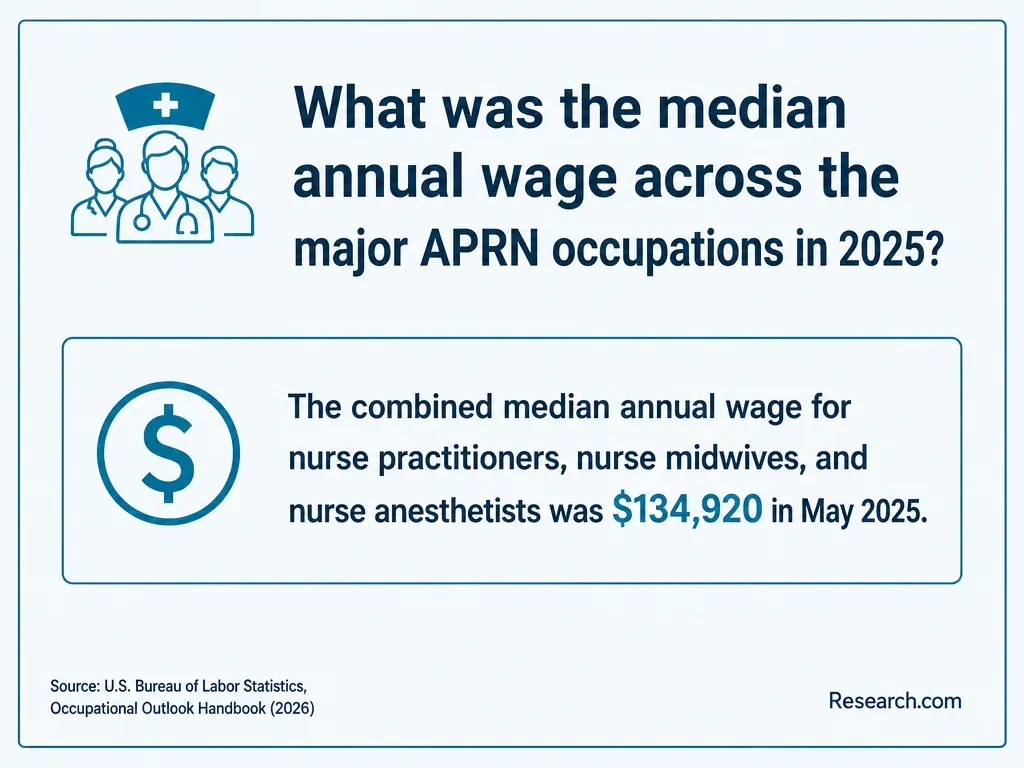
NP pay data describes a different licensed occupation and should not be used as an ambulatory RN salary estimate. If an RN is weighing that larger career change, an online nurse practitioner affordability guide can help frame education costs, which should be compared with the actual requirements and likely opportunities in the intended market.
U.S. Bureau of Labor Statistics employment projections cover registered nurses across settings; they do not forecast ambulatory RN openings separately. National RN growth can indicate broad demand, but local clinic hiring also depends on specialty, health-system staffing models, experience requirements, and the number of positions with formal new-graduate orientation.
For a practical outlook, review recent local postings for the exact setting you want. Note whether they require triage experience, a BSN, procedural competencies, or weekend coverage, then ask recruiters whether the role is newly created or a replacement. A nurse without outpatient experience may find an employer's supervised transition program more useful than an additional degree.
Do not interpret interest in doctoral nursing education as evidence that ambulatory RN jobs require it. Exploring faster online DNP routes makes sense only for a separately defined doctoral goal and after checking that the specific track supports it.
How can registered nurses earn ambulatory care certification?
The American Nurses Credentialing Center offers the Ambulatory Care Nursing Certification (AMB-BC) for eligible RNs. It is a professional specialty credential, not an RN license, an APRN credential, or permission to perform duties outside state law and employer policy. Eligibility includes an active RN license and specified nursing experience, ambulatory practice, and continuing education; applicants should check ANCC's current official eligibility rules, exam outline, fees, and renewal requirements before paying or scheduling an exam.
For an experienced ambulatory RN, preparation should begin with the current exam content outline and a candid review of weaker topics, such as triage, care coordination, patient education, and quality or safety. Keep records of qualifying practice and education. For a new graduate, the better immediate priority is supported orientation and observed competency; certification can follow when eligibility and a professional reason for earning it are clear.
A DNP does not replace AMB-BC eligibility or the examination. Even post-master's DNP programs without traditional clinical rotations address an academic pathway, not the specialty certifier's separate practice and credentialing requirements.
Other Things You Should Know About Nursing
No. Some clinics have regular weekday hours, while others offer evenings, weekends, procedures, or after-hours phone coverage. Confirm the schedule and call expectations for the specific position.
It involves different pressures, not necessarily less stress. A clinic may have fewer overnight emergencies but substantial triage volume, rapid patient turnover, and responsibility for closing follow-up gaps.
Some RN roles involve telephone triage or care coordination from a remote location. Employers still set privacy, equipment, supervision, and performance requirements, and the nurse must be authorized to practice where required.
Ask to see how scheduled visits, incoming messages, urgent concerns, and unfinished follow-up are managed. Find out who helps when priorities conflict and how new nurses learn the clinic's protocols.
- Scoping review of nurse triage in primary care - PMC - NIH https://pmc.ncbi.nlm.nih.gov/articles/PMC12372265/
- Care Coordination | Agency for Healthcare Research and Quality https://www.ahrq.gov/ncepcr/care/coordination.html
- Interruptions and Distractions in Health Care | ahrq.gov https://psnet.ahrq.gov/perspective/interruptions-and-distractions-health-care-improved-safety-mindfulness
- Risk Factors for Stress and Burnout | Healthcare Workers https://www.cdc.gov/niosh/healthcare/risk-factors/stress-burnout.html
- Patient Engagement Playbook - HealthIT.gov https://playbook.healthit.gov/playbook/pe/full/
- Specialty Care | cms.gov https://www.cms.gov/priorities/innovation/key-concepts/specialty-care
- Ambulatory Care Nursing Modules - Collaborate https://collaborate.uw.edu/resources/ambulatory-nursing-toolkit-for-educators/ambulatory-care-nursing-modules/
- Telephone Triage - an overview https://www.sciencedirect.com/topics/nursing-and-health-professions/telephone-triage
- Modern Healthcare's Ambulatory Care Nurse - Consult QD | Cleveland Clinic https://consultqd.clevelandclinic.org/modern-healthcares-ambulatory-care-nurse
- What Is Ambulatory Care? Settings, Services & Examples https://www.ambula.io/the-role-of-ambulatory-care-in-modern-healthcare