2027 Accelerated Online Education Leadership Doctorate Programs: Faster Timelines, Credit Transfers, and Completion Paths

Co-Founder and Chief Data Scientist
Choosing an accelerated online education leadership doctorate is mostly a time-to-completion decision: how fast can you finish without weakening quality, cost control, or career value? The U.S. Bureau of Labor Statistics, in its 2024 Occupational Outlook Handbook, projects 3% growth for postsecondary education administrators from 2023 to 2033 and reports median annual pay of $102,610.
This guide is for educators, administrators, instructional leaders, and district or higher education professionals comparing faster EdD pathways, transfer credits, capstone options, and realistic completion plans.
Key Things You Should Know
- The fastest credible online education leadership doctorates are usually accelerated EdD, EdS-to-EdD, ABD-completion, or capstone-based programs; advertised timelines often range from about 12 months for specialized completion pathways to 3 years for full doctoral programs.
- Transfer credit can shorten the path substantially, but schools commonly evaluate only graduate-level, relevant, recent coursework; some programs may accept 12 to 30 credits, while others accept far fewer.
- Speed should be balanced against accreditation, workload, residency rules, and career fit; BLS-reported median pay for postsecondary education administrators was $102,610, but the degree does not guarantee a specific salary or promotion.
Which Online Education Leadership Doctorate Programs Offer the Fastest Accelerated Pathways?
The fastest online education leadership doctorate is usually not a standard three-year doctorate compressed into fewer weeks. It is more often a program designed for students who already have graduate education, leadership experience, a defined problem of practice, or prior doctoral credits. For that reason, the "fastest" option depends heavily on where you are starting.
Students comparing 1 year EdD programs online should look beyond the advertised length and ask whether the timeline applies to all admitted students or only to advanced-standing, transfer-heavy, or dissertation-completion candidates.
The table below compares common accelerated formats. It helps clarify which pathway is likely to be fastest based on your prior education and the amount of original doctoral work you still need to complete.
| Program type | Typical best fit | Why it may be faster | Important limitation |
| EdS-to-EdD completion pathway | Students who already hold an Education Specialist degree | Prior specialist-level coursework may satisfy part of the doctoral curriculum | Only works if the EdS aligns closely with the doctorate's concentration and recency rules |
| ABD or doctoral-completion EdD | Students who completed doctoral coursework but did not finish the dissertation or capstone | The student may need fewer courses before entering the final project stage | Prior credits may be rejected if they are old, unrelated, or from a non-comparable program |
| Accelerated cohort EdD | Working educators who can follow a fixed, intensive schedule | Courses are sequenced continuously with fewer breaks between terms | Falling out of sequence can add months because courses may be offered only once per year |
| Capstone-based EdD | Practitioners solving a workplace or systems problem | The final project may be embedded throughout coursework rather than delayed until the end | Capstones still require research, approvals, revisions, and faculty review |
| Traditional online EdD with flexible pacing | Students needing part-time flexibility | Online delivery reduces commuting and may offer multiple start dates | Flexible pacing is not always accelerated; part-time enrollment can extend the timeline |
For most working professionals, the best fast-track program is the one that gives a realistic degree map before enrollment. Ask admissions for the number of credits required after transfer review, the average completion time for recent graduates, and the exact point at which students begin the dissertation, doctoral project, or capstone.
Which Completion Pathways Help Students Finish an Online Education Leadership Doctorate Sooner?
The completion pathway often matters more than the course delivery format. A fully online program can still take longer than expected if the dissertation process is open-ended, while a hybrid or online capstone program may finish faster if the research sequence is structured from the first term.
Students who want to avoid a traditional dissertation should compare online EdD programs no dissertation carefully because "no dissertation" does not mean "no final doctoral project." Most programs still require a capstone, applied research project, improvement initiative, or scholarly portfolio.
The table below shows how the final doctoral requirement can affect speed. Use it to identify which model best matches your work style, research readiness, and career goal.
| Completion pathway | Usually fastest for | Speed advantage | Risk of delay |
| Applied capstone | Practitioners with access to a school, district, college, nonprofit, or training organization | Often tied to a real organizational problem, which can make topic selection faster | Delays can occur if workplace data access or leadership approval is not secured early |
| Dissertation in practice | Education leaders who want rigorous applied research without a traditional PhD focus | May be more structured and professionally relevant than a theoretical dissertation | Research design, IRB review, and faculty revisions can still lengthen completion |
| Traditional dissertation | Students considering faculty roles, research leadership, or policy research | Strong fit for scholarly goals and research-heavy careers | Can take longer if the topic is too broad or committee feedback is slow |
| Portfolio or improvement project | Experienced administrators documenting leadership impact | May build on artifacts, assessments, and projects completed during coursework | Quality expectations vary, so students must confirm doctoral-level rigor and employer acceptance |
To choose the fastest pathway, compare the final project before you compare course titles. A practical decision process can prevent late-stage delays.
- Ask when the doctoral project begins; faster programs usually introduce the topic, literature review, and methodology early rather than after coursework ends.
- Request examples of approved final projects so you can see whether the scope fits a realistic timeline for a working professional.
- Confirm whether the program requires original data collection, organizational permission, IRB approval, in-person defense, or synchronous committee meetings.
- Choose a pathway connected to your current role, because access to data, stakeholders, and implementation sites often determines how quickly you can finish.
How Do Transfer Credits Affect Completion Time for an Online Education Leadership Doctorate?
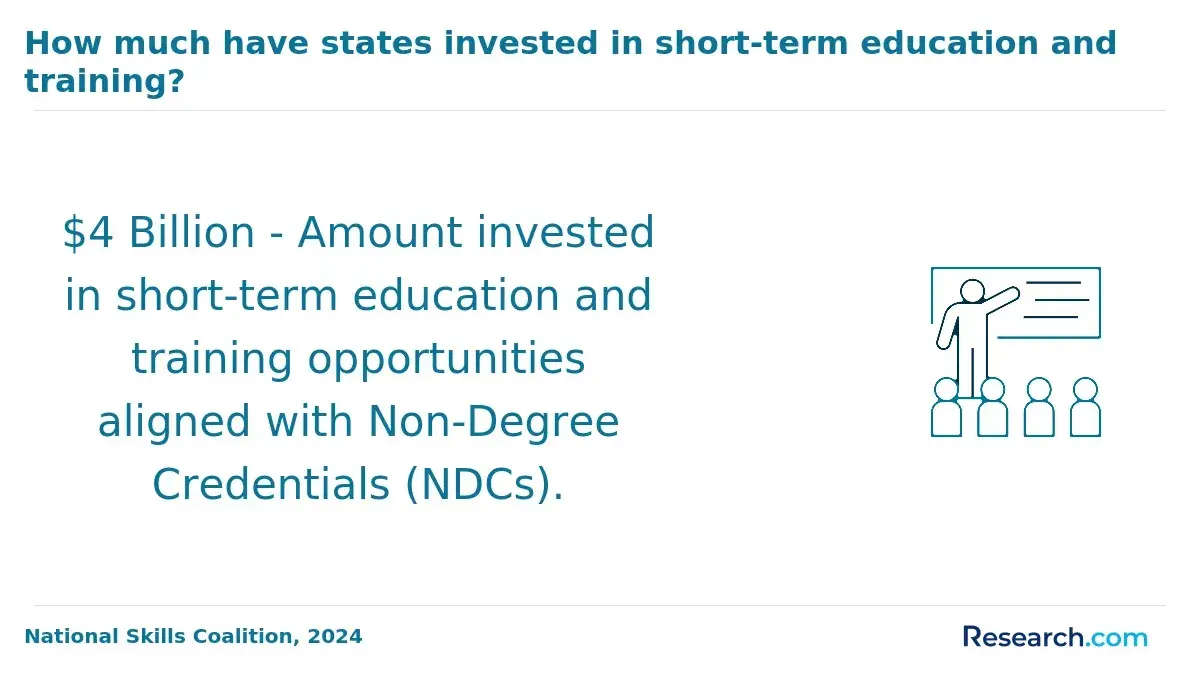
Transfer credits can be the largest legitimate time-saver in an online education leadership doctorate. They reduce the number of courses you must complete, which can lower tuition, shorten enrollment, and help you move into the doctoral project stage sooner. However, transfer credit is never automatic.
Students who already hold an Education Specialist credential should examine EDS to EdD programs because these pathways are often built specifically to recognize advanced graduate preparation in leadership, curriculum, administration, or related education fields.
The table below summarizes the main types of prior credit and how they may affect completion time. Policies vary by school, so treat these as comparison categories rather than guarantees.
| Prior learning or credential | Potential effect on timeline | What schools usually review | Best question to ask |
| Recent graduate education courses | May reduce required coursework if content matches the doctoral curriculum | Transcript, syllabus, grade, credit level, and course age | Which exact doctoral courses can these credits replace? |
| Education Specialist degree | May create advanced standing in EdS-to-EdD programs | Degree alignment, institution accreditation, leadership focus, and completed credits | How many credits remain after the EdS is evaluated? |
| Unfinished doctoral coursework | May help ABD students avoid repeating content | Doctoral level, research courses, institution type, and time since completion | Will prior doctoral research courses count toward the methodology sequence? |
| Professional certifications or training | Usually limited impact, though some schools may consider prior learning in narrow cases | Documentation, assessed learning outcomes, and institutional policy | Does the program award credit for professional learning or only for transcripted graduate coursework? |
To maximize transfer credit, begin before applying. Collect official transcripts, syllabi, course descriptions, catalog pages, and evidence of accreditation from the time you completed the courses. Then request a written credit evaluation, not a verbal estimate.
A common mistake is assuming that a school's maximum transfer policy applies to every student. A program may allow up to a certain number of transfer credits, but your actual award may be lower if your courses are outdated, too specialized, graded below the minimum, or not equivalent to required doctoral courses.
What Program Features Help Students Complete an Online Education Leadership Doctorate Faster?
The fastest programs are not simply shorter; they are better organized. Strong accelerated online education leadership doctorates reduce friction by aligning admissions, advising, course sequencing, research milestones, and faculty feedback around a predictable completion plan.
The most useful program features are the ones that reduce waiting time between academic steps. Look for features that make progress measurable every term.
- Multiple annual start dates, which can prevent applicants from waiting several months for the next cohort.
- Continuous enrollment options, including summer terms, so students do not lose momentum between academic years.
- Embedded doctoral project milestones, such as topic approval, literature review, methodology planning, and proposal development inside required courses.
- Dedicated doctoral advising, because accelerated students need early alerts when transfer credit, course load, or project scope threatens the timeline.
- Clear residency rules, especially whether any campus visits, weekend intensives, or synchronous sessions are required.
- Fast faculty feedback cycles, since delayed review of proposals, chapters, or capstone drafts can add more time than coursework itself.
- Technology support for online research, collaboration, data analysis, and presentation, including responsible use of AI tools where the institution permits them.
AI is increasingly relevant in doctoral education, but it should not be treated as a shortcut around scholarship. Some universities now provide guidance on AI-assisted literature searching, editing, coding support, or administrative productivity, while still requiring original analysis, proper citation, and compliance with academic integrity rules. Before enrolling, ask how the program defines acceptable AI use in coursework and the doctoral project.
Working professionals should also compare the learning format. Asynchronous courses offer scheduling flexibility, but synchronous sessions can improve accountability and access to faculty. The fastest option is usually the format you can sustain consistently, not the one that looks shortest on a brochure.
What Factors Most Commonly Delay Graduation From an Accelerated Online Education Leadership Doctorate?
Most delays in accelerated online education leadership doctorates are predictable. They happen when students underestimate the workload, choose an overly ambitious research topic, misunderstand transfer rules, or discover late that a program includes requirements not obvious in the advertised timeline.
The following red flags are worth checking before you enroll because each can add time, cost, or stress if discovered after admission.
- Advertised timelines that do not explain whether transfer credits, full-time enrollment, or prior doctoral work are assumed.
- Vague dissertation or capstone language that does not identify proposal, review, approval, defense, or revision steps.
- Residency requirements described as "minimal" without dates, location, travel expectations, or alternatives for working professionals.
- No published sequence showing when research courses, statistics or inquiry courses, and final project milestones occur.
- Transfer policies that list a maximum credit number but do not explain recency limits, grade minimums, or equivalency standards.
- Programs that are not institutionally accredited by an agency recognized by the U.S. Department of Education or that avoid clear accreditation language.
- Course loads that require year-round enrollment without explaining weekly time expectations for employed students.
Students also lose time when they treat online learning as automatically easier. Accelerated doctoral courses may compress reading, writing, group work, and research tasks into shorter sessions. If your job has seasonal peaks, such as budget season, accreditation visits, teacher evaluation cycles, enrollment periods, or district testing windows, build those constraints into your academic plan before selecting a pace.
The best prevention strategy is to ask for evidence. Request average time-to-completion data for recent graduates in your concentration, not just the shortest possible timeline. If the school cannot provide a clear explanation of how students move from coursework to final project completion, assume the advertised timeline may not reflect your experience.
Which Accelerated Online Education Leadership Doctorate Programs Are Best for Working Professionals?
The best accelerated online education leadership doctorate for working professionals is usually a structured but flexible EdD designed around applied leadership problems. It should let students connect assignments to their current workplace while maintaining clear deadlines and faculty accountability.
Different professional profiles need different pacing models. The table below can help you match your work situation to a realistic accelerated format.
| Working professional profile | Best-fit accelerated structure | Why it works | What to verify |
| K-12 administrator or aspiring district leader | Cohort-based EdD in educational leadership | Peer groups and fixed sequences can support steady progress during demanding school years | Whether the curriculum aligns with state administrator licensure or advancement expectations |
| Higher education professional | Online EdD in higher education leadership or organizational leadership | Assignments can often connect to retention, student success, enrollment, or academic operations | Whether the final project can use institutional data and whether approvals are feasible |
| Instructional coach or curriculum leader | EdD in curriculum, instruction, learning design, or instructional leadership | The doctorate can build on assessment, professional learning, and improvement work already in progress | Whether the program emphasizes applied practice or research-heavy theory |
| Training, nonprofit, or education technology leader | EdD in organizational leadership, learning technologies, or educational innovation | Leadership research can be applied outside traditional school systems | Whether the program accepts non-school education settings for the capstone or project |
Working professionals should be especially cautious about full-time acceleration. A faster schedule can be a good value if your employer supports tuition assistance, flexible scheduling, data access, and project implementation. It can be a poor fit if you need frequent travel, unpredictable hours, or cannot reserve consistent writing time each week.
A practical way to test fit is to map the program calendar against your work calendar for the entire first year. If major assignments overlap with your busiest professional cycles, ask whether the program permits temporary pacing adjustments without forcing you to wait for the next cohort.
Does Accelerating an Online Education Leadership Doctorate Affect Cost or Academic Quality?
Accelerating an online education leadership doctorate can reduce total cost if it shortens the number of terms you are enrolled, but it can also increase short-term financial pressure. The biggest cost variables are tuition per credit, required credits after transfer, fees, residency travel, books or software, and whether you can keep working while enrolled.
The U.S. Department of Education's College Scorecard data, updated regularly and used in current federal consumer information tools, shows wide variation in graduate debt and earnings by institution and program. For doctorate shoppers, the takeaway is simple: compare total program cost after transfer credit, not just tuition per credit.
The table below outlines the main cost and quality trade-offs. It is designed to help you evaluate value rather than assuming the fastest program is automatically the cheapest or best.
| Factor | Accelerated pathway | Standard-paced pathway | Decision point |
| Tuition exposure | May be lower if fewer terms and transfer credits reduce total enrollment | May cost more over time if more credits or terms are required | Calculate total credits remaining after official transfer review |
| Cash flow | Can require paying for more credits in a shorter period | May spread cost over more terms | Check employer reimbursement timing and federal loan limits |
| Workload | More intensive weekly reading, writing, and project work | More manageable pace for students with heavy personal or work demands | Choose the fastest pace you can complete without stopping out |
| Academic quality | Can be strong if accredited, faculty-led, and project-structured | Can be strong if it provides deeper research time and mentoring | Judge quality by accreditation, faculty access, outcomes, and project rigor, not pace alone |
| Opportunity cost | May help students qualify sooner for roles requiring or preferring a doctorate | May delay credential completion but reduce burnout risk | Estimate whether faster completion aligns with a real career opportunity |
Academic quality depends on design, not speed alone. A high-quality accelerated program should still include doctoral-level writing, research methods, ethics, leadership theory, applied inquiry, and faculty evaluation. Be skeptical of programs that promise unusually fast completion without explaining credit requirements, final project expectations, or accreditation status.
Which Careers Benefit Most From Completing an Accelerated Online Education Leadership Doctorate?
An accelerated online education leadership doctorate can be most useful for professionals whose next step requires advanced leadership credibility, applied research ability, or eligibility for senior roles. It is generally strongest for people already working in education, training, policy, administration, or organizational learning.
BLS data published in the 2024 Occupational Outlook Handbook reports median annual pay of $102,610 for postsecondary education administrators and projects 3% employment growth from 2023 to 2033. This does not mean every doctorate holder will reach that pay level, but it shows that senior education administration is a high-responsibility career track where advanced credentials may support competitiveness.
The careers below commonly benefit from doctoral-level education leadership preparation, especially when the program's concentration matches the role.
- School or district administrator: An EdD can support leadership in curriculum, operations, student services, school improvement, or district strategy, though state licensure requirements must be checked separately.
- Higher education administrator: Doctoral training may help professionals move into academic affairs, student success, institutional effectiveness, enrollment leadership, or college operations.
- Instructional leadership or curriculum director: Applied research skills can help leaders evaluate programs, implement instructional improvement, and use evidence to guide professional development.
- Education consultant or nonprofit leader: A doctorate can strengthen credibility when advising schools, districts, foundations, workforce programs, or education technology organizations.
- Learning and development executive: Education leadership doctorates with organizational learning or instructional design coursework can be relevant for corporate, government, and nonprofit training environments.
Not every education career requires a doctorate. If your goal is to move into curriculum design, learning technologies, or training design rather than executive leadership, comparing best online instructional design master's programs may be a more efficient and lower-cost path before committing to doctoral study.
The strongest ROI case usually exists when the doctorate connects to a specific advancement path, such as a superintendent pipeline, dean or vice president track, senior learning role, consulting practice, or policy leadership position. If the degree is mainly for personal enrichment, a slower and less expensive pathway may be more appropriate.
Which Students Are Most Likely to Succeed in an Accelerated Online Education Leadership Doctorate?
Students most likely to succeed in an accelerated online education leadership doctorate usually have three advantages: relevant professional experience, stable weekly study time, and a practical research problem they can access through their workplace or professional network. Motivation matters, but structure matters more.
The strongest candidates tend to share several traits. Use this list as a self-assessment before choosing an accelerated pace.
- They already understand education systems, leadership challenges, or organizational improvement through professional experience.
- They can write at the graduate level and are willing to revise extensively based on faculty feedback.
- They have access to a setting where they can study or improve a real education-related problem.
- They can reserve consistent time each week for reading, writing, research, discussion, and project work.
- They are comfortable using online learning platforms, digital libraries, video meetings, and collaborative tools.
- They ask detailed policy questions before enrolling rather than relying on marketing language.
Students who should be cautious include those changing fields with little education experience, those needing maximum scheduling flexibility, and those who cannot identify a feasible problem of practice. These students may still succeed, but they may benefit from a standard-paced doctorate, a bridge program, or additional graduate coursework before entering an accelerated doctoral sequence.
A useful readiness test is whether you can describe your likely doctoral problem in one sentence. For example, "I want to study how a district can improve retention among early-career teachers" is more actionable than "I want to research leadership." The more concrete your problem, the easier it is to move through proposal and project stages efficiently.
How Should Students Compare Accelerated Online Education Leadership Doctorate Programs?
Comparing accelerated online education leadership doctorate programs requires more than ranking them by the shortest advertised timeline. The best choice is the program that gives you the shortest realistic path after transfer review, while still meeting accreditation, career, licensure, cost, and workload needs.
Use the following sequence when narrowing your options. It keeps the decision focused on completion speed without ignoring quality.
- Confirm institutional accreditation through a recognized accreditor and verify any state authorization rules for online students.
- Request an official or preliminary transfer credit evaluation before estimating your completion time or total cost.
- Ask for the full course sequence, including summer terms, research courses, project milestones, and any residency or synchronous requirements.
- Compare the final doctoral requirement by scope, review process, data access needs, defense format, and average time from proposal to completion.
- Calculate total cost using remaining credits, fees, residency travel, books, software, and expected time in the program.
- Ask about support systems, including doctoral advising, writing help, library access, research methods support, and faculty response expectations.
- Check career alignment by reviewing concentrations, faculty expertise, alumni roles, and whether the curriculum supports your target setting.
Before committing, ask admissions and program faculty direct questions. The answers should be specific, written, and consistent across departments.
- How many credits will I have left after transfer evaluation?
- What was the average completion time for recent graduates in this specific program?
- What percentage of students complete within the advertised accelerated timeline?
- When do students begin the dissertation, capstone, or doctoral project?
- Are there any required campus visits, live sessions, internships, practica, or field approvals?
- What happens if I need to slow down for one term?
- Does this program meet requirements for any license, endorsement, or leadership role I am pursuing?
The final decision should balance speed, certainty, and fit. A program that appears slightly longer but offers stronger transfer clarity, better advising, and a more realistic capstone structure may get you to graduation sooner than a shorter program with hidden bottlenecks.
Other Things You Should Know About Education Leadership
No. An EdD is usually practice-focused and designed for education leaders who want to solve organizational problems. A PhD is typically more research-focused and may be a better fit for academic research, theory development, or tenure-track faculty goals.
Many online EdD programs no longer require the GRE, but policies vary by university. Applicants are more commonly evaluated through graduate GPA, professional experience, recommendations, writing samples, resumes, and goal statements.
Sometimes, but not automatically. Licensure requirements are set by states and may require specific coursework, exams, internships, or administrator preparation approval. Students should verify requirements with the state education agency before enrolling.
Employers are more likely to value the credential when it comes from an accredited institution and aligns with the role. Program quality, relevance, leadership experience, and the student's demonstrated impact usually matter more than whether the courses were online or accelerated.
References
- 25 Best Online EdD Programs of 2025 https://www.eddprograms.org/schools/best-online-doctor-of-education-programs/
- Career Opportunities After Earning an Educational Leadership Graduate Degree https://aituedu.org/career-opportunities-after-earning-an-educational-leadership-graduate-degree/
- What Is An Accelerated Doctorate Degree Online? https://www.affordablecollegesonline.org/degrees/best-accelerated-doctorate-phd-programs/
- Careers with a Doctorate in Educational Leadership | Neumann https://learn.neumann.edu/neuperspectives/careers-with-a-doctorate-in-educational-leadership
- How to Advance Your Career with an Ed.D. in Educational Leadership - Graduate Programs for Educators https://www.graduateprogram.org/blog/how-to-advance-your-career-with-an-ed-d-in-educational-leadership/
- UMass Global Announces New Ed.D. Transfer Credit Policy https://www.umassglobal.edu/blog-news/umass-global-announces-new-edd-transfer-credit-policy
- 2 Year Online EdD Programs: Accelerated Doctor of Education Programs https://www.onlineeddprograms.com/faqs/two-year-online-edd-programs
- Doctor of Education (Ed.D.) https://online.une.edu/education/doctor-of-education/
- Can you get a PhD in one year? - Swiss School of Business Research https://ssbr-edu.ch/can-you-get-a-phd-in-one-year/
- Best EdD Programs (On-Campus) - Online EDD Programs https://onlineeddprograms.net/best-edd-programs-on-campus/