2027 Are Online Education Leadership Doctorate Degrees Respected by Employers? Hiring Trends and Career Outcomes

Co-Founder and Chief Data Scientist
Choosing an online education leadership doctorate is a high-stakes career decision, especially when senior education roles increasingly require evidence of strategic leadership, data use, and organizational change skills. BLS wage data published for May 2024 shows postsecondary education administrators had a median salary of $103,960, making the credential potentially valuable but not automatically profitable. This guide is for educators, administrators, instructional leaders, and training professionals who want to know whether employers respect online doctorates, which careers reward them, and how to judge whether the cost, time, and program reputation fit their goals.
Key Things You Should Know
- Employers generally respect online education leadership doctorates when the school is institutionally accredited, the program fits the role, and the graduate can show leadership outcomes; the online format alone is usually less important than credibility, experience, and relevance.
- The strongest financial returns tend to come from senior roles such as postsecondary administrator, training and development manager, district leader, superintendent-track administrator, or executive learning leader; BLS May 2024 median pay was $103,960 for postsecondary education administrators and $127,090 for training and development managers.
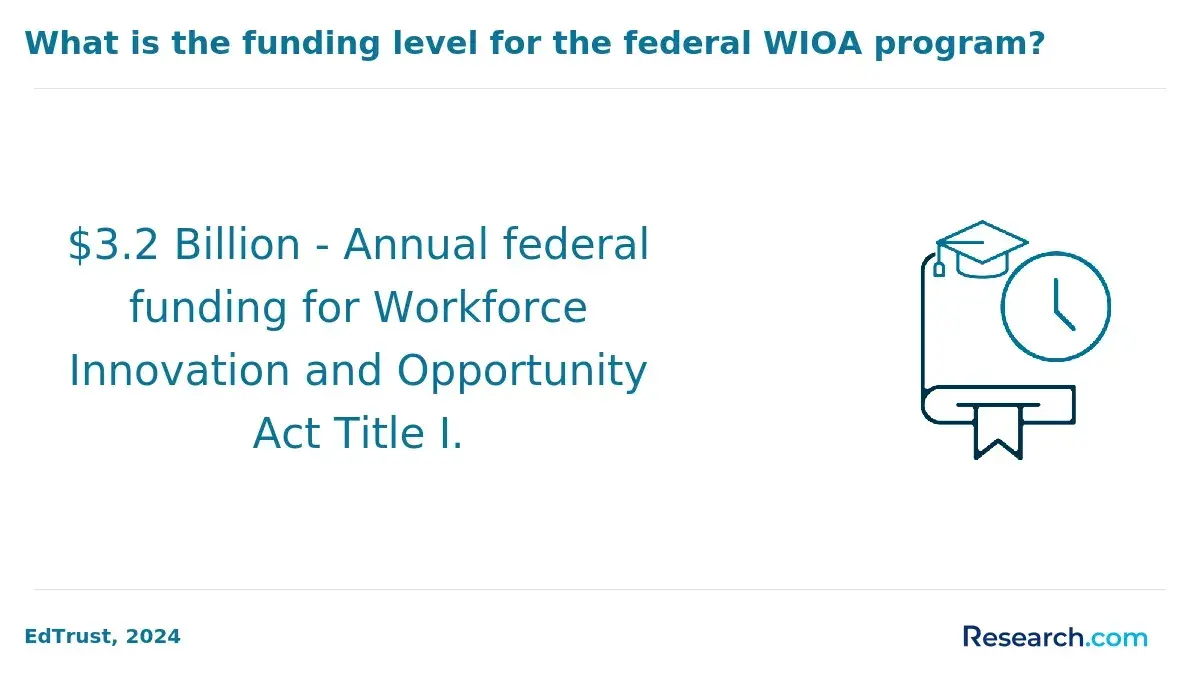
- Cost matters heavily: NCES data published in 2024 shows average graduate tuition and required fees for 2022-23 were much lower at public institutions than private nonprofit institutions, while federal Direct Unsubsidized Loans for graduate students are capped at $20,500 per academic year.
What Is the True ROI of an Online Education Leadership Doctorate?
The true ROI of an online education leadership doctorate is the career value you gain after accounting for tuition, fees, time, debt, opportunity cost, and employer recognition. In this field, ROI is not just a salary calculation. It also includes access to senior leadership roles, credibility in policy or organizational change work, eligibility for superintendent or district-level advancement, and stronger positioning for college administration or corporate learning leadership.
An education leadership doctorate usually comes in two forms. An EdD is commonly designed for working professionals who want to solve applied leadership problems in schools, districts, colleges, nonprofits, or workforce learning organizations. A PhD is usually more research-intensive and may be better for tenure-track faculty, academic research, or policy research roles. Employers often care less about whether the program was online and more about whether the degree type matches the job.
Employer respect usually depends on several concrete factors. The table below summarizes how hiring committees and senior leaders tend to evaluate an online doctorate in education leadership.
| Employer recognition factor | Why it matters | What to verify before enrolling |
| Institutional accreditation | It signals that the school meets recognized academic and operational standards. | Confirm the institution is accredited by an agency recognized by the U.S. Department of Education or CHEA. |
| Program relevance | A doctorate in education leadership is most persuasive when the curriculum matches the target role. | Review concentrations such as higher education leadership, K-12 leadership, organizational leadership, curriculum leadership, or learning technologies. |
| Applied leadership evidence | Employers want proof that doctoral learning produced measurable workplace impact. | Look for capstones, dissertations in practice, internships, consulting projects, or portfolio-based leadership work. |
| Licensure alignment | Some K-12 leadership roles require state administrator, principal, or superintendent credentials beyond the doctorate. | Ask whether the program leads to, supports, or does not satisfy state licensure requirements. |
| Professional network | Senior education hiring is often relationship-driven and reputation-sensitive. | Evaluate alumni networks, employer partnerships, field placements, faculty experience, and cohort design. |
In practical terms, an online education leadership doctorate has the strongest ROI when it helps you reach a role that was already realistic based on your experience. It has weaker ROI when a student expects the credential alone to overcome limited leadership experience, weak networking, missing licensure, or a poorly matched specialization.
How Much Does an Online Education Leadership Doctorate Increase Earning Potential?
An online education leadership doctorate can increase earning potential, but the effect varies widely because many education employers use salary schedules, public-sector pay bands, union contracts, or executive hiring processes. In K-12 systems, the doctorate may produce a lane change or stipend in some districts, but in others it may only matter when paired with administrator licensure and years of leadership experience. In higher education and workforce learning, the degree may be more valuable for director, dean, provost, chief learning officer, or executive roles.
BLS May 2024 wage data gives useful benchmarks, not promises. The median annual wage for postsecondary education administrators was $103,960, while training and development managers had a median wage of $127,090. These figures show that doctoral-level leadership roles can sit in strong salary ranges, but they do not prove that the doctorate caused the salary. Experience, employer type, budget authority, geographic region, and scope of responsibility all matter.
The table below compares common education leadership career areas where a doctorate may influence earning potential. Use it as a role-comparison tool rather than a salary guarantee.
| Career area | How the doctorate may help | Salary context | Important limitation |
| Postsecondary administration | Can strengthen candidacy for dean, director, student affairs, academic affairs, and institutional leadership roles. | BLS reported a May 2024 median wage of $103,960 for postsecondary education administrators. | Many jobs also weigh campus experience, budget management, accreditation knowledge, and faculty governance experience. |
| K-12 district leadership | May support advancement into assistant superintendent, superintendent, curriculum, or central-office leadership roles. | Pay depends heavily on district size, state funding, contract terms, and administrator salary schedules. | State licensure and prior school leadership experience often matter more than the doctorate alone. |
| Training and development management | Can position educators for corporate learning, talent development, workforce education, and organizational learning leadership. | BLS reported a May 2024 median wage of $127,090 for training and development managers. | Employers may prioritize business outcomes, learning technology, analytics, and change management experience. |
| Instructional coordination and curriculum leadership | Can support movement into senior curriculum, assessment, or instructional improvement roles. | BLS reported a May 2024 median wage of $74,720 for instructional coordinators. | The doctorate may not pay off financially if the role remains below senior leadership level. |
The best way to estimate your personal earning increase is to compare the salary range for your current role with the posted salary range for your target role, then subtract total program cost and likely debt. If the degree mainly creates access to a promotion path rather than an immediate raise, the payoff period may be longer but still worthwhile for professionals committed to leadership.
Which Careers Provide the Best Financial Return With an Online Education Leadership Doctorate?
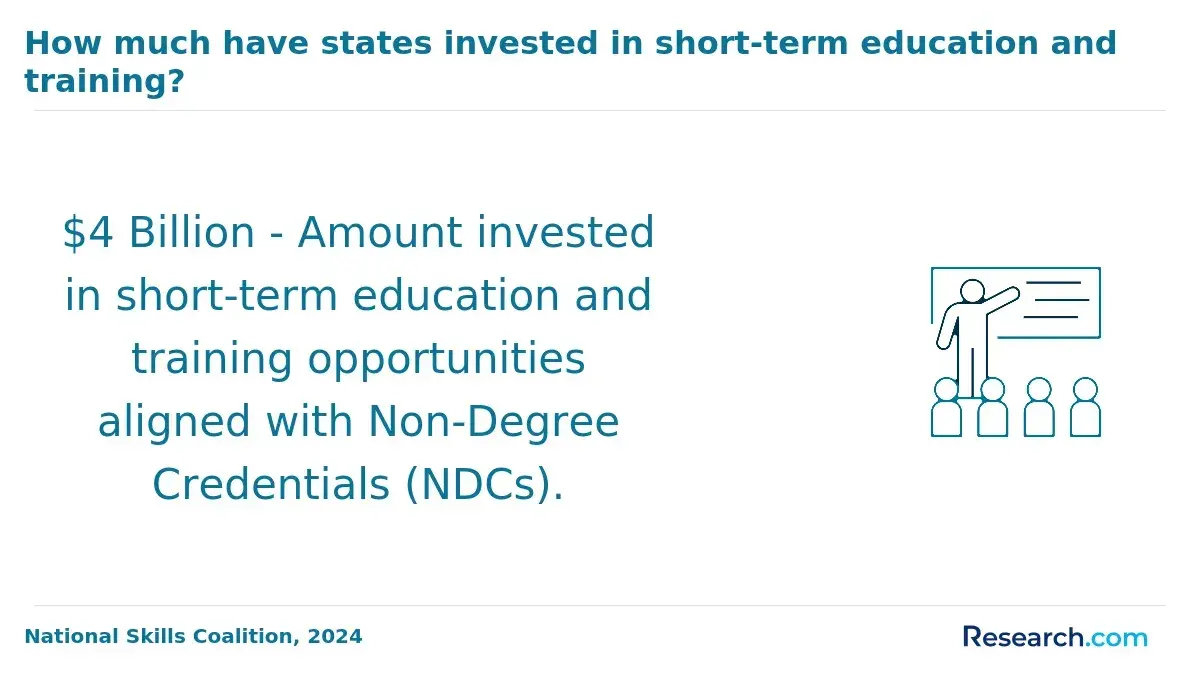
The best financial return usually comes from roles where a doctorate improves credibility for executive decisions, institutional strategy, policy implementation, accreditation, organizational learning, or systemwide improvement. These roles reward not only the credential but also the ability to lead teams, manage budgets, interpret data, and communicate with boards, faculty, district leaders, or senior executives.
For many students, the key question is not "What job can I get with this doctorate?" but "Which target role actually values doctoral-level education leadership training?" The following comparison highlights where the degree is most likely to carry financial weight.
| Target role | Doctorate value | Best-fit doctoral focus | Financial return potential |
| Superintendent or assistant superintendent | Often respected as evidence of advanced leadership preparation, especially when paired with required state credentials. | K-12 leadership, policy, curriculum leadership, organizational change. | Strong when the doctorate helps secure district-level executive roles. |
| College dean or academic affairs leader | Frequently valued because doctorate holders often work with faculty, accreditation processes, academic programs, and institutional planning. | Higher education leadership, academic administration, student success, assessment. | Strong for candidates already working in higher education administration. |
| Chief learning officer or learning and development executive | Valued when paired with business acumen, learning analytics, workforce strategy, and measurable training outcomes. | Organizational leadership, adult learning, instructional systems, learning technologies. | Strong in large employers, healthcare systems, government agencies, and corporate learning teams. |
| Education consultant or policy leader | Can build credibility with districts, agencies, nonprofits, and foundations. | Education policy, systems improvement, research methods, program evaluation. | Variable because income depends on contracts, reputation, and niche expertise. |
| Tenure-track professor | Usually less direct unless the degree is research-intensive and accepted by the hiring department. | PhD or research-focused doctorate in education, policy, leadership, or a related field. | Variable and highly dependent on academic market conditions and publication record. |
A common mistake is assuming that every leadership title rewards a doctorate equally. A doctoral credential may be a strong advantage for executive education roles but only a modest advantage for mid-level roles where a master's degree, administrator certification, project leadership, or specialized technical skill is the main requirement.
How Does an Online Education Leadership Doctorate Affect Career Advancement?
An online education leadership doctorate can affect career advancement in three main ways: it can make a candidate more credible for senior leadership, help the candidate build advanced problem-solving skills, and provide a structured research or improvement project that can be shown to employers. It is most useful when a professional already has teaching, administrative, student services, curriculum, HR, training, or organizational leadership experience.
Employers hiring for education leadership roles often look for evidence that the candidate can move beyond classroom or department-level work into system-level leadership. The doctorate can help if it develops and documents these capabilities:
- Strategic planning and change leadership, especially the ability to lead initiatives across departments, campuses, schools, or employee groups.
- Data-informed decision-making, including assessment, program evaluation, student success metrics, workforce outcomes, and continuous improvement.
- Budget, operations, and resource management, particularly for roles involving staffing, grants, accreditation, compliance, or large-scale programs.
- Communication with senior stakeholders, including boards, faculty, unions, parents, community partners, executives, or public agencies.
- Equity, access, and policy implementation skills, which are increasingly central to education leadership decisions.
Hiring trends also favor candidates who can connect education leadership with technology. AI tools, learning analytics, online program management, and digital student support systems are changing how schools and organizations make decisions. A doctorate becomes more valuable when the graduate can show practical fluency with these tools rather than treating leadership as purely theoretical.
To make the credential work in the job market, students should plan their dissertation, capstone, or applied research around a real employer problem. A study on retention, teacher development, online student success, AI adoption, leadership pipelines, or training effectiveness can become a portfolio asset during interviews.
How Does the Cost of an Online Education Leadership Doctorate Affect Its Overall Value?
Cost is one of the biggest factors determining whether an online education leadership doctorate is worth it. Even a respected degree can produce weak ROI if tuition is high, borrowing is heavy, employer tuition support is limited, or the graduate's target role does not pay meaningfully more than their current position.
NCES data published in 2024 shows why cost comparison matters: average graduate tuition and required fees for 2022-23 were substantially lower at public institutions than at private nonprofit institutions. That difference can affect debt, monthly payments, and the number of years needed for the degree to pay for itself.
Before choosing a program, compare the full cost structure rather than relying on the advertised per-credit rate. Important cost items include:
- Total credits required, because a lower per-credit price can still be expensive if the program requires many more credits.
- Technology, dissertation, residency, graduation, and student service fees that may not appear in headline tuition.
- Travel costs for required campus residencies, intensives, conferences, internships, or dissertation defenses.
- Transfer credit policies, especially for students entering with an EdS, advanced graduate certificate, or prior doctoral coursework.
- Employer tuition reimbursement, assistantships, scholarships, military education benefits, or district professional development funds.
- Loan limits and borrowing plans, including the $20,500 annual federal Direct Unsubsidized Loan cap for graduate students and any use of Grad PLUS loans.
Some students reduce time and cost by choosing applied alternatives to a traditional dissertation. For example, online EdD programs no dissertation may use a capstone or dissertation-in-practice model, which can be a better fit for working professionals if employers in the target field value applied leadership outcomes.
The most expensive program is not automatically the most respected, and the cheapest program is not automatically the best value. The strongest value usually comes from the program that combines recognized accreditation, relevant specialization, manageable debt, strong faculty support, and career outcomes aligned with your target employers.
How Does the Time Commitment of an Online Education Leadership Doctorate Affect Its ROI?
Time commitment affects ROI because doctoral study can take several years of evenings, weekends, research, writing, meetings, and fieldwork. Online delivery can make the schedule more manageable, but it does not eliminate the workload. A shorter program may improve ROI if it reduces tuition and opportunity cost, but only if it still provides adequate academic quality and employer credibility.
Many online education leadership doctorates are designed for working professionals and may take about three to five years, depending on transfer credits, dissertation or capstone structure, enrollment intensity, and whether the student pauses for work or family responsibilities. Faster options exist, but students should evaluate them carefully. Some 1 year EdD programs online may appeal to experienced professionals with substantial prior graduate credits, but speed should not come at the expense of accreditation, faculty access, research quality, or employer trust.
To judge whether the time commitment is realistic, prospective students should take these steps before enrolling:
- Ask the program for the median time to completion for working students, not just the shortest possible completion timeline.
- Confirm how many hours per week students typically spend on coursework, writing, research, and group projects.
- Review when dissertation, capstone, or improvement-project milestones begin and how faculty advising works.
- Check whether required synchronous sessions, residencies, internships, or leadership labs fit your work schedule.
- Estimate the professional opportunity cost, including promotions, consulting work, family obligations, and leadership responsibilities you may delay during the program.
Time can also create career value. A well-designed cohort can expand your professional network, expose you to leaders in other systems, and give you multiple years to test research ideas at work. The key is choosing a timeline that supports both completion and meaningful professional growth.
Does an Online Education Leadership Doctorate Have the Same Career Value as a Campus-Based Degree?
An online education leadership doctorate can have the same career value as a campus-based degree when the institution is properly accredited, the curriculum is rigorous, and the graduate can demonstrate strong leadership results. Most employers do not evaluate a doctorate by delivery format alone. They evaluate the school, the candidate's experience, the relevance of the degree, and the evidence of advanced leadership ability.
That said, online and campus-based doctorates can differ in networking style, field experiences, faculty access, and local reputation. The table below shows the practical differences that may affect employer perception.
| Comparison point | Online education leadership doctorate | Campus-based education leadership doctorate |
| Employer recognition | Strong when the school is accredited and the program is known or clearly relevant. | Strong when the campus has a respected regional, district, or higher education reputation. |
| Networking | Often broader geographically, especially with working professionals from multiple states or sectors. | Often stronger locally, especially if the campus has ties to nearby districts, colleges, or agencies. |
| Flexibility | Usually better for full-time workers, parents, military-affiliated students, and administrators with demanding schedules. | May be harder for working professionals unless classes are hybrid, evening, weekend, or executive-format. |
| Applied leadership opportunities | Often completed in the student's current workplace, which can produce employer-relevant evidence. | May offer more direct campus-based research assistantships, faculty projects, or local field placements. |
| Perception risk | Higher if the school has weak accreditation, unclear standards, or aggressive marketing. | Higher if the program is prestigious but poorly aligned with the student's actual career goal. |
Students should not assume online delivery is a disadvantage, but they also should not assume all online programs are equal. A credible online doctorate should look rigorous on a résumé: recognized institution, relevant specialization, strong research or capstone title, leadership outcomes, and professional experience that supports the degree.
On a résumé or LinkedIn profile, it is usually best to list the institution, degree, specialization, and dissertation or capstone topic without emphasizing the delivery format unless asked. If an employer asks, describe the program in terms of accreditation, faculty engagement, cohort collaboration, research expectations, and applied leadership outcomes.
How Does an Online Education Leadership Doctorate Compare With Other Career Advancement Options?
An online education leadership doctorate is only one path to career advancement. For some professionals, a master's degree, administrator license, graduate certificate, project management credential, HR certification, instructional design portfolio, or specialized analytics training may produce a faster or more targeted return.
The right alternative depends on the role you want. If your goal is executive education leadership, a doctorate may be worthwhile. If your goal is to move into learning design, curriculum technology, or corporate training without seeking senior executive authority, options such as the best online instructional design master's programs may be more cost-effective and directly aligned with hiring requirements.
Compare alternatives based on what employers actually request in job postings. The following guide can help you decide whether a doctorate is necessary, preferred, or optional for your target path:
- Choose an online education leadership doctorate if your target roles commonly involve executive leadership, systemwide change, policy implementation, accreditation, strategic planning, or doctoral-level credibility.
- Choose a master's degree if you need an advanced credential for mid-level advancement, instructional design, curriculum development, student support leadership, or a role that does not reward doctoral preparation.
- Choose administrator licensure or certification if your target K-12 role legally requires a principal, superintendent, or school administrator credential.
- Choose a graduate certificate if you need targeted skills in assessment, AI in education, learning analytics, higher education compliance, special education leadership, or online teaching.
- Choose professional credentials if employers in your target field prioritize project management, HR, data analytics, instructional technology, or organizational development over academic rank.
A common red flag is enrolling in a doctorate because it sounds prestigious without confirming whether the target job requires or rewards it. A smarter approach is to collect 10 to 20 job postings for your intended role, note the required and preferred credentials, and then choose the least expensive credible pathway that meets those expectations.
Which Professionals Benefit Most From an Online Education Leadership Doctorate?
The professionals who benefit most from an online education leadership doctorate are usually mid-career or senior professionals who already have a strong record in education, administration, training, policy, student services, curriculum, or organizational leadership. The degree is less likely to deliver immediate value for someone with little leadership experience or no clear target role.
Strong-fit students often include:
- School principals, assistant principals, curriculum directors, instructional coaches, and district administrators seeking superintendent-track or central-office leadership roles.
- Higher education professionals in academic affairs, student affairs, enrollment management, institutional effectiveness, advising, or program administration who want director, dean, or vice president roles.
- Training, workforce development, and learning and development professionals who want to lead enterprise learning strategy or organizational capability programs.
- Education consultants, nonprofit leaders, policy professionals, and grant-funded program leaders who need stronger credibility in research, evaluation, and systems change.
- EdS graduates who want to convert prior specialist-level study into a terminal degree through structured pathways such as EDS to EdD programs.
Professionals who should be cautious include those who are trying to enter education leadership without experience, those who need a state license but are considering a non-licensure doctorate, and those whose employers pay strictly by role rather than credential. The degree may still have personal or intellectual value, but the financial return may be weaker.
Admissions requirements vary by institution, but many programs expect a master's degree, professional experience, transcripts, recommendation letters, a statement of purpose, and sometimes a writing sample or interview. Competitive applicants can clearly connect their work history, doctoral research interests, and target leadership role.
How Can Students Decide Whether an Online Education Leadership Doctorate Is Worth It?
Students can decide whether an online education leadership doctorate is worth it by treating the choice like an investment decision, not just an academic goal. The best decision combines employer research, cost analysis, accreditation verification, career-path mapping, and honest assessment of your experience level.
Use the following process before applying:
- Define the target role as specifically as possible, such as assistant superintendent, dean of students, director of institutional effectiveness, chief learning officer, or education policy consultant.
- Review real job postings and note whether a doctorate is required, preferred, optional, or not mentioned.
- Contact professionals already working in the role and ask whether online doctorates are respected in their hiring environment.
- Verify institutional accreditation through recognized accreditation databases and confirm whether any state licensure requirements apply to your role.
- Ask programs for completion rates, median time to completion, graduate employment outcomes, alumni roles, employer partnerships, and dissertation or capstone support.
- Calculate total cost, likely debt, employer tuition support, and the realistic salary range for your target role.
- Compare the doctorate with lower-cost alternatives such as licensure, certificates, master's programs, or employer-sponsored leadership development.
- Choose a program only if the curriculum, format, cost, network, and outcomes align with the way your target employers hire.
When reviewing schools, watch for red flags. Be cautious if a program avoids clear accreditation information, promises rapid completion for all students, makes salary claims without evidence, hides fees, provides only testimonials instead of outcomes, or cannot explain how online students receive advising and career support.
The bottom line is that online education leadership doctorates are respected by many employers when they come from credible institutions and are paired with relevant leadership experience. They are not a shortcut to senior roles, but they can be a powerful career asset when selected strategically and used to demonstrate measurable leadership impact.
Other Things You Should Know About Education Leadership
Yes, graduates of accredited doctoral programs commonly use the title "Dr." in professional settings. In education workplaces, it is still best to follow local norms and avoid implying medical, clinical, or licensed authority if the doctorate is in education leadership.
Most accredited universities do not state the delivery format on the diploma, but policies vary by school. Ask the registrar before enrolling if this matters to you.
For applied leadership roles, an EdD is often the better fit because it focuses on practice, systems improvement, and organizational problem-solving. A PhD may be stronger for research-intensive academic, policy, or faculty roles.
Some are fully online, while others require short residencies, intensives, dissertation meetings, or leadership labs. Students should confirm travel requirements, added costs, and scheduling expectations before applying.
References
- The Best EdD Programs of 2025 | EdDPrograms.org https://www.eddprograms.org/schools/best-doctor-of-education-programs/
- Ed.D. vs. Ph.D.: What’s the Difference? https://www.educationdegree.com/articles/edd-and-phd-differences/
- Higher education trends: implications for university leaders https://oes.com/higher-education-trends/
- EdD Salary - How much can you make with a Doctor of Education (EdD) degree? (2025 Update) https://www.onlineeddprograms.com/faqs/edd-salary
- Educational Leadership: Master’s vs. Doctorate Degree - Graduate Programs for Educators https://www.graduateprogram.org/blog/masters-vs-doctorate-educational-leadership-degree/
- 2025 Most Affordable Online Doctorates in Education https://www.onlineu.com/most-affordable-colleges/education-doctoral-degrees
- How Employers View Online Degrees: Interviews with Nine Hiring Executives https://www.onlineeducation.com/features/how-employers-view-online-degrees
- Careers with a Doctorate in Educational Leadership | Neumann https://learn.neumann.edu/neuperspectives/careers-with-a-doctorate-in-educational-leadership
- Trends for the Future of Education: How Cairn’s EdD Equips You to Lead https://cairn.edu/trends-for-the-future-of-education-how-cairns-edd-equips-you-to-lead/
- 5 High-Paying Jobs with an Ed.D. Degree | University of Bridgeport https://www.bridgeport.edu/news/high-paying-jobs-with-an-edd/