Future-Proofing Your Resume: Inside Purdue West Lafayette’s Online Graduate Pathways

Co-Founder and Chief Data Scientist
The contemporary professional operates in an environment defined by continuous market disruption. While artificial intelligence automation frequently dominates economic forecasts, industries are equally pressured by tightening environmental regulations, shifting global supply chains, and increasingly complex public relations climates. Relying on a static skill set can be a professional liability across multiple sectors. However, stepping away from the workforce for two years to pursue a traditional graduate degree carries financial and opportunity costs.
Purdue University’s flagship campus in West Lafayette, Indiana addresses this friction through its online graduate programs utilizing a framework of stackable credentials. By allowing students to earn targeted graduate certificates that can roll directly into full master's and doctoral degrees, the university provides a flexible, incremental structure for professionals to adapt to current industry demands without halting their careers.
Key Findings
- Uncompromised Flagship Rigor: Purdue University’s online graduate programs operate as direct digital extensions of the West Lafayette campus, maintaining identical admissions standards, Tier-1 faculty, and credentialing, distinguishing them from the open-access model of Purdue Global.
- The Stackable Credential Advantage: Professionals can utilize short-term, specialized graduate certificates (such as Smart Manufacturing or Strategic Communication) to solve immediate workplace challenges, later stacking those credits into a full master’s or doctoral degree.
- Industry-Aligned Career Pathways: The curricula within the Purdue Polytechnic Institute and the College of Liberal Arts are specifically designed to bridge the gap between tactical execution and executive strategy, addressing high-demand sectors like IT, aviation, construction management, and corporate communications.
The Academic Structure: R1 Rigor in a Digital Format
Before evaluating the specific career pathways these programs facilitate, it is essential to establish the institutional structure of Purdue West Lafayette’s online offerings. Students enrolled in these specific online graduate programs are attending the flagship, Tier-1 (R1) research institution. The delivery method is digital, but the academic infrastructure remains identical to the physical campus in Indiana. Students engage with the following structural realities:
- Identical Admissions Standards: Applicants must clear the same departmental requirements as those applying to the on-campus cohorts.
- Tier-1 Faculty Integration: Courses are designed and taught by the same West Lafayette researchers and industry-experienced professors.
- Equivalent Credentialing: Graduates receive the exact same diploma as physical campus students, ensuring the degree carries the institutional weight of the flagship university.
Understanding this framework also helps clarify the distinction between Purdue University’s online offerings and Purdue Global. While Purdue Global is a separate, fully accredited institution purposefully built with an open-access, competency-based model to assist adult learners in degree completion, Purdue University’s online programs are simply the digital extension of the traditional, prestigious flagship university.
Purdue Polytechnic Institute: Technology and Organizational Leadership
The Purdue Polytechnic Institute structures its online offerings to bridge the gap between technical execution and executive strategy. This is particularly relevant for mid-career professionals who possess extensive field experience but lack the formal theoretical frameworks often required for upper-management roles.
Overcoming the Credential Ceiling
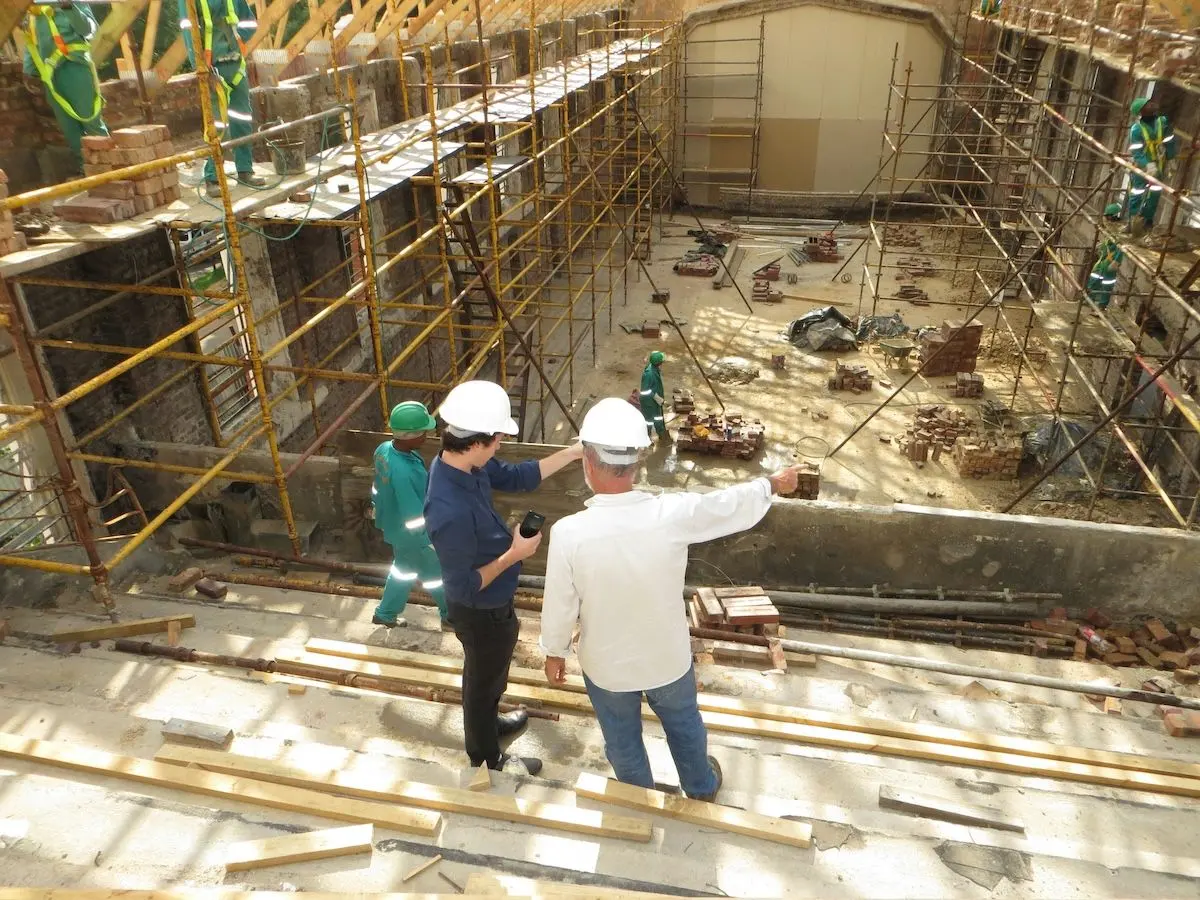
In many technical fields, career progression eventually shifts from practical execution to strategic oversight. The U.S. Bureau of Labor Statistics notes that while hands-on experience is critical in fields like construction, larger firms increasingly prefer candidates with advanced degrees for management roles. These positions demand strong analytical, business, and leadership skills to manage budgets, personnel, and complex problem-solving. To facilitate upward mobility for these professionals, Purdue Polytechnic Institute offers:
- Master of Science in Construction Management: Focuses on high-level operational strategy and executive management. The curriculum directly addresses the industry's demand for business acumen; for instance, courses like Construction Leadership and Marketing (CM 55500) train students in executive decision-making and organizational leadership. A professional with a decade of site experience can test these graduate rigors through the Graduate Certificate in Executive Construction Management, applying those credits toward the master's later.
- Master of Science in Organizational Leadership and Supervision: Designed for leaders moving into complex corporate structures. Students can stack certificates in Human Resources Development, Project Management, and Technical Communication—allowing them to incrementally build highly specific managerial competencies directly applicable to their current employment.
Translating Tactical Experience into Tech Leadership
For professionals navigating industry transitions—such as veterans mapping military logistical expertise to the civilian sector, or mid-career engineers aiming for executive roles—Purdue Polytechnic Institute offers pathways focused on emergent technology and continuous innovation:
- Master of Science in Engineering Technology: This program emphasizes interdisciplinary, job-ready skills for technical leaders. Courses such as Change Management for Enterprise Sustainability (ENGT 54000) teach professionals how to implement and document engineering changes across a product's lifecycle using real-time digital frameworks.
- Graduate Certificate in Smart Manufacturing: Serving as a targeted, nine-credit entry point into the Engineering Technology master's, this pathway is designed for engineers and IT professionals managing advanced production environments. The curriculum focuses on integrating the Internet of Things (IoT) and cybersecurity into sustainable system designs. Professionals can immediately apply these data analytics and supply chain strategies to highly regulated sectors like aerospace, semiconductor, or pharmaceutical manufacturing, testing the academic rigor before committing to the full degree.
Mastering Sector-Specific Complexities: Aviation and IT
Beyond broad manufacturing and organizational leadership, certain sectors demand highly specialized operational oversight. To manage these capital-intensive and data-driven environments, the institute provides targeted pathways:
- Master of Science in Aviation and Aerospace Management: Designed to address the rapidly expanding global air transportation sector. Professionals can enroll in the aviation and aerospace management masteral program by stacking specialized graduate certificates—such as Aviation Financial Management, Aviation Safety Management, and Advanced Unmanned Aerial Systems (UAS)—to master regulatory frameworks before advancing to the full degree.
- Master of Science in Computer and Information Technology: Structured to train leaders in managing complex enterprise ecosystems. Aligning heavily with industry credentialing bodies like the Project Management Institute (PMI) and the International Institute of Business Analysis (IIBA), the Master of Science in Computer and Information Technology allows students to stack graduate certificates in Applied Data Analytics Technology, Information Technology Business Analysis, or Managing Information Technology Projects. This ensures IT professionals acquire precise analytical frameworks while securing a direct pathway to a master's degree.
The Apex of the Stackable Pathway: The Doctor of Technology
Ultimately, this stackable framework provides a continuous progression from an initial graduate certificate to a master's degree, and finally, to a professional doctorate. Many students utilize the aforementioned master's programs as a direct bridge to the Doctor of Technology (DTech). This professional doctorate provides an ongoing educational pipeline for professionals aiming to lead major technological initiatives, startups, or large-scale integrations at the highest organizational levels.
The College of Liberal Arts: Strategic Communication
While the Polytechnic Institute focuses on technical and organizational frameworks, the College of Liberal Arts addresses a different structural need within the modern economy: complex stakeholder management. Corporate communication is recognized as a critical organizational competency utilized for crisis management, internal alignment, and brand positioning. The Master of Science in Communication is designed to move beyond foundational theory to focus on the active application of these strategies.
Managing Public and Community Impact
Organizations across public sectors, healthcare, and athletics require professionals capable of distilling complex information into actionable public strategies. For example, a healthcare administrator or community outreach coordinator often needs to manage localized campaigns, direct public health messaging, or navigate media relations during organizational shifts.
To address these specific challenges, professionals can begin with targeted Graduate Certificates in Health Communication, Sports Communication, or Communication and Leadership. This allows individuals to acquire industry-specific frameworks to solve immediate workplace problems. Should their career trajectory later require a comprehensive credential, these certificate credits serve as a direct stepping stone, stacking into the full MS in Communication.
Driving Digital and Corporate Brand Strategy
In the corporate sector, the proliferation of digital platforms has complicated how organizations maintain a cohesive identity. The U.S. Bureau of Labor Statistics projects sustained demand for management roles focused on public relations, advertising, and marketing, as companies actively seek professionals who can align fragmented digital media into a unified strategy.
Mid-career marketers or media specialists can address this by completing graduate certificates in Strategic Communication, Branding and Marketing Communication, or Digital Media and Communication Technology. Similar to the public impact pathways, these certificates allow professionals to immediately demonstrate higher-level strategic competency to employers while securing a foundation of graduate credits that can be converted into a master's degree at their own pace.
The coursework actively addresses these modern friction points; in Organizational Culture and Internal Communication (COM 65100), students learn to navigate a five-generation workforce and align internal commitments with external corporate social responsibility.
The Logistical Reality: Navigating Cost and Time
A critical component of evaluating any graduate program is the structural reality of the financial and time investment. Purdue University’s online programs are designed to accommodate the schedules of professional adults, utilizing asynchronous coursework that allows professionals to maintain their current employment while studying.
Financially, prospective students must plan strategically. It is important to note that Purdue's well-publicized "frozen tuition" initiative applies specifically to in-state undergraduate students; it does not apply to online graduate programs. However, the stackable certificate model offers a pragmatic financial benefit. By completing a three-to-four-course certificate first, students can distribute the cost of their education over a longer horizon. Furthermore, taking smaller credential steps allows many professionals to maximize annual employer tuition reimbursement benefits, effectively reducing the out-of-pocket cost of eventually completing the full Master of Science degree.
Advancing Careers Through Continuous Learning
The modern professional requires continuous skill acquisition, yet traditional graduate education often forces a difficult choice between career momentum and academic advancement. Purdue University’s online programs address this structural challenge by delivering the academic rigor of an R1 flagship institution through a highly adaptable online format. By implementing a stackable credential framework, the university provides students with the tools to advance their careers.
Professionals can systematically acquire targeted, industry-aligned competencies—from smart manufacturing and executive construction management to strategic digital communication. They can test the immediate value of these skills in the workforce before rolling them into a full master's or doctoral degree. This structure removes the historical compromises of distance learning, ensuring that graduates do not just earn a credential, but actively secure their footing in an evolving economy.
References:
- Bureau of Labor Statistics, U.S. Department of Labor. (2026). Construction managers. Occupational Outlook Handbook. Retrieved October 15, 2026, from https://www.bls.gov/ooh/management/construction-managers.htm
- Bureau of Labor Statistics, U.S. Department of Labor. (2026). Public relations and fundraising managers. Occupational Outlook Handbook. Retrieved October 15, 2026, from https://www.bls.gov/ooh/management/public-relations-managers.htm
- Purdue University. (n.d.). Community outreach coordinator utilizes her online communication master’s to inspire action on water pollution. Purdue University Online. Retrieved October 15, 2026, from https://www.purdue.edu/online/community-outreach-coordinator-utilizes-her-online-communication-masters-to-inspire-action-on-water-pollution/