2027 Best Study Habits for College Students

Co-Founder and Chief Data Scientist
College students often have to study while balancing jobs, family, online coursework, and career planning. NSSE's recent annual results show full-time first-year and senior students report spending about 15 hours per week preparing for class, making study quality as important as study time. This guide is for new, returning, online, working, and campus-based students who want better grades without burning out. You will learn which habits are evidence-aligned, how to build a realistic schedule, and how to choose techniques that support academic success and long-term career readiness.
Key Things You Should Know
- The strongest study habits combine spaced practice, active recall, self-testing, organized notes, distraction control, sleep, and early review rather than last-minute rereading.
- A realistic study schedule should be built around fixed commitments first; many full-time students report roughly 15 hours per week of class preparation, so planning blocks in advance matters.
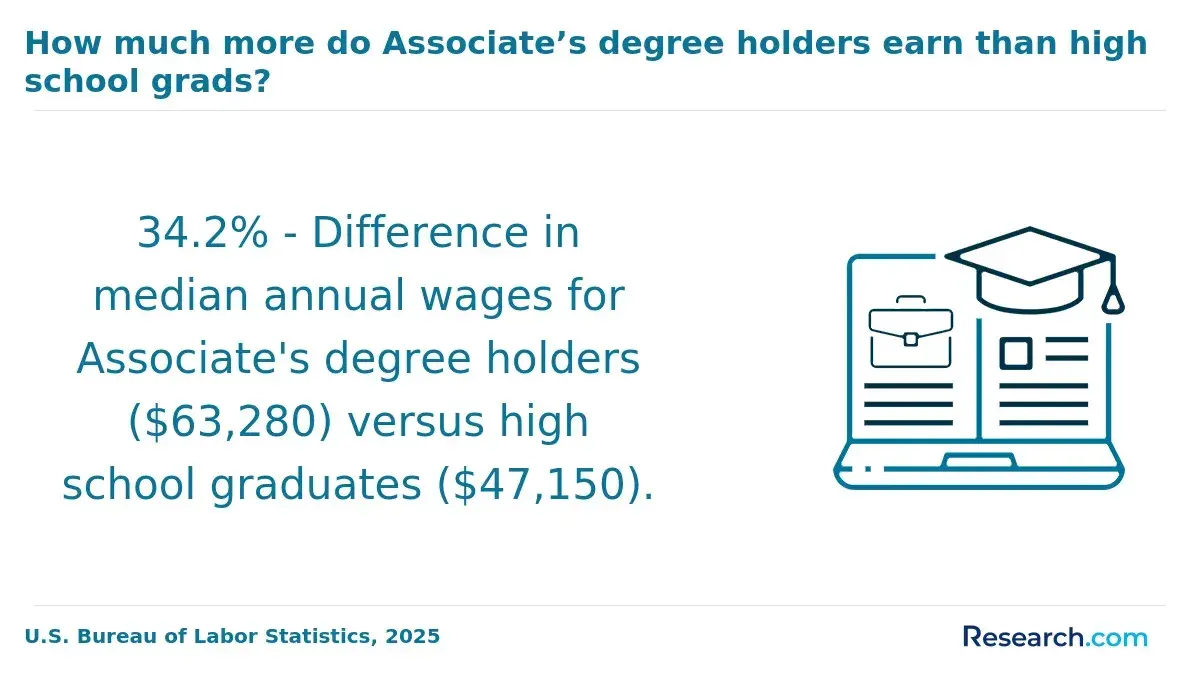
- Good study habits affect more than grades: BLS 2024 data shows workers age 25 and older with a bachelor's degree had median weekly earnings of $1,543, so academic persistence can support long-term career options.
What are the most effective study habits for college students to succeed academically?
The most effective study habits for college students are the habits that make learning active, repeated, and measurable. Studying is not just time spent with a textbook open; it is the process of retrieving information, correcting mistakes, connecting ideas, and applying knowledge before an exam or assignment forces you to do it under pressure.
Use the table below to compare common study habits by what they actually help you do. This is useful because many students confuse familiar-feeling activities, such as highlighting, with durable learning.
| Study habit | What it strengthens | Best used for | Common mistake to avoid |
| Spaced practice | Long-term retention through repeated review | Courses with cumulative exams, formulas, vocabulary, or concepts | Waiting until the week of the exam to start reviewing |
| Active recall | Memory retrieval and exam readiness | Definitions, processes, case facts, anatomy, history, law, and science concepts | Looking at the answer too quickly instead of attempting retrieval first |
| Practice testing | Accuracy, speed, and confidence under exam conditions | Multiple-choice, licensing-style, math, accounting, and science exams | Counting a practice test as "done" without reviewing missed questions |
| Interleaving | Choosing the right method for the problem | Math, statistics, chemistry, coding, finance, and problem-solving courses | Practicing one type of problem so long that the method becomes obvious |
| Elaboration | Deeper understanding and transfer of knowledge | Essays, discussion posts, presentations, clinical reasoning, and case analysis | Writing vague summaries without explaining why something is true |
A strong study routine usually includes several of these methods, not just one. For most students, the best starting point is to replace passive review with a repeatable learning cycle.
- Preview the topic before class so the lecture has context.
- Take organized notes during class and mark confusing points immediately.
- Review notes within 24 hours and turn key ideas into questions.
- Test yourself without looking at the answer.
- Correct mistakes and schedule another review session a few days later.
The biggest red flag is a study method that feels easy but produces weak recall. If you can recognize information when reading but cannot explain it from memory, you need more retrieval practice, not more highlighting.
How can college students create a structured study schedule that fits work and family life?
A structured study schedule works best when it starts with real life, not an idealized version of the week. Students who work, commute, parent, serve in the military, or care for relatives need a schedule that protects essential responsibilities while still creating predictable learning time.
Begin by separating fixed commitments from flexible tasks. Fixed commitments are classes, shifts, childcare, commute time, labs, appointments, and sleep; flexible tasks include reading, practice problems, discussion posts, and exam review. If your program offers flexible pacing, comparing options such as the cheapest self-paced online college pathways can also help you decide whether a more independent format fits your life and budget.
The steps below help convert a busy week into a study plan you can actually follow. They are especially helpful for students who have irregular schedules or limited uninterrupted time.
- List every fixed commitment for the week before adding any study blocks.
- Assign each course a minimum weekly study target based on difficulty, credit load, and upcoming deadlines.
- Place short study blocks near related classes so you review material while it is still fresh.
- Reserve at least one deeper block for problem sets, papers, labs, or exam practice.
- Add buffer time for work schedule changes, family needs, illness, or technology problems.
- Review the schedule every Sunday and move unfinished tasks before the new week begins.
A useful rule is to schedule the hardest course when your energy is highest, not when your calendar is merely empty. If you are a morning person, do quantitative work early; if you focus better after dinner, use that time for demanding reading or writing. The right schedule is the one that you can repeat consistently without sacrificing sleep or essential responsibilities.
What time management strategies help college students avoid cramming and burnout?
Time management in college is less about filling every hour and more about preventing academic emergencies. Cramming usually happens when deadlines are invisible, tasks are too vague, or students underestimate how long reading, writing, and problem-solving will take.
Students in flexible or mastery-based programs may need an even clearer system because fewer live class meetings can make progress feel less urgent. If you are comparing formats, the best competency-based colleges may appeal to self-directed learners, but they still require steady weekly progress and honest self-assessment.
The strategies below are designed to reduce cramming while keeping your workload visible. They work best when you apply them before the semester becomes overwhelming.
- Use a master deadline calendar for exams, projects, labs, papers, quizzes, and discussion posts.
- Break large assignments into smaller milestones, such as topic selection, source gathering, outline, draft, revision, and submission.
- Start exam review at least one week before a major test by scheduling short practice sessions across several days.
- Use "next action" planning: write the next concrete task, such as "complete five practice problems," instead of "study chemistry."
- Protect one catch-up block each week so a missed session does not become a missed chapter.
- Stop studying when accuracy collapses; exhaustion can create the illusion of effort without improving performance.
One common mistake is treating all courses equally. A three-credit elective with weekly quizzes may need less deep work than a gateway biology, accounting, programming, or statistics course. Another mistake is using productivity apps as a substitute for decisions. A calendar helps only if you decide what to study, when to stop, and how you will know you learned it.
How do different learning styles affect the best study techniques for individual students?
Learning styles are often misunderstood. Research does not support the idea that students should only study in one fixed style, such as "visual" or "auditory." A better approach is to choose study techniques based on the task, the course, and your current level of understanding.
That distinction matters when making academic decisions. A student who prefers discussion may still need diagrams for anatomy, practice problems for finance, and written recall for history. If you are planning beyond college and want a program that matches your strengths and constraints, comparing options such as the easiest master's degrees can be useful, but "easy" should always be weighed against career relevance, accreditation, cost, and workload.
The table below shows how to match study techniques to learning demands rather than relying on a single label. This helps students choose methods that fit the material instead of forcing every subject into the same routine.
| Learning demand | Useful technique | Why it works | Example |
| Memorizing terms or facts | Flashcards with active recall | Forces retrieval instead of recognition | Biology vocabulary, legal definitions, medication classes |
| Understanding systems | Concept maps or diagrams | Shows relationships among parts | Supply chains, body systems, historical causes |
| Solving problems | Mixed practice sets | Builds method selection and accuracy | Calculus, accounting, chemistry, statistics |
| Preparing for discussion | Question-based notes | Turns reading into analysis | Literature, ethics, sociology, education |
| Applying knowledge | Case studies and scenarios | Connects theory to decisions | Nursing, business, criminal justice, psychology |
The best personal study system is flexible. If a method does not improve recall, accuracy, or application, change the method rather than assuming you are "bad" at the subject.
What are proven active learning methods college students can use while studying?
Active learning means doing something with the material instead of simply being exposed to it. In college, active learning is especially important because many exams, papers, labs, and presentations test whether you can use information, not just recognize it.
The following methods are practical enough to use in a dorm room, library, workplace break room, or online course. Choose one or two to start, then add more as your routine becomes stable.
- Self-quizzing: Close your notes and answer questions from memory before checking the source.
- Blurting: Write everything you remember about a topic on a blank page, then compare it with your notes and fill gaps.
- Teach-back: Explain a concept aloud as if teaching a classmate who has not taken the course.
- Worked-example review: Study a solved problem, cover the solution, and recreate each step independently.
- Error logs: Keep a list of missed questions, why you missed them, and what rule or concept fixes the error.
- Case application: Apply a theory, formula, or framework to a realistic scenario instead of only defining it.
Active learning can feel slower at first because it reveals what you do not know. That discomfort is useful. A practice quiz that exposes weak areas three days before the exam is far better than discovering those gaps during the exam itself.
How can students minimize distractions and build a focused, productive study environment?
A productive study environment reduces the number of decisions your brain has to make. The goal is not to create a perfect space; it is to reduce avoidable distractions, make materials easy to access, and associate certain locations or routines with focused work.
Digital distractions are one of the biggest current challenges because many students study on the same device they use for messaging, streaming, shopping, social media, and AI tools. AI can be useful for explaining concepts or generating practice questions, but it can also weaken learning if it replaces retrieval, original writing, or problem-solving.
Use the checklist below to build a focus-friendly environment before a study session begins. These steps prevent small distractions from becoming repeated interruptions.
- Put your phone out of reach or use focus mode during timed study blocks.
- Open only the tabs, files, or apps needed for the current task.
- Keep a "distraction list" nearby to capture unrelated thoughts without acting on them immediately.
- Use headphones, white noise, or a quiet campus space if your home environment is unpredictable.
- Prepare chargers, textbooks, notes, water, and assignment instructions before starting.
- Tell roommates, family members, or coworkers when you are unavailable for a defined period.
The most common mistake is relying on willpower alone. If your phone is visible, notifications are active, and your browser has ten unrelated tabs open, focus becomes a constant negotiation. Design the environment so the easiest action is the academic task in front of you.
What role do breaks, sleep, and wellness habits play in better study performance?
Breaks, sleep, movement, nutrition, and mental health habits directly affect study performance because learning depends on attention and memory consolidation. A student can spend many hours "studying" and still perform poorly if fatigue prevents accurate recall or clear reasoning.
Short breaks are not wasted time when they are planned. They help reset attention, reduce frustration, and prevent the low-quality study sessions that often happen when students push too long without recovery.
Use these wellness habits to make study time more effective rather than simply longer. They are not substitutes for academic work, but they make academic work more productive.
- Use focused blocks of 25 to 50 minutes followed by short breaks when attention starts to fade.
- Stand up, stretch, walk, or look away from screens during breaks instead of switching immediately to social media.
- Prioritize sleep before major exams because all-night studying can impair attention and recall.
- Eat before long study sessions if hunger is likely to distract you or reduce concentration.
- Ask for help early if stress, anxiety, depression, caregiving demands, or financial pressure are disrupting academic work.
Burnout often appears as avoidance, irritability, low motivation, repeated missed deadlines, or feeling unable to start simple tasks. If that pattern lasts, contact an academic advisor, counseling center, disability services office, professor, or trusted support person. Getting help early is a study strategy, not a sign that you do not belong in college.
How can online and campus students adapt study habits to different course formats?
Online, hybrid, and campus-based courses require different study habits because the structure around learning changes. Campus courses often provide regular in-person cues, while online courses may require more self-monitoring. Hybrid courses can be challenging because students must track both physical and digital expectations.
Format also affects degree planning. Students seeking speed and flexibility may compare options such as 2-year bachelor degree programs, but accelerated formats are demanding because they compress deadlines and reduce recovery time between assignments.
The table below compares how students should adapt their habits by course format. Use it to identify where your current routine may need more structure.
| Course format | Main advantage | Main risk | Study habit that matters most |
| On-campus | Regular class meetings and direct access to campus resources | Assuming attendance is enough to learn the material | Reviewing notes soon after class and using office hours early |
| Online asynchronous | Flexible timing for students with work or family responsibilities | Falling behind because there are fewer live reminders | Scheduling fixed weekly log-in, reading, discussion, and submission times |
| Online synchronous | Live interaction without commuting | Passive attendance while multitasking | Taking active notes and participating as if in a physical classroom |
| Hybrid | Combination of in-person support and online flexibility | Missing assignments posted in different places | Checking the learning management system and syllabus on a set routine |
| Accelerated | Faster progress toward completion | Limited time to recover from missed work | Starting assignments early and using weekly progress tracking |
For online students, the learning management system is the classroom. Check announcements, rubrics, grade comments, due dates, and discussion expectations regularly. For campus students, the risk is different: showing up physically but not engaging cognitively. In both formats, success depends on turning course structure into repeatable habits.
What note-taking and review strategies help college students retain information long term?
Good note-taking is not transcription. It is a system for capturing important ideas, organizing them, and turning them into review materials. The best notes help you answer questions later, not simply remember what the lecture looked like.
Students should choose a note-taking method based on course type and assessment style. The table below summarizes common methods and when they are most useful.
| Method | Best for | Strength | Limitation |
| Cornell notes | Lecture-heavy courses | Creates built-in review questions and summaries | Can feel rigid for highly visual or problem-based classes |
| Outline notes | Courses with clear hierarchy | Organizes main points and supporting details | May encourage passive copying if not reviewed actively |
| Concept maps | Systems, theories, and relationships | Shows connections between ideas | Can become messy without clear labels |
| Problem notebooks | Math, science, accounting, coding, and statistics | Tracks steps, formulas, and errors | Needs regular correction to avoid repeating mistakes |
| Question-based notes | Reading-heavy courses | Turns notes into study prompts | Requires effort before and after class |
Long-term retention depends on review, not just note creation. After each class, convert your notes into a study tool by writing questions in the margin, creating flashcards for high-value facts, summarizing the main idea in your own words, and marking anything that needs clarification.
One of the most effective review habits is a weekly reset. During the reset, compare notes with the syllabus, check whether your notes answer the course learning objectives, update your error log, and schedule review for older material. This prevents the familiar problem of understanding Week 1 during Week 1 but forgetting it by the midterm.
How can study habits support career readiness, internships, and professional licensing exams?
Study habits also shape career readiness because employers, internship supervisors, graduate programs, and licensing boards often evaluate skills that are built through consistent academic practice: communication, reliability, analysis, ethical judgment, technical fluency, and problem-solving.
BLS 2024 data shows workers age 25 and older with a bachelor's degree had median weekly earnings of $1,543, compared with $946 for workers whose highest credential was a high school diploma. This does not mean a degree guarantees a specific salary, but it does show why persistence, credential completion, and skill-building can matter for long-term labor market options.
For some students, the smartest career move may not be another degree right away. Depending on the field, short-term credentials can lead to entry-level work or help test interest before committing to a longer program; researching jobs that only require a certificate can help students compare faster training options against degree pathways.
The habits below connect classroom success with career preparation. They are especially useful for students planning internships, graduate school, licensure exams, or professional certifications.
- Save strong projects, writing samples, lab reports, code, presentations, or case analyses for a future portfolio.
- Use office hours to ask career-related questions, not only grade-related questions.
- Practice explaining course concepts in plain language because interviews often test communication, not memorization.
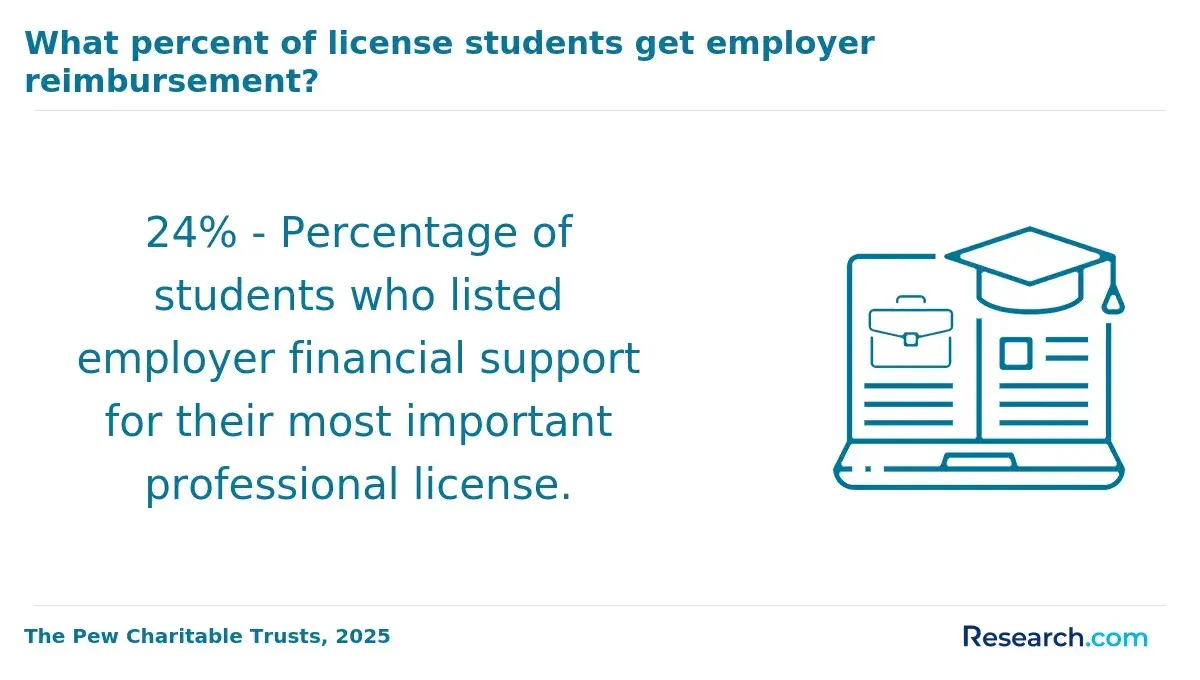
- Build exam-style practice early if your field requires licensing, certification, or board exams.
- Track technical tools used in courses, such as spreadsheets, statistical software, coding platforms, lab equipment, or design tools.
- Reflect after group projects on leadership, conflict resolution, deadlines, and collaboration because these examples can support interview answers.
A common mistake is separating "studying" from "career preparation." In reality, the same habits that improve academic performance can produce portfolio evidence, faculty references, internship readiness, and exam confidence. The key is to document what you learn and connect it to the roles you want.
Other Things You Should Know About
There is no perfect number for every student, but a common planning range is two to three hours of preparation for each credit hour in demanding courses. The better question is whether your study time includes active recall, practice, review, and assignment progress rather than passive rereading.
Usually, yes. Shorter sessions spread across the week support spaced practice and reduce cramming. Weekend study can still help, but it should reinforce material you have already started, not serve as the first time you engage with it.
Audit your method before assuming you need more hours. Check whether you are testing yourself without notes, reviewing mistakes, practicing under exam conditions, and asking for help early. If you are mainly rereading or highlighting, shift to active recall and practice questions.
AI tools can help generate practice questions, explain difficult concepts, or provide examples, but they should not replace your own retrieval, writing, calculations, or reasoning. Use AI as a tutor-like support, then verify answers with course materials and instructor guidance.
References
- Empowering Student Success Through Time Management - TimelyCare https://timelycare.com/blog/empowering-student-success-through-time-management/
- How to determine your learning style for effective studying https://www.rcl.ac.uk/news/find-your-ideal-study-method-learning-style-tips/
- 7 Ways to create a productive study space for students - All Saints Grammar https://www.allsaints.nsw.edu.au/7-ways-to-create-a-productive-study-space-for-students/
- Study methods for every learning style | Latimer Tuition https://latimertuition.com/blog/different-study-methods-for-every-learning-style
- Certification Exam Success: Study Habits That Work Across Different Career Paths - myTEFL https://mytefl.com/2026/07/06/certification-exam-success-study-habits-that-work-across-different-career-paths/
- How Schools Help Students Minimize Distractions During Study https://oxfordeastinternationalschool.com/how-schools-help-students-minimize-distractions/
- Time Management Tips for Students—Balance Study & Life https://www.ue-amsterdam.com/blog/time-management-tips-for-students
- How to Create an Effective Study Schedule https://www.slingshotedu.com/how-to-create-an-effective-study-schedule
- How taking regular breaks can boost focus, energy and wellbeing https://hw.qld.gov.au/blog/how-taking-regular-break-can-boost-focus-energy-and-wellbeing/
- Time Management Strategies to Reduce Academic Stress in College https://www.rockethealth.app/blog/time-management-strategies-to-reduce-academic-stress-in-college/