2027 Metallurgical Engineering: Complete Student Guide

Co-Founder and Chief Data Scientist
Choosing metallurgical engineering means deciding whether you want a career built around metals, materials, manufacturing, and failure prevention. The field matters because U. S. employers need materials expertise for batteries, aerospace, semiconductors, infrastructure, and advanced manufacturing. The Bureau of Labor Statistics projects materials engineers to grow faster than the average occupation from 2023 to 2033, which makes program choice and career planning especially important. This guide is for students, career changers, and families comparing degrees, costs, online options, jobs, salaries, and the smartest path into the field.
Key Things You Should Know
- Metallurgical engineering is usually offered as a standalone major or as a concentration within materials science and engineering; ABET accreditation is the key quality check for most U.S. bachelor's programs.
- The Bureau of Labor Statistics reported a median annual wage of about $104,100 for materials engineers in its latest Occupational Outlook Handbook data, but pay varies by industry, region, degree level, and experience.
- A typical bachelor's degree takes four years full time, while College Board's 2024-25 published tuition and fees averages show major cost differences between in-state public, out-of-state public, and private nonprofit colleges.
What is metallurgical engineering and what do metallurgical engineers do?
Metallurgical engineering is the branch of engineering focused on metals: how they are extracted, refined, processed, tested, strengthened, recycled, and used safely in products and structures. It overlaps with materials science and engineering, but it pays special attention to metallic materials such as steel, aluminum, titanium, copper, nickel alloys, magnesium, and high-performance superalloys.
Metallurgical engineers connect chemistry, physics, mechanics, and manufacturing. Their work can determine why a bridge component cracked, how to make a turbine blade survive extreme heat, how to recycle battery metals more efficiently, or how to choose an alloy for a medical implant. In many organizations, the job title may be "materials engineer," "process engineer," "failure analysis engineer," "metallurgist," or "quality engineer" rather than "metallurgical engineer."
The table below shows how major areas of metallurgical engineering differ. This matters because your preferred work setting should influence your choice of electives, internships, labs, and graduate study.
| Area of metallurgy | What it focuses on | Common work settings | Best fit for students who like |
| Extractive metallurgy | Recovering metals from ores, recycled materials, and industrial streams | Mining, recycling, battery materials, refining, environmental compliance | Chemistry, process design, sustainability, large-scale production |
| Physical metallurgy | How metal structure affects strength, toughness, corrosion, fatigue, and heat resistance | Aerospace, automotive, defense, energy, research labs | Microscopy, testing, materials behavior, product performance |
| Process metallurgy | Manufacturing metals through casting, forming, welding, heat treatment, powder processing, and additive manufacturing | Foundries, mills, advanced manufacturing plants, supplier quality teams | Production systems, equipment, troubleshooting, optimization |
| Failure analysis and reliability | Investigating fractures, corrosion, wear, recalls, and safety-critical failures | Forensic engineering, energy, transportation, insurance, manufacturing | Problem solving, evidence review, lab testing, technical reporting |
Day to day, metallurgical engineers may run lab tests, analyze microstructures, write specifications, model heat treatment results, inspect supplier parts, improve manufacturing yield, or explain test results to non-engineers. The best fit is usually a student who likes applied science and can move comfortably between hands-on lab work, data analysis, and engineering judgment.
What degrees and training do you need to become a metallurgical engineer?
The most direct path is a bachelor's degree in metallurgical engineering, materials science and engineering, or materials engineering with metallurgy-focused coursework. A bachelor's degree is the standard entry credential for engineering roles, especially in manufacturing, aerospace, energy, mining, defense, and product development.
Students can enter the field through several education routes. The table below compares the most common options and explains when each one makes sense.
| Credential | Typical purpose | When it makes sense | Limitations to check |
| Associate degree or engineering technology coursework | Preparation for technician roles or transfer into a bachelor's program | You want a lower-cost start, need stronger math preparation, or plan to transfer | May not qualify for engineering roles without a bachelor's degree |
| Bachelor's degree | Primary entry path for metallurgical or materials engineering jobs | You want engineering design, process, quality, lab, or manufacturing roles | Program names vary, so confirm metallurgy coursework and ABET status |
| Master's degree | Specialization in areas such as computational materials, corrosion, additive manufacturing, or extractive metallurgy | You want R&D, advanced technical roles, leadership, or a shift from another engineering field | Return on investment depends heavily on employer support and career target |
| Doctorate | Research-intensive preparation for university, national lab, or advanced industrial research roles | You want to lead original research or teach at the college level | Longer timeline and narrower career fit than a professional master's |
| Certificate or short course | Targeted skill building in welding, corrosion, quality, NDT, safety, or manufacturing systems | You already work in industry and need a focused skill upgrade | Usually supplements, rather than replaces, an engineering degree |
If you already have an engineering or science bachelor's degree, a specialized master's can be a practical way to move into materials-focused work without starting over. Students comparing speed and flexibility can review an online masters degree option, but they should still confirm lab access, faculty expertise, and whether the program's materials content matches metallurgy career goals.
Licensure is not required for every metallurgical engineering job, but it can matter in consulting, public safety, forensic engineering, and work involving signed engineering documents. The usual U.S. path is an ABET-accredited engineering degree, the Fundamentals of Engineering exam, supervised experience, and the Principles and Practice of Engineering exam; exact rules vary by state licensing board.
How do you choose an accredited metallurgical engineering program in the U.S.?
Accreditation should be one of your first checks because it affects employer confidence, licensure eligibility, transfer value, and graduate school review. In the U.S., engineering bachelor's programs are commonly evaluated by ABET, the main programmatic accreditor for engineering and engineering technology programs.
Do not rely only on a school's marketing page or the word "engineering" in a program name. Use a structured review so you can compare programs on evidence rather than reputation alone.
- Search ABET's public accredited program database for the exact institution, campus, degree level, and program name.
- Confirm whether the program is accredited as metallurgical engineering, materials engineering, materials science and engineering, or engineering technology because these labels can lead to different outcomes.
- Review required courses for thermodynamics, transport phenomena, phase transformations, mechanical behavior, corrosion, extraction or processing, characterization, and senior design.
- Ask how often students use metallography, microscopy, mechanical testing, heat treatment, casting, welding, or additive manufacturing equipment.
- Compare internship pipelines with employers in aerospace, mining, automotive, energy, defense, semiconductors, or manufacturing.
- Check graduation rates, career services support, transfer policies, undergraduate research access, and whether co-op participation delays graduation.
The table below summarizes red flags that should prompt more questions before you apply or enroll. These issues do not always mean a program is poor, but they can affect your career options.
| Red flag | Why it matters | Better question to ask |
| No clear ABET status for the specific program | Institutional accreditation is not the same as engineering program accreditation | "Is this exact bachelor's program currently ABET-accredited, and under what name?" |
| Very limited lab or testing access | Metallurgy is hands-on, and employers value practical familiarity with materials testing | "Which required courses include lab work, and what equipment do undergraduates use?" |
| Few metallurgy-specific electives | A broad materials degree may not cover enough metal processing, extraction, or failure analysis | "Can students build a metallurgy-focused elective plan?" |
| Unclear internship outcomes | Co-ops and internships often shape first-job opportunities | "Which employers recruited students from this program in the last two years?" |
| Tuition is advertised without total cost | Fees, housing, equipment, travel, and delayed graduation can change ROI | "What is the estimated total cost of attendance for my residency status?" |
A strong program is not always the most expensive or the highest-ranked. The better question is whether the program is accredited, rigorous, affordable for you, connected to relevant employers, and equipped to teach the type of metallurgy you want to practice.
What is the typical curriculum in a metallurgical engineering bachelor's program?
A metallurgical engineering bachelor's program usually begins with math, chemistry, physics, computing, and general engineering. It then moves into materials-focused courses that explain why metals behave the way they do and how engineers control that behavior in real products.
The curriculum below reflects common U.S. bachelor's program patterns, but course names vary by school. Use it as a checklist when comparing programs.
| Curriculum area | Typical courses or topics | Why it matters for career readiness |
| Math and basic science | Calculus, differential equations, chemistry, physics, statistics | Builds the foundation for thermodynamics, mechanics, and process modeling |
| Engineering core | Statics, mechanics, circuits or instrumentation, computing, engineering design | Helps students communicate with mechanical, electrical, chemical, and manufacturing teams |
| Materials fundamentals | Structure of materials, phase diagrams, crystallography, diffusion, thermodynamics | Explains how composition and processing affect metal properties |
| Metallurgy specialization | Physical metallurgy, extractive metallurgy, corrosion, heat treatment, welding, casting, forming | Prepares students for metal processing, testing, selection, and failure prevention |
| Laboratory and characterization | Metallography, microscopy, hardness testing, tensile testing, spectroscopy, fracture analysis | Develops practical skills employers expect in quality, R&D, and failure analysis roles |
| Capstone design | Team-based project involving materials selection, process improvement, testing, or product design | Provides evidence of applied problem solving for interviews and portfolios |
Students should pay close attention to lab intensity. A program with strong theory but weak hands-on work may leave you less prepared for manufacturing, testing, and field troubleshooting. If the school offers undergraduate research, choose projects that produce tangible skills: sample preparation, scanning electron microscopy, thermal analysis, mechanical testing, data visualization, or technical writing.
Short credentials can also help fill gaps, especially for students who want to add quality, safety, welding, or data-analysis skills. Carefully chosen certificate programs online can support a résumé, but they should align with your target role rather than distract from core engineering coursework.
Are online metallurgical engineering programs available, and how do they compare to campus options?
Fully online metallurgical engineering bachelor's programs are uncommon because the field depends heavily on laboratories, testing equipment, and supervised design work. Online options are more common at the graduate, certificate, or continuing education level, especially for working engineers who already have access to workplace labs or prior hands-on training.
The comparison below shows how online and campus formats usually differ. The right choice depends less on convenience alone and more on whether the format can provide credible lab, project, and employer exposure.
| Format | Strengths | Trade-offs | Best fit |
| Campus bachelor's program | Direct lab access, faculty interaction, undergraduate research, recruiting events | Less scheduling flexibility and often higher relocation or housing costs | First-time engineering students who need hands-on training and internship access |
| Hybrid program | Some flexibility while preserving labs or short campus residencies | Travel requirements and lab scheduling can be difficult for working adults | Students near campus or workers who can attend periodic labs |
| Online master's program | Convenient for employed engineers and career changers with a technical background | May offer limited hands-on work unless paired with workplace projects or residencies | Engineers seeking specialization without leaving employment |
| Online certificate or short course | Fast skill development in focused areas | Not a substitute for an ABET engineering bachelor's degree | Technicians, engineers, managers, or learners testing interest in the field |
Online study can be a smart option when you are building theory, learning software, or adding management and quality skills. It is less ideal if you still need foundational lab skills in metallography, microscopy, heat treatment, corrosion testing, and mechanical testing.
For low-risk exploration before committing to a degree, older adults and lifelong learners can also compare open university free courses for over 60s or similar no-cost learning options. These courses can clarify interest, but students seeking engineering employment should still plan for accredited, credit-bearing study.
What admissions requirements and prerequisite courses do metallurgical engineering programs expect?
Admissions requirements vary by school, but metallurgical engineering programs typically expect strong preparation in math and science. Competitive applicants usually show readiness for calculus, chemistry, physics, and rigorous problem-solving rather than only general interest in engineering.
Before applying, review both university-wide requirements and the engineering college's separate requirements. Many engineering programs have higher standards than general admission.
- High school preparation: four years of math when possible, including precalculus or calculus; chemistry and physics are especially valuable.
- College readiness: placement into calculus and college chemistry can prevent delays in the engineering sequence.
- Transfer preparation: community college students should confirm course equivalency for calculus, physics, chemistry, programming, and introductory engineering.
- Application materials: transcripts, test scores if required or beneficial, essays, recommendations, and evidence of engineering-related activities may be reviewed.
- Graduate admission: master's applicants often need an engineering, physics, chemistry, geology, or related technical background, plus prerequisite courses set by the department.
Students who are not ready for calculus should not automatically give up on metallurgical engineering. A community college pathway can lower cost and strengthen preparation, but only if courses transfer cleanly into the target bachelor's program. If your first step is an associate pathway, compare whether a quickest associates degree option actually includes the calculus-based science courses needed for engineering transfer.
A common mistake is choosing easy prerequisites over transferable prerequisites. For engineering, the fastest-looking path can become slower if credits do not apply to the degree plan. Ask admissions or transfer advisors for a written degree map before enrolling in lower-division courses.
How long do metallurgical engineering degrees take, and what do they cost?
A bachelor's degree in metallurgical engineering usually takes four years of full-time study, but the actual timeline can change if you need prerequisite math, switch majors, study part time, participate in a co-op, or transfer credits that do not fit the sequence. Engineering courses often build on each other, so missing one prerequisite can delay graduation by a semester or more.
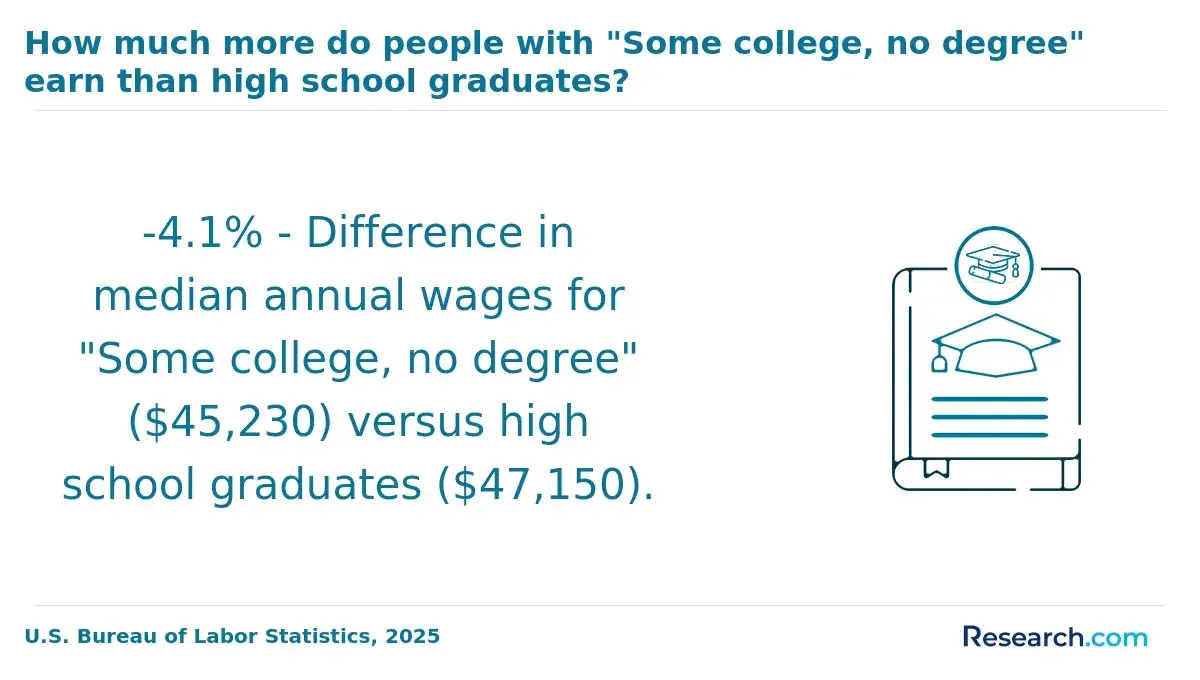
Cost depends heavily on residency, institution type, scholarships, housing, lab fees, and time to completion. College Board's 2024-25 Trends in College Pricing data reported average published tuition and fees of about $11,610 for in-state students at public four-year institutions, $30,780 for out-of-state students at public four-year institutions, and $43,350 at private nonprofit four-year institutions. These are published averages, not your net price after grants, scholarships, or institutional aid.
The table below shows the main cost drivers students should compare before choosing a program. Looking only at tuition can lead to a poor estimate of the real investment.
| Cost factor | Why it changes the total price | How to evaluate it |
| Residency status | Public universities often charge much more for out-of-state students | Compare in-state, out-of-state, and reciprocity or regional tuition agreements |
| Housing and transportation | Engineering labs and projects can require regular campus access | Estimate rent, commuting, parking, relocation, and summer internship costs |
| Time to completion | Extra semesters add tuition, fees, and lost earnings time | Ask for a four-year course rotation and graduation plan |
| Lab, technology, and materials fees | Engineering programs may charge fees beyond base tuition | Request a full cost-of-attendance estimate, not just tuition |
| Scholarships and employer support | A higher sticker price may become competitive after aid | Compare net price offers and renewable scholarship conditions |
| Co-op participation | Paid work experience can improve readiness but may extend the calendar timeline | Ask whether co-op terms are paid, credit-bearing, and built into the degree plan |
To reduce cost without weakening outcomes, prioritize accredited in-state options, apply early for departmental scholarships, consider a transfer pathway only with confirmed equivalencies, and pursue paid internships or co-ops. Avoid choosing the cheapest program if it lacks the labs, accreditation, or employer connections needed for your target role.
What entry-level jobs and career paths are available in metallurgical engineering?
Entry-level metallurgical engineering jobs often sit at the intersection of manufacturing, testing, quality, and product support. New graduates may not design alloys on day one; they are more likely to analyze test results, troubleshoot processes, support production, improve quality systems, or investigate why a component did not meet specifications.
The table below summarizes common early-career roles. Titles vary widely, so read job descriptions for metallurgy-related duties rather than searching only for the exact phrase "metallurgical engineer."
| Entry-level role | Typical responsibilities | Industries where it appears | Good preparation |
| Metallurgical engineer | Evaluate metal properties, support heat treatment, improve processing, write technical reports | Metals production, aerospace, automotive, energy, defense | Physical metallurgy, mechanical testing, heat treatment, failure analysis |
| Materials engineer | Select materials, test performance, support product design, investigate defects | Manufacturing, electronics, medical devices, transportation | Materials characterization, design, statistics, communication |
| Process engineer | Improve yield, reduce scrap, optimize casting, rolling, welding, or forming processes | Foundries, mills, fabrication plants, advanced manufacturing | Process control, manufacturing systems, thermodynamics, data analysis |
| Quality engineer | Manage specifications, supplier issues, nonconformance reports, audits, and corrective actions | Aerospace, automotive, defense, industrial manufacturing | Statistics, quality systems, standards, root-cause analysis |
| Failure analysis engineer | Investigate fractures, corrosion, wear, overheating, and product failures | Consulting, insurance, energy, transportation, product safety | Fractography, microscopy, corrosion, technical writing |
| Corrosion engineer or specialist | Assess degradation, coatings, cathodic protection, and material compatibility | Oil and gas, utilities, infrastructure, marine, chemical processing | Electrochemistry, corrosion testing, inspection methods |
Career growth usually comes from combining technical depth with business judgment. Metallurgical engineers can move into senior technical specialist roles, plant engineering, R&D, supplier quality, operations leadership, project management, consulting, or forensic engineering. Graduate study may help for R&D and advanced materials roles, while certifications may help in quality, welding, corrosion, safety, and inspection-focused careers.
If you are deciding which add-on credentials are worth it, compare role-specific certifications for jobs rather than collecting credentials randomly. A welding inspection credential, quality certification, or corrosion-related training is most useful when it matches the industry you want to enter.
What is the salary outlook for metallurgical engineers across different industries?
Salary data for metallurgical engineers is usually reported under the broader occupation of materials engineers. That category includes engineers working with metals, ceramics, polymers, composites, and other materials, so it is a useful benchmark but not a perfect one-to-one measure for metallurgy-only roles.
The Bureau of Labor Statistics reported a median annual wage of about $104,100 for materials engineers in its latest Occupational Outlook Handbook data. For students, the main takeaway is that metallurgical engineering can lead to strong technical salaries, but compensation depends on industry, geography, clearance requirements, overtime or shift expectations, graduate education, and whether the role is plant-based, design-oriented, or research-focused.
The table below explains how salary context can differ by industry. Use it to think about trade-offs, not as a promise of specific earnings.
| Industry or setting | Why pay may differ | Career trade-off to consider |
| Aerospace and defense | High-performance materials, strict quality systems, and specialized testing can increase demand for expertise | May require security clearance, documentation discipline, and compliance-heavy work |
| Energy and utilities | Materials reliability, corrosion, high-temperature performance, and safety are central to operations | Some roles involve fieldwork, plant sites, or emergency troubleshooting |
| Metals manufacturing | Process knowledge can directly affect yield, scrap reduction, and production uptime | Plant environments may include shift support, safety rules, and production pressure |
| Automotive and transportation | Lightweighting, joining, fatigue, and supplier quality create ongoing materials needs | Work may be tied to production cycles and cost constraints |
| Research and development | Advanced materials roles may reward graduate study and specialized technical depth | Entry may be more competitive and may require a master's or doctorate |
| Consulting and failure analysis | Specialized expertise and responsibility can support higher earning potential over time | Requires strong reporting, client communication, and often licensure or expert credibility |
When evaluating ROI, compare the total cost of your degree with realistic entry roles in your preferred region. A lower-cost accredited program with strong internships can be a better value than a more expensive program if both lead to similar employer access. At the same time, a costlier program may be worthwhile if it offers specialized labs, funded research, co-ops, or recruiting pipelines that directly match your goals.
What is the job demand, industry trends, and future outlook for metallurgical engineers?
Demand for metallurgical engineers is shaped by broader materials engineering needs rather than one single industry. The Bureau of Labor Statistics projects employment for materials engineers to grow 7% from 2023 to 2033, which is faster than the average for all occupations. That projection does not mean every graduate will have the same job market, but it signals continuing need for engineers who understand materials performance, manufacturing quality, and failure prevention.
Several trends are especially relevant for students choosing courses and internships. These trends are not separate from metallurgy; they are changing what metallurgy skills employers value.
- Advanced manufacturing: additive manufacturing, powder metallurgy, and automated inspection are increasing demand for engineers who understand both metal behavior and process data.
- Battery and critical minerals supply chains: recycling, extraction, refining, and materials qualification create opportunities for students interested in extractive metallurgy and sustainability.
- Aerospace and defense modernization: high-temperature alloys, lightweight structures, fatigue performance, and strict quality systems continue to require metallurgical expertise.
- AI-assisted engineering: machine learning can help analyze images, predict properties, and optimize processes, but engineers still need materials judgment to validate outputs and prevent unsafe conclusions.
- Infrastructure reliability: corrosion, fracture, welding quality, and lifecycle assessment remain important in utilities, transportation, pipelines, and public works.
The smartest preparation strategy is to pair classic metallurgy with modern tools. Build depth in thermodynamics, phase transformations, corrosion, mechanical behavior, and processing, then add data analysis, programming, statistics, modeling, or automation exposure. Working engineers can use targeted upskilling, including carefully selected online technical courses, to stay current without leaving the workforce.
Students should avoid assuming that AI will replace the need for metallurgical expertise. In safety-critical industries, employers still need people who can connect data, physical evidence, process history, standards, and engineering ethics. The more realistic shift is that metallurgical engineers will be expected to use better software, cleaner data, and faster testing workflows while still owning the technical judgment behind decisions.
Other Things You Should Know About
Yes, it is academically demanding because it combines calculus, chemistry, physics, thermodynamics, mechanics, and laboratory analysis. It is manageable for students who build strong math habits early and use tutoring, office hours, study groups, and lab time consistently.
Not exactly. Metallurgical engineering focuses on metals, while materials engineering covers a wider range of materials, including polymers, ceramics, composites, semiconductors, and biomaterials. Many U.S. schools teach metallurgy inside a materials science and engineering department.
It is possible, especially for roles involving manufacturing, failure analysis, welding, or materials selection, but you may need metallurgy electives, a master's degree, lab experience, or employer-specific training. A materials-focused internship can also help bridge the gap.
Ask whether the specific program is ABET-accredited, which metallurgy courses and labs are required, what equipment undergraduates use, which employers recruit students, how transfer credits are evaluated, and what the total cost of attendance will be after aid.
References
- Metallurgy Courses for non-metallurgists https://www.imetllc.com/metallurgy-courses/
- Masters in Metallurgical Engineering Requirements at Vaal University of Technology | VUT Admissions https://research.vut.ac.za/what-are-the-requirements-for-a-masters-in-metallurgical-engineering/
- Accredited Schools & Programs - Society for Mining, Metallurgy & Exploration https://www.smenet.org/student-resources/accredited-schools-programs
- How to Become a Metallurgist https://www.open.edu.au/advice/careers/science/metallurgist
- Find Programs - ABET https://www.abet.org/accreditation/find-programs/
- Career Paths in Materials Science: From Entry-Level Research to Leadership and Beyond https://materialssciencejobs.co.uk/career-advice/career-paths-in-materials-science-from-entry-level-research-to-leadership-and-beyond
- Metallurgical Engineer | Dr. Kit https://www.drkit.org/metallurgical-engineer/
- What Is a Metallurgist? Careers, Jobs, and Salaries in 2026 https://www.metalrecruiters.com/metallurgist-careers-jobs-salary/
- Metallurgical and Materials Engineering Major - Academics https://www.mines.edu/academics/program/metallurgical-materials-engineering/
- Metallurgical Engineering https://www.princetonreview.com/college-majors/174/metallurgical-engineering