2027 Is Education a Major: Complete Student Guide

Co-Founder and Chief Data Scientist
Choosing education as a major is really a decision about where you want to work, whom you want to serve, and whether licensure is part of your plan. The U. S. Bureau of Labor Statistics reported a $59,220 median annual wage for education, training, and library occupations in May 2024, but pay and requirements vary widely by role and state. This guide is for prospective students comparing teaching, counseling, instructional design, administration, and education-adjacent careers. You'll learn which degree level fits your goal, what to verify before enrolling, and how to avoid costly program mistakes.
Key Things You Should Know
- Education can be a strong major if your target role requires teacher licensure, school-based experience, curriculum expertise, or child and adolescent learning knowledge; it is less flexible than some majors if you do not want education-related work.
- Costs vary sharply by institution: NCES data reported in 2024 showed average undergraduate tuition and fees of about $9,800 at public four-year institutions for in-state students versus about $40,700 at private nonprofit four-year institutions in 2022-23.
- BLS May 2024 data placed many classroom teacher median salaries in the low-to-mid $60,000s, while some advanced education roles such as instructional coordinator or school administrator typically require graduate preparation and can have higher median pay.
What does it mean to major in education, and what types of education majors exist?
Majoring in education means studying how people learn, how schools operate, how curriculum is designed, and how teachers or education professionals support learners. For students pursuing public school teaching, the major usually combines academic coursework, field observations, student teaching, and preparation for state licensure exams.
The most important distinction is whether the program is licensure-track or non-licensure. A licensure-track education major is designed to meet state teacher certification requirements. A non-licensure education major may prepare students for roles in childcare, tutoring, training, youth programs, edtech, or graduate study, but it may not qualify them to teach in public K-12 schools without additional steps.
The table below compares common education majors so you can match the major name to the age group, workplace, and credential pathway you actually want.
| Education major type | Primary focus | Common career direction | Licensure considerations |
| Early childhood education | Infants, toddlers, preschool, and early elementary learners | Preschool teacher, early intervention aide, childcare program staff, pre-K or early grades teacher | Public school pre-K or elementary roles usually require state-approved licensure; childcare roles may follow separate state rules. |
| Elementary education | Broad instruction across subjects for elementary grades | Elementary school teacher, reading support teacher, curriculum assistant | Usually designed for K-6 or similar grade-band licensure, depending on the state. |
| Secondary education | Teaching a specific subject to middle or high school students | Middle school teacher, high school teacher, subject-area tutor | Typically requires both education coursework and subject-area preparation. |
| Special education | Teaching students with disabilities and supporting individualized education plans | Special education teacher, inclusion support specialist, intervention teacher | Licensure categories vary by disability area, grade band, and state. |
| Educational studies | Learning theory, policy, community education, or non-classroom education work | Program coordinator, education nonprofit staff, training assistant, graduate school applicant | Often non-licensure unless clearly stated otherwise. |
| Career and technical education | Workforce, trade, and applied skills instruction | CTE teacher, workforce trainer, technical education coordinator | Some states allow alternative certification based on industry experience. |
If your goal is public school teaching, do not assume that any education major will qualify. The program must align with the state, grade band, and subject area you plan to teach.
Is education a good major for my career goals, and who is it best suited for?
Education is a good major when your career goal is directly connected to teaching, student support, curriculum, training, school leadership, or learning design. It is especially practical for students who want a structured pathway into a licensed profession and who are comfortable with field placements, background checks, classroom observation, and state exams.
This major is best suited for students who enjoy explaining ideas, adapting to different learners, working with families or communities, and staying organized under real-world pressure. Teaching is relational work, not just subject expertise. Strong education students usually develop patience, communication skills, cultural awareness, assessment skills, and resilience.
You may want to compare education with broader or higher-paying majors if you are mainly focused on income flexibility, private-sector mobility, or technical specialization. A resource on the best degrees for the future can help you compare education against fields such as healthcare, engineering, technology, and business before you commit.
Use the following fit check to decide whether education is the right investment or whether another path may serve you better.
| Student profile | Education major fit | Why it may or may not work |
| You want to teach in a public K-12 school | Strong fit | A state-approved licensure program is often the most direct route to eligibility. |
| You want to work with children but are unsure about teaching | Possible fit | Consider early childhood, human development, psychology, social work, or educational studies depending on the role. |
| You want a high-income major with broad private-sector options | Mixed fit | Education can lead to stable careers, but salary growth may be more structured and location-dependent. |
| You want edtech, training, or instructional design | Good fit with planning | Choose coursework in learning technology, assessment, adult learning, and digital content design. |
| You dislike public speaking, classroom management, or ongoing feedback | Weak fit for teaching | Non-classroom education roles may still work, but a traditional licensure path may feel misaligned. |
The best reason to choose education is not simply liking school. It is wanting to help people learn in structured environments while meeting professional standards that can include licensure, ethics rules, assessment requirements, and continuing education.
What degrees do I need to become a licensed teacher or education professional?
The degree you need depends on the role. For most public school teaching jobs in the U.S., a bachelor's degree plus completion of a state-approved educator preparation program is the standard baseline. However, requirements vary by state and may differ for private schools, charter schools, substitute teaching, career and technical education, early childhood settings, and alternative certification pathways.
The table below summarizes common education roles and the typical academic credential associated with each. Treat this as a planning guide, not a substitute for your state licensing board's rules.
| Goal | Typical minimum education | Common additional requirement | Important note |
| Public elementary, middle, or high school teacher | Bachelor's degree | State-approved teacher preparation, student teaching, licensure exams, background check | The degree must match the state, grade band, and subject endorsement. |
| Preschool teacher | Associate or bachelor's degree, depending on setting | State childcare credential, early childhood coursework, or public school licensure | Public pre-K roles often require more formal licensure than private childcare roles. |
| Special education teacher | Bachelor's degree | Special education licensure or endorsement | State rules may distinguish mild/moderate, severe/profound, or grade-band categories. |
| School counselor | Master's degree | School counseling certification or licensure | This is usually not a bachelor's-level teaching credential. |
| Instructional coordinator | Master's degree often preferred or required | Teaching experience or administrator credential may be expected | Many roles focus on curriculum, assessment, and teacher support. |
| Principal or school administrator | Master's degree | Administrative license and teaching or school experience | Requirements vary significantly by state and district. |
If you are entering college with teacher licensure in mind, follow a sequence rather than choosing courses randomly. This helps you avoid losing time to missing prerequisites or unsupported field placement requirements.
- Identify the exact state where you expect to seek your first teaching license.
- Choose the grade band and subject area you want to teach, such as elementary education, secondary math, special education, or early childhood.
- Verify that the college's educator preparation program is approved for that exact license area.
- Ask when field observations and student teaching begin, because these requirements can affect your work schedule.
- Confirm required exams, minimum GPA rules, background checks, and any content-area testing before your senior year.
Alternative certification can be useful for career changers who already have a bachelor's degree, especially in high-need subject areas. However, it is not a shortcut around state rules; it is a different route to meeting them.
How do education majors differ across associate, bachelor's, master's, and doctoral levels?
Education degrees differ most by career outcome. An associate degree may help you enter early childhood or support roles, a bachelor's degree is the main route into licensed teaching, a master's degree can support specialization or advancement, and a doctorate is usually for leadership, research, policy, or higher education roles.
For students who want a lower-cost first step, transfer-oriented associates degrees online can be useful if the credits apply cleanly to a future bachelor's program. The key is to confirm transferability before enrolling, not after completing courses.
The table below compares degree levels by purpose, timeline, and decision value. This can help you avoid over- or under-enrolling for your target job.
| Degree level | Typical length | Best for | Limitations |
| Associate degree in education or early childhood education | About 2 years full time | Childcare, preschool support, paraprofessional roles, transfer to bachelor's study | Usually not enough for full public school teacher licensure. |
| Bachelor's degree in education | About 4 years full time | Initial teacher preparation, elementary or secondary teaching, special education pathways | Must be state-approved if licensure is the goal. |
| Master's degree in education | About 1-2 years after a bachelor's degree | Advanced teaching, curriculum, literacy, special education, leadership, instructional design | May not provide initial licensure unless it is specifically designed for that purpose. |
| Doctor of Education or PhD in Education | Often 3+ years | District leadership, research, policy, higher education, executive education roles | Usually unnecessary for entry-level teaching and can be costly without a clear goal. |
A common mistake is assuming a higher degree automatically produces a better return. In education, ROI depends heavily on state salary schedules, district pay policies, licensure status, employer reimbursement, and whether the degree qualifies you for a specific advancement step.
What is the typical coursework and specialization options in an education major?
Education coursework usually combines theory, methods, field practice, and assessment. Students learn how to design lessons, manage classrooms, evaluate learning, support diverse students, use educational technology, and communicate with families and colleagues.
Typical coursework varies by school, but most education majors include several recurring areas. These courses matter because they connect college study to real classroom decisions.
- Learning and development courses that explain cognitive, social, emotional, and language development across age groups.
- Instructional methods courses that show how to teach reading, math, science, social studies, or subject-specific content.
- Assessment courses that teach students how to measure learning, interpret results, and adjust instruction.
- Classroom management courses that address routines, behavior support, motivation, and safe learning environments.
- Diversity, inclusion, and special education courses that prepare future educators to support students with varied needs and backgrounds.
- Educational technology courses that cover digital tools, learning platforms, accessibility, and responsible technology use.
- Field experience and student teaching, where students observe and teach under supervision in real school settings.
Specializations are where education majors become more targeted. Choose one based on the learners or workplace you want, not just the course titles that sound interesting.
| Specialization | What you study | Best matched career direction |
| Literacy or reading education | Reading development, intervention, phonics, comprehension, assessment | Elementary teaching, reading specialist preparation, literacy intervention |
| STEM education | Math and science teaching methods, inquiry-based learning, lab or applied instruction | Middle or high school STEM teaching, curriculum support |
| Special education | Disability law, individualized education plans, behavior support, inclusive instruction | Special education teaching, intervention support |
| English language learning | Language acquisition, multilingual learners, culturally responsive instruction | ESL teaching, bilingual education support, language program roles |
| Instructional technology | Learning management systems, digital content, accessibility, media design | Instructional design, edtech support, online learning coordination |
| Educational leadership | School law, supervision, finance, organizational leadership | Administrator preparation, department leadership, district roles |
Short credentials can also complement an education major, especially for students exploring technology, tutoring, childcare, or workforce training. If you are not ready for a full degree, comparing short term certificate programs can help you understand where a faster credential may be enough and where a degree is still necessary.
How do online education degree programs compare to campus-based options?
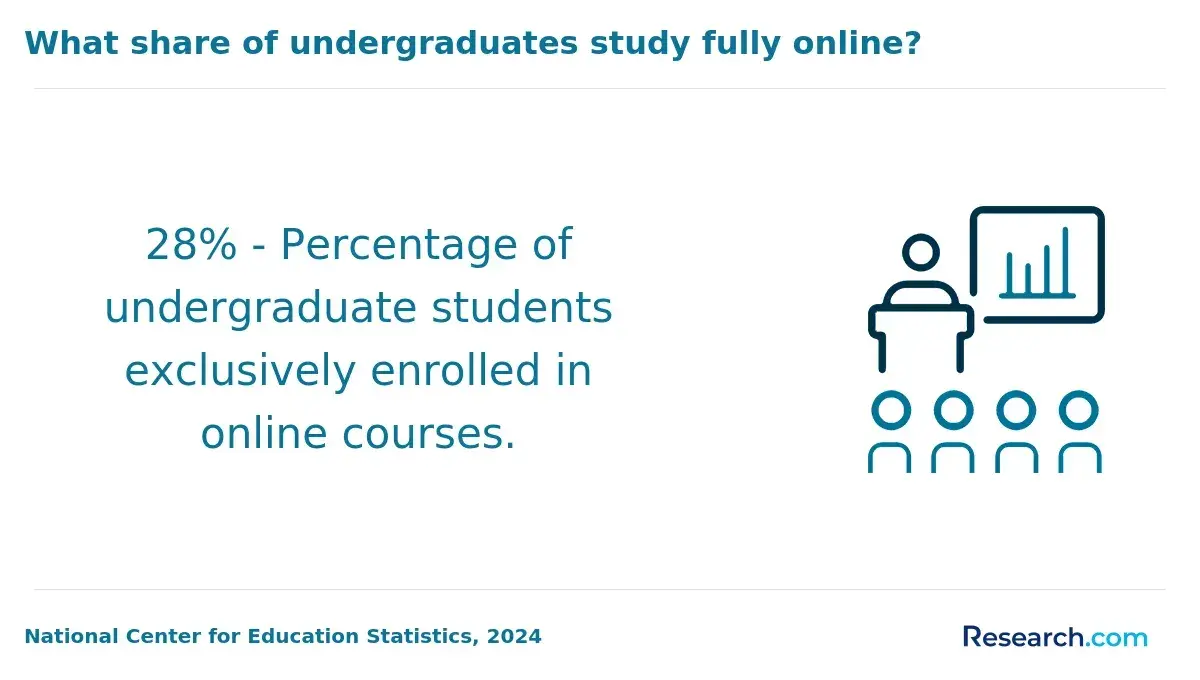
Online education degree programs can be convenient, but they are not all equal for licensure. The biggest question is not whether the courses are online; it is whether the program can place you in approved field experiences and student teaching sites that satisfy your state's requirements.
Online programs often work well for adult learners, paraprofessionals, career changers, rural students, and students who need to balance work and family responsibilities. Campus-based programs may be stronger for students who want frequent face-to-face coaching, local school partnerships, cohort support, or easier access to faculty and licensure offices.
The table below compares online and campus-based formats using factors that directly affect completion, licensure, and cost.
| Factor | Online education degree | Campus-based education degree |
| Schedule flexibility | Often stronger, especially for asynchronous courses | More fixed class times and in-person commitments |
| Field placement | Must be arranged locally and approved by the program and state | Often supported by established local school partnerships |
| Peer and faculty interaction | Depends on course design, advising, and synchronous sessions | Usually easier to access in person |
| Licensure fit | Can be excellent if state-approved for your location | Often clearer if you plan to teach in the same state as the campus |
| Cost control | May reduce commuting and relocation costs | May include campus fees, housing, or transportation expenses |
| Best for | Working adults, transfer students, remote learners, paraprofessionals | Traditional undergraduates, students seeking local placements, learners who prefer in-person support |
Cost is one reason many students compare online formats. Guides to the best affordable online colleges can be helpful, but affordability should be evaluated alongside accreditation, licensure alignment, student teaching support, transfer credit, and graduation requirements.
Before choosing an online education degree, ask direct questions rather than relying on marketing language. These checks can prevent enrolling in a program that is convenient but not usable for your goal.
- Does the program lead to initial teacher licensure in my state and intended subject or grade band?
- Who arranges local classroom observations and student teaching placements?
- Are any campus visits, synchronous sessions, or in-person intensives required?
- What licensure exam pass-rate information does the program publish or provide to applicants?
- Will transfer credits apply to education prerequisites, general education, or only electives?
- What happens if I move to another state before completing student teaching?
What are the admission requirements and program length for education degrees?
Admission requirements for education degrees depend on the level of study and whether the program leads to licensure. Some colleges admit students directly into an education major as first-year students, while others require students to complete prerequisites and apply separately to the teacher preparation program after the first year or sophomore year.
Program length also varies by transfer credits, full-time status, field placement timing, and whether student teaching is completed in one semester or spread across multiple terms. Licensure-track programs can be harder to accelerate because clinical practice requires real school calendars.
The table below summarizes common admission expectations and timelines so you can plan realistically.
| Program level | Common admission requirements | Typical full-time length | Planning concern |
| Associate degree | High school diploma or GED, placement requirements, possible background check for fieldwork | About 2 years | Transfer agreements matter if you plan to earn a bachelor's degree later. |
| Bachelor's degree | High school transcript, GPA requirements, general education coursework, teacher-prep application, background check | About 4 years | Student teaching can limit work hours during the final year. |
| Master's in education | Bachelor's degree, transcripts, statement of purpose, recommendations, teaching license for some tracks | About 1-2 years | Some programs are for licensed teachers only; others offer initial licensure. |
| Doctoral degree | Master's or bachelor's degree depending on program, professional experience, writing sample, recommendations | Often 3+ years | Research, dissertation, or capstone expectations can extend completion time. |
To reduce delays, build your enrollment plan around the most restrictive requirement. For education majors, that is often not a lecture course but a field placement, background clearance, licensure exam, or student teaching semester.
Common admission and timing mistakes include problems that students could have caught early. Review these before applying.
- Choosing a program before confirming that it is approved for the state license you want.
- Assuming transfer credits will automatically count toward teacher preparation prerequisites.
- Underestimating the time commitment of student teaching, which may require daytime availability for a full school term.
- Ignoring GPA gates for admission into the educator preparation sequence.
- Waiting too long to complete background checks, fingerprinting, or basic skills exam requirements.
- Choosing the fastest program without checking whether acceleration conflicts with licensure requirements.
What careers can you pursue with an education major beyond classroom teaching?
An education major can lead beyond classroom teaching, especially when paired with experience, technology skills, subject expertise, or graduate study. Some roles remain school-based, while others move into nonprofits, corporate training, education technology, publishing, government programs, or community organizations.
If salary upside is a major priority, compare education-related paths with broader lists of the most lucrative college degrees. That comparison can help you decide whether to stay within education, add a technical specialization, or choose a different major with education as a minor or career focus.
The table below shows common non-classroom or education-adjacent careers and how an education major can apply to each.
| Career path | Typical responsibilities | Additional preparation that may help |
| Instructional designer | Design online courses, training modules, assessments, and learning materials | Learning technology, adult learning, portfolio projects, authoring tools |
| Curriculum specialist | Develop or evaluate lessons, standards alignment, assessments, and instructional resources | Teaching experience, master's degree, subject specialization |
| Education program coordinator | Manage tutoring, youth, museum, nonprofit, or community learning programs | Project management, grant writing, community engagement |
| Academic advisor | Guide students on course planning, degree progress, and academic policies | Higher education experience, counseling skills, student services knowledge |
| Corporate trainer | Teach employees job skills, compliance topics, software, or leadership content | Adult learning, presentation skills, industry knowledge |
| Education policy analyst | Research school systems, funding, outcomes, and program effectiveness | Statistics, public policy, graduate study, research methods |
| Edtech customer success or implementation specialist | Help schools adopt learning platforms and train teachers or administrators | Technology fluency, classroom experience, communication skills |
The most portable education majors deliberately build transferable skills. If you want options beyond teaching, add evidence of skills employers can see, such as data analysis projects, curriculum samples, training videos, accessibility work, tutoring outcomes, or learning management system experience.
What salary ranges and job outlook can education majors expect in the U.S.?
Salary outcomes for education majors depend on role, state, district pay schedule, union agreements, degree level, years of experience, and whether the job is public, private, nonprofit, or corporate. The U.S. Bureau of Labor Statistics reported May 2024 median pay for elementary school teachers at about $63,670 and high school teachers at about $64,580. Those figures are useful benchmarks, but they do not capture local pay scales, summer work choices, benefits, or advanced-degree salary lanes.
The table below gives a practical salary context for common education-related roles using recent BLS median annual wage data where available. Use it to compare directionally, not as a personal income forecast.
| Role | Recent U.S. median salary context | Typical education path | Outlook factor to consider |
| Preschool teacher | Lower than K-12 teaching roles in many settings | Associate or bachelor's degree depending on employer and state | Public pre-K expansion can affect demand, but requirements vary by state. |
| Elementary school teacher | About low $60,000s based on May 2024 BLS data | Bachelor's degree plus state licensure | Openings are influenced by retirements, local enrollment, and state budgets. |
| Middle or high school teacher | About low-to-mid $60,000s based on May 2024 BLS data | Bachelor's degree, subject preparation, and state licensure | Shortages may be more pronounced in certain subjects and regions. |
| Special education teacher | Often similar to other K-12 teaching roles, with variation by grade level and district | Bachelor's degree plus special education licensure | Demand is tied to legally required services and availability of qualified teachers. |
| Instructional coordinator | Higher than many entry-level teaching roles; BLS May 2024 data placed the median around the mid-$70,000s | Master's degree and teaching or curriculum experience often preferred | Curriculum changes, assessment systems, and teacher support needs shape hiring. |
| Education administrator | Often higher than classroom teaching, especially at the school or district level | Master's degree, experience, and administrative credential | Leadership roles are competitive and usually require proven school experience. |
The labor market is also changing because of technology. AI tools can help with lesson planning, feedback drafts, translation support, accessibility, and data review, but they do not replace the professional judgment teachers need for student safety, classroom relationships, ethics, and differentiated instruction. Students who learn to use AI responsibly may be better prepared for modern schools and training environments.
To evaluate ROI, compare total program cost against the specific role you want. Include tuition, fees, commuting or housing, books, lost wages during student teaching, exam costs, and the likelihood that your chosen district or employer rewards graduate credits or advanced credentials.
How do you evaluate accredited, reputable education programs and meet state requirements?
Accreditation and state approval are the most important quality checks for an education major. Institutional accreditation tells you the college meets broad academic standards. State educator preparation approval tells you whether the program is recognized for teacher licensure in a specific state and endorsement area. You usually need both for a safe licensure-track choice.
Program reputation should be evaluated through evidence, not slogans. Rankings can be useful starting points, but they should never replace licensure verification, clinical placement quality, completion support, and affordability analysis.
Use this checklist before submitting an application or deposit. It focuses on decisions that can affect licensure, transferability, and cost.
- Verify institutional accreditation through recognized accreditation databases or the college's official accreditation page.
- Confirm state approval for the exact teaching license, grade band, and subject endorsement you want.
- Ask whether the program prepares students for licensure in your state if the college is located elsewhere.
- Review field placement and student teaching support, including who finds placements and what happens if a placement falls through.
- Ask for licensure exam pass-rate information, completion rates, and job-placement support when available.
- Compare total cost of attendance, not just tuition, including fees, clinical placement expenses, testing, and lost work time.
- Check transfer credit rules in writing, especially if you are entering with community college credits or prior coursework.
- Speak with an advisor in the education department, not only a general admissions representative.
Watch for red flags that can create expensive problems later. A program may be legitimate in one context but wrong for your goal if it lacks the approval or placement structure you need.
- The school says the degree is "education-related" but avoids clearly stating whether it leads to initial teacher licensure.
- The program cannot explain which state licenses or endorsements its graduates are prepared to pursue.
- Student teaching is described as the student's responsibility with little placement support.
- Admissions materials emphasize speed but do not explain clinical hours, exams, or state approval.
- Tuition looks low, but required fees, travel, testing, or extra terms make the total cost unclear.
- The program is online and out of state, but no one can confirm whether it meets your home state's requirements.
The safest next step is to define your target role first, then work backward to the required credential. For licensed teaching, that means state, grade band, subject area, approved program, exams, fieldwork, and timeline. For non-teaching education careers, it means employer expectations, portfolio evidence, technology skills, and whether a graduate degree is truly necessary.
Other Things You Should Know About
Education is not usually considered the most math- or lab-intensive major, but it can be demanding because it combines coursework, field placements, lesson planning, assessment, classroom management, and professional evaluations. Student teaching can be especially time-intensive.
Yes, in many states you can become a teacher through alternative certification if you already have a bachelor's degree and meet state requirements. This route is common for career changers, but it still usually involves exams, supervised teaching, and educator preparation coursework.
An online education degree can be respected if it comes from an accredited institution and, for teaching careers, a state-approved educator preparation program. The most important issue is whether it meets licensure requirements where you plan to teach.
Educational studies, instructional design, learning technology, education policy, or human development may fit better than a traditional teacher licensure major. Choose electives and internships that build transferable skills such as program coordination, training, curriculum design, data analysis, or edtech support.
References
- Accreditation: The Basics https://www.learnhowtobecome.org/accreditation/
- Accreditation Explained: Guidelines for Global Verification https://www.motaword.com/blog/understanding-accreditation-how-to-verify-institutions-globally
- Admission Requirements for Professional Year Bachelor of Education (Consecutive) https://www.lakeheadu.ca/studentcentral/applying/general-admission-requirements/admission-requirements-for-professional-year-bachelor-of-education-consecutive-
- How to Become a Teacher https://www.nysut.org/resources/special-resources-sites/look-at-teaching/becoming-a-teacher-legacy
- Admission Requirements https://www.ualberta.ca/en/education/programs/undergraduate-programs/admission-requirements.html
- 7 Unique Career Paths for Education Graduates | MANCOSA https://www.mancosa.co.za/blog/7-unusual-career-paths-for-education-graduates/
- An Overview of Specialization Options in Education Degrees https://www.euroeducation.net/articles/an-overview-of-specialization-options-in-education-degrees.htm
- Teacher Certification (Complete Guide) https://www.teach.org/becoming-teacher/teaching-certification
- International Credential Evaluation Services | NACES Member https://www.wes.org/
- USA Recognition - USA Education Quality https://www.accreditation.info/education-quality/usa-recognition.html