2027 Free Certifications Online: Complete Student Guide

Co-Founder and Chief Data Scientist
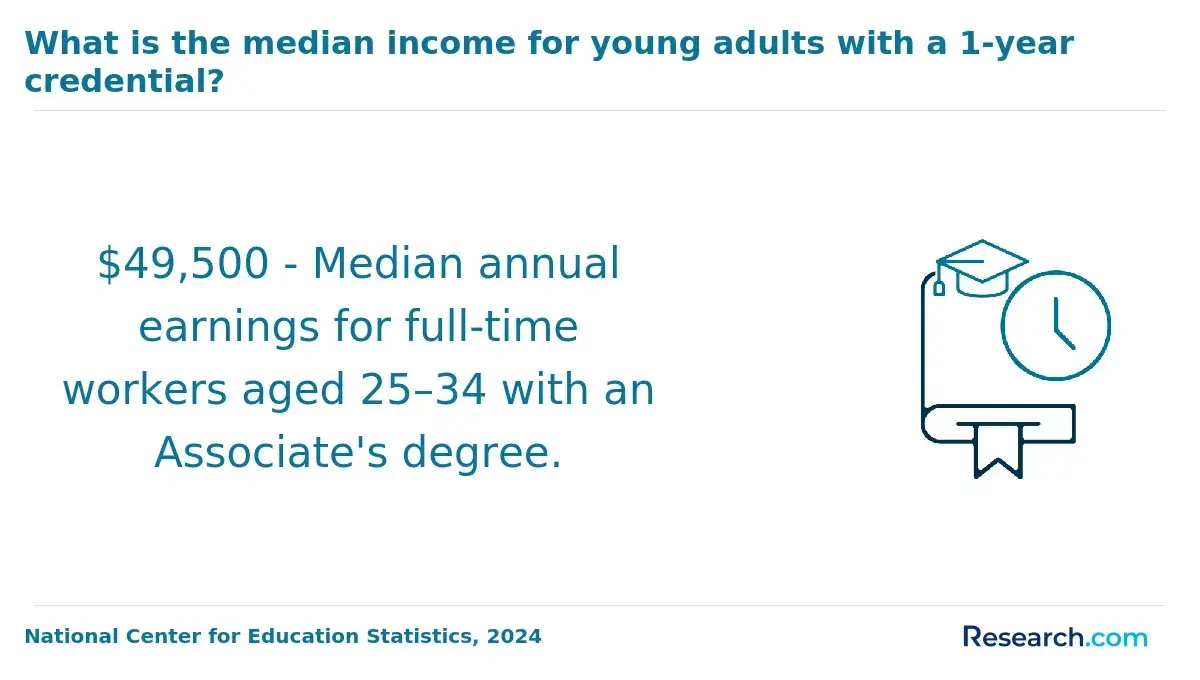
Free online certifications can help students and career changers prove job-ready skills without taking on tuition debt. That matters as the Bureau of Labor Statistics reported a $49,500 median annual wage across all U. S. occupations in May 2024, while many skill-focused roles pay above that level. This guide explains which free certifications are worth considering, how employers view them, when a paid certificate or degree makes more sense, and how to avoid low-value programs before investing your time.
Key Things You Should Know
- Free online certifications are most useful when they teach verifiable, job-specific skills such as IT support, data analysis, project management, cybersecurity basics, bookkeeping, digital marketing, healthcare administration, or office software.
- A free certificate is not the same as an accredited degree; employers may value it for skills evidence, but academic credit usually applies only when the course has ACE, NCCRS, institutional, or prior-learning assessment approval.
- Use 2024 U.S. labor data as context: roles connected to strong technical credentials can exceed the $49,500 all-occupation median wage, but salary outcomes depend on experience, location, industry, and whether the certification matches the job.
What are the best free online certification programs for students and career changers?
The best free online certification programs are the ones that match a real hiring need, provide a verifiable credential or badge, and help you build something you can show in an interview. For students, that may mean a starter credential that supports internships; for career changers, it may mean a low-risk way to test a new field before paying for college courses.
The table below compares common free certification categories by career use. It focuses on practical value rather than brand popularity, because the best choice depends on your target job and current experience.
| Certification area | Good fit for | Typical free providers or formats | Best use case |
| IT support and networking basics | Beginners seeking help desk, computer support, or technician roles | Vendor learning platforms, nonprofit workforce programs, open course platforms | Building baseline technical vocabulary, troubleshooting skills, and a path toward paid industry exams |
| Cloud computing fundamentals | Students interested in cloud support, systems administration, or software infrastructure | Cloud vendor academies and free digital badges | Learning core cloud concepts before committing to paid certification exams |
| Cybersecurity awareness and foundations | Career changers exploring security operations, compliance, or risk roles | Government training portals, vendor academies, nonprofit cyber programs | Testing interest in security work before pursuing more advanced credentials |
| Data analytics and spreadsheets | Business, social science, health, and STEM students who need evidence of analytical skills | Free courses, audit tracks, software training centers, open learning programs | Creating portfolio projects with spreadsheets, dashboards, or basic SQL |
| Digital marketing and content tools | Students seeking internships in marketing, communications, e-commerce, or small business roles | Platform academies for ads, analytics, email marketing, SEO, and CRM tools | Showing platform familiarity for entry-level marketing jobs |
| Project management foundations | Students in business, IT, healthcare, construction, or operations | Free introductory courses and professional association resources | Learning planning, scheduling, stakeholder communication, and workflow basics |
| Healthcare administration and medical office basics | Students exploring nonclinical healthcare roles | Workforce programs, community college continuing education pilots, open courses | Understanding terminology, compliance basics, and administrative workflows |
One important distinction: many platforms let you study for free but charge for a verified certificate. If you need flexible enrollment while comparing credentials, reviewing online schools with multiple start dates can help you see how free learning might fit beside credit-bearing options.
Students should prioritize programs that end with at least one of these outcomes. These signals make the credential easier to explain to employers, advisors, or transfer evaluators.
- A verifiable digital badge or certificate URL that employers can check.
- A portfolio artifact, such as a spreadsheet analysis, website, marketing campaign, help desk simulation, or code repository.
- Clear alignment with a real job posting requirement, software tool, industry standard, or entry-level certification pathway.
- Transparent ownership of the platform, school, company, nonprofit, or government agency offering the training.
How do free online certifications compare to paid certificates and degrees?
Free online certifications, paid certificates, and degrees serve different purposes. A free certification is usually best for skill sampling, resume enhancement, and career exploration; a paid certificate may offer stronger assessment, instructor support, or exam preparation; a degree usually carries broader academic recognition and may be required for regulated or professional roles.
The comparison below can help you decide whether free training is enough or whether a paid academic pathway is the better investment.
| Option | Typical cost pattern | Academic recognition | Employer value | Best when |
| Free online certification | No tuition, but some platforms charge for verified certificates or exams | Usually noncredit unless formally evaluated or accepted by a school | Strongest when tied to a known tool, vendor, portfolio, or job skill | You need to explore a field, add a skill quickly, or prepare for an entry-level role |
| Paid professional certificate | May involve course fees, subscription fees, or exam fees | May be noncredit, credit-bearing, or eligible for continuing education | Can be stronger when it includes proctored exams, projects, or employer-recognized standards | You already know your target career and need a credential with clearer signaling power |
| College certificate | Usually tuition-based, though financial aid or workforce grants may apply | Often transcripted by an accredited institution | Useful for fields where employers value formal education and structured coursework | You want credits that may stack into an associate or bachelor's degree |
| Associate or bachelor's degree | Usually the highest total cost and longest timeline | Accredited, credit-bearing, and broadly transferable when properly chosen | Often required or preferred for roles with broader responsibility or advancement potential | Your target job requires a degree, licensure eligibility, or long-term promotion mobility |
A free certification makes the most sense when the job market values demonstrable skills and the role does not legally require a degree or license. If you need a credential that can lead to higher-level academic or career mobility, compare free training with quick online degrees that may offer a more formal pathway.
The biggest trade-off is opportunity cost. A free course may cost $0, but a low-quality or irrelevant course can still waste weeks that could have gone toward a stronger credential, portfolio, internship, or transfer-credit option.
Are free online certification programs reputable and recognized by employers?
Free online certification programs can be reputable, but recognition varies widely. Employers typically care less about the word "free" and more about whether the credential proves a relevant skill, comes from a credible provider, and can be verified.
A free certification is more likely to be recognized when it meets the following standards. Use these points to separate useful credentials from certificates that only look impressive on a resume.
- The provider is an accredited college, government agency, major technology company, established nonprofit, professional association, or widely used software platform.
- The certificate includes assessments, projects, labs, simulations, or a final exam rather than only passive video viewing.
- The credential can be verified through a public badge, certificate ID, completion URL, or official learner record.
- The skills listed in the course appear in current job descriptions for your target role.
- The provider explains whether the training is noncredit, credit-bearing, continuing education, or exam preparation.
Employer recognition is strongest in fields where tools and skills change quickly, such as IT, digital marketing, analytics, customer relationship management, and cloud computing. In regulated fields such as nursing, teaching, accounting licensure, counseling, and many healthcare roles, free certifications may help with supplemental skills but usually cannot replace required degrees, supervised experience, state approval, or licensing exams.
AI is also changing how credentials are evaluated. As more applicants list short online courses, employers may look for proof that you can apply the skill, not just complete the course. A short certification paired with a project, internship, lab, or work sample is often more convincing than a long list of unrelated badges.
Which accredited schools and platforms offer free online certifications?
Accredited schools and well-known platforms offer many free learning options, but the word "certification" can mean different things. Some programs are free to learn but charge for the official certificate; others issue free certificates of completion; a smaller group may connect to academic credit through specific arrangements.
The table below summarizes where students commonly find legitimate free or no-cost training and what to verify before enrolling.
| Provider type | Examples of what they may offer | What to verify | Best fit |
| Accredited colleges and universities | Open courses, public lecture courses, workforce grant programs, free noncredit modules | Whether the certificate is free, transcripted, credit-bearing, or only a completion record | Students who may later want to continue into a formal program |
| Community colleges | Short workforce certificates, digital skills training, adult education, grant-funded programs | Residency rules, funding eligibility, start dates, and whether credits apply to a degree | Learners seeking local employer connections or career services |
| Government agencies | Emergency management, public health, cybersecurity awareness, workplace safety, and career readiness training | Whether the certificate is recognized for employment, continuing education, or agency requirements | Students interested in public service, compliance, safety, or emergency management |
| Technology vendors | Software, cloud, analytics, cybersecurity, CRM, and productivity tool training | Whether the free course includes a credential or only prepares you for a paid exam | Students targeting roles that use specific platforms or tools |
| Professional associations and nonprofits | Career exploration, industry basics, introductory certifications, mentoring, and workforce readiness | Membership requirements, employer recognition, and whether the credential is introductory or advanced | Career changers who need orientation and networking support |
| MOOC and open learning platforms | Free audit courses, low-cost verified certificates, guided projects, and university-created content | Whether certificate access requires payment and whether the course is current | Learners who want flexible, self-paced exploration across many subjects |
Accreditation matters most when you want academic credit, transfer options, federal financial aid eligibility, or licensure preparation. A platform can be reputable without being accredited, but only accredited institutions and formally evaluated learning pathways are likely to support degree progress.
How can students verify that a free online certification is legitimate?
Before enrolling, verify that the free online certification is legitimate, current, and useful for your goal. This step matters because a polished website does not prove that a credential has employer value or academic recognition.
Use this checklist before you spend time on any free certification. It is especially important if the provider asks for personal information, payment details, or claims that the credential can replace college credit or licensure.
- Identify the provider and confirm it is a real school, company, agency, nonprofit, or professional organization.
- Check whether the program is free to study, free to receive a certificate, or free only during a trial period.
- Look for a syllabus that lists learning outcomes, assessments, estimated time, software requirements, and credential details.
- Confirm how completion is verified, such as a badge, certificate ID, public link, transcript, or learner record.
- Search recent job postings for your target role to see whether the skill, tool, or credential appears in employer requirements.
- If credit is advertised, ask which accreditor, ACE review, NCCRS recommendation, articulation agreement, or school policy supports that claim.
- Read refund, subscription, privacy, and data-sharing terms before creating an account or entering payment information.
Watch for red flags that often signal low-value or misleading programs. These warning signs do not always mean a program is fraudulent, but they should prompt deeper review.
- The site promises guaranteed jobs, guaranteed salaries, or instant professional certification without assessment.
- The provider claims "accreditation" but does not name a recognized accreditor or confuses accreditation with simple business registration.
- The certificate requires a surprise fee after you complete the course.
- The curriculum is vague, outdated, or unrelated to skills employers request.
- The program uses pressure tactics, countdown timers, or unrealistic claims about replacing a degree or license.
What admission requirements and eligibility rules apply to free certification programs?
Most free online certification programs have open admission, which means students can enroll without transcripts, test scores, or prior college experience. However, eligibility rules vary by provider, funding source, and credential type.
Common requirements are usually simple, but overlooking them can delay completion or prevent you from receiving the certificate. Check these details before starting.
- Age rules: Some programs require learners to be at least 13, 16, or 18, especially when accounts, badges, or workplace simulations are involved.
- Technology access: You may need a reliable computer, updated browser, webcam, spreadsheet software, coding tools, or access to a cloud sandbox.
- Education level: Beginner courses may have no prerequisites, while advanced certificates may assume algebra, writing skills, prior coursework, or work experience.
- Location or residency: Grant-funded workforce programs may be limited to residents of a city, county, state, school district, or public workforce region.
- Student status: Some free licenses and training programs require a school-issued email address or current enrollment verification.
- Identity verification: Verified certificates, proctored exams, and digital badges may require a legal name, photo ID, or account authentication.
Students should also check whether the program is self-paced or cohort-based. Self-paced programs are easier to fit around school and work, while cohort programs may offer more structure, deadlines, peer interaction, or career support.
If the certification connects to a regulated career, eligibility can be more complex. Healthcare, education, accounting, public safety, aviation, and some skilled trades may require background checks, state approval, supervised hours, clinical placements, or exams that are not included in a free online course.
How long do free online certifications take, and can credits apply toward degrees?
Free online certifications can take anywhere from under an hour to several months. The right timeline depends on whether you want a quick skill badge, a deeper career foundation, or a credential that might support college credit later.
The table below shows common completion ranges and how to think about academic credit. Use it to avoid assuming that all certificates work the same way.
| Program type | Typical time commitment | Credit potential | Best use |
| Micro-course or software badge | Less than 1 day to 1 week | Usually noncredit | Learning a narrow tool or adding a quick resume skill |
| Introductory career certificate | 2 to 8 weeks | Usually noncredit, but may support prior-learning portfolios | Exploring a field or preparing for internships and entry-level applications |
| Professional foundation program | 2 to 6 months | Varies; some may have ACE, NCCRS, or school-specific pathways | Preparing for a paid certification exam, portfolio, or career transition |
| College-issued noncredit certificate | Several weeks to one semester | May be noncredit or continuing education; not always transferable | Workforce upskilling with local employer alignment |
| Credit-bearing college certificate | One semester to one year | Usually transcripted by the college and may stack into a degree | Building toward an associate or bachelor's program |
Credits apply toward degrees only when a school agrees to accept them. That may happen through transfer credit, credit for prior learning, standardized exams, portfolio review, military or workforce training evaluation, ACE recommendations, NCCRS recommendations, or a formal articulation agreement.
If your long-term goal is graduate study or management advancement, free certifications may be a bridge rather than the destination. Learners who already have a bachelor's degree can also compare whether a shortest masters program would offer more recognized academic progress than stacking multiple noncredit certificates.
Before you start, ask the receiving college in writing whether the certification can transfer, where it fits in the degree plan, and whether there are limits on nontraditional credit. A certificate that does not apply to your major may still be useful for employment, but it may not shorten your time to graduation.
What careers and entry-level jobs can free online certifications help you qualify for?
Free online certifications can help with entry-level roles where employers value demonstrable skills, software familiarity, customer support ability, or technical foundations. They are less likely to qualify you alone for jobs that require a state license, clinical training, an apprenticeship, or a specific degree.
The table below connects common free certification areas with possible entry-level job paths. Salary figures are U.S. Bureau of Labor Statistics May 2024 median annual wages for broad occupations, so local offers may differ by region, employer, experience, and job title.
| Career direction | Entry-level roles to research | Relevant free certification focus | Common responsibilities | May 2024 median wage context |
| IT support | Help desk technician, computer support assistant, technical support representative | Operating systems, networking basics, troubleshooting, ticketing, customer support | Resolving user issues, documenting tickets, setting up devices, escalating complex problems | Computer support specialists: $61,550 |
| Digital marketing | Marketing assistant, social media coordinator, SEO assistant, email marketing assistant | Analytics, advertising platforms, content tools, CRM systems, campaign reporting | Tracking campaigns, preparing reports, scheduling content, supporting lead generation | Market research analysts: $76,950 |
| Data and business operations | Data assistant, operations coordinator, reporting assistant, junior business analyst | Spreadsheets, dashboards, SQL basics, data cleaning, visualization | Cleaning data, preparing reports, monitoring performance metrics, supporting decisions | Data scientists: $112,590, though entry-level support roles may pay less |
| Bookkeeping and office administration | Bookkeeping clerk, accounting assistant, administrative assistant, payroll assistant | Spreadsheet skills, accounting software, business communication, records management | Entering transactions, reconciling records, preparing invoices, organizing documents | Bookkeeping, accounting, and auditing clerks: $49,210 |
| Healthcare administration | Medical office assistant, patient access representative, health records assistant | Medical terminology, privacy basics, scheduling systems, records workflows | Scheduling, intake, records coordination, patient communication, insurance documentation support | Medical records specialists: $50,250 |
| Cybersecurity foundations | Security operations trainee, IT support with security duties, compliance assistant | Security awareness, risk basics, access control, incident response concepts | Monitoring alerts, following security procedures, documenting incidents, supporting audits | Information security analysts: $124,910, typically requiring stronger experience and credentials |
Students choosing between certifications and college majors should consider how much education the target role usually expects. If you are still selecting a degree path, comparing highest paying college majors can help you decide whether a free certification should supplement a major or serve as a short-term career test.
For job applications, do not simply list every free certificate you have earned. Choose the most relevant ones, describe the skills learned, and include a project or result when possible. For example, "completed a spreadsheet analytics certificate and built a sales dashboard using pivot tables" is stronger than "completed online business course."
Do free online certifications improve salary potential and job advancement?
Free online certifications can improve salary potential when they help you move into a higher-skill role, qualify for additional responsibilities, or show readiness for a paid industry credential. They do not automatically raise pay, and they should not be treated as a guaranteed shortcut to a specific salary.
The strongest salary impact usually comes from stacking the credential with experience. A student who adds a data certificate to a business degree, an office worker who learns bookkeeping software, or a help desk employee who studies cloud fundamentals may become more competitive for roles with broader responsibility.
The 2024 BLS wage data is useful because it shows why credential choice matters. For example, computer support specialists had a May 2024 median annual wage of $61,550, which is above the all-occupation median of $49,500. That does not mean a free IT certificate alone leads to that wage, but it shows that targeted technical skills can align with occupations that have stronger wage potential than many general entry-level roles.
Free certifications are most likely to support advancement when they meet one or more of these conditions. Use this list to evaluate whether a certificate is likely to be more than resume decoration.
- It fills a skill gap your current employer has already identified.
- It prepares you for a recognized exam, vendor credential, apprenticeship, or credit-bearing program.
- It helps you complete projects that demonstrate measurable skills.
- It aligns with job postings that show higher pay, promotion potential, or specialized responsibilities.
- It complements your degree, work experience, military training, internship, or volunteer work.
A common mistake is collecting many unrelated certificates and expecting employers to infer a career direction. A focused set of two or three credentials tied to one target role is usually easier to explain and more persuasive.
How should students choose the right free online certification for their goals?
Choosing the right free online certification starts with your goal, not the course catalog. The best program for a high school student exploring careers may be different from the best program for a college student seeking an internship or an adult learner trying to switch industries.
Follow these steps to choose a certification that is worth your time. The process helps you connect free learning to a real academic or career outcome.
- Pick one target role or skill area, such as help desk support, digital marketing, bookkeeping, data reporting, or healthcare administration.
- Review 10 to 15 current job postings in your region and note repeated skills, software tools, credentials, and education requirements.
- Choose a free certification that teaches one of those repeated requirements and includes assessment, practice, or a portfolio task.
- Confirm whether the certificate is free at completion, not just free to audit or free during a trial.
- Check whether the provider is credible and whether the credential can be verified by an employer.
- Estimate the time required and decide whether it fits your semester, work schedule, or job search timeline.
- Plan how you will use the credential after completion, such as updating your resume, building a project, applying for internships, or asking for new duties at work.
Students should also compare the certification with longer education paths. If the jobs you want regularly require a degree, an affordable academic credential may be the better next step; for example, some learners compare free certificates with easy associate degrees that pay well when they want both employable skills and college credit.
Avoid choosing based only on popularity, influencer recommendations, or the number of certificates you can earn quickly. The better question is whether the credential moves you closer to a specific role, transfer plan, internship, promotion, or paid certification exam.
Before enrolling, ask yourself three final questions: Would I put this credential on a resume for my target job? Can I prove what I learned with a project or assessment? If I later need a degree, will this course help, or will it simply be extra experience?
Other Things You Should Know About
Some are fully free, including the certificate or badge. Others are free to study but charge for a verified certificate, final exam, subscription, or proctored assessment. Always check the completion cost before starting.
Sometimes, especially for entry-level roles that value software skills, customer support, technical basics, or portfolio work. However, many jobs also require experience, interviews, projects, degrees, licenses, or paid industry credentials.
Yes, if they are relevant to the job and come from a credible provider. List the provider, credential name, completion date, and key skills, and include a project link when possible.
Usually not automatically. Credit depends on the college's policy and whether the course has formal credit recommendations, articulation agreements, transcripted status, or prior-learning assessment approval.
References
- Best free certificate courses | Alison https://alison.com/certificate-courses
- Free Online Courses & Certificates to Learn & Build Skills https://www.mygreatlearning.com/academy
- How to Choose the Right Online Course for Your Career Goals https://mba-centrum.edu.pe/how-to-choose-the-right-online-course-for-your-career-goals/
- How to Choose the Right Online Course | A Step-by-Step Guide https://dsuonline.com/resources/blogs/guide-choosing-right-online-course/
- Free Course with Swiss Certificate | SIU Swiss International University VBNN https://www.swissuniversity.com/free-course-with-swiss-certificate
- How To Tell If Online Courses Are Legitimate Or Scams https://www.skillshub.com/blog/online-course-scams/
- 5 Steps to Choose the Right Online Course for Your Goals https://www.upskillist.com/blog/5-steps-to-choose-the-right-online-course-for-your-goals/
- Free online courses from edX | edX https://www.edx.org/free-online-courses
- How to Choose the Right Online Course for Your Career Growth https://oacademy.co.uk/how-to-choose-the-right-online-course-for-your-career-growth/
- 5 Ways to Recognize a Reliable Online Course and Avoid Scams https://www.dyndevice.com/en/news/5-ways-to-recognize-a-reliable-online-course-and-avoid-scams-ELN-2297/