2027 Environmental Engineering Schools: Complete Student Guide

Co-Founder and Chief Data Scientist
Choosing an environmental engineering school is a high-stakes decision because the degree connects directly to public health, water quality, climate resilience, and infrastructure work. The U.S. Bureau of Labor Statistics reports a May 2024 median annual wage of $104,170 for environmental engineers, making program quality, accreditation, and career fit especially important.
This guide is for prospective undergraduates, transfer students, graduate applicants, and career changers. You will learn how degree levels, costs, online formats, admissions, licensure, and job outcomes compare so you can choose a school with fewer surprises.
Key Things You Should Know
- For most engineering roles, prioritize ABET-accredited bachelor's programs because many employers, graduate schools, and Professional Engineer licensing boards use accreditation as a quality benchmark.
- Cost varies widely: College Board's 2024 pricing data lists average published tuition and fees at $11,610 for in-state public four-year colleges and $43,350 for private nonprofit four-year colleges.
- The labor market is solid but not automatic: BLS projects environmental engineer employment to grow 7% from 2023 to 2033, so internships, technical skills, and licensure planning can strongly affect outcomes.
What is environmental engineering and how do U.S. degree programs prepare students?
Environmental engineering applies engineering design, science, and regulation to problems that affect air, water, soil, ecosystems, and communities. Students learn how to design treatment systems, reduce pollution, manage waste, evaluate environmental risk, and help organizations comply with environmental laws. It is different from environmental science because it is more design- and math-intensive; it is different from civil engineering because it focuses more directly on environmental systems and public-health protection.
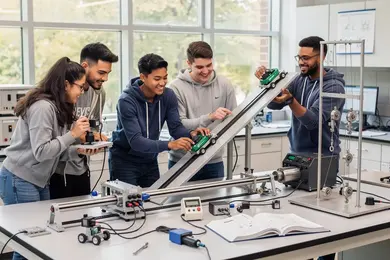
U.S. degree programs prepare students through a mix of classroom theory, laboratory work, design projects, field sampling, modeling software, and professional practice. A strong program should help students connect technical decisions to real constraints, such as budget, safety, permitting, community impact, and long-term maintenance.
The table below summarizes the main areas students usually encounter and why each one matters when comparing schools. Use it to check whether a program's curriculum matches the type of work you hope to do after graduation.
| Program area | What students learn | Why it matters |
| Water and wastewater systems | Treatment processes, hydraulics, distribution, collection, and reuse | Supports careers in utilities, consulting, municipal engineering, and public health infrastructure |
| Air quality and emissions control | Pollutant formation, monitoring, dispersion, and control technologies | Prepares students for work with industry, regulators, transportation systems, and energy-related employers |
| Solid and hazardous waste | Waste characterization, landfill design, remediation, and containment | Connects to environmental compliance, remediation firms, manufacturing, and government agencies |
| Environmental chemistry and microbiology | Contaminant behavior, biological treatment, sampling, and lab analysis | Builds the scientific foundation for treatment design and risk assessment |
| Engineering design and regulation | Permitting, standards, cost estimates, ethics, and capstone design | Shows whether students can turn analysis into practical, defensible engineering solutions |
Environmental engineering may be a good fit if you like applied science, math, infrastructure, problem solving, and work with measurable public impact. It may be a weaker fit if you want a mostly policy-focused, advocacy-focused, or field-research career with little calculus, physics, or design work.
What types of environmental engineering degrees can you earn and at which levels?
Environmental engineering is available at several academic levels, but each level serves a different purpose. The right choice depends on whether you want to enter the workforce quickly, become a licensed engineer, specialize, move into research, or qualify for leadership roles.
The table below compares common degree levels. It is especially useful if you are deciding whether to start with a transfer pathway, go straight to a bachelor's degree, or pursue graduate study later.
| Degree level | Typical purpose | Best fit | Key limitation |
| Associate degree or pre-engineering pathway | Complete lower-division math, science, and general education before transfer | Cost-conscious students planning to enter a bachelor's program | Usually not enough for environmental engineer roles by itself |
| Bachelor's degree | Prepare for entry-level engineering, FE exam eligibility, internships, and graduate study | Students seeking the standard engineering credential | Requires strong math, science, labs, and design coursework |
| Master's degree | Build advanced expertise in water resources, remediation, air quality, sustainability, or systems modeling | Engineers seeking specialization, career advancement, or a pivot from another engineering field | May not replace the value of an ABET-accredited bachelor's degree for licensure pathways |
| Doctorate | Prepare for research, university teaching, advanced technical leadership, or specialized R&D | Students aiming for academic, national lab, or high-level research careers | Time-intensive and usually unnecessary for standard engineering practice |
| Graduate certificate | Add focused knowledge in compliance, sustainability, water treatment, or environmental management | Working professionals who already have a related degree | Does not usually substitute for an engineering degree |
A bachelor's degree is the usual starting point for becoming an environmental engineer. A master's can be valuable when a student wants advanced design skills, management credibility, or a stronger technical niche. Doctoral study is most appropriate for people who want to create new knowledge rather than primarily apply existing design standards; students comparing research-heavy paths can also review cheap online PhD programs to understand how affordability and doctoral formats differ across fields.
Before choosing a level, ask what job you want the degree to unlock. If the target job title includes "engineer," a non-engineering environmental degree may not be enough. If the target is environmental compliance, sustainability reporting, field sampling, or environmental health and safety, a broader environmental science, public health, or management program may also be relevant.
How do you choose accredited environmental engineering schools and verify program quality?
Accreditation is one of the most important checks when evaluating environmental engineering schools. Institutional accreditation confirms that the college or university meets broad academic and administrative standards. Programmatic accreditation, especially ABET accreditation for engineering programs, is the more specific signal that the engineering curriculum has been reviewed against professional standards.
ABET accreditation matters because many state licensing boards use graduation from an ABET-accredited engineering program as the cleanest path toward the Engineer in Training and Professional Engineer process. Requirements vary by state, so students should never assume a program qualifies them for licensure without checking the relevant board.
Use the following steps to verify program quality before applying or enrolling. These checks can help you avoid programs that look convenient but may not support your professional goals.
- Confirm institutional accreditation through the school's official accreditation page and recognized accreditation databases.
- Search ABET's accredited program database for the exact program name, campus, degree level, and accreditation dates.
- Review whether the degree is specifically in environmental engineering, civil engineering with an environmental concentration, or another related field.
- Ask the department how many students complete internships, capstone projects, undergraduate research, or co-op placements with environmental employers.
- Check whether graduates are prepared for the Fundamentals of Engineering exam and whether faculty advise students on state licensure requirements.
- Compare labs, design studios, field equipment, software access, and relationships with utilities, agencies, or consulting firms.
Common red flags include vague accreditation language, no clear engineering design sequence, limited lab access, weak transfer-credit transparency, and programs that advertise "engineering" but do not clearly identify the accredited engineering degree. Rankings can be useful for discovery, but they should not replace accreditation, curriculum fit, cost, and career support.
What is the typical curriculum in environmental engineering programs and common specialization areas?
Environmental engineering curricula are demanding because they combine engineering fundamentals with environmental science and public policy constraints. Students typically take calculus, differential equations, chemistry, physics, biology or microbiology, fluid mechanics, thermodynamics or transport processes, environmental systems, statistics, and engineering design.
Specializations matter because environmental engineering is broad. A student interested in drinking water treatment may need different electives, labs, and internships than a student interested in contaminated site cleanup or climate resilience. The table below shows common concentration areas and the kinds of career directions they support.
| Specialization | Common coursework or projects | Career connection |
| Water resources and treatment | Hydrology, hydraulics, drinking water treatment, wastewater treatment, stormwater design | Utilities, consulting firms, municipal engineering, watershed management |
| Air quality engineering | Air pollution control, emissions modeling, monitoring methods, industrial processes | Regulatory agencies, manufacturing, energy, transportation, environmental consulting |
| Remediation and hazardous waste | Soil and groundwater remediation, contaminant transport, risk assessment, site investigation | Cleanup contractors, federal projects, brownfield redevelopment, environmental due diligence |
| Sustainability and climate resilience | Life-cycle assessment, green infrastructure, resilience planning, systems analysis | Infrastructure planning, corporate sustainability, city resilience teams, consulting |
| Environmental data and modeling | GIS, programming, statistics, sensor data, water or air quality models | Data-driven consulting, public agencies, research groups, smart infrastructure teams |
Technology is changing what students need to know. Employers increasingly value GIS, programming, remote sensing, automated monitoring, data dashboards, and modeling tools alongside traditional design skills. AI may help with document review, environmental data screening, and scenario modeling, but engineers still need judgment, ethics, regulatory understanding, and accountability for design decisions.
When comparing curricula, look beyond course titles. Strong programs show evidence of hands-on design, realistic constraints, team projects, technical writing, safety training, and opportunities to work with real environmental data. A program with many electives but weak required engineering fundamentals may be less useful for licensure-oriented students.
How do online environmental engineering programs compare with campus-based options?
Online environmental engineering options are more common at the master's and certificate levels than at the undergraduate level. The main reason is practical: bachelor's programs usually require labs, design studios, fieldwork, and sometimes in-person proctored assessments. Graduate online programs can be more flexible because many students are already working engineers who can complete advanced coursework remotely.
The table below compares online and campus-based formats. Use it to decide which format fits your schedule without ignoring engineering-specific requirements.
| Factor | Online programs | Campus-based programs |
| Best use case | Working professionals, graduate students, military families, or students needing schedule flexibility | Traditional undergraduates, lab-intensive learners, and students seeking immersive campus recruiting |
| Lab and field access | May require short residencies, local arrangements, simulations, or transfer credits | Usually easier access to labs, field trips, equipment, and faculty-led research |
| Networking | Can be strong if the program has live classes, cohort models, and employer-connected projects | Often stronger for spontaneous faculty contact, clubs, research, and local internships |
| Licensure fit | Must be checked carefully, especially for bachelor's-level engineering programs | Often clearer when the program is ABET-accredited and well established |
| Flexibility | Usually better for part-time students and full-time workers | Usually better for students who can attend during standard class and lab times |
Online study can be a smart choice if the program is properly accredited, transparent about lab requirements, and aligned with your state's licensing expectations. Students comparing flexible institutions can start with guides to good online colleges, then narrow the search to engineering programs that meet environmental engineering goals.
Campus programs may be better if you are starting directly from high school, need structured academic support, want extensive lab time, or plan to pursue internships through local engineering employers. The best format is not simply the cheapest or fastest one; it is the one that lets you complete the required technical work, build experience, and remain eligible for your intended career path.
What are the usual admission requirements and prerequisites for environmental engineering majors?
Environmental engineering admissions are usually math- and science-focused. Bachelor's applicants are commonly expected to have strong preparation in algebra, trigonometry, precalculus or calculus, chemistry, physics, and English composition. Graduate applicants usually need a bachelor's degree in engineering or a closely related quantitative field, though bridge courses may be available for students from environmental science, chemistry, geology, or other STEM backgrounds.
Admission requirements vary, but the following items are common enough that applicants should prepare for them early. Checking these requirements before applying can prevent delays, extra prerequisite costs, or a mismatch with your academic background.
- High school or college transcripts showing strong performance in math and science courses.
- Prerequisite coursework in calculus, chemistry, physics, and sometimes biology, statistics, or computer programming.
- Standardized test policies, which may be test-optional at some undergraduate institutions and optional or waived for some graduate programs.
- Personal statement or essays explaining interest in environmental engineering, problem-solving experience, and career goals.
- Letters of recommendation, especially for graduate programs and competitive scholarships.
- Transfer-credit evaluation for students entering from community colleges, military coursework, or previous universities.
Transfer students should pay close attention to course sequencing. Missing one calculus, physics, or engineering mechanics course can delay graduation by a semester or more because upper-division engineering courses often have strict prerequisites. Students exploring lower-cost starts may compare 2-year online degrees, but they should verify that math, science, and engineering courses transfer into the target bachelor's program.
A common mistake is choosing an easy-looking environmental program without checking whether it leads to the desired engineering credential. Another is underestimating the workload: environmental engineering is mission-driven, but it is still an engineering major with substantial quantitative demands.
How long do environmental engineering degrees take and what do they cost to complete?
A full-time bachelor's degree in environmental engineering typically takes about four years, while master's programs often take one to two years depending on course load, thesis requirements, and whether the student studies full time or part time. Doctoral programs vary more widely because research progress, funding, and dissertation requirements differ by university and advisor.
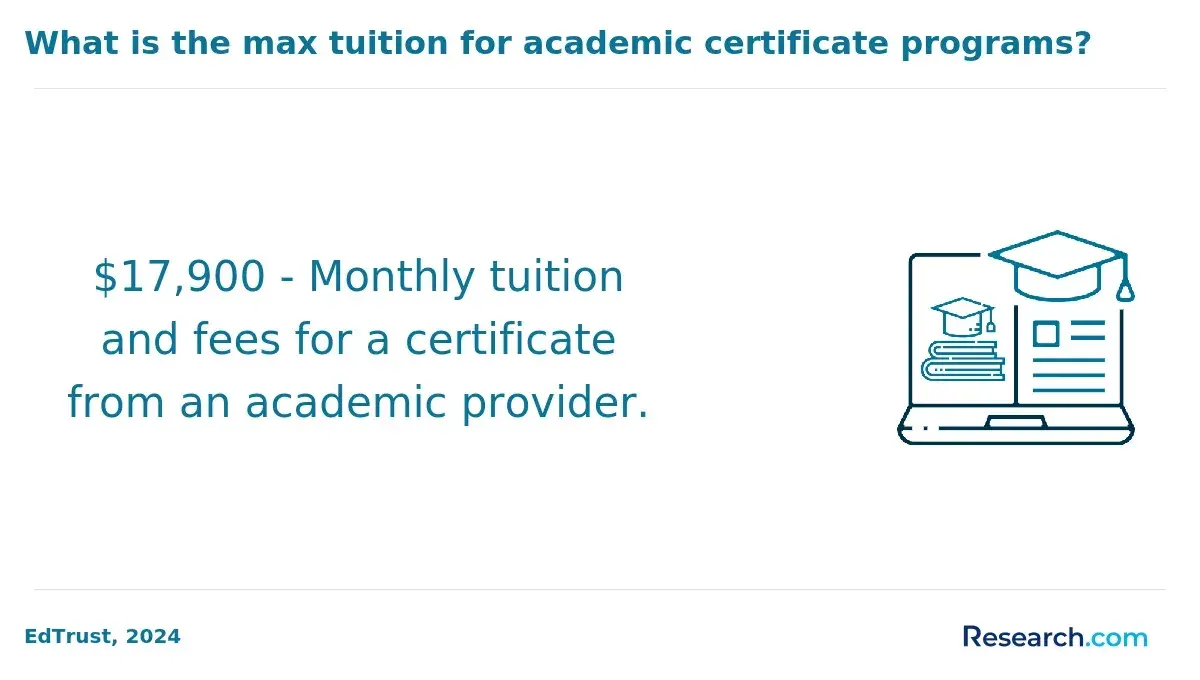
Cost depends on residency status, institution type, financial aid, housing, transfer credits, and whether the student studies online or on campus. College Board's 2024 data reported average published tuition and fees of $11,610 for in-state public four-year colleges and $30,780 for out-of-state public four-year colleges, before grants and scholarships. That gap makes residency and transfer planning especially important for students comparing public universities.
The table below summarizes major cost factors. It is designed to help you estimate the total cost of completion rather than comparing tuition alone.
| Cost factor | Why it matters | How to evaluate it |
| Tuition and mandatory fees | Usually the largest direct academic cost | Compare net price after grants, scholarships, and employer support, not just sticker price |
| Residency status | Public universities often charge different rates for in-state and out-of-state students | Confirm residency rules before assuming you qualify for in-state rates |
| Lab and course fees | Engineering courses may include equipment, lab, software, or materials costs | Ask the department for program-specific fees by year |
| Housing and transportation | Campus programs may add major living costs | Compare commuting, relocation, parking, and internship location costs |
| Time to degree | Extra semesters can increase tuition and delay full-time earnings | Review course sequencing, transfer acceptance, and graduation maps |
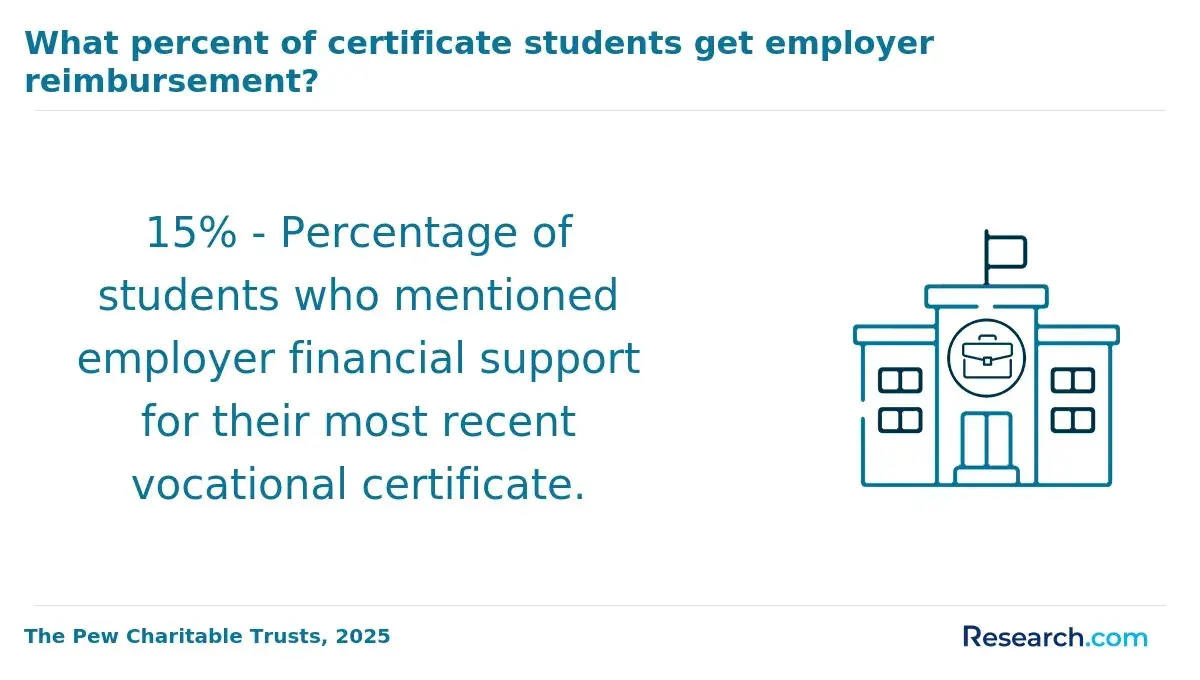
| Financial aid and military benefits | Grants, scholarships, GI Bill benefits, and employer tuition assistance can change affordability | Ask for a written aid estimate and renewal conditions |
Students with military-connected households should also look for schools with strong transfer-credit policies, flexible enrollment, and benefits advising. Guides to online degrees for military spouses can help families understand what flexibility and support services to look for before committing to a program.
To reduce cost, consider an in-state ABET-accredited public program, a carefully planned transfer pathway, paid co-ops, departmental scholarships, undergraduate research assistantships, or employer tuition support for graduate study. Avoid judging affordability only by annual tuition; a cheaper program that adds extra semesters or does not support licensure can become more expensive in the long run.
What careers can environmental engineering graduates pursue and in which industries?
Environmental engineering graduates can work in consulting, government, utilities, construction, manufacturing, energy, transportation, waste management, research, and sustainability-focused organizations. Their work often sits at the intersection of design, compliance, operations, and public impact.
The table below outlines common career directions. It can help you connect school features, such as electives and internships, to likely job settings.
| Career path | Typical responsibilities | Common employers |
| Environmental engineer | Design systems, prepare reports, evaluate environmental impacts, support permitting, and solve pollution-control problems | Engineering consulting firms, municipalities, utilities, state agencies, federal agencies |
| Water or wastewater engineer | Plan and design treatment plants, pump stations, distribution systems, and reuse projects | Utilities, public works departments, consulting firms, design-build contractors |
| Remediation engineer | Investigate contaminated sites, model contaminant movement, and design cleanup systems | Environmental consulting firms, construction firms, federal contractors, industrial companies |
| Air quality engineer | Assess emissions, design control systems, prepare compliance documents, and analyze monitoring data | Manufacturers, energy firms, regulatory agencies, environmental consultants |
| Environmental compliance specialist | Track permits, prepare reports, inspect operations, and coordinate regulatory requirements | Manufacturing plants, logistics companies, universities, hospitals, government agencies |
| Sustainability or resilience analyst | Analyze systems, support climate adaptation, evaluate infrastructure risk, and develop sustainability metrics | Consulting firms, cities, infrastructure owners, corporate sustainability teams |
Entry-level roles often involve sampling, calculations, CAD or GIS work, report writing, permit support, inspections, and assisting senior engineers. With experience, graduates may move into project management, technical specialization, regulatory leadership, client management, or licensed engineering roles.
The degree is most worth it for students who want technical work with infrastructure and environmental impact, not just general interest in sustainability. If your goal is environmental policy, conservation, education, or advocacy, another degree may be more direct. If your goal is engineering design, however, environmental engineering is usually the more aligned path.
What salary ranges and earning potential do environmental engineers have across the U.S.?
Environmental engineering salaries vary by region, employer, experience, licensure, industry, and graduate education. The U.S. Bureau of Labor Statistics reported a May 2024 median annual wage of $104,170 for environmental engineers. A median is not a starting salary or a promise; it is the midpoint across workers in the occupation, including experienced professionals.
The table below shows how to think about earning potential by career stage. It uses qualitative ranges rather than promising specific outcomes because pay depends heavily on local markets and employer type.
| Career stage | Typical salary drivers | What can improve earning potential |
| Entry level | Internship experience, technical software skills, location, industry, and FE exam progress | Co-ops, design projects, GIS or CAD skills, strong technical writing, and willingness to work in high-demand regions |
| Early career | Project responsibility, specialization, client-facing work, and regulatory knowledge | Passing the FE exam, building a portfolio of project work, and gaining experience in water, remediation, or compliance |
| Midcareer | Licensure, project management, technical authority, and industry niche | Earning the PE license where relevant, leading projects, and developing expertise in complex regulatory or design areas |
| Senior level | Business development, management scope, advanced specialization, and organizational leadership | Managing teams, winning clients, directing programs, or leading high-risk infrastructure and remediation projects |
Students should evaluate salary data as one part of return on investment. A lower-cost in-state program with strong employer connections may be financially stronger than a high-cost program with weak career support. At the same time, a more expensive program may be reasonable if it offers ABET accreditation, excellent labs, paid co-ops, strong placement in a target region, and clear support for licensure.
Do not assume that an environmental engineering degree automatically leads to the median wage. Outcomes are shaped by technical ability, internships, location, economic cycles, licensing progress, and whether the graduate enters engineering, compliance, data analysis, or a related environmental role.
What is the job outlook for environmental engineers and are licenses or certifications needed?
The job outlook for environmental engineers is favorable compared with many occupations, but students should still plan strategically. The BLS projects 7% employment growth for environmental engineers from 2023 to 2033, reflecting demand tied to infrastructure, water systems, environmental compliance, remediation, and climate-related resilience work. This projection describes the occupation nationally; local hiring can differ by state budgets, utility investment, construction activity, and environmental enforcement priorities.
Licensure is not always required for every entry-level role, but it can be important for engineers who want to sign and seal engineering documents, lead public projects, or advance in consulting and infrastructure work. The typical pathway includes graduating from an accredited engineering program, passing the Fundamentals of Engineering exam, gaining qualifying work experience under licensed engineers, and passing the Principles and Practice of Engineering exam. State boards set the final rules.
Students should also understand how credentials fit into the career path. The following options are common, but their value depends on the role you want.
- Fundamentals of Engineering exam: Often the first step toward Engineer in Training status and later PE licensure.
- Professional Engineer license: Valuable or required for engineers responsible for public-facing design, consulting deliverables, and certain leadership roles.
- Hazardous materials, safety, or environmental compliance training: Useful for fieldwork, site remediation, industrial compliance, and environmental health and safety roles.
- GIS, data analytics, or software certificates: Helpful when roles involve mapping, modeling, monitoring data, or environmental information systems.
- Graduate certificates: Practical for working professionals who need focused skills in water resources, sustainability, remediation, or environmental management.
Short credentials can complement a degree, especially for students building skills before internships or professionals pivoting into environmental work. If you are comparing skill-based options outside a full degree, guides to easy certifications to get online can help you think through cost, time, and career relevance before enrolling.
The smartest career plan is to choose an accredited program, complete internships, pass the FE exam when eligible, build software and communication skills, and confirm state licensure rules early. The biggest mistake is waiting until senior year to learn that a program, course sequence, or experience record does not align with the jobs you want.
Other Things You Should Know About
Yes, it can be demanding because it combines calculus, chemistry, physics, fluid mechanics, biology, labs, and design projects. Students who like applied problem solving and stay consistent with prerequisites are usually better prepared for the workload.
If you want to become a licensed engineer or keep that option open, an ABET-accredited engineering program is usually the safest choice. Some employers may hire graduates from related programs, but licensure rules and employer expectations vary.
Some graduate programs and certificates are available online, but bachelor's programs are harder to deliver fully online because of labs, fieldwork, and design requirements. Always check accreditation, residency requirements, lab arrangements, and licensure compatibility.
It can be worth it if your goal is technical work in water, remediation, air quality, infrastructure, compliance, or resilience. The value is strongest when the program is accredited, affordable for your situation, connected to employers, and aligned with licensure or career goals.
References
- ABET Accreditation | AEES https://www.ecoeng.org/abet
- Environmental Engineer https://www.truity.com/career-profile/environmental-engineer
- Environmental Engineering ABET Accreditation https://unity.edu/distance-education/environmental-engineering-faq/environmental-engineering-abet-accreditation/
- Top 7 Online Environmental Engineering Degrees | NEWENGINEER https://newengineer.com/advice/top-7-online-environmental-engineering-degrees-1415753
- How to Become an Environmental Engineer - Steps & Time Required https://www.onlineengineeringprograms.com/faq/how-to-become-an-environmental-engineer
- Career Cornerstone Center: Careers in Science, Technology, Engineering, Math and Medicine https://www.careercornerstone.org/environmental/envengprep.htm
- Environmental Engineers: Salary, career path, job outlook, education and more - RaiseMe https://www.raise.me/careers/architecture-and-engineering/environmental-engineers/
- Enviromental Engineering in English (spec. Modern Engineering in Water Management) - Warsaw University of Life Sciences https://www.sggw.edu.pl/en/kierunki-sggw/enviromental-protection-in-english-spec-modern-engineering-in-water-management/
- Find Programs - ABET https://www.abet.org/accreditation/find-programs/
- Environmental Engineering: Bachelor, Associate & Online Degree Info https://learningpath.org/articles/Environmental_Engineering_Bachelor_Associate_Online_Degree_Info.html