2027 Social Work Boundaries with Former Clients: Why Context and Rules Matter
Audited and Verified:
Our Editorial and Data Verification Process
Research.com uses government datasets, official education statistics and primary institutional information to support its career and degree guides. Our review process checks factual accuracy, occupational definitions, source dates and the requirements associated with the credentials discussed.
How This Article Was Fact-Checked
Our editorial team verifies salary estimates, employment projections, education requirements and program information against original data providers and official organizations. Salary figures are checked against the relevant occupational definitions and reporting periods. Information about licensure, accreditation and required in-person training is reviewed separately.
Fact-checked and verified on:

Co-Founder and Chief Data Scientist
Ending services does not erase the trust, private knowledge, or power differences created during a social work relationship. A former client may later become a neighbor, send a friend request, or suggest a date - and the right response depends on more than how long ago the case closed.
This guide is for social workers, supervisors, and students making those decisions. It explains the ethical baseline, where state rules may be stricter, and how to respond without assuming that every contact is either forbidden or harmless.
Key Things You Should Know
- Former-client contact requires a context-specific assessment; case closure and client consent do not, by themselves, eliminate exploitation or confidentiality risks.
- The NASW Code warns against harmful dual relationships with former clients and says social workers should not have sexual contact with them; it establishes no universal waiting period that makes such contact safe.
- Check three separate sources before acting: the applicable professional ethics code, current state law or licensing rules, and employer or placement policy.
What are professional boundaries with former social work clients?
Professional boundaries are limits that keep a worker's personal interests from interfering with a client's welfare, privacy, or freedom to choose. A former client is someone whose professional service relationship has ended; an administrative case closure alone may not resolve whether that relationship has truly ended, especially if services or decisions remain pending.
After termination, boundaries can still matter because the worker knows sensitive history, may be seen as an authority figure, or may influence access to services. An ordinary encounter is different from seeking a personal relationship. For students comparing social work degree options and program formats, the relevant educational question is whether the program provides opportunities to practice making these distinctions - not simply whether it offers an ethics course.
Can social workers be friends with former clients?
There is no blanket answer for every friendship, but a former client's invitation does not make a friendship ethically sound. The NASW Code cautions against dual or multiple relationships with former clients when they risk exploitation or harm. A worker should consider the prior service, the client's vulnerability, any continuing dependence, and whether the worker could benefit from information or influence gained professionally.
A brief, courteous exchange at a community event may be manageable. Regular private socializing with someone recently discharged from intensive services presents a different risk. If friendship would blur roles or make future referrals uncomfortable, decline kindly without discussing the person's service history. Students exploring flexible online graduate social work study should expect to examine such judgment calls through supervision or skills work; flexible coursework does not remove their complexity.
Can social workers date or have sexual relationships with former clients?
The NASW Code says social workers should not engage in sexual activities or sexual contact with former clients because of the potential for harm. It places the burden of demonstrating that a former client was not exploited, coerced, or manipulated on a social worker who acts contrary to that prohibition or claims an exception. That is not a recommended pathway or a guarantee that conduct is lawful.
There is no NASW-wide number of months or years after which dating automatically becomes acceptable. State rules may impose their own prohibitions, waiting periods, or disciplinary standards. A former client's apparent enthusiasm does not erase the worker's prior authority or knowledge of intimate disclosures. If attraction arises, do not pursue it; seek confidential ethics and legal consultation before taking any step. Students comparing online clinical MSW programs should look for supervised discussion of these situations, not a simple time-based rule.
The NASW Code of Ethics is professional guidance, not a substitute for a state statute or licensing regulation. Its provisions on conflicts of interest and sexual relationships expressly address former clients. Its confidentiality principles also remain relevant after services end. Membership in NASW is not what gives a state board authority to investigate a licensed worker.
Before relying on a general rule, identify the worker's license and state, where the services occurred, and any applicable agency policy. Read the current board rules and statutory language: a state may define prohibited conduct or former-client status differently from the Code. An employer or field site may set tighter boundaries. For students understanding degree and licensing expectations for MSW study, this distinction is essential: graduation, ethical guidance, and permission to practice are separate matters.
Time can reduce some forms of dependence, but it cannot by itself undo a worker's knowledge of trauma, finances, family conflict, or legal concerns. The closer and more intensive the former relationship, the more carefully a later personal connection needs to be assessed. A worker who controlled a discharge decision, wrote a court report, or provided psychotherapy may retain influence that is not obvious in an ordinary social encounter.
Context matters, too. Consider whether services could resume, whether the person relies on the same agency, whether there is a substantial age or authority difference, and whether either party might feel unable to refuse. These are reasons to seek consultation, not a formula that produces automatic permission. Likewise, social work clinical experience counting and verification concerns supervised-practice eligibility; completing required hours does not change a former client's protections.
How do accredited social work programs teach boundaries in online and campus settings?
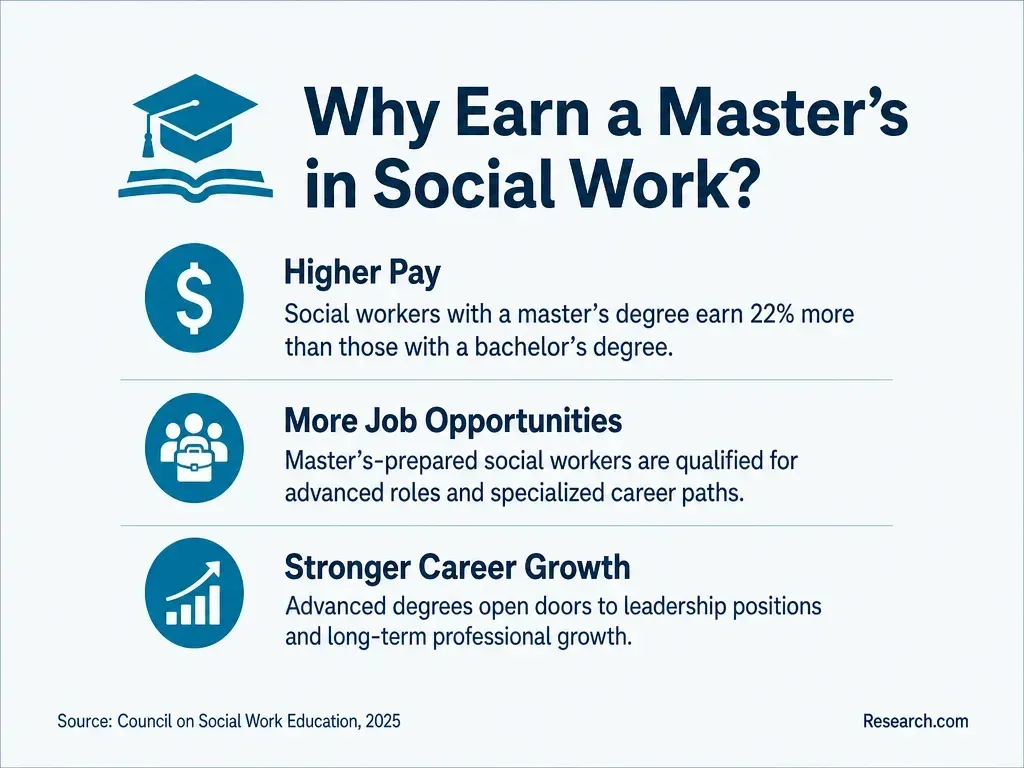
BSW and MSW programs can teach boundaries through ethics coursework, role-play, case discussion, field education, and feedback on actual professional conduct. What matters is whether students can apply principles under supervision: recognizing a power difference, protecting privacy, explaining a limit, and documenting consultation. Online delivery can support these exercises, but it does not replace required field learning or site-specific policies.
Prospective students can ask how a program assesses ethical decision-making, who supervises field situations, and how a student raises a concern safely. After graduation, employer training, consultation, and continuing education may be more direct responses to a boundary-learning gap than another degree. Even doctoral social work education on a budget is not a substitute for following current licensing rules and seeking competent supervision in practice.
Other Things You Should Know About Social Work
Assess its value, meaning, timing, and possible effect on the former client before accepting. Agency rules may prohibit it; consult a supervisor if the answer is unclear.
Do not disclose their service history or assume the prior relationship must be discussed publicly. Seek confidential guidance about any reporting line, access to records, or other conflict.
Possibly, if the agency can provide appropriate services and manage any intervening relationship or conflict. Follow intake, consent, and assignment procedures rather than arranging care privately.
Do not solicit one without checking ethics rules, workplace policy, and privacy requirements. A person's choice to post publicly does not authorize the worker to confirm their client status or reuse their story.
- OBN's Complaint & Investigation Process | Ohio Board of Nursing https://nursing.ohio.gov/complaints-and-regulations/obns-complaint-and-investigation-process
- Sec. 148E.220 MN Statutes https://www.revisor.mn.gov/statutes/cite/148E.220
- NYS Social Work: Social Work Licensure & Practice FAQs | nysed.gov https://www.op.nysed.gov/professions/licensed-master-social-worker/faq-licensure-practice
- 1.6 Confidentiality Of Information | North Carolina State Bar https://www.ncbar.gov/for-lawyers/ethics-and-governing-rules/rules-of-professional-conduct/10-119-client-lawyer-relationship/16-confidentiality-of-information/
- Boundary Crossings and Violations in Clinical Settings - PMC https://pmc.ncbi.nlm.nih.gov/articles/PMC3361837/
- Boundary Issues and Dual Relationships in the Human Services | jstor.org https://www.jstor.org/stable/10.7312/ream19402
- Social Work Boundary Issues in the Digital Age - IU Indianapolis https://journals.indianapolis.iu.edu/index.php/advancesinsocialwork/article/download/26358/25414/55806
- Social Media Guidelines - School of Social Work | Boise State Online https://www.boisestate.edu/socialwork/social-media-guidelines/
- 'Til Death Do Us Part: Does a Client Ever Stop Being a Client? - SocialWorker.com https://www.socialworker.com/feature-articles/ethics-articles/%27Til_Death_Do_Us_Part%3A_Does_a_Client_Ever_Stop_Being_a_Client%3F/
- Social Workers' Ethical Responsibilities to Clients https://www.socialworkers.org/About/Ethics/Code-of-Ethics/Code-of-Ethics-English/Social-Workers-Ethical-Responsibilities-to-Clients