2027 Social Work Vacancy Rates and Staff Turnover: Questions for Employer Interviews
Audited and Verified:
Our Editorial and Data Verification Process
Research.com uses government datasets, official education statistics and primary institutional information to support its career and degree guides. Our review process checks factual accuracy, occupational definitions, source dates and the requirements associated with the credentials discussed.
How This Article Was Fact-Checked
Our editorial team verifies salary estimates, employment projections, education requirements and program information against original data providers and official organizations. Salary figures are checked against the relevant occupational definitions and reporting periods. Information about licensure, accreditation and required in-person training is reviewed separately.
Fact-checked and verified on:

Co-Founder and Chief Data Scientist
A social work job can look promising until you learn how many positions are unfilled - and who carries the work while the agency hires. For BSW/MSW students, new graduates, and experienced social workers, vacancy and turnover figures are useful only when paired with questions about caseloads, supervision, pay, and why people leave.
This guide explains how to interpret an employer's numbers, what to ask in an interview, and how to distinguish a manageable transition from a staffing problem that could undermine your practice or well-being.
Key Things You Should Know
- Ask for the number of funded positions, current vacancies, and departures over the past 12 months for the team you would join; an organization-wide rate may hide local problems.
- Vacancy measures unfilled positions at a point in time; turnover measures departures over a period. A team with 4 unfilled positions out of 20 funded positions has a 20% vacancy rate.
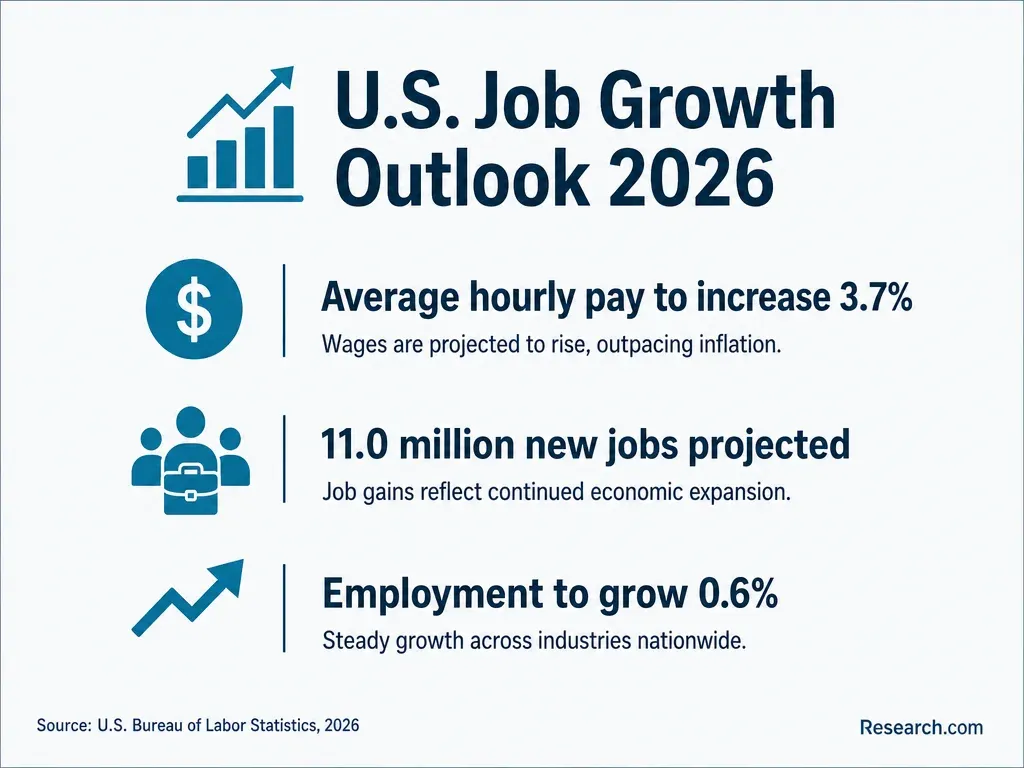
- Compare staffing figures with a written caseload plan, protected supervision time, and the full compensation package. National job growth does not establish whether a particular opening is sustainable.
What are social work vacancy rates and staff turnover rates?
A vacancy rate is the share of funded positions that are unfilled on a specified date: vacant funded positions divided by all funded positions. A turnover rate measures employees who leave during a specified period, commonly departures divided by average headcount over that period. Employers may calculate turnover differently, so ask for both the numerator and denominator.
For example, four open roles on a 20-position team produce a 20% point-in-time vacancy rate. If six employees left a team averaging 20 employees over the year, annual turnover would be 30%. The figures answer different questions: a team can have few openings today yet have repeatedly replaced staff during the year.
Clarify whether the count includes part-time equivalents, newly approved but never filled roles, temporary staff, internal transfers, and voluntary versus involuntary departures. A position reposted after several resignations is not necessarily several simultaneous vacancies. Nor does an advertised opening establish how quickly someone can qualify for it; applicants considering further education should assess online social work master's programs by duration against their actual entry qualifications and field schedules, not an employer's immediate hiring need.
How do social work vacancy and turnover rates vary by setting?
There is no single national vacancy rate that fairly describes every social work team. Funding, job classifications, local hiring competition, and service demands differ by setting. Compare openings with similar roles in the same area, then ask what each employer expects staff to do while positions remain open.
The table shows why identical vacancy rates can create different working conditions.
| Setting | Staffing context to examine | What an open position may shift to coworkers |
| Child welfare or public benefits | Public budgets, hiring approvals, geographic coverage, and mandated work | Investigations, visits, deadlines, or eligibility-related tasks |
| Hospital or healthcare | Patient volume, discharge processes, and interdisciplinary coverage | Discharge planning, family meetings, or care coordination |
| Behavioral health | Qualified clinical staffing, supervision, and service schedules | Intakes, ongoing appointments, crisis coverage, or documentation |
| Schools or community nonprofits | Academic calendars, contracts, grants, and referral networks | Student support, outreach, groups, or partner coordination |
For public-sector applicants, a slow hiring process may reflect a civil-service classification or budget approval rather than unusually frequent resignations. Ask how long positions have been funded and vacant before drawing conclusions. Experienced social workers considering management should likewise test whether they will have authority and resources to improve staffing; exploring affordable online DSW education is a separate decision, not a substitute for an agency's hiring budget or workable staffing model.
What questions should social workers ask employers about vacancies and turnover?
Ask the hiring manager for team-level figures and concrete operating practices. These questions invite specific answers without asking anyone to disclose a former employee's private circumstances.
- "How many funded positions are on this team, how many are vacant now, and how long have the openings been unfilled?"
- "How many people left this team in the past 12 months, and how many departures were transfers, planned departures, or resignations?"
- "Is this a replacement or a newly funded role? What changes would I see if current vacancies remain open for another three months?"
- "What is the usual active caseload for this role, what is the current range across the team, and who assigns new cases?"
- "How are urgent work, leave coverage, documentation time, and supervision protected when staffing is short?"
- "What changed in response to staff feedback about retention, and how will you know whether it worked?"
Request the same definitions from each employer and note the date of each figure. If you are interviewing for a placement rather than a paid job, ask the school and agency who approves learning tasks and provides field instruction; placement selection is not the same as hiring. Applicants who discover that their target jobs require an MSW can separately review MSW programs that do not require recommendation letters, but an easier application does not resolve a prospective employer's staffing concerns.
An unfilled position can redistribute cases, but caseload count is not the same as workload. Ten cases involving frequent crises, travel, court deadlines, or complex coordination can demand more time than a larger, stable caseload. Documentation, meetings, on-call duties, and coverage for colleagues also matter.
Ask for the expected caseload and the current range, then ask what happens when work exceeds capacity. A useful answer identifies who prioritizes tasks, what can be deferred, when a supervisor intervenes, and whether temporary coverage or hiring support is available. For new graduates, a lower initial caseload and a defined ramp-up period may be more meaningful than an organization-wide average.
MSW students should not assume a short-staffed placement will provide more useful learning simply because it offers more tasks. Approved field activities still need qualified instruction and school oversight. When comparing programs, comparing MSW practicum placement assistance can help you ask how a school evaluates sites when agencies face staffing pressure.
Support should be visible in the schedule, not just listed as a benefit. Ask who supervises the role, how often individual consultation occurs, what happens when that person is absent, and how staff obtain timely guidance for urgent decisions. New social workers also need orientation to documentation, safety procedures, referral networks, and the boundaries of their role.
Burnout prevention involves manageable assignments, usable leave, coverage during absences, a way to report unsafe conditions, and follow-through on staff feedback. Wellness resources can help, but they cannot compensate for a persistently unmanageable workload. Ask to speak with a prospective teammate about how these practices work in an ordinary week.
If the position is intended to support clinical licensure, confirm the supervisor's qualifications, the supervision arrangement, documentation, and whether the work meets the applicable state board's rules. Employer mentoring, MSW field instruction, and post-degree clinical supervision are distinct. Review social work clinical hour requirements before relying on an offer's promise of "supervision."
How can students compare accredited online and campus social work programs?
Students anticipating work in hard-to-staff agencies should compare programs by the preparation and support they actually provide - not by delivery label alone. Verify the specific BSW or MSW program's CSWE accreditation status and the requirements applicable to your cohort. Then compare field-placement responsibilities, qualified instruction, skills practice, scheduling, total cost, and support when a placement becomes unsuitable.
Online coursework does not remove required field education or guarantee evening placements. Ask each program where students can complete placements, who approves sites, what happens if an agency loses a field instructor, and whether employment-based placements are permitted under its rules. Campus students should ask the same questions; proximity to an agency does not guarantee a placement.
Finally, compare tuition and fees with travel, placement-related expenses, and paid work you may have to reduce. If earnings during study are essential, investigate planning paid university work alongside MSW study, but confirm availability, eligibility, hours, and whether the schedule fits field education. The strongest choice is the program whose verified qualification, placement plan, and total workload fit your intended job - not the one that merely advertises flexibility.
Other Things You Should Know About Social Work
They may suggest questions to investigate, but reviews are self-selected and may describe a different team or period. Look for recurring, specific concerns and ask the employer for current team-level information.
Ask about the role and aggregate departure patterns instead. An employer may be unable to share an individual's reasons, and respecting that privacy is appropriate.
Ask for simpler facts: current openings, team size, how long the role has been vacant, and how coverage works. Note what remains unknown rather than treating a refusal alone as proof of a problem.
Get material terms such as pay, schedule, on-call expectations, benefits, and any promised licensure supervision documented. Caseloads can change, so also ask for the written assignment and escalation policies that govern them.
- What are the vacancy trends in the public sector? | Office for National Statistics https://www.ons.gov.uk/economy/governmentpublicsectorandtaxes/publicspending/articles/whatarethevacancytrendsinthepublicsector/2019-08-06
- Section 3: Terms and definitions | Government of Canada, Statistics Canada https://www150.statcan.gc.ca/n1/pub/72-210-g/2013001/part-partie3-eng.htm
- Workforce Issues in Corrections - National Institute of Justice https://nij.ojp.gov/topics/articles/workforce-issues-corrections
- Varying Estimates of Social Workers in the United States - PMC https://pmc.ncbi.nlm.nih.gov/articles/PMC11389054/
- Five Ways High Caseloads Hinder Social Work | Walden University https://www.waldenu.edu/online-masters-programs/master-of-social-work/resource/five-ways-high-caseloads-hinder-social-work
- Exploring Organizational Responses to Clinician Turnover | ScholarWorks https://scholarworks.waldenu.edu/cgi/viewcontent.cgi
- Employee Turnover: What It Is And How You Prevent It | netsuite.com https://www.netsuite.com/portal/resource/articles/human-resources/employee-turnover.shtml
- Voluntary vs. Involuntary Turnover: Key Differences | workinstitute.com https://workinstitute.com/blog/voluntary-vs-involuntary-turnover/
- How To Embrace a Job Seeker's Market in Social Work | SocialWorker.com https://www.socialworker.com/feature-articles/career-jobs/embrace-job-seekers-market-social-work/
- Here's How I Calculate Employee Turnover Rate in 3 Steps | HR University https://hr.university/analytics/how-to-calculate-employee-turnover-rate/