2027 Resource Navigation in Social Work: Helping People Understand Services and Access Routes
Audited and Verified:
Our Editorial and Data Verification Process
Research.com uses government datasets, official education statistics and primary institutional information to support its career and degree guides. Our review process checks factual accuracy, occupational definitions, source dates and the requirements associated with the credentials discussed.
How This Article Was Fact-Checked
Our editorial team verifies salary estimates, employment projections, education requirements and program information against original data providers and official organizations. Salary figures are checked against the relevant occupational definitions and reporting periods. Information about licensure, accreditation and required in-person training is reviewed separately.
Fact-checked and verified on:

Co-Founder and Chief Data Scientist
Finding a service is not the same as being able to use it. A person may need help understanding eligibility, completing an application, arranging transportation, or connecting with an agency that has capacity. Resource navigation addresses those gaps.
This guide is for prospective social workers, students, and human services professionals who want to understand the work and decide whether a social work degree fits their goals. It explains the navigation process, the qualifications different jobs may require, and the practical factors to check before choosing a program or position.
Key Things You Should Know
- Resource navigation goes beyond handing someone a referral: it includes identifying priorities, checking access requirements, making connections with consent, and following up on barriers.
- Many navigator and case-management jobs do not require a social work license; protected social work titles, clinical duties, and some employer roles have different requirements.
- For a degree route, compare the actual job requirements with field-placement access, total cost, and state licensing rules, not just a program's online format or advertised length.
What is resource navigation in social work?
Resource navigation is the process of helping a person understand available supports and move through the steps needed to access them. Resources may include food assistance, housing services, transportation, healthcare, disability supports, or benefits.
The work draws on a social work perspective: a person's options depend not only on individual needs but also on eligibility rules, service capacity, language access, geography, and other conditions.
Navigation overlaps with case management and service coordination, but the job titles are not interchangeable. A navigator may concentrate on finding and connecting people with resources; a case manager may also maintain a broader service plan over time.
Duties depend on the agency. The social work master's skills across career settings can inform this work, but an MSW is not required for every position that involves referrals.
How do social workers help people find and access services?
Effective navigation starts with the person's priorities rather than a directory search. The steps below distinguish a usable connection from a referral that ends when a phone number is handed over.
- Clarify the goal: Ask what the person wants help with now, what they have already tried, and which barriers make a service difficult to use.
- Check the route: Confirm eligibility, documents, cost, location, hours, accessibility, and whether the provider is accepting referrals.
- Agree on the next step: Explain options and, with appropriate consent, help make an appointment, complete an application, or arrange a warm handoff.
- Follow up: Ask whether the connection worked, document relevant actions under agency policy, and revise the plan if the service was unavailable or unsuitable.
A warm handoff might mean contacting a receiving agency together; it does not justify sharing more personal information than authorized or necessary. Navigators also need to know when a concern exceeds their role and calls for a supervisor, a qualified clinician, or an agency safety procedure.
If a position includes clinical services, its work must be evaluated separately against social work clinical hour requirements; navigation work does not automatically count toward clinical licensure.
What degree do you need for social work resource navigation?
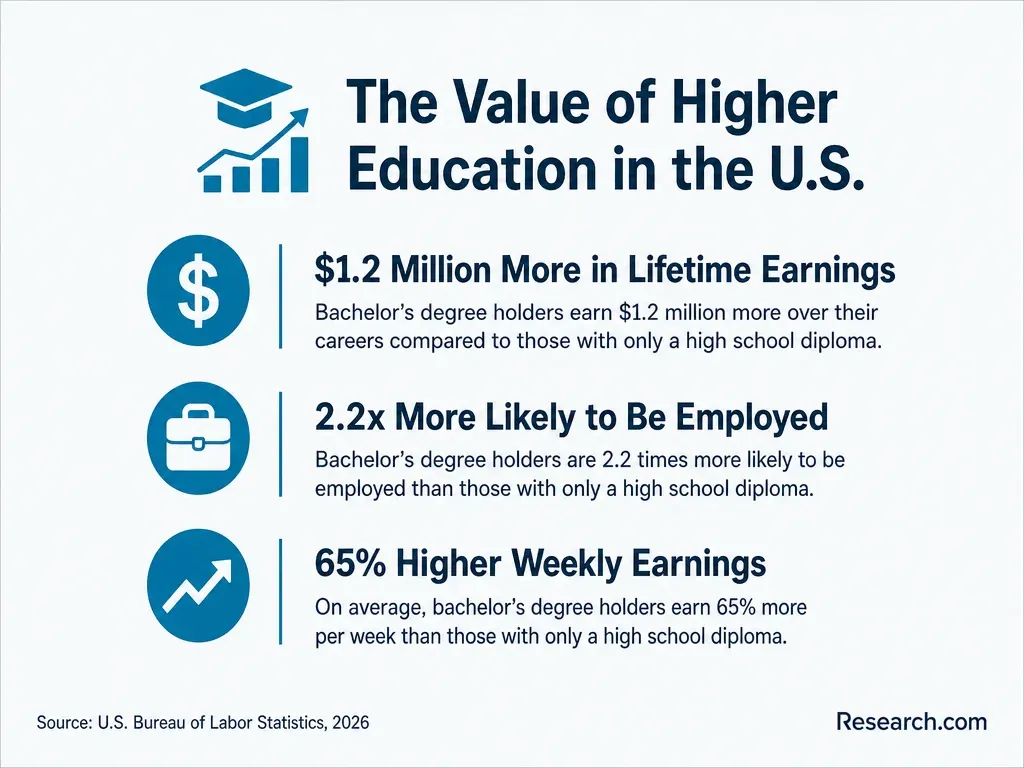
There is no single degree required for all resource navigation jobs. Some community outreach and service-coordination employers accept relevant experience or a human services degree. Others require a BSW or MSW, particularly when the job combines navigation with social work assessment, hospital discharge planning, or duties reserved for licensed staff. Check the position description and applicable state rules before investing in a degree.
A BSW provides generalist social work preparation and supervised field education. A traditional or foundation MSW accepts eligible graduates from other disciplines and adds graduate-level social work study; an advanced-standing MSW is a separate route for applicants with a qualifying social work degree under the program's rules.
If you are changing careers, your experience in community services, healthcare, education, or advocacy may help you compete for a navigator role without making you eligible for advanced standing. When an MSW is necessary, comparing online MSW entry requirements can help you identify programs that consider your background.
A DSW or PhD is generally unnecessary for direct resource navigation. Before enrolling anywhere, compare local vacancies: if they ask for outreach experience, benefits training, and strong documentation rather than a social work credential, targeted training and supervised job experience may be the more direct route.
For a prospective BSW or MSW student, verify the program's Council on Social Work Education (CSWE) accreditation status and how it applies to the intended program and cohort. Also check the institution's accreditation. These are distinct from state licensing-board requirements, which determine eligibility for particular social work licenses and permitted practice.
Licensing rules matter most when a navigator job requires a social work license, uses a protected professional title, or includes regulated clinical duties. Requirements and license categories vary by state. Graduation does not itself issue a license, and an MSW alone does not authorize independent psychotherapy.
Before choosing a program for a licensed role, use comparing graduate social work programs for licensure planning alongside the intended state board's current rules. Ask the employer which credential it actually requires; a job title containing "navigator" does not answer that question.
BSW and MSW coursework may be available online, on campus, or in hybrid formats. Online study does not remove supervised field education, and a program may require live classes, skills practice, campus visits, or placements during ordinary agency hours. The decisive question is whether you can complete the whole program, not only watch its lectures, within your work, caregiving, and travel constraints.
Ask where placements can occur, who secures them, whether your workplace could be an approved site, and what happens if a site becomes unavailable. If speed is a priority, exploring shorter online MSW degree options is useful only after checking admissions eligibility, course intensity, live-session schedules, and field sequencing. A shorter advertised timeline may require a workload that is impractical alongside full-time employment.
Requirements vary by school and entry route. A BSW applicant may first enter the institution and later apply to the social work major. A traditional MSW generally requires a bachelor's degree, not necessarily in social work.
An advanced-standing MSW typically requires a qualifying BSW and may impose additional grade or recency conditions. Programs may also request transcripts, a statement of purpose, references, relevant experience, or particular prerequisite courses.
For a navigation-focused applicant, the most useful admissions question is whether the program will support field learning in a relevant setting, not merely whether admission appears attainable.
Request written clarification about prerequisites, the applicable MSW route, and placement eligibility before paying an application fee. A social work master's application reference guide can help you prepare materials, but the individual program's published requirements control.
What are the salary and job outlook for social workers in navigation roles?
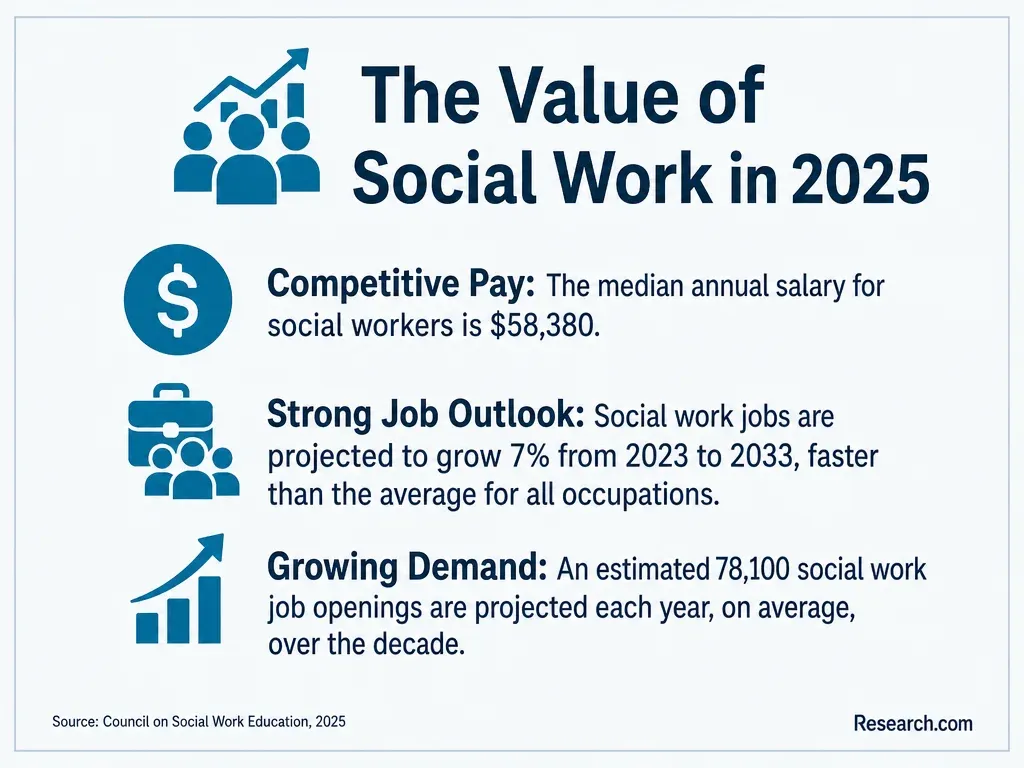
The U.S. Bureau of Labor Statistics (BLS) does not report a single wage for "resource navigator." Its social worker occupation figures offer context when a position is classified as social work, not a salary promise for every navigator or MSW graduate.
The following U.S. medians refer to May 2025; projected growth covers 2025-2035.
| Social work occupation | Median annual pay | Projected employment growth |
| Social workers, all specialties | $61,780 | 6% |
| Child, family, and school social workers | $59,550 | 4% |
| Healthcare social workers | $67,880 | 8% |
| Mental health and substance abuse social workers | $60,280 | 10% |
These categories describe occupations, not navigation specialties or state license levels. A nonlicensed outreach position may fall outside them. For a realistic pay decision, compare local postings with the same duties and credentials, then use state-level salary context for MSW careers to understand geographic variation. Weigh the likely pay against the degree's full cost and whether that degree is required for the work you want.
Other Things You Should Know About Social Work Programs
211 can be a useful starting point for finding local services. A navigator may add value when someone needs help comparing options, completing steps, coordinating agencies, or resolving an unsuccessful connection. Availability and services vary by area.
Clarify the stated reason, check for missing information or an available review process, and discuss other options with the person. Follow agency policy; do not promise eligibility or give legal advice outside your role.
Referral counts alone are limited. With appropriate privacy safeguards, an agency can also examine whether people reached services, what barriers remained, and whether users found the process understandable and respectful.
Confirm availability with the provider before relying on the listing, identify another route when possible, and report the outdated entry through the directory's update process. A listing is not a guarantee of access.
- Disability Inclusion Strategies | cdc.gov https://www.cdc.gov/disability-inclusion/strategies/index.html
- Social Determinants of Health - Healthy People 2030 https://odphp.health.gov/healthypeople/priority-areas/social-determinants-health
- Addressing Social Needs in Health Care Settings - PMC - NIH https://pmc.ncbi.nlm.nih.gov/articles/PMC8240195/
- Case Management - StatPearls - NCBI Bookshelf https://www.ncbi.nlm.nih.gov/books/NBK562214/
- Summary of the HIPAA Privacy Rule | hhs.gov https://www.hhs.gov/hipaa/for-professionals/privacy/laws-regulations/index.html
- 6: Confidentiality | United States Department of Justice https://www.justice.gov/elderjustice/mdt-guide-toolkit/6-confidentiality
- NASW Standards for Social Work Case Management | nycourts.gov https://www.nycourts.gov/reporter/webdocs/nasw_standards_socialwork_casemgt.htm
- Exploring the roles, functions, and background of patient navigators and case managers: A scoping review - ScienceDirect https://www.sciencedirect.com/science/article/abs/pii/S0020748919301488
- Community Navigation as a Field of Practice | gvsu.edu https://scholarworks.gvsu.edu/cgi/viewcontent.cgi
- Implementing Inter-Agency Referral Technologies | Network for Nonprofit and Social Impact https://nnsi.northwestern.edu/implementing-inter-agency-referral-technologies/