Most Affordable Trade School & Training Programs - Leading Certification Courses in Panama City for 2026

Co-Founder and Chief Data Scientist
Choosing the right trade school in Panama City can feel overwhelming, but this article is here to help. We've teamed up with data scientists from Research.com to create a comprehensive trade school programs ranking for 2026, giving you clear insights into the best options available.
Reading this guide will help you discover affordable schools that offer valuable certifications and diplomas, opening doors to new career opportunities. Whether you're starting fresh or enhancing your skills, a trade school education is a smart step toward a brighter future.
Let's explore the possibilities together and find the program that fits you best.
Key benefits of finishing trade school programs trade school in Panama City
- Trade school graduates in Panama City can earn competitive salaries, with electricians making between $37,000 and $51,000 annually, warehouse specialists earning from $52,900 to $108,000, and skilled technicians like sprinkler installers earning hourly wages from $16.50 to $22.00.
- Popular career paths include electricians, construction sprinkler technicians, warehouse operations specialists, and plumbers, offering diverse opportunities to match different skills and interests.
- Getting a trade school diploma or certification online offers flexibility, allowing students to balance work and family while gaining practical skills, making education more accessible and convenient compared to traditional on-campus programs.
- Most Affordable Trade School & Training Programs - Leading Certification Courses in Panama City for 2026
- What can I expect from trade school programs trade schools in Panama City?
- Where can I work after finishing trade school programs trade schools in Panama City?
What can I expect from trade school programs trade schools in Panama City?
Trade school programs in Panama City typically cost between $3,000 and $15,000, depending on the length and specialization of the course. Graduates from popular schools, such as Tom P. Haney Technical College, often report that the investment feels worthwhile due to the strong focus on practical skills and rapid job placement. For many students, fees include access to hands-on training with industry-standard equipment and opportunities to earn nationally recognized certifications, which employers highly value.
Financial aid options like scholarships and grants are commonly available, making these programs more affordable for a wide range of students. Enrollment periods throughout the year provide flexibility, which helps students manage both their education and personal schedules effectively.
Graduates emphasize the positive impact of ongoing career support offered by local trade schools, including assistance with resume building and interview preparation. This practical approach cultivates confidence and readiness to enter high-demand fields quickly, reflecting the community-focused nature of trade education in Panama City.
Where can I work after finishing trade school programs trade schools in Panama City?
After finishing a trade school program in Panama City, graduates commonly find rewarding career opportunities in various technical fields. Many secure positions as HVAC technicians, commercial electricians, maintenance technicians, or linepersons, reflecting the region's demand fueled by ongoing construction and service industries. For example, a recent graduate from a local welding program quickly found steady work at a manufacturing plant, enjoying the satisfaction of hands-on problem solving and financial independence.
Other graduates find meaningful roles in automotive repair shops, hospitals, or electrical contracting firms, where their specialized training directly contributes to operational success. Career Services Gulf Coast and Haney Technical Center's career counseling have been instrumental in helping graduates navigate job searches through resume support and employer connections.
This practical approach leads many to start jobs offering competitive salaries between $45,000 and $70,000, often without the need for a four-year degree. The strong network of construction firms, utilities, and service companies in Panama City ensures trade school graduates can build stable, fulfilling careers quickly.
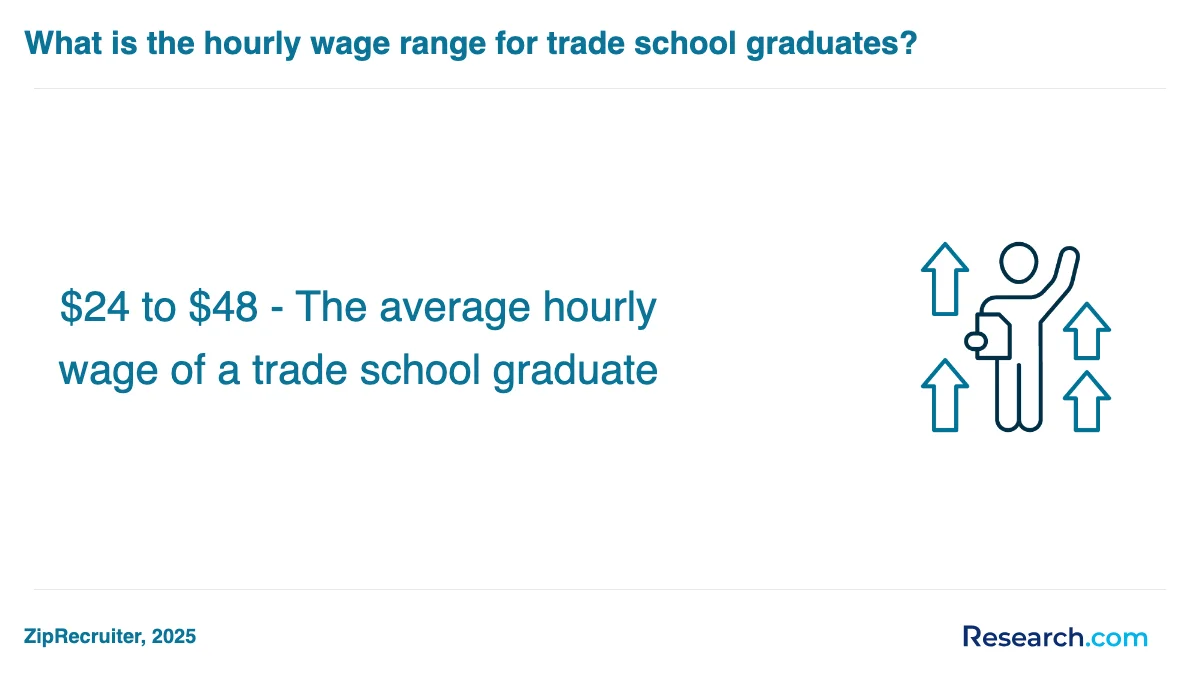
After finishing a trade school program in Panama City, graduates typically see a strong return on their investment, with average annual salaries around $50,180, or about $24.12 per hour. Those entering entry-level roles like plumbing apprentices or construction sprinkler technicians often start with hourly wages between $16.50 and $22.00, translating to yearly incomes of roughly $34,320 to $45,760. Many graduates from well-known Panama City trade schools report feeling encouraged by the steady wage growth as they gain experience and earn certifications.
More specialized positions, such as Technical Training Instructors, can command salaries near $69,500 annually, making advanced careers a motivating goal for many students. Graduates who transition into teaching roles, including science teachers in the area, earn about $63,929 per year, benefiting from rewarding careers that combine technical skills and education. With salaries ranging broadly from $37,700 to $60,900 for most graduates, and top earners making up to $74,729, trade schools in Panama City provide viable pathways to financial stability and professional satisfaction.
- Trade schools in Panama City offer over 21 career and technical education programs in fields like health science, manufacturing, IT, and marine services.
- Admission is generally straightforward, with some schools like Tom P. Haney Technical College not requiring transcripts for entry.
- Program lengths range from six months to just over two years and include opportunities to earn nationally recognized industry certifications.
- Tuition costs typically range from $2,500 to $7,000 for the whole program, with additional expenses for books and certification exams.
- Graduates see strong job placement rates, with an average exceeding 87%, and starting salaries often between $30,000 and $45,000 per year.
Trade school programs in Panama City typically take between six months and just over two years to complete, depending on the field and program structure. Graduates from Tom P. Haney Technical College often share how shorter certificate programs last about six months, allowing them to quickly enter the workforce with valuable skills. More advanced technical diplomas at the same school usually require just over two years, reflecting the in-depth training needed for those careers.
Many students find that full-time enrollment accelerates their progress, completing programs in under a year, which is especially common in fields like carpentry. For instance, carpentry courses demand roughly 1,200 hours, translating to about one year of focused study. Other trades, such as automotive repair and welding, usually last between 36 and 45 weeks, fitting neatly within an academic year.
Part-time options add flexibility but can extend completion to two years or more. This suits students balancing work or family commitments, who appreciate the ability to advance at their own pace. Most graduates express satisfaction with this balance, highlighting their confidence in career readiness upon completion.
The primary difference between online and on-campus trade school programs in Panama City centers on how students experience learning and skill development. At Tom P. Haney Technical College, on-campus students benefit from hands-on training in well-equipped labs, gaining real-world experience essential for careers in automotive technology or welding. Graduates often share how working directly with instructors and equipment boosted their confidence and job readiness, contributing to Haney's impressive job placement rate of over 87%.
Online programs, however, offer flexibility for students balancing work or family commitments. Courses such as medical billing or business administration can be completed remotely, allowing students in Panama City to study at their own pace. While many appreciate this convenience, graduates note that online formats may limit opportunities for immediate practical application. Some trade schools address this with hybrid models, combining online coursework and on-site labs to ensure students still gain hands-on experience without foregoing flexibility.
The average trade school tuition in Panama City varies widely depending on the type of institution and program chosen. For example, Haney Technical Center charges about $2.92 per clock hour for in-state residents, making a typical 1,200-hour program cost approximately $3,504 in tuition and fees. Additional semester fees of around $45 and potential lab or testing fees may also apply. Graduates from Haney often express satisfaction with the affordability compared to other local options.
At Gulf Coast State College, students pay $98.75 per credit hour. A standard 30-credit program would total roughly $2,962.50 for tuition and required fees. Many students appreciate the clear pricing structure, which helps them manage their education budget effectively. When evaluating the Panama City trade school total cost, these examples show that local tuition rates align well with national averages for public trade schools.
Program-specific costs can differ significantly. Automotive technology programs typically range from $5,000 to $12,000, and welding courses can reach $15,000 depending on specialization. Medical assisting programs range from $2,000 to $20,000, influencing the total expenses students should be prepared for. Those seeking alternative options might explore affordable online trade schools with landscaping technology classes, which offer additional flexibility and cost-effectiveness for Panama City residents.

Trade school students in Panama City have access to various financial aid options that make education more affordable and accessible. Completing the Free Application for Federal Student Aid (FAFSA) is crucial; it determines eligibility for federal grants like the Pell Grant, which many graduates from local trade schools have depended on to avoid student debt. These grants are awarded based on financial need and do not require repayment, offering real relief to families managing tight budgets.
Florida residents enrolled at least half-time in technical programs often benefit from the Florida Student Assistance Grant-Career Education (FSAG-CE). Students attending popular Panama City vocational institutions have shared how early application to FSAG-CE helped them secure funding quickly before slots filled up, easing their focus on studies.
The Open Door Grant Program also provides comprehensive coverage for tuition, fees, books, and materials in high-demand trade programs offered at local career centers and Florida College System schools. Many students express gratitude for this support, describing it as a vital lifeline that enabled timely completion of their certification.
Beyond federal and state aid, institutional scholarships based on merit or program criteria are common at Panama City's trade schools. Veterans and their families benefit from military education benefits like the GI Bill, which several recent graduates credit with significantly lowering their education expenses.
To enroll in a trade school program in Panama City, applicants typically must be at least 16 years old and provide a high school diploma or GED. However, some schools offer flexibility by accepting students without these credentials, especially for GED preparation or adult education tracks, making technical training accessible to many.
Common prerequisites include:
- Proof of residency for in-state tuition eligibility
- Submission of a valid government-issued photo ID (excluding military)
- Official transcripts from high school, GED, or prior institutions
- Payment of all tuition and related fees before admission
Academic requirements may be more rigorous in specialized programs like Emergency Medical Technician or Firefighting, requiring background checks, drug screening, and sometimes a combination of admission points and a lottery system due to high demand.
At popular schools such as Tom P. Haney Technical College, students often share that passing the basic skills test in math and reading is a milestone that boosts confidence and readiness. Younger students frequently appreciate the clear guidance on immunization requirements and health protocols for specific programs.
This practical approach allows graduates to feel prepared and supported as they advance toward their career goals in Panama City's trade schools.

Trade school programs in Panama City typically include a variety of hands-on courses designed to prepare students for skilled careers quickly and effectively. At Tom P. Haney Technical College, the most notable institution in the region, students gain both theoretical knowledge and practical skills in high-demand fields.
Popular courses include:
- Automotive service technology, where graduates confidently troubleshoot and repair vehicles.
- Welding technology, featuring training in metal cutting, fabrication, and blueprint reading.
- HVAC/R programs, teaching installation and maintenance of heating and cooling systems, with certification preparation.
- Electrical and plumbing courses that cover residential and commercial systems along with specialized terminology and practical math.
- Healthcare-related fields such as practical nursing and medical administrative specialist, offering instruction in patient care, pharmacology, and medical office management.
Graduates often highlight the immediate applicability of their training and the strong support for job placement, making these programs an empowering and efficient path to employment in Panama City's thriving technical and healthcare sectors.
Trade school programs in Panama City offer a wide range of specializations tailored to meet local employment needs and student interests. Graduates from popular institutions like Tom P. Haney Technical College and Florida Panhandle Technical College often highlight how programs blend practical training with industry certifications, making their transition to the workforce smooth and confident.
Common specializations include:
- Health science: Preparing students for roles such as Medical Administrative Specialist or Medical Assistant, with hands-on clinical and administrative training that employers nationwide recognize.
- Skilled trades: Focused programs in HVAC (Heating, Ventilation, Air Conditioning/Refrigeration), plumbing, welding, and maintenance technology provide both theory and practical lab experience, often culminating in certifications like HVAC Excellence or NATE.
- Information technology and manufacturing: Training in IT support, networking, and modern manufacturing methods to meet growing technical workforce demands.
Other specializations offered include architecture and construction, arts and communication, human services, law and public safety, transportation and logistics, and marketing. With many programs lasting six months to two years, students enjoy high job placement rates-averaging over 87% at Tom P. Haney Technical College-reflecting their effectiveness. For those weighing options, understanding trade school vs university pathways can clarify the focus on fast, job-ready skills in Panama City's technical colleges.
Choosing from the best trade school programs in Panama City involves focusing on practical career outcomes and local employer needs. Graduates of Tom P. Haney Technical College frequently praise its hands-on training and industry-recognized certifications, which have made their transition to employment smoother and more confident. The college's high job placement rate reflects strong ties to area businesses, reassuring students that their investment leads to tangible career opportunities.
Flexibility in program length, ranging from six months to over two years, allows students to balance work or family commitments while advancing skills. Many accredited vocational schools Panama City Florida rely on emphasize this adaptability along with solid financial aid options, making education more accessible.
Researching programs that align with your goals and offer support services is crucial; many students benefit from career counseling that helps them step directly into rewarding roles. Exploring high paying trades that are quick to learn can also guide you toward fields with strong demand and faster return on investment.
Trade school career opportunities in Panama City span several high-demand industries, enabling graduates to enter the workforce quickly with practical skills. Technical colleges like Tom P. Haney Technical College equip students for skilled trades such as plumbing, welding, HVAC, and maintenance technology, fields essential to ongoing infrastructure development. Graduates often share experiences of hands-on training paired with certifications that enhance employability in these stable, well-paying careers.
Another prominent path includes healthcare support roles. Programs in medical administrative technology and practical nursing prepare graduates for jobs as medical assistants, licensed practical nurses, and billing coordinators, offering fast entry into a growing sector. Many find satisfaction working in healthcare, appreciating the reliable career trajectory and meaningful work.
Automotive technology is a popular choice, with graduates becoming service technicians or mechanics in dealerships and repair shops. Equally appealing are programs in cosmetology, culinary arts, and information technology, where students develop skills for roles like licensed cosmetologists, chefs, or IT support specialists.
Graduates also benefit from strong employer partnerships that facilitate job placement and career advancement. For those exploring specialized options, programs including the most affordable baking and pastry arts class online offer additional pathways to rewarding trades. These varied opportunities highlight some of the highest paying trade jobs in Panama City, reflecting a robust local job market and diverse career prospects.
The demand for skilled trade workers in Panama City remains strong, with over 100 active job openings across key sectors such as HVAC, electrical, welding, and commercial driving. Graduates from local trade schools, especially those from Tom P. Haney Technical College, often report smooth transitions into employment thanks to the college's alignment with regional workforce needs. For example, graduates frequently secure roles as HVAC technicians or commercial electricians within months of completing their programs.
Trade schools here focus on delivering hands-on training and industry-recognized certifications, which employers highly value. Students benefit from direct connections to hiring companies through career specialists who facilitate job placement. The job placement rates for trade schools in Panama City exceed 87%, highlighting the effectiveness of this approach. Graduates often share positive feedback about gaining practical experience that prepares them for real-world challenges.
If you're exploring careers in the trades, Panama City's market offers a stable path with rapid entry into well-paying roles.
Most Affordable Trade School & Training Programs - Leading Certification Courses in Panama City for 2026
# 1 position
Gulf Coast State College - Diagnostic Medical Sonography/Sonographer and Ultrasound Technician.
associateThe Diagnostic Medical Sonography/Sonographer and Ultrasound Technician program at Gulf Coast State College is a hybrid course preparing students to use ultrasound techniques for diagnosing medical conditions. It covers patient care, sonographic data processing, equipment operation, and professional ethics. The program is accredited by the Southern Association of Colleges and Schools Commission on Colleges. Annual in-state tuition is $2,370, and median earnings one year after completion are $58,019.
# 2 position
Gulf Coast State College - Computer and Information Systems Security/Auditing/Information Assurance.
associateGulf Coast State College offers a hybrid program in Computer and Information Systems Security/Auditing/Information Assurance. The program trains students to assess security needs, recommend safeguards, and manage security systems, including auditing and maintenance. Coursework covers computer architecture, programming, networking, cryptography, law, risk assessment, and investigation techniques. The annual in-state tuition is $2,370. The program is accredited by the Southern Association of Colleges and Schools Commission on Colleges.
# 3 position
Gulf Coast State College - Legal Assistant/Paralegal.
associateThe Legal Assistant/Paralegal program at Gulf Coast State College is an on-campus program designed to prepare students for legal research, drafting, investigatory, and administrative tasks under attorney supervision. The curriculum covers legal research, document drafting, courthouse procedures, and various legal specializations. Annual in-state tuition is $2,370. The program is accredited by the Southern Association of Colleges and Schools Commission on Colleges.
# 4 position
Gulf Coast State College - Criminal Justice/Law Enforcement Administration.
associateGulf Coast State College offers a Criminal Justice/Law Enforcement Administration program with a hybrid format that includes some distance education. The curriculum covers organizational management, law enforcement history and theory, operational command leadership, labor relations, incident response, legal responsibilities, budgeting, and public relations. Annual in-state tuition is $2,370. The program is accredited by the Southern Association of Colleges and Schools Commission on Colleges.
# 5 position
Gulf Coast State College - Physical Therapy Assistant.
associateThe Physical Therapy Assistant program at Gulf Coast State College offers a hybrid format, preparing students to implement treatment plans, conduct interventions, and assist physical therapists. The curriculum covers applied anatomy, physiology, biomechanics, neuroscience, and professional ethics. The program’s annual in-state tuition is $2,370. Graduates have a median earning of $40,027 one year after completion. It is accredited by the Southern Association of Colleges and Schools Commission on Colleges.
# 6 position
Gulf Coast State College - Business Administration and Management, General.
associateGulf Coast State College offers a program in Business Administration and Management, General, designed to prepare individuals to plan, organize, direct, and control functions within organizations. The curriculum includes management theory, human resources, accounting, purchasing, logistics, marketing, and business decision-making. The program’s annual in-state tuition is $2,370. It is accredited by the Southern Association of Colleges and Schools Commission on Colleges.
# 7 position
Gulf Coast State College - Accounting Technology/Technician and Bookkeeping.
associateThe Accounting Technology/Technician and Bookkeeping program at Gulf Coast State College prepares students to provide technical administrative support to professional accountants and financial management personnel. The curriculum includes instruction in posting transactions, record-keeping systems, accounting software operation, and general accounting principles and practices. The annual in-state tuition is $2,370. The program is accredited by the Southern Association of Colleges and Schools Commission on Colleges.
# 8 position
Gulf Coast State College - Computer Numerically Controlled (CNC) Machinist Technology/CNC Machinist.
certificate or diplomaThe Computer Numerically Controlled (CNC) Machinist Technology program at Gulf Coast State College offers a hybrid format with some distance education options. It trains students to operate CNC machine tools, including lathes and mills, and covers setup, programming, troubleshooting, and blueprint reading. The curriculum includes technical mathematics, CAD/CAM systems, and safety practices. Annual in-state tuition is $2,370. The program is accredited by the Southern Association of Colleges and Schools Commission on Colleges.
# 9 position
Gulf Coast State College - Dental Assisting/Assistant.
certificate or diplomaGulf Coast State College offers a hybrid Dental Assisting/Assistant program designed to prepare students for patient care, dental radiography, and office administrative duties under dentist supervision. The curriculum includes medical record-keeping, equipment maintenance, chairside assisting, and supervised practice. The program is accredited by the Southern Association of Colleges and Schools Commission on Colleges. Annual in-state tuition is $2,370.
Frequently Asked Questions about trade school programs
After completing trade school in Panama City, preparing for the job market involves several important steps. First, graduates should build a professional resume highlighting their technical skills and certifications earned during training. Many programs emphasize hands-on experience, which employers highly value in trades like welding, HVAC, or electrical work.
Networking is crucial; attending local job fairs and connecting with employers in Panama City can lead to valuable opportunities. According to the Panama City Workforce Development Board, trade school graduates have a 75% employment rate within six months of completing their programs.
Finally, continuing education and certification updates increase job prospects in competitive fields.
Employers in Panama City highly value specific skills in trade school graduates, combining both technical expertise and soft skills. According to the U.S. Bureau of Labor Statistics, proficiency in hands-on skills like electrical work, plumbing, and HVAC troubleshooting is critical, as these trades show steady local demand.
Additionally, communication and problem-solving abilities rank strongly in employer surveys by the National Skills Coalition. Graduates who can effectively work in teams and adapt to changing technologies are preferred. Time management and reliability also emerge as top traits.
Overall, success in Panama City's job market often depends on a blend of practical skills and workplace professionalism, supported by up-to-date credentials.
Finding internships in Panama City relevant to your trade school program involves targeted research and networking. Begin by contacting your trade school's career services office, as many maintain partnerships with local businesses offering internship opportunities. According to the U.S. Department of Labor, internships in skilled trades can enhance practical skills and increase employability by up to 60%.
Additionally, explore local business directories and industry-specific associations in Panama City, which often advertise openings for interns. Websites such as Indeed and Glassdoor provide listings but focus on those related to your trade field.
Networking through community events and job fairs also boosts your chances. The Panama City Chamber of Commerce frequently organizes events where students can connect with employers in construction, automotive, or healthcare fields, some of the most active sectors for internships.
In Panama City, a trade school diploma significantly enhances career mobility by providing practical skills tailored to local industries. According to the Ministry of Labor and Workforce Development, graduates with vocational credentials have a 30% higher employment rate compared to those without specialized training. These diplomas offer direct pathways into in-demand sectors such as construction, electrical work, and information technology.
Trade school education also supports career advancement by enabling workers to gain certifications that employers recognize for promotions and wage increases. The Panamanian Chamber of Commerce notes that many employers prioritize candidates with formal trade qualifications when filling supervisory roles.
Moreover, such diplomas reduce barriers to entering stable, well-paying jobs quickly, helping individuals improve their economic status significantly within a few years of graduation.
Part-time job opportunities in Panama City that complement trade school education often align with the fields students pursue. For example, students studying automotive technology can find work as apprentices or junior technicians at local repair shops. This hands-on experience is crucial for skill development. According to the Panama Ministry of Labor, part-time roles in construction and electrical services have grown by 8% in recent years, reflecting high demand.
In hospitality and culinary programs, students often secure roles in restaurants or hotels, enhancing practical knowledge. Data from INADEH reveals that nearly 40% of trade students engage in part-time jobs related to their training. These opportunities not only provide income but also build professional networks.
Yes, there are affordable degree programs available near Panama City, FL, offering a variety of academic and professional fields. The region hosts several institutions and community colleges dedicated to providing cost-effective education options for students seeking degrees near me. Research.com can be a valuable resource for exploring and comparing program options and their accessibility in the Panama City area.
- Career Training | Tom P. Haney Technical College https://haney.edu/
- Career Pathways | Bay District Schools Career & Technical Education https://bay.k12.fl.us/career-and-technical-education/career-pathways/
- Prepare Your Student for a Career | North Bay Haven Charter Academy Panama City https://northbayhaven.org/career-academies
- Academic Programs & College Credit | Rutherford High School Panama City https://rutherfordrams.com/cte
- Vocational Program - Central High School https://baycentralhs.org/education-programs/vocational-program/
- Diversified Vocational Academy (DVA) Panama | school | Potrerillos Arriba, Panama https://www.dvapanama.org/
- Study abroad experience in Panama gets well-connected boost | Virginia Tech News | Virginia Tech https://news.vt.edu/articles/2024/04/oia-pamplin-panama-study-abroad.html
- FSU Panama City https://pc.fsu.edu/