
Most Affordable Trade School & Training Programs - Leading Certification Courses in Long Island City for 2026

Co-Founder and Chief Data Scientist
Choosing the right trade school can be a game-changer for your future. If you’re in Long Island City and looking to start a rewarding career, this article is here to guide you.
We present a carefully crafted trade school programs ranking created by the Research.com team of data scientists. This ranking helps you see which programs offer the best value and opportunities, making your decision easier and more confident.
By exploring affordable, quality options, you can take a meaningful step toward earning a diploma or certification that opens doors to stable and fulfilling work.
Key benefits of finishing trade school programs trade school in Long Island City
- Expected salary: Trade school graduates in Long Island City can earn competitive salaries, with averages around $73,463 annually and hourly wages near $35.32. Entry-level roles start at about $55,200, and experienced professionals can make over $109,403 per year.
- Popular career paths: Graduates often pursue trades like electrical work, plumbing, HVAC, and building maintenance-fields that offer solid growth opportunities and median incomes between $36,000 and $73,000.
- Online certification benefits: Earning a trade diploma online offers flexible scheduling and faster completion, allowing students to balance work and study while accessing quality programs similar to top Long Island City trade schools.
- Most Affordable Trade School & Training Programs - Leading Certification Courses in Long Island City for 2026
- What can I expect from trade school programs trade schools in Long Island City?
- Where can I work after finishing trade school programs trade schools in Long Island City?
What can I expect from trade school programs trade schools in Long Island City?
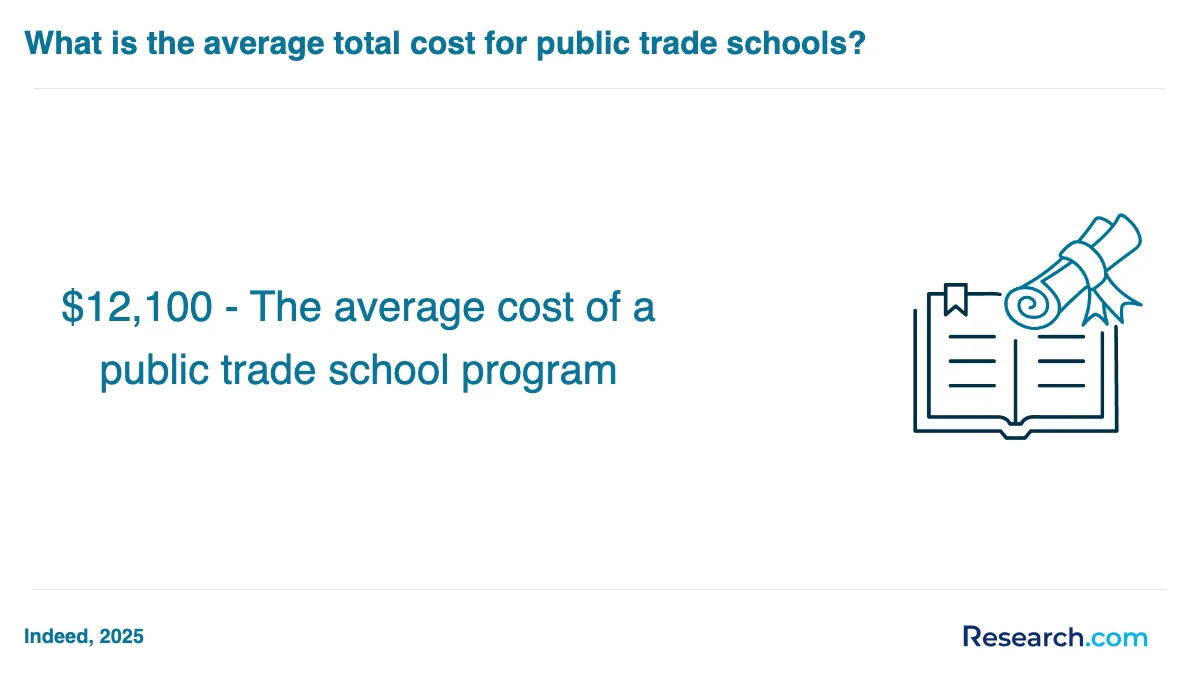
The average cost of a trade school program in Long Island City typically ranges from $5,000 to $15,000, depending on the length and field of study. Graduates from places like Apex Technical School or Lincoln Tech often mention how affordable their programs were compared to traditional colleges, allowing them to focus on hands-on skills without piling up debt. Many students appreciate that these schools keep tuition reasonable while providing access to industry-standard tools and real-world training.
For example, a student completing an automotive technology program at Lincoln Tech might finish in under a year and quickly start earning, thanks to the school's strong connections with local employers. Meanwhile, Aviation High School students training for aircraft maintenance find the investment worthwhile given the high demand in that growing field.
Overall, Long Island City trade schools aim to deliver practical education at a price point that feels manageable. The emphasis on career readiness, job placement help, and certifications that employers respect makes these programs a smart choice for many. Graduates often describe feeling confident and eager to step directly into the workforce.
Where can I work after finishing trade school programs trade schools in Long Island City?
After finishing a trade school program in Long Island City, you'll find plenty of job opportunities waiting for you. Graduates from popular local schools like Apex Technical School and the Finishing Trades Institute of New York often land roles in construction, HVAC, plumbing, and electrical work. Many share the excitement of stepping into the workforce, whether painting bridges, repairing HVAC systems, or working hands-on as drywall tapers. These real experiences make the classroom lessons come alive, boosting confidence when applying for jobs.
Union apprenticeships are especially popular here, offering steady pay and a clear career path. Graduates often speak about how these programs helped them not just find a job, but build a lifelong career, sometimes moving up to supervisor roles. If teaching appeals to you, experienced tradespeople from schools like Apex even become instructors, sharing their know-how with new students, making it all feel like a close-knit community while keeping you connected to your trade.
After finishing a trade school program in Long Island City, you can expect to earn quite a solid income that really matches the high cost of living in New York City. Graduates from popular local trade schools often share how starting salaries range from around $55,200 to $60,000, especially in in-demand fields like electricians, plumbers, and HVAC technicians.
Many grads notice that with just a couple of years of experience and the right certifications, they can quickly boost their earnings to the mid $80,000s or even beyond. Some of the top earners reach over $100,000 annually, which is a big motivator for those weighing the cost and time investment of a trade school.
Hearing success stories from classmates who started out making $45,000 but are now comfortably above the $70,000 mark shows how much room there is to grow. The local job market in Long Island City actively seeks skilled trade pros, so finding steady work with a paycheck that beats the city's median $65,000 salary feels achievable and rewarding.
- Most trade schools in Long Island City require proof of high school graduation or a GED, with some asking for minimum age and citizenship status verification.
- Application processes typically include interviews, submitting identification, and completing forms; some programs may require placement tests or additional documents for financial aid.
- Tuition costs range from about $4,000 to $20,000, with healthcare and technology programs usually costing more; application fees are approximately $65 at community colleges.
- Graduates in fields like medical assisting, nursing, and web development can expect starting salaries between $35,000 and $55,000, with experienced professionals earning $60,000 or more.
- Programs offer job placement support, internships, and apprenticeships, and admissions are generally rolling, allowing applications year-round.
Trade school programs in Long Island City can be surprisingly quick to finish, especially if you're eager to jump into a new career fast. Many grads from Apex Technical School share how they wrapped up their programs in just six to seven months, which is perfect for those who want to start working without a long wait. These programs cover hands-on skills like auto repair and HVAC, so students get real-world experience fast.
For people looking for something more in-depth, apprenticeship programs stretch longer. At places like the Finishing Trades Institute of New York, some apprenticeships last three to four years, mixing classroom lessons with on-the-job training, sometimes even with night classes. It's ideal if you want steady progress while still earning.
Others turn to schools like Lincoln Tech in Queens, where diploma programs often take a year or less. Graduates often say this timeline helped them balance school and life easily. Overall, how long you spend depends on your trade and whether you choose full- or part-time learning, but quick, practical training is definitely available in Long Island City.
Choosing between online and on-campus trade school programs in Long Island City really comes down to how you want to learn and what skills you need. Online programs let you study from anywhere, making it easier to juggle work, family, or other commitments. Many grads enjoy the flexibility of logging into lectures on their own time and saving money on commuting or housing. It's perfect if you're aiming for careers that focus more on digital skills or business.
On the other hand, on-campus programs are all about hands-on experience. For trades like HVAC repair or automotive tech, being in a Long Island City school's lab with tools in hand and instructors watching over you is key. Graduates often say that this face-to-face time builds confidence and skills you just can't get online.
Some students love hybrid programs here in LIC, which mix online classes with in-person labs. This combo gives you the best of both worlds-flexibility plus real practice.
The average trade school tuition in Long Island City usually falls between $10,000 and $15,000 for a full program, which aligns well with many graduates' experiences from local schools. For instance, those who completed programs at Berk Trade and Business School often mention the manageable overall cost of $13,200 for the academic year 2024-2025, covering comprehensive career training rather than just a semester's fees. Graduates appreciate that this investment feels worthwhile given the strong hands-on skills they gain.
When thinking about Long Island City trade school program costs, it's helpful to remember that prices here can be a bit higher than other regions due to the city's urban environment and living expenses. But many students find that financial aid options ease this burden. At Berk Trade, for example, around 83% of students receive grants or scholarships, making education more affordable. These supports can turn what seems like a steep price tag into something much more doable.
Besides tuition, students should consider extra costs like textbooks and equipment, which some programs require. However, many find these expenses manageable when spread out. Those looking for alternatives might explore pathways highlighted in the most affordable online maintenance technician trade programs, which offer cost-effective choices beyond the traditional classroom experience.

Trade school students in Long Island City have plenty of financial aid options to ease the cost of their education. Many start by filling out the FAFSA form, which opens doors to federal grants like the Pell Grant-something nearly two-thirds of trade students nationwide rely on, often receiving about $4,800 yearly. For example, a graduate from LaGuardia Community College shared how the Pell Grant covered a big chunk of their tuition, making day-to-day life less stressful.
New York State also helps with the Tuition Assistance Program (TAP), which residents attending approved trade schools can tap into. On top of that, some schools offer scholarships-LaGuardia awards up to $500 for students with strong grades, which can really feel like a reward for hard work.
Many Long Island City trade schools, like Apex Technical School, provide one-on-one financial aid advising, guiding students through grants, scholarships, and even federal loans. One graduate recalls how having someone explain loan terms helped them confidently manage repayment later on. Plus, there are work-study programs and emergency aid options, giving students ways to handle unexpected expenses while gaining real work experience.
If you're thinking about enrolling in a trade school program in Long Island City, there are a few key prerequisites you'll want to keep in mind. Most schools ask for a high school diploma or GED to get started. This is common at spots like the Finishing Trades Institute of New York, where having that diploma is part of the intake process. However, some programs are flexible and welcome adult learners who might not have finished high school yet.
Age is another important factor. Generally, you need to be at least 18 years old, but some schools, like Apex Technical School, allow 17-year-olds to enroll with parental permission-and even consider 16½ in certain cases.
Here's a quick rundown of what you'll likely need when applying at a trade school in Long Island City:
- Proof of education: high school diploma or GED (or equivalent)
- Valid ID: driver's license or state ID
- Age verification: typically 18+, some exceptions apply
- Residency or income documentation, if required by the program
- Ability to pass placement tests in reading, writing, and math
- Physical readiness for hands-on work, such as lifting or working at heights
Graduates often share how these steps felt like a straightforward checklist before they could jump into exciting hands-on training. Preparing documents and passing placement tests helped them feel confident and ready. You'll find that once you meet these simple requirements, the path into a rewarding trade career here in Long Island City opens up and feels really achievable.

If you're thinking about trade schools in Long Island City, you'll find courses that get you straight into practical work with skills employers want. Many graduates praise how the hands-on approach made a real difference for them. For example, students at popular trade schools dive into programs like:
- Electrical systems, where they wire circuits and troubleshoot problems under expert guidance.
- Plumbing technology, practicing pipe installation and repairs in real workshop settings.
- Welding fundamentals, learning to operate welders safely while building metal projects.
Healthcare courses are also a great pick, offering training for roles like Clinical Medical Assistant and Phlebotomy Technician. Imagine confidently drawing blood or assisting patients after a few months of focused study!
Others enjoy programs in automotive repair or HVAC, gaining skills to fix engines or install air conditioners-skills that lead to solid jobs with steady demand in Long Island City.
There are even courses for those interested in cosmetology or pet grooming, combining fun creative work with real salon and clinic experience.
Plus, if you're juggling a job, many schools offer evening and part-time classes, so leveling up your career is totally doable.
If you're looking at trade school programs in Long Island City, you'll find a variety of specializations that really match the local job market's needs. Many graduates from Apex Technical School rave about its 900-hour certificate programs in trades like automotive service, welding technology, electrical work, plumbing, and construction. These hands-on courses are designed to get you working quickly, sometimes in as little as seven months. Imagine spending your days learning about steering systems or wheel alignments, just like those who completed the automotive program.
Others prefer the Finishing Trades Institute of New York, where apprenticeships in structural steel, bridge painting, glazing, metal polishing, painting, or drywall taping combine classroom lessons with on-the-job training over three to four years. Many students appreciate schedules that fit around their day jobs, with some evening options available.
Healthcare-focused learners often turn to Hunter Business School for programs in licensed practical nursing, X-ray tech, ultrasound, and medical billing. Graduates feel confident stepping straight into medical roles thanks to industry-driven curricula.
For those exploring low cost online construction trade school programs, there are great options that suit folks balancing work and study.
- Automotive service
- Welding technology
- Electrical and advanced electrical
- Plumbing
- Construction
- Structural steel and bridge painting
- Glazing and metal polishing
- Painting and drywall taping
- Licensed practical nursing (LPN)
- X-ray technology
- Diagnostic medical sonography (ultrasound)
- Medical billing
This range of programs means students here can find a path that feels right for them-whether that's jumping straight into a hands-on trade or earning healthcare credentials. If you want to dig deeper into some affordable options tailored for working adults, check out low cost online construction trade school programs to explore flexible ways to advance your career.
Choosing the best trade school programs in Long Island City means focusing on what fits your career goals and lifestyle. Graduates from Aviation High School often share how FAA-approved courses gave them a clear path to aircraft maintenance certifications, boosting their confidence on the job. With programs ranging from a few months to two years, like those at Berk Trade and Business School, you can find options that work with your schedule and budget. It really comes down to how to compare Long Island City trade schools based on factors like accreditation, cost, and job placement rates. Many students appreciate schools near public transit, making daily commutes stress-free. Checking graduation rates, which can be as high as 97%, gives you peace of mind that the program supports your success. If you're interested in HVAC, for example, exploring online hvac certificate programs might also be a smart move to broaden your options while staying local.
Trade school graduates in Long Island City find a wealth of career opportunities that fit both hands-on and technical interests. Many jump right into construction and technical jobs in Long Island City, working in fields like automotive repair, HVAC, welding, plumbing, and electrical systems. Graduates from popular local schools often share how their fast-paced programs - some as short as seven months - gave them the confidence and skills to start earning quickly. They appreciate training that's tailored to the actual needs of NYC employers, making job hunting less stressful.
Some graduates choose to enter union apprenticeship programs, scoring paid on-the-job training that leads to stable, well-paying trades like carpentry or electrical work. Others use their experience to become instructors at trade schools themselves, staying connected to the industry while shaping the next generation.
Here's a quick look at career paths available:
- Entry-level roles in automotive repair, welding, HVAC, plumbing, and construction
- Union apprenticeships offering paid training and job stability
- Technical roles requiring specialized certifications
- Instructor positions at local technical schools
For those curious about high paying trade school jobs, Long Island City's trade schools prepare graduates well for real-world challenges and rewarding careers.
The job market for trade school graduates in Long Island City is buzzing with opportunities thanks to strong demand in construction, manufacturing, and tech trades. Graduates from well-known local programs often find themselves stepping right into paid apprenticeships or full-time roles with companies seeking skilled workers. Many graduates share how apprenticeships opened doors for them, offering hands-on training while earning a paycheck. The employment outlook for trade school graduates in Long Island City is especially promising with nearly 200 skilled trades openings, including electricians, plumbers, and maintenance technicians.
Several factors make this market attractive:
- Apprenticeships provide real-world experience and often lead to permanent jobs.
- Employers frequently offer benefits like health insurance and relocation aid.
- Trade schools in the area connect students directly to industries growing in Queens.
If you're aiming for electrician roles, looking into low cost online trade schools programs for electricians can be a smart move. Many graduates find combining local training with affordable online options makes entering the workforce smoother and quicker.
Most Affordable Trade School & Training Programs - Leading Certification Courses in Long Island City for 2026
# 1 position
CUNY LaGuardia Community College - Physical Therapy Assistant.
associateThe Physical Therapy Assistant program at CUNY LaGuardia Community College is offered in a hybrid format, combining on-campus and distance education. It prepares students to assist physical therapists by implementing treatment plans, training patients, and conducting interventions. Coursework covers anatomy, physiology, biomechanics, neuroscience, and professional ethics. The program is accredited by the Middle States Commission on Higher Education. Annual in-state tuition is $5,218, and median earnings one year after completion are $40,463.
# 2 position
CUNY LaGuardia Community College - Legal Assistant/Paralegal.
associateThe Legal Assistant/Paralegal program at CUNY LaGuardia Community College offers a hybrid format, combining in-person and distance education. It prepares students to perform legal research, drafting, and administrative functions under attorney supervision. The program includes instruction in courthouse procedures and legal specializations. Annual in-state tuition is $5,218. Graduates have median earnings of $36,358 one year after completion. The program is accredited by the Middle States Commission on Higher Education.
# 3 position
CUNY LaGuardia Community College - Business Administration and Management, General.
associateCUNY LaGuardia Community College offers a fully online Business Administration and Management, General program. It prepares students to plan, organize, direct, and control business functions, covering management theory, human resources, accounting, purchasing, marketing, and decision-making. The program is accredited by the Middle States Commission on Higher Education. Annual in-state tuition is $5,218. Median earnings of graduates one year after completion are $29,953.
# 4 position
CUNY LaGuardia Community College - Veterinary/Animal Health Technology/Technician and Veterinary Assistant.
associateCUNY LaGuardia Community College offers a program in Veterinary/Animal Health Technology/Technician and Veterinary Assistant. The curriculum prepares students to assist veterinarians and animal health professionals in patient care, clinical procedures, and owner communication. Instruction covers animal nursing, health, nutrition, handling, clinical pathology, radiology, anesthesiology, surgical assisting, and office administration. The program's annual in-state tuition is $5,218 and it is accredited by the Middle States Commission on Higher Education.
# 5 position
CUNY LaGuardia Community College - Tourism and Travel Services Management.
associateThe Tourism and Travel Services Management program at CUNY LaGuardia Community College offers a hybrid format with some distance-education options. It prepares students to manage travel-related enterprises and convention or tour services. Coursework covers travel agency management, event planning, tourism marketing, travel law, and industry operations. The program’s annual in-state tuition is $5,218, and median earnings one year after completion are $27,031. It is accredited by the Middle States Commission on Higher Education.
# 6 position
CUNY LaGuardia Community College - Criminal Justice/Law Enforcement Administration.
associateCUNY LaGuardia Community College offers a Criminal Justice/Law Enforcement Administration program with a hybrid format, including some distance education. The program prepares students to manage public law enforcement agencies through courses in leadership, law enforcement history, labor relations, and budgeting. Annual in-state tuition is $5,218. Graduates have median earnings of $25,515 one year after completion. The program is accredited by the Middle States Commission on Higher Education.
# 7 position
CUNY LaGuardia Community College - Computer Science.
associateThe Computer Science program at CUNY LaGuardia Community College offers a hybrid format with some distance-education options. It emphasizes computer theory, problem-solving, and system design from a scientific perspective. Instruction covers computational science principles, programming, and practical applications. The annual in-state tuition is $5,218. Graduates have a median earning of $24,888 one year after completing the program. The program is accredited by the Middle States Commission on Higher Education.
# 8 position
CUNY LaGuardia Community College - Accounting Technology/Technician and Bookkeeping.
associateThe Accounting Technology/Technician and Bookkeeping program at CUNY LaGuardia Community College offers hybrid learning options. It prepares students to provide technical support to accountants, covering transaction posting, record-keeping, accounting software, and basic accounting principles. The annual in-state tuition is $5,218. Graduates have a median earning of $20,436 one year after completion. The program is accredited by the Middle States Commission on Higher Education.
# 9 position
New York School for Medical and Dental Assistants - Dental Assisting/Assistant.
certificate or diplomaThe Dental Assisting/Assistant program at New York School for Medical and Dental Assistants is a hybrid course preparing students to provide patient care, take dental radiographs, and assist dentists and hygienists. Instruction includes office duties, scheduling, equipment maintenance, sterilization, radiography, chairside assisting, and supervised practice. Graduates earn a median salary of $28,538 one year after completion. The program is accredited by the Accrediting Commission of Career Schools and Colleges.
# 10 position
Berk Trade and Business School - Electrical and Power Transmission Installation/Installer, General.
certificate or diplomaBerk Trade and Business School offers a hybrid program in Electrical and Power Transmission Installation/Installer, General. The curriculum teaches technical skills for installing residential, commercial, and industrial electrical systems and power transmission lines. Instruction covers electricity, safety, wiring, insulation, grounding, blueprint interpretation, equipment operations, and relevant codes. Graduates earn a median income of $31,116 one year after completion. The program is accredited by the Accrediting Commission of Career Schools and Colleges.
Frequently Asked Questions about trade school programs
After completing a trade school program in Long Island City, preparing for the job market involves several key steps. First, graduates should leverage career services offered by their schools, which often provide job placement assistance and resume workshops. According to the National Center for Education Statistics, trade school graduates have higher employment rates within six months of graduation compared to traditional college graduates.
Networking locally is also vital. Attend industry-specific job fairs and connect with employers in Long Island City's growing construction and technology sectors. Certifications and licenses relevant to your trade enhance employability. Stay updated on market trends by consulting resources such as the U.S. Bureau of Labor Statistics, which projects steady job growth in skilled trades through 2030.
Internships or apprenticeships can further improve practical experience. It's important to maintain a professional online presence and tailor applications to emphasize specific skills acquired during training.
Employers in Long Island City highly value technical skills in trade school graduates, particularly in fields like electrical work, HVAC, plumbing, and welding. According to the U.S. Bureau of Labor Statistics and local workforce surveys, proficiency with modern tools and safety protocols is essential. Additionally, strong problem-solving abilities and attention to detail are frequently cited as critical by regional employers.
Soft skills such as communication, reliability, and teamwork also rank prominently. A 2023 report from the New York State Department of Labor highlights that over 70% of trade employers emphasize the importance of punctuality and adaptability in hiring decisions. These combined skills help graduates succeed in competitive job markets within Long Island City's growing industrial and construction sectors.
Finding internships in Long Island City relevant to your trade school program requires proactive research and networking. Many local businesses in fields such as construction, electrical work, and HVAC offer internship opportunities designed to provide hands-on experience.
You can start by contacting your trade school's career services office, which often maintains relationships with local employers. According to the New York State Department of Labor, Long Island City has seen a 12% increase in apprenticeship and internship opportunities in skilled trades over the past five years.
Additionally, online job boards like NYC.gov's careers portal frequently list internships by industry and location. Joining trade associations or attending local job fairs also enhances your chances of finding relevant positions.
Remember, internships in Long Island City may vary from unpaid to paid, so inquire about compensation when applying.
A trade school diploma in Long Island City significantly enhances career mobility and advancement opportunities. According to the U.S. Bureau of Labor Statistics, industries dominant in the area-such as construction, electrical work, and HVAC-often require specialized certifications that trade schools provide. Graduates gain hands-on skills valued by local employers, increasing their readiness for higher-paying jobs.
Data from the New York State Department of Labor shows that individuals with trade certifications experience a 15% higher average income growth over five years compared to those with only a high school diploma.
Furthermore, the New York City Employment and Training Coalition highlights that trade school credentials help lower barriers to entry in skilled trades, facilitating upward mobility within competitive markets in Long Island City.
Part-time job opportunities in Long Island City can effectively complement trade school education by providing practical experience alongside classroom learning. Popular roles include positions in construction, electrical work, and automotive repair, where students can apply their developing skills. According to the New York State Department of Labor, these sectors frequently offer part-time and apprenticeship roles suitable for trade students.
Additionally, healthcare support jobs such as medical assistants or pharmacy aides are common in the area and align well with healthcare trade programs. Retail and administrative positions in industrial businesses also help build customer service and organizational skills, enhancing employability after graduation.
The combination of part-time work and trade education supports skill-building while easing financial burdens. Real-time application of learned skills significantly improves job readiness, making Long Island City a viable location for trade students seeking balance between study and work.
Yes, there are affordable degree programs near Long Island City, NY, as several community colleges and public universities offer cost-effective options. These institutions provide diverse programs in fields like business, technology, and healthcare, making them financially accessible to students. To find these programs "near me" in Long Island City, NY, prospective students can utilize resources like Research.com and connect with local educational institutions for detailed information.
- NYC Trade School Programs | Apex Technical School https://apexschool.com/programs/
- Learn A Trade - SUNY https://www.suny.edu/trades/
- What Is a Trade School? Benefits of Career-Focused Training https://intercoast.edu/articles/what-is-a-trade-school/
- The top six career and technical schools https://nypost.com/2015/09/27/the-top-six-career-and-technical-schools/
- Front | Opportunities Long Island https://opportunitieslongisland.org/
- Career Skills & Workforce Training - LaGuardia Community College https://www.laguardia.edu/ce/career-skills-training/
- Finishing Trades Institute Of New York Apprenticeship – District Council 9 NY – IUPAT Painters & Allied Trades https://www.districtcouncil9.net/ftiny/
- Lincoln Tech in Queens NY - Vocational School and Career Training https://www.lincolntech.edu/campus/queens-ny


