Best Trade School & Training Programs - Leading Certification Courses in Birmingham for 2026

Co-Founder and Chief Data Scientist
Choosing the right trade school is an important step toward building a successful career in Birmingham. This article introduces the best trade schools in the area for 2026, helping you discover opportunities to gain valuable skills and certifications.
The trade school programs ranking featured here was developed by the Research.com team of data scientists, designed to guide you in making an informed choice about which programs truly stand out.
Whether you seek hands-on training or a fast track to employment, exploring these options can boost your confidence and career prospects. Your future starts with the right education.
Key benefits of finishing trade school programs trade school in Birmingham
- Expected salary: Trade school graduates in Birmingham can earn between $15 and $20 per hour as HVAC install apprentices, with experienced instructors making up to $72,000 annually, showing great income potential.
- Popular career paths: Graduates often find jobs in construction, electrical, and mechanical maintenance fields, where associate degrees and technical skills are in high demand and pay well.
- Online programs: Earning a trade diploma online offers flexibility and convenience, making it easier to balance work and study, just like many successful online graduates from Birmingham's top trade schools.
- Best Trade School & Training Programs - Leading Certification Courses in Birmingham for 2026
- What can I expect from trade school programs trade schools in Birmingham?
- Where can I work after finishing trade school programs trade schools in Birmingham?
What can I expect from trade school programs trade schools in Birmingham?
Expect tuition costs for trade school programs in Birmingham to vary widely depending on the field and length of study. For example, a 6-week construction trades course at the Alabama Workforce Training Center tends to be more affordable, while extended programs like the five-year electrical apprenticeships involve more cumulative expenses.
Graduates from Fortis Institute often mention the value they found in courses that cover both foundational and advanced electrical work without the excessive price tag of a traditional college degree. Similarly, those completing cosmetology programs at Aveda Institute highlight that while investment is necessary, the hands-on training and externships make the cost worthwhile, especially with 80% of externships leading to job offers.
In general, students report that trade school tuition in Birmingham is a cost-effective alternative that aligns well with earning potential post-completion. Smaller class sizes and flexible schedules at HVAC and electrical programs help students balance training with work, making tuition feel like a practical investment rather than a financial burden.
Where can I work after finishing trade school programs trade schools in Birmingham?
After completing a trade school program in Birmingham, graduates find themselves in high demand across several key industries. Many enter the HVAC field, where companies actively seek certified technicians and installers. Graduates from schools like BTrained often secure positions quickly and benefit from paid apprenticeships that offer real-world experience while earning health insurance and retirement plans.
Others build careers in manufacturing technology, taking on roles such as industrial maintenance technicians or machine operators. Local employers value the multi-disciplinary skills taught at institutions like Lawson State Community College, where students train in equipment maintenance, welding, and programmable logic controllers, opening doors to stable, well-paying jobs.
The cosmetology and esthiology sector is another thriving area, especially for graduates of the Aveda Institute. Many who complete externships there receive immediate job offers at local salons, making it a rewarding path with strong industry connections in Birmingham's beauty scene.
Across the city, trade school graduates enjoy over 200 job opportunities spanning plumbing, electrical, facility maintenance, and fire protection, demonstrating the broad career choices available after finishing programs locally.
After finishing a trade school program in Birmingham, you can realistically expect to earn around $62,931 per year, or roughly $30.26 per hour. This is a solid starting point, especially when compared to the Alabama state average of approximately $60,863 annually. Many graduates from popular local trade schools find this wage encouraging as it supports a comfortable lifestyle in Birmingham.
Entry-level apprentices typically start closer to $47,155 annually, which allows new graduates to gain experience without financial pressure. As they hone their skills, wages increase noticeably. Those specializing in construction and extraction average about $29.57 per hour, while graduates working in installation, maintenance, and repair make around $28.13 per hour.
Others pursuing careers in production or transportation find hourly rates near $22.90 and $22.45, respectively. Many graduates from Birmingham's well-known trade schools share that gaining certifications and field experience has inspired confidence, allowing them to aim for six-figure incomes as they grow professionally.
- Applicants typically need a high school diploma or equivalent, be at least 18 years old, and U.S. citizens or legal residents.
- Some programs, like the Birmingham Promise Apprenticeship, require specific criteria including GPA, school attendance, and a detailed application.
- Program length varies from intensive 6-week courses to certificate or associate degrees lasting several months up to two years.
- Tuition costs range from $3,930 to $8,550 per year, with extra expenses for materials and certification fees.
- Entry-level salaries start between $35,000 and $45,000 annually, with experienced workers earning $60,000 to $75,000 or more.
Completing a trade school program in Birmingham varies significantly based on the trade and program format. Many graduates share that programs in healthcare, HVAC, and cosmetology typically take between 12 to 24 months. This timeline fits well for students balancing work or family, allowing them to steadily build skills without rushing.
Some students looking for faster options find shorter, intensive courses ideal. For example, HVAC training at BTrained can be completed in as few as 12 weeks with the BElite course, or even 2 weeks through their accelerated BElite Express. Graduates appreciate these options for quickly entering the workforce while still gaining solid technical knowledge.
Electrical trade learners often spend longer, committing to the five-year apprenticeship offered by the Birmingham Electrical Joint Apprenticeship and Training Committee. Combining 10,000 hours of hands-on work with 900 hours of classroom training, this program molds confident, licensed electricians ready for demanding roles.
Other fast-track courses, like Southland Training Solutions' 14-week evening HVAC classes, allow students to maintain their day jobs while advancing their skills efficiently, making the experience both manageable and rewarding.
The main difference between online and on-campus trade school programs in Birmingham lies in how students engage with their training. Online programs, like those offered by Jefferson State Community College, give students the freedom to study anytime and anywhere through platforms like Canvas and Zoom. Graduates often appreciate this flexibility, especially when balancing jobs or family, but they need to be self-motivated and comfortable with technology.
On-campus programs, such as those at the Aveda Institute, provide hands-on experience that's hard to match online. Students work directly with equipment or real clients, gaining immediate feedback and peer interaction. Many find this face-to-face environment energizing and essential for mastering practical skills in trades like cosmetology or HVAC.
Some Birmingham schools offer hybrid options, combining online coursework with in-person labs. This balance offers convenience without sacrificing vital hands-on training, a setup many grads find ideal for their busy lives.
The average trade school cost in Birmingham generally falls between $5,000 and $15,000, depending on the program and institution. Many graduates from popular trade schools in the area recall how their investment was manageable and focused on specific skills without the lengthy duration of a traditional college degree. For example, those pursuing diplomas in automotive technology often find tuition ranging from $5,000 to $12,000, while welding programs may cost up to $15,000 due to specialized equipment needs.
When considering Birmingham trade school tuition and fees, it's important to account for program length, as certificates can be completed more quickly and cost less than associate degrees. Graduates mention feeling a sense of accomplishment entering the workforce sooner, balancing cost and time effectively. While the tuition in Birmingham may be slightly higher in urban settings, it remains more affordable compared to the nearly $10,000 annual fees at four-year public universities statewide.
Financial aid plays a crucial role in making these programs accessible. Students often apply for federal grants such as the Pell Grant, offering up to $6,345 annually, as well as state-specific support through the Alabama Student Assistance Program. Scholarships and federal loans further ease the financial burden. For those weighing options, comparing trade vs vocational programs can clarify potential costs and outcomes, guiding smart decisions about their training.
Trade school students in Birmingham have multiple financial aid options to help manage costs. Most start by completing the Free Application for Federal Student Aid (FAFSA), unlocking access to federal programs like the Federal Pell Grant, which can award up to $7,395 per year based on need. Some graduates recall that this grant was a critical part of making their training at Paul Mitchell The School Birmingham affordable.
In addition, the Federal Supplemental Educational Opportunity Grant (FSEOG) offers extra support for low-income students, providing up to $4,000 annually. State programs such as the Alabama Student Assistance Program (ASAP) also assist by granting between $300 and $5,000 to eligible residents attending approved trade schools.
Local initiatives, like Birmingham Promise Tuition Assistance, make a difference for recent Birmingham high school grads by covering costs not already paid by other aid, which some students found vital attending two-year programs. Many trade schools themselves provide scholarships combined with aid guidance, easing financial stress and helping students focus on their technical skills and careers.
To enroll in a trade school program in Birmingham, the primary prerequisite is a high school diploma or GED equivalent. This ensures you have the fundamental skills in reading, writing, and math needed to handle the technical coursework ahead, which many graduates appreciate as a solid foundation for their hands-on training.
Some programs, such as the Veterinary Technician program at Jefferson State Community College, expect more than just academic credentials. Applicants might need to submit:
- A separate application
- Relevant work experience
- References from industry professionals
For current high school students in Alabama, the workforce diploma pathway lets you substitute career and technical education courses for math and science credits. This practical option suits those eager to jump into the workforce but keep in mind it might limit eligibility for some four-year colleges like the University of Alabama that want three math credits.
Trade schools here commonly ask you to fill out personal info forms and may require interviews or orientations, helping you feel prepared and confident about starting. Adult learners or those returning after time away find that many institutions provide tailored admissions paths and support.

Trade school programs in Birmingham typically include hands-on courses designed to prepare students for in-demand careers. Graduates from Fortis College, for example, highlight the value of learning practical skills like Alternating Current Theory (A.C.) and conduit bending, which ready them for real-world electrical work in homes and businesses.
At Lawson State Community College, students gain expertise through focused Career & Technical Education courses such as:
- Automotive technology, including manufacturer-specific programs like Ford ASSET and Toyota T-TEN
- Auto body and collision repair
- Medium and heavy truck technology
- HVAC training accredited by HVAC Excellence
- Mechatronics, covering robotics and industrial maintenance
Those attending the Aveda Institute enjoy extensive cosmetology and esthiology practice with actual clients, complemented by business fundamentals and ergonomic training. Many graduates praise the externship experience, reporting strong job offers afterward.
Other schools like BTrained offer specialized HVAC certifications meeting Alabama licensing standards, while Jefferson State provides courses ranging from welding technology to culinary arts, combining classroom theory with valuable lab time.
High school students can also access construction trade skills through the Academy of Craft Training using the NCCER curriculum, which supports both craft proficiency and state graduation requirements.
Trade school programs in Birmingham cover a broad spectrum of specializations tailored to meet local industry demands. Graduates from Fortis Institute often share how their training in electrical trades gave them confidence working on residential and commercial projects, mastering skills like conduit bending and electrical schematics. Healthcare programs, including dental and medical assisting, attract students eager to join the growing healthcare workforce, supported by ongoing job expansion.
Popular programs at Lawson State's Alabama Center for Automotive Excellence prepare students for careers in auto body repair and manufacturer-specific mechanics, directly leading to certifications employers seek. HVAC programs provide a blend of classroom theory and hands-on practice, a big plus for students who value real-world experience. At the Aveda Institute, cosmetology grads highlight how their training in beauty services combined with business skills empowered them to start client-focused careers.
- Electrical trades with comprehensive OSHA and code compliance training
- Healthcare allied fields with strong job market outlook
- Automotive mechanics including manufacturer-specific courses
- HVAC installation and maintenance accredited programs
- Cosmetology and esthiology blending technical and management skills
- Other areas like welding, mechatronics, and criminal justice tailored for certification
For students balancing work and study, Birmingham offers options like cheap online freight broker training classes that can complement in-person technical skills, making career advancement feasible for many.
Choosing the best trade school programs in Birmingham starts with verifying accreditation, as graduates from schools like Lawson State Community College consistently report their credentials open doors in industries such as HVAC and automotive repair. Aligning your career goals with a school's program offerings is essential-schools like Jefferson State and Fortis College offer diverse specializations, so you can pursue a path that fits your strengths and interests. Students appreciate flexible schedules, with many local programs offering evening or hybrid classes, making it easier to balance work and family commitments.
When you compare trade school costs in Birmingham, public institutions often provide more affordable tuition, but also consider available financial aid and scholarships. Graduates frequently highlight the value of strong career support services at schools like Roadmaster Drivers School, which help smooth the transition to employment. To gain perspective, explore student reviews and investigate job placement rates. For a deeper understanding of educational paths, check out trade school vs college pros and cons.
Trade school graduates in Birmingham can access a wide range of career opportunities for trade school graduates in Birmingham, mainly in highly demanded fields that local employers actively seek. Graduates from programs at institutions like Lawson State Community College often secure roles in automotive technology, working as service technicians for major brands such as Ford and Toyota. Others find success in healthcare support positions like dental hygienists or pharmacy technicians, where hands-on training speeds their entry into the workforce.
High demand skilled trades in Birmingham Alabama include HVAC technicians and electricians, with schools such as Fortis Institute preparing students for residential and commercial electrical work through in-depth practical training. Graduates appreciate the structured curriculum that makes real-world troubleshooting and safety standards second nature.
Many students benefit from cooperative education opportunities and internships partnered with local businesses, gaining valuable experience and often transitioning directly to employment. For those interested in expanding options, exploring cheap online carpentry trade school programs can offer flexible pathways tailored to the Birmingham market.
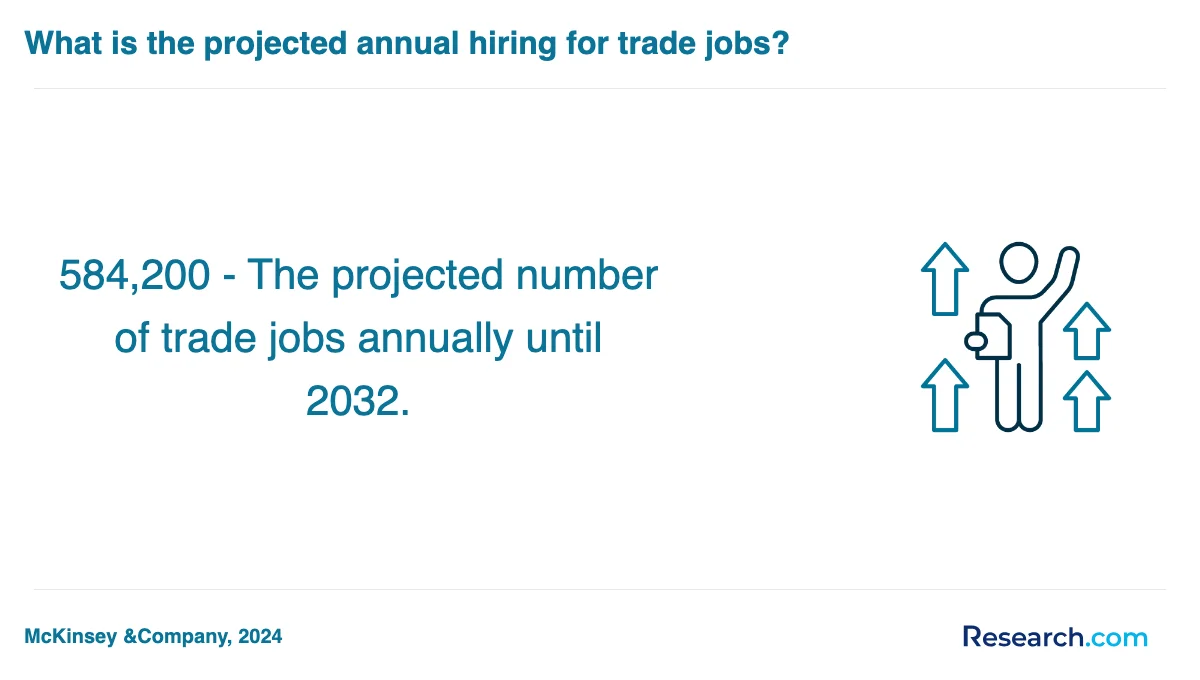
The job market for trade school graduates in Birmingham is robust, with over 200 openings specifically seeking skilled tradespeople. Graduates from local programs often find themselves quickly placed in roles such as HVAC technicians, diesel mechanics, and apprentice plumbers. Many trade schools in Birmingham partner with employers to offer hands-on externships and apprenticeships, which result in up to 80% of students receiving job offers upon completion. This direct pathway to employment highlights the practical effectiveness of trade education in the area.
For those weighing options, the Birmingham Alabama skilled trades employment outlook is notably positive, especially in sectors like manufacturing, where a skills gap drives competitive wages and advancement opportunities. Graduates commonly start at around $47,300 annually, with experienced workers earning as much as $93,719.
Considering the rapidly growing demand and strong industry connections, many students seek affordable and flexible training options, including a low cost online solar technician course to complement local programs.
- Strong demand with over 200 job openings
- Hands-on training leading to 80% job offer rate post-externships
- Competitive salaries starting at $47,300 annually
- High growth industries with career advancement potential
Best Trade School & Training Programs - Leading Certification Courses in Birmingham for 2026
# 1 position
Jefferson State Community College - Veterinary/Animal Health Technology/Technician and Veterinary Assistant.
associateJefferson State Community College offers a program in Veterinary/Animal Health Technology/Technician and Veterinary Assistant that trains students to assist veterinarians and animal health professionals in patient care and clinical procedures. The curriculum covers animal nursing, health, nutrition, clinical pathology, radiology, anesthesiology, dental prophylaxis, surgical assisting, laboratory procedures, office administration, and communication. The program’s annual in-state tuition is $5,040 and is accredited by the Southern Association of Colleges and Schools Commission on Colleges.
# 2 position
Jefferson State Community College - Criminal Justice/Police Science.
associateJefferson State Community College offers a Criminal Justice/Police Science program in a hybrid format with some distance education options. The program prepares students for duties such as patrol, investigative activities, traffic and crowd control, witness interviewing, evidence management, crime prevention, weapon operation, and report preparation. The annual in-state tuition is $5,040. The program is accredited by the Southern Association of Colleges and Schools Commission on Colleges.
# 3 position
Jefferson State Community College - Physical Therapy Assistant.
associateJefferson State Community College offers a Physical Therapy Assistant program with a hybrid format, combining in-person and distance education. The program prepares students to assist physical therapists in treatment care plans and patient training. Coursework covers anatomy, physiology, biomechanics, kinesiology, and clinical documentation. Annual in-state tuition is $5,040. Graduates earn a median salary of $47,796 one year after completion. The program is accredited by the Southern Association of Colleges and Schools Commission on Colleges.
# 4 position
Jefferson State Community College - Office Management and Supervision.
associateJefferson State Community College offers a program in Office Management and Supervision designed to prepare students for managing business office operations and personnel. The curriculum covers employee supervision, management, labor relations, budgeting, scheduling, office systems, records management, and public relations. The program is accredited by the Southern Association of Colleges and Schools Commission on Colleges. Annual in-state tuition is $5,040.
# 5 position
Jefferson State Community College - Accounting Technology/Technician and Bookkeeping.
associateJefferson State Community College offers a hybrid Accounting Technology/Technician and Bookkeeping program designed to prepare students for technical administrative roles supporting accountants and financial managers. The curriculum covers posting transactions, record-keeping systems, accounting software, and fundamental accounting principles and practices. The program’s annual in-state tuition is $5,040. It is accredited by the Southern Association of Colleges and Schools Commission on Colleges.
# 6 position
Fortis Institute-Birmingham - Dental Assisting/Assistant.
certificate or diplomaThe Dental Assisting/Assistant program at Fortis Institute-Birmingham offers a hybrid format with some distance education. It prepares students to provide patient care, take dental radiographs, assist chairside, and perform office administrative tasks under supervision. The curriculum includes medical record-keeping, scheduling, equipment maintenance, sterilization, and supervised practice. Annual in-state tuition is $14,561, and median earnings one year after completion are $31,554. The program is accredited by the Accrediting Bureau of Health Education Schools.
# 7 position
Jefferson State Community College - Computer and Information Sciences, General.
associateJefferson State Community College offers a program in Computer and Information Sciences, General, which covers computing, computer science, and information science and systems. The program focuses on broad foundational knowledge without specialization. Annual in-state tuition is $5,040. Median earnings of graduates one year after completion are $29,478. The program is accredited by the Southern Association of Colleges and Schools Commission on Colleges.
# 8 position
Fortis Institute-Birmingham - Heating, Air Conditioning, Ventilation and Refrigeration Maintenance Technology/Technician.
certificate or diplomaThe Heating, Air Conditioning, Ventilation and Refrigeration Maintenance Technology/Technician program at Fortis Institute-Birmingham offers a hybrid format with some distance education options. It prepares students to repair, install, service, and maintain HVAC and refrigeration systems using technical knowledge, diagnostic techniques, and testing equipment. The program covers mechanics, electricity, and electronics principles related to these systems. Annual in-state tuition is $14,561. The program is accredited by the Accrediting Bureau of Health Education Schools.
# 9 position
Herzing University-Birmingham - Computer Systems Networking and Telecommunications.
associateHerzing University-Birmingham offers a program in Computer Systems Networking and Telecommunications designed to prepare students for roles as network specialists and managers. The curriculum covers operating systems, systems design, networking theory, security, and troubleshooting. Annual in-state tuition is $13,420. Graduates have a median earning of $43,901 one year after completion. The program is accredited by the Higher Learning Commission.
# 10 position
Herzing University-Birmingham - Legal Assistant/Paralegal.
associateThe Legal Assistant/Paralegal program at Herzing University-Birmingham prepares students to perform research, drafting, investigatory, record-keeping, and related administrative tasks under attorney supervision. The curriculum covers legal research, drafting legal documents, courthouse procedures, and legal specializations. Annual in-state tuition is $13,420. The program is accredited by the Higher Learning Commission. Median earnings one year after completion are $39,952.
Frequently Asked Questions about trade school programs
After completing trade school in Birmingham, preparing for the job market involves several key steps. First, graduates should obtain relevant certifications and licenses required in their field, such as HVAC or electrical credentials, which enhance employability. According to the Alabama Department of Labor, Birmingham's trade sectors have shown steady job growth, especially in construction and automotive services.
Next, building a professional network through local job fairs and trade unions can open doors to employment opportunities. Many trade schools in Birmingham offer career services that assist with resume writing and interview preparation, essential for standing out to employers.
Finally, gaining work experience through apprenticeships or internships enables practical learning and often leads to full-time positions, a critical factor highlighted by the U.S. Bureau of Labor Statistics for trade-related careers.
Employers in Birmingham highly value trade school graduates who demonstrate strong technical skills relevant to their field. For example, proficiency in welding, electrical systems, or HVAC repair is often essential. According to the Alabama Department of Labor, skill shortages in these areas make qualified graduates particularly attractive.
In addition to technical abilities, employers seek practical problem-solving skills and adaptability. Trade graduates who can troubleshoot equipment issues efficiently tend to stand out.
Soft skills are equally important. Communication, teamwork, and punctuality frequently rank among the top qualities Birmingham employers desire, as reported by local workforce studies.
Finding internships in Birmingham that align with your trade school program involves using multiple local resources. Start by visiting your trade school's career services office, as many schools have partnerships with local companies and maintain updated internship listings. According to the Birmingham Business Alliance, industries such as construction, automotive repair, and HVAC offer numerous internship opportunities in the area.
Online job platforms like Indeed and LinkedIn also list internships specific to Birmingham. Networking events hosted by local trade organizations can be valuable too. The Alabama Department of Labor reports a steady increase in skilled trade internships, emphasizing hands-on experience to boost employment chances after graduation.
In Birmingham, earning a trade school diploma can significantly enhance career mobility and advancement opportunities. According to the U.S. Bureau of Labor Statistics and local workforce reports, many industries in the area-including construction, manufacturing, and automotive services-prioritize skilled workers holding trade credentials.
Trade school graduates often experience quicker entry into the workforce, with some programs leading to employment within six months. This practical training aligns closely with employer demands, improving job retention and wage growth.
Research from the Alabama Department of Labor highlights that diploma holders in trades typically see a 15% higher earning potential compared to those with only a high school diploma, supporting upward social mobility in Birmingham's evolving economy.
In Birmingham, part-time job opportunities that complement trade school education are diverse, offering practical experience alongside coursework. Students enrolled in HVAC or electrical programs often find roles as apprentice technicians or helpers with local contractors, which enhances hands-on skills. According to the U.S. Bureau of Labor Statistics, demand for skilled trade assistants in Alabama is expected to grow by 8% through 2031. Automotive trade students commonly work in service garages or parts departments, gaining industry-specific knowledge. Additionally, positions in construction sites as laborers or equipment operators provide valuable exposure to real-world workflow and safety standards, making these roles ideal adjuncts to trade education.
To find the best degree program near Birmingham, AL, start by researching local universities and colleges that offer programs in your area of interest, as Alabama is home to a variety of higher education institutions. Consider using resources like Research.com to compare program rankings and academic offerings to help determine which schools provide the most reputable and comprehensive education in your desired field. Additionally, make a list of essential criteria for the best degree program near me, such as faculty expertise, campus facilities, and opportunities for networking and career advancement, and visit these campuses to get a firsthand impression before making a decision.
- Best Trade School & Training Programs - Leading Certification Courses in Little Rock for 2026
- Best Trade School & Training Programs - Leading Certification Courses in Florence for 2026
- Best Trade School & Training Programs - Leading Certification Courses in Springfield for 2026
- Best Trade School & Training Programs - Leading Certification Courses in Angola for 2026
- Best Trade School & Training Programs - Leading Certification Courses in Akron for 2026
- Best Trade School & Training Programs - Leading Certification Courses in Adrian for 2026
- Vocational Courses - Courses For School Leavers - Birmingham https://www.bmet.ac.uk/our-courses/courses-for-16-19-years/vocational-courses/
- Home | Heart of Birmingham Vocational College https://www.hbvc.ac.uk/
- Birmingham Training Centre | Access Training https://www.accesstraininguk.co.uk/locations/birmingham-training-courses
- Construction Multi-Skills Level 1 | University College Birmingham https://www.ucb.ac.uk/study/courses/college/construction-multi-skills-level-1/
- Post 16 options – Birmingham Careers Service https://www.birminghamcareersservice.co.uk/post-16-options/
- How to get work experience while studying - Access Creative College https://www.accesscreative.ac.uk/blog/how-to-get-work-experience-while-studying/
- Careers information for students – Fairfax Academy https://www.fairfax.bham.sch.uk/academy-life/careers-programme-information/careers-information-for-students-and-parentscarers/
- Trade Schools, What Are The Benefits - InterCoast Colleges https://intercoast.edu/articles/benefits-of-trade-schools/
- Career skills at the University of Birmingham | Kaplan Pathways https://www.kaplanpathways.com/where-to-study/university-of-birmingham-foundation-pathways/career-skills/