Best Trade School & Training Programs - Leading Certification Courses in Berkeley for 2026

Co-Founder and Chief Data Scientist
The main question for students comparing trade school programs in Berkeley is not simply “Which school is best?” It is whether a program leads to a credential employers recognize, fits your schedule, keeps debt manageable, and prepares you for work in a field with real local demand.
This 2026 guide summarizes trade school options in Berkeley using a ranking developed by the Research.com team of data scientists. It is designed for high school graduates, working adults, career changers, and anyone who wants job-focused training without committing to a traditional four-year degree.
Use this guide to compare expected costs, program lengths, online versus on-campus formats, admissions requirements, financial aid, common specializations, career paths, and salary expectations. The goal is to help you choose a practical program with a clear return on your time and money.
Key benefits of finishing trade school programs trade school in Berkeley
Trade school can be a strong option for Berkeley students who want focused training, faster entry into the workforce, and a credential tied to a specific occupation. The best programs combine classroom instruction, hands-on practice, career advising, and preparation for any required certification or licensing steps.
- Strong earning potential: Trade school graduates in Berkeley can expect competitive salaries, such as electricians earning $65,000 to $80,000, healthcare workers like licensed vocational nurses making $60,000 to $75,000, and automotive technicians bringing in $50,000 to $65,000 annually.
- Diverse career options: Trade school training can lead to hands-on roles in healthcare, construction, automotive repair, HVAC, technology support, business services, and building maintenance. These fields suit students who prefer practical skills over purely academic coursework.
- Flexible learning formats: Many trade schools in Berkeley offer online certification programs, which can help students balance training with work, family, or transportation constraints. For skills that require labs, clinical practice, tools, or equipment, hybrid or on-campus formats may be necessary.
- Shorter path to employment: Certificate and diploma programs often take less time than a four-year degree, allowing students to start earning sooner and build experience while continuing to pursue advanced credentials.
- Career-focused curriculum: Trade programs usually emphasize job tasks, safety procedures, industry tools, workplace communication, and credential preparation rather than broad general education requirements.
- Best Trade School & Training Programs - Leading Certification Courses in Berkeley for 2026
- What can I expect from trade school programs trade schools in Berkeley?
- Where can I work after finishing trade school programs trade schools in Berkeley?
What can I expect from trade school programs trade schools in Berkeley?
Students can expect career-centered training that is usually more structured and occupation-specific than a general college degree. A Berkeley trade school program may include classroom lessons, lab work, simulations, internships, externships, certification preparation, and career services. The right fit depends on whether your target field requires hands-on practice, supervised clinical hours, licensing, or an industry exam.
Tuition for trade school programs in Berkeley varies by field, credential level, program length, supplies, and required fees. Many students find trade school financially manageable when compared with traditional four-year degrees, especially if the program leads quickly to paid employment. Some programs, particularly those designed for high school students or adults seeking career changes, may offer waived or reduced tuition.
At institutions like Berkeley City College, students may find smaller classes, instructor access, advising, and career-focused support. When comparing schools, look beyond the advertised tuition. Ask whether the price includes books, tools, uniforms, background checks, certification exams, licensing fees, technology fees, and transportation to clinical or work-based learning sites.
What to check before enrolling
- Credential outcome: Confirm whether the program awards a certificate, diploma, associate degree, or exam preparation certificate.
- Accreditation and approvals: Make sure the institution and program meet requirements for your occupation, especially in healthcare, electrical, plumbing, HVAC, and other regulated fields.
- Hands-on training: Ask how many hours are spent in labs, workshops, clinical settings, internships, or supervised practice.
- Employer connections: Review job placement support, local employer partnerships, apprenticeship pathways, and internship opportunities.
- Total cost: Compare net price after grants and scholarships, not just listed tuition.
Where can I work after finishing trade school programs trade schools in Berkeley?
After completing a trade school program in Berkeley, graduates may work for employers that need practical technical, healthcare, maintenance, administrative, and service skills. Local opportunities can include private companies, public institutions, healthcare providers, contractors, schools, nonprofits, and logistics employers.
Graduates from construction, electrical, carpentry, plumbing, HVAC, or building maintenance programs may pursue roles with local contractors, property management companies, public facilities, or the University of California, Berkeley, where campus buildings and infrastructure require ongoing maintenance and upgrades.
Healthcare-focused graduates may look for work in clinics, long-term care facilities, medical offices, pharmacies, and community health organizations. Common entry points include medical assistant, pharmacy technician, patient care, medical billing, coding, and administrative support roles, depending on the program completed and any certification requirements.
Students trained in technology, media support, business operations, or digital tools may find openings with schools, nonprofits, local businesses, startups, and service organizations. Retail and logistics employers, including Peet's Coffee or UPS, can also offer entry-level roles where technical, customer service, scheduling, maintenance, or operations skills may support advancement.
Common employer settings
- Construction firms and specialty contractors
- Healthcare clinics, pharmacies, and long-term care facilities
- Schools, colleges, and public institutions
- Property management and facilities maintenance teams
- Retail, logistics, and operations employers
- Nonprofits and small businesses needing technical or administrative support
Earnings after trade school depend on the occupation, credential, employer, experience level, union status, certifications, shift schedule, and whether the role is licensed or apprentice-based. Many graduates begin in entry-level positions and increase pay as they gain supervised experience, pass exams, specialize, or move into lead roles.
After completing a trade school program in Berkeley, many graduates find their initial earnings align with the local minimum wage of $19.18 per hour, translating to about $39,900 annually for a full-time position. Entry-level roles may include HVAC technician assistant, automotive service technician, medical office support, customer service, or building maintenance trainee, depending on training and employer requirements.
Pay can rise significantly in skilled trades as workers gain experience and credentials. Electricians and plumbers frequently reach median annual wages near $60,000, and some workers benefit from union representation, overtime opportunities, and employer-sponsored benefits. Technical roles such as computer support specialist may also exceed starting minimum wages when the program builds marketable troubleshooting, networking, and user-support skills.
Salary factors to compare
- Licensure or certification: Required credentials can affect both eligibility and pay.
- Experience: Employers often pay more for workers who can operate independently and safely.
- Union or apprenticeship pathway: Some trades have structured wage progression and benefits.
- Specialization: Advanced skills in HVAC systems, electrical work, diagnostics, data tools, or healthcare administration may improve earning potential.
- Work schedule: Overtime, weekend shifts, emergency calls, and field assignments can change total compensation.
- Applicants usually need a high school diploma or GED, official transcripts, an application, and a non-refundable fee of about $50.
- Some programs, especially in health fields, require passing the HESI Admission Assessment exam, which costs around $75, plus possible additional tests.
- Personal interviews are often recommended to evaluate motivation, goals, and experience for program fit.
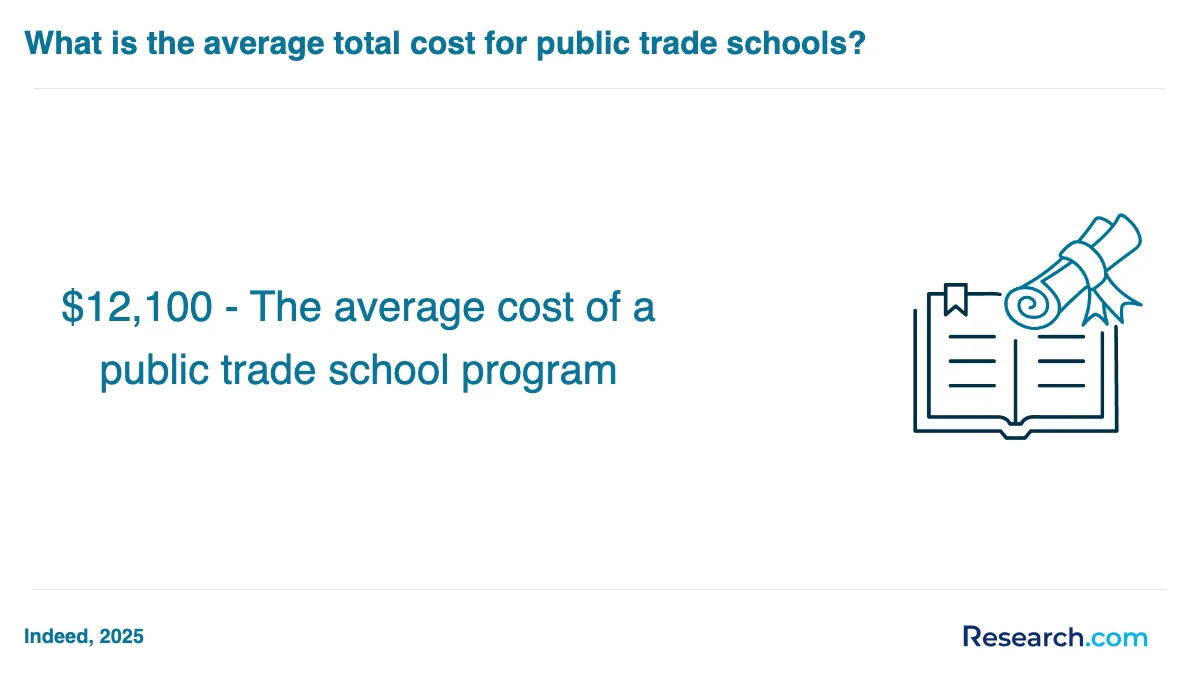
- Tuition and fees for trade school programs range from $5,000 to over $15,000, with higher costs in health and technical specialties including materials and licensing fees.
- Entry-level salaries for graduates typically start between $40,000 and $55,000 annually, with experienced professionals earning over $70,000 in high-demand trades.
These findings point to a simple decision framework: confirm that you meet admissions requirements, compare total program cost, check whether your target career needs certification or licensure, and estimate likely earnings after graduation. A lower-cost program is not always the best value if it lacks hands-on training, employer connections, or required approvals. A higher-cost program may be worthwhile only if it clearly supports job placement, credential completion, and wage growth.
Program length varies widely by credential and field. Short workshops and focused certificates may take only a few months, while more comprehensive diploma or associate degree pathways can take up to two years. The best choice depends on whether you need a quick entry-level credential or deeper preparation for a licensed, technical, or higher-responsibility role.
Students at Berkeley Adult School may find flexible CTE courses that range from one workshop to several sessions. These shorter formats can be useful for career exploration, skill refreshers, or adults who need training that fits around work and family obligations.
Students pursuing professional certificates through UC Berkeley Extension may complete programs in less than two years, with some course structures including around 140 hours of study spread over several classes. Longer programs may offer more complete preparation, broader skill development, and stronger evidence of training for employers.
How to choose the right timeline
- Choose a short program if you need a fast credential, already have related experience, or want to test a new field before committing more time.
- Choose a longer certificate or diploma if the occupation requires labs, clinical practice, certification preparation, or substantial technical skill.
- Choose an associate degree pathway if you want broader training, transfer options, or a credential that may support advancement later.
- Ask about pacing: Part-time, evening, weekend, hybrid, and self-paced options can change the actual completion timeline.
The main difference is how much of your training can be completed remotely. Online programs are best for subjects that rely on reading, software, documentation, communication, administration, or exam preparation. On-campus programs are usually stronger for trades that require tools, equipment, labs, clinical practice, or supervised hands-on performance.
Graduates from Berkeley College Online® often point to flexibility as the major advantage. Asynchronous coursework can allow students to study around jobs, caregiving, and transportation barriers. This format can work well for business, administrative, technology, medical billing, coding, digital marketing, and other computer-based subjects.
On-campus tracks, including options at Berkeley Adult School, can be better for students who learn by doing and want direct instructor feedback. In-person labs, workshops, and peer interaction are especially important in fields where safety, equipment handling, physical technique, and real-time troubleshooting matter.
A blended format can offer a practical compromise. For example, Berkeley City College students may encounter models that combine online coursework with in-person practice, advising, or labs. Before choosing a format, ask whether online completion is enough for your target job or whether employers, certification boards, or licensing agencies expect in-person training.
Online versus on-campus: quick comparison
| Format | Best for | Potential drawback |
| Online | Students who need flexibility and are pursuing computer-based or administrative skills | May not provide enough hands-on practice for tool-based or clinical fields |
| On-campus | Students who need labs, equipment, workshops, direct supervision, or in-person coaching | Requires commuting and a more fixed schedule |
| Hybrid | Students who want online convenience plus required in-person practice | Still requires some campus or site attendance |
The average trade school tuition Berkeley students face depends on the institution, program length, credential type, and field. Costs can rise when a program includes labs, clinical placement, tools, uniforms, supplies, certification exams, background checks, licensing fees, or specialized equipment.
At Berkeley College, certificate programs generally cost between $17,900 and $23,200, with some intensive programs like Practical Nursing reaching $37,000 for the full course. Students comparing these programs should confirm whether tuition includes books, certification exam fees, and background checks, because included costs can make budgeting more predictable.
Shorter certificate paths, such as Medical Assistant or Patient Care Technician programs, may fall toward the lower end of this range. However, students may still need to budget for semester fees, supplies, and sometimes field trips, which can add up to $1,500 annually.
Living costs can also affect the true price of attendance. Room and board for Berkeley trade school attendees not living on campus varies between $3,164 and $13,204 yearly, depending on personal circumstances, while transportation and personal costs add roughly $5,400 combined.
For comparison, the average tuition and fees for all Berkeley colleges, including universities and community colleges, is $7,448 for in-state students and $22,433 for out-of-state attendees. Trade schools may be appealing for students who want shorter, career-specific training, but the best value depends on net cost, credential quality, job outcomes, and required licensing preparation.
Students comparing career-focused pathways may also want to review the best construction trade programs, especially if they are looking for flexible options connected to practical employment skills.
Financial aid for Berkeley trade school students may come from federal, state, institutional, and private sources. Eligibility depends on the school, program, enrollment status, financial need, citizenship or residency requirements, satisfactory academic progress, and whether the program participates in aid programs.
Many students begin by completing the FAFSA, which can help determine eligibility for federal aid options such as the Pell Grant, work-study programs, and low-interest loans. Students should complete the FAFSA early and confirm that their chosen institution and program are eligible before assuming aid will apply.
California students may also be considered for state grants, including the Cal Grant and the California College Promise Grant. These programs can be especially important for students attending eligible public or community college pathways.
Institutional aid can also reduce costs. Colleges like Berkeley City College may provide scholarships and direct grants, sometimes totaling millions annually. Some awards require the FAFSA plus separate school forms, deadlines, essays, proof of need, or enrollment in a specific program.
Private scholarships can help fill gaps. For example, scholarships from the Berkeley College Foundation offer consistent $1,000 semester awards. Students should ask whether private scholarships affect other aid, whether awards are renewable, and what GPA or enrollment requirements apply.
Financial aid checklist
- Submit the FAFSA as early as possible.
- Ask the school whether your specific program is aid-eligible.
- Compare grants and scholarships before taking loans.
- Confirm whether aid covers tools, books, fees, uniforms, exams, transportation, and living expenses.
- Check refund, withdrawal, and satisfactory academic progress policies before enrolling.
Most trade school programs in Berkeley require applicants to show they are academically prepared and ready for focused career training. Requirements vary by school and field, but many programs begin with a high school diploma or GED, official transcripts, an application, and an application fee.
Berkeley College, for example, requires applicants to have graduated from an accredited high school or have a GED. Applicants should request official transcripts early, especially if they attended multiple schools or need records sent from another state or country.
Applicants must also complete an application and pay a non-refundable fee. Berkeley College's fee is $50. Some programs, especially in health-related fields, may require additional documents, immunization records, background checks, drug screening, CPR certification, or entrance testing. Some programs, especially in health fields, require passing the HESI Admission Assessment exam, which costs around $75, plus possible additional tests.
- High school diploma or GED
- Official transcripts
- Completed application and fee
- Entrance exam scores, if applicable
- Recommended personal interview to showcase your motivation and career goals
- Additional health, safety, or background documentation for certain programs
A personal interview, though optional in some cases, can help admissions staff evaluate program fit, motivation, prior experience, and career readiness. Veterans should ask about the process for submitting military documents and using educational benefits.

Typical trade school courses in Berkeley are designed around job tasks rather than broad academic theory. Depending on the program, coursework may combine technical concepts, hands-on practice, workplace safety, software tools, documentation, customer service, and certification preparation.
At Berkeley City College, students may find career-focused training in areas such as information technology and business administration. Technology-oriented courses can include programming languages, database management, cloud computing, and data analytics, which may prepare students for software support, systems, or technical operations roles.
Healthcare programs often include medical billing, coding, health services management, medical insurance, regulatory compliance, patient communication, and administrative procedures. These courses can prepare students for roles in hospitals, clinics, insurance companies, and medical offices, depending on credential requirements.
Business, digital marketing, and UX-related programs may cover financial management, marketing, operations, customer targeting, campaign management, design thinking, and user-centered design. Berkeley Adult School may also offer career-focused classes such as English for career advancement, resume building, and technical skills support.
- Information technology: programming, database management, cloud computing
- Business administration: financial management, marketing, operations
- Health care: medical insurance, billing, coding, health services management
- Digital marketing and UX design: campaign management, user-centered design
- Career advancement support: English, resume building, technical skills
How to evaluate a course list
- Look for courses that match real job postings in your target field.
- Check whether the program teaches current tools, software, equipment, and safety standards.
- Ask whether courses prepare you for a required certification or licensing exam.
- Confirm whether the program includes internships, labs, simulations, or practical projects.
Trade school specializations in Berkeley can support different career goals, from healthcare and technology to skilled trades, business, and creative media. The best specialization is the one that aligns with your target occupation, preferred work environment, required credentials, and long-term advancement plan.
- Health sciences: biomedical sciences, EMS, sports medicine
- Information technology: IT management, programming, software development
- Business: accounting, finance, marketing
- Skilled trades: automotive, welding, construction
- Creative media: digital art, graphic communications
Health sciences pathways may prepare students for patient-facing, emergency, laboratory, or administrative roles, depending on the credential and clinical requirements. Information technology and software development programs can be a good fit for students who want computer-based work and are comfortable learning technical systems.
Business and management specializations such as accounting, banking services, and marketing communications may suit students who want office-based, customer-facing, or operations roles. Skilled trades such as automotive technology, welding, and building construction are often better for students who prefer physical work, tools, diagnostics, and job-site problem solving.
Creative media options such as digital art and media technology may connect with Berkeley's design, technology, and communications environment. High school students may also benefit from programs that include certifications and internships, allowing earlier career exploration.
Students interested in less traditional trade paths may also consider baking and pastry arts training online, which can support culinary career goals beyond the most common vocational fields.
To choose the best trade school program in Berkeley, start with the occupation you want, then work backward. Identify the credential employers expect, any license or certification required, the training hours needed, and the type of hands-on experience that will make you employable.
Accreditation should be one of your first checks. An accredited institution or approved program gives students more confidence that training meets recognized standards and may affect financial aid, transfer options, employer recognition, and licensing eligibility. This is especially important in healthcare, construction-related trades, electrical work, HVAC, and other regulated fields.
Hands-on training is equally important. Ask whether the program uses current equipment, realistic labs, supervised practice, internships, externships, or employer projects. A program with strong industry ties can make it easier to transition from training to work.
Cost should be evaluated by net price, not sticker price. Compare tuition, fees, books, supplies, tools, transportation, exam fees, and lost work time. Public colleges may offer affordable options, scholarships, and flexible payment plans. Private programs may be worthwhile if they offer strong completion support and clear employment outcomes, but students should verify claims carefully.
For students who need flexible training outside a traditional campus schedule, affordable maintenance technician online courses can be a useful comparison point when evaluating cost, format, and job relevance.
Questions to ask before enrolling
- Is the school accredited, and is the specific program approved for my career goal?
- What credential will I earn, and do employers in Berkeley recognize it?
- What is the total cost after grants and scholarships?
- What percentage of training is hands-on?
- Does the program prepare students for required certification or licensing exams?
- Are job placement support, internships, or apprenticeships available?
- Can I complete the program while working?

Trade school graduates in Berkeley can pursue practical roles that support construction, infrastructure, healthcare, transportation, facilities, technology, and business operations. Many career paths begin with entry-level technical work and can progress into supervisory, specialist, or project management roles with experience and additional credentials.
Popular trade schools in Berkeley may prepare students for roles such as:
- Carpenter, working on renovations and new construction projects
- Electrician, managing complex electrical installations and urgent repairs
- Plumber, ensuring water and sewage systems are reliable across buildings
- Painter, preserving the appearance and protection of structures
- HVAC technician or building maintenance worker, maintaining comfortable and safe environments
- Automotive technician, diagnosing and repairing vehicle systems
- Medical assistant, pharmacy technician, or healthcare administrative worker
- Computer support specialist or technical support worker
Career growth often depends on experience, reliability, safety record, certifications, and the ability to lead projects or train others. Students interested in HVAC advancement can compare the best online hvac certificate programs to understand how additional credentials may support deeper technical expertise.
The job market for trade school graduates in Berkeley is shaped by local demand in construction, facilities maintenance, healthcare, education, technology, logistics, and skilled services. Students with hands-on training, recognized credentials, and practical experience are typically better positioned than applicants with coursework alone.
Graduates from popular trade schools in Berkeley may find opportunities in construction, electrical work, HVAC, and related building trades. Berkeley has seen a 7.1% employment boost in Architectural & Engineering Services and a solid 4.0% rise in Education & Health Services, both of which can support demand for trained technical and support workers.
Students pursuing tech-oriented trades may also see opportunities as the local technology market evolves. Berkeley's tech sector is expecting 50,000 new jobs by 2030 and 15% annual growth, and specialized training in AI or cybersecurity can help candidates compete for technical roles when paired with strong projects, certifications, and experience.
Employment opportunities for vocational school graduates in Berkeley include:
- Strong growth in construction and manufacturing sectors fueled by government investments
- Competitive salaries in data engineering and business intelligence
- Increasing demand for skilled roles in commercial truck driving and welding
Students considering vehicle repair and diagnostics can also compare automotive technician trade schools to see how program content aligns with local employer needs and entry-level hiring expectations.
Best Trade School & Training Programs - Leading Certification Courses in Berkeley for 2026
# 1 position
Berkeley City College - Information Technology.
associateBerkeley City College offers a hybrid Information Technology program focusing on designing technological information systems to support business and research data communications. The curriculum covers computer hardware and software, algorithms, databases, telecommunications, application testing, and human interface design. The annual in-state tuition is $1,148. The program is accredited by the Western Association of Schools and Colleges Accrediting Commission for Community and Junior Colleges.
# 2 position
Berkeley City College - Business Administration and Management, General.
associateBerkeley City College offers a hybrid Business Administration and Management, General program designed to prepare students for planning, organizing, directing, and controlling business functions. The curriculum includes management theory, human resources, accounting, purchasing, logistics, marketing, and business decision-making. The annual in-state tuition is $1,148. The program is accredited by the Western Association of Schools and Colleges Accrediting Commission for Community and Junior Colleges.
# 3 position
Berkeley City College - Accounting Technology/Technician and Bookkeeping.
associateBerkeley City College offers a hybrid program in Accounting Technology/Technician and Bookkeeping that prepares students to provide technical administrative support to accountants and financial personnel. The curriculum covers posting transactions, record-keeping systems, accounting software operation, and general accounting principles. The annual in-state tuition is $1,148. The program is accredited by the Western Association of Schools and Colleges Accrediting Commission for Community and Junior Colleges.
# 4 position
Berkeley City College - Medical Administrative/Executive Assistant and Medical Secretary.
certificate or diplomaBerkeley City College offers a hybrid Medical Administrative/Executive Assistant and Medical Secretary program designed to prepare students for roles supporting physicians, nurses, and healthcare administrators. The curriculum covers business and medical communications, medical terminology, healthcare operations, software applications, and professional ethics. The program's annual in-state tuition is $1,148. It is accredited by the Western Association of Schools and Colleges Accrediting Commission for Community and Junior Colleges.
Frequently Asked Questions about trade school programs
Employers in Berkeley prioritize a mix of technical and soft skills when hiring trade school graduates. According to recent data from the U.S. Bureau of Labor Statistics and local workforce reports, strong technical abilities related to the specific trade-such as electrical wiring, HVAC installation, or automotive repair-are essential. Additionally, problem-solving skills and adaptability are highly valued due to the diverse challenges workers face on-site.
Communication skills also rank high, as graduates often collaborate with team members and clients. Time management and reliability are critical, with over 70% of local employers emphasizing punctuality and consistent attendance as key hiring factors. These combined skills help graduates stand out in Berkeley's competitive job market.
Finding internships in Berkeley that align with your trade school program involves multiple strategies. Start by connecting with your school's career services, as many local trade schools maintain partnerships with businesses in industries like construction, automotive, and healthcare. The City of Berkeley's official website often lists apprenticeship and internship programs geared toward vocational students.
Additionally, websites like Handshake and Indeed offer localized internship listings and allow filtering by trade fields. According to the Berkeley Chamber of Commerce, sectors such as green technology and culinary arts show steady internship growth, providing valuable hands-on experience.
Networking is essential. Attend local job fairs, reach out to unions, and engage with community organizations involved in trades. Engaging with these resources can increase your chances of securing internships that directly support your educational and career goals.
Berkeley offers various part-time job opportunities that complement trade school education effectively. Many trade students find work in construction, automotive repair, and electrical services, matching their field of study. According to the U.S. Bureau of Labor Statistics, Berkeley's demand for skilled tradespeople continues to grow due to ongoing infrastructure projects and local business needs.
Retail and food service jobs also provide flexible hours, allowing students to balance work and study. Local businesses in Berkeley often prioritize hiring trade school students for roles in maintenance, plumbing, or HVAC assistance, which enhance practical skills.
The city's proximity to San Francisco expands opportunities in specialized technical roles too, offering part-time apprenticeships and internships that align with trade programs.
To prepare for the 2026 job market after trade school in Berkeley, students should focus on gaining industry-specific certifications, attending networking events, and refining their resumes with relevant skills. Engaging in internships or apprenticeships during their studies can also provide valuable experience and improve employability.
- Best Trade School & Training Programs - Leading Certification Courses in Los Angeles for 2026
- Best Trade School & Training Programs - Leading Certification Courses in Walla Walla for 2026
- Best Trade School & Training Programs - Leading Certification Courses in Kyle for 2026
- Best Trade School & Training Programs - Leading Certification Courses in Emporia for 2026
- Best Trade School & Training Programs - Leading Certification Courses in Springfield for 2026
- Best Trade School & Training Programs - Leading Certification Courses in Little Rock for 2026
- Career Education – Berkeley City College https://www.berkeleycitycollege.edu/ce
- Career Technical Education | Berkeley Unified School District https://www.berkeleyschools.net/teaching-and-learning/cte/
- Gain Skills for Work - Berkeley Adult School https://bas.berkeleyschools.net/gain-skills-for-work/
- Client Challenge https://www.bcsdschools.net/article/2057950
- Career Technical Education https://www.peralta.edu/cte