# 1 position


Audited and Verified:
Our Editorial and Data Verification Process
Research.com uses government datasets, official education statistics and primary institutional information to support its career and degree guides. Our review process checks factual accuracy, occupational definitions, source dates and the requirements associated with the credentials discussed.
How This Article Was Fact-Checked
Our editorial team verifies salary estimates, employment projections, education requirements and program information against original data providers and official organizations. Salary figures are checked against the relevant occupational definitions and reporting periods. Information about licensure, accreditation and required in-person training is reviewed separately.
Fact-checked and verified on:

Co-Founder and Chief Data Scientist

Reviewed by Karolina Broda
Fact-Checker and Data Verification
A low tuition price does not tell you whether plumbing training will lead to paid work - or whether you will still need years of supervised experience. The U.S. Bureau of Labor Statistics projects 6.8% national employment growth for plumbers, pipefitters, and steamfitters from 2025 to 2035. For prospective students and career changers, this guide compares Los Angeles training routes, costs, credentials, and California licensing rules. It also accompanies the Most Affordable Plumber Trade Schools in Los Angeles for 2027 ranking, created by the Research.com team of data scientists to help you identify programs worth considering.
Expect instruction in plumbing systems, plans and codes, measurement, materials, joining methods, installation, troubleshooting, and jobsite safety. A worthwhile program also provides supervised practice with tools and pipe assemblies. Classroom instruction can prepare you for an entry-level role, but it does not replace the worksite experience needed to become a proficient journey-level worker.
The routes below lead to different kinds of training and credentials. Compare the practical experience built into each route, not just the credential's name.
| Route | Typical training and result | Best fit and main limitation |
| Public college or trade-school certificate | Courses and shop practice; a school-issued certificate upon completion | Fits students who want structured preparation before seeking employment; paid field experience is not automatic. |
| Longer college program | More extensive coursework and labs; a certificate or, where offered, an associate degree | May suit students seeking broader technical study; additional time and cost do not substitute for required work experience. |
| Registered apprenticeship | Paid, supervised work and related instruction; a completion credential from the registered program | Fits applicants ready to learn on jobsites while earning wages; entry depends on openings and sponsor selection. |
| Direct employer entry | Paid helper or trainee work, with training that varies by employer | Can reduce upfront school expense; confirm who supervises training and how experience will be documented. |
In Los Angeles, ask whether a school has an active shop, where field placements occur, and whether its schedule allows you to take paid plumbing work. Los Angeles Trade Technical College is one public provider to investigate, but its current catalog - not a program title alone - should establish the credential, courses, and charges. A short certificate is most useful if it improves your access to a well-supervised job or apprenticeship.
Plumbing trainees can seek work with residential and commercial contractors, building maintenance teams, service-and-repair businesses, and employers working on public facilities. New construction emphasizes layout and installation; service work emphasizes diagnosis, customer communication, and repairs in occupied buildings. The U.S. Bureau of Labor Statistics describes both construction and maintenance as core work settings for plumbers.
Greater Los Angeles offers multiple potential jobsite settings, but a training location near home may be far from an assigned worksite. Before accepting a program or apprenticeship, ask about service territory, reporting times, transportation, and whether work hours can change with projects. A placement opportunity is valuable only if you can reliably reach the site and sustain the schedule.
The U.S. Bureau of Labor Statistics reports a $63,800 national median annual wage in May 2025 for the combined occupation of plumbers, pipefitters, and steamfitters. It is a benchmark for an established occupational group, not a Los Angeles plumber-only wage or an entry-level offer. Pay can differ substantially between apprentices and experienced workers, service and construction jobs, and union and nonunion agreements.
For a useful local comparison, request the current wage progression from each apprenticeship sponsor or a written pay range from a prospective employer. Compare the starting rate, scheduled increases, benefits, likely work hours, and commute. A higher eventual wage will not by itself offset expensive training if you cannot complete the program or obtain qualifying work.
School timelines depend on the specific credential, required courses, and whether you attend full time or around work. Ask for the program's published total contact hours, shop hours, course sequence, and expected time to completion; there is no single Los Angeles clock-hour requirement that applies to every plumbing school certificate.
A registered plumbing apprenticeship generally combines years of paid on-the-job training with related classroom instruction; the U.S. Bureau of Labor Statistics describes plumbing apprenticeships as commonly lasting four or five years. An initial school course may help you enter that pathway, but do not add its hours to an apprenticeship - or assume advanced standing - without written confirmation from the sponsor. If your goal is eventually to operate as a California C-36 contractor, the California Contractors State License Board's experience and application rules are a separate consideration from either school graduation or apprenticeship completion.
Online lessons can cover plan reading, calculations, terminology, and code concepts. They cannot demonstrate that you can safely cut, join, support, test, and troubleshoot piping on a jobsite. An on-campus or hybrid program should identify its supervised shop hours and explain how any worksite practice is arranged and assessed.
For working adults comparing cheapest online schools for working students, the decisive plumbing question is not how many lessons are remote: it is where hands-on competencies will be practiced. Ask for the exact location and schedule of required labs before treating an online price as your total cost. An entirely online completion document should not be assumed to meet an employer's skills expectations, apprenticeship entry rules, or California contractor-licensing requirements.
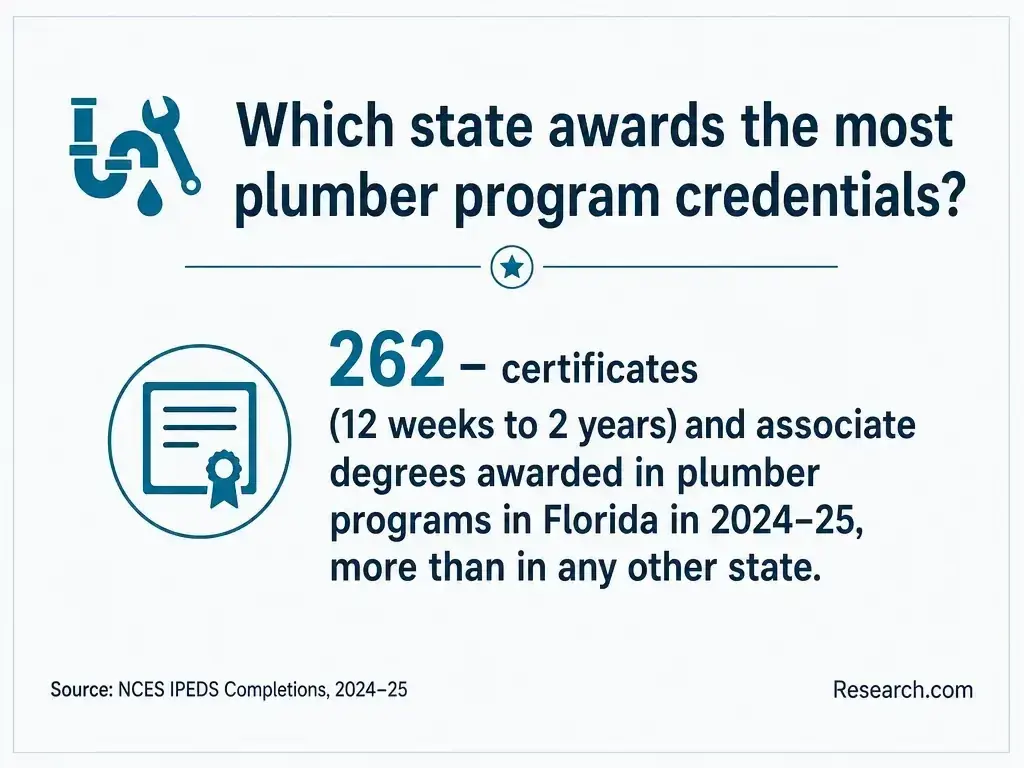
There is no single defensible Los Angeles average covering school certificates, private training, employer-paid instruction, and paid apprenticeships. Prices also change by enrollment status and provider. For a 2027 decision, obtain a current, itemized quote from each school and compare it with an apprenticeship's charges and wages over the same period. Do not treat the ranking's affordability score as a quoted program price.
The following cost categories show why the lowest tuition figure may not produce the lowest cost to become job-ready. Request each amount in writing rather than estimating it from a school's headline price.
| Cost or offset | What to verify | Why it changes the comparison |
| School charges | Tuition, mandatory fees, materials, and any resident-rate eligibility | Published tuition may exclude required charges. |
| Work-ready supplies | Tools, protective equipment, and required clothing | Employer-provided items can lower upfront expense. |
| Travel and time | Trips to shops or jobsites and earnings forgone during class hours | A distant or full-time program can cost more than its invoice suggests. |
| Funding and paid work | Grants, eligible aid, employer support, apprenticeship wages, and borrowing | Net cost and debt can differ markedly from sticker price. |
Federal aid eligibility belongs to the specific institution and program, not to all trade training. Federal Student Aid advises students to confirm eligibility and complete the FAFSA when appropriate; California residents should also ask about applicable state and college assistance. Lists of online schools that take fafsa cannot establish that a particular plumbing course qualifies. Compare net out-of-pocket cost and expected debt, then account for the wages you could earn during a paid apprenticeship.
A school may award a certificate, diploma, or, for a qualifying college program, an associate degree. A registered apprenticeship awards its own completion credential. An employer may instead document job training without awarding an academic credential. Ask the provider to name the exact award and show how employers or apprenticeship sponsors recognize it.
These credentials are not interchangeable with occupational licensure. Institutional accreditation addresses an institution's educational oversight; state school authorization concerns permission to operate; apprenticeship registration identifies a registered work-based training program; and a California C-36 license authorizes qualifying contractor activity. Neither an accredited school nor an industry training certificate automatically grants that contractor license. Resources about unrelated credentials, such as easiest phd degree programs, do not answer whether a plumbing credential supplies the practical training your intended job requires.
Requirements vary by provider. A school may require an application, placement assessment, or prerequisites for particular courses; an apprenticeship sponsor sets its own eligibility, selection process, and hiring conditions. Review the current school catalog or sponsor notice rather than assuming admission to a class also secures a paid apprenticeship position.
Entry is a separate question from staying employed on a jobsite. Ask whether you must obtain tools or protective equipment, travel to changing locations, meet employer safety policies, or pass any screening tied to a placement. If you already have construction experience, request a written evaluation of prior-learning credit or apprenticeship advanced standing before enrolling; neither should be presumed from your résumé.
Core instruction commonly covers measuring and layout, reading plans, selecting pipe and fittings, joining methods, drainage and venting concepts, water distribution, fixture installation, testing, troubleshooting, and safety. The U.S. Bureau of Labor Statistics identifies blueprint reading, code knowledge, installation, and repair as central occupational skills. California-focused instruction should teach students how to find and apply the codes relevant to their work rather than promise that memorizing a national code is sufficient for every local job.
Ask to see the shop syllabus: which assemblies will you build, which tools will you personally use, and how will an instructor assess your work? A lecture-heavy course may provide useful vocabulary, but it is not equivalent to repeated supervised installation and repair practice. Customer communication and documenting work also matter for service roles where plumbers explain problems and repairs in occupied homes or businesses.
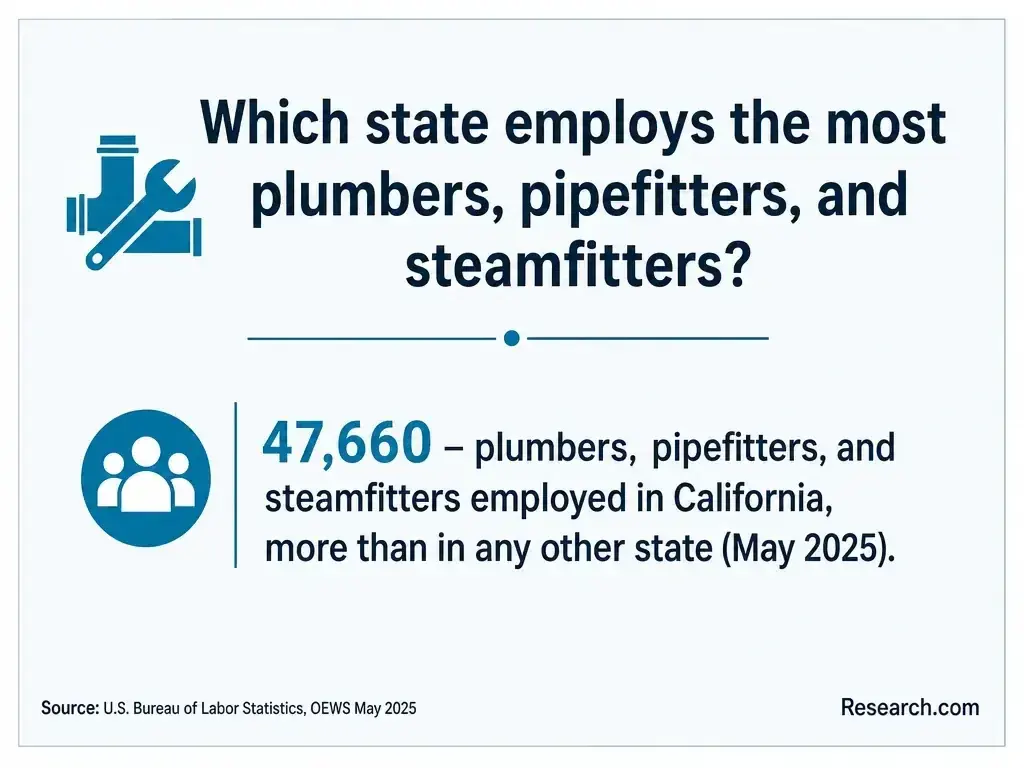
Do not confuse working as a plumbing employee with contracting independently. California's Contractors State License Board (CSLB) regulates the C-36 plumbing contractor license. CSLB generally requires an applicant to document four years of qualifying journey-level experience within the previous 10 years and pass a trade examination and a law-and-business examination, subject to its current rules and any applicable exemptions. A school certificate alone does not meet those requirements.
An entry-level worker can instead seek supervised employment or an apprenticeship without already holding a C-36 contractor license. The California Division of Apprenticeship Standards oversees state-registered apprenticeships; registration is not the same thing as a contractor license. Before paying for training intended to support a specific job or future business, check CSLB's current classification and experience rules and ask the employer or apprenticeship sponsor what it recognizes. Also check applicable local job requirements rather than assuming that every municipality or public project uses identical hiring rules.
Start with your intended first job: plumbing helper, apprentice, or a role that builds on existing experience. The best-value program is the one you can complete that supplies relevant practice and a credible route into supervised work - not necessarily the shortest course or the first result in an affordability ranking. Comparisons with highest paying 4 year degree lists do not measure a plumbing program's jobsite training or licensing relevance.
Use these questions with admissions staff and apprenticeship coordinators before you commit; ask for documents or specific examples rather than assurances.
A red flag is a claim that a short certificate makes you a licensed California contractor or guarantees a particular wage. Also be cautious if required labs are unspecified, charges are not itemized, or the provider cannot explain the difference between school approval, accreditation, apprenticeship registration, and CSLB licensure. For return on investment, weigh net cost and debt against paid training, likely completion, your current earnings, plausible post-training pay, and the time it takes to advance - not institution type alone.
A common progression is helper or apprentice, followed by increasingly independent installation or service work as skills and experience grow. Experienced workers may specialize in service diagnosis, commercial systems, or supervision; operating a contracting business brings separate California C-36 licensing obligations. Pipefitting and steamfitting are related occupations, but their work and training are not identical to plumbing. Confirm that a program's labs and employer connections match the trade you actually want.
Short courses and online certifications that pay well may look attractive to someone changing careers, but plumbing advancement depends heavily on demonstrated field competence. If you need income immediately, compare a paid apprentice or helper opening with tuition-based training. If employers will not consider you without basic tool and safety skills, a hands-on introductory program may be worth its cost.
The U.S. Bureau of Labor Statistics projects 6.8% national employment growth from 2025 to 2035 for plumbers, pipefitters, and steamfitters. That supports exploring the trade, but it is neither a Los Angeles-only plumbing forecast nor a promise of an opening after graduation. Construction hiring can vary with projects, while repair and maintenance create a different source of work.
Use the national projection as context, then investigate actual local entry points: current apprentice recruitment notices, employer requirements, and whether a school can identify recent plumbing placements. A growing occupation does not remove the need for transportation to jobsites, supervised practice, and a credential that employers understand.
Investing in training is a consequential decision, so Research.com evaluates programs against others in the same occupation and location rather than treating a low advertised tuition price as the whole story. Only programs with completions reported to the Integrated Postsecondary Education Data System (IPEDS) are eligible for the ranking. This makes the comparison more consistent, but it means a registered apprenticeship or employer-sponsored program may be absent even when it is a strong local option.
For most affordable rankings, the score uses tuition, cost of attendance, median student debt, and federal loan default rate. An entropy-based method assigns more weight to measures that distinguish programs more clearly. Accreditation and other quality indicators are not included in this affordability score. Research.com's separate best programs methodology considers student outcomes; earnings and return on investment; costs and debt; and quality and recognition. In that methodology, occupation-relevant programmatic accreditation or industry recognition receives 20%, institutional accreditation 10%, student support services 10%, and outcomes, earnings, and costs collectively 60%, with the latter indicators weighted through the entropy-based method.
The Research.com team uses the following data sources in developing its trade-school rankings. Some are relevant to other occupations in the broader ranking system; their inclusion does not imply that they approve plumbing programs.
The ranking can narrow your list of schools with reported completions and comparatively favorable cost-and-debt measures. Before enrolling, verify current program charges, hands-on training, apprenticeship connections, and licensing relevance directly with the provider. See Research.com's methodology for more on how its rankings are created.
# 1 position
# 2 position
No. Paid apprenticeship and supervised employer training are also routes into the trade. A school program can help you build basic skills, but ask whether it leads to worksite experience.
It can reduce upfront costs because apprentices earn wages while training. Compare any program fees, tools, benefits, travel, and the time it may take to secure an opening.
Not on the certificate alone. California's Contractors State License Board has separate experience, examination, and application requirements for a C-36 contractor license.
Online coursework can cover theory, but pipe assembly, testing, tool use, and jobsite skills require supervised in-person practice. Verify the lab requirements before enrolling.
Compare total net cost, supervised hands-on hours, the exact credential, and access to paid work or apprenticeship. Request current written details from each provider; a low tuition figure alone cannot answer which path is the better investment.