# 1 position

Audited and Verified:
Our Editorial and Data Verification Process
Research.com uses government datasets, official education statistics and primary institutional information to support its career and degree guides. Our review process checks factual accuracy, occupational definitions, source dates and the requirements associated with the credentials discussed.
How This Article Was Fact-Checked
Our editorial team verifies salary estimates, employment projections, education requirements and program information against original data providers and official organizations. Salary figures are checked against the relevant occupational definitions and reporting periods. Information about licensure, accreditation and required in-person training is reviewed separately.
Fact-checked and verified on:

Co-Founder and Chief Data Scientist

Reviewed by Karolina Broda
Fact-Checker and Data Verification
Choosing affordable plumber training in Calmar means looking beyond tuition: you need practical experience and a path that fits Iowa's licensing rules. The Research.com team of data scientists created the Most Affordable Plumber Trade Schools in Calmar for 2027 ranking to help students identify programs worth considering. Nationally, employment of plumbers, pipefitters, and steamfitters is projected to grow 6.8% from 2025 to 2035, according to the U.S. Bureau of Labor Statistics. This guide helps career starters and career changers compare school, apprenticeship, cost, and entry requirements before committing.
A plumber training program teaches you to read plans, measure and join pipe, install and test systems, and work safely around water, drainage, and related equipment. The critical distinction is between school-based preparation and supervised occupational experience: a classroom or shop credential alone should not be assumed to qualify you for independent plumbing work in Iowa.
For a Calmar resident, Northeast Iowa Community College is a local public-college option to investigate. Confirm its current plumbing-related offerings, campus or worksite location, credential, shop hours, and apprenticeship connections directly before treating any course as a complete entry pathway. The Iowa Plumbing and Mechanical Systems Board, rather than a school's marketing description, is the authority for state license eligibility.
A short course can make sense if you want foundational skills before seeking an employer. If you already have access to a registered apprenticeship, compare its classroom instruction, supervised work, wages, and costs before paying separately for similar preparation. Do not assume similarly named certificates provide the same practice or employer recognition.
Plumbing training can lead to work with residential service contractors, commercial construction firms, facilities-maintenance teams, and employers installing or repairing water and drainage systems. Pipefitting and steamfitting are related but distinct work: ask whether a program teaches the systems your intended employer actually uses, rather than relying on the broad occupational label in wage data (U.S. Bureau of Labor Statistics, Occupational Outlook Handbook).
Calmar's size makes worksite location a meaningful part of the choice. A training seat nearby may still require regular travel to a sponsor's jobs across northeast Iowa. Ask where apprentices are assigned, whether you need a vehicle, and whether travel is paid before comparing a school schedule with an employer-sponsored route.
The U.S. median annual wage for the combined occupation of plumbers, pipefitters, and steamfitters was $63,800 in May 2025, according to the U.S. Bureau of Labor Statistics. A national median covers experienced workers and multiple specialties; it does not describe typical starting pay, an apprentice rate, or wages specific to Calmar.
For a useful earnings comparison, request the actual apprentice wage schedule from a prospective sponsor and compare local job postings for the work you want to perform. Then weigh likely earnings while training against school costs and any hours you would have to give up at your current job. Avoid using the national median as a guaranteed return on tuition.
Completion time depends on the credential and what it is intended to accomplish. A short school course may teach introductory skills; a longer certificate or diploma can allow more shop practice. A registered apprenticeship combines instruction with supervised employment and takes substantially longer than a stand-alone introductory course. The U.S. Bureau of Labor Statistics describes plumbing apprenticeships as typically lasting four to five years; confirm the schedule and Iowa eligibility rules with the sponsor and state board before enrolling.
If speed matters, distinguish time to finish a course from time to meet licensing requirements. Readers comparing best 6-month certificate programs that pay well online should not assume a short online plumbing course replaces worksite experience. Ask each provider for its scheduled instruction hours, hands-on hours, and any credit a registered apprenticeship will award for prior training.
Online instruction can be useful for plumbing theory, math, plan reading, and some safety topics. It cannot, by itself, show that you can cut and join pipe, locate faults, test an installation, or work safely on an occupied jobsite. An on-campus or hybrid option is more useful when it provides accessible shop practice and a clear route to supervised work.
When comparing formats, request a schedule showing which sessions take place online, in a lab, and at an employer worksite. Confirm who evaluates practical skills and whether the arrangement satisfies the apprenticeship sponsor and Iowa Plumbing and Mechanical Systems Board. Even when exploring best non profit accredited online colleges, remember that institutional accreditation and an online course format do not replace occupation-specific experience or state licensing decisions.
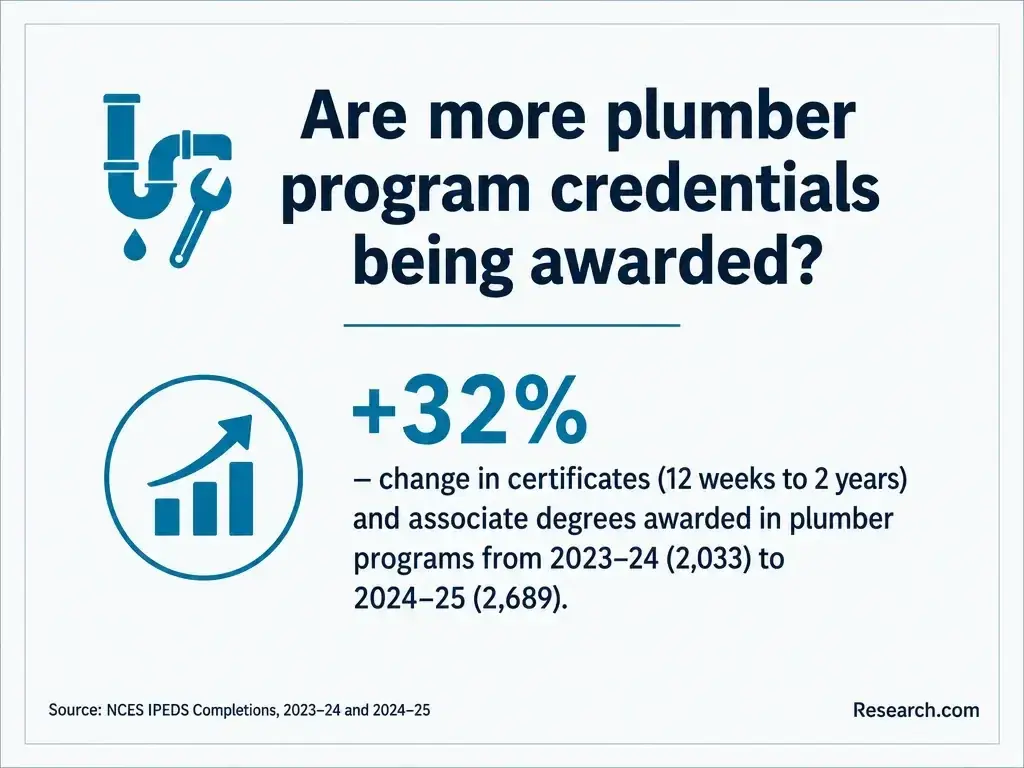
There is no reliable single "average cost" that covers all Calmar plumbing routes. A public-college course, a longer school credential, and a paid apprenticeship have different prices, schedules, and earnings while training. Published tuition alone is therefore a poor measure of the amount needed to become job-ready.
Ask for a written, itemized estimate covering tuition and mandatory fees; books and consumables; tools, work clothing, and protective equipment; any required screening; exam and license applications; and travel to classes and jobsites. Check whether you can use existing tools, whether an employer supplies gear, and whether the specific program qualifies for federal aid, Iowa workforce assistance, or other funding. Federal Student Aid eligibility depends on the institution, program, and student - not simply on the occupation. Compare the remaining out-of-pocket cost and foregone earnings with the wages available through a paid apprenticeship.
The credential depends on the route: a school may award a certificate or diploma, while completion of a registered apprenticeship documents a different combination of instruction and supervised work. Neither should be described as an Iowa plumbing license. Before enrolling, ask precisely what the credential is, whether an apprenticeship sponsor recognizes it, and whether completed instruction can count toward that sponsor's requirements.
Industry training credentials may help document particular skills, but recognition by an employer is different from state authority to perform licensed work. If you are comparing certification programs that pay well, verify the credential's issuer and what it actually permits in Iowa. Institutional accreditation, program recognition, apprenticeship registration, and occupational licensure answer separate questions.
Entry rules vary by provider. A school may ask for an application and placement information; an apprenticeship sponsor or employer may also assess math, availability, driving needs, and readiness for physical work. Ask for the current requirements in writing, including any age, education, screening, or employment conditions, rather than assuming admission to a course also secures an apprentice position.
Career changers should ask whether prior shop learning earns credit or advanced standing - and get the answer from both the school and the apprenticeship sponsor. This is especially useful if you are weighing a trade pathway against resources such as best degrees for 60 year olds: the relevant plumbing question is whether your schedule, physical demands, paid-training options, and time to occupational entry fit your circumstances.
Useful plumbing instruction connects code concepts and calculations to physical installation. Expect topics such as pipe materials and joining methods, fixtures, supply and drainage, drawings, measurement, troubleshooting, and jobsite safety, with content varying by program (U.S. Bureau of Labor Statistics, Occupational Outlook Handbook). Ask to see the syllabus and shop schedule: a course covering the right topics on paper may offer too little supervised practice for your goal.
Look for opportunities to assemble and test systems, use trade tools, correct mistakes, and receive feedback. If your goal is service work, ask about diagnostic practice; if it is construction, ask about reading plans and installing systems in coordination with other trades. Worksite training adds experience with real schedules, occupied buildings, and employer safety procedures that a school lab cannot fully reproduce.
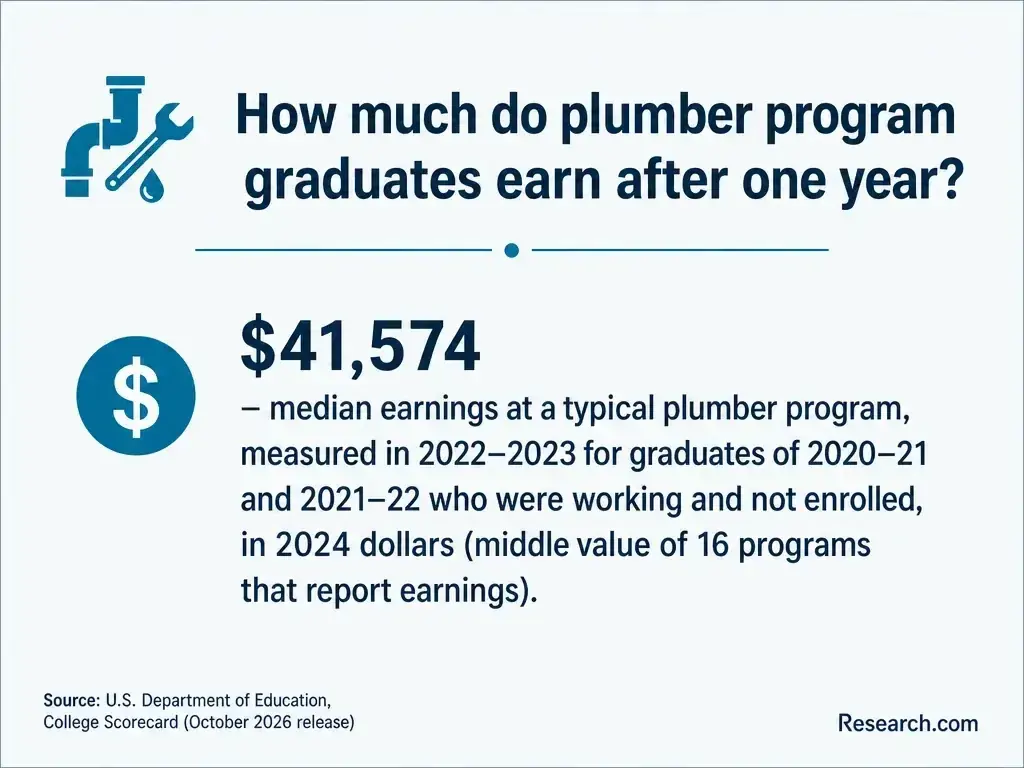
Yes - plan around Iowa's plumbing licensing framework, not graduation alone. The Iowa Plumbing and Mechanical Systems Board regulates plumbing licenses, including progression beyond apprentice-level work. The applicable category, qualifying experience, examination, and supervision rules depend on the role sought; confirm the current requirements directly with the board before paying for training. A school certificate does not itself confer permission to work independently.
Ask a prospective employer or sponsor who handles apprentice registration and how supervised hours are documented. Then ask the board whether the proposed school instruction or prior experience counts toward your intended license. Industry certification and school accreditation may be useful signals, but neither substitutes for Iowa occupational licensure.
The best-value option is the one that gets you the practical training and regulatory eligibility you need at a cost you can sustain. Start with your intended job - service plumbing, new construction, or a related pipe trade - then compare the school route with available registered apprenticeships and employer training. An affordability ranking is a shortlist, not a substitute for checking current program details.
Use these questions when speaking with Northeast Iowa Community College, an apprenticeship sponsor, or an employer; the answers reveal costs and gaps that a tuition figure cannot:
A red flag is a promise of quick independent practice without a clear explanation of Iowa licensing and supervised experience. Another is a low advertised tuition figure that omits mandatory expenses. Comparing unrelated options such as cheapest masters degrees online will not answer whether plumbing training meets your occupational goal; compare the whole pathway instead, including completion likelihood, borrowing, wages during training, and time until you can take the next licensing step.
An entry route may begin with introductory training and an apprentice position, followed by greater responsibility as supervised experience and Iowa license requirements are met. With experience, workers may focus on residential service, commercial installation, maintenance, or supervision. Self-employment is a separate decision involving the applicable license, business obligations, customers, and operating costs - not an automatic outcome of finishing trade school (Iowa Plumbing and Mechanical Systems Board; U.S. Bureau of Labor Statistics, Occupational Outlook Handbook).
Choose initial training with your likely next step in mind. Someone seeking service calls benefits from troubleshooting practice and access to a service employer; someone aiming at commercial projects should ask about plan reading, larger systems, and relevant worksite placements. A credential's value depends in part on whether it helps secure the supervised experience needed for that progression.
U.S. employment of plumbers, pipefitters, and steamfitters is projected to grow 6.8% from 2025 to 2035, according to the U.S. Bureau of Labor Statistics Employment Projections. That is a national projection for a combined occupation, not a forecast of openings in Calmar or an assurance that a particular graduate will be hired.
For a local decision, check current northeast Iowa apprenticeship openings and employer vacancies before choosing a class schedule. Demand may be spread across communities and jobsites beyond Calmar, so willingness and ability to travel can affect access to training and work as much as the number of nearby courses. Compare a sponsor's actual hiring timeline with the start date of any school program.
Education is a consequential investment, so Research.com designed this ranking to make local cost comparisons more transparent. Programs are compared with others in the same occupation and location; only programs reporting completions to the Integrated Postsecondary Education Data System (IPEDS) are eligible. That restriction means the ranking may not include every apprenticeship, employer training route, or other available option.
For most affordable rankings, Research.com scores tuition, cost of attendance, median student debt, and federal loan default rate. An entropy-based method gives more weight to measures that differ more among eligible programs. Accreditation and other quality indicators are not part of this affordability score. The separate best programs methodology also considers student outcomes, earnings, support, and recognition; readers should not mistake an affordability rank for a finding that a program meets Iowa licensing requirements or provides sufficient hands-on training.
The Research.com team draws on the following sources to check education, cost, outcome, and occupation-related information. Some sources cover trades other than plumbing; their inclusion in the research process does not make them plumbing accreditors or Iowa licensing authorities.
This approach helps readers identify lower-cost options to investigate, not skip direct verification. For more on how the rankings are built, see Research.com's methodology.
# 1 position
# 2 position
Not necessarily. A registered apprenticeship or employer-sponsored route may provide classroom instruction and supervised work. Verify your intended route against Iowa Plumbing and Mechanical Systems Board requirements.
It may lower borrowing because apprentices are employed while training, but compare wages, required purchases, travel, and any instruction costs. The cheapest route depends on your actual offer and schedule.
Online coursework can cover theory, but it does not replace practical plumbing skills or required supervised experience. Confirm the in-person and licensing steps before enrolling.
Check its current catalog and ask about the specific plumbing-related offering, credential, shop hours, and apprenticeship connections. Do not infer license eligibility from a program name.
Compare mandatory fees, tools, travel, practical hours, available aid, and whether a sponsor recognizes the training. Ask for itemized costs and written answers about the next step toward Iowa licensing.