# 1 position


Audited and Verified:
Our Editorial and Data Verification Process
Research.com uses government datasets, official education statistics and primary institutional information to support its career and degree guides. Our review process checks factual accuracy, occupational definitions, source dates and the requirements associated with the credentials discussed.
How This Article Was Fact-Checked
Our editorial team verifies salary estimates, employment projections, education requirements and program information against original data providers and official organizations. Salary figures are checked against the relevant occupational definitions and reporting periods. Information about licensure, accreditation and required in-person training is reviewed separately.
Fact-checked and verified on:

Co-Founder and Chief Data Scientist

Reviewed by Karolina Broda
Fact-Checker and Data Verification
For a prospective plumber in Columbus, the cheapest course is not necessarily the cheapest route to a job: tools, unpaid training time, and access to supervised work all matter. The U.S. Bureau of Labor Statistics projects 6.8% national employment growth for plumbers, pipefitters, and steamfitters from 2025 to 2035. This guide compares school-based training with paid apprenticeships, explains Ohio's licensing rules, and shows what to check before enrolling. It accompanies the Most Affordable Plumber Trade Schools in Columbus for 2027 ranking, created by the Research.com team of data scientists to help students identify programs worth considering.
Expect instruction in pipe systems, drawings, code, measurement, and safety, with shop practice if the program is designed for hands-on entry. A school course can build foundational skills; it is not automatically an apprenticeship or a substitute for years of supervised field experience. Ask for the published breakdown of classroom, lab, and employer-worksite hours before treating similarly named credentials as equivalent.
The main decision is whether to pay for an introduction to the trade or seek a sponsor that pays you while you learn. This comparison shows what each route generally delivers; actual offerings and entry terms vary by provider.
| Pathway | What it provides | Best fit and main limitation |
| School certificate or diploma | Structured instruction and, where offered, plumbing labs | Useful for exploring the trade or strengthening an application; verify field experience and total cost. |
| Registered apprenticeship | Paid supervised work plus related instruction under a registered sponsor | Strong fit for earning while training; entry can depend on openings and selection requirements. |
| Direct employer entry | Helper work and employer-led training | Can provide immediate work; ask whether instruction is structured and whether experience counts toward advancement. |
| Associate-degree pathway with relevant trade coursework | Trade instruction plus broader coursework | Consider only if the additional credential serves your goal; it can take longer and cost more than focused training. |
Unlike some quick degrees online that pay well, plumbing entry depends heavily on demonstrated practical skill. Choose the shortest route only if it gives you enough supervised practice to compete for the work you want.
Potential workplaces include residential service firms, commercial construction contractors, facilities-maintenance teams, and contractors working on new buildings or renovations. Pipefitting and steamfitting are related but distinct specialties: a plumbing course should not be assumed to prepare you for every industrial piping role (U.S. Bureau of Labor Statistics).
Columbus-area applicants should compare a program's employer connections with their intended work. For example, a residential-service placement may develop troubleshooting and customer communication, while a commercial construction placement may emphasize drawings, installation sequencing, and jobsite coordination. Ask where recent trainees obtained supervised work, not merely whether the provider advertises "job placement."
A verified Columbus-specific wage should be the basis for a local pay comparison; the national figure is context, not a substitute. The U.S. Bureau of Labor Statistics reports a $63,800 national median annual wage in May 2025 for plumbers, pipefitters, and steamfitters combined. That figure covers experienced workers and multiple specialties, so an entry-level plumbing helper or apprentice should not budget as though they will immediately earn the median.
Compare any Columbus offer by hourly rate, paid hours, benefits, travel between sites, and scheduled raises during training. For return on investment, account for your current earnings, time out of work, aid, debt, likelihood of completing, and the time it may take to advance; do not compare a course's tuition with one year of median occupational pay. Plumbing is a different investment from a 1 year master program online because supervised work is central to entering the trade.
A school-based introductory course may be much shorter than an apprenticeship, but its length does not tell you whether it leads to independent work. Registered plumbing apprenticeships commonly extend across multiple years of paid work and related instruction; the sponsor's approved standards, rather than a general estimate, establish the actual schedule. Federal registered-apprenticeship standards use at least 2,000 hours of on-the-job learning for a time-based program and recommend 144 hours of related instruction per year (U.S. Department of Labor, 29 CFR 29.5).
Ask a provider for its exact contact hours, shop hours, required attendance, and whether graduates receive credit toward a particular sponsor's apprenticeship. Get any advanced-standing arrangement in writing before enrolling. A course advertised as "accelerated" may save classroom time without shortening the supervised work needed to become proficient. The practical timeline is therefore unlike that of a phd without dissertation: plumbing progress is measured substantially through worksite competency.
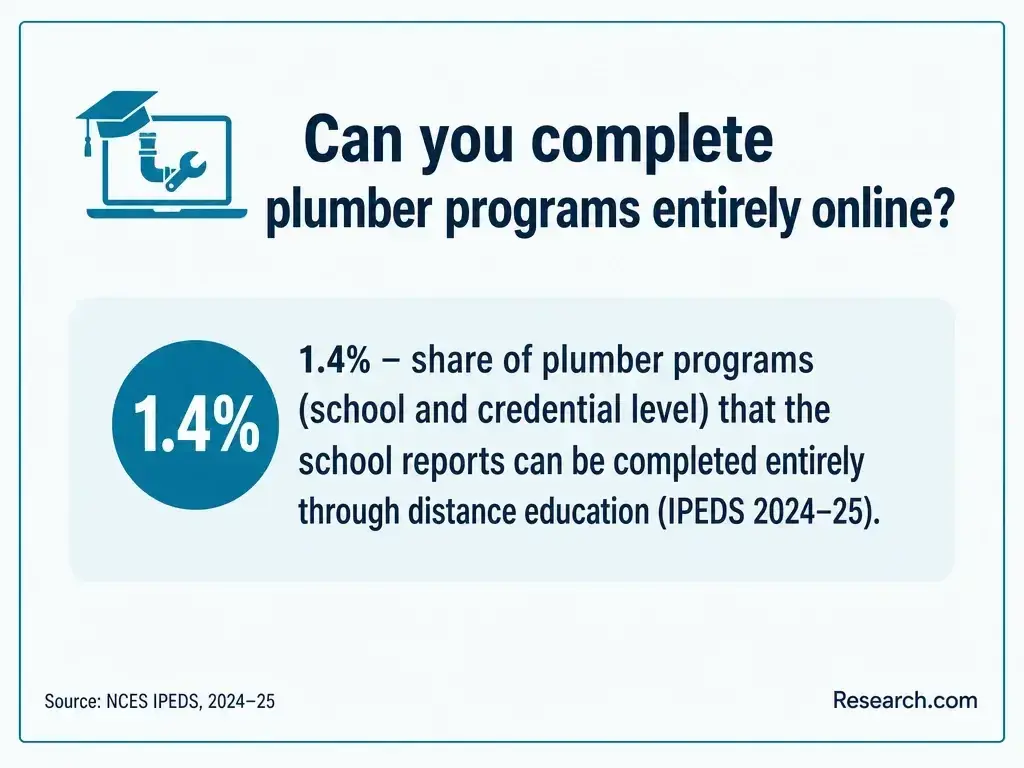
Online lessons can cover calculations, terminology, drawings, and code concepts. They cannot by themselves show that a learner can measure, cut, join, test, and troubleshoot a piping system safely. On-campus or hybrid options make more sense when they provide accessible shop sessions and a clear route to supervised fieldwork; an online-only course is better treated as supplemental preparation unless an employer or apprenticeship sponsor confirms how it fits its training requirements.
Before choosing a hybrid option, check the location and timing of every required lab. Travel across the Columbus area can erase the convenience of remote coursework, particularly for someone also working apprentice hours. Whether comparing trade formats or reading about what is the easiest bachelor degree, do not let delivery format stand in for evidence of occupational readiness.
There is no single defensible Columbus average that captures school certificates, employer training, and paid apprenticeships on the same basis. Request a written, program-specific estimate instead. For a school option, add mandatory tuition and fees, books, consumable materials, tools, protective equipment, and travel to shops or worksites. Also account for earnings you would forgo if the timetable reduces your paid work.
For an apprenticeship, compare apprentice wages and benefits against any required classroom charges, tools, and transportation. A lower school sticker price can be a worse financial choice if it lacks practical training or delays paid entry. Ask Columbus State Community College or any apprenticeship sponsor you are considering for its current itemized charges and aid terms; do not assume that a provider's general tuition figure is the plumbing program's job-ready cost.
Federal aid depends on the institution and program's eligibility, while workforce funding, scholarships, and employer support have separate rules (Federal Student Aid; OhioMeansJobs). Confirm eligibility before counting assistance in your budget, and compare the net cost and debt you would actually take on.
A school may award a certificate, diploma, or, for an eligible academic pathway, an associate degree. A registered apprenticeship has its own completion credential issued through the registered apprenticeship system. These credentials document different types and amounts of learning; none should be described simply as a "plumber license" (U.S. Department of Labor; Ohio Construction Industry Licensing Board).
Ask which specific credential appears on the transcript or completion document and whether a local sponsor recognizes it for entry or advanced standing. Institutional accreditation concerns the school; state authorization concerns its permission to operate; industry credentials address particular skills; and occupational licensing concerns legal authority to perform regulated work. Check each separately. Lists of top schools with national accredited status cannot establish whether a plumbing program provides the field practice or regulatory standing you need.
School entry requirements and apprenticeship selection requirements are not interchangeable. A school may ask for an application, proof of prior education, and placement information; a sponsor may additionally assess math readiness, work eligibility, ability to reach jobsites, and its own selection criteria. Requirements vary, so check the current admissions page or ask the sponsor directly rather than assuming that admission to a course secures an apprenticeship.
If you are new to the trade, ask whether you need to arrange your own employer placement and whether a driving requirement applies to the worksite assignments you want. If you already work in construction, ask whether documented experience can count toward placement or advanced standing; obtain the answer from the receiving program or sponsor, not only the school selling the course.
Relevant instruction typically covers reading plans, laying out pipe runs, measuring and joining materials, drainage and water-supply systems, fixture installation, testing, jobsite safety, and applicable code. Plumbing also requires diagnosing failures and communicating with customers or other trades - not just installing new pipe (U.S. Bureau of Labor Statistics; O*NET).
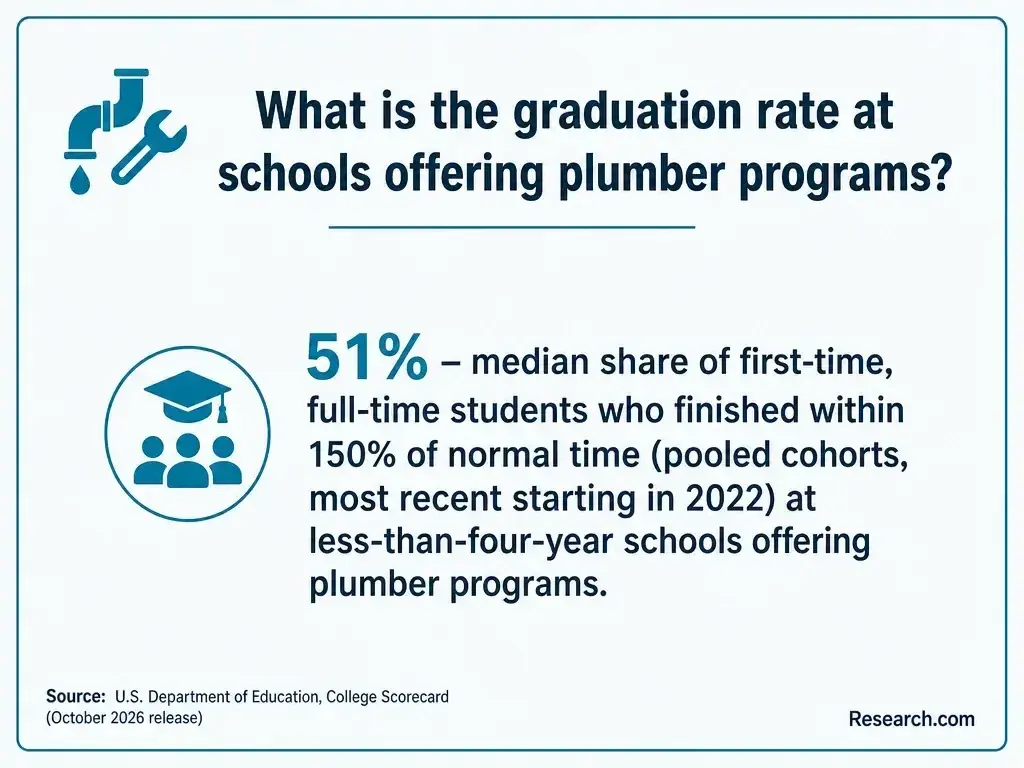
Evaluate a curriculum through its practical assessments. Can students assemble and test systems in a shop? Do they use the tools and materials they will encounter at work? Who supervises field tasks, and how are competencies recorded? A program with extensive code videos but little assessed hands-on work may be useful preparation, yet insufficient as a stand-alone path to employment.
Ohio does not have a general statewide journeyman-plumber license. The Ohio Construction Industry Licensing Board regulates plumbing contractors undertaking covered commercial contracting work; its contractor requirements involve experience and examination, among other conditions. Completing trade school is not the same as obtaining that license (Ohio Construction Industry Licensing Board).
Rules for a particular job can also depend on the work performed and the authority having jurisdiction. Before planning to work independently, ask the relevant Columbus building or licensing office what contractor registration, permits, or supervision apply to your intended residential or commercial work. If your immediate goal is an apprentice or employee position, ask the hiring sponsor what entry credentials it requires. Optional industry certificates may help demonstrate skills, but they do not replace a required contractor license.
Use the affordability ranking to form a shortlist, then test whether each option actually moves you toward your intended job. The questions below target the cost and training gaps that a tuition figure cannot reveal:
A red flag is a promise that a short online certificate alone makes you licensed or guarantees a Columbus job. Another is a low advertised tuition that omits mandatory equipment or fails to explain how students obtain field experience. A school course is worth considering when its assessed skills, employer connections, schedule, and net cost fit your goal; otherwise, applying directly to paid apprenticeships or helper positions may be the better first move.
A realistic first step is a helper or apprentice role under experienced supervision. With additional work-based learning, a worker may progress toward more independent installation or service assignments, specialize in particular systems, or take on crew leadership. Operating as a contractor is a separate decision involving applicable licensing and business requirements; training completion alone does not authorize it (U.S. Bureau of Labor Statistics; Ohio Construction Industry Licensing Board).
Match the first training placement to the direction you want to pursue. Someone interested in service calls should seek troubleshooting and customer-facing practice; someone drawn to larger construction projects should ask about plan reading, jobsite coordination, and commercial systems. Neither path requires assuming that every plumbing credential also qualifies its holder for pipefitting or steamfitting work.
The U.S. Bureau of Labor Statistics projects 6.8% growth from 2025 to 2035 for the national plumbers, pipefitters, and steamfitters occupation. That signals continuing demand across the combined trade, but it is not a Columbus-specific forecast or a placement rate for any school.
For a local decision, compare current Columbus-area apprentice and helper openings with each program's employer network and the sites you can realistically reach. Ask sponsors when they recruit and whether openings favor service, new construction, or other work. National growth makes the career worth investigating; access to supervised local employment determines whether a particular training route is practical for you.
Investing in training is an important decision, so Research.com evaluates programs against other programs in the same occupation and location rather than against unrelated schools nationwide. The Most Affordable ranking considers tuition, cost of attendance, median student debt, and federal loan default rates. Its indicator weights are assigned using an entropy-based method, which gives more weight to measures that vary more across eligible programs. Accreditation and other quality indicators are not part of the affordability score.
Only programs with completions reported to IPEDS are eligible. That boundary helps make the comparison consistent, but it also means a registered apprenticeship, employer program, or other training provider may be absent without being unsuitable or unapproved. Research.com checks data from the following sources when creating its trade-program rankings; some accreditation and certification sources apply to other occupations, not plumbing:
The ranking is a starting point for comparing reported school costs, not a verdict on job readiness. Readers should also compare shop time, apprenticeship connections, fees, and the credential awarded. More detail about Research.com's approach appears on its methodology page.
# 1 position
# 2 position
Not necessarily. A registered apprenticeship or an employer-supported entry route may provide training without a separate school certificate. Compare the instruction, supervised work, and entry requirements of each route.
Online study can teach theory, but plumbing requires assessed hands-on skills and supervised work. Ask a prospective employer or apprenticeship sponsor how an online course would count before paying for it.
No. Ohio's commercial plumbing contractor licensing has separate requirements. Check the Ohio Construction Industry Licensing Board and the local authority for the work you intend to do.
It can reduce out-of-pocket costs because you earn while learning, but compare wages, classroom charges, tools, travel, and time to completion. Admission and available work also matter.
Request the total required cost, shop and field hours, credential awarded, placement arrangements, and written confirmation of any apprenticeship credit. Ask how the provider measures program-specific outcomes.