# 1 position
Most Affordable Pharmacy Technician Schools & Training in Utah for 2027
Audited and Verified:
Our Editorial and Data Verification Process
Research.com uses government datasets, official education statistics and primary institutional information to support its career and degree guides. Our review process checks factual accuracy, occupational definitions, source dates and the requirements associated with the credentials discussed.
How This Article Was Fact-Checked
Our editorial team verifies salary estimates, employment projections, education requirements and program information against original data providers and official organizations. Salary figures are checked against the relevant occupational definitions and reporting periods. Information about licensure, accreditation and required in-person training is reviewed separately.
Fact-checked and verified on:

Co-Founder and Chief Data Scientist

Reviewed by Karolina Broda
Fact-Checker and Data Verification
The cheapest pharmacy technician program is not necessarily the cheapest route to a Utah license: exam fees, required practice, and time away from work can change the total. The U.S. Bureau of Labor Statistics reports a $45,750 national median annual wage for pharmacy technicians in May 2025. This guide pairs those career realities with a Most Affordable Pharmacy Technician Trade Schools in Utah for 2027 ranking created by the Research.com team of data scientists. It will help prospective students compare costs, training routes, and licensing fit before enrolling.
Key findings about pharmacy technician degrees in Utah
- Compare the total cost to become licensed, not just tuition: Utah applicants should account for practical training, certification testing, licensing, and travel before choosing the lowest-priced program.
- The national median annual wage for pharmacy technicians was $45,750 in May 2025; it is not a Utah starting-wage estimate (U.S. Bureau of Labor Statistics).
- U.S. pharmacy technician employment is projected to grow 6.4% from 2025 to 2035, but a program's value still depends on whether its training fits Utah licensing requirements and nearby employers (U.S. Bureau of Labor Statistics).
Table of Contents
- Most Affordable Pharmacy Technician Schools & Training in Utah for 2027
- What can I expect from a pharmacy technician trade school program in Utah?
- Where can I work with a pharmacy technician trade school training in Utah?
What can I expect from a pharmacy technician trade school program in Utah?
Expect instruction in medication names, dosage calculations, prescription processing, inventory, patient privacy, and error prevention, followed by practice with pharmacy workflows. A technician works under a pharmacist's supervision; training does not authorize independent clinical decisions (U.S. Bureau of Labor Statistics). Programs differ substantially in whether practice occurs in a simulation lab, an employer pharmacy, or both.
Public technical-college and community-college programs can suit students who want scheduled instruction and help arranging practical experience. Employer-sponsored training can suit someone who can secure a supervised position and wants to earn while learning. An apprenticeship may combine paid work and instruction where a suitable sponsor is available; do not assume every pharmacy job advertised as "training" is a registered apprenticeship (U.S. Department of Labor). The deciding question is whether the specific route documents the experience and preparation needed for Utah licensure - not whether it uses a familiar school label.
Where can I work with a pharmacy technician trade school training in Utah?
Utah technicians may work in retail and grocery pharmacies, hospital pharmacies, health-system clinics, and other medication-dispensing settings. Retail work emphasizes prescription intake, insurance claims, inventory, and customer communication. Hospital work may add sterile-product preparation and medication distribution, with employer-specific competency checks (U.S. Bureau of Labor Statistics).
Location matters when comparing programs: a convenient campus is less useful if its required placement demands a difficult commute or an incompatible shift. Ask where previous students completed supervised practice and whether the program can arrange a site near your home. A classroom credential alone does not establish that a particular hospital will hire a new technician for specialized duties.
Pay depends on setting, experience, shift, and local market. The U.S. Bureau of Labor Statistics reports a $45,750 national median annual wage in May 2025 for pharmacy technicians. A national midpoint is neither a Utah wage figure nor an expected offer for a newly trained applicant. For a local decision, compare current Utah Department of Workforce Services wage estimates with openings in the area where you intend to work.
Ask employers about starting pay and any differential for evenings, weekends, or specialized duties before calculating a program's payoff. A higher wage after training may still take longer to justify a costly program if you must reduce work hours, borrow heavily, or travel far for placement. Conversely, paid supervised training may lower the investment even if its classroom schedule is less flexible.
Completion time depends on the provider's schedule, the amount of practical training, and when a placement is available. An accelerated classroom sequence may end well before a student finishes supervised work, passes any required examination, and obtains a Utah license. Ask each provider for separate estimates of instructional hours, practical hours, calendar time, and time to licensing eligibility; do not assume those milestones occur together.
If speed is your priority, compare the dates on which you could actually begin paid technician work, not just graduate. Pages about accelerated degree programs online answer a different question: pharmacy technician entry depends on occupation-specific practice and state requirements. A part-time route can preserve current earnings, while a full-time route may shorten the calendar schedule but increase lost wages.
Online delivery can work for terminology, calculations, and other coursework. It cannot, by itself, demonstrate every hands-on competency involved in handling medications, using pharmacy systems, or following workplace safety procedures. Before enrolling in a remote program, obtain a written explanation of where practical work occurs, who supervises it, and how the provider documents it for Utah licensing review.
The comparison below separates learning format from the practical experience a student may still need.
| Format | Potential advantage | Point to verify |
| On-campus | Scheduled labs and direct instructor feedback | Whether a workplace placement is included and accessible |
| Hybrid | Remote coursework with designated in-person sessions | Required campus visits and placement location |
| Online coursework | Greater flexibility for theory | Who arranges and documents supervised practical training |
A search for the best schools to go to for college will not settle this occupation-specific question. For pharmacy technician training, the better format is the one you can complete and use toward your intended Utah licensing route. Treat "fully online and immediately job-ready" claims as a reason to request written evidence, not as proof of eligibility.
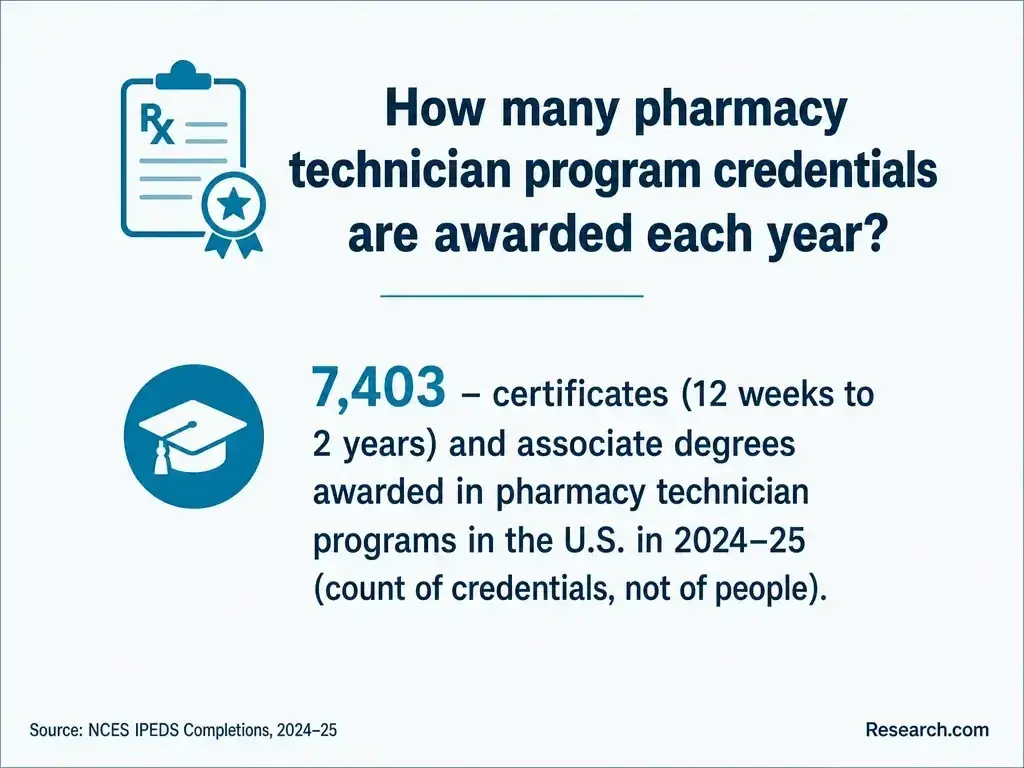
There is no single reliable statewide price that represents every Utah pharmacy technician training route. Published tuition can omit charges that differ by provider, while employer-sponsored training may shift some costs away from the student. For a 2027 decision, request a current, itemized estimate from each program rather than treating an earlier catalog price or a schoolwide cost-of-attendance figure as the program's final bill.
Build a comparable total that includes tuition, mandatory fees, books or software, lab supplies and uniforms if required, background screening or health documentation, certification examinations, Utah application fees, and travel to campus and placement. Add earnings you expect to forgo during training; subtract aid you are eligible to receive or wages from paid training. Federal student aid depends on the student's and program's eligibility, not simply a provider's accreditation (Federal Student Aid). Utah workforce funding may also be worth checking with the Utah Department of Workforce Services.
Affordability is more than the lowest bill. Compare the amount you would borrow with your likelihood of completing, your current earnings, realistic starting offers, and the time it would take any earnings gain to repay your investment. That calculation is more useful than assuming a program will lead to one advertised salary.
A school may award a certificate or diploma documenting completed training. That award is distinct from national certification, which comes from a certifying organization after its eligibility and examination requirements are met, and from a Utah occupational license, which the state issues under its own rules. The Pharmacy Technician Certification Board administers the PTCE; the National Healthcareer Association administers the ExCPT. Confirm which examinations Utah currently accepts before paying for preparation or testing (PTCB; NHA; Utah Division of Professional Licensing).
Institutional accreditation assesses an institution; programmatic accreditation assesses a particular program. ASHP/ACPE accreditation is a pharmacy-technician program recognition to check where offered, but neither type of accreditation is itself a Utah license (American Society of Health-System Pharmacists; Utah Division of Professional Licensing). If you may later continue training, ask whether your coursework carries transferable credit or is a noncredit occupational credential; a similarly named certificate does not establish transferability.
Lists of certifications that pay well without a degree can help frame a career search, but the certificate, certification, and license in this occupation serve different purposes. Ask the provider to name exactly which one you will hold at graduation.
Entry rules vary by provider and placement site. A program may ask for evidence of secondary-school completion, an application, a skills assessment, or background and health documentation before workplace practice. An employer-training route may instead begin with a job application. Ask when each requirement is due: a student who can begin coursework but cannot enter a required placement may face a costly delay.
Admission is not the same as authorization to work in a pharmacy. Before accepting a placement or training job, check the Utah Division of Professional Licensing's current technician and trainee rules, including whether you need a trainee credential first and how supervised experience must be recorded. If you already have pharmacy experience, ask both the provider and the licensing agency whether it can count; never assume prior work automatically waives training.
A useful curriculum connects arithmetic and medication terminology to actual prescription workflow: interpreting an order, entering information accurately, identifying a potential discrepancy, preparing the medication as permitted, and referring clinical questions to a pharmacist. It should also address inventory controls, insurance processing, privacy, and communication with patients and coworkers (U.S. Bureau of Labor Statistics; O*NET).
Ask to see the practical-training outline, not just a course-title list. Students aiming for hospital roles should ask whether they can practice the relevant procedures and whether sterile-compounding instruction is included; students aiming for retail roles should look for prescription-processing and insurance-workflow practice. Specialized duties commonly require additional employer training after entry, so neither curriculum should be mistaken for automatic qualification for every technician position.
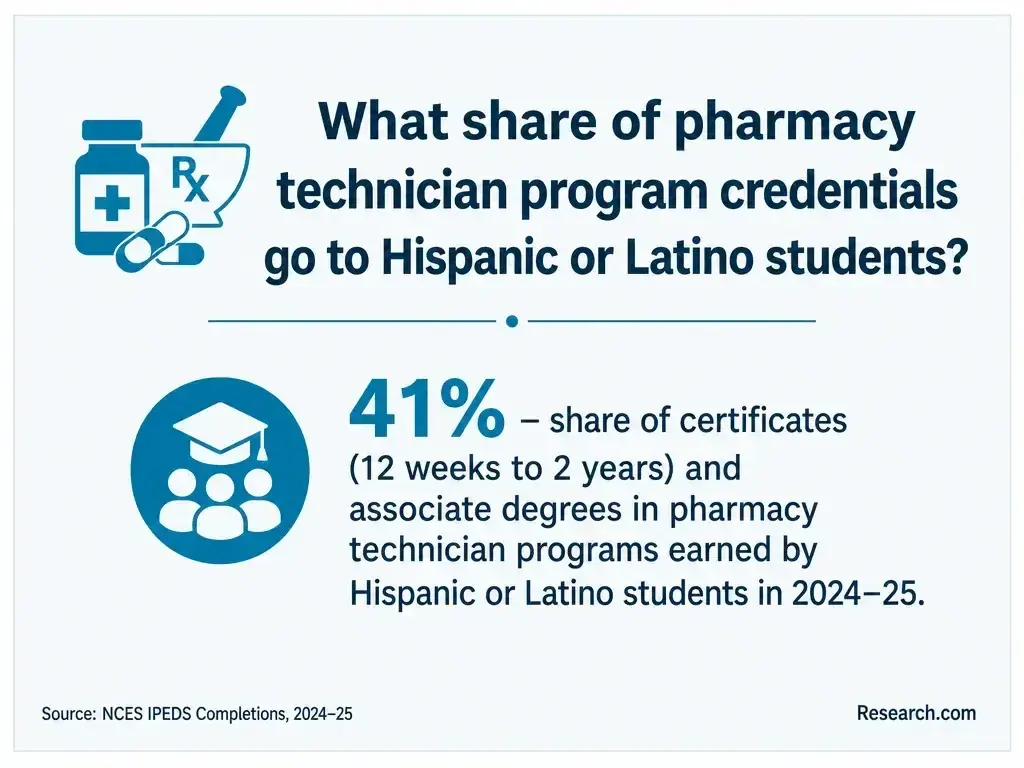
Utah regulates pharmacy technician practice through the Utah Division of Professional Licensing (DOPL). Before starting work, distinguish any trainee authorization used during supervised training from the pharmacy technician license needed for the role you intend to hold. DOPL's current application instructions and pharmacy rules - not a school's general statement that its graduates are "certification-ready" - control the applicable training, examination, and licensing steps (Utah Division of Professional Licensing; Utah Administrative Code).
National certification and state licensure are separate decisions by separate organizations. Ask DOPL which examinations it currently accepts and what evidence it requires from your chosen training route; then ask the school or employer who supplies that evidence. Do this before enrolling in an out-of-state online program or accepting an unsupervised placement. Completing coursework alone should never be treated as permission to practice.
Start with the job and licensing route you want, then compare programs that can plausibly get you there. Snow College, Salt Lake Community College, Utah State University, Bridgerland Technical College, and Davis Technical College are among the named institutions a Utah student might investigate; confirm each institution's current pharmacy technician offering, location, schedule, and credential directly rather than assuming every campus offers the same option.
Use the affordability ranking as a shortlist, not a substitute for due diligence. These questions expose differences that a tuition figure cannot:
- What credential is awarded, and how does this specific route meet current Utah DOPL requirements?
- How many instructional and supervised practical hours are required, and who secures the placement?
- What is the complete cost through examination and license application, after likely aid or paid-training wages?
- What happens if a placement is delayed, and what support is available to finish?
Request written answers and verify licensing claims with DOPL. Confirm institutional accreditation with the accreditor, any claimed programmatic accreditation with the relevant program accreditor, and federal-aid eligibility with the school's aid office. A search for universities that offer double degrees does not answer these trade-training questions. The right investment is the route whose cost, completion schedule, practical experience, and licensing eligibility fit your goal.
Entry-level technicians commonly build speed and accuracy in retail or health-system workflows before pursuing more specialized responsibilities. With experience and employer training, possible directions include hospital distribution, sterile compounding, inventory coordination, and lead-technician work. Availability depends on the employer and location; an entry credential is a starting point, not an automatic promotion (U.S. Bureau of Labor Statistics).
If your goal is a particular specialty, compare the cost of entering through general technician training and learning on the job with the cost of a longer program offering relevant practice. Lists of high paying majors do not establish technician earnings or advancement prospects. Ask local employers which additional competencies or certifications they recognize and whether they pay for that training.
The U.S. Bureau of Labor Statistics projects 6.4% national employment growth from 2025 to 2035 for pharmacy technicians. That projection signals continued demand nationally, but it does not predict openings in a specific Utah town or guarantee employment after graduation. For a local decision, review Utah Department of Workforce Services projections alongside current postings in commuting range, separating trainee-friendly jobs from roles requiring experience.
Technology is also part of the work: pharmacy systems assist with records and dispensing workflows, while technicians remain responsible for accurate processing and knowing when to refer a question to a pharmacist (U.S. Bureau of Labor Statistics). Choose training that teaches both system use and safe, supervised judgment rather than relying on a growth projection alone.
Most Affordable Pharmacy Technician Schools & Training in Utah for 2027
Choosing training is a consequential financial decision. Research.com created this ranking to help readers compare pharmacy technician programs with other programs in the same occupation and location, using documented education and financial data rather than advertised tuition alone. Only programs with completions reported to the Integrated Postsecondary Education Data System (IPEDS) are eligible; an omitted employer-training route or other provider should not be assumed to be unavailable or inferior.
For the most affordable ranking, scores use tuition, cost of attendance, median student debt, and federal loan default rate. An entropy-based method assigns more weight to measures that differ more across eligible programs. Accreditation, student support, earnings, and other quality measures are not part of this affordability score. Readers should therefore use the ranking to narrow a cost comparison, then independently check hands-on training and Utah licensing eligibility. Research.com describes its broader approach in its ranking methodology.
The Research.com team draws on the following sources when creating its trade-program rankings. Some professional organizations listed cover other occupations; their inclusion as ranking data sources does not mean they accredit pharmacy technician programs.
- IPEDS database - reported program completions and institutional data.
- National Center for Education Statistics - federal education data and definitions.
- College Scorecard database - available institutional cost, debt, and outcome measures.
- Peterson's database - supplementary institutional information.
- Commission on Accreditation of Allied Health Education Programs - occupation-specific accreditation information where applicable.
- Accrediting Bureau of Health Education Schools - applicable health-education accreditation information.
- Commission on Dental Accreditation - dental-program accreditation information for relevant rankings.
- Dental Assisting National Board - dental-assisting credential information for relevant rankings.
- National Center for Construction Education and Research - construction-training recognition information for relevant rankings.
- Apprenticeship.gov Partner Finder - apprenticeship-provider information where relevant.
# 2 position
Salt Lake Community College - Pharmacy Technician/Assistant.
certificate or diploma# 3 position
Utah State University - Pharmacy Technician/Assistant.
certificate or diploma# 4 position
Bridgerland Technical College - Pharmacy Technician/Assistant.
certificate or diploma# 5 position
Davis Technical College - Pharmacy Technician/Assistant.
certificate or diploma# 6 position
Tooele Technical College - Pharmacy Technician/Assistant.
certificate or diplomaFrequently asked questions about pharmacy technician programs in Utah
Is the cheapest Utah pharmacy technician program the best value?
Not necessarily. Compare the full cost through examination and licensing, whether supervised practice is arranged, and when you could realistically begin working. A lower tuition price can lose its advantage if placement delays extend training.
Can I become a Utah pharmacy technician entirely online?
Online coursework may cover theory, but you must verify how the route provides and documents any practical experience required for your intended Utah license. Ask the Utah Division of Professional Licensing about eligibility before enrolling.
Is national certification the same as a Utah license?
No. A certifying organization awards certification; Utah issues an occupational license. Check Utah's current examination and application requirements rather than assuming one credential automatically grants the other.
Can I train while working in a pharmacy?
Potentially. Ask an employer whether it offers supervised training, what authorization Utah requires before you start, whether training is paid, and who documents your experience. An employer training job is not automatically a registered apprenticeship.
Will federal aid pay for any pharmacy technician certificate?
No. Aid depends on student and program eligibility. Ask the school's financial aid office about the specific program, then compare your remaining cost with any employer-paid or workforce-funded alternative (Federal Student Aid).
- U.S. Bureau of Labor Statistics - Pharmacy Technicians
Used to verify salary, employment outlook, and typical education requirements.
https://www.bls.gov/ooh/healthcare/pharmacy-technicians.htm - NCES College Navigator (IPEDS)
Used to verify programs offered and institutional accreditation.
https://nces.ed.gov/collegenavigator/ - PTCB - Certified Pharmacy Technician (CPhT)
Professional certification reference for graduates of this occupation.
https://www.ptcb.org/credentials/certified-pharmacy-technician - Snow College - official website
Official school website (programs, tuition, admissions).
https://www.snow.edu/ - Salt Lake Community College - official website
Official school website (programs, tuition, admissions).
https://www.slcc.edu/ - Utah State University - official website
Official school website (programs, tuition, admissions).
https://www.usu.edu/ - Bridgerland Technical College - official website
Official school website (programs, tuition, admissions).
https://www.btech.edu/ - Davis Technical College - official website
Official school website (programs, tuition, admissions).
https://www.davistech.edu/