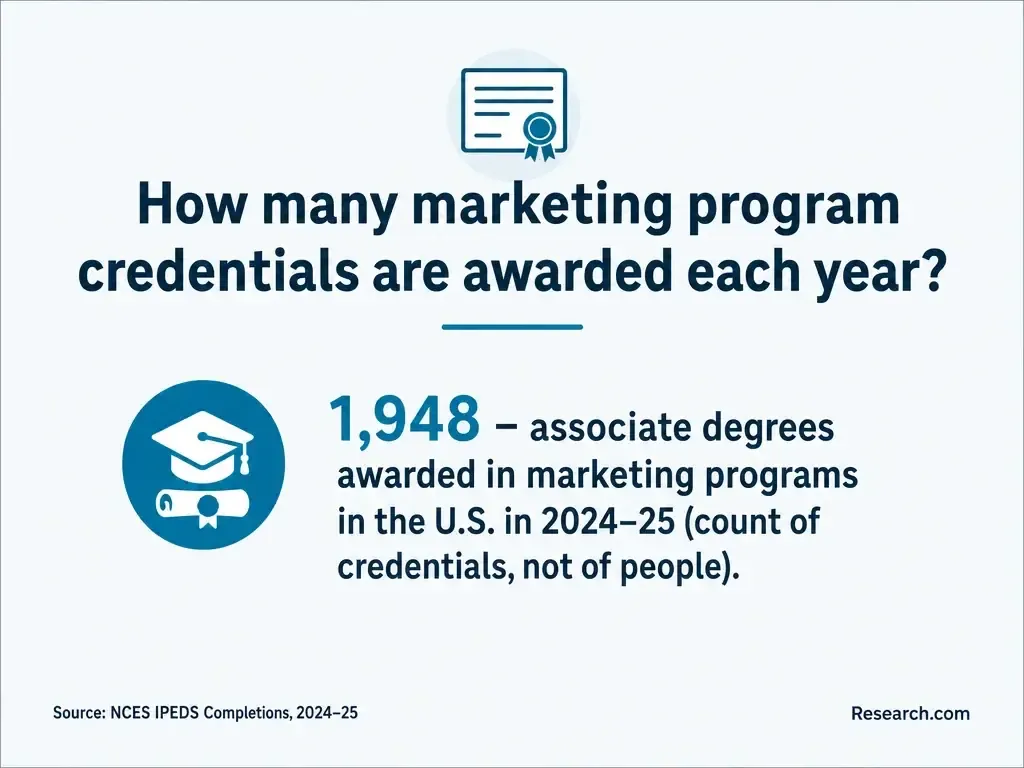
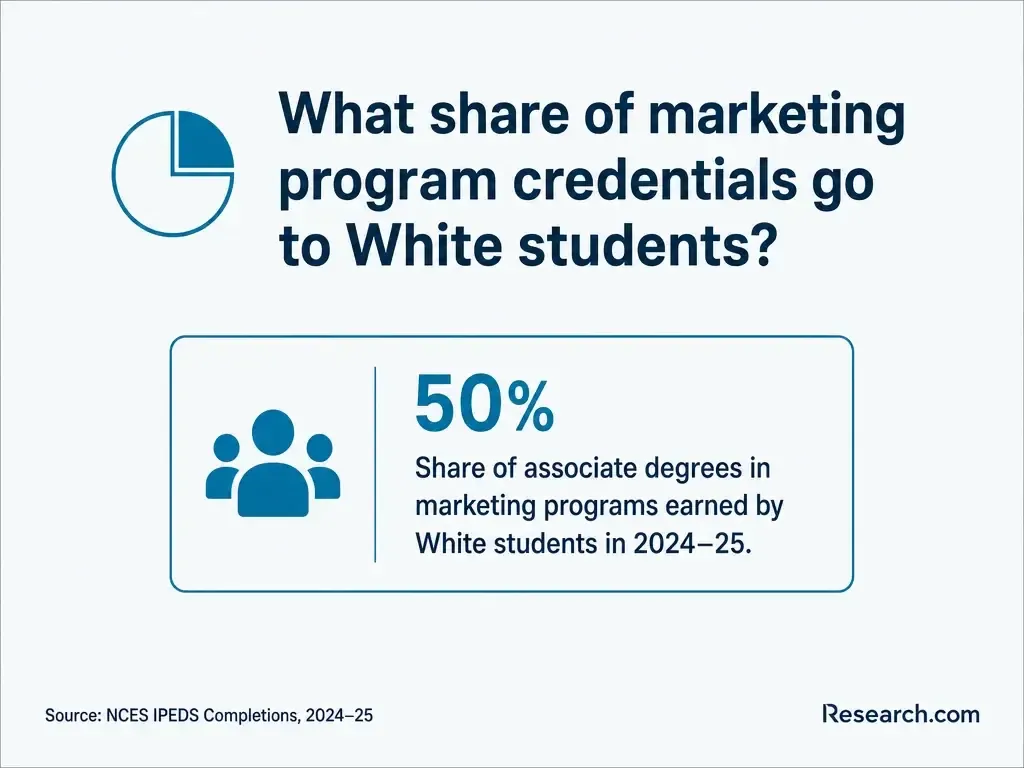
Investing in an associate degree is an important decision, so the Research.com team designed this ranking to help readers compare programs against relevant options rather than rely on reputation alone. Only programs with completions reported to IPEDS are included. That boundary supports consistent comparisons, but it does not mean an omitted program is unavailable or poor quality.
Best-program rankings assess student outcomes; earnings and return on investment; costs and debt; and quality and recognition. Measures include completion and full-time and part-time retention, earnings one year after completion relative to annual attendance cost, tuition, attendance cost, debt including that of students who withdrew, loan default rates, accreditation, relevant industry recognition, and student support. Programmatic accreditation or relevant industry recognition receives 20% of the score, institutional accreditation 10%, and student support 10%. An entropy-based method distributes the remaining 60% among outcomes, earnings, and cost measures according to how much indicators differ across programs. A separate most-affordable ranking scores only costs and debt using that method; it does not score accreditation or other quality measures.
The following sources were used in creating the ranking. Several cover occupations outside marketing; their inclusion in the ranking's broader source set does not imply that marketing programs require healthcare, dental, construction, or apprenticeship approval.
Use the ranking to narrow your choices, then confirm the current degree plan, price, delivery format, and transfer rules with each institution. More detail on the approach is available on the Research.com methodology page.