
Best Interior Design Training Programs & Schools - Top Interior Design Schools in Des Moines for 2026

Co-Founder and Chief Data Scientist
If you're considering a career in interior design, choosing the right trade school is a crucial first step. This article introduces the best interior design trade schools in Des Moines for 2026, based on a detailed ranking developed by the Research.com team of data scientists.
By exploring these programs, you’ll gain insights that help you make confident, informed decisions. Earning a diploma or certification in interior design can open doors to creative and rewarding career opportunities.
Discover which schools stand out and start your journey toward a brighter future in design.
Key benefits of finishing interior designer trade school in Des Moines
- Graduates from interior designer trade schools in Des Moines can expect starting salaries around $50,545, with opportunities to earn up to $60,505 as experience grows, making it a rewarding career choice.
- Career paths include roles such as residential designer, commercial space planner, or project coordinator, offering diverse opportunities as seen with successful graduates from popular local trade schools.
- Completing an interior design trade school online offers flexibility and convenience, allowing students to balance work and study, which many online program graduates in Des Moines find highly beneficial compared to traditional degrees.
- Best Interior Design Training Programs & Schools - Top Interior Design Schools in Des Moines for 2026
- What can I expect from interior designer trade schools in Des Moines?
- Where can I work after finishing interior designer trade schools in Des Moines?
What can I expect from interior designer trade schools in Des Moines?
Expect a dynamic blend of creativity and technical skill when you enroll in an interior designer trade school program in Des Moines. Graduates from programs at Des Moines Area Community College (DMACC) often share how hands-on projects and the use of industry-standard tools like Revit and Adobe Creative Suite made their learning tangible and exciting. Imagine designing a living room layout, selecting fabrics, lighting, and furniture while mastering both digital renderings and traditional hand-drafting-this is the reality in classrooms here.
Students frequently highlight the value of project-based learning, where final designs are critiqued by local professionals, boosting confidence and building portfolios that open doors to jobs. Beyond design, courses address vital topics such as health, safety, and sustainability, preparing students to create spaces that are not just beautiful but also functional and responsible. Many also appreciate learning business skills, from client communication to launching a design venture, making the transition into the professional world smoother and inspiring.
Admissions might ask for a portfolio review, so be ready to showcase your creativity early on. Graduates feel well-equipped for entry-level roles or further study, energized by the supportive, practical training Des Moines schools provide.
Where can I work after finishing interior designer trade schools in Des Moines?
After finishing an interior designer trade school program in Des Moines, many graduates step directly into roles like Junior Designer, Design Assistant, or Sales Representative within local firms and showrooms. For instance, graduates from popular trade schools often share their excitement about landing positions at boutique firms such as Morris Lare Interiors, where hands-on residential design experience is highly valued and full-time salaries start around $60,000 with bonuses and retirement benefits.
Others find opportunities with national furniture retailers, architecture firms, or specialized kitchen and bath showrooms, applying skills learned in school like blueprint reading and software use, including 2020 Design. The variety of entry-level roles means graduates can tailor their career path-whether focusing on creative design, client collaboration, or project management.
Part-time and temporary positions also help new designers balance gaining experience with flexibility, making the initial career steps less daunting. Local job boards frequently list openings for roles such as Designer I or Mid-Level Interior Designer, reflecting a competitive but vibrant job market that rewards creativity, attention to detail, and teamwork nurtured during trade school training.
After finishing an interior designer trade school program in Des Moines, graduates often find themselves earning between $47,000 and $53,800 annually as they step into entry-level roles like "Interior Designer I" or "Junior Interior Designer." Many recent grads from popular local trade schools share stories of landing their first jobs with salaries around $48,000, feeling excited about turning their creative skills into real projects.
With one to four years of experience, the average annual pay rises to about $47,917, reflecting steady growth as designers build their portfolios and client networks. Some graduates recall how mastering software tools and sustainable design at school gave them an edge, pushing their salaries closer to $52,820 early on.
For those who stick with the field, gaining experience over five years or more can boost earnings to over $62,000, with top earners in Des Moines surpassing $68,000. This progression highlights how dedication and specialized skills learned through trade programs can transform passion into a rewarding career.
- Admission to interior designer trade schools in Des Moines typically requires a high school diploma or equivalent and an application; some schools may ask for a portfolio.
- Programs offered include a two-year Associate of Applied Science (AAS) at DMACC and a four-year Bachelor of Fine Arts (BFA) at Iowa State University, which is CIDA-accredited.
- Tuition costs range from $5,000 to $7,000 per year at DMACC for Iowa residents and about $9,000 to $10,000 per year at Iowa State for in-state students, excluding fees and supplies.
- Starting salaries for graduates are around $38,000 to $45,000 annually, with potential to increase to $60,000 to $75,000 or more with experience and certification.
- Programs also offer preparation for certifications like R.I.D.E. and eligibility for the RIDQC exam to boost career opportunities.
Completing an interior designer trade school program in Des Moines typically takes between 9 months and 18 months, depending on the intensity and structure of the course. Many graduates from well-known local trade schools share how the fast-paced schedules allowed them to dive deep into hands-on projects quickly, transforming their passion into practical skills in under a year. One graduate recalls balancing coursework with part-time work, appreciating how the condensed program fit their busy lifestyle without sacrificing quality learning.
Popular trade schools in Des Moines often offer flexible evening and weekend classes, enabling students to advance their education without pausing their lives. Imagine working on a real client's room layout one week, then immediately applying color theory in the next session-this immersive approach keeps the learning dynamic and engaging. Such programs emphasize not only design concepts but also real-world application, helping students feel confident stepping into the local job market sooner than expected.
For those motivated by quick progress and tangible results, Des Moines trade schools provide a timeline that feels both manageable and inspiring, fueling a rewarding path toward becoming an interior designer.
Choosing between online and on-campus interior designer trade school programs in Des Moines often comes down to how you want to engage with your education. Online courses, like the introductory program at Des Moines Area Community College (DMACC), offer a flexible rhythm that fits easily around work or family. Graduates often recall the convenience of studying color theory and lighting design from home, appreciating the ability to revisit lectures and complete assignments at their own pace.
On the other hand, students in DMACC's on-campus Associate of Applied Science in Interior Design describe a vibrant, hands-on environment that feels like stepping into a real design studio. They thrive working with industry-standard software and participating in workshops that challenge them to create tangible projects. The energy of collaborating with peers and receiving immediate feedback from instructors creates a sense of community and confidence that many find irreplaceable.
Both paths shape capable designers, but the choice hinges on whether you value flexible, theory-based learning or immersive, practical experience deeply connected to local industry networks.
The average cost interior design trade school Des Moines students face varies notably depending on the institution and program structure. At Des Moines Area Community College (DMACC), graduates recall managing tuition fees set at $201 per credit hour for in-state students, which made balancing education and personal expenses feasible. Non-resident fees are slightly higher at $231 per credit, but many find the hands-on experience and networking opportunities invaluable in launching their interior design careers.
Meanwhile, some students opt for nearby programs like those at Kirkwood Community College in Cedar Rapids, where the interior design program tuition fees Des Moines-area learners have considered total approximately $28,062 when factoring in tuition, course materials, laptop requirements, and technology fees. Graduates mention how this all-inclusive approach prepares them for real-world challenges, with access to advanced software and practical tools fueling their enthusiasm for innovative design.
These tangible costs are part of a larger decision-making process that includes exploring financial aid and scholarships, which previous students found essential for easing the financial load. Prospective learners are encouraged to thoroughly investigate all available options as they navigate their career path, including resources for cheaper paths like cheap online masters in architecture, which can complement their on-site experiences and broaden career prospects.
By understanding these cost structures and hearing from peers who successfully navigated these programs, future interior designers can approach their educational journeys with confidence and clarity, informed by real-life scenarios within familiar regional options.

Students pursuing interior design at Des Moines Area Community College (DMACC) often find relief through a mix of federal aid, state grants, and targeted scholarships. Many graduates recall the ease of applying for Federal Pell Grants after submitting the FAFSA, which helped cover essential costs without the stress of repayment. This federal support extends directly to DMACC's Interior Design Consultant Certificate program, ensuring that practical credentials qualify for loans and grants just like traditional degrees.
Local scholarships add another layer of support. The Dee Johnson Design Scholarship, for instance, offers $2,500 across two semesters, easing the financial burden on students who balance coursework and creative projects. Some students also tap into professional networks, gaining access to the Nebraska/Iowa Chapter ASID Scholarship, which awards up to $1,000 to members pursuing interior design degrees in Iowa.
These combined resources create an environment where aspiring interior designers in Des Moines feel empowered and motivated, knowing financial aid options are within reach as they build their futures.
To enroll in an interior designer trade school program in Des Moines, students typically need a high school diploma or GED, which forms the foundational requirement. Graduates often recall how their strong interest in art and spatial design helped them breeze through admissions interviews at popular local trade schools.
Some schools ask for a basic portfolio showcasing creativity-think sketches, color boards, or even photos of redesigned spaces. This requirement allows applicants to demonstrate their passion and potential even before classes begin.
Applicants usually benefit from having a solid grasp of math and computer skills, especially familiarity with design software. Graduates often mention how early exposure to CAD programs or drafting classes made their transition smoother.
Additional prerequisites might include:
- Letters of recommendation highlighting dedication and work ethic
- A personal statement explaining motivation to pursue interior design
- Basic understanding of design principles or related coursework
These prerequisites ensure students entering Des Moines trade schools are well-prepared and excited, creating a vibrant learning environment where creativity thrives.
Interior designer trade school programs in Des Moines typically immerse students in a carefully balanced curriculum that bridges creativity and technical mastery. Graduates often recall starting with foundational courses in design principles, where they learned how to shape spaces through color theory, material selection, and spatial planning-skills crucial for transforming a blank room into a vibrant, functional environment.
Many students at Des Moines Area Community College (DMACC), a well-known local trade school, highlight hands-on experience with:
- Space planning and lighting design
- Material and color theory
- Hand-drafting and digital rendering using tools like Revit and Adobe Creative Suite
These technical skills empower students to present professional-quality projects, blending artistry with precision. Courses on the history of interior styles and furnishings bring depth to their designs, teaching them to incorporate textiles, window treatments, and artwork thoughtfully.
Health, safety, and sustainability are also embedded in the coursework, preparing students to create inclusive, eco-friendly spaces that meet building codes and universal design principles. Many graduates describe the capstone project as a defining moment-where all their learning culminates in crafting a complete, personalized interior design portfolio ready to impress future employers.
Interior designer trade school programs in Des Moines offer a range of interior design specializations in Des Moines trade schools that reflect the dynamic needs of today's market. Graduates often emphasize how programs at popular schools like DMACC prepare them for diverse career paths by focusing on practical, in-demand areas. For instance, kitchen and bath design programs Des Moines students find rewarding hone skills in creating both functional and beautiful spaces, balancing technical knowledge with creativity.
Key specializations include:
- Lighting design to master ambiance and utility
- Finishes and specifications, emphasizing material selection for durability and style
- Building codes and accessibility to ensure legal compliance and inclusivity
- Universal design, which creates spaces suitable for all ages and abilities
- Sustainability-focused classes to embrace eco-conscious building practices
Hands-on technology training with CAD tools like Revit and Adobe suites supports students in digital visualization and client presentations, skills highly praised by graduates. Many also benefit from immersive study tours that bring new perspectives.
Those weighing their educational options can learn more about what level of education is required to become a video game designer, providing context on specialized training paths.
Choosing among interior design programs in Des Moines means prioritizing accreditation and curriculum depth. Graduates from well-regarded institutions in the city often share how accreditation assured them their training met industry standards, opening doors for licensure and employment. You want a program offering robust coverage of design principles, color theory, and hands-on software use to build confidence in real-world projects.
Another key factor is the blend of faculty expertise and practical experience opportunities. Students from the best interior design schools in Des Moines describe the value of mentorship from seasoned instructors and internships that provided real-world context, helping them navigate complex client projects before graduation. Imagine working in a design studio where you use state-of-the-art resources alongside professionals who know the local industry's pulse.
Location also shapes your daily life; proximity means less commuting stress and more time for creativity. Financial aid and scholarships frequently make attending top programs in Des Moines manageable. Exploring careers related to interior design is easier when your school fosters industry connections and maintains a strong alumni network, giving you both guidance and tangible job leads after completing your studies.
Graduates of interior designer trade school programs in Des Moines often embark on varied and fulfilling journeys within the local design scene. Many start with entry level interior designer careers in Des Moines as Junior Designers, gaining hands-on experience by supporting senior designers with client communication and project coordination. For example, some successfully secure positions at boutique firms offering competitive starting salaries near $40,000 along with performance bonuses and benefits.
With experience, graduates move into higher roles such as Mid-Level or Senior Designer, taking on project leadership and client management. These roles command salaries beginning around $60,000, reflecting increased responsibility and the opportunity to shape impactful residential or commercial spaces.
Beyond traditional roles, trade school alumni often branch into specialty areas like kitchen or bath design, sales representation for furnishing companies, or design consulting. Proficiency in software like Revit and the Adobe suite, cultivated in popular Des Moines trade schools, remains essential.
Many graduates also pursue certifications such as NCIDQ to qualify for commercial projects, while others leverage their skills to launch boutique studios or remodeling businesses. The consistent listing of interior design jobs in Des Moines IA highlights the demand for skilled designers ready to thrive in this dynamic market.
Those eager to accelerate their career may explore fast architecture programs online to complement their trade school foundation with deeper architectural knowledge.
The interior design job market in Des Moines shows strong potential for trade school graduates, with steady demand and a competitive salary landscape. Graduates from popular trade schools often share experiences of quickly securing positions due to their hands-on training, technical skills, and certification credentials being highly valued by local employers. Many find themselves employed by local design firms or construction companies eager for designers who understand the practical aspects of the trade, including up-to-date design software and sustainable building codes.
Entry-level designers usually start with salaries between $40,000 and $55,000 annually, which grows to over $60,000 with some years of experience. Freelance work also appeals to many graduates, offering the freedom to manage schedules and earn approximately $46.56 per hour. This flexibility often suits those who prefer to balance multiple projects or pursue contract roles.
Key factors contributing to success include:
- Trade school programs focusing on real-world applications and certifications recognized locally
- Strong networking opportunities via schools popular for studying interior designer in Des Moines
- Familiarity with sustainable and technical design practices valued by employers
For those weighing their education options, it's worthwhile to study interior design online at accredited trade schools that highlight practical training and job-ready skills, ensuring alignment with the thriving interior designer employment outlook Des Moines provides.
Best Interior Design Training Programs & Schools - Top Interior Design Schools in Des Moines for 2026
# 1 position
Highline College - Interior Design.
associateHighline College offers a Hybrid Interior Design program focused on applied visual arts. The curriculum covers artistic principles, computer applications, drafting, lighting, acoustics, furniture, textiles, historical styles, structural design, building codes, and design applications for various commercial and residential spaces. The annual in-state tuition is $4,623. The program is accredited by the Northwest Commission on Colleges and Universities.
# 2 position
Highline College - Interior Design.
certificate or diplomaHighline College offers a Hybrid Interior Design program that prepares students to plan, design, and furnish residential and commercial spaces. The curriculum covers computer applications, drafting, lighting, acoustics, color coordination, furniture, textiles, and building codes. The program is accredited by the Northwest Commission on Colleges and Universities. Annual in-state tuition is $4,623.
Frequently Asked Questions about interior designer
After completing an interior designer trade school in Des Moines, graduates should focus on building a strong professional portfolio showcasing their design projects. This portfolio is essential for demonstrating skills to potential employers or clients.
Networking within the local design community is also crucial. Joining organizations such as the American Society of Interior Designers (ASID) Iowa chapter can provide valuable connections and job leads.
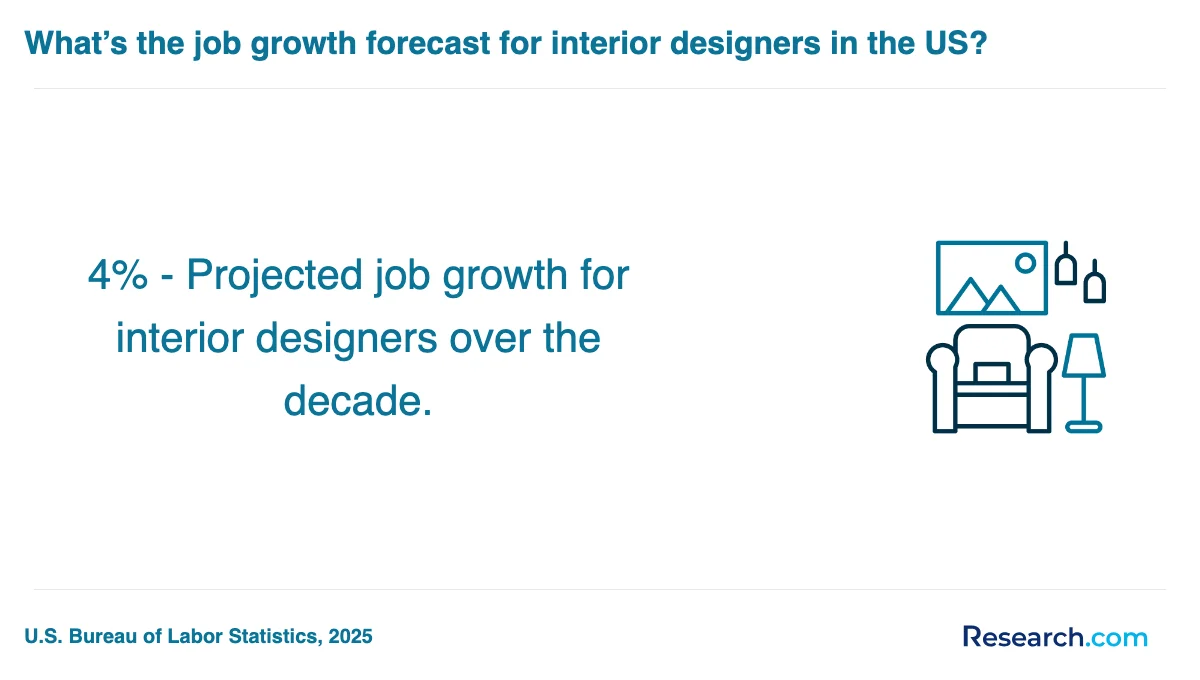
Additionally, gaining experience through internships or entry-level positions helps graduates apply their knowledge practically. The U.S. Bureau of Labor Statistics projects a 4% growth for interior designers nationally from 2022 to 2032, highlighting steady demand.
Licensing requirements vary by state, so researching Iowa's credentialing can be beneficial for career advancement.
Employers in Des Moines value several key skills when hiring interior designer trade school graduates. Strong proficiency in computer-aided design (CAD) software is essential, as it allows designers to create precise plans and 3D models. According to the U.S. Bureau of Labor Statistics, CAD skills improve job prospects significantly in the interior design field.
In addition, knowledge of building codes and safety regulations is critical in Des Moines, where local standards influence design choices. Communication skills are also highly sought after, enabling designers to effectively collaborate with clients and contractors.
Problem-solving abilities and creativity remain at the core of employer expectations, helping graduates develop innovative and functional spaces. The Iowa Workforce Development highlights that graduates who demonstrate a blend of technical and interpersonal skills tend to secure employment faster in the local market.
Finding internships in Des Moines that align with interior designer trade school programs involves a combination of research and networking. Start by exploring local design firms and architecture companies; many offer internships to students to gain practical experience. The Des Moines Area Community College (DMACC) career services can be a valuable resource, connecting students with employers seeking interns.
The Iowa Workforce Development reports that design-related jobs in Des Moines have grown by 4% annually, increasing internship opportunities. Additionally, professional associations like the American Society of Interior Designers (ASID) Iowa Chapter often list internships and mentorship programs.
Online platforms such as Handshake and Indeed also feature local internships, but verifying their relevance to trade school curricula is essential.
In Des Moines, earning a diploma from an interior designer trade school can significantly enhance career mobility and advancement opportunities. According to the U.S. Bureau of Labor Statistics, interior designers with formal credentials often experience faster job placement and higher starting salaries compared to those without specialized training.
The diploma serves as a practical credential recognized by local employers, showcasing proficiency in design software, materials, and client management. Trade schools in Des Moines typically offer hands-on experience, which is highly valued in the competitive regional market.
Additionally, graduates may find it easier to qualify for licensing or certification programs, which are essential for career growth in Iowa's interior design industry.
Part-time job opportunities in Des Moines that complement interior designer trade school education often include roles in retail home décor stores, furniture outlets, and paint supply shops. These positions allow students to gain hands-on experience with materials, color theory, and customer preferences, which are essential in interior design.
Additionally, internships or assistant roles at local design firms provide practical exposure to project management and client interaction. According to the U.S. Bureau of Labor Statistics, Des Moines has a growing demand for interior designers, with a 4% projected employment growth from 2022 to 2032, making relevant part-time work valuable for building a competitive resume.
Jobs in architectural offices or real estate staging companies also offer experience in spatial planning and aesthetics, directly supporting trade school coursework.
To choose the best Interior Designer degree program near Des Moines, WA, start by researching local colleges and universities that offer accredited design programs. Look for institutions with a strong curriculum, experienced faculty, and successful graduate outcomes, perhaps using Research.com as a resource for program rankings. Additionally, consider factors such as program flexibility, hands-on learning opportunities, and proximity to design firms for internships when selecting the ideal program near me.
- Best Interior Design Training Programs & Schools - Top Interior Design Schools in Portland for 2026
- Best Interior Design Training Programs & Schools - Top Interior Design Schools in Redwood City for 2026
- Best Interior Design Training Programs & Schools - Top Interior Design Schools in Salt Lake City for 2026
- Best Interior Design Training Programs & Schools - Top Interior Design Schools in Westminster for 2026
- Best Interior Design Training Programs & Schools - Top Interior Design Schools in Ankeny for 2026
- Best Interior Design Training Programs & Schools - Top Interior Design Schools in Overland Park for 2026
- 5 Career Options After You've Earned Your Design Certification https://www.qcdesignschool.com/blog/2022/11/5-career-options-after-youve-earned-your-design-certification
- What to Do After Graduating Interior Design School (job search, freelancing and advice) https://www.youtube.com/watch
- How nine interior designers got their jobs (plus their advice for someone hoping to do the same) | House & Garden https://www.houseandgarden.co.uk/gallery/how-to-become-an-interior-designer
- How to build a design career without an interior design degree. What no one will tell you - In Detail Interiors https://www.indetailinteriors.com/how-to-build-a-design-career-without-an-interior-design-degree-what-no-one-will-tell-you/
- 11 Tips to Land a Job in Architecture or Interior Design https://site.co-architecture.com/co-academy/11-tips-to-land-a-job-in-architecture-or-interior-design/
- What can I do with an interior design degree? | Prospects.ac.uk https://www.prospects.ac.uk/careers-advice/what-can-i-do-with-my-degree/interior-design
- Interior Design Trade Schools & Training Programs https://www.best-trade-schools.net/programs/arts-design/interior-design/
- Becoming An Interior Designer - Should I Get A Job Or Work For Myself? https://www.idbs.online/becoming-an-interior-designer-should-i-get-a-job-or-work-for-myself/
- DMACC Interior Design Academic Program Details https://www.dmacc.edu/pathways/dma/interior-design.html
- Online Certified Residential Interior Designer from Des Moines Area Community College https://careertraining.dmacc.edu/training-programs/residential-interior-designer-course-online/


