
# 1 position
Most Affordable Electrical Technician Schools & Training in Dublin for 2027
Audited and Verified:
Our Editorial and Data Verification Process
Research.com uses government datasets, official education statistics and primary institutional information to support its career and degree guides. Our review process checks factual accuracy, occupational definitions, source dates and the requirements associated with the credentials discussed.
How This Article Was Fact-Checked
Our editorial team verifies salary estimates, employment projections, education requirements and program information against original data providers and official organizations. Salary figures are checked against the relevant occupational definitions and reporting periods. Information about licensure, accreditation and required in-person training is reviewed separately.
Fact-checked and verified on:

Co-Founder and Chief Data Scientist

Reviewed by Karolina Broda
Fact-Checker and Data Verification
If you live near Dublin, North Carolina, the cheapest electrician course may not be the cheapest route to becoming job-ready. You need to compare tuition with tools, travel, hands-on training, and access to paid work. The U.S. Bureau of Labor Statistics reports a May 2025 national median wage of $63,190 for electricians, though new workers typically earn less. This guide helps you assess those trade-offs. It will also feature a Most Affordable Electrician Trade Schools in Dublin for 2027 ranking, created by the Research.com team of data scientists to help students make an informed choice about programs worth considering.
Key findings about electrician degrees in Dublin
- Compare routes, not just schools: A Dublin-area classroom program can build electrical skills, while a registered apprenticeship combines instruction with paid supervised work. Confirm what each option costs and what experience it provides.
- Plan for on-site training: The U.S. Bureau of Labor Statistics says electricians typically learn through a four- or five-year apprenticeship. A shorter certificate is not equivalent to completing that work-based pathway.
- Separate wages from starting pay: The national electrician median was $63,190 in May 2025, according to the U.S. Bureau of Labor Statistics. It is not a Dublin starting-wage estimate or a promised return on tuition.
Table of Contents
- Most Affordable Electrical Technician Schools & Training in Dublin for 2027
- What can I expect from an electrician trade school program in Dublin?
- Where can I work with an electrician trade school training in Dublin?
What can I expect from an electrician trade school program in Dublin?
Expect electrical theory alongside practical work: reading plans, installing wiring and devices, using test instruments, and following safe work procedures. For a Dublin-area student, Bladen Community College is a local provider to investigate, but verify its current electrician-related offerings, schedule, lab access, and credential directly before applying. A program's title alone does not establish how much supervised installation experience it includes.
The main choice is between school-based preparation and learning while employed. A certificate may help a newcomer compete for an apprentice or electrical-helper position; a diploma or associate-level occupational program may provide broader technical coursework. A registered apprenticeship instead combines paid work with related instruction and leads to an apprenticeship completion credential when its requirements are met (U.S. Department of Labor; ApprenticeshipNC). Ask whether school coursework can count toward a sponsor's instruction or any later experience requirement; do not assume credit transfers automatically.
Where can I work with an electrician trade school training in Dublin?
Training can support applications to electrical contractors working on homes, commercial buildings, and industrial facilities, as well as to maintenance employers. These settings require different preparation: residential work emphasizes branch circuits and service equipment, while industrial work can involve motors, controls, and troubleshooting (U.S. Bureau of Labor Statistics). Ask employers which entry roles accept classroom training and which require an apprenticeship.
Dublin's location makes travel part of the decision. A nearby classroom may reduce school commuting costs, but job sites and apprenticeship employers may be elsewhere in the surrounding area. Before enrolling, compare the distance to both the training site and likely worksites; a low course price can lose its advantage if attendance or work travel is impractical.
The latest national figure specified here is the U.S. Bureau of Labor Statistics' May 2025 median annual wage of $63,190 for electricians. A median describes workers across experience levels and employers; it does not establish what a new helper or apprentice in Dublin will earn. Ask prospective sponsors for their starting rate, scheduled increases, and whether classroom time is paid.
For a realistic return-on-investment comparison, weigh expected earnings during training and afterward against fees, debt, forgone wages, and the chance of completing the route. A paid apprenticeship may improve cash flow even when it takes longer than a classroom certificate. Neither pathway guarantees a particular wage or a contractor license.
Length depends on the credential and schedule. A short certificate can cover introductory skills, while a diploma or associate-level occupational program generally requires more coursework. The U.S. Bureau of Labor Statistics describes electrician apprenticeships as typically lasting four or five years, combining job training with technical instruction. That apprenticeship timescale should not be mistaken for the length of a school course.
Request the current curriculum's total contact hours and a breakdown of lab, classroom, and worksite hours. If your aim is electrical contracting in North Carolina, ask the North Carolina State Board of Examiners of Electrical Contractors whether and how any proposed training or experience counts toward your intended license classification. Finishing a short program does not, by itself, complete an apprenticeship or establish license eligibility.
Online coursework can be useful for theory, code study, and scheduling flexibility. It cannot replace physically installing equipment, testing circuits, demonstrating safe tool use, or working under supervision. A hybrid option makes sense only if its in-person labs and any required worksite component are accessible from Dublin.
The distinction matters especially if you need to keep a job while training. Resources about the cheapest online schools for job holders can inform a scheduling comparison, but electrician preparation must still be judged by its practical component. Ask where that component takes place, who supervises it, and whether an apprenticeship sponsor or employer recognizes it.
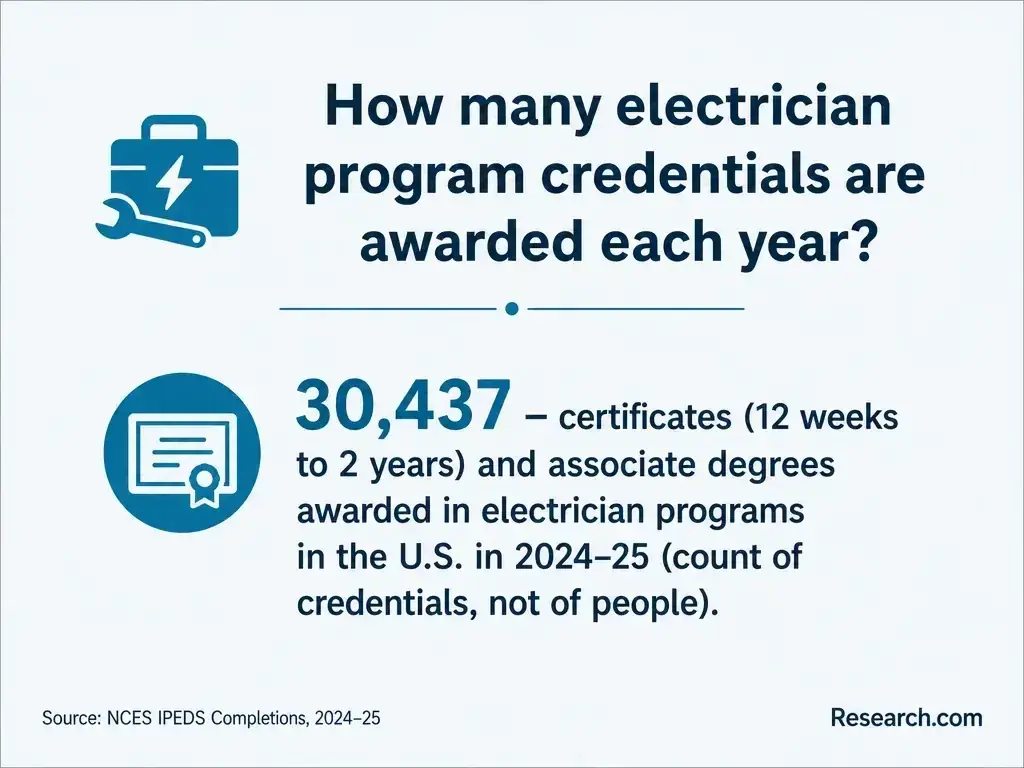
A reliable Dublin-wide average is not available from a single comparable set of school and apprenticeship prices. Reported college costs also omit some apprenticeship and employer-sponsored routes. Treat any advertised tuition as a starting point, not a job-ready total. Searching for the online university cheapest option will not answer whether an electrical program supplies accessible labs and supervised practice.
Compare written estimates using the same cost categories. This separates a lower sticker price from a lower total cost of entry:
| Cost or offset | What to confirm |
| School charges | Tuition, mandatory fees, books, and required materials |
| Job-readiness expenses | Tools, test equipment, PPE, transportation, and any required exam or application fees |
| Time and income | Work hours you must reduce, or wages paid during training |
| Assistance | Program-specific aid eligibility, employer support, and workforce funding |
Ask Bladen Community College for a current itemized program estimate and its financial-aid eligibility. Ask apprenticeship sponsors who purchases tools and whether instruction has a charge. Federal aid depends on the student's and program's eligibility, not simply on a provider being a college (Federal Student Aid).
The award depends on the route: a school may issue a certificate, diploma, or occupational associate credential; a registered apprenticeship has its own completion credential. An optional industry credential, such as one aligned with NCCER training, is different again. None should be described as a North Carolina electrical contractor license (NCCER; ApprenticeshipNC; North Carolina State Board of Examiners of Electrical Contractors).
If you are comparing highest paid certifications, first ask what an electrical credential actually verifies and whether local employers request it. For this occupation, documented practical experience and the requirements of the intended job or license matter more than the credential's name alone.
Requirements vary by provider and pathway. A school can set its own application and placement rules; an apprenticeship sponsor selects applicants for a job-based program and may require evidence of math preparation, work authorization, and the ability to reach worksites. Check the current requirements with Bladen Community College or the sponsor rather than assuming that admission to one route qualifies you for the other.
Before paying a deposit, ask whether you need to buy tools or PPE before the first lab or workday and whether previous construction coursework can earn credit. Searching for a cheapest master's degree addresses a different education decision; for electrician entry, prioritize the actual admission rules, practical access, and employer pathway.
Core training commonly covers electrical calculations, circuitry, wiring methods, blueprint reading, electrical code, testing, and safety. Practical quality matters: identifying a fault with a meter under supervision is different from answering a theory question online. The U.S. Bureau of Labor Statistics identifies troubleshooting, physical dexterity, and safety awareness as important electrician skills.
Compare syllabi against the work you want. Someone targeting residential installation should look for substantial wiring and service-equipment practice; someone interested in industrial maintenance should ask about motors and controls. Request lab-hour totals and examples of assessed tasks, not just a list of course titles.
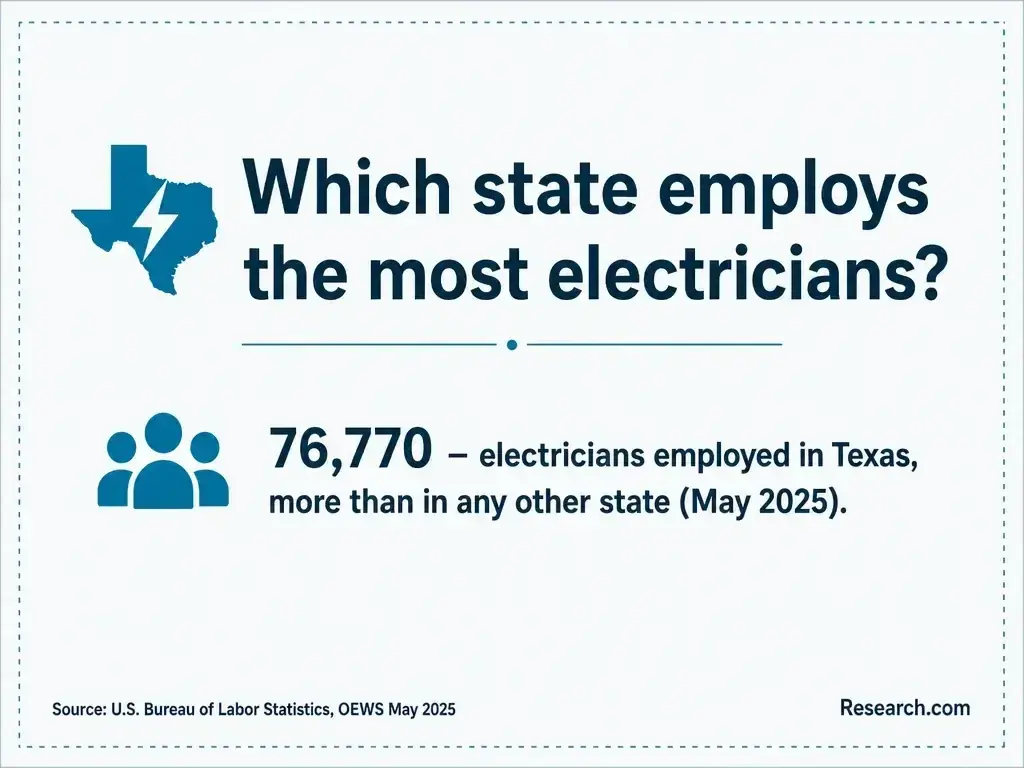
North Carolina distinguishes working as an employee from offering electrical contracting services. The North Carolina State Board of Examiners of Electrical Contractors licenses electrical contractors and sets classification, experience, and examination requirements. A school credential, NCCER credential, or apprenticeship completion does not automatically confer that license. Confirm the rules for the work you intend to perform before treating a program as a licensing route.
If your immediate goal is an employee or apprentice role, ask the hiring contractor what training it requires and who supervises the work. If your longer-term goal is to contract independently, review the board's current requirements for your intended classification and document qualifying experience as you gain it. Institutional accreditation, school authorization, apprenticeship registration, and occupational licensure answer different questions; none substitutes for the others.
Start with the job you want, then compare the route that gets you there. A school program can be worthwhile when you need structured introductory instruction or cannot yet secure an apprenticeship. Direct entry into a paid apprenticeship may be more attractive when a sponsor will hire you and its schedule fits your circumstances. Do not select either route solely because it ranks well or finishes quickly.
Use these checks before committing money or time:
- Confirm the exact credential, current schedule, and total classroom, lab, and supervised-work hours.
- Request an itemized cost estimate and identify wages, aid, or employer support that could offset it.
- Ask employers or apprenticeship sponsors whether they recognize the training and award any credit for it.
- Check institutional status separately from any apprenticeship registration or North Carolina contractor-licensing requirements.
- Compare commuting demands, completion support, and your ability to keep earning while training.
A broad search such as which is the easiest phd course illustrates the wrong test for this decision: ease of entry says little about safe electrical practice or access to supervised work. A red flag is a provider that promises a license or electrician-level wages from online coursework alone without explaining the required practical and regulatory steps.
An introductory program can lead to applications for electrical-helper or apprentice roles. With further supervised experience, workers may move into broader installation, troubleshooting, or maintenance responsibilities; some specialize in controls or pursue supervision. Electrical contracting is a separate business and licensing step in North Carolina, not an automatic result of completing training (U.S. Bureau of Labor Statistics; North Carolina State Board of Examiners of Electrical Contractors).
Choose training that matches the next step rather than the most distant job title. A newcomer needs a credible way onto a supervised worksite; an experienced worker considering advancement may need documented experience, targeted technical skills, or preparation for the appropriate contractor examination.
The U.S. Bureau of Labor Statistics projects 9.2% national employment growth for electricians from 2025 to 2035. That signals a growing occupation nationally, not a forecast of Dublin openings or a guarantee of placement. For a local decision, ask nearby contractors and registered apprenticeship sponsors about current hiring, worksite locations, and how often they take new entrants.
The strongest pathway is one you can finish and use: accessible practical training, a recognized route into supervised employment, and costs you can manage. If local openings are limited when you apply, willingness to travel to worksites may matter as much as where you attend class.
Most Affordable Electrical Technician Schools & Training in Dublin for 2027
Education is a significant investment, so Research.com designed this affordability ranking to compare electrician programs with other reported options in the same occupation and location. The team reviews cost and debt measures for consistency and credibility. Only programs with completions reported to IPEDS are eligible; that boundary does not mean an excluded apprenticeship, employer program, or training provider is unavailable or unsuitable.
Most-affordable rankings use tuition, cost of attendance, median student debt, and federal loan default rates. Weights are assigned through an entropy-based method, which gives more weight to measures that vary more across eligible programs. Unlike Research.com's best-program rankings, the affordability score does not include accreditation, student support, completion, or earnings. Readers should check those factors separately before enrolling.
The ranking draws on the following sources. Some cover other trades or provide broader institutional context; their inclusion does not imply that an allied-health credential applies to electricians:
- IPEDS database - program completions and institutional reporting.
- National Center for Education Statistics - federal education data and definitions.
- College Scorecard database - available institutional cost, debt, and outcome measures.
- Peterson's database - supplementary institutional information.
- Commission on Accreditation of Allied Health Education Programs (CAAHEP) - occupation-specific recognition checks where applicable.
- Accrediting Bureau of Health Education Schools (ABHES) - occupation-specific recognition checks where applicable.
- Commission on Dental Accreditation (CODA) - occupation-specific recognition checks where applicable.
- Dental Assisting National Board (DANB) - occupation-specific credential context where applicable.
- National Center for Construction Education and Research (NCCER) - construction-training and industry-recognition context.
- Apprenticeship.gov Partner Finder - apprenticeship-provider context beyond college listings.
Use the ranking to narrow your cost comparison, not to decide whether a course meets your employment or North Carolina licensing goals. More detail on how rankings are developed appears in Research.com's methodology.
# 2 position
Bladen Community College - Electrician.
certificate or diplomaFrequently asked questions about electrician programs in Dublin
Is trade school required to become an electrician in Dublin?
Not necessarily. A registered apprenticeship is another route that combines paid supervised work and instruction. Compare sponsor entry requirements with school-based options (ApprenticeshipNC).
Can I become an electrician through an online-only program?
Online study can cover theory, but it cannot replace in-person wiring practice and supervised work. Verify practical requirements before enrolling.
Does a certificate let me work independently as an electrical contractor?
No. North Carolina electrical contractor licensing has separate requirements set by the North Carolina State Board of Examiners of Electrical Contractors.
Is a paid apprenticeship always cheaper than school?
Not automatically. Compare wages with tool purchases, travel, any instruction charges, and the time required. Compare the school route using its full cost and available aid.
What should I ask Bladen Community College before applying?
Ask which electrician-related programs are currently offered, what credential each awards, its itemized cost and lab hours, and whether apprenticeship sponsors recognize its coursework.
- U.S. Bureau of Labor Statistics - Electricians
Used to verify salary, employment outlook, and typical education requirements.
https://www.bls.gov/ooh/construction-and-extraction/electricians.htm - NCCER - Accredited Training
Used to verify programmatic accreditation or industry recognition of programs.
https://www.nccer.org/ - O*NET OnLine - Electricians
Used to verify common responsibilities, skills, work settings, and education expectations.
https://www.onetonline.org/link/summary/47-2111.00 - Bladen Community College - official website
Official school website (programs, tuition, admissions).
https://bladencc.edu/