Best CNC Machinist Training Programs & Trade Schools - Top CNC Schools in Florida for 2026

Co-Founder and Chief Data Scientist
Looking for the best CNC machinist trade schools in Florida for 2026? This article is here to guide you through top programs that can jumpstart your career in this skilled trade.
The CNC machinist trade school programs ranking, created by the Research.com team of data scientists, helps you make an informed choice by highlighting quality programs worth considering.
Discover valuable insights that can lead to a rewarding diploma or certification, opening doors to steady jobs and personal growth in manufacturing and technology fields.
Take the first step toward a promising future today.
Key benefits of finishing CNC machinist trade school in Florida
- Strong earning potential: Graduates can expect an average starting salary around $51,030 annually in Florida, with opportunities to grow to $68,350 or more as they gain experience.
- Varied career paths: Many CNC machinist graduates from popular Florida trade schools quickly find roles not only as machinists but also as CNC manufacturing specialists or engineers, expanding their job options.
- Flexible learning options: Completing a CNC machinist program online offers convenience and affordability, allowing students to balance work and study while gaining skills valued by employers.
- Best CNC Machinist Training Programs & Trade Schools - Top CNC Schools in Florida for 2026
- What can I expect from CNC machinist trade schools in Florida?
- Where can I work after finishing CNC machinist trade schools in Florida?
What can I expect from CNC machinist trade schools in Florida?
When you enroll in a CNC machinist trade school program in Florida, expect a hands-on experience right from the start. Many students at schools like Eastern Florida State College and Atlantic Technical College find themselves working directly with high-tech equipment like Haas mills and lathes, gaining real skills in setup, operation, and troubleshooting.
Courses usually follow a clear sequence, so you'll build your knowledge step-by-step-from basic machine operation to advanced CNC programming. Graduates often mention the excitement of moving from reading blueprints to actually running the machines that bring those designs to life.
You'll also dive into CAD/CAM software, preparing you for modern digital manufacturing jobs. Some programs even let you transfer industry certifications, like the Certified SolidWorks Associate, which can save you time.
Expect a classroom environment that balances theory with plenty of practical labs. Plus, many Florida programs offer co-op opportunities, so you can gain real-world experience while still studying.
Physically, be ready for some hands-on work that might involve lifting and color recognition. Overall, students leave these programs feeling confident and ready to jump into entry-level roles with a solid foundation.
Where can I work after finishing CNC machinist trade schools in Florida?
After finishing a CNC machinist trade school program in Florida, you'll find plenty of exciting job options waiting for you. Graduates from popular Florida trade schools often land roles in manufacturing companies creating parts for industries like aerospace, automotive, and medical devices. Imagine working in a bustling Tampa machine shop, programming CNC machines to craft precision parts that go into airplanes or cars-that's a real possibility. Many grads share how rewarding it is to see their work used in high-tech products just weeks after graduating.
Jobs are available across the state-in Orlando, Hollywood, West Palm Beach, and beyond-so you're not limited to one area. You could be a CNC Operator or even advance to a Lead CNC Machinist role, mentoring others while earning $28 to $39 an hour. Some grads mention the pride of working at family-owned shops with a close-knit team vibe, while others thrive in larger firms with cutting-edge tech. Florida's CNC machinist job market feels like a launchpad for a hands-on, well-paid career.
After finishing a CNC machinist trade school program in Florida, many graduates find themselves pleasantly surprised by their starting pay. For example, those coming out of well-known Florida trade schools often start around $40,000 a year, which feels like a solid paycheck for jumping straight into the workforce. Some even report landing jobs that pay closer to $50,000 annually within their first year, which really boosts confidence and excitement about their career choice.
Hourly wages are just as encouraging. Many new CNC machinists earn about $22 to $26 per hour, especially if they've mastered specific programming or machine setup skills during their training. Graduates often mention how working full-time at these rates quickly adds up, making it easier to handle living expenses in cities like Orlando or Tampa.
Plus, with more experience and additional skills, it's common to see paychecks rise to $60,000 or more. Some grads have shared stories of moving into programming or supervisory roles, which can add $25,000 or more to their annual income. That kind of growth makes the hard work in trade school feel totally worth it.
- CNC machinist programs in Florida are usually technical or college credit certificates offered at several state colleges.
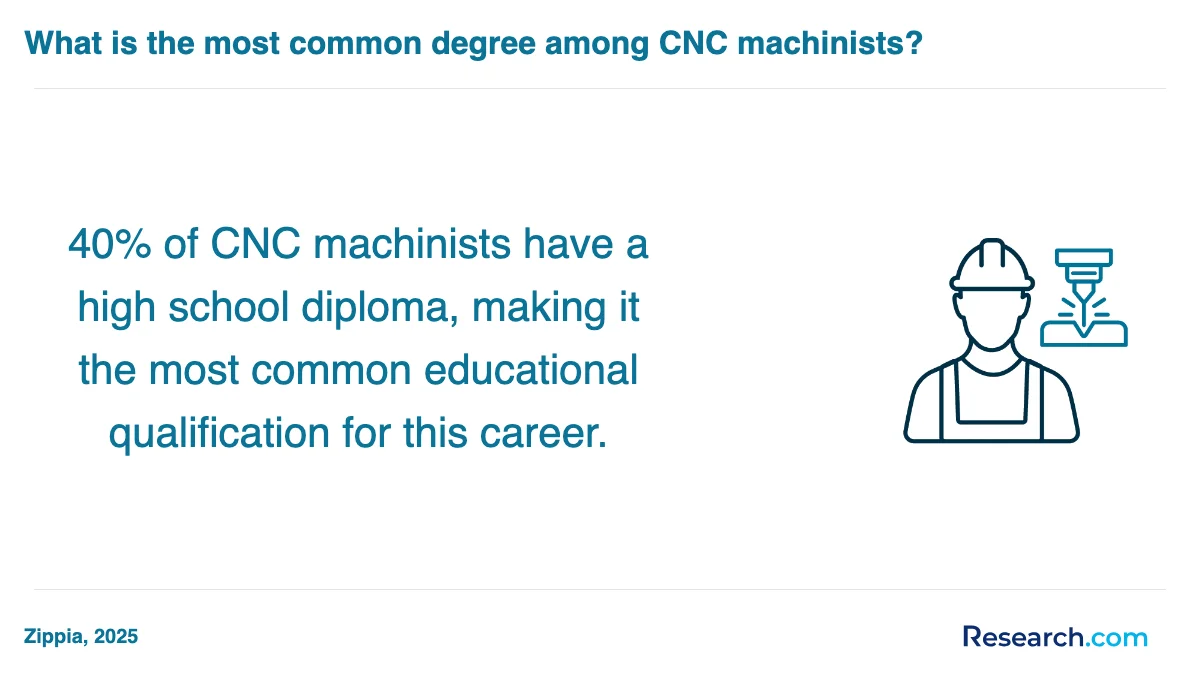
- Admission typically requires a high school diploma or GED, with some programs having physical requirements like lifting 50+ pounds.
- Programs cover theoretical and hands-on training, including CNC programming and machine operation, often with industry certification opportunities.
- Tuition and fees range from about $1,500 to $3,500 for in-state students, excluding books and supplies.
- The median annual income for machinists in Florida was around $42,110, with jobs available as machine operators, CNC programmers, and tool grinders.
Most CNC machinist trade school programs in Florida typically take about 9 to 12 months to complete, which is great news if you're eager to jumpstart your career quickly. Graduates from well-known Florida trade schools often share how this timeframe allowed them to balance hands-on learning with real-world practice, making the experience both exciting and manageable.
For example, students at popular Florida trade schools find that the curriculum is designed to build their skills steadily-starting with basic machine operation and moving into programming and precision machining. Many recall feeling a real sense of accomplishment as they mastered each phase, knowing they were just months away from entering the workforce.
Because the programs are so focused and practical, you won't be stuck in lengthy lectures. Instead, you get plenty of time on the machines, which helps keep motivation high. If you're someone who thrives on learning by doing, completing the program within a year in Florida feels like a rewarding sprint rather than a marathon.
The main difference between online and on-campus CNC machinist trade school programs in Florida comes down to how you learn and the hands-on experience you get. Online programs are great if you need flexibility-they let you study at your own pace from anywhere. Graduates from these courses often mention how convenient it was to fit lessons around work or family, especially since the material covers basics like CNC programming and tool setting through videos and interactive modules. However, they'll tell you that it's tough to get that "feel" for real machines without being in a workshop.
On the flip side, students at places like Lake Tech College or Eastern Florida State College rave about getting direct time on actual CNC machines. They describe the thrill of turning designs into real parts during hands-on labs and how immediate feedback from instructors helped them improve quickly. These on-campus programs often follow a set schedule, which keeps you motivated and connected with classmates and industry pros. Plus, many on-campus grads feel more confident walking into Florida manufacturing jobs because they've practiced on real equipment and prepared for certification exams.
The average tuition for CNC machinist programs in Florida can vary widely depending on the type of program you choose. For instance, certificate programs at community colleges like Eastern Florida State College usually cost between $3,000 and $5,000. Graduates from these programs often share how manageable the expenses felt, especially since these programs are designed to prepare students quickly for entry-level positions in CNC machining. This cost, however, doesn't always include additional fees like labs or supplies, so it's wise to budget for those extra charges.
If you're looking for a more comprehensive education, associate degree programs come with a higher price tag, typically between $10,000 and $20,000. These programs cover broader topics like CAD/CAM and provide a wider skill set. The cost of CNC machinist certification in Florida through these degrees reflects the extra coursework and the hands-on training that really helps graduates feel confident stepping into diverse machining roles.
On the more flexible side, online CNC courses offer affordability and convenience, often priced between $100 and $1,500. Some students appreciate this route because it allows them to learn at their own pace without interrupting their current jobs or finances. For individuals looking for a direct and practical approach, apprenticeships are a fantastic option since they usually come free or low-cost, combining work and learning in a real-world setting over one to four years.
Keep in mind, the total cost of attending a CNC machinist trade school also includes essentials beyond tuition. Books and supplies typically add about $1,705, while living expenses for off-campus students can average $21,435. Smart budgeting for these factors helps you avoid surprises during your education journey in Florida.
For those aiming to find the fastest associate degree online that pays well, exploring accredited online programs can be a great way to advance your skills without excessive expense. Choosing the right path depends on your career goals and financial situation, but knowing the average tuition for CNC machinist programs in Florida is a solid starting point to making an informed decision.
Financial aid for CNC machinist students in Florida can look a bit different depending on the program you choose. For example, graduates from Eastern Florida State College often share how their short 12-credit certificate programs didn't qualify for federal Pell Grants-but that didn't stop them from finding other support. Many tapped into the Florida Bright Futures Scholarship or Florida Prepaid College Plans, which helped ease tuition costs. Some also made use of Titan Scholarships offered at Eastern Florida State College or found outside scholarships to chip away at expenses.
Payment plans like Nelnet are a lifesaver, too, letting students spread tuition out over time instead of facing a big bill all at once. Over at Gulf Coast State College, CNC students often mention how their financial aid office guided them toward scholarships and aid options that matched their backgrounds and needs.
Veterans especially find value in VA benefits accepted by many Florida programs, making their education more affordable. Plus, workforce grants sometimes come through for those pursuing these in-demand technical skills, making the path smoother and more affordable overall.
If you're thinking about enrolling in a CNC machinist trade school program in Florida, you'll find that most schools keep the prerequisites pretty straightforward and accessible. Graduates from popular Florida trade schools often share how these requirements helped them focus on learning rather than stressing over complex admissions hurdles.
Typically, you'll need:
- A high school diploma or GED-this is the basic starting point for most programs.
- Some schools might ask for a placement test to check your math and reading skills, since precision is key in CNC machining.
- A genuine interest in hands-on technical work and problem-solving-something many students discover during tours or info sessions at schools like those in Miami or Tampa.
One graduate mentioned how having a solid foundation in basic math made the transition into CNC programming smoother. Another recalled that being comfortable with computers really helped when they started working with CAD/CAM software. If you're worried about these skills, don't stress-trade schools in Florida often offer preparatory workshops or tutoring to get you up to speed.
Overall, the prerequisites are designed to set you up for success without shutting the door on those switching careers or coming back to school after some time away.

CNC machinist trade school programs in Florida usually start with hands-on basics like machine safety, using measuring tools, and manual machining. Graduates often recall how these initial courses gave them confidence before moving on to more complex tasks.
Next up, students dive into operating CNC mills and lathes, learning to read technical drawings and understand geometric dimensioning and tolerancing. For example, at Eastern Florida State College, this step-by-step learning builds essential skills that feel practical and rewarding.
Programming courses are a big highlight. Schools like Daytona State College and Manatee Technical College teach CAD/CAM software, helping students create precise part programs for automated machines. Graduates often mention how mastering these tools made them feel ready to tackle real-world manufacturing jobs.
Hands-on labs using industry-standard equipment, such as Haas mills and lathes, are common. Plus, some programs, like at Pensacola State College, include extras like sheet metal work and welding, broadening students' skill sets significantly.
- Basic machining and safety
- Reading technical drawings and GD&T
- CNC programming with CAD/CAM software
- Hands-on labs on real machines
- Optional electives like SolidWorks or welding
In Florida, CNC machinist trade school programs offer a range of specializations to get you ready for real-world manufacturing jobs. Common areas covered include:
- Precision Measurement and Blueprint Reading - essential for understanding exact specs
- Manual Machining Operations - hands-on work with lathes, mills, and drill presses
- CNC Programming and Operation - learning to control computer-guided machines
- CAD/CAM Software Training - designing parts on software like SolidWorks
- Advanced Machining Techniques - for those wanting to push skills beyond the basics
Graduates from schools like Orange Technical College often share how mastering CNC machinist program specializations in Florida gave them confidence to jump straight into well-paying jobs. Programs at Broward College add depth by focusing on 3D design and manufacturing processes, which really sets you up for success.
If you're aiming to find high-quality and low cost cnc machinist training courses online, these Florida schools balance hands-on learning with industry-relevant skills. Whether you want to operate machines manually or dive into advanced CNC machining courses in Florida, these programs tailor the training to what local employers want.
When choosing the best CNC machinist programs in Florida, start by checking if the school is accredited and recognized by manufacturers. Graduates from Hillsborough Community College often mention how their hands-on training with actual machines made the learning experience feel real and exciting. Programs like those at Lake Tech offer step-by-step courses, which help students gradually build confidence and skills instead of feeling overwhelmed.
Flexibility is another key factor-many students appreciate Pensacola State College's mix of online and in-person classes, especially when juggling work or family. Comparing CNC trade schools in Florida also means looking at tuition costs and financial aid options, since prices can vary from a few thousand to nearly $10,000. Plus, schools with strong career support can make a big difference; some graduates landed internships or jobs quickly thanks to partnerships with local manufacturers.
Thinking about your future earnings? You might want to explore jobs that pay well with associates degree to see how a good program could boost your career path.
Graduates from CNC machinist trade school programs in Florida can jump straight into rewarding roles like CNC Machinist, CNC Operator, or CNC Set-Up Machinist. Many find these entry-level jobs give them hands-on experience running and maintaining advanced machines in local manufacturing hubs like Orlando or Tampa. For example, graduates from popular Florida trade schools often share how exciting it is to see their work come to life in aerospace or medical device manufacturing settings.
With some experience, a common step up is becoming a CNC Programmer, where you write the codes that control the machines-this role often comes with better pay and more technical challenges. Others aim for leadership positions like Senior Machinist or Lead CNC Operator, managing teams and improving production lines. Some graduates explore related fields like tool making, quality control, or sales, broadening their career horizons.
If you're curious about top paying trade jobs that are easy to learn, check out top paying trade jobs that are easy to learn for insights on how a CNC machinist career can grow in Florida's thriving manufacturing industry.
The career options are diverse and promising, making CNC machinist career opportunities in Florida a smart choice for hands-on, tech-driven work that's in demand throughout cities like DeLand and Naples.
The CNC machinist job opportunities in Florida have been steadily growing, especially for those fresh out of trade school programs. Graduates from popular Florida trade schools often share how quickly they landed roles ranging from entry-level machinists to multi-axis CNC operators. Many employers in South Florida and beyond are eager to hire new talent, offering chances to develop skills on lathes and mills without the need for prior supervisory experience.
Wages and hiring trends demonstrate promising Florida CNC machinist salary and hiring trends. Hourly rates for beginners generally start around $18, with experienced specialists making up to $39 per hour. Some companies sweeten the deal with signing bonuses as high as $2,500 and relocation assistance, making these roles even more appealing.
Graduates often highlight working in climate-controlled environments within industries like aerospace and medical devices, where advancement opportunities are common. If you're weighing your options, choosing trade school programs that pay well and offer solid job placement can truly set you up for success in Florida's manufacturing scene.
- Strong demand statewide with hundreds of monthly openings
- Entry-level roles focused on skill-building and hands-on training
- Competitive pay reflecting experience and specialization
- Job growth linked to advanced manufacturing technologies
Best CNC Machinist Training Programs & Trade Schools - Top CNC Schools in Florida for 2026
# 1 position
Northwest Florida State College - Computer Numerically Controlled (CNC) Machinist Technology/CNC Machinist.
certificate or diplomaNorthwest Florida State College offers a hybrid Computer Numerically Controlled (CNC) Machinist Technology program that trains students to operate CNC machine tools including lathes and mills. The curriculum covers CNC setup, programming, blueprint reading, machining, CAD/CAM, and safety practices. The annual in-state tuition is $3,246. Graduates earn a median salary of $37,052 one year after completion. The program is accredited by the Southern Association of Colleges and Schools Commission on Colleges.
# 2 position
Hillsborough Community College - Computer Numerically Controlled (CNC) Machinist Technology/CNC Machinist.
certificate or diplomaHillsborough Community College offers a hybrid Computer Numerically Controlled (CNC) Machinist Technology program that prepares students to operate CNC machine tools and perform machining functions. The curriculum covers CNC programming, setup, troubleshooting, blueprint reading, lathe and mill operations, technical math, CAD/CAM systems, and safety practices. Annual in-state tuition is $2,506. The program is accredited by the Southern Association of Colleges and Schools Commission on Colleges. Median earnings one year after completion are $24,327.
# 3 position
Florida State College at Jacksonville - Computer Numerically Controlled (CNC) Machinist Technology/CNC Machinist.
certificate or diplomaFlorida State College at Jacksonville offers a hybrid Computer Numerically Controlled (CNC) Machinist Technology program that trains students to operate CNC machine tools for cutting, drilling, shaping, and finishing products. The curriculum covers CNC programming, setup, troubleshooting, blueprint reading, machining operations, technical math, CAD/CAM systems, and safety practices. Annual in-state tuition is $2,878. The program is accredited by the Southern Association of Colleges and Schools Commission on Colleges.
# 4 position
Pensacola State College - Computer Numerically Controlled (CNC) Machinist Technology/CNC Machinist.
certificate or diplomaPensacola State College offers a hybrid Computer Numerically Controlled (CNC) Machinist Technology program that trains students to operate CNC machine tools, including lathes and mills. The curriculum covers CNC programming, setup, operations, troubleshooting, blueprint reading, technical math, CAD/CAM systems, and safety practices. Annual in-state tuition is $2,348. The program is accredited by the Southern Association of Colleges and Schools Commission on Colleges.
# 5 position
South Florida State College - Computer Numerically Controlled (CNC) Machinist Technology/CNC Machinist.
certificate or diplomaSouth Florida State College offers a hybrid Computer Numerically Controlled (CNC) Machinist Technology program that trains students to operate CNC machine tools, including lathes and mills. The curriculum covers CNC programming, setup, troubleshooting, blueprint reading, machining, CAD/CAM systems, and safety practices. The program’s annual in-state tuition is $3,165 and it is accredited by the Southern Association of Colleges and Schools Commission on Colleges.
# 6 position
Eastern Florida State College - Computer Numerically Controlled (CNC) Machinist Technology/CNC Machinist.
certificate or diplomaEastern Florida State College offers a hybrid Computer Numerically Controlled (CNC) Machinist Technology program that trains students to operate CNC machine tools, including lathes and mills. The curriculum covers CNC terminology, setup, programming, blueprint reading, machining, technical mathematics, CAD/CAM systems, and safety practices. The program’s in-state tuition is $2,496 annually and it is accredited by the Southern Association of Colleges and Schools Commission on Colleges.
# 7 position
Gulf Coast State College - Computer Numerically Controlled (CNC) Machinist Technology/CNC Machinist.
certificate or diplomaThe Computer Numerically Controlled (CNC) Machinist Technology program at Gulf Coast State College offers a hybrid format with some distance education options. It trains students to operate CNC machine tools, including lathes and mills, and covers setup, programming, troubleshooting, and blueprint reading. The curriculum includes technical mathematics, CAD/CAM systems, and safety practices. Annual in-state tuition is $2,370. The program is accredited by the Southern Association of Colleges and Schools Commission on Colleges.
Frequently Asked Questions about CNC machinist
After completing a CNC machinist trade school in Florida, preparing for the job market involves several key steps. First, graduates should obtain industry-recognized certifications such as the National Institute for Metalworking Skills (NIMS) credentials, which improve employability. Florida's manufacturing sector, employing over 400,000 workers statewide, offers strong demand for skilled CNC machinists according to the Florida Department of Economic Opportunity.
Networking is also crucial; attending local trade shows and joining professional associations like the Precision Machined Products Association can open job opportunities. Additionally, gaining hands-on experience through internships or apprenticeships enhances practical skills employers seek. Lastly, maintaining an updated resume that highlights technical proficiencies and certifications increases the chances of securing competitive positions.
Employers in Florida seek CNC machinist graduates with strong technical skills, including proficiency in computer-aided design (CAD) and computer-aided manufacturing (CAM) software. Knowledge of CNC programming languages such as G-code is essential for operating modern machinery efficiently. According to the Florida Department of Economic Opportunity, attention to detail and the ability to interpret blueprints accurately are critical in minimizing production errors.
Furthermore, skills in machine setup, calibration, and maintenance are highly valued. Soft skills like problem-solving, communication, and teamwork also play a significant role, as CNC machinists often collaborate with engineers and quality control teams. Overall, hands-on experience gained during training is a key factor employers prioritize in Florida's competitive manufacturing sector.
Finding internships in Florida related to CNC machinist trade school programs involves several practical steps. Start by contacting career services at your trade school, as many maintain partnerships with local manufacturers and machine shops. According to the Florida Department of Economic Opportunity, manufacturing employers in Florida often seek interns to support CNC operations.
Utilize online platforms like the Florida Virtual Job Fair and local workforce boards to find current internship listings. Networking through industry events hosted by organizations such as the National Tooling and Machining Association's Florida chapter can also reveal opportunities.
Finally, directly approaching companies in Florida's key manufacturing hubs-like Tampa, Orlando, and Jacksonville-can be effective. Many CNC machinist internships provide hands-on experience, which is crucial for skill development in this technical field.
A CNC machinist trade school diploma in Florida significantly enhances career mobility and advancement opportunities. According to the Florida Department of Economic Opportunity, CNC machinists earn a median annual wage of approximately $45,000, with growth projected at 7% through 2030, faster than the average for all occupations. Completing a diploma program equips students with hands-on skills in programming, operation, and maintenance of CNC machinery, which employers highly value. This credential often opens doors to higher-paying positions, supervisory roles, or specialized technical jobs within manufacturing and aerospace sectors prevalent in Florida. Additionally, many trade schools have partnerships with local industries, facilitating smoother job placement and career progression.
Part-time job opportunities in Florida that complement CNC machinist trade school education often include positions such as machine operator assistants, quality control inspectors, and maintenance technicians. These roles provide practical experience working with manufacturing equipment and understanding production workflows. According to the Florida Department of Economic Opportunity, the manufacturing sector employs over 300,000 workers statewide, with CNC-related jobs growing steadily.
Students may also find opportunities in local fabrication shops or automotive repair centers, where precision machining skills are valued. Gaining hands-on experience through part-time work can enhance technical knowledge and improve job prospects after graduation.
Yes, there are several CNC Machinist degree programs and training opportunities near Florida, offered by various technical institutes and community colleges. You can explore courses tailored to your location by searching for "CNC Machinist programs near me" to find institutions that offer hands-on training in areas like CNC programming, machine operation, and tool design. For those specifically looking near Florida, Research.com is a helpful resource to locate programs that meet educational and career goals in the manufacturing sector.
- Best CNC Machinist Training Programs & Trade Schools - Top CNC Schools in Georgia for 2026
- Best CNC Machinist Training Programs & Trade Schools - Top CNC Schools in Alabama for 2026
- Best CNC Machinist Training Programs & Trade Schools - Top CNC Schools in Tennessee for 2026
- Best CNC Machinist Training Programs & Trade Schools - Top CNC Schools in North Carolina for 2026
- Best CNC Machinist Training Programs & Trade Schools - Top CNC Schools in Indiana for 2026
- Best CNC Machinist Training Programs & Trade Schools - Top CNC Schools in Ohio for 2026
- Best CNC Machinist Training Programs & Trade Schools - Top CNC Schools in Pennsylvania for 2026
- Best CNC Machinist Training Programs & Trade Schools - Top CNC Schools in Texas for 2026
- Best CNC Machinist Training Programs & Trade Schools - Top CNC Schools in Oklahoma for 2026
- Best CNC Machinist Training Programs & Trade Schools - Top CNC Schools in Iowa for 2026
- CNC Machinists: A Career Path for School Leavers - Stonehill Engineering https://stonehillengineering.com/cnc-machinists-a-career-path-for-school-leavers/
- 37 Careers You Can Pursue Via Trade Schools https://www.best-trade-schools.net/careers/
- CNC Machinist: Great Career for High School Students & Recent Grads https://www.steckermachine.com/blog/cnc-machinist-career-for-students-and-grads
- CNC Design & Manufacturing Technology | Anoka Technical College https://www.anokatech.edu/programs/cnc-design-manufacturing-technology/
- Career Opportunities in the Field | HVCC https://www.hvcc.edu/programs/all/stem/cnc-machining-technology/career.html
- WorkBC Site Maintenance - Service Temporarily Unavailable https://www.workbc.ca/career-profiles/machinists-and-machining-and-tooling-inspectors
- CNC machinist | Explore Careers | National Careers Service https://nationalcareers.service.gov.uk/job-profiles/cnc-machinist
- The Ultimate CNC Machinist Career Guide https://www.4cornerresources.com/career-guides/cnc-machinist/
- Top 3 CNC Machinist Careers In-Demand | Goodwin University https://www.goodwin.edu/enews/in-demand-cnc-machining-careers/
- How to Become a CNC Machinist: A Comprehensive Guide https://www.amtec.us.com/blog/how-to-become-a-cnc-machinist-a-comprehensive-guide