Most Affordable CNC Machinist Schools & Training - Budget-Friendly CNC Trade Programs in Alabama for 2026

Co-Founder and Chief Data Scientist
Choosing the right CNC machinist trade school in Alabama can shape your future career. This article introduces a detailed ranking of CNC machinist trade school programs developed by the Research.com team of data scientists. It’s designed to help you make an informed decision about which programs offer the best value and opportunities.
Whether you’re starting fresh or seeking new skills, earning a diploma or certification in CNC machining opens doors to well-paying jobs and career growth. Explore the options and take confident steps toward your goals.
Key benefits of finishing CNC machinist trade school in Alabama
- Graduates can expect starting salaries around $18-$21 per hour in Alabama, with chances to earn more in cities like Birmingham or Mobile as they gain experience.
- CNC machinist trade school graduates often find career paths in manufacturing, quality control, or machine programming, enjoying hands-on work and steady job growth.
- Completing a CNC machinist trade school online offers flexibility and quicker entry into the workforce, helping graduates balance learning with personal commitments and start earning sooner.
- Most Affordable CNC Machinist Schools & Training - Budget-Friendly CNC Trade Programs in Alabama for 2026
- What can I expect from CNC machinist trade schools in Alabama?
- Where can I work after finishing CNC machinist trade schools in Alabama?
What can I expect from CNC machinist trade schools in Alabama?
Enrolling in a CNC machinist trade school program in Alabama means diving into hands-on training combined with classroom learning tailored to real-world industrial settings. Graduates from schools like Lawson State Community College and Bevill State Community College often describe gaining confidence operating lathes, milling machines, and advanced CNC equipment from day one. Expect to master both manual machining techniques and computer-assisted programming, such as G-code, which prepares you for the evolving demands of modern manufacturing.
Classes typically include blueprint reading, metal cutting, and safe use of precision measuring tools, reflecting the clean, well-lit environments students encounter in actual machine shops. Many students appreciate how the curriculum balances theory and practice, making each lesson feel immediately applicable.
Completing a short certificate or associate degree in Alabama opens doors to roles like CNC operator or tool and die maker, with some programs accredited by NIMS to boost job prospects. Students often feel motivated and ready to join Alabama's growing manufacturing sector upon graduation.
Where can I work after finishing CNC machinist trade schools in Alabama?
After completing a CNC machinist trade school program in Alabama, graduates find diverse job opportunities in manufacturing, aerospace, automotive, and defense industries. Many start working in machine shops or companies located in cities like Huntsville, Birmingham, Mobile, and Decatur. For instance, graduates from popular Alabama trade schools share how they quickly secured roles operating and programming CNC mills and lathes at firms supporting aerospace projects or automotive suppliers.
Typical roles include CNC machinist, CNC programmer, and CNC mill machinist, often with responsibilities such as setting up machines, reading blueprints, and adjusting CNC programs to meet precise tolerances. Graduates recall hands-on training from schools that prepared them well to confidently solve production challenges on the shop floor.
Employers in Alabama value trade school skills in operating two- to five-axis CNC machines, offering entry-level jobs with room to advance to senior positions. Many graduates express satisfaction with the steady demand and benefits like health insurance and paid time off, reflecting a rewarding career path after trade school.
After completing a CNC machinist trade school program in Alabama, many graduates find themselves earning an average of $21.43 per hour, which adds up to about $44,574 annually for full-time work. For those fresh out of popular Alabama trade schools, this starting wage can feel like a solid step into a rewarding career. Early in their journey, some may start closer to $12.85 per hour, but with hands-on experience gained on the job, their earnings often increase steadily.
Graduates working in cities like Mobile, Huntsville, or Birmingham often report higher pay, with hourly rates reaching up to $28 to $34 and annual salaries between $58,000 and $88,850. For example, a graduate employed in Huntsville shared how after just a year, they moved from entry-level pay to earning nearly $30 per hour, feeling proud of their progress and excited about future growth.
These figures reflect real opportunities for CNC machinists in Alabama, where demand remains strong and wages rise quickly with skill and experience.
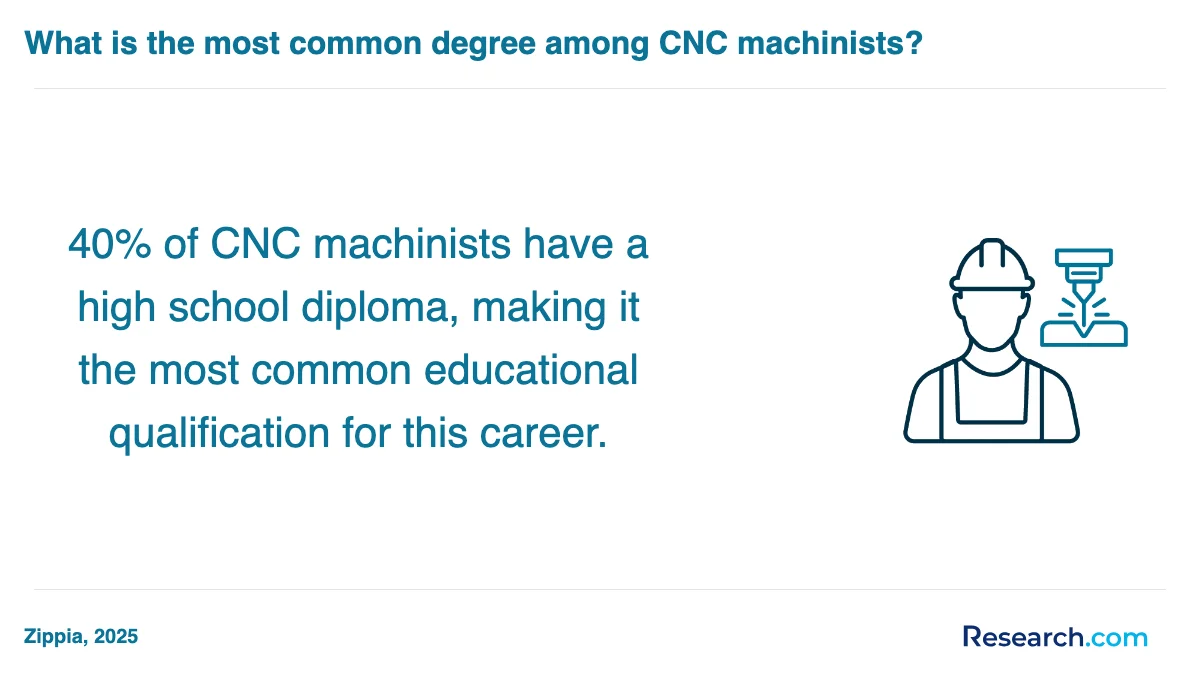
- Admission requires a high school diploma or GED; some advanced tracks may need prior machining experience.
- Programs include hands-on training with lathes, milling machines, CNC equipment, and cover blueprint reading and programming.
- Tuition ranges from $4,920 to $8,670 for short certificate programs, with scholarships like the $2,500 Gene Haas Machine Tool Scholarship available.
- Job prospects are strong in Alabama's manufacturing sector, with positions such as CNC operators and tool and die makers.
- Entry-level salaries average $47,500 per year, with top earners making up to $73,900 annually.
Completing a CNC machinist trade school program in Alabama typically takes between six months and one year. Popular trade schools in the state offer flexible schedules that accommodate working adults and full-time students alike. Graduates often share how the intensive hands-on training made the time fly by, especially when working directly with CNC machines in real workshop environments.
For example, at well-known Alabama trade schools, students quickly gain confidence as they progress from basic machine setup to advanced programming within a few months. This rapid skill-building helps many feel ready to enter the workforce sooner than they expected. One graduate recalled feeling excited and accomplished after just eight months, having already secured a job thanks to their practical expertise.
Choosing a program with a clear focus on applied skills and strong industry connections in Alabama can shorten the learning curve. The immersive, project-based approach means students don't just learn theory-they develop the hands-on abilities employers value, making the completion time feel worthwhile and rewarding.
The main difference between online and on-campus CNC machinist programs in Alabama lies in how and where you gain hands-on experience. Graduates from on-campus programs, like those at Lawson State Community College and Bevill State Community College, often share how valuable it is to work directly with real machine tools such as lathes and milling machines. Being in a physical machine shop allows immediate feedback from instructors and the chance to tackle real-world machining challenges, which builds confidence and practical skills quickly.
Online programs, such as Alabama State University's, offer flexibility through remote video lessons and interactive modules. Graduates appreciate the convenience, especially if balancing work or family commitments, but they also mention that scheduled on-site labs are necessary to practice hands-on skills. This hybrid setup requires strong self-discipline but still delivers essential knowledge like G code programming and blueprint reading.
Choosing between these options depends on your learning style and availability-whether you thrive in a collaborative, face-to-face setting or need the freedom to study remotely while still gaining practical experience.
The average tuition for CNC machinist programs in Alabama varies significantly depending on the institution and program type, but generally falls between $2,245 and $9,278. For example, graduates from Alabama State University's online CNC machinist program appreciate the flexibility of its self-paced, 12-month course priced at $2,245, which covers essential topics like CNC controls and production floor safety.
Other popular trade schools, such as Bevill State Community College, offer a range of award options including Associate degrees and certificates, with tuition costs from $5,278 up to $9,278. Graduates highlight the invaluable hands-on training they received working with CNC milling machines, lathes, and wire EDM, which boosted their confidence entering the workforce.
Similarly, Lawson State Community College provides its Machine Tool Technology program with tuition fees ranging from $4,920 to $8,670, preparing students thoroughly for CNC machining careers. Many students find that despite the upfront cost, the intensive training helps them feel ready and competitive in the job market.
When considering the cost of CNC machinist training in Alabama, it's smart to explore financial aid options that make these programs more accessible. Scholarships, federal aid, and employer-sponsored training can reduce the financial burden, allowing students to focus more on skill development.
For those researching careers in manufacturing, combining this investment with knowledge of associate degree jobs that pay well can guide you toward a rewarding career path that balances education cost and earning potential.
Students pursuing CNC machinist programs in Alabama have several financial aid options to ease the cost of their education. Scholarships are a key resource, especially at schools like Wallace State Community College, where competitive awards up to $4,000 help cover tuition, fees, and books. Many graduates share how these scholarships made it possible to focus on mastering machining skills without overwhelming debt.
Dual enrollment programs at Gadsden State Community College offer high school students a head start. By maintaining a minimum 2.0 GPA and gaining counselor approval, students earn both college and high school credits while receiving scholarships that reduce expenses. This early financial support encourages many to confidently continue into full-time CNC programs.
Paid work experience programs, such as Calhoun Community College's AMP, allow students to learn advanced CNC machining while earning wages. Graduates often highlight how this hands-on work not only funded their schooling but also built industry connections, boosting their career readiness immediately after graduation.
Federal and state aid, including Pell Grants and the Alabama Student Assistance Program, are widely available at community colleges like Lawson State and Bevill State. Completing the FAFSA is essential for students seeking these benefits, helping to make technical training financially accessible and less stressful.
To enroll in a CNC machinist trade school program in Alabama, applicants typically need a high school diploma or GED. This basic educational requirement ensures you have foundational skills in math and reading, essential for understanding machine operation and technical drawings.
Many trade schools in Alabama, such as those in Birmingham or Huntsville, also recommend some prior experience or familiarity with mechanical concepts. Graduates often share that having hands-on experience, even from hobbies like woodworking or automotive repair, made the learning curve smoother and boosted their confidence early on.
Other common prerequisites include:
- Passing an entrance exam or placement test focusing on math and reading skills
- Basic computer literacy, since CNC machines use software for programming
- Physical ability to handle machinery and tools safely
For example, students at popular Alabama trade schools find that meeting these requirements helps them quickly adapt to the fast-paced, practical environment. This readiness often leads to a more positive, engaging learning experience and better job prospects after graduation.
CNC machinist trade school programs in Alabama focus on hands-on skills and technical knowledge essential for success in the industry. Students at popular schools like Wallace State Community College and Calhoun Community College often start with foundational courses that cover:
- Basic machining operations on mills and lathes, including safety protocols and tooling
- Blueprint reading to interpret technical drawings accurately
- Precision measurement techniques for exact manufacturing
Graduates recall how early safety training became second nature, helping them feel confident working with complex equipment. As they progress, students dive into programming with G-code and M-code, learning to write and troubleshoot CNC machine instructions in practical labs.
Mathematics courses cover geometry and trigonometry, enabling precise calculations on the job. Advanced learners gain experience with computer-aided design (CAD) and computer-aided manufacturing (CAM), bridging software and machine operation.
Many find short-term certificates in areas like Advanced CNC Machining valuable for sharpening specific skills and earning industry-recognized credentials, which boosts their readiness for real-world manufacturing challenges across Alabama's growing industrial sector.
CNC machinist trade school programs in Alabama typically focus on key specializations that prepare students for hands-on careers in advanced manufacturing. Graduates from schools like Calhoun Community College benefit from foundational training in Manual Machining, which includes skills such as lathing, milling, and precision grinding. Alternatively, Wallace State Community College emphasizes CNC programming and precision machining Alabama, training students to operate and program computer-controlled machinery with precision and confidence.
Many students choose targeted certificates in Advanced CNC Machining to gain expertise in troubleshooting and setup, making them highly competitive in the job market. Bishop State Community College highlights pathways toward roles such as CNC operator, tool and die maker, and manufacturing technician by teaching blueprint reading, G-code programming, and use of precision measuring instruments.
Students often find that these specializations provide real-world skills immediately applicable on the job floor in aerospace, automotive, and other high-demand industries. Those new to the field appreciate how Alabama's programs are designed for those seeking the easiest trade to learn that pays well, blending practical expertise with industry-recognized certifications.
Choosing the best CNC machinist programs in Alabama means looking beyond just course titles. Graduates from Wallace State Community College emphasize the value of accreditation, ensuring their credentials are respected by employers statewide. Others highlight the importance of hands-on experience, referencing J.F. Drake State Community and Technical College's modern machine tool technology labs that build confidence on real equipment. Affordable CNC machinist training in Alabama is often achievable by comparing tuition fees and financial aid options, as seen at Central Alabama Community College, where many students successfully balance costs through scholarships and grants.
Internship opportunities also play a crucial role. Lawson State Community College's close industry ties provide students with practical work placements, making the transition to full-time jobs smoother. Graduates of Northwest-Shoals Community College note strong job placement rates, boosting their optimism about career prospects. For those seeking flexibility, exploring the most affordable cnc machining online trade school programs can be a strategic choice, blending quality education with convenience and cost savings.

Graduates of CNC machinist trade school programs in Alabama often find themselves well-prepared for a variety of rewarding career paths within the state's manufacturing industry. Those who studied at schools like Lawson State Community College or Wallace State Community College typically enter roles including CNC machinist, CNC programmer, tool and die maker, instrument maker, and CNC operator. These roles involve everything from setting up and operating machines to writing precise programming codes and maintaining specialized tools. For example, a recent graduate working as a CNC operator in Birmingham enjoys hands-on work that challenges technical skills daily while contributing to automotive part production.
Career options expand with certifications, such as NIMS accreditation, enhancing prospects in competitive fields like process engineering or machine tool sales. Entry-level steps usually require a certificate or associate degree and a high school diploma or GED. Graduates seeking stable income and steady advancement should explore CNC machinist jobs in Alabama, known for competitive pay and growth.
Those interested in exploring trade programs that pay well will find that CNC machine operator careers Alabama offer solid opportunities with experience and credentials.
The CNC machinist job outlook in Alabama is strong, with over 230 openings across key industrial hubs such as Birmingham, Huntsville, and Mobile. Graduates from popular trade schools in Alabama often share how their hands-on training prepared them to confidently enter roles that involve programming, setup, and operating CNC machinery. Employers in aerospace, automotive, and shipbuilding sectors actively seek these graduates, reflecting a healthy demand that supports both entry-level and advancement opportunities.
Salary prospects vary by location but remain competitive. For example, Birmingham offers an average CNC machinist salary Alabama graduates find appealing at about $58,070 per year, while Huntsville positions can pay around $65,418 annually, fueled by high-tech industries and defense contractors.
Graduates appreciate benefits provided by many employers, including health insurance and 401(k) matching, alongside chances for overtime. Trade school students often report that early co-op roles help them transition smoothly into full-time jobs. Those exploring further education might consider the quickest online associate degree programs that pay well to boost their career growth.
Most Affordable CNC Machinist Schools & Training - Budget-Friendly CNC Trade Programs in Alabama for 2026
# 1 position
Shelton State Community College - Computer Numerically Controlled (CNC) Machinist Technology/CNC Machinist.
associateShelton State Community College offers a hybrid Computer Numerically Controlled (CNC) Machinist Technology program. It trains students to operate CNC machine tools, including lathes and mills, focusing on setup, programming, and troubleshooting. The curriculum covers blueprint reading, machining, technical math, CAD/CAM systems, safety, and regulations. Annual in-state tuition is $5,067. The program is accredited by the Southern Association of Colleges and Schools Commission on Colleges.
# 2 position
Shelton State Community College - Computer Numerically Controlled (CNC) Machinist Technology/CNC Machinist.
certificate or diplomaThe Computer Numerically Controlled (CNC) Machinist Technology/CNC Machinist program at Shelton State Community College offers hybrid learning options. It trains students to operate CNC machine tools, including lathes and mills, covering setup, programming, and troubleshooting. The curriculum includes blueprint reading, technical mathematics, CAD/CAM systems, and safety practices. The program is accredited by the Southern Association of Colleges and Schools Commission on Colleges. Annual in-state tuition is $5,067.
Frequently Asked Questions about CNC machinist
After completing a CNC machinist trade school program in Alabama, effective preparation for the job market is essential. Begin by obtaining industry-recognized certifications, such as those from the National Institute for Metalworking Skills (NIMS), which many Alabama employers prefer. Networking is critical; connect with local manufacturers and attend job fairs in cities like Birmingham and Huntsville. According to the Alabama Department of Labor, CNC machinist jobs are projected to grow by 8% through 2030, signaling strong demand.
Additionally, build a portfolio showcasing your completed projects and practical skills. Consider internships or apprenticeships to gain hands-on experience. Lastly, update your resume to highlight technical proficiencies and soft skills valued by employers in Alabama's manufacturing sector.
Employers in Alabama prioritize specific skills when hiring CNC machinist trade school graduates. Strong technical proficiency in operating CNC machinery and programming using G-code is essential. According to the Alabama Department of Labor, candidates with hands-on experience in CNC setup, tooling, and maintenance have a competitive advantage.
Attention to detail and the ability to interpret blueprints accurately are also critical skills. Precision is vital in manufacturing, where tolerances can be as tight as a few thousandths of an inch.
Additionally, problem-solving skills and familiarity with computer-aided manufacturing (CAM) software are increasingly valued. Soft skills such as teamwork, communication, and punctuality help graduates succeed in Alabama's manufacturing environments.
Overall, a combination of technical know-how and workplace readiness defines the top qualities employers seek in CNC machinist graduates.
Finding internships in Alabama relevant to a CNC machinist trade school program involves leveraging multiple local resources. Many trade schools in Alabama maintain partnerships with manufacturing companies that offer hands-on internship opportunities to students. Prospective interns should contact their school's career services office early, as these often serve as direct liaisons with industry employers.
Additionally, statewide workforce development programs, such as those supported by the Alabama Department of Commerce and AlabamaWorks, provide listings and assistance in securing manufacturing internships. According to AlabamaWorks, manufacturing internships in the state have grown by 12% over the past three years, reflecting rising demand for skilled CNC machinists.
Networking through local trade associations like the Alabama Manufacturing Association can also connect students with internship openings. Finally, job platforms focused on Alabama's industrial sector, including regional job boards and company websites, are useful for locating current internship listings.
Obtaining a CNC machinist trade school diploma in Alabama significantly enhances career mobility and advancement opportunities. Graduates often gain practical skills in programming, setup, and operation of CNC machinery, which are in demand across Alabama's manufacturing sectors. According to the Alabama Department of Labor, CNC machinists with formal training earn median wages approximately 15-20% higher than those without certification.
The diploma also serves as a credential that employers recognize, often leading to faster job placement and eligibility for advanced roles such as CNC programmer or supervisor. Trade schools in Alabama frequently partner with local industries, facilitating internships and apprenticeships that improve employment prospects.
Furthermore, Alabama's growing aerospace and automotive industries increase demand for skilled CNC machinists, supporting upward mobility. The U.S. Bureau of Labor Statistics projects a steady growth rate of 5% for machinist jobs in Alabama through 2030, emphasizing the value of specialized education in this field.
Students enrolled in CNC machinist trade schools in Alabama can benefit from part-time jobs that offer practical experience and income. Entry-level positions such as machine operator assistants or production helpers in manufacturing plants provide hands-on exposure to machining processes. These roles often involve supporting skilled machinists, which reinforces classroom learning.
Alabama's manufacturing sector, including aerospace and automotive industries, employs many CNC professionals. According to the Alabama Department of Labor, part-time opportunities in machine shops or fabrication facilities are available, especially near industrial hubs like Birmingham and Huntsville.
Additionally, some companies offer internships or cooperative education programs aligned with trade school schedules, enabling students to build relevant skills while studying.
Yes, there are affordable CNC Machinist degree programs available both near me and near Alabama. Community colleges and technical schools in and around Alabama often offer certification and associate degree programs in CNC machining, which can be a cost-effective option. Research.com can be a helpful resource for identifying universities and programs that offer these degrees at a competitive price.
- Most Affordable CNC Machinist Schools & Training - Budget-Friendly CNC Trade Programs in Georgia for 2026
- Most Affordable CNC Machinist Schools & Training - Budget-Friendly CNC Trade Programs in Florida for 2026
- Most Affordable CNC Machinist Schools & Training - Budget-Friendly CNC Trade Programs in Arkansas for 2026
- Most Affordable CNC Machinist Schools & Training - Budget-Friendly CNC Trade Programs in North Carolina for 2026
- Most Affordable CNC Machinist Schools & Training - Budget-Friendly CNC Trade Programs in Indiana for 2026
- Most Affordable CNC Machinist Schools & Training - Budget-Friendly CNC Trade Programs in Illinois for 2026
- Most Affordable CNC Machinist Schools & Training - Budget-Friendly CNC Trade Programs in Ohio for 2026
- Most Affordable CNC Machinist Schools & Training - Budget-Friendly CNC Trade Programs in Iowa for 2026
- Most Affordable CNC Machinist Schools & Training - Budget-Friendly CNC Trade Programs in Minnesota for 2026
- Most Affordable CNC Machinist Schools & Training - Budget-Friendly CNC Trade Programs in Michigan for 2026
- MACHINIST | ‼️ New Job Alert ‼️ | Facebook https://www.facebook.com/groups/769782850345135/posts/1645305092792902/
- 11 cnc machinist Jobs in Alabama | Randstad USA https://www.randstadusa.com/jobs/q-cnc-machinist/alabama/
- Machinist salary in Alabama ‐ CareerExplorer https://www.careerexplorer.com/careers/machinist/salary/alabama/
- Top CNC Machinist Schools in Alabama | Learn How to Become https://toptradeschools.com/near-you/cnc-machinist/alabama/
- Is becoming a CNC machinist difficult? https://www.cloudnc.com/blog/is-becoming-a-cnc-machinist-difficult
- Online CNC Machinist from University of South Alabama Center for Continuing Education https://careertraining.southalabama.edu/training-programs/cnc-machinist/
- Machine Tool Technology (STC-MT1) : Coastal Alabama Community College https://www.coastalalabama.edu/industry-manufacturing-and-construction/machine-tool-technology-stc-mt1/
- Computerized Numerical Control – Shelton State https://www.sheltonstate.edu/instruction-workforce-development/technical-programs/computerized-numerical-control/
- Machine Tool Technology - Snead State Community College https://snead.edu/career-technical-education/machine-tool-technology/
- Precision Machining - Technical Programs of Study - Gadsden State Community College http://www.gadsdenstate.edu/programs-of-study/precision-machining.cms