2027 Most Popular Marketing Degree Programs Ranking in Connecticut

Co-Founder and Chief Data Scientist
Choosing the right marketing degree program in Connecticut can feel overwhelming, but it's an important step toward a rewarding career. This article features the 2027 Most Popular Marketing Degree Programs Ranking in Connecticut created by the Research.com team of data scientists to help you make an informed choice.
By exploring this ranking, you'll discover programs that match your goals and interests. A marketing degree opens doors to exciting opportunities in today's dynamic business world, making it a smart investment in your future.
Key benefits of getting marketing degree in Connecticut
- Salary for marketing degree graduates: Graduates often enjoy strong earning potential with roles such as Public Relations Specialist earning a mean annual wage of $159,420 and Marketing Assistants averaging $83,190 per year in Connecticut, reflecting rewarding financial opportunities.
- Career paths: A marketing degree opens doors to diverse roles like Digital Marketing Specialist, Media Planner, or Sales Associate, offering flexibility and growth to graduates from Connecticut's well-known schools such as the University of Connecticut.
- Benefits of online degrees: Earning a marketing degree online allows graduates from Connecticut to balance work and study efficiently while gaining up-to-date skills, providing a convenient path to career advancement without sacrificing personal commitments.
- 2027 Most Popular Marketing Degree Programs Ranking in Connecticut
- What can I expect from marketing degree in Connecticut?
- Where can I work with marketing degree in Connecticut?
What can I expect from marketing degree in Connecticut?
The average cost of pursuing a marketing degree in Connecticut varies depending on the type of institution. At well-known schools like the University of Connecticut, tuition and fees for a bachelor's degree typically range between $15,000 to $20,000 per year for in-state students, making the total cost around $60,000 to $80,000 over four years. Graduates often reflect on this investment as worthwhile, especially when considering the hands-on projects and internships that connect classroom theory to real-world marketing challenges.
Community colleges and smaller private institutions tend to offer more affordable options, with associate degrees costing significantly less, often under $10,000 for the full program. Many students appreciate the flexibility these programs provide, combining affordability with tailored coursework focused on digital marketing trends that are rapidly shaping the industry.
With Connecticut's strong professional networks and growing demand in sectors like healthcare and finance, graduates frequently report feeling optimistic about their return on investment, citing meaningful mentorships and job opportunities that help them launch rewarding marketing careers locally.
Where can I work with marketing degree in Connecticut?
Graduates from marketing programs at institutions like the University of Connecticut and Quinnipiac University often find themselves thriving in dynamic industries such as finance, healthcare, and manufacturing. Imagine working at a major Hartford insurer crafting campaigns that influence millions, or supporting digital outreach for Yale New Haven Health's community initiatives-these are real pathways many alumni pursue.
With Connecticut's economy rapidly embracing digital transformation, marketing students are increasingly prepared for roles in social media management, SEO, and content strategy. Graduates share how internships in Bridgeport's growing tech startups helped them apply classroom theory to create engaging digital content, fueling their excitement about future careers.
Emerging trends highlight a shift toward integrated marketing roles combining analytics with creativity, especially in aerospace and retail sectors found statewide. Being in Connecticut means you have the advantage of nearby employers who value innovative marketing approaches, which recent graduates report makes their career launches both inspiring and rewarding.
Graduates with a marketing degree in Connecticut often find rewarding salary prospects right after college. For instance, many who begin as marketing assistants or digital marketing specialists can expect a mean annual wage near $83,190, according to recent data. Alumni from renowned institutions such as the University of Connecticut and Quinnipiac University frequently share how internships and campus projects helped them land roles with competitive pay.
Those pursuing careers as PR specialists can anticipate even higher earnings, with mean salaries around $159,420, reflecting the growing demand for skilled communicators in industries like finance and insurance prevalent in the state. Similarly, marketing graduates stepping into media planner roles see wages comparable to marketing assistants, also near $83,190 annually.
Sales associates with marketing backgrounds usually start closer to $53,280, benefiting from valuable sales and consumer behavior insights gained during their studies. Graduates often express excitement about the dynamic marketing landscape in Connecticut, where skills in SEO, PPC, and data-driven campaigns increasingly boost earning potential.
With the state's vibrant corporate environment and access to hands-on learning at top local universities, marketing degree holders are poised to see their salaries grow as they gain experience and specialize.
- Public marketing degree programs in Connecticut cost between $30,000 and $50,000 for in-state students, while private schools may charge over $60,000.
- Entry-level marketing salaries in Connecticut range from $50,000 to $55,000, with potential growth to $80,000 or more after five to ten years of experience.
- There are about 12,000 marketing jobs in Connecticut, with a projected employment growth rate slightly above the national average.
- Connecticut's proximity to New York City and Boston offers additional commuting and remote work opportunities for marketing graduates.
- Many marketing programs in the state are accredited by AACSB, ensuring quality education in areas like digital marketing and analytics.
Completing a marketing degree in Connecticut generally takes about four years for full-time students, a timeline that aligns with experiences from graduates at popular institutions like the University of Connecticut. Many share how balancing a mix of core marketing courses, electives, and general education felt manageable yet fulfilling during this period. Some students working part-time or leveraging transfer credits find themselves extending their time to five or six years, but they appreciate the flexibility tailored to their unique situations.
Graduate degrees, such as MBAs with marketing focuses, typically require two years, though the rise of part-time and online options allows for schedules that accommodate busy professionals. Imagine feeling the excitement of progressing through an accelerated program, especially in vibrant cities like Stamford or Hartford, where summer sessions help you finish sooner. Connecticut's blend of traditional and flexible pathways means students often complete their studies with a strong sense of accomplishment, ready to enter dynamic marketing careers.
As Connecticut’s economy continues to evolve, marketing professionals must stay ahead of key industry shifts. According to the U.S. Bureau of Labor Statistics, marketing manager roles are projected to grow 10% from 2022 to 2032-faster than the average for all occupations. Demand for digital marketing specialists skilled in SEO, content strategy, and data analytics is particularly strong, fueled by Connecticut’s growing tech and healthcare sectors. To thrive, graduates should focus on mastering AI-driven tools, social media optimization, and omnichannel campaign management. Key trends shaping the future of marketing careers in Connecticut include:
- Rise of Data-Driven Decision Making: Proficiency in Google Analytics, CRM platforms, and predictive modeling will separate top candidates.
- Personalized Customer Experiences: Skills in segmentation, A/B testing, and marketing automation (e.g., HubSpot, Marketo) are increasingly valuable.
- Content and Video Marketing Growth: Storytelling via short-form video and interactive content is becoming a must-have competency.
- Sustainability and Ethical Branding: Consumers expect transparent, socially responsible messaging-marketers who can craft authentic brand narratives will lead. By aligning your skillset with these trends and continuously upskilling through workshops or certifications, you’ll position yourself for leadership roles and higher earning potential. Additionally, for prospective students exploring cost-effective alternatives beyond Connecticut, check out our Affordable Marketing Degree Programs Ranking in Colorado.
Graduates from the University of Connecticut recall how on-campus marketing programs boosted their confidence through lively class debates and real-time group projects, experiences that sharpened their communication skills. In contrast, online students at Central Connecticut State University often praise the freedom to juggle coursework with jobs or family commitments, accessing lectures anytime to fit unpredictable schedules. This flexibility creates an empowering learning pace tailored to individual lifestyles.
Looking ahead, Connecticut's online marketing programs are likely to integrate even more immersive digital tools, like augmented reality case studies or AI-driven marketing simulations, enhancing virtual engagement while maintaining affordability compared to traditional campus fees and housing costs.
On-campus experiences still shine in offering spontaneous networking moments-meeting local marketing professionals through university events or internships-something online learners actively seek through virtual networking lounges and digital clubs. Both methods nurture different strengths, preparing students uniquely for the evolving marketing landscape.
As marketing increasingly embraces digital platforms, students from both formats in Connecticut find themselves developing relevant tech skills, ensuring they remain competitive in a rapidly shifting industry.
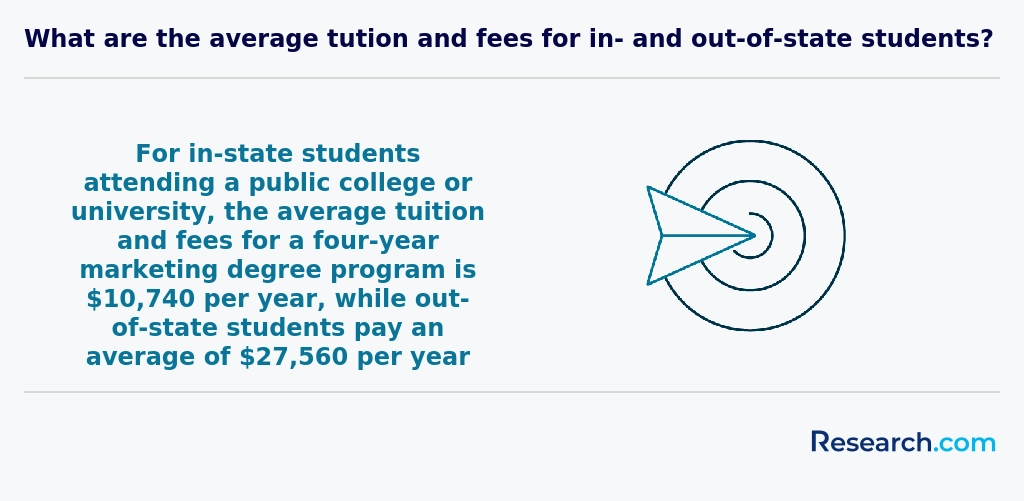
The average cost of a marketing degree in Connecticut reflects a unique blend of opportunities and challenges for students navigating their educational journey. Graduates from well-known institutions like the University of Connecticut often share that while the tuition can be a significant investment-particularly around a median total cost of $59,082 for out-of-state students and $21,044 for in-state residents-the long-term value is palpable through the strong professional networks and career-ready skills they gain.
Students pursuing marketing in Connecticut encounter total expenses that go beyond tuition, encompassing fees, textbooks, and living costs. Many find creative ways to manage these expenses, connecting with scholarship programs and financial aid aimed specifically at business and marketing majors. Those studying at private schools like Quinnipiac or Sacred Heart often note that despite the higher price tag, the focused resources and smaller class sizes contribute to a rewarding experience that sparks excitement for their future careers.
With evolving educational models and emerging scholarship options, the total expenses for marketing degree programs CT could become more manageable, making this career path accessible to an even wider group of motivated students. For those eager to explore cost-effective pathways, the cheapest marketing programs in connecticut offer promising alternatives that provide quality education without overwhelming debt.

Marketing students in Connecticut benefit from a dynamic mix of financial aid that eases the cost of education and sparks hope for a brighter future. For those attending public universities like the University of Connecticut, the Roberta B. Willis Scholarship can transform the dream of a degree into reality by offering vital funds for low- and middle-income families. Graduates often recall how FAFSA opened doors to Pell Grants worth up to $7,000 annually, creating a safety net without the stress of repayment.
Private scholarships from organizations such as the American Marketing Association add another layer of encouragement, rewarding ambition and dedication. Students at Fairfield University have shared how departmental scholarships, ranging between $1,000 and $10,000, helped them focus more on mastering marketing strategies rather than financial worries.
Looking ahead, increasing partnerships between local businesses and universities may expand work-study placements, providing hands-on marketing experience alongside wages. This blend of aid and opportunity nurtures confidence and drives many Connecticut marketing students toward promising careers.
When exploring a Marketing degree in Connecticut, it's vital to understand the range of career paths open to you. Whether you're inclined toward creative storytelling or data-driven strategy, a diverse array of roles awaits. Graduates can leverage their skills in fields such as digital marketing, brand management, public relations, and market research. For instance, you might step into positions like Marketing Coordinator, Social Media Manager, or even Product Manager-each offering unique opportunities to enhance your talents. Many professionals begin their journey as Marketing Assistants, gaining hands-on experience while discovering their niche within the industry. As you hone your skills through internships and real-world projects, you’ll find that your career can evolve in unexpected and rewarding ways. Moreover, the continuous growth of Connecticut’s dynamic business environment means that innovative roles are emerging constantly, allowing graduates to adapt and thrive. For those seeking affordable educational options to kickstart their journey, consider exploring the cheapest marketing programs in connecticut. This can be an excellent starting point to balance both cost and quality as you prepare for a successful career in marketing. Embrace the many career avenues available, and let your passion for marketing guide you toward a fulfilling future in this ever-evolving landscape.
To enroll in a marketing degree program in Connecticut, prospective students typically need a high school diploma or equivalent, with core coursework in English, math, and social studies. Graduates from universities like the University of Connecticut often recall how strong foundations in algebra and statistics helped them confidently tackle marketing analytics classes. Recently, many Connecticut schools have embraced test-optional policies, offering flexibility to applicants who may excel in practical skills over standardized exams.
Many programs suggest maintaining a GPA around 2.5 to 3.0, encouraging students to challenge themselves with rigorous classes to stand out. Application submissions usually include essays and letters of recommendation, which allow candidates to share their passion for marketing and demonstrate real-world curiosity-something graduates often say made their applications feel genuinely personal.
Transfer and graduate students in Connecticut increasingly benefit from waived GRE or GMAT scores if they show strong business backgrounds, reflecting a trend toward valuing experience alongside exams. This evolving landscape supports hopeful marketers ready to blend creativity with analytical thinking in dynamic academic environments.

As Connecticut’s economy evolves, marketing professionals must stay ahead of shifts such as AI-driven personalization, voice search optimization, and sustainability branding. According to the U.S. Bureau of Labor Statistics, marketing specialist jobs in the Northeast are projected to grow by 10% over the next decade, with Connecticut seeing particular demand in fintech, healthcare marketing, and green product launches. Integrating data analytics and machine learning into campaign strategies is no longer optional-graduates who master these tools will outpace peers in securing roles that blend creative storytelling with predictive insights. Local employers increasingly seek candidates who can harness social commerce and mobile engagement to reach consumers on platforms like TikTok and Instagram Reels. Enrolling in a hands-on business and marketing course that emphasizes real-world projects will prepare you to craft viral micro-influencer collaborations and immersive brand experiences. In Connecticut’s robust digital marketing landscape, professionals skilled in UX/UI principles and conversion rate optimization can command premium salaries and fast-track into leadership positions. Finally, as remote and hybrid work models become permanent fixtures, networking remains critical. Virtual marketing conferences-such as the annual Connecticut Digital Summit-offer opportunities to connect with industry veterans. By continuously upskilling in emerging tools like augmented reality ads and no-code automation platforms, you’ll not only navigate the evolving job market but also shape the next generation of marketing innovation in Connecticut.
Marketing degree programs in Connecticut typically include courses that blend foundational theory with hands-on skills relevant to a fast-evolving marketplace. Students at well-known institutions like the University of Connecticut or Quinnipiac University often share how courses such as Principles of Marketing grounded their understanding of market segmentation and consumer targeting, providing a solid base for real-world marketing challenges.
Graduates recall that Consumer Behavior classes helped them unlock the psychological and cultural triggers behind purchasing decisions, making campaign planning feel both creative and strategic. With digital transformation reshaping the industry, courses like Digital Marketing equip students to master SEO, social media strategies, and content creation-skills highly valued in Connecticut's growing tech-savvy business hubs.
Moreover, marketing research and data analytics are gaining prominence, as students learn to interpret complex market data, enabling smarter decision-making. Electives in brand management and international marketing encourage forward-thinking, preparing students to thrive beyond Connecticut's borders in an interconnected global market.
Marketing degree specializations in Connecticut are evolving to meet the rapid changes in digital landscapes and data analytics. Graduates from popular institutions like the University of Connecticut often share how focusing on digital marketing, with hands-on experience in SEO and social media campaigns, opens doors to innovative roles that didn't exist a decade ago. These experiences prepare students for a future where brands rely heavily on personalized online engagement.
Connecticut marketing programs with concentrations in market research and analytics also empower students to make data-driven decisions. Graduates express excitement about applying insights from big data to real-world scenarios, especially in thriving local sectors like healthcare and finance. Some have even utilized this knowledge during internships, gaining confidence in forecasting consumer trends across industries.
Other in-demand options include advertising and branding or sales management, which resonate with those drawn to creative storytelling or business-to-business strategies. Many students appreciate how courses at Connecticut colleges connect theoretical concepts with practical skills through projects. For those exploring global opportunities, the international marketing track aligns well with Connecticut's export-driven economy. Prospective students can find more details on these pathways offered in a comprehensive business and marketing course.
Choosing the best marketing degree programs in Connecticut means focusing on regional strengths and evolving trends. Graduates from institutions like the University of Connecticut often share how their data-driven coursework and hands-on projects prepare them for dynamic roles in marketing. Envision yourself working with local businesses in finance or healthcare, gaining real-world experience through internships that spark excitement and confidence. Affordable marketing degrees in Connecticut 2027 will likely emphasize digital skills and analytics, responding to industry demands and positioning students ahead of the curve. Cost considerations are important too; many students find value by exploring financial aid or selecting programs recognized for balancing quality and price.
Also, connecting with the local labor market is crucial. Marketing programs with strong ties to Connecticut's business community can open doors to job opportunities. For guidance on managing costs while pursuing quality education, consider consulting resources like the Affordable Marketing Degree Programs Ranking in Colorado to understand broader pricing trends and options.
Graduates from popular marketing programs at universities in Connecticut often find themselves stepping into dynamic roles such as marketing managers, digital marketing specialists, or brand managers. These positions allow them to apply creativity and strategic thinking learned on campus to real-world business challenges, especially within thriving sectors like finance and healthcare around Hartford and New Haven. The hands-on experience gained through local internships enhances their readiness for competitive job markets, opening doors to leadership roles that emphasize cutting-edge digital marketing trends.
Emerging opportunities in data analytics and consumer behavior analysis further expand jobs with a marketing degree in Connecticut. Graduates report excitement about careers as market research analysts, leveraging insights to drive smarter decisions in regional companies. Many also pursue certifications or practical skills in platforms like Google Analytics, supplementing their degrees with real-world tools, which has become increasingly important as marketing integrates more technology-driven strategies.
For those weighing options or alternative paths, exploring best 6-month associate degree programs online can provide flexible entry points into marketing careers. The combination of Connecticut's educational resources and proximity to major metropolitan hubs positions graduates advantageously for a future filled with evolving marketing career opportunities in Connecticut.
Graduates holding a marketing degree in Connecticut find themselves in a dynamic job market fueled by the state's diverse economy and proximity to major metropolitan hubs. Careers with marketing degree in Connecticut often emphasize digital marketing, brand positioning, and data-driven customer engagement strategies, making graduates from institutions like the University of Connecticut or Quinnipiac University well-prepared. Many alumni recall beginning their careers at local firms or regional branches of national companies, leveraging internships to gain hands-on experience that employers highly value. This blend of academic knowledge and practical skills positions them competitively amid steady job growth projected around 6% through 2030.
Marketing degree job outlook Connecticut is especially encouraging for those fluent in the latest CRM software and analytics tools, with average salaries surpassing national figures around $75,000 annually. Students exploring options can benefit from attending a college with open admission to build foundational skills before transferring to more specialized programs. The evolving marketplace promises more openings for adaptable marketers ready to innovate in digital campaigns and content strategy within sectors like finance and healthcare.
2027 Most Popular Marketing Degree Programs Ranking in Connecticut
Investing in your education is a significant decision that can shape your future, and the Research.com team understands the importance of making informed choices. To assist prospective students in Connecticut, we have meticulously developed the "2027 Most Popular Marketing Degree Programs Ranking in Connecticut." Our commitment to quality, credibility, and accuracy is reflected in the thorough research and analysis conducted to compile this ranking.
We utilized the following reputable data sources to ensure a comprehensive evaluation of marketing degree programs:
By exploring this ranking, readers will gain valuable insights into the most popular marketing programs in Connecticut, helping them make informed decisions about their educational and career paths. For more details on our methodology, please visit our Research.com methodology page.


Frequently Asked Questions About marketing
Marketing degree students in Connecticut can maximize their learning experience by combining academic knowledge with practical application. Engaging in internships within Connecticut's growing sectors-such as finance, healthcare, and manufacturing-offers valuable real-world exposure. According to the Connecticut Department of Labor, the state's marketing-related jobs are expected to grow by 6% from 2022 to 2032, highlighting strong career prospects.
Students should also consider participating in local networking events and joining professional organizations like the American Marketing Association's Hartford Chapter. Connecticut colleges often provide access to industry speakers and workshops, which can deepen understanding of current marketing trends. Utilizing resources such as Connecticut's Small Business Development Centers helps students gain insights into marketing strategies tailored for small and medium businesses in the region.
The marketing field in Connecticut is evolving rapidly, with several emerging niches gaining traction for students pursuing marketing degrees. Digital marketing, particularly in social media strategy and analytics, remains a leading area due to growing online commerce and local business needs. Content marketing and search engine optimization (SEO) are also expanding, as firms aim to improve their online visibility in a competitive market.
Additionally, data-driven marketing using big data and AI tools has become crucial. According to the U.S. Bureau of Labor Statistics and Connecticut Department of Labor, roles related to marketing analytics grew by over 10% from 2019 to 2023 statewide. Another niche is sustainable marketing, reflecting increasing consumer interest in eco-friendly products and corporate responsibility.
After earning a marketing degree in Connecticut, preparing for the job market involves strategic steps to stand out. First, gaining practical experience through internships is crucial; Connecticut's proximity to major business hubs like New Haven and Hartford offers valuable opportunities in advertising, digital marketing, and sales. According to the Connecticut Department of Labor, marketing-related job openings are projected to grow by 5% through 2030, highlighting a steady demand for skilled professionals.
Building a strong professional network via local business groups such as the Connecticut American Marketing Association chapter can also aid job placement. Additionally, certifications in digital marketing tools and data analytics improve employability in this evolving field.
Employers in Connecticut highly value marketing graduates who demonstrate strong analytical skills. The ability to interpret data and measure campaign performance is crucial, especially as local businesses increasingly rely on digital marketing strategies. According to a 2023 report from the Connecticut Department of Labor, 68% of marketing job postings sought candidates skilled in data analysis and market research tools.
Communication skills, both written and verbal, are essential. Graduates must convey persuasive messages across multiple channels, including social media, email, and traditional advertising. Creativity and adaptability remain important to respond to evolving consumer preferences.
Proficiency in digital marketing platforms, such as Google Analytics and SEO tools, is often required. Employers also look for teamwork and project management abilities to succeed in collaborative environments.
Finding internships in Connecticut relevant to a marketing degree involves leveraging local resources and industry connections. Many universities in Connecticut, like the University of Connecticut and Quinnipiac University, have career services that offer internship listings specifically tailored to marketing students.
Connecticut's proximity to major cities like New York and Boston expands the opportunities for marketing internships within industries such as finance, healthcare, and media. According to the Connecticut Department of Labor, about 12% of internships statewide in 2023 were in marketing and communications fields.
Students should also explore local chambers of commerce, professional marketing associations like the American Marketing Association's Connecticut chapter, and online platforms such as Handshake for vetted marketing internship offers.
A marketing degree in Connecticut significantly enhances career mobility and advancement prospects. According to the Connecticut Department of Labor, marketing-related job openings are projected to grow by 6% through 2030, which is slightly faster than the average for all occupations. Graduates with a marketing degree often qualify for diverse roles, including market research analysts, digital marketing specialists, and brand managers, increasing job flexibility within various industries.
Employers in Connecticut value candidates with formal marketing education, as it demonstrates critical skills in consumer behavior, data analysis, and strategic communication. A degree also facilitates access to higher-level positions, with median salaries for marketing managers in Connecticut reaching approximately $115,000 annually, according to the Bureau of Labor Statistics.
Furthermore, many Connecticut universities offer networking opportunities, internships, and ties to local businesses, all of which support career progression. This combination of academic preparation and practical experience helps graduates advance faster in competitive job markets.
Studying for a marketing degree in Connecticut equips students with skills applicable to various interdisciplinary roles by integrating courses from business, communications, psychology, and data analytics. Connecticut's marketing programs often emphasize collaboration with sectors like finance and technology, reflecting the state's diverse economy. For example, the Connecticut Department of Labor reports strong growth in marketing-related fields paired with data analysis and IT expertise.
Students learn to frame marketing strategies based on consumer behavior insights, financial principles, and digital technologies. This approach prepares graduates for roles that blend marketing with product development, sales, or corporate communications. Connecticut's universities also frequently encourage internships and partnerships with local industries, further enhancing real-world interdisciplinary experience.
When choosing between a thesis and a non-thesis marketing degree program in Connecticut, consider your career goals and learning preferences. Thesis programs often suit students aiming for research-oriented roles or doctoral studies, emphasizing analytical skills through a significant research project. Non-thesis options typically focus on practical applications, internships, and coursework, ideal for those seeking immediate employment in Connecticut's growing marketing sector.
Connecticut's job market for marketing professionals is expected to grow by 6% through 2030, according to the U.S. Bureau of Labor Statistics. This growth supports practical skill development found in non-thesis programs. Meanwhile, universities in Connecticut, such as the University of Connecticut, offer robust thesis tracks for academically inclined students.
Students in Connecticut seeking to study marketing abroad have several pathways through U.S. higher education programs. Many Connecticut universities partner with international institutions, offering exchange programs or dual degrees. For example, the University of Connecticut provides options to spend a semester overseas while completing marketing coursework. This exposure helps students gain global perspectives, a crucial skill in today's interconnected market.
Additionally, accredited institutions support participation in study abroad initiatives endorsed by organizations such as the Institute of International Education. These programs often include destinations popular for marketing studies, like London or Barcelona.
Financial aid and scholarships specifically for study abroad can be accessed through university resources, supporting Connecticut students' international ambitions. According to the Connecticut Office of Higher Education, about 12% of undergraduates participate in study abroad experiences, a rate aligned with national averages.
Students pursuing marketing degrees in Connecticut can benefit from several part-time job opportunities that complement their studies. Positions such as social media coordinator, marketing assistant, and content creator are common and provide practical experience. According to the Connecticut Department of Labor, marketing-related jobs in the state are expected to grow by 6% from 2022 to 2032, reflecting a steady demand in the field.
Internships at local marketing agencies and corporate communications departments offer hands-on exposure to real-world campaigns. Retail marketing roles also help develop customer engagement skills. Gaining experience in these roles can enhance practical knowledge and improve job prospects after graduation.
Marketing students in Connecticut benefit from numerous networking opportunities that connect them with professionals and companies in the field. Many universities partner with local businesses in Hartford and Stamford, key economic hubs, to provide internships and practical experience. According to the Connecticut Department of Labor, marketing-related roles are growing steadily, encouraging schools to foster industry connections.
Student chapters of national organizations such as the American Marketing Association (AMA) are active in several Connecticut colleges, offering events, workshops, and conferences for networking. Additionally, marketing students can attend regional career fairs and business expos to meet recruiters and alumni.
These opportunities help students gain real-world insights, mentors, and potential job leads, strengthening their career prospects within Connecticut's competitive market.
Alumni networks are a valuable resource for marketing degree students in Connecticut. These networks connect current students with graduates working in diverse marketing roles across the state, helping to create professional opportunities. According to the Connecticut Business & Industry Association, strong local connections can improve job placement rates, which stand around 85% within six months of graduation for marketing graduates in Connecticut.
Through alumni events and mentorship programs, students gain insights into industry trends, often tailored to Connecticut's evolving market sectors such as digital marketing and advertising. These programs foster relationships that can lead to internships and full-time employment.
Moreover, alumni often provide real-world advice on resume building and interview preparation, which is crucial in the competitive marketing field. Networking with alumni enhances students' career development by expanding their professional circle beyond the campus.
Customizing a marketing degree program in Connecticut allows you to align your education with specific career goals. Many Connecticut colleges offer flexible curricula where you can select electives focusing on areas like digital marketing, consumer behavior, or brand management. You can also pursue internships or cooperative education opportunities with local businesses in Hartford, New Haven, or Stamford, which are key economic hubs. According to the Connecticut Department of Labor, marketing-related jobs in the state are expected to grow by 8% through 2030, emphasizing the value of specialized skills. Choosing concentrations and hands-on experiences can enhance your marketability after graduation.
Marketing students in Connecticut often face several challenges that reflect broader trends in the US higher education system. One major difficulty is staying current with rapidly evolving digital marketing tools and techniques, which require continual learning beyond standard curricula. Additionally, Connecticut's marketing students must navigate a competitive job market, especially in urban areas like Hartford and Stamford where marketing roles are sought after by many graduates.
Another challenge involves gaining hands-on experience. Internship opportunities can be limited, particularly in smaller cities or rural areas of the state, affecting students' practical skill development. According to the Bureau of Labor Statistics, Connecticut's employment growth in advertising and promotions is moderate but limited by industry shifts, which impacts entry-level job availability.
Lastly, marketing students must balance the cost of education with potential ROI. Connecticut has some of the highest tuition rates in New England, making financial planning essential.
With a marketing degree, professionals in Connecticut can pursue several recognized certifications to enhance their skills and job prospects. Popular options include the Certified Marketing Management Professional (CMMP) and the Professional Certified Marketer (PCM) offered by the American Marketing Association. These certifications validate expertise in marketing strategy, digital marketing, and consumer behavior.
Additionally, certifications like the Google Ads Certification or HubSpot Inbound Marketing certification are valuable for those focusing on digital marketing roles. These credentials demonstrate proficiency in online advertising platforms and content marketing techniques.
According to the Connecticut Department of Labor, the marketing sector is expected to grow by 6% through 2030, increasing demand for certified marketing professionals. Pursuing certifications can therefore provide a competitive advantage in this expanding job market.
Writing a winning application for a marketing program in Connecticut requires clarity, strong presentation, and relevant experience. Start by researching each college's specific admission requirements and deadlines to tailor your application accordingly. Highlight your interest in marketing through a well-crafted personal statement, focusing on any internships, volunteer work, or projects related to business or digital marketing.
Include quantitative achievements such as sales growth, social media metrics, or leadership roles to demonstrate practical skills. According to the Connecticut Department of Labor, marketing-related jobs in the state grew by 5% from 2020 to 2023, emphasizing demand for graduates with real-world experience.
Additionally, ensure your letters of recommendation speak directly to your marketing aptitude and teamwork abilities. A polished resume and accurate transcripts will further strengthen your profile.
The global outlook on marketing careers emphasizes adaptability and cultural awareness. Marketing professionals today must understand diverse markets and digital strategies that connect brands worldwide. According to the U.S. Bureau of Labor Statistics, marketing jobs are expected to grow 10% from 2022 to 2032, reflecting strong demand nationally, including in Connecticut.
Connecticut's strategic location near major international business hubs like New York City boosts opportunities in global marketing roles. Universities in Connecticut often include global marketing and digital analytics in their curricula to prepare students for these trends. The Hartford region, in particular, hosts companies with international operations, enhancing practical experience options for graduates.
Studying marketing in Connecticut offers exposure to evolving global marketing techniques that emphasize data-driven decision-making and cross-cultural communication.
Students pursuing a marketing degree in Connecticut can gain practical experience through a variety of structured opportunities. Many universities offer internship programs that connect students with local businesses, allowing hands-on exposure to marketing campaigns and digital strategies. For example, Hartford and Stamford host numerous corporate headquarters where internships are common.
Additionally, participating in campus-sponsored workshops and marketing clubs provides skill-building and networking. Some programs incorporate live projects with real clients, enhancing practical understanding. According to the Connecticut Department of Labor, marketing-related internships grew by 12% from 2020 to 2023, reflecting increasing opportunities.
Volunteering for nonprofit organizations or local events also helps build portfolios and industry contacts.
Choosing the right concentration within a marketing degree program in Connecticut depends on your interests and career goals. Popular concentrations include digital marketing, market research, and brand management. Connecticut's growing industries, such as finance and healthcare, often value digital marketing skills, which makes this concentration valuable.
According to the Connecticut Department of Labor, jobs in marketing analysis are expected to grow by 8% from 2022 to 2032, highlighting the demand for data-focused skills. When selecting a concentration, consider programs that offer internships or connections with local businesses to gain practical experience.
Review the curriculum carefully to ensure it matches your desired career path and provides up-to-date tools and techniques relevant to Connecticut's market trends.
- 2027 Most Popular Marketing Degree Programs Ranking in Massachusetts
- 2027 Most Popular Marketing Degree Programs Ranking in New Jersey
- 2027 Most Popular Marketing Degree Programs Ranking in New Hampshire
- 2027 Most Popular Marketing Degree Programs Ranking in Maine
- 2027 Most Popular Marketing Degree Programs Ranking in Indiana
- 2027 Most Popular Marketing Degree Programs Ranking in Michigan
- 2027 Most Popular Marketing Degree Programs Ranking in Georgia
- 2027 Most Popular Marketing Degree Programs Ranking in Illinois
- 2027 Most Popular Marketing Degree Programs Ranking in Florida
- 2027 Most Popular Marketing Degree Programs Ranking in Alabama
See What Experts Have To Say About Studying Marketing
Read our interview with Marketing experts

Sonya A. Grier, Ph.D.
Marketing Expert
Professor, Department of Marketing
American University

John R. Meindl
Marketing Expert
Adjunct Assistant Professor of Marketing
Hofstra University

- Career Goals: 17 Inspirational Examples for you in 2026 https://www.imd.org/blog/learning-and-development/career-goals/
- What Careers Can You Expect with a Marketing Degree https://www.global-business-school.org/content-type/blog/what-careers-can-expect-marketing-degree/
- The skills that will get you a graduate job in marketing https://targetjobs.co.uk/careers-advice/marketing-advertising-and-pr/skills-will-get-you-graduate-job-marketing
- How Niches Provide New Growth Opportunities for Business https://visionedgemarketing.com/niche-marketing-provides-new-growth-opportunities/
- Who Can Be an International Marketer? https://www.spencerstuart.com/research-and-insight/who-can-be-an-international-marketer
- Business Administration-Marketing Concentration, BA - New England College https://www.nec.edu/programs/business-administration-marketing-b-a
- 12 Major Marketing Challenges and How to Address Them | NetSuite https://www.netsuite.com/portal/resource/articles/erp/marketing-challenges.shtml
- Marketing Manager Salaries State-by-State https://www.allbusinessschools.com/marketing/salary/
- Why study marketing? Discover 7 compelling reasons https://isc.strath.ac.uk/blog/why-study-marketing
- Master of Science (M.S.) Major in Marketing Research and Analysis (Non-thesis Option) https://mycatalog.txstate.edu/graduate/mccoy-business-administration/marketing/marketing-research-analysis-ms/